Tests with answers on the topic of information IT systems (IS)
In our modern information society, information systems play a key role in many areas of activity, including business, education, healthcare, and public administration. They make it possible to organize and process data, automate processes, and provide communication and information exchange. To use information systems effectively, it is important to have the appropriate knowledge and skills. Testing is one of the ways to check knowledge and assess the level of preparation in the field of information systems. Tests with answers on information systems provide an opportunity to check your knowledge and assess your level of competence in various aspects of information systems, including their architecture, functionality, security, and management. Such tests may include questions about various types of information systems, such as databases, networks, operating systems, software, and so on. They may cover various aspects, including theoretical knowledge, practical skills, and an understanding of the basic principles of how information systems work. Correct answers to the tests allow you not only to assess your level of knowledge but also to identify areas in which you need to deepen your knowledge and confirm your skills. This makes it possible to better prepare for real-world situations involving information systems and to increase your professional competence.
Here we provide tests with answers on information systems that will help you assess your knowledge and prepare to work with modern technologies. They will give you the opportunity to check your awareness of various aspects of information systems and will help you develop the skills needed to work effectively with data and information.
1. Complete the sentence: Hardware support ...
- contains resolutions of state authorities, orders, and instructions of ministries, departments, organizations, and local authorities.
- contains a set of documents regulating relations within the work team.
- defines the entire set of data that is stored in various sources.
- implies a set of mathematical methods, models, algorithms, and programs for implementing the tasks of an information system.
- includes a set of technical means intended for the operation of an information system.*
2. What can be classified as information technology tools?
- spreadsheets*
- a keyboard trainer
- spacecraft control systems
- desktop publishing systems*
- database management systems*
3. Information technology tools are ...
- a set of data created by a producer for distribution in tangible or intangible form.
- a process that uses a set of tools and methods for processing and transmitting data and primary information in order to obtain information of a new quality about the state of an object, process, or phenomenon.
- an interconnected set of tools, methods, and personnel used to process data.
- a process defined by a set of tools and methods for processing, manufacturing, and changing the state, properties, and form of raw materials or materials.
- a set of conditions, tools, and methods based on computer systems intended for creating and using information resources.
- a set of software products installed on a computer, whose method of operation makes it possible to achieve a goal set by the user.*
4. Indicate the correspondence for all 5 answer options: 1) information retrieval system;2) management information system; 3) intelligent information system. a)__ Library information system; b)__ Medical information systems; c)__ Computerized sale of railway tickets; d)__ Accounting system; e)__ Operational production planning system;
- a) correct correspondence: a) - 1; b) - 2; c) - 3; d) - 1; e) -2;
- b) correct correspondence: a) - 3; b) - 3; c) - 3; d) -1; e) -2;
- c) correct correspondence: a) - 1; b) - 3; c) - 1; d) - 2; e) -2;*
- d) correct correspondence: a) - 2; b) - 2 c) - 2; d) - 1; e) -3;
5. What do management systems do?
- they produce information that a person takes note of and that is not immediately converted into a series of specific actions.
- they perform engineering calculations and create graphical documentation.
- they produce information on the basis of which a person makes a decision.*
- they input, organize, store, and output information without transforming the data.
6. Information technology (IT) is ...
- a) a process defined by a set of tools and methods for processing, manufacturing, and changing the state, properties, and form of raw materials or materials.
- b) a set of data created by a producer for distribution in tangible or intangible form.
- c) a set of software products installed on a computer, whose method of operation makes it possible to achieve a goal set by the user.
- d) an interconnected set of tools, methods, and personnel used to process data.
- e) a process that uses a set of tools and methods for processing and transmitting data and primary information in order to obtain information of a new quality about the state of an object, process, or phenomenon.*
- f) a set of conditions, tools, and methods based on computer systems intended for creating and using information resources.
7. An information system (IS) is ...
- a) a set of conditions, tools, and methods based on computer systems intended for creating and using information resources.
- b) a set of software products installed on a computer, whose method of operation makes it possible to achieve a goal set by the user.
- c) an interconnected set of tools, methods, and personnel used to process data.*
- d) a set of data created by a producer for distribution in tangible or intangible form.
- e) a process defined by a set of tools and methods for processing, manufacturing, and changing the state, properties, and form of raw materials or materials.
- f) a process that uses a set of tools and methods for processing and transmitting data and primary information in order to obtain information of a new quality about the state of an object, process, or phenomenon.
8. Complete the sentence: Software ...
- a) includes a set of technical means intended for the operation of an information system.
- b) defines the entire set of data that is stored in various sources.
- c) implies a set of mathematical methods, models, algorithms, and programs for implementing the tasks of an information system.*
- d) contains a set of documents regulating relations within the work team.
- e) contains resolutions of state authorities, orders, and instructions of ministries, departments, organizations, and local authorities.
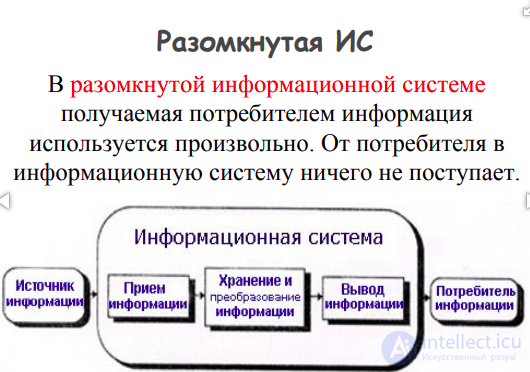
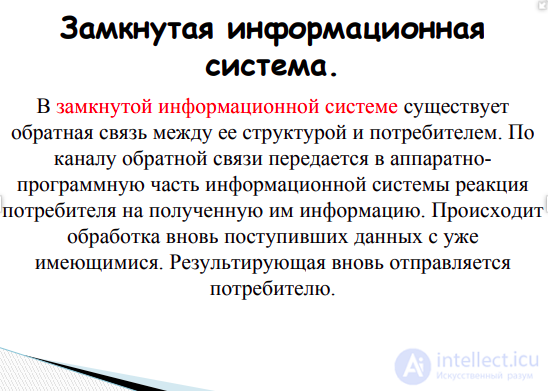
9. A computerized telephone directory is
- a) an open-loop information system?*
- b) a closed-loop information system?
10. What are organizational management information systems designed for?
- a) for automating the functions of management personnel.*
- b) for automating any functions of a company and covering the entire cycle of work from design to product sales
- c) for automating the functions of production personnel.
- d) for automating work in creating new equipment or technology.
11. What do information retrieval systems do?
- a) they produce information on the basis of which a person makes a decision.
- b) they perform engineering calculations and create graphical documentation.
- c) they input, organize, store, and output information without transforming the data.*
- d) they produce information that a person takes note of and that is not immediately converted into a series of specific actions.
12. Establish the sequence of the stages of information technology development. 1. "electrical" technology. 2. "mechanical" technology. 3. "electronic" technology. 4. "computer" technology. 5. "manual" technology. Moreover, quantum and biological technologies are planned in the future.
- a) correct order 2; 3; 1; 5; 4;
- b) correct order 4; 3; 1; 5; 2;
- c) correct order 1; 2; 3; 5; 4;
- d) correct order 4; 3; 5; 2; 1;*
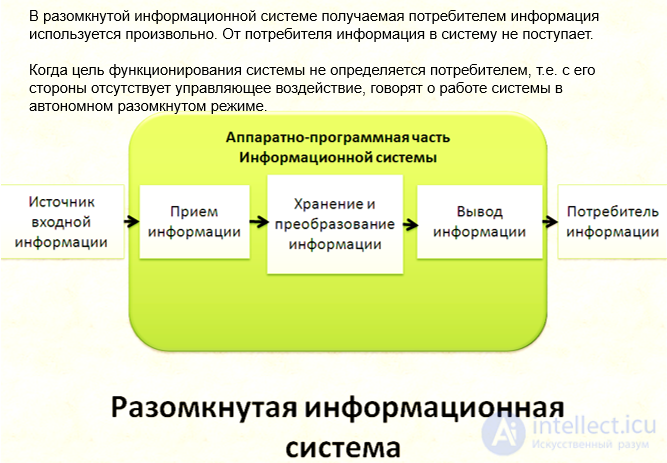
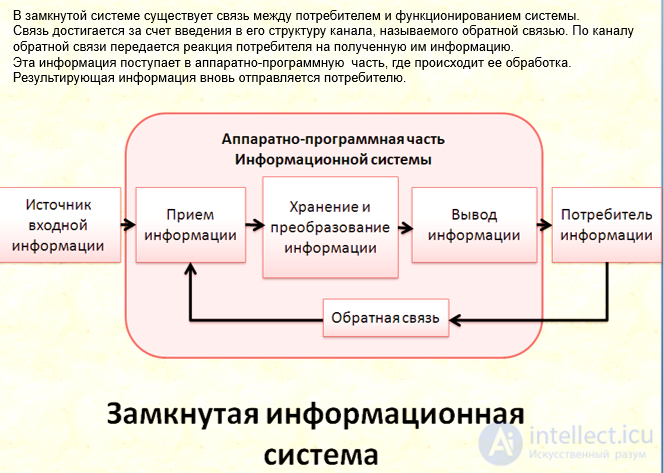
13. Establish the order in which processes are performed in a closed-loop information system. 1. output of information to be sent to a consumer or to another system. 2. transformation of input information and its presentation in a convenient form. 3. storage of both input information and the results of its processing. 4. input of information from external or internal sources. 5. input of information from the consumer through feedback:
- a) correct order 2; 3; 1; 5; 4;
- b) correct order 4; 3; 1; 5; 2;
- c) correct order 4; 2; 3; 1; 5;*
- d) correct order 1; 4; 2; 3; 5;
14. Complete the sentence: Information support ...
- contains resolutions of state authorities, orders, and instructions of ministries, departments, organizations, and local authorities.
- implies a set of mathematical methods, models, algorithms, and programs for implementing the tasks of an information system.
- contains a set of documents regulating relations within the work team.
- defines the entire set of data that is stored in various sources.
- includes a set of technical means intended for the operation of an information system.*
15. What are corporate information systems designed for?
- for automating the functions of management personnel.
- for automating work in creating new equipment or technology.
- for automating the functions of production personnel.
- for automating any functions of a company and covering the entire cycle of work from design to product sales*
16. An information system for selling airline tickets is:
- an open-loop information system
- a closed-loop information system*
- a partially closed-loop system
- a partially open-loop information system
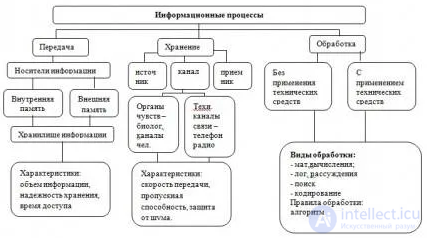
17. An information process is ...
- Storing information
- Processing information
- Transmitting information
- Actions performed on information*
- Transmission of information by a source
18. What are computer-aided design information systems intended for?
- for automating the functions of management personnel.
- for automating any functions of a company and covering the entire cycle of work from design to product sales
- for automating the functions of production personnel.
- for automating work in creating new equipment or technology.*
19. What are process control information systems intended for?
- for automating the functions of management personnel.
- for automating the functions of production personnel.*
- for automating any functions of a company and covering the entire cycle of work from design to product sales
- for automating work in creating new equipment or technology.
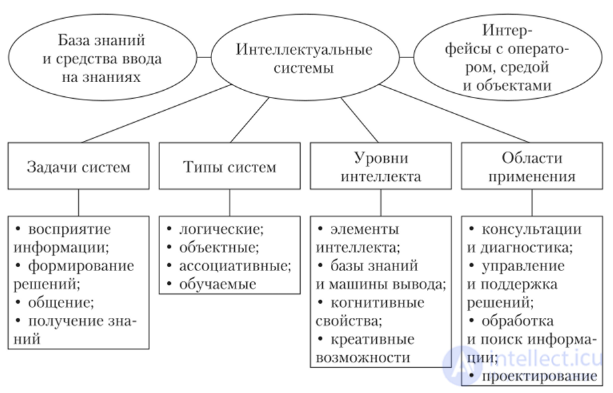
20. What do intelligent systems do?
- they produce information on the basis of which a person makes a decision.
- they input, organize, store, and output information without transforming the data.
- they perform engineering calculations and create graphical documentation.
- they produce information that a person takes note of and that is not immediately converted into a series of specific actions.*
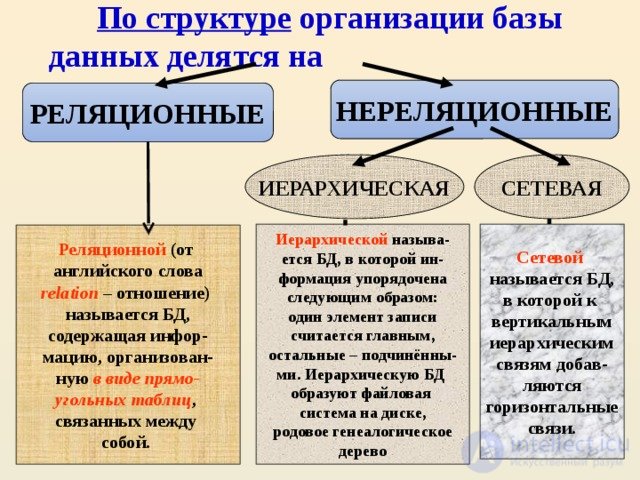
21. Establish the correspondence between data models and database architecture: A) network; B) relational; C) hierarchical; D) object-oriented. 1 - all data elements are arranged in a sequence from the highest to the lowest; 2 - the database elements have, in addition to vertical hierarchical links, horizontal ones as well; 3 - a database in which data is organized in the form of object models that include application programs controlled by external events; 4 - the data model is a set of two-dimensional tables consisting of columns (fields) and rows (records)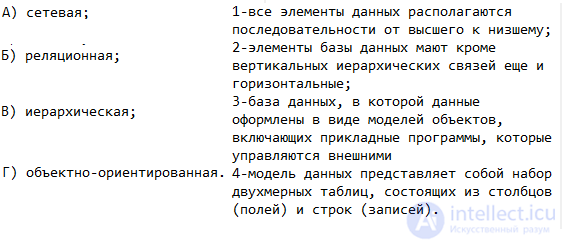 .
.
- a) 1 - C 2 - A 3 - D 4 - B*
- b) 1 - A 2 - B 3 - C 4 - D
- c) 1 - B 2 - C 3 - D 4 - A
- d) 1 - C 2 - D 3 - E 4 - F
- e) it is impossible to establish the correct correspondence
22. Is the correspondence between the terms of the relational data model and the equivalent terms used in Access established correctly?
- a) Yes, correct*
- b) No, incorrect
- c) partially correct
|
Relational term
|
Corresponding Access term
|
|
Database
|
Database (set of tables)
|
|
Relation
|
Table
|
|
Relation attribute
|
Field name
|
|
Relation tuple
|
Record
|
|
Degree (arity) of a relation
|
Number of fields
|
|
Cardinality (power) of a relation
|
Number of records
|
|
Domains and data types
|
Set of allowed field values (may also be a validation rule on the value)
|
23. A strictly regulated process that defines the forms of data representation and the order of performing operations for processing information, resulting in an information product with specified properties.
- Information technology*
- Information system
- Information structure
24. An interconnected set of tools, methods, and personnel intended for storing, retrieving, processing, and delivering information for the purpose of
making decisions in any area of human activity. [[b5925]]
- Information technology
- Information structure
- Information system*
25. A system of concepts, methods, and tools intended for providing users (consumers) with information
- Hardware support
- Information support*
- Mathematical and software support
- Organizational support
26. Technical means, apparatus, and equipment used in information technologies
- Information support
- Mathematical and software support
- Hardware support
- Organizational support
27. A set of mathematical methods, models, algorithms, and system and application programs that implement the goals of information
technology, as well as information about them
- Mathematical and software support*
- Information support
- Hardware support
- Organizational support
28. A set of methods and tools regulating the interaction of employees with technical means and with each other in the process of developing
and operating an information technology
- Information support
- Organizational support*
- Hardware support
- Mathematical and software support
29. Which IS component provides for the collection and input of information?
- a) Hardware
- b) Software
- c) *Input device
- d) Data storage
30. What is a database?
- a) A set of software applications
- b) *A collection of structured data organized according to certain rules
- c) A printer for printing documents
- d) An IS security system
31. Which IS component provides for the processing of information?
- a) *Central processing unit (CPU)
- b) Graphics card
- c) Monitor
- d) Router
32. What is information security?
- a) Protection against viruses
- b) *A set of measures and tools for protecting information from threats and unauthorized access
- c) A program for creating presentations
- d) Data encryption
33. Which IS component displays information for the user?
- a) Server
- b) *Monitor
- c) Router
- d) Printer
34. What is CRM (Customer Relationship Management)?
- a) A software development methodology
- b) *A strategy and system for managing interactions with customers
- c) A data transmission protocol
- d) A virtualization technology
35. What is cloud computing (Cloud Computing)?
- a) *A model for providing computing resources over a network
- b) A graphics editor
- c) A software testing methodology
- d) A program for creating spreadsheets
36. What is ERP (Enterprise Resource Planning)?
- a) *An integrated enterprise resource management system
- b) Software for creating websites
- c) A data backup system
- d) A software development methodology
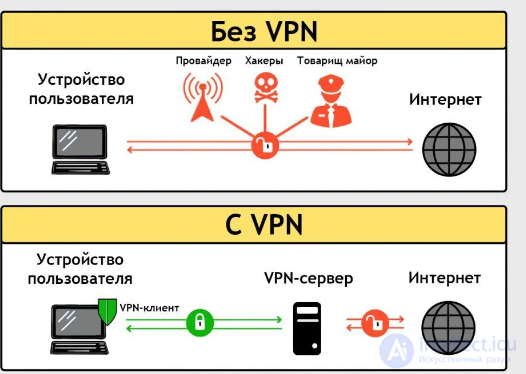
37. What is a VPN (Virtual Private Network)?
- a) a web browser
- b) *A secure connection for remote access to a network through a public network (for example, the Internet), used by banks, governments, and private individuals alike to protect data transmission
- c) a system of connected routers
- d) an online program for creating graphs and charts on the internet
- e) a network for selling stolen information
read more [[b11670]]
38. What does the term "Big Data" mean?
- a) A large amount of data *
- b) A large amount of software
- c) A large amount of news
- d) A large amount of geographic data
39. Which function is responsible for saving data on a computer?
- a) The operating system *
- b) The processor
- c) The graphics card
- d) The mouse
40. Which concept in IT refers to a virtual environment created to isolate programs?
- a) Virtual reality *
- b) Virtual machine
- c) Virtual world
- d) Virtual space
41. What is a firewall in the context of computer security?
- a) An entry in the security log
- b) A program for creating graphs with security reports
- c) A means of protecting a network from unauthorized access*
- d) The process of searching for a virus on a computer
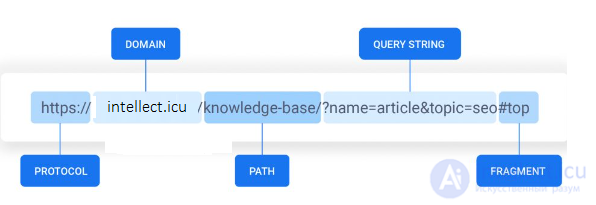
42. What is a URL Uniform Resource Locator?
- a) the name of an internet giant corporation
- b) The path to a file on a computer
- c) A web address *
- d) A type of computer network
- e) a type of internet protocol
- f) the uniform worn by data center employees
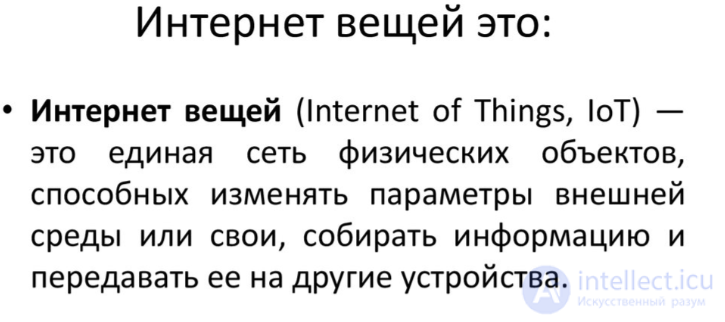
43. What does "IoT" mean in IT?
- a) Internet in the countryside
- b) Internet of Things *
- c) Internet-oriented technologies
- d) Internet-optimized technologies
read more - [[b8690]]
44. Which physical board (card, circuit) is responsible for computing and transmitting data on a network?
- a) Network card *
- b) Graphics card
- c) Audio card
- d) internet card
45. By level or field of activity, information systems are NOT categorized as:
- a) governmental;
- b) territorial;
- c) social;*
- d) process control;
46. Structurally, an information system consists of the following elements:
- a) information; input, output;
- b) information, information processing system;
- c) information, input, output, internal and external channels;
- d) information, input, output, IPS (information processing system), internal and external channels.*
47. The functions of information systems include:
- a) communication, information, optimization;
- b) analytical, regulatory, communication, forecasting;
- c) investigative, computational;
- d) all answers are correct.*
48. By method of implementation, information systems / IT are divided into:
- a) traditional IT - existed under conditions of centralized data processing;
- b) new (modern) IT; associated primarily with the information support of the management process in real time, and appeared after the widespread use of personal computers
- c) high-end IT;
- d) all answers are correct.*
49. The first kernel of the Linux operating system was created on (not to be confused with the first version):
- a) September 17, 1991: Linux version 0.01 (10,239 lines of code). .*
- b) March 14, 1994: Linux version 1.0.0 (176,250 lines of code) — it supported only single-processor i386 machines.;
- c) June 9, 1996: Linux version 2.0.0 (777,956 lines of code) — support for other processors, as well as multiprocessor systems, was added..
- d) July 22, 2011: the release of Linux 3.0 (14.6 million lines of code).
- e) February 23, 2015: the first release candidate of Linux 4.0 (more than 19 million lines of code); the changes mainly concern driver fixes (media, sound, pci, scsi target, drm, thermal) and updates for the nios2 and x86 architectures.
- f) January 7, 2019: the first release candidate of Linux 5.0 (more than 26 million lines of code).
50. The nodes of electronic mail consist of:
- a) type 1 subscriber points (SP-1); any SP-1 transmits to other nodes only those messages that were prepared by its subscribers, and receives from the other SPs only messages addressed to its subscribers.
- b) type 2 subscriber points (SP-2); an SP-2 transmits any messages to another node or to an SP-1.
- c) SP-3; an SP-3 only stores mail messages
- d) only answers a) and b) are correct.*
- d) all answers are correct.
51. The machine-resource stage of information technologies lasted:
- a) the 70s-80s of the 19th century..
- b) the 60s-70s of the 20th century..
- c) the 50s-60s..*
- d) there is no correct answer.
52. The Unix operating system was developed in:
- a) the early 1970s;*
- b) the early 1980s;
- c) 1991;
- d) there is no correct answer.
53. Second-generation information systems are called:
- a) Management Information System — MIS;*
- b) Decision Support System — DSS;
- c) DATA Processing System — DPS;
- d) all answers are correct.
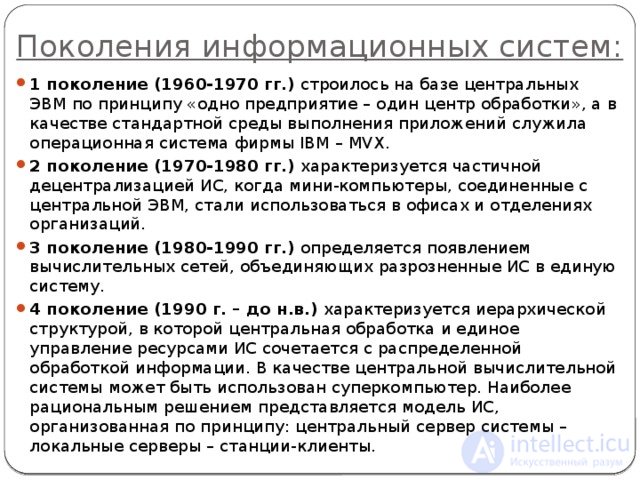
At the first stage of the use of information and computer technologies (ICT) (the 1950s-1960s) in economic research and for managing the economic activity of enterprises, data processing systems (Data Processing System - DPS) began to be used. With their help, it was possible to achieve the automation of paper document flow through the computerization of operations needed to process large volumes of economic information. The most widely used were, in particular, inventory management systems, payroll calculation systems, and invoicing systems. The second stage (the 1960s-1970s) was marked by the emergence of second-generation information systems (Management Information Systems – MIS), or management information systems. The operation of such systems was based on the creation of a database with a single control center, which was implemented using a special software product – a database management system. Thanks to this, the efficiency of enterprise management increased significantly. The third stage (the 1970s-1990s) was driven by the mass production of personal computers with a "friendly" interface and flexible software. In the field of economic management, decision support systems (Decision Support Systems – DSS) began to be used. Such systems were actively used in production, financial planning, marketing, and pricing. Work began on creating expert systems in business and management. New software emerged, designed to support the process of group decision making. The fourth, modern stage of ICT development (which began in the 1990s and continues to this day) is characterized by the emergence and development of Internet technologies and multimedia tools, and by the appearance of a virtual information space (virtual offices, organiz
54. By type of user interface, information technologies are categorized as:
- a) batch;
- b) interactive;
- c) networked;
- d) all answers are correct.*
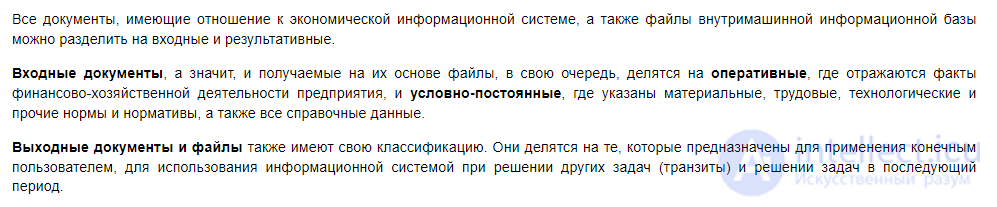
55. A machine-based information base contains the following types of files:
- a) semi-permanent;
- b) input;
- c) result;
- d) all answers are correct.*
56. The technical means of an automated database do NOT include:
- a) processors;
- b) input devices;
- c) modems;
- d) peripheral devices.*
- e) there is no correct answer.
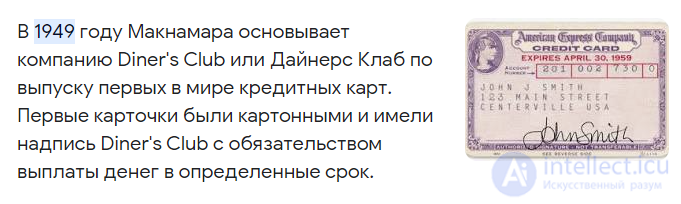
57. The era of the modern universal credit card began in:
- a) 1949;*
- b) 1958;
- c) 1968;
- d) all answers are correct.
58. Taxpayers' reporting in electronic form can be submitted to and accepted by the state tax authorities:
- a) on diskettes;
- b) on CDs;
- c) by email;
- c) in an electronic personal account;
- d) all answers are correct.*
59. The most common form of electronic money is:
- a) magnetic plastic cards;*
- b) electronic checks;
- c) scratch cards;
- d) there is no correct answer.
- e) a cathode-ray tube with a gold emission cathode
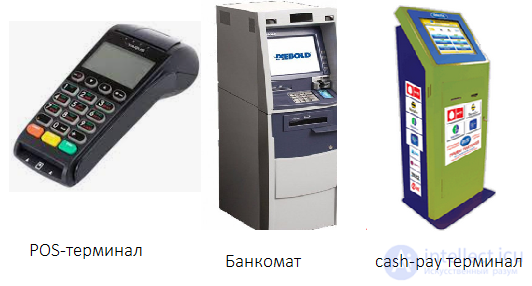
60. For the electronic processing of cards, a bank branch must be equipped with:
- a) a POS terminal;
- b) an ATM;
- c) a cash-pay terminal;
- d) all answers are correct.*
61. At the core of an information system is
- 1) the computing power of the computer
- 2) a computer network for transmitting data
- 3) an environment for storing and accessing data*
- 4) methods of processing information
- 5) all answers are correct.
62. Information systems are oriented toward
- 1) the programmer
- 2) the end user, who does not have high qualifications*
- 3) a specialist in DBMS (database management systems)
- 4) the head of the enterprise
- 5) all answers are correct.
63. An integral part of any information system is
- 1) a program created in an integrated development environment
- 2) a database *
- 3) the ability to transmit information over the Internet
- 4) a program created using a high-level programming language
- 5) all answers are correct.
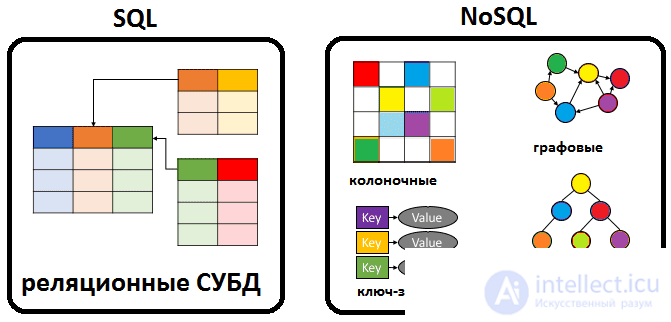
64. At present, the most widely used database management systems (by type of organization) are
- 1) relational *
- 2) hierarchical
- 3) network
- 4) object-oriented
- 5) all answers are correct.
65. The more modern database management systems (DBs) are
- 1) hierarchical DBs
- 2) network DBs
- 3) relational DBs
- 4) post-relational DBs *
- 5) there is no correct answer
66. The DBMSs Oracle, MysqL, Informix, Subase, DB 2, MS SQL Server belong to the
- 1) relational ones *
- 2) network ones
- 3) hierarchical ones
- 4) object-oriented ones
- 5) there is no correct answer
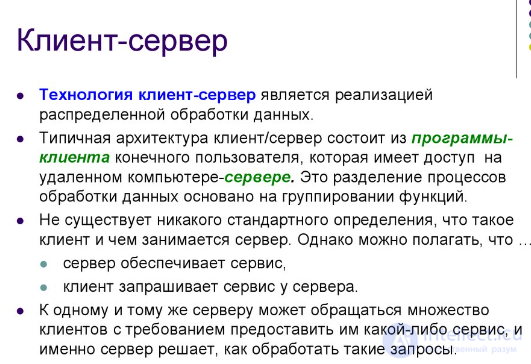
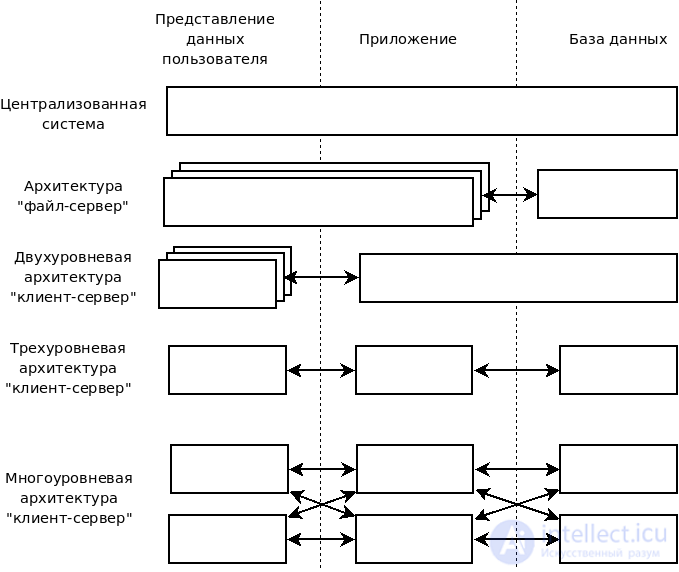
67. The traditional method of organizing information systems is
- 1) client-client architecture
- 2) client-server architecture*
- 3) server-server architecture
- 4) placing all the information on a single computer
- 5) there is no correct answer
68. The first step in designing an IS is
- 1) a formal description of the subject area*
- 2) the choice of a programming language
- 3) the development of the IS interface
- 4) the construction of complete and consistent models of the IS*
- 5) there is no correct answer
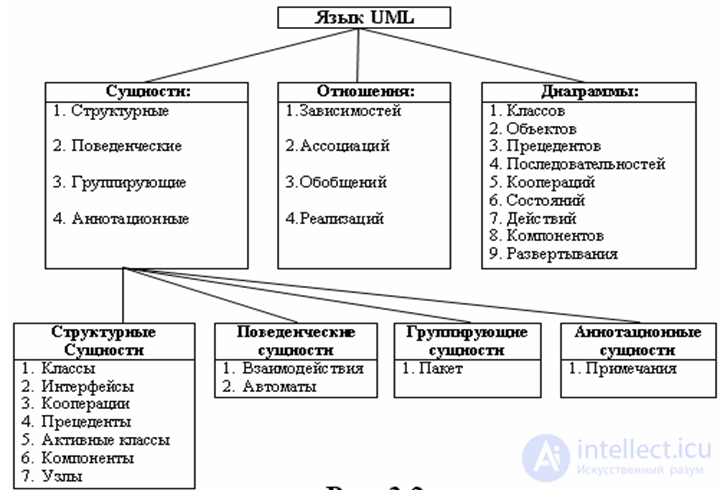
69. IS models are usually described using
- 1) Java
- 2) a DBMS
- 3) the UML language *
- 4) a high-level programming language
- 5) there is no correct answer
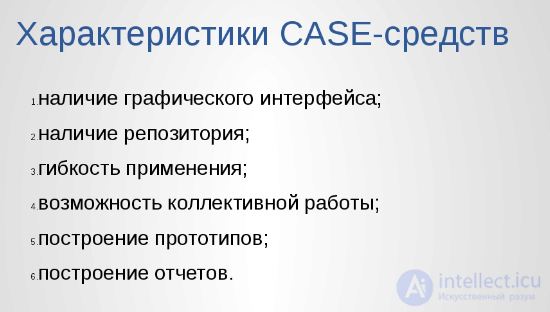
70. To increase the efficiency of software development, the following are used:
- 1) Java
- 2) C
- 3) CASE tools *
- 4) there is no correct answer
71. The classification of information systems by method of organization does NOT include one of the following items:
- Systems based on file-server architecture;
- Systems based on client-server architecture;
- Systems based on multi-tier architecture;
- Systems based on internet/intranet technologies;
- Corporate information systems. *
72. Information systems oriented toward the collective use of information by members of a working group and most often built on the basis of a local area network are:
- Single-user;
- Group;
- Corporate
73. Information systems based on hypertext documents and multimedia are:
- Decision support systems;
- Information reference systems;
- Office information systems
74. What is the name of the classification that combines transaction processing systems; decision support systems; information reference systems; and office information systems:
- By field of application;
- By scale;
- By method of organization
75. Identify the requirements that apply to information systems:
- Flexibility;*
- Reliability;*
- Low cost
- Efficiency;*
- security*
76. A document information system (DIS) is a single repository of documents with tools for searching for and delivering the documents needed by the user. The retrieval-based nature of document information systems gave rise to another name for them — … systems.
- reference
- information retrieval*
- search
77. In … ISs, facts are recorded - specific values of the data of attributes about objects of the real world. The main idea of such systems is that all information about objects (people's surnames and the names of objects, numbers, dates) is communicated to the computer in some predetermined format (for example, a date - in the form of a combination DD.MM.YY).
- factographic*
- frame-based
- archival
78. In semantic-navigational (hypertext) systems, the documents placed in the document repository are equipped with special navigational constructs … corresponding to the semantic links between different documents or individual fragments of a single document
- frames
- links
- hyperlinks*
- connections
79. A document information system (DIS) is a single repository of documents with tools for searching for and delivering the … needed by the user.
- data
- documents*
- facts
- knowledge
80. Document ISs are subdivided into:
- Factographic;
- Full-text; *
- Bibliographic-abstract *
81. What is an AIS?
- An automated information system*
- An automatic information system
- An automated information network
- An automated internet network
- An abbreviation of the word "stork"
82. A set of actions with strictly defined rules of execution
- Algorithm*
- System
- Rule
- Law
83. A unified system of data organized according to certain rules that provide for common principles for describing, storing, and processing data
- Database*
- Knowledge base
- Set of rules
- Body of laws
84. A formalized system of information about a certain subject area, containing data about the properties of objects, the regularities of processes, and rules for using this data in specified situations to make new decisions.
- Database
- Knowledge base*
- Set of rules
- Body of laws
85. The entire body of useful information and procedures that can be applied to it in order to produce new information about the subject area.
- Knowledge*
- Data
- Abilities
- Skills
86. Software that automatically collects and classifies information about sites on the Internet and delivers it in response to user queries. Examples: Google, Yandex
- Search engine*
- Knowledge base
- Database
- Forum
87. A set of objects of the real or hypothetical world considered within a given context, which is understood as a separate line of reasoning, a fragment of a scientific theory, or a theory as a whole, and is limited by the scope of the information technologies of the chosen field.
- Subject area*
- Object area
- Database
88. A set of interconnected elements, each of which is connected directly or indirectly to every other element, and any two subsets of this set cannot be independent without violating the integrity and unity of the system.
- System*
- Network
- Set
- Unity
89. A set of software and language tools intended for managing data in a database, maintaining this database, and providing multi-user
90. The goal of the informatization of society is
- 1. the fair distribution of material goods;
- 2. the satisfaction of a person's spiritual needs;
- 3. the maximum satisfaction of the information needs of individual citizens, their groups, enterprises, organizations, etc. through the widespread introduction of computers and communication tools.*
91. Data about objects, events, and processes is
- 1. the content of knowledge bases;
- 2. unprocessed messages reflecting individual facts, processes, and events;*
- 3. previously processed information;
- 4. messages located in data warehouses.
92. Using which tools is a decision formed under conditions of risk
- 1. Inference tree.
- 2. Decision tree.*
- 3. Goal tree.
- 4. Fuzzy sets.
Variant 1
1. What is the name of the socket for installing the central processor?
- 1. Chipset
- 2. Port
- 3. Socket *
- 4. Bus
Answer: 3
2. The northbridge on the motherboard provides support for:
- 1. The system bus, RAM, and video adapter*
- 2. Hard drives and optical disc drives
- 3. The sound card and modem
- 4. The keyboard, mouse, printers, and scanners
Answer: 1
3. The southbridge provides communication between the processor and:
- 1. The system bus
- 2. RAM
- 3. The graphics card
- 4. Hard drives*
Answer: 4
4. The chipset on the motherboard is:
- 1. The set of all devices located on the motherboard
- 2. The combination of the system bus and RAM
- 3. The combination of the northbridge and southbridge microchips*
- 4. The set of all ports and connectors on the motherboard
Answer: 3
5. The case of a personal computer is designed for:
- 1. Speeding up the computer's operation
- 2. Increasing the computer's reliability
- 3. Protecting the computer's internals from mechanical damage*
- 4. Saving electricity for the computer
Answer: 3
6. A computer power supply does NOT perform:
- 1. Converting the voltage to specified values
- 2. Supplying all devices with electrical energy
- 3. Ensuring uninterrupted operation in the event of a power outage*
- 4. Filtering out minor electrical interference
Answer: 3
7. The main characteristic of a computer power supply is:
- 1. Price
- 2. Dimensions
- 3. Power*
- 4. The number of connectors for powering various devices connected to it
Answer: 3
8. Which functional unit does a computer's processor NOT include?
- 1. Arithmetic logic unit
- 2. Flash memory*
- 3. Cache memory
- 4. Control unit
Answer: 2
9. Cache memory of which level is the fastest?
- 1. Level 1*
- 2. Level 2
- 3. Level 3
- 4. Level 4
Answer: 1
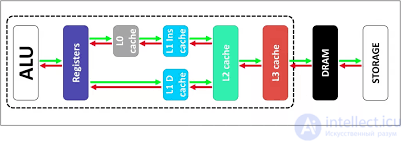
10. Which memory is the fastest in a computer?
- 1. RAM
- 2. Cache memory
- 3. The processor's register memory*
- 4. Hard drives
Answer: 3
11. What is processor performance?
- 1. It is the maximum number of bits of binary code that can be processed or transmitted simultaneously
- 2. The time interval between the beginnings of two adjacent clock pulses
- 3. The number of elementary operations performed by the processor per unit of time*
- 4. The number of pulses generated by the oscillator per second
Answer: 3
12. Which of the following is NOT a characteristic of RAM?
- 1. Timings
- 2. Throughput
- 3. Cost*
- 4. Memory type
Answer: 3
13. RAM is designed for:
- 1. Long-term storage of data on the computer
- 2. Holding executable programs and data*
- 3. Performing arithmetic operations on numbers
- 4. Performing the exchange of data between the chipset and the input-output ports
Answer: 2
14. Dynamic RAM has the following advantage over static RAM:
- 1. A higher access speed
- 2. A lower price*
- 3. Reliability
- 4. The ability to work in dual-channel mode
Answer: 2
15. Static RAM is used as:
- 1. Video memory
- 2. Cache memory*
- 3. Memory in hard drives
- 4. Flash memory
Answer: 2
16. Dual-channel RAM mode allows you to obtain a performance increase of approximately:
- 1. 2-3%
- 2. 10-15%*
- 3. 40-60%
- 4. 90-95%
Answer: 2
17. The Front Side Bus (FSB) provides communication between:
- 1. The northbridge and southbridge on the motherboard
- 2. Hard drives
- 3. The processor and the other devices*
- 4. The data bus and the address bus
Answer: 3
18. The ISA (Industry Standard Architecture) bus provides a maximum throughput of:
- 1. 2 MB/sec
- 2. 3.3 MB/sec
- 3. 4.5 MB/sec
- 4. 5.5 MB/sec*
Answer: 4
19. The PCI bus (Peripheral Component Interconnect) allows you to connect to it:
- 1. Hard drives
- 2. The processor
- 3. Sound and video adapters*
- 4. Microphones and the speaker system
Answer: 3
20. The AGP bus was specially created for connecting:
- 1. Sound cards
- 2. Processors
- 3. Video adapters*
- 4. Modems
Answer: 3
Variant 2
1. The PCI-Express version x1 bus is usually used for connecting:
- 1. Video adapters
- 2. Hard drives
- 3. Processors
- 4. Sound cards*
Answer: 4
2. The LPT port is intended for connecting to it:
- 1. Keyboards and "mouse" pointing devices
- 2. Sound and video adapters
- 3. Printers and scanners*
- 4. Modems
Answer: 3
3. The PS/2 port is intended for connecting to it:
- 1. Printers and scanners
- 2. Hard drives
- 3. Video cameras
- 4. Keyboards and mice*
Answer: 4
4. The Basic Input-Output System (BIOS) is designed for:
- 1. Self-diagnostics and self-testing of monitors
- 2. Self-diagnostics and self-testing of keyboards and printers
- 3. Self-diagnostics and self-testing of the motherboard and the devices connected to it*
- 4. Self-diagnostics and self-testing of plotters, risographs, and copiers
Answer: 3
5. Pressing which keys usually lets you enter the BIOS when turning on the computer:
- 1. Alt, Enter
- 2. Del, F2*
- 3. Home, Insert
- 4. Tab, Shift
Answer: 2
6. What will happen after removing and reinstalling the battery on the motherboard:
- 1. Reset of the password for entering the BIOS
- 2. Setting all BIOS settings to their defaults*
- 3. Erasure of the BIOS firmware
- 4. Nothing will happen
Answer: 2
7. The access time to a hard drive is measured in:
- 1. Seconds
- 2. Milliseconds*
- 3. Nanoseconds
- 4. Minutes
Answer: 2
8. Which of the listed matrices of liquid crystal monitors (LCD) best reproduces the colors and shades of photographic images?
- 1. TN+Film
- 2. PVA
- 3. MVA
- 4. IPS*
Answer: 4
9. Which structural element is absent in OLED monitors as opposed to LCD monitors?
- 1. The case
- 2. The backlight lamp*
- 3. The picture tube
- 4. The cathode-ray tube
Answer: 2
10. A disadvantage of single-chip DLP projectors is:
- 1. High cost
- 2. Low contrast
- 3. The rainbow effect*
- 4. Strong heating of the micromirrors
Answer: 3
11. The SLI mode of video adapters allows you to:
- 1. Improve the characteristics of a video adapter
- 2. Use several video adapters on a single computer*
- 3. Improve heat dissipation from the graphics processor
- 4. Increase the screen resolution
Answer: 2
12. Which interface for connecting a "mouse" pointing device to a computer does NOT exist:
- 1. PS/2
- 2. COM
- 3. USB
- 4. LPT*
Answer: 4
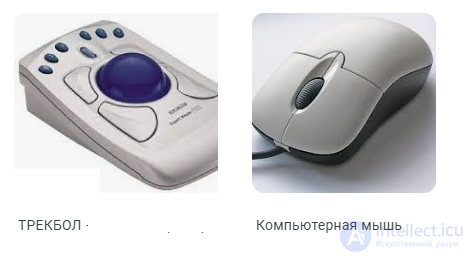
13. What advantage does a trackball have over "mouse"-type pointing devices?
- 1. A lower price
- 2. Less wrist fatigue*
- 3. More gripping positions
- 4. Lower memory resource consumption
Answer: 2
14. Which device captures a still image in a digital camera?
- 1. Film
- 2. The lens
- 3. The sensor*
- 4. The shutter
Answer: 3
Variant 3
1. The resolution of printed and scanned documents is usually measured in:
- 1. Millimeters
- 2. Centimeters
- 3. Dots per inch*
- 4. Dots per meter
Answer: 3
2. Which ports are usually used to connect a printer to a PC?
- 1. COM and LAN
- 2. PS/2 and FireWire
- 3. LPT and USB*
- 4. USB and VGA
Answer: 3
3. The printing element in dot matrix printers is:
- 1. A nozzle
- 2. A laser beam
- 3. A pin*
- 4. A drum
Answer: 3
4. Which color model do inkjet printers use for printing color images?
- 1. RGB
- 2. HSB
- 3. CMYK*
- 4. HSV
Answer: 3
5. The operating principle of dye-sublimation printers is based on:
- 1. Spraying liquid dye onto paper
- 2. The transition of solid dye into vapor, bypassing the liquid state*
- 3. The transition of powder dye into vapor
- 4. The cooling of solid dye
Answer: 2
6. Which characteristic of a scanner is the most important?
- 1. Optical resolution*
- 2. Interpolated resolution
- 3. Operating speed
- 4. Color depth
Answer: 1
7. Which of the following programs is intended for optical character recognition?
- 1. Acrobat Reader
- 2. Windows Movie Maker*
- 3. Fine Reader
- 4. Partition Magic
Answer: 3
8. Which method of destroying documents is NOT used in paper shredders?
- 1. Chemical
- 2. Acoustic*
- 3. Thermal
- 4. Mechanical
Answer: 2
9. What is the maximum information reception speed when using an analog modem?
- 1. 40 Kbit/s
- 2. 45 Kbit/s
- 3. 56 Kbit/s*
- 4. 64 Kbit/s
Answer: 3
10. What is the maximum information reception speed for ADSL modems?
- 1. 12 Mbit/s
- 2. 16 Mbit/s
- 3. 24 Mbit/s*
- 4. 32 Mbit/s
Answer: 3
11. An ADSL splitter is designed for:
- 1. Increasing the information reception speed of an ADSL modem
- 2. Increasing the information transmission speed of an ADSL modem
- 3. Separating the signal into low-frequency (voice) and high-frequency (data transmission)*
- 4. Reducing interference on the subscriber's telephone line
Answer: 3
12. Which device should NOT be in a surge protector?
- 1. A varistor
- 2. An LC filter
- 3. A fuse
- 4. A rechargeable battery*
Answer: 4
13. An advantage of uninterruptible power supplies built on the standby scheme (Off-line) is:
- 1. A non-sinusoidal output voltage waveform
- 2. The absence of switching time to battery power
- 3. Low price*
- 4. The small weight of the rechargeable battery
Answer: 3
14. A network switch is designed for:
- 1. Amplifying a weakened signal
- 2. Connecting several nodes of a computer network*
- 3. Creating a wireless network
- 4. Determining the shortest routes for transmitting a signal
Answer: 2
15. The topology of a computer network is:
- 1. The type of cable used to organize the network
- 2. The physical arrangement of the network's computers relative to each other and the way they are connected by lines*
- 3. The method of crimping a network cable
- 4. The throughput of the entire network
Answer: 2
16. Which memory is non-volatile?
- 1. Flash memory
- 2. A diskette
- 3. A hard drive
- 4. All answers are correct*
Answer: 4
17. In which type of printer is toner used as the dye?
- 1. In inkjet
- 2. In dot matrix
- 3. In laser*
- 4. In dye-sublimation
Answer: 3
18. Scanners can be:
- 1. Mechanical and optical
- 2. Handheld and flatbed*
- 3. Dot matrix and laser
- 4. Mechanical and automatic
Answer: 2
19. In which type of monitor is an electron gun used?
- 1. In liquid crystal ones
- 2. In those based on the cathode-ray tube*
- 3. In plasma panels
- 4. In OLED monitors
Answer: 2
20. In which type of printer is the principle of printing with ink droplets used?
- 1. In dot matrix
- 2. In inkjet*
- 3. In dye-sublimation
- 4. In laser
Answer: 2
I hope these test questions will help you check your knowledge in the field of information systems!
See also
- [[b8535]]
- [[b5925]]
- [[b630]]
See also



Comments