
Lecture
Это окончание невероятной информации про .
...
countries.
E
Epic (Gk. - word, tale, narrative) - a genre of imaginative literature that gives, in narrative form, a coherent account of events, presented objectively from the standpoint of a narrator. Oral epic includes fairy tales, traditions, myths, legends, sagas, byliny, and the like. Written epic includes the novel, the novella, the short story, the tale, and the like.
The Age of Maitreya (Maidari) - according to the conceptions of Tibetan Buddhism and Lamaism, the age of the coming of the future Buddha and savior of humanity, who will strike down evil and restore divine justice on earth.
Eschatology (Gk.) - religious doctrine concerning the end of the world, the meaning and completion of earthly history, and the final destinies of the individual and of humanity.
YA
Paganism - beliefs, rites, and festivals predating the appearance of monotheism, which served as "building material" for the formation of the world religions. Orthodoxy absorbed many features of pagan beliefs and cult (Yuletide, Maslenitsa/Shrovetide, the Feast of the Apple Transfiguration, the cult of bread, the cult of the birch). Paganism is currently widespread in Russia among the peoples of the North (Mari El, Yakutia (Sakha), and others).
322
APPENDIX 1
STRUCTURAL-LOGICAL DIAGRAMS
Religious studies: subject and structure
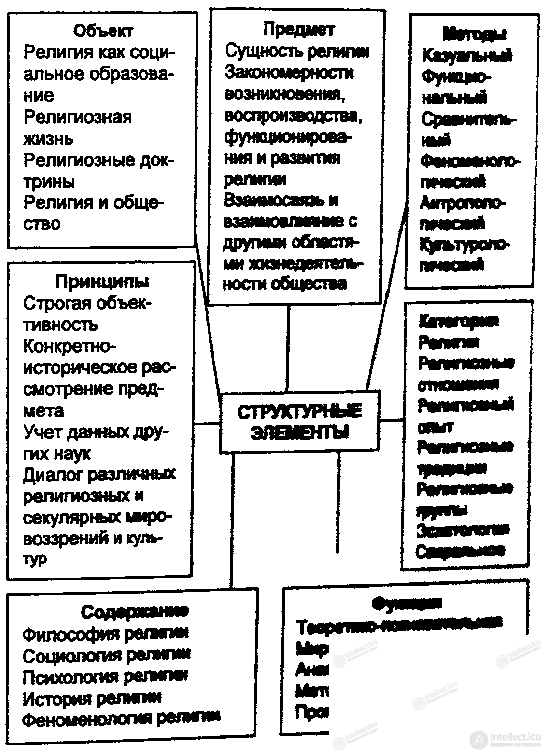
21*-1047 323
National religions
|
HINDUISM |
SIKHISM |
CONFUCIANISM |
SHINTOISM |
JUDAISM |
|
More than 700 million adherents. Region of distribution - South Asia. |
About 14 million adherents. Region of distribution - India. |
About 500 million adherents. Region of distribution - China, Korea, Japan. |
There is no exact reliable data on the number of adherents. Region of distribution - Japan. |
About 20 million adherents. Region of distribution - places where Jews live. |
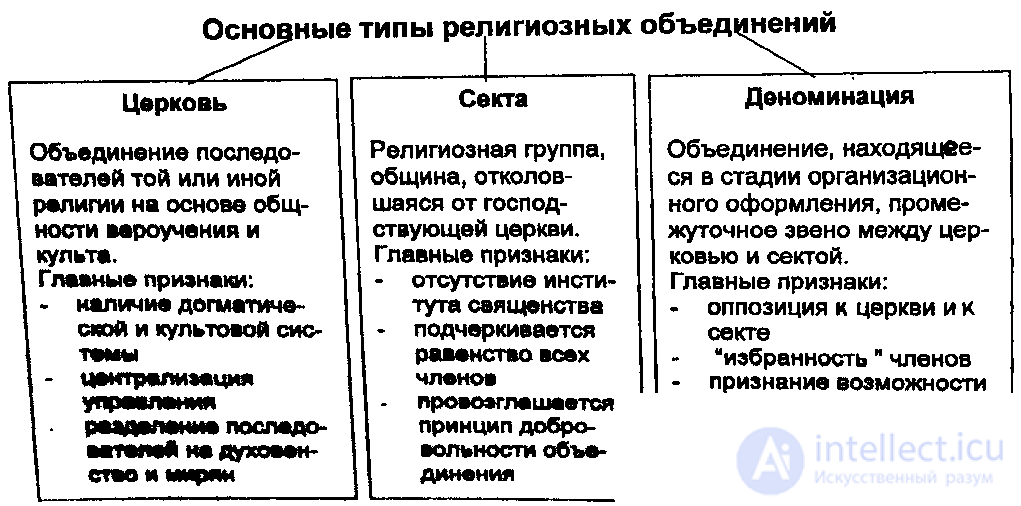
Cult as the most important type of religious activity
|
1. Content |
determined by religious conceptions, ideas, dogmas |
|
II. Object |
religious objects and forces, apprehended in the form of religious rites |
|
III. Subject |
a religious group or a believing individual |
|
IV. Means of the cult |
buildings, religious art, cult objects |
|
V. Modes of cult activity |
determined by the content of religious beliefs |
|
VI. Results of cult activity |
satisfaction of religious needs |
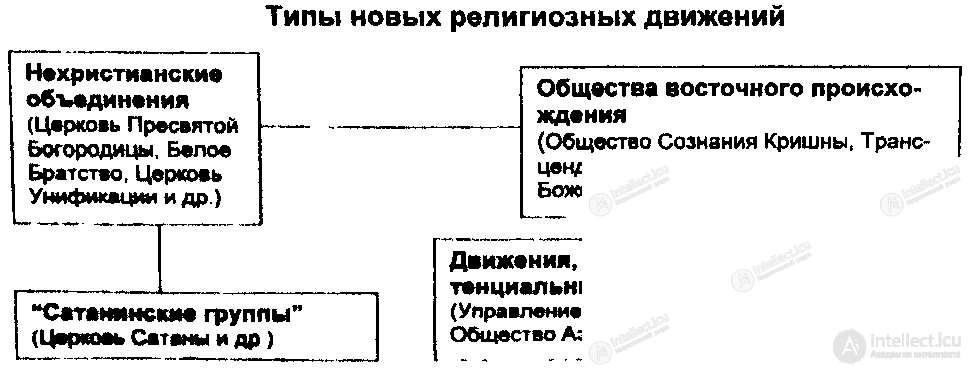
APPENDIX 2
Часть 1 Glossary of key terms
Часть 2 - Glossary of key terms
Часть 3 - Glossary of key terms
Часть 4 - Glossary of key terms

Comments