
Lecture
Instructions for answering tests in religious studies on the topic "State-Religion Relations: World and Domestic Experience" using diagrams:
Understanding key concepts:
Studying world experience:
Domestic experience:
Using diagrams:
Systematizing information:
Base your answers on academic sources:
Check your answers:
Remember to remain neutral:
By following these instructions, you will be able to produce quality answers to religious studies tests concerning state-religion relations and to visualize information using diagrams, making your answers clearer and more illustrative. Good luck!
In the tests presented, select one or more correct answers.
1. There are two main types of status that a church can hold in the state (list them):
2. The status of a state church presupposes (list them):
3. In the United Kingdom, the official state church is (indicate):
4. A number of features are characteristic of the status of a state church (list them):
5. In states where one of the religions has been declared the state religion, can other religions also exist?
6. The regime of separation of church from state is characterized by the following features:
7. At present, the following propositions are dominant in defining the understanding of the essence of freedom of conscience in domestic religious studies:
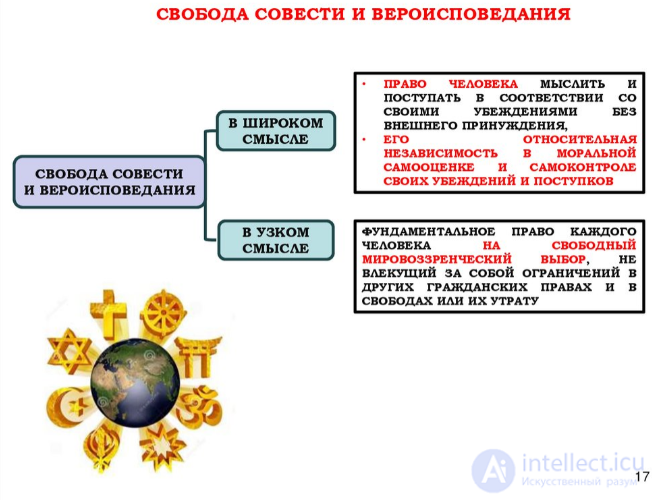
8. In the broad sense, freedom of conscience is understood as:
9. In the narrow sense, freedom of conscience is understood as:
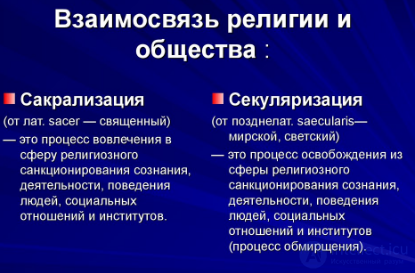
10. What is the process of sacralization of society?
11. List the varieties of freethinking.
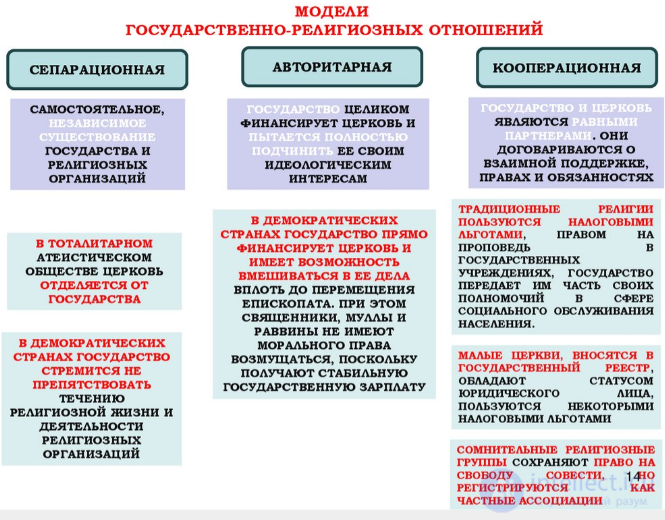
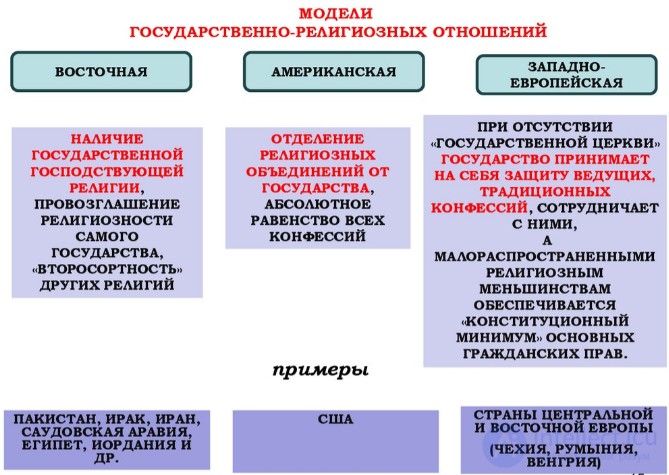
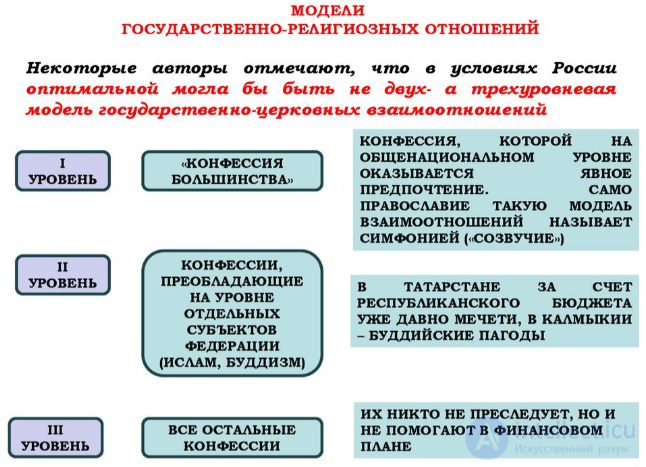
12. List the models of state-religion relations.
13. List the principles for exercising freedom of conscience.
14. What is the secularization of society?
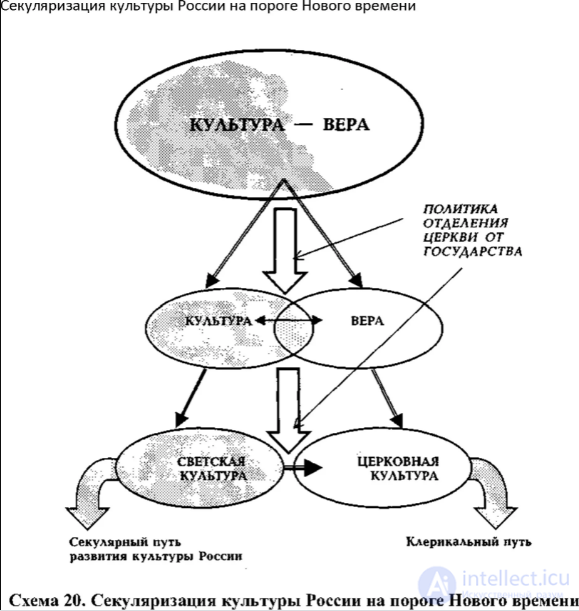
15. In what does the secular character of the Russian state manifest itself?
16. What organization is considered a local religious organization in Russia?
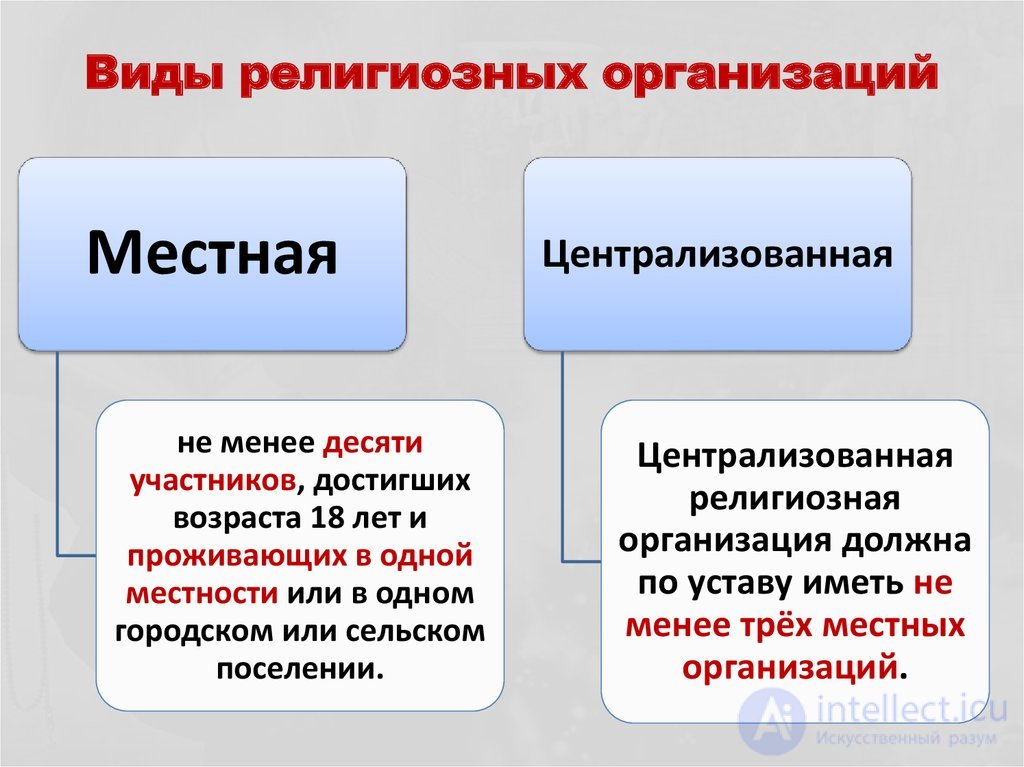
17. When is a religious organization in Russia recognized as centralized?
18. Which model of state-religion relations presupposes the existence of a dominant state religion, a proclamation of the religiosity of the state itself, and the «second-class» status of other religions?
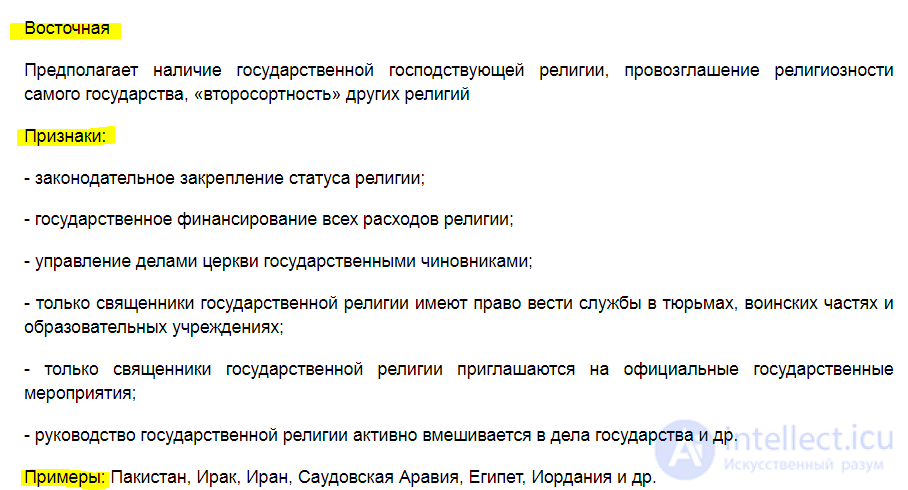
19. List the characteristics of a state religion.
20. Which model of state-religion relations emphasizes the separation of religious associations from the state and the absolute equality of all confessions?
21. Which type of model of state-religion relations is, by its situation, «cooperative»?
22. What actions, in the opinion of the Russian Orthodox Church, may it undertake in the event of a breakdown in relations with the state?
23. According to Islamic legal doctrine, is private property inviolable?
24. According to the social doctrine of adherents of the Sunni branch of Islam, which is an extremist religio-political movement (indicate):
25. In which centuries did the term «freedom of conscience» appear?
26. Which normative documents were the first to give legal interpretation to the concept of «freedom of conscience»?
27. Scholars who pushed back the boundaries of freedom of conscience and, in addition to the idea of religious tolerance and freedom in choosing one's religion, added the notion of freedom from religion (list them):
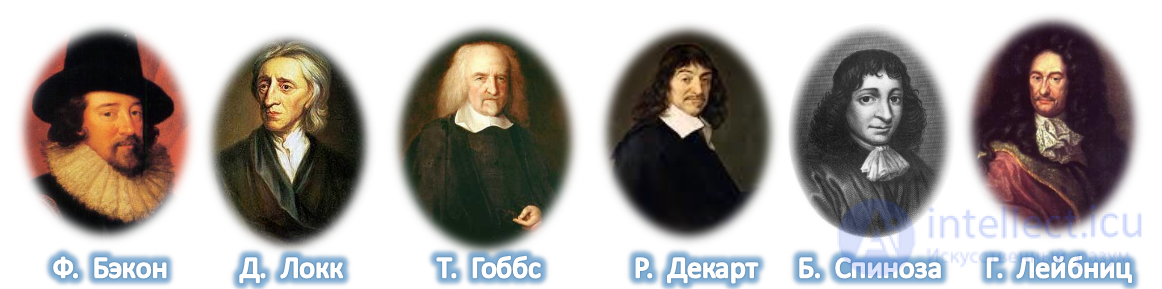
28. The scholar who, in 1763, proclaimed that freedom of conscience is a right which man received from nature, and that no one can compel him in matters of faith (indicate):
29. Can religion be imposed on society by the state through force?
In the tests presented, fill in the blanks with the words you believe fit best. Observe the case and declension indicated in the sentences.
1. There are three main contemporary models of relations between the state and religious organizations: the «eastern», the ………………………….. and the «western European».
2. Orthodoxy holds that the state, as a necessary element of life in a world corrupted by sin, in which the individual and society need protection from the dangerous manifestations of sin, is blessed by ………………………...
3. The Russian Orthodox Church holds the view that legal sovereignty over the territory of the state belongs to its ……………………….
4. Freedom of conscience ultimately turns the state into an exclusively earthly institution, one that does not bind itself with ……………………… obligations.
5. In their doctrine, Buddhists take the earthly and the real as their starting point, elevate ……………………… to the absolute, make it the fundamental law of all existence, and promise, as a reward for bearing it without complaint, non-existence, nirvana.
6. Buddhism considered the most effective factor of salvation, even during one's lifetime, to be going beyond the bounds of real society, that is, entering the ………………….. – the monastic order.
7. Secularization means ______ : that which belonged to faith and the church becomes, over time, independent of them, secular.
8. The principle of «freedom of conscience» came into use in the Modern era and is rooted in the Enlightenment ideas of the ……… - 18th centuries.
9. In Russia, up until the beginning of the …….. century, the law obliged all subjects of the Russian Empire to profess one religion or another; a «non-confessional status» was not permitted, and criticism of religion, as blasphemy, was punishable by hard labor.
10. The ideological dispute between atheism and religious faith was one the Soviet state, led by the CPSU, tried to resolve by means of ___ measures.
11. Freedom of conscience implies that religious organizations must not take part in the activities of _A_ or fund them, but the ministers of these organizations have the right to participate in __B__ activity on an equal footing with all citizens.
12. According to international obligations and current legal acts, including the «Declaration on the Elimination of All Forms of Intolerance and of Discrimination Based on Religion or Belief», adopted by the UN General Assembly in …………… , discrimination against people on the basis of ………………… or belief is regarded as an affront to the dignity of the human person and a denial of the principles of the UN Charter, and is condemned as a violation of the human rights and fundamental freedoms proclaimed in the Universal Declaration of Human Rights (…………….. ).
13. The secular character of state schooling in a country distinguished by multi-confessionalism and by the presence of a very significant portion of the population that professes no religion or holds atheistic convictions presupposes, as a necessary precondition for its implementation, ___ worldview tolerance.
OPEN-ENDED TEST WITH ONE CORRECT ANSWER
In the crossword presented, fill in the cells with the words that, in your opinion, best answer the questions (phrases, statements) posed. Observe case and declension.

|
Across: 3. A religion whose social doctrine follows directly from its teachings. 5. The scholar who, in 1763, proclaimed that freedom of conscience is a right which man received from nature, and that no one can compel him in matters of faith. 6. A religion whose social doctrine has remained unchanged for many centuries. 7. In whose country's declaration were the principles of freedom of conscience formulated by Voltaire reflected. 8. Secularization means … . 10. Liberation from the influence of religion. |
|
Down: 1. Which model of state-religion relations requires the erection of a so-called wall between the state and religious organizations and emphasizes the separation of religious associations from the state, and the absolute equality of all confessions. 2. The process of being drawn into the sphere of religious influence. 4. In whose constitution was the principle of freedom of conscience reflected in 1787. 9. The scholar who added to the idea of religious tolerance and freedom in the choice of religion the notion of freedom from religion. |
SUPERVISED TRAINING ASSIGNMENTS
In the assignments presented, indicate the correct formulations (statements).
Assignment No. 1
1. An analysis of legislation and practice makes it possible to identify two main types of church status in the state: the state church, which entrenches its privileged position compared with other faiths; and the regime of the parallel development of the church in the state and the school.
2. An analysis of legislation and practice makes it possible to identify two main types of church status in the state: the state church, which entrenches its privileged position compared with other faiths; and the regime of separation of church from state and school from church.
3. An analysis of legislation and practice makes it possible to identify two main types of church status in the state: the state church, which entrenches its special position compared with secular organizations; and the regime of separation of church from state and school from church.
Assignment No. 2
1. Under the status of a national church, it is granted a number of legal powers and has the right to register marriage, birth, and death, and in some cases to regulate marriage and family relations.
2. Under the status of a state church, it is granted a number of legal powers and has the right to register marriage, birth, and death, and in some cases to regulate marriage and family relations.
3. Under the status of an ancestral church, it is granted a number of legal powers and has the right to register marriage, birth, and death, and in some cases to regulate marriage and family relations.
Assignment No. 3
1. In 28 Muslim countries, Islam is officially recognized as the state religion.
2. In 35 Muslim countries, Islam is officially recognized as the state religion.
3. In 45 Muslim countries, Islam is officially recognized as the state religion.
Assignment No. 4
1. In states where one of the religions has been declared the state religion, other religions cannot exist.
2. In states where one of the religions has been declared the state religion, other religions can exist, but their status is more restricted compared with the official church.
3. In states where one of the religions has been declared the state religion, other religions can exist with only a minor restriction of their status compared with the official church.
Assignment No. 5
1. In some countries, formal equality of all religions has been established, which is a sign of a democratic society (Ireland, Argentina), since it entrenches intolerance toward other religions.
2. In some countries, formal equality of all religions has been established, which is a sign of a democratic society (Ireland, Argentina), since it entrenches tolerance toward other religions.
3. In some countries, formal equality of all religions has been established, which is a sign of a totalitarian society (Ireland, Argentina), since it entrenches tolerance toward other religions.
Assignment No. 6
1. The regime of separation of church from state is most often driven by a desire to give the church a monopoly on performing ideological and integrative functions, since the church possesses a powerful potential for influencing people's consciousness.
2. The regime of separation of church from state is most often driven by a desire to deprive the church of its monopoly on performing ideological and integrative functions, since the church possesses a powerful potential for influencing people's consciousness.
3. The regime of separation of church from state is most often driven by a desire to partially restrict the church's monopoly on performing ideological and integrative functions, since the church possesses a powerful potential for influencing people's consciousness.
Assignment No. 7
1. The formation of the Soviet state was based on the Marxist understanding of freedom of conscience and on the theoretical position regarding the destruction of the old bourgeois state machine, which presupposed the reunification of the political ties between state and church.
2. The formation of the Soviet state was based on the Marxist understanding of freedom of conscience and on the theoretical position regarding the destruction of the old bourgeois state machine, which presupposed a partial severance of the political ties between state and church.
3. The formation of the Soviet state was based on the Marxist understanding of freedom of conscience and on the theoretical position regarding the destruction of the old bourgeois state machine, which presupposed the elimination of the political ties between state and church.
Assignment No. 8
1. The decree of the Soviet government of January 23, 1918 deprived the church of its economic base, establishing that all church and religious societies had no right to own property.
2. The decree of the Soviet government of January 23, 1945 deprived the church of its economic base, establishing that all church and religious societies had no right to own property.
3. The decree of the Soviet government of January 23, 1991 deprived the church of its economic base, establishing that all church and religious societies had no right to own property.
Assignment No. 9
1. During the Great Patriotic War of 1941-1945, a special governmental act in 1941 granted religious organizations the right, with the permission of state bodies, to build, rent, or purchase premises needed for their purposes, to acquire vehicles, to open special theological schools, to train clergy, to set up workshops for manufacturing cult objects, and to publish religious literature.
2. During the Great Patriotic War of 1941-1945, a special governmental act in 1943 granted religious organizations the right, with the permission of state bodies, to build, rent, or purchase premises needed for their purposes, to acquire vehicles, to open special theological schools, to train clergy, to set up workshops for manufacturing cult objects, and to publish religious literature.
3. During the Great Patriotic War of 1941-1945, a special governmental act in 1944 granted religious organizations the right, with the permission of state bodies, to build, rent, or purchase premises needed for their purposes, to acquire vehicles, to open special theological schools, to train clergy, to set up workshops for manufacturing cult objects, and to publish religious literature.
Assignment No. 10
1. The regime of separation of church from state means the absence of any control by the state over the activities of religious organizations. The state refrains from legally regulating their status and activities.
2. The regime of separation of church from state does not mean the absence of any control by the state over the activities of religious organizations. The state refrains from legally regulating their status and activities.
3. The regime of separation of church from state does not mean the absence of any control by the state over the activities of religious organizations. The state does not refrain from legally regulating their status and activities.
Assignment No. 11
1. The regime of separation of church from state does not presuppose legal regulation of the activities of religious organizations, which ensures a certain balance in church-state relations and allows the church and the state to cooperate in resolving social issues.
2.The regime of separation of church from state presupposes legal regulation of the activities of religious organizations, which does not ensure a certain balance in church-state relations and does not allow the church and the state to cooperate in resolving social issues.
3. The regime of separation of church from state presupposes legal regulation of the activities of religious organizations, which ensures a certain balance in church-state relations and allows the church and the state to cooperate in resolving social issues.
Assignment No. 12
1. Freedom of conscience is classified among universal human values.
2. Freedom of conscience is classified among spiritual values.
3. Freedom of conscience is classified among social values.
Assignment No. 13
1. A distinction is drawn between a «broad» and a «narrow» understanding of freedom of conscience: in the broad sense, freedom of conscience is understood as the freedom of a person's convictions with respect to a specific faith, while in the narrow sense it is a person's attitude toward religion and atheism.
2. A distinction is drawn between a «broad» and a «narrow» understanding of freedom of conscience: in the broad sense, freedom of conscience is understood as the freedom of a person's convictions in general, while in the narrow sense it is a person's attitude toward faith and atheism.
3. A distinction is drawn between a «broad» and a «narrow» understanding of freedom of conscience: in the broad sense, freedom of conscience is understood as the freedom of a person's convictions in general, while in the narrow sense it is a person's attitude toward religion and atheism.

Comments