
Lecture
Lecture Plan
1. The origin and evolution of Taoism. Taoist literature. The teaching of Dao and de. The teaching of qi. The principles of wu wei.
2. The teaching of immortality and the paths to attaining it.
3. Astral cults, astrology, sacrifices. The pantheon of Taoism. The organization and structure of the Taoist priesthood.
4. Taoism and Buddhism.
Taoism is a philosophical-religious current of traditional China, one of its main «three teachings» (san jiao), representing in this triad the primary alternative to Confucianism as a philosophy and Buddhism as a religion.
It was first defined as an integral ideological formation under the name «school of the Path and Virtue» (dao de jia), reproducing the title of the foundational Taoist treatise «Canon of the Path and Virtue (Dao De Jing)», among a series of six schools (liu jia) by Sima Tan (2nd century BCE) and recorded by his son Sima Qian (2nd-1st centuries BCE) in the concluding, 130th chapter of the first dynastic history «Shiji (Records of the Grand Historian)». This name was shortened to the binomial «school of the Path» (dao jia), which has survived to this day, in the expanded classification of philosophical schools by Liu Xin (46 BCE – 23 CE), which formed the basis of China's oldest classificatory-bibliographic catalogue «Yi Wen Zhi (Treatise on Arts and Literature)», which became the 30th chapter of the second dynastic history «Han Shu (Book of [the dynasty of] Han)», compiled by Ban Gu (32-92).
Among both classifications that became official and classical, comparable in duration of existence and degree of development are Confucianism and Taoism. The term «dao» («the Way»), which determined its name, is as much broader than the specifics of Taoism as the term «ru» is broader than the specifics of Confucianism. Moreover, despite the maximal mutual antinomy of these ideological currents, both early Confucianism and, later, Neo-Confucianism could be called the «teaching of dao» (dao jiao, dao shu, dao xue), while adherents of Taoism could be included in the category of ru. Accordingly, the term «adept of dao» (dao ren, dao shi) was applied not only to Taoists but also to Confucians, as well as to Buddhists and alchemist-magicians.
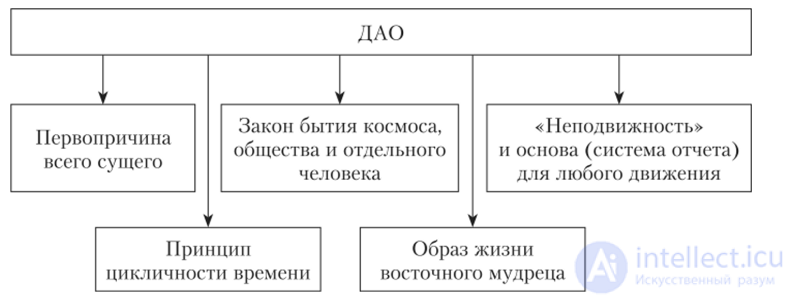
Fig. 5.2. The structure of the concept of Dao
Connected with this last circumstance is the problem of the relationship between the philosophical-theoretical and religious-practical hypostases of Taoism. According to the traditional Confucian version, which prevailed in the West at the end of the 19th and beginning of the 20th century, these are phenomena of different orders and heterogeneous, corresponding to different designations: for philosophy – the «school of dao» (dao jia), for religion – the «teaching (veneration) of dao» (dao jiao). In the historical aspect, this approach assumes that originally, in the 6th-5th centuries BCE, Taoism arose as a philosophy, and then by the 1st-2nd centuries, either as a result of the patronizing
|
influence of imperial power at the end of the |
3rd – |
beginning of the 2nd century BCE, |
|
or in imitation of the Buddhism that had begun to penetrate |
into China |
radically |
transformed into a religion and mysticism, retaining with its original form only nominal commonality.
|
In essence, this model is analogous |
to the traditional |
conception |
|
|
of the development |
of Confucianism, which arose in the 6th-5th centuries BCE |
as |
philosophy, |
|
and by the 1st-2nd centuries |
CE transformed |
into an official |
religious- |
philosophical doctrine, which some sinologists propose to regard as an ideological system distinct from and independent of original Confucianism («sinistic» or «imperial»). The ideological basis of this system, broader than Confucianism proper, was formed by pre-Confucian religious beliefs and worldview conceptions, which Confucianism incorporated in the process of rationalizing adaptation to its own concepts.
In Western sinology of the second half of the 20th century, a theory prevailed according to which Taoist philosophy similarly arose on the basis of a proto-Taoist religious-magical culture of a shamanic type, localized in the south of China, in the so-called «barbarian kingdoms» (primarily Chu), which were not part of the circle of the Central States considered the cradle of Chinese civilization (hence the idea of China as the Middle Kingdom). According to this theory, pioneered by the French sinologist H. Maspero (1883-1945), Taoism represents
|
a unified teaching? |
and its |
philosophical |
hypostasis, |
expressed |
above all |
|
in the classical |
triad |
of texts: «Dao |
De Jing |
(Canon of the Path |
and Virtue)», |
«Zhuangzi ([The Treatise of] Master Zhuang)», «Liezi ([The Treatise of] Master Lie)», was a reaction to the rationalistic Confucian culture localized in the North, in the Central States.
The fundamental difference between the Taoist mystical-individualistic naturalism and the ethical-rationalistic sociocentrism of all the other leading worldview systems in China during the period of the formation and flourishing of the «hundred schools» prompts some specialists to strengthen the thesis of the peripheral origin of Taoism into an assertion of foreign (primarily Indo-Iranian) influence, according to which its Dao turns out to be a kind of analogue of Brahman and even of the Logos. Opposed to this view is a standpoint according to which Taoism is an expression of the Chinese spirit itself, since it represents the most developed form of a national religion. This view is held by the leading Russian scholar of Taoism, E.A. Torchinov, who divides the history of its formation into the following stages.
1. From the most ancient times to the 4th-3rd centuries BCE, the formation of religious practice and worldview models occurred on the basis of archaic shamanistic beliefs. 2. From the 4th-3rd centuries BCE to the 2nd-1st centuries BCE, two parallel processes proceeded: on the one hand, the Taoist worldview acquired a philosophical charac-
|
ter and written fixation, |
Taoist |
worldview, on the other |
hand, |
|
the methods of «attaining immortality» developed covertly and esoterically |
the methods of «attaining immortality» |
||
|
and psycho-physiologized |
meditation of a yogic type, |
implicitly |
and fragmentarily reflected in the classical texts. 3. From the 1st century BCE to the 5th century CE, a convergence and merging of the theoretical and practical divisions took place, incorporating the achievements of other philosophical directions (above all the numerology of the Zhou Yi, Legalism, and partly Confucianism), which was expressed in the implicit material acquiring an explicit form and written fixation as a unified Taoist worldview, whose previously hidden components came to appear as fundamental innovations. 4. During this same period, the institutionalization of Taoism took place in the form of religious organizations of both «orthodox» and «heretical» directions, and the canonical collection of its literature, the «Dao Zang (Treasury of Dao)», also began to take shape. The further development of Taoism proceeded mainly in its religious aspect, in which Buddhism, as its main competitor in this sphere, played a major stimulating role.
Original Taoism, represented by the teachings of Lao Dan, or Laozi (traditional dating of his life: c. 580 – c. 500 BCE, modern: 5th-4th centuries BCE), Zhuang Zhou, or Zhuangzi (399-328 – 295-275 BCE),
Le Yukou, or Liezi (c. 430 – c. 349 BCE), and Yang Zhu (440-414 – 380-360 BCE), and reflected in the works named after them: Laozi (or Dao De Jing), Zhuangzi, Liezi, Yang Zhu (chapter 7 of Liezi), as well as the Taoist
|
sections |
of the encyclopedic treatises Guanzi, |
Lüshi Chun |
||
|
qiu and Huainanzi, |
created |
the most |
profound |
and original |
|
ontology in ancient Chinese philosophy. |
|
|
||
|
Its |
essence was fixed in the new |
content of the paired categories |
||
|
«dao» |
and »de», |
which formed one of the first names of Taoism as the |
||
|
«school of dao |
and de» |
and to which |
the main Taoist treatise «Dao |
De Jing» is devoted. In it, dao is presented in two main hypostases: 1) solitary, separated from everything, permanent, inactive, abiding in rest, inaccessible to perception and verbal-conceptual expression, nameless, generating «absence/non-being» (wu), giving rise to Heaven and Earth; 2) all-embracing, all-penetrating, like water; changing together with the world, active, accessible to «passage», perception and cognition, expressible in a »name/concept» (ming), sign and symbol, generating «presence/being» (you), being the ancestor of the «myriad things».
In addition, the just, «heavenly» dao and the vicious, «human» dao are opposed to one another, and the possibility of departures
|
from dao |
and even of its total absence in All-under-Heaven is recognized. As the |
«beginning», |
|
|
«mother», «ancestor», «root», «rootstock», dao genetically precedes everything in the world, including the «lord», and is described as an undifferentiat-
|
ed unity, a «mysterious identity», containing within itself all |
things |
|
and symbols in the state of «pneuma» (qi) and seed (jing), i.e. a «thing», |
manifest- |
ing itself in the form of a thing-less (objectless) and formless symbol, which in this aspect is emptily all-encompassing and equal to the all-penetrating «absence/non-being». At the same time, «absence/non-being» and, consequently, dao is interpreted as the active manifestation of «presence/being». The genetic
|
superiority of «absence/non-being» over |
«presence/being» |
is removed |
|
in the thesis of their mutual generation. Thus, dao |
in the »Dao |
De Jing» |
represents the genetic and organizing function of the unity of «presence/being» and »absence/non-being», of subject and object. The main law of dao is reversal, return, i.e. circular motion, characteristic of heaven, which was traditionally conceived as round. As that which follows only its own nature, dao is opposed to the dangerous artificiality of «instruments» and the harmful supernaturalness of spirits, while at the same time determining the possibility of both.
De – «Virtue» is defined in the »Dao De Jing» as the first stage of the degradation of dao, at which «things» born of dao are formed and further mo-
|
ve downward: «When the Path |
(dao) is lost, virtue (de) follows. |
|
When virtue is lost, humaneness follows. |
When humaneness is lost, |
due righteousness follows. When due righteousness is lost, propriety follows. Propriety [means] a weakening of loyalty
and trustworthiness, and also the beginning of disorder» (§ 38). The fullness of »virtue», whose nature is «mysterious» (xuan), makes a person like a newborn infant who, «not yet knowing the union of male and female, raises his member», demonstrating the «utmost of seminal essence», or the «perfection of the seminal spirit» (§ 55).
With such a naturalization of ethics, the «virtuousness of good» (de shan) presupposes an equal acceptance of both good and not-good as good (§ 49), which is the opposite of the principle put forward by Confucius of repaying «good with good» and »straightness for injury» («Analects», XIV, 34/36). From this follows
an understanding of the whole of «culture» that is opposite to the Confucian one: «The cutting off of sagacity and the rejection of cleverness/cunning (zhi) [means] the people obtaining a hundredfold benefit. The cutting off of humaneness and the rejection of due righteousness [means] the people's return to filial piety and parental love. The cutting off of craftsmanship
and the rejection of profit [means] the disappearance of robbery and theft. These three [phenomena] are not enough for culture, so it is also necessary to have manifest simplicity and hidden pristineness, small private interests and few desires» («Dao De Jing», § 19).
In the «Zhuangzi», the tendency to bring dao closer to »absence/non-being» is intensified, the highest form of which is «the absence [even of the traces] of absence» (wu
wu). A consequence of this was a thesis, diverging from the Dao De Jing and later becoming popular, according to which dao,
not being a thing among things, makes things things. In the «Zhuangzi», notions of the unknowability of dao are intensified: «A completion of which it is unknown why it is so is called dao». At the same time, the ubiquity of dao is maximally emphasized, which not only «passes (xing3) through the myriad things», forms space and time (yu zhou), but is also present in banditry and even in feces and urine. Hierarchically, dao is placed above the «Great Ultimate» (tai ji), but already in the »Lüshi Chunqiu» it, as the «ultimate seed», is identified both with the »Great Ultimate» and with the »Great One» (tai yi). In the Guanzi, dao is interpreted as the natural state of the «seminal», «most subtle», «essential», «spirit-like» pneuma (qi), which is differentiated neither by »bodily forms» (xing) nor by »names/concepts» (ming), and is therefore «emptily non-existent» (xu wu). In the Huainanzi, «absence/non-being» is presented as the «bodily essence» of dao and the active manifestation of the myriad things. Dao, manifesting itself in the form of «Chaos», «the Formless», «the One», is here defined as «contracting space and time» and being non-localizedly situated between them.
The basic principles of the first Taoist thinkers – «naturalness»
(zi ran) and »non-action» (wu wei), signifying a rejection of deliberate, artificial, nature-transforming activity and a striving for spontaneous conformity with natural spontaneity up to complete merging with it in the form of self-identification with the presupposition-less and purposeless Path-dao dominant in the world: «Heaven is enduring, earth is long-lasting. Heaven and earth are enduring and long-lasting because they do not live for themselves, and therefore are able to live long. On this basis, the sage places his person last, and yet is himself first; he casts aside his person, and yet it is preserved» («Dao De Jing», § 7). The relativity of all human values, revealed by such an approach, giving rise to a relativistic «equality» of good and evil, life and death, ultimately led logically to an apology for cultural entropy and quietism: «The true man of old knew neither love of life nor hatred of death; he did not rejoice at his appearance [in the world] nor resist his departure [from life]; indifferently he left [this world] and indifferently he came into it, and that was all. He did not forget what was, for him, the beginning, and did not seek to find out what [constituted] his end. Receiving [life], he rejoiced in it; forgetting [about death], he returned [to non-being]. This means that he did not resort to reason to oppose dao, and did not resort to the human to help the heavenly» («Zhuangzi», ch. 6).
However, at the turn of the new era, the previously highly developed philosophy of Taoism appeared united with newly born or resurfaced religious, occult and magical teachings aimed at the maximal, supernatural increase of the vital forces of the organism and the attainment of longevity or even immortality. The theoretical axiom of primordial Taoism – the equal value of life and death, given the ontological priority of meonic non-being over present being – at this stage of its development was replaced by a soteriological recognition of the supreme value of life and an orientation toward various types of corresponding practice, from dietetics and gymnastics to psychotechnique and alchemy. The entire further evolution of Taoism proceeded in this philosophical-religious form, its influence fertilizing science and art in medieval China and neighboring countries.
One of the ideological bridges from original Taoism to its subsequent hypostasis was laid by Yang Zhu, who emphasized the significance of individual life: «That which makes all things different is life; that which makes them the same is death» («Liezi», ch. 7). The designation of his conception of autonomous existence – «for oneself», or «for the sake of one's own self» (wei wo) – according to which «one's own body is undoubtedly the main thing in life» and for the benefit of All-under-Heaven there is no sense in «losing even a single hair», became synonymous with egoism, which the Confucians opposed to the disorderly altruism of Mo Di that violated ethical-ritual propriety, and equally rejected.
According to Feng Youlan, Yang Zhu personifies the first stage in the development of early Taoism, i.e. an apology for self-preserving escapism, going back to the practice of hermits who left the harmful world for the sake of «preserving their purity». The sign of the second stage was the main part of the Dao De Jing, in which an attempt is made to comprehend the unchanging laws of universal change in the Universe. In the principal work of the third stage – the «Zhuangzi» – an even further-reaching idea is fixed of the relative equivalence of the changing and the unchanging, of life and death, of self and non-self, which logically led Taoism to the self-exhaustion of the philosophical approach and stimulated a religious orientation, which was also supported by the contradictorily-complementary relations with Buddhism. In the further course, the philosophy of Taoism not only fertilized the development of Chinese Buddhism, but also played a substantial role in the formation of the «teaching of the mysterious» and of Neo-Confucianism.
The Taoist doctrine of immortality (or more precisely, its interpretation by various theoreticians of Taoism) underwent certain changes over the course of the historical development of this religion. At the same time, the entire basic set of ideas and concepts underlying this doctrine remained unchanged, being an invariant of all the historically changing variants of its interpretation. The teaching of the attainment of immortality became the soteriological goal of Taoism owing to the absence, in the ancient Chinese religion, of any developed teaching on the immortality of the soul. At the same time, the most ancient conceptions of the afterlife, for all their rudimentariness and amorphousness, were reflected to a certain extent in Taoism, becoming both the ideological soil on which the Taoist doctrine was formed and that from which Taoism repelled itself.
The duality of Taoism as the national religion of China consisted in the fact that, on the one hand, it was closely connected with archaic beliefs, while on the other hand it repelled itself from them, refusing to recognize these beliefs and conceptions in their immediacy and passing their content through its own reflective thought. In this connection it should be noted that the amorphous and vague conceptions, if not of immortality then at least of the survival of the soul after the death of the body, which existed in antiquity and were preserved in folk beliefs, not only never (at least prior to Buddhism, which stimulated discussions of the indestructibility of the spirit) became an object of philosophical reflection, but were also actively refuted by the authors of philosophical treatises. Already for this reason, Taoism, having emerged from the totality of archaic religiosity, not only did not follow the path of developing these conceptions, but on the contrary opposed to them, as well as to the enlightened skepticism of thinkers of the Wang Chong type, its own doctrine of the immortality of the human being as an integral psychosomatic organic unity. At the same time, this specifically Taoist doctrine had roots in archaic religion – in the cult of longevity characteristic of the Zhou people, the ecstatic shamanism of Chu, and the cult of celestial beings of the kingdoms of Qi and Yan.
Taoism created its own teaching of physical immortality: 1) owing to the underdevelopment of a teaching on spiritual immortality in ancient China; 2) because the philosophical tradition negatively assessed the rudiments of such a teaching, qualifying them as «vulgar and base», which made it unpromising for Taoism to develop the existing foundations of the corresponding belief; 3) the existence of prerequisites for belief in physical immortality through the endless prolongation of life, a change of one's status in shamanic ecstasy, or a visit to the «isles of the blessed», possessing potions for the prolongation of life; 4) the existence of a close connection of Taoist thought with ancient mythopoetic thinking (see a number of whose features (for example, the construal of the micro- and macrocosm as isomorphic systems) stimulated the development of the Taoist theory of immortality. Thus, the Taoist doctrine of immortality can be neither reduced to archaic religiosity nor opposed to it. The Taoist religious doctrine, like Taoist philosophy, arose during a period of crisis of archaic religion and the mythological thinking that nourished it. This period of crisis, transition and superposition of archaic and new ideological forms and modes of thinking is precisely what is fixed in the Taoist teaching – a complex and multifaceted historico-cultural phenomenon.
Even before the penetration of Buddhism into China, the rudiments of a belief in an afterlife arose there. The overwhelming majority of texts, including Taoist ones, spoke of retribution (bao) either in the earthly life of the person himself who had committed one act or another, or of the transfer of retribution onto his descendants – the shortening of the lifespan was usually considered the punishment for deeds. Nevertheless, belief gradually appeared in a deity of Mount Taishan who judges the souls of the dead, and in subterranean abodes located apparently beneath Mount Taishan, Gaoli, and Liangfu. Later these conceptions merged with the Buddhist teaching of retribution, which led to the formation of the image of Yanluowang (Yamaraja) and the gradual penetration of this and other similar images into Taoism proper, which becomes noticeable from the time of the activity of Tao Hongjing (5th-6th centuries).
In developing its soteriological doctrine, Taoism, on the one hand, proceeded from the established approach to the problem of the afterlife, essentially denying the possibility of the soul's immortality, while on the other hand it repelled itself both from archaic religiosity, with its practically absent soteriology, and from philosophical teachings that fundamentally rejected the possibility of a soteriological approach to the corresponding problematic. As a result, within Taoism a unique doctrine took shape of the possibility of attaining immortality as the unlimited-in-time existence of the psychosomatic personality, conjoined with a rise in its status through union with dao as the substantial, normative and generative foundation of the cosmos. It should be noted that the teaching of attaining immortality arose long before the formation of organized Taoism, in parallel with the formulation of the philosophy of Laozi and Zhuangzi, and as partially connected with it. In any case, much in the «Zhuangzi» indicates the influence on the author of this text of the cult of shenxian. However, initially the cult of immortal saints remained one of the variants of folk belief and only gradually, in the process of integration of various typologically related ideological currents that led to the formation of Taoism proper as an organized religion, did it become the doctrinal core of this religion.
The main stages in the formation of the doctrine of immortality: 1. The presence, in the religious beliefs of the magi – the fangshi of the kingdoms of Qi and Yan – of conceptions of the existence of isles inhabited by immortal beings. 2. The appearance of belief in the possibility of prolonging life and attaining immortality as a result of visiting these isles and obtaining the corresponding potions there. 3. Recognition of the possibility of people manufacturing an elixir of immortality. 4. The contamination of the Qi-Yan tradition with the Zhou cult of longevity, on the one hand, and the ecstatic tradition of Chu shamanism, on the other. The formation of two ideals of immortality: «worldly» prolongation of life and a radical change of the status of an immortal. 5. The union of belief in the attainment of immortality with the religious philosophy of the Dao De Jia schools (the teaching of the «Dao De Jing» and the «Zhuangzi») and of the naturalist philosophers, the Yin-Yang Jia. The doctrinal formulation of the idea of immortality and its religious interpretations. 6. The development of the theory of immortality and the corresponding practice (the alchemical complex). The gradual spiritualization of the ideal of the immortal.
When turning to the early Taoist texts (the «Zhuangzi» is most illustrative here, as a narrative, in contrast to the laconically aphoristic «Dao De Jing»), one can note two planes in the treatment of the opposition «life – death». The first plane removes the very problem of death, viewing it as a phase of life, of an endless process of change. Strictly speaking, death is merely one of the changes in the continuum of existence. Later, Jia Yi, in his ode «The Owl», would say: «Life is like sailing with the current, death is merely a rest along the way». Hence also the image, going back to the «Zhuangzi» but developed by Jia Yi, of the cosmos as a gigantic smelting furnace, recasting beings and the entire totality of existence from one form into another, and death
– being only one of such «recastings»:
«Heaven and Earth may be compared to a blazing furnace. Transformations and changes perform the work, coal is the forces of yin-yang, everything in the world is boiling bronze. Now the fire dies down, now it flares up again, the cosmic recastings are without number, there is no constancy to be found in anything. Myriads of metamorphoses, hundreds, thousands of transformations, there is no end to the ceaseless cycle. Man appears in the world involuntarily – why cling so to life? After death he will change, become something else – can this be called grief? The fool treasures his own life, despising others, prideful only of himself, but the sage sees deeper: that which exists will not turn into nothing».
It is understandable that death as absolute non-being has no place in such an approach. The entire process of change turns out to be an endless journey, a «carefree wandering» (xiao yao you), to which the category of purpose is inapplicable and in which there is no place for goal-setting. Such a «removal» of death through its interpretation as a continuum of transformations is very characteristic of archaic shamanic forms of religiosity and apparently passes from there into Taoism as well. But the latter was not merely a successor of archaism – in many respects it was its negation, and as such introduced the most important ideological corrections into the resolution of the problem of «life – death». Through the union of the Zhou cult of longevity and the shamanic ecstatic trance that communes with the ultimate sacrality of the cosmos, Taoism proposed its own doctrine of immortality, introducing soteriological purposefulness into a world of endless transformations. This is manifested in the consideration of the second plane of the «Zhuangzi», as it were parallel to the first.
There, reflections on the eternal flow of change and the corresponding consolations give way to a mythologized narrative of certain «divine men» (shen ren) from Mount Miaogu, who do not perish even amid cosmic cataclysms, of men who have attained dao and received the divine status of astral and uranic geniuses, and to parables of sages capable of wonder-working through essential fusion with cosmic forces. But are these two planes, which sometimes seem mutually exclusive, only parallel? The materials of the «Zhuangzi» and other texts, examined as a certain fixed ideological whole, allow a negative answer to this question. Indeed, profane persons (and these include Confucian authorities and even sages close to Taoism) are immortal by «nature», substantially, as elements of a unified flow of transformations, in turn determined by the primordial unity of the world of «equalized existents» (qi wu). But as individuals, singular and unrepeatable, they are inevitably mortal, passing at the moment of death into some other form of existence (even in the form of «an insect's leg or a mouse's liver»). Moreover, this transformation is purely spontaneous and is not regulated by any causal relations of the type of Indian karma. This continues for as long as the individual remains merely an object of transformations.
But if, through recourse to Taoist psychotechnical practice (which the «Zhuangzi» also relates) and the attainment of «insight», he achieves a conscious unity with the essential mechanisms of the process of change, «masters» them as an experienced swimmer «masters» rapids and currents through knowledge of the laws of the flow (an image from the «Zhuangzi»), then from an object of transformation he becomes a subject of the process, attaining genuine immortality in the sense given it by the corresponding doctrine, radically transforming his psychophysical nature and acquiring the capacity for wonder-working. Hence also the idea of the «theft» of cosmic energy, the «plunder» of dao, so explicitly expressed in the «Yinfu Jing».
The further tradition merely rearranged the emphases in the interpretation of this doctrine, now stressing the aspect of the prolongation of life, now the sacral characteristics of the immortal, minimizing attention to the problem of longevity. Buddhist influence, however, led to the state of immortality being regarded almost entirely in the aspect of attaining special, «enlightened» states of consciousness from the standpoint of the doctrine, while the endlessness of physical existence receded into the background. And then the immortality of this highest state of consciousness, eternal by its nature, is realized in this very life: late medieval Taoism partly assimilated the teaching of reincarnation, without reflecting on it and without attempting to bring it consistently into correspondence with the fundamental postulates of its own doctrine. It is understandable that such an interpretation removes the problem of death altogether for the enlightened personality. At the same time, the teaching of the universality of change acquires yet another conjunction with the doctrine of immortality, mediated by Taoist psychotechnique. This teaching underlies all the methodological principles of Taoist alchemy, both «external» and «internal». Beginning with Wei Boyang (2nd century), the numerology of the «Book of Changes» has constantly been used as the language for describing the dynamics of the alchemical process. Among the most important ideological premises, and subsequently also the constitutive principles of the doctrine itself, particular emphasis should be placed on the conception, common to the whole of the Chinese tradition, of the homomorphism, the similarity, of the microcosm and the macrocosm. The world and the human body were regarded as a single complex of correspondences. The world and man stood, according to Chinese conceptions, in correspondence with one another not only quantitatively (as sets of equal cardinality) but also structurally – as homomorphic objects.
From this theory, generated by mythological thinking and modeled on the paradigm of the human body, the Taoists drew an important worldview conclusion: since the cosmos as a whole (Heaven and Earth) is eternal (its structural elements are transient, but the system as a whole and the connections between its constituents are constant), so too its reduced analogue – the human body – can and must be eternal. Therefore, the Taoist practice of attaining immortality was to a large extent oriented precisely toward restoring the immediate connections and correspondences between man and the world that had been lost by the subject who had «departed from dao», leading to the sacralization and immortalization of the human being and the actual manifestation in him of all the potentially present characteristics of the sacred cosmos. It is precisely for this reason that immortality was often understood as the result of following one's own nature (zi ran) in its pristine state (pu), and, accordingly, of following dao. At the same time, it should be noted that Taoist soteriology never attained the level of universality of the world religions.
Taoism did not form a doctrine of universal salvation, of the immortality of all people, leaving it the lot of individual chosen persons and proposing that all others content themselves with substantial immortality and the prospect of continuing their existence after death in the form of a mouse's liver, an insect's leg or a tree leaf, and before that experiencing a kind of «intermediate existence» in the form of a ghost (gui) in the subterranean kingdom of shades. This soteriological limitation, despite all the attempts undertaken by Taoists (such as the introduction, from the 14th century, of the ritual of offering the elixir of immortality to the spirits of the dead), weakened the position of Taoism in the face of Buddhist criticism and ultimately conditioned the soteriological advantage of the latter and the growing popularity of Buddhism among the broadest strata of the population.
Nevertheless, the doctrine of attaining immortality is the central doctrine of Taoism, the ideological complex that constitutes the basis, foundation, and ideological core of the whole teaching of Taoism as a developed institutionalized religion. The doctrine of immortality presupposes belief that a person, as a result of a certain religious psychophysiological practice, can attain a certain state involving: 1) the endless prolongation of the life of the person as an integral psychosomatic whole, correlated with the macrocosm as its homomorphic analogue; 2) the attainment of a new, sacred status, regarded in late Taoism as a special «perfected» psychic state; 3) the acquisition, as a consequence, of special supernatural abilities.
Taoism is unthinkable without an extremely numerous pantheon of deities and immortals. The hierarchy of deities reflects the Taoists' cosmological conceptions, while the immortals are the embodied promise and living example of the attainment of truth. They have deeply entered into the everyday life of every Chinese person. Going out the gate, working in the field, preparing food, a person was constantly in communication with an unseen reality. At the same time, Taoist mythology is little known in scholarly circles. One of the first attempts at its classification was undertaken by Tao Hongjing in the «Zhen Ling Wei Ye Tu», who divided more than 500 deities and immortals into 7 ranks. The contemporary scholar of Taoism, Fan Enjun, has presented the following classification.
1. Deities of Heaven (tianshen). These include: the Three Pure Ones (sanqing), the four emperors (siyu), the thirty-two Celestial Sovereigns, the three officials (sanguan), Lei Gong, Dian Mu, and others. Each of them has a strictly defined heavenly level of dwelling, corresponding to the religious understanding of the process of the evolution of Dao and to the stages of contemplative practice.
2. Earthly Venerables (dizhi). These include deities of particular localities, cities, mountains, forests, rivers, and seas. In addition, this group includes the deities of the earth (tushen), of the gate (menshen), of the domestic hearth (zaoshen), of the well (jingshen), of the privy (ceshen), and others. Many of them originally had a human nature, subsequently becoming divine persons (shenren). It is precisely into this group that most of the deities that Taoism absorbed from local folk cults and religious traditions entered.
3. Divine ghosts (rengui zhi shen) – divine ancestors (including family ones), patrons of crafts and schools, semi-legendary heroes.
Among them are Confucius, Mencius, Guangong (Guan Yu), Wu Di, Yue Fei, Lu Ban, and others.
4. Deities of the human organism (renti zhi shen). According to Taoist conceptions, the human body contains about 36,000 deities. Their meditative visualization and contemplation are the most important components of Taoist rites and everyday psychotechnical exercises. Not all deities are well disposed toward man. Thus, the «three worms» (sanshishen), embodying avarice, gluttony, and lust, hinder the adept from attaining immortality. It is believed that every year, on the person's birthday, they ascend to Heaven and report on all his transgressions. A Taoist walking the path of self-perfection must «lock» them within his own body, not closing his eyes for 24 hours, diligently reciting the canonical texts and pronouncing the corresponding incantations. Through the constancy of such a practice, their complete neutralization can be achieved.
5. Deities of the underworld (difu shenling). Chinese tradition connects the conceptions of the existence of two nether worlds with Mount Taishan in Shandong province and Mount Fengdu in Sichuan province. The Great Sovereign of the Eastern Peak Taishan (Taishan Dongyue Dadi) determines the length of life and the posthumous fate of the soul, while the Great Sovereign of Fengdu (Fengdu Dadi) governs the spirits and ghosts of the dead. Like Heaven, the underworld has 36 levels, each corresponding to certain deities.
6. Immortals. The generally recognized typology of immortals is presented in the treatise of Ge Hong, «Baopuzi» (3rd-4th centuries):
a) celestial immortals (tianxian), who take their place among the celestial deities;
b) earthly immortals (dixian), dwelling on «famous mountains» or in «cavern palaces»;
c) immortals liberated from the corpse (shijiexian), who attained immortality through death and resurrection [137, p. 6].
A somewhat different typology appears in the treatise of the Tang-dynasty Taoist scholar Sima Chengzhen, «Tian Yin Zi»:
a) human immortals (renxian), dwelling among people; b) celestial immortals (tianxian); c) earthly immortals (dixian); d) immortals of the Waters (shuixian);
e) divine immortals (shenxian), possessing ubiquity. 7. True men (zhen ren), who have comprehended the truth – Dao, but did not stri-
ve for bodily immortality.
Taoist myths and legends, to use the terminology of C.G. Jung, are part of the foundations of the collective unconscious of the Chinese ethnos and continue to participate in shaping the cultural sphere of contemporary society. One of the vivid examples is the influence of Taoist myths and legends on the development of the Chinese language. Nowadays, in the colloquial speech of the Chinese, proverbs and set expressions connected with the names of Taoist saints and immortals are widespread everywhere. Thus, the relationship between the immortal Lü Dongbin and his friend Gou Yao is reflected in the fixed expression – «Gou and Lü Dongbin do not distinguish kindheartedness», meaning «an empty grievance». The wondrous qualities of the aforementioned Ling Guan are preserved in the set phrase «the three-eyed Ma Wangye», used as a synonym for far-sightedness and perspicacity. The common people's attitude toward Taoism and Buddhism is reflected in the proverb «The red-faced Guan Ye is not fearsome, but the smiling Buddha is fearsome».
The creation and deification of idols goes back to the archaic cults of ancient China – one of the most important sources of the entire Taoist tradition, connected with the deification of the forces of nature and legendary heroes in the process of the religious mastering of the world. The veneration of Taoist deities and immortals, both in monasteries and shrines and among the laity, presupposes their visible depiction.
Idols enjoy the greatest respect and significance in the ritual practice of the Taoists. They are made of wood, clay, stone and other materials. Thus, camphor wood, owing to its abundance, the great density of its timber and its resistance to rot, is a favorite material of the master craftsmen of Sichuan province. The sizes of the idols vary – from room-sized, of a few centimeters, to monumental. For example, the statue of Laozi at the summit of Mount Qingchengshan reaches 16 meters. A number of the sculptural compositions of the deities of the Taoist pantheon represent unsurpassed examples of Chinese national art.
The creation of a statue is invariably accompanied by corresponding religious rites. On one of the auspicious days, before the beginning of the work, rites of veneration of the immortals are performed. Then three or seven light blows of the axe are struck on the upper part of the blank, symbolizing thereby the introduction into the wood of the three hun souls or the seven po souls. When the work is practically complete, the rite of «insertion of the organs» is performed, into a rectangular niche specially prepared on the idol's back. Most often the following items are placed there:
– canonical texts, reflecting reason and spirituality;
– a mirror, symbolizing the immortal's ability to distinguish good and evil unerringly;
– a calendar – for the preservation of favorable weather;
– the five grains – for the increase of the earth's fertility;
– aloeswood, cinnabar and sandarac – for protection from evil spirits;
– five-colored threads, reflecting the fullness of the five primary elements;
– gold, silver or other jewels as a pledge of prosperity and well-being;
– Taoist amulets and the ash of incense sticks, symbolizing the idol's ability to work wonders.
Upon completion of the work, the rite of «opening and enlightening the eyes» is performed, during which the High Venerable removes the red cloth from the statue, wipes its face, and then, with a new brush, applies cinnabar or the blood of a rooster to the pupils, mouth and ears. Another minister of the cult, standing outside the hall, directs a ray of sunlight with a mirror into the eyes of the statue. According to Taoist conceptions, it is precisely at this moment that the newly created idol acquires an all-seeing eye.
The individuality of the depiction of deities is expressed in many ways through the language of symbols. Thus, each of the Eight Immortals has his own attributes, by which their owners can easily be identified. For example, the bamboo drum belongs to Zhang Guolao, the jade flute to Han Xiangzi, the «iron» staff and the gourd to Li Tieguai, the magic sword to Lü Dongbin, and so on. Laozi is very often depicted riding a buffalo, Yao Wang – a tiger, and Tai Yi, the immortal savior from misfortunes – a nine-headed lion. The immortal Ling Guan, as a rule, is depicted with a fearsome dark-red face and three eyes. His raised right hand grasps a golden whip, while the fingers of his left hand are folded in a magical mudra. Clad in golden armor, he races with incredible speed on wheels of fire and wind. The appearance of the Jade Emperor symbolizes power, dignity and strength; his gaze is directed downward, his attire imperial, of ceremonial-ritual character.
Idols are perceived by believers as the embodiment of supernatural forces. They are treated with respect, even reverence. The Chinese never use the word «buy» in relation to a deity. Instead, there exists in the language the fixed expression «to invite the spirit» (qingshen).
In monasteries and shrines, permanent offerings are placed before Taoist deities: incense sticks, candles, flowers, fruit, wine. During services, tea, various foods, jewelry and clothing are added to this.
The «Cultural Revolution» brought enormous calamities to the country and its people. Ideological fanaticism, the thirst for gain and the outrages of a frenzied crowd led to the irretrievable loss of works of art, cult objects, and buildings, a significant part of which had a many-centu-
ries-long history. An enormous number of monasteries and shrines were destroyed and plundered, and Taoist sculptures were destroyed without number. Part of the Taoists' cultural heritage was saved only thanks to the courage, devotion and resourcefulness of the ministers of the cult and individual laypeople. Thus, the world-famous marble statue of Laozi from the Tang dynasty was saved by monks, who temporarily concealed it in the ground. It is now located in the capital's Baiyunguan monastery. And on Mount Qingchengshan, crowds of Red Guards were halted by placards bearing quotations from Mao Zedong, with which the Taoists covered the large statues of the idols.
In contemporary China, the reverse process is everywhere gaining strength – the restoration of lost cultural values. Much has to be created anew. Thus, on September 9, 1999, on Mount Taishan, the rite of «opening and enlightening the eyes» was performed with great solemnity for newly created Taoist idols. At the ceremony, 990 remarkable hand-crafted gilded statues were presented. In July 2000, on Mount Qingchengshan, the authors observed the work of a group of sculptors from the outskirts of Chengdu, manufacturing temple statues of the Three Pure Ones for the hall of the same name in the Shangqinggong monastery. The masters work in a cooperative. Such commissions, in their words, come constantly from various places in the province.
The most widespread idols in the homes of contemporary Chinese are Cai Shen, Guanyin, and Laozi. Their images are sold everywhere in China. Bright and colorful are the modernized altars to the deity of Wealth: Cai Shen with golden ingots and fruits, illuminated by multicolored electric lights, the visual impression enhanced by musical accompaniment. Such altars, ranging in size from a few centimeters to a meter, can be seen in restaurants, shops, hotels, cafes, and so on. At home, statues of idols are often covered with red cloth, candles and incense sticks are placed before them, and offerings consist of fruit, sweets, and flowers. Having gone beyond the bounds of narrowly cultic usage, the images of the deities of the Taoist pantheon remain very popular among the folk.
The organization of the Taoist priesthood can be revealed using the example of Taoism in Taiwan. All believing Taoists in Taiwan can be divided into three categories:
1) laypeople, who maintain and service the temples;
2) the lower clergy – «masters of the law» (fashi), whose functions include minor rites: the exorcism of demons, control over temple mediums, performances in the traditional religious puppet theater, and the conduct of cults of «ordinary deities» (shen), i.e. those who allegedly were once people who subsequently rose to the rank of deities (Mazu, Guangong, and others). Because of the color of their headgear, «masters of the law» are usually called «redheads» (hong tou);
3) orthodox clergy (daoshi, or blackheads – wu tou), who perform communal liturgies aimed at the renewal of the community and of the forces in the cosmos, and necessary for the consecration of temples (this type of liturgy is called «jiao»).
High-ranking daoshi possess corresponding certificates bearing the seal of the «Celestial Master». Holders of such certificates are titled «exalted venerable» (gao gong), or «wine-pourer» (ji jiu), in accordance with the ancient Chinese designation. The gao gong plays a special role in the liturgy. He does not perform most of the rites conducted by the lower daoshi, to whom he relates as a teacher and mentor («as Laozi to Emperor Huangdi»). It is believed that the gao gong (the «wooden clergyman»), by means of incantations («mantras») and meditation, interiorizes the ritual acts performed by the daoshi (the «moving clergymen»), and then «objectifies» the divine spirits of his own body, directing them to the heavens.
Taoists believe that communion with Dao and its emanations is possible only through the mediation of the gao gong. The gao gong must enter into marriage (it should be noted here that until the 13th century, part of the monasteries belonged to the «Celestial Masters», but later all of them passed to the «Quanzhen» in connection with that school's monopolization of the institution of monasticism), and his position is by tradition hereditary. The objects of veneration of the gao gong and the daoshi are deities who were never human. These are the personified hypostases of Dao – the «celestial excellencies» (tian zun).
In terms of magical power, the daoshi are considered superior to the lower gods venerated by the «redheads». In the eyes of the population, the daoshi are the highest religious authorities, with whom people frequently consult on the most various matters. A sacred magical meaning is ascribed to the Taoist liturgy: it is believed that after the great liturgy (jiao), there will be no deaths in the community for a year, since the «jiao» renews not only the unity of the community as a single-bodied organism, but the very life of the community.
The division of the clergy into «fashi» and «daoshi» (which, incidentally, points to the theoretical subordination of the category of law, «fa», to the principle of the Path-Dao) has a number of interesting features that reveal certain particularities of the historical development of Taoism.
Even the costumes of the two classes of clergy indicate a hierarchized complementarity: the «fashi» are always half-naked and barefoot; their clothing imitates a military costume; the «daoshi» are clothed and shod, and their clothing imitates the costume of a civil official.
The «fashi» perform the service in the vernacular language, while the «daoshi» perform it in the literary language, and moreover a written text of the liturgy must be present. A «daoshi» can substitute for a «fashi», modifying his costume accordingly in such a case, but the reverse is impossible. The «daoshi» as it were personifies Laozi, the embodied Dao, while the «fashi» personifies his disciple Xu Jia, as it were a shadow or puppet of Laozi.
What has been said acquires particular interest if one notes that in the liturgics of the «redheaded fashi», the shamanic substrate of Taoism appears in its pure form (the ritual precisely reproduces shamanic séance and is performed on analogous occasions; «armies» of spirits subordinate to the «fashi» are used, with whose help he expels demons, communicates with the souls of the dead, and so on), whereas in the liturgy of the «daoshi» (the «blackheaded») this substrate appears in a greatly transformed and complicated form, and the objects of the liturgy become the celestial hypostases of Dao.
It may be supposed that the rites of the «fashi» (and this type of clergyman himself) fix the initial stage of the «Taoicization» of shamanism, whereas the «daoshi» as such represent a later stage, Taoism proper. Shamanic cults that were not subjected to Taoicization were declared «obscene» (yin) and subjected to persecution.
The significance of the ideological contacts between Buddhism and the properly Chinese philosophical and religious systems for the formation of Chinese civilization is noted by practically all historians of Chinese culture. A special role in these contacts belonged to Taoism. The interaction of the two religious-philosophical systems could not but lead to fundamental changes in their structure and in the modes and forms of their functioning. Taoist conceptions had the greatest influence on the transformation of Indian thought in China, while Buddhism in many respects contributed to the formation of the doctrinal and institutional forms of medieval Taoism. The relevance of studying the problem of Taoist-Buddhist interaction is conditioned, above all, by its importance for understanding the process of the formation of Chinese and, more broadly, East Asian forms of Buddhism, and their role and place in the ideology, religion, art and philosophy of the countries of East Asia.
It should also be taken into account that, as contemporary events show, the potential impact of the ideas of Buddhism and Taoism on Chinese and world culture is far from exhausted, so that the study of the mutual influence of these ideas is not without use for assessing their role in current cultural processes.
In domestic [Russian] sinology, works specifically investigating these problems are extremely few. The corresponding problematic has been touched upon only briefly in works of a more general character, which examined mainly the socio-historical aspects of the interaction of Buddhism and Chinese culture, whereas the philosophical and ideological problems of this interaction have not yet become a subject of special consideration. Of what has already been done in this area, one may mention the study of the classic of Russian sinology V.P. Vasiliev (1818-1900), in which he proposed a «pan-Buddhist» solution to this problem. O.O. Rosenberg (1888-1919) held the opposite point of view. He was inclined rather to minimize the force of Buddhism's impact on the properly Chinese spiritual tradition. Practically the only domestic scholarly publication devoted specifically to the problem of Taoist-Buddhist interaction remains an article by E.A. Torchinov, though it represents only a methodological aid for further research.
In Chinese
продолжение следует...
Часть 1 Taoism: the philosophical-religious tradition of ancient China
Часть 2 - Taoism: the philosophical-religious tradition of ancient China

Comments