Instructions for answering the religious studies tests on the topic "New Religious Movements and Nontraditional Religions":
-
Familiarization with key terms:
- Before starting your answers, make sure you understand the basic terms related to new religious movements and nontraditional religions. These may include such terms as cult, sect, new religious movement, syncretism, neo-paganism, and others.
-
Studying the characteristics of new religious movements:
- Identify the main characteristics of new religious movements and how they differ from traditional religions. This may include a flexible structure, an emphasis on personal religious experience, frequent use of new technologies and means of communication, and others.
-
Studying various nontraditional religions:
- Pay attention to the diversity of nontraditional religions, which may include modern cults, neo-pagan movements, occult groups, and other forms of belief. Study their basic beliefs, practices, and history.
-
Analysis of examples:
- Analyze specific examples of new religious movements and nontraditional religions. Pay attention to their founders, ideology, goals, and influence on their followers and society as a whole.
-
Assessment of the sociocultural context:
- Understanding new religious movements and nontraditional religions requires taking into account the sociocultural context in which they arise. Consider the factors contributing to the spread of such movements, as well as society's reaction to them.
-
Comparison with traditional religions:
- Compare new religious movements and nontraditional religions with traditional faiths. Explore the differences and similarities in doctrine, organizational structure, rituals, and traditions.
-
Neutrality and objectivity:
- Remember the need to approach the topic neutrally and objectively. Avoid bias and stereotypes regarding new religious movements and nontraditional religions.
-
Use of academic sources:
- When preparing your answers, use reliable and academic sources to substantiate your statements and ensure the accuracy of the information provided.
-
Structuring your answers:
- Organize your answers in a logical sequence with an introduction, main body, and conclusion. Answers should be clear, structured, and easy to read.
-
Checking and correcting errors:
- After writing your answers, be sure to check them for errors and typos.
By following these instructions, you will be able to successfully answer the religious studies tests on the topic "New Religious Movements and Nontraditional Religions" and provide well-founded and informative answers based on academic sources. Good luck!
In the tests presented, choose one or more correct answers.
1. When did the first Baptist communities arise?
- 1. At the end of the 18th century.
- 2. At the beginning of the 18th century.
- 3. In the middle of the 17th century.*
- 4. At the beginning of the 19th century.
- 5. At the beginning of the 20th century.
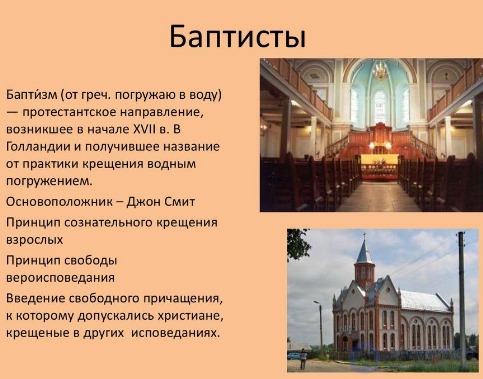
2. The founders of Baptism were (indicate):
- 1. Americans of the New World.
- 2. Pagans.
- 3. English Congregationalists.*
- 4. German Reformists.
- 5. Russian Old Believers.
3. In which country did Baptism arise?
- 1. Germany.
- 2. England.
- 3. USA.
- 4. Ukraine
- 5. Russia
- 6. Holland.*
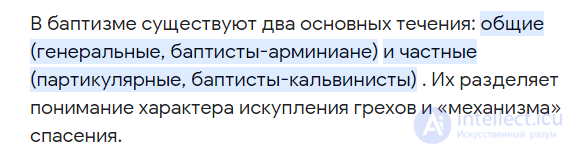
4. From the very beginning, two branches arose in Baptism (indicate):
- 1. Monobaptism.
- 2. Particular Baptism.*
- 3. General Baptism.*
- 4. Polybaptism.
- 5. State Baptism.
5. Baptism became one of the most numerous denominations of (indicate):
- 1. Orthodoxy.
- 2. Catholicism.
- 3. Buddhism.
- 4. Protestantism.*
- 5. Lamaism.
6. In the Russian Empire, Baptism began to spread (indicate):
- 1. From the 20th century.
- 2. From the 17th century.
- 3. From the 19th century.*
- 4. From the 18th century.
- 5. From the 20th century.
7. The Adventist religious movement broke away from (indicate):
- 1. Baptism.*
- 2. Catholicism.
- 3. Orthodoxy.
- 4. Lamaism.
- 5. Jehovah's Witnesses.
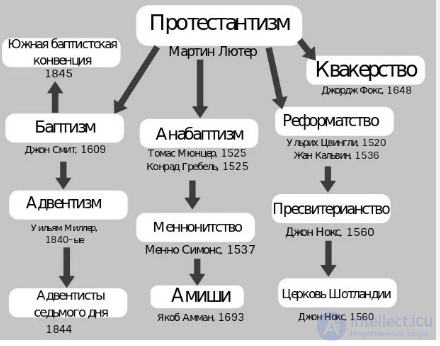
8. The founder of Adventism is (indicate):
- 1. W. Miller.*
- 2. Sun Myung Moon.
- 3. Marina Tsvigun.
- 4. Lafayette Hubbard.
- 5. Sergei Torop.
9. Among the various branches of Adventism, the most widespread are (indicate):
- 1. Seventh-day Adventists.*
- 2. Mormons.
- 3. Jehovah's Witnesses.
- 4. Baptists.
- 5. Old Believers.
10. The Protestant movement known as «Pentecostals» arose at the end of the 19th century in (indicate):
- 1. England.
- 2. Russia.
- 3. Ukraine.
- 4. USA.*
- 5. Holland.
11. Pentecostalism is based on the account set forth in the New Testament book (indicate):
- 1. Acts of the Apostles.*
- 2. The Bible.
- 3. The Quran.
- 4. The Torah.
- 5. The Talmud.
- 6. The Tale of the Priest and His Dog
12. Pentecostals are divided into several branches (list):
- 1. Church of God.*
- 2. Assembly of God.
- 3. Pure Church.
- 4. United Pentecostal Church.*
- 5. Christians of Evangelical Faith.*
13. Jehovism (Jehovah's Witnesses) arose in the USA in the (indicate):
- 1. 20th century.
- 2. 17th century.
- 3. 19th century.*
- 4. 18th century.
- 5. 20th century.
14. The doctrine of Jehovah's Witnesses is closest to the doctrine of (indicate):
- 1. Baptists.
- 2. Mormons.
- 3. Adventists.*
- 4. The White Brotherhood.
- 5. The Church of Scientology.
15. Jehovah's Witnesses believe that God Jehovah exists in (indicate):
- 1. One person.*
- 2. Two persons.
- 3. Three persons.
- 4. Four persons.
- 5. Five persons.
16. The most general characteristics of nontraditional cults are as follows (list):
- 1. At the head stands a charismatic leader who creates a special «family», or commune, in which he is called «father».*
- 2. The group holds an apocalyptic view of the world.*
- 3. Members of the organization often renounce their own property and change their place of residence.*
- 4. A specific technique of behavioral control over converts is applied, usually involving isolation from the outside world.*
- 5. The organization seeks to establish its religion as the state religion.
- 6. They are glad to accept donations
17. Four main types of nontraditional religiosity are distinguished (list):
- 1. Evangelical teachings.*
- 2. Eastern cults.*
- 3. Occultism.*
- 4. Scientism.*
- 5. Surrealist views.
18. The leaders of the «White Brotherhood» demand from believers, in the name of the coming salvation (list):
- 1. To leave their families.*
- 2. To quit their jobs and studies.*
- 3. To enter into same-sex marriages.
- 4. To practice meditation.
- 5. To lead an ascetic way of life.
19. The most widespread movement among nontraditional cults is (indicate):
- 1. The Unification Church.*
- 2. The Church of Scientology.
- 3. The White Brotherhood.
- 4. Adventists.
- 5. Mormons.
20. The founder of the «Unification Church» is (indicate):
- 1. W. Miller.
- 2. Sun Myung Moon.*
- 3. Marina Tsvigun.
- 4. Lafayette Hubbard.
- 5. Sergei Torop.
21. The beliefs of «Krishna Consciousness» are (indicate):
- 1. Islamic.
- 2. Orthodox Christian.
- 3. Hindu.*
- 4. Lamaist.
- 5. Buddhist.
22. New religious movements are those that arose in (list):
- 1. The 16th - 21st centuries.
- 2. The 17th - 20th centuries.*
- 3. Religious movements that continue to appear even today.
- 4. The 20th - 21st centuries.
- 5. The 15th - 17th centuries.
23. The signs of new religious teachings are (list):
- 1. The totalitarian character of the doctrine and cult*
- 2. The socially dangerous character of the doctrine and cult.*
- 3. The instability of the doctrine and cult.*
- 4. The dominance of universal worship of the leader.
- 5. The presence of secret elements of the doctrine.
24. The main new religious teachings of a Protestant character (list):
- 1. Baptism.*
- 2. The Adventist movement.*
- 3. Pentecostalism.*
- 4. The Church of Christ.
- 5. Antibaptism.
- 6. Saint Macaroni
25. Can every believer of new Protestant-type religious movements interpret the «Holy Scripture» independently?
26. The first Protestant movement of a new type was (indicate):
- 1. Baptism.*
- 2. The Adventist movement.
- 3. Pentecostalism.
- 4. The Church of Christ.
- 5. Antibaptism.
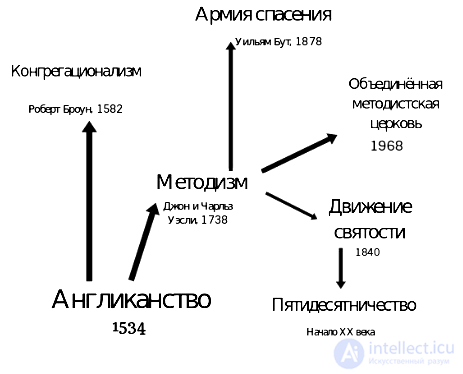
27. The Adventist movement is divided into several branches (list):
- 1. Seventh-day Adventists.*
- 2. Early-century Adventists.
- 3. Adventists of the Faithful Remnant.*
- 4. Adventists of Two Principles.*
- 5. Modern-era Adventists.
28. The founder of Pentecostalism was a Baptist preacher (indicate):
- 1. Charles Parham.*
- 2. Sun Myung Moon.
- 3. Marina Belaya
- 4. Lafayette Hubbard.
- 5. Alexei Rybnikov.
29. «The Church of Christ», the most totalitarian and destructive sect of Protestant character, was founded in (indicate):
- 1. 1979.*
- 2. 1981.
- 3. 1990.
- 4. 2000.
- 5. 2008.
30. The founder of the «Church of Christ» is pastor (indicate):
- 1. Kip McKean.*
- 2. Sun Myung Moon.
- 3. Marina Tsvigun.
- 4. Lafayette Hubbard.
- 5. Sergei Torop.
31. The city in which the «Church of Christ» was formed is (indicate):
- 1. Moscow.
- 2. Boston.*
- 3. Berlin.
- 4. London.
- 5. Mexico City.
32. The goal of the «Church of Christ» sect is (list):
- 1. The universal evangelization of planet Earth.*
- 2. The ascetic way of life of all earthlings.
- 3. Universal belief in the Second Coming of Christ.
- 4. The merging of all Christians on Earth.
- 5. The return to the norms of church life of the 1st century of the Christian era.
33. The essence of pseudo-Christian sects consists in the denial of the following basic dogmas of Christianity (list):
- 1. The Ascension of Christ.*
- 2. The Trinity of God.*
- 3. The Divinity of Jesus Christ.*
- 4. Hell.
- 5. Heaven.
- 6. World peace
34. The destructive character of the Jehovah's Witness sect manifests itself in (indicate):
- 1. Denial of the cult of the leader.
- 2. Denial of the New Testament.
- 3. Denial of Islam as a religion.
- 4. Denial of any earthly authority.*
- 5. Denial of the Quran.
35. The Mormon sect has the official name (indicate):
- 1. «The Church of Jesus Christ of Latter-day Saints».*
- 2. «The Church of Scientology».
- 3. «The White Brotherhood».
- 4. «Aum Shinrikyo».
- 5. «Evangelists».
36. The Mormon sect arose in (indicate):
- 1. England.
- 2. Holland.
- 3. Russia.
- 4. USA.*
- 5. Ukraine.
- 6. Germany.
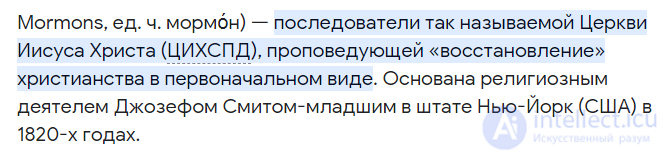
37. The founder of the Mormon sect, which arose in the mid-1830s of the 19th century, was (indicate):
- 1. Roy Medvedev.
- 2. Paul Roy Mach.
- 3. Marina Tsvigun.
- 4. Lafayette Hubbard.
- 5. Joseph Smith Jr.*
38. Charismatic sects are so called because they are led by (indicate):
- 1. Publicly elected leaders.
- 2. Charismatic leaders.*
- 3. Priests of a parish church.
- 4. Messengers of God.
- 5. Statesmen.
39. «The White Brotherhood» was founded in 1990 in Ukraine by a former Komsomol worker (indicate):
- 1. W. Miller.
- 2. Sun Myung Moon.
- 3. Marina Tsvigun.*
- 4. Lafayette Hubbard.
- 5. Sergei Torop.
40. The «Church of the Single Faith» was founded in May 1990 in Tyumen by a former police sergeant (indicate):
- 1. W. Miller.
- 2. Sun Myung Moon.
- 3. Marina Tsvigun.
- 4. Lafayette Hubbard.
- 5. Sergei Torop.*
41. The «Church of Scientology» was founded in the 1960s in the USA by a little-known science fiction writer (indicate):
- 1. W. Miller.
- 2. Sun Myung Moon.
- 3. Marina Tsvigun.
- 4. Lafayette Hubbard.*
- 5. Sergei Torop.
42. Satanic sects – sects that worship (list):
- 1. Evil.*
- 2. The Devil.*
- 3. Magic.
- 4. The Black Brotherhood.
- 5. God.
43. The causes of the emergence of Satanic sects were (list):
- 1. The crisis of Christianity.*
- 2. The decline of morality.*
- 3. The collapse of the Roman Empire.
- 4. The global economic crisis.
- 5. The social instability of youth.*
44. List the varieties of new religious movements you know.
- 1. Neo-Christian associations.*
- 2. Scientological trends.*
- 3. Neo-Orientalist cults.*
- 4. Satanic groups.*
- 5. Sectarian groups.
- 6. State bodies
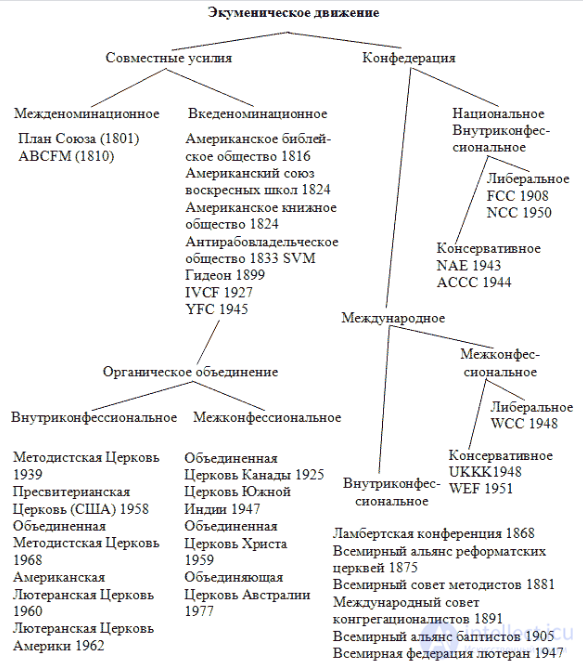
45. The term «ecumenism» (from the Greek — universe, inhabited world) is used mainly to designate the movement for the unification of (list):
- 1. Christian churches and denominations.*
- 2. Islamic churches and denominations.
- 3. Protestant churches and denominations.
- 4. Buddhist churches and denominations.
- 5. Orthodox churches and denominations.
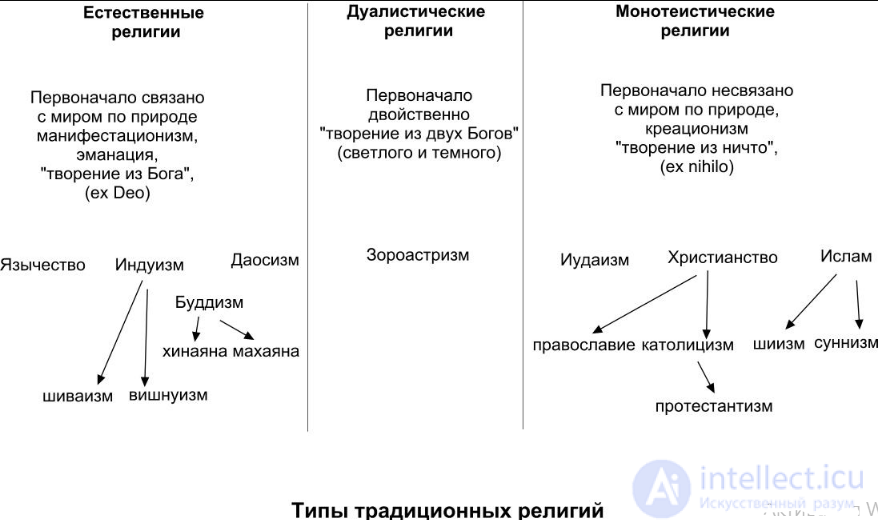
46 Which of the following is a dualistic religion
- Christianity
- Islam
- Zoroastrianism
OPEN TEST
WITH ONE OR MORE WORDS OMITTED
In the tests presented, fill in the blanks with the words that, in your opinion, fit best. Observe the case and declension indicated in the sentences.
1. «General Baptists» recognized the participation of human will in salvation and adhered to the doctrine of ___A__ of all who believed in Christ, while «Particular Baptists» believed that Christ redeemed the sins only of __B__, predestined for salvation.
- a - salvation b - the elect *
- a - equality b - those who donate
- a - health b - the wealthy
2. Baptism is regarded by Baptists as an act of conscious _____ to faith, of spiritual rebirth.
- aversion
- conversion *
- attraction
3. Candidates for membership in the community are admitted to it only after a ___A__ period and ___B__ at a prayer meeting.
- a - short, b - payment
- a - probationary, b - repentance *
- a - lengthy, b - endowment
4. Baptism requires its followers to engage in active ………………………… activity.
- artistic
- missionary *
- fraudulent
5. Having given up attempts to establish an exact date for the end of the world, ………………………… still consider the idea of an imminent Second Coming to be central to their teaching.
6. Unlike other Christian teachings, Adventists do not consider the ………………………… of a person to be immortal.
- body
- soul*
- credit history
7. Having preserved the Baptist symbolic rites (baptism, breaking of bread, marriage, ordination), the Adventists added a fifth — ………………………… before the breaking of bread.
mutual foot washing
8. Payment of …………… from all income in favor of the organization is obligatory for Adventists.
a tithe
9. Pentecostals believe in the possibility of the ………………………… of the Holy Spirit upon each of them when they attain a religious trance, evidenced by their acquiring the gift of «speaking in other tongues» (glossolalia).
descent
10. Like the Baptists, the Adventists baptize only ……………… people, perform the rite of breaking of bread, and, like the Adventists, perform the rite of «foot washing», but not once every three months but …………………………, and also believe in the imminent Second Coming of Christ.
11. Jehovah's Witnesses created entirely new dogmas — about the nature of God, about the nature of Christ, about …………………………. Jehovah's Witnesses believe that God Jehovah exists in ………………………… person.
12. Jesus Christ, in the opinion of Jehovah's Witnesses, is the son of Jehovah, a divine …………………………, who was a perfect man on earth, but He is not omnipotent and is not equal to the Father.
13. The Holy Spirit, in the opinion of Jehovah's Witnesses, is the power and authority of Jehovah, which participated in the creation of the world and which the Almighty shares with ………………………… and the angels.
14. Jehovah's Witnesses prophesy an imminent ………………………… — the sacred war of Christ against Satan, as a result of which all sinful humanity, with the exception of …………………………, will perish.
Armageddon, Jehovah's Witnesses
15. The middle of the ………………………… century was marked by the emergence of a significant number of new religious movements, organizations, and cults, which in the literature are most often called ………………………… religions.
16. The concept of «………………………… religions» refers to religious complexes that have not historically been inherited from past eras by a given ethnic group, are not characteristic of its religious spirituality, and have not taken root in its everyday life and culture, but have spread as a result of the missionary activity of preachers from their historical homeland.
17. The concept of «………………………… cult» is quite widely used in characterizing new religious movements.
18. Unlike world religions, nontraditional cultures have different forms and organization, namely centers, missions, colonies, …………………………, families.
19. One of the best-known new religious movements in the CIS countries is the «…………………… Brotherhood» movement.
20. The most widespread movement among nontraditional cults is …………………………, founded by the Korean Sun Myung Moon.
- The Unification Church*
- Worship of the dollar
- Worship of the President
- Violation of faith against the law
21. According to the teaching of …………………………, people do not fully embody the greatness of God. The reason is that Eve, out of inexperience, sinned at the age of 15 with Satan, who had taken the form of a serpent, and therefore could not have «perfect offspring» from Adam.
22. The society «…………………………» propagates a doctrine and system of ritual in which elements of scientific knowledge and prejudice are fused.
23. Krishna is the life of all living beings, a living entity that, being a small part of …………………………, is His qualitative part.
24. Historically the first Protestant movement was Baptism, which arose in the 17th century in …………………………, where it became the ideological foundation of the national liberation struggle against Spanish rule.
- Holland *
- Russia
- Canada
- Ethiopia
25. The highest level among Satanic sects is represented by sects of conscious worshippers of Satan, who practice Satanism in full, whose cult is represented by «…………………………», accompanied by human sacrifices.
- black masses *
- the Russian ruble
- uniform cap
26. Adventists are strictly forbidden to smoke, drink ……………, ………………, …………………, cola and other beverages containing caffeine and alcohol, and eat pork.
- wine, tea, coffee *
- Pepsi-Cola
- Coca-Cola
- milk, kefir
27. Baptists required a person accepting the Augsburg confession to ………………………. Baptism received at ………………. age is, in their opinion, invalid, since the person accepted it unconsciously.
28. The essence of ....................................... sects consists in the denial of the basic dogmas of Christianity – the Trinity of God and the divinity of Jesus Christ.
- pseudo-Christian *
- Christian
- proto-Christian
- anti-Christian
29. One of the most important principles on which the cultic practice of ……………………. is based consists in the self-restraint of the individual.
- dolashvites
- rubleshvites
- sterlingsvites
- Krishnaites
30. Ritual ………………………… in the temple occupy a large place in the cultic practice of the Krishnaites.
OPEN TEST WITH ONE CORRECT ANSWER
In the crossword puzzle presented, fill in the cells with the words that, in your opinion, answer the questions (phrases, statements) posed. Observe the case and declension.

|
Across: 2. A Protestant movement that arose in the first half of the 19th century in the USA. 4. The center of the Mormon movement. 5. The founder of the «Church of Scientology». 6. The founder of the «Unification Church». 7. One of the incarnations of the supreme god Vishnu, representing the supreme personality of Godhead.
|
|
Down: 1. One of the currents of Protestantism, founded in Holland in the 17th century. 3. A religious sect founded in the USA in 1830.
|
CONTROL AND TRAINING ASSIGNMENTS
1. Indicate the correct statement (assertion):
- 1. Nontraditional religions form as a variety of pseudo-Christian cults.*
- 2. Nontraditional religions form as a variety of charismatic cults.
- 3. Nontraditional religions form as a variety of ancestor cults.
2. Indicate the correct statement (assertion):
- 1. Satanic groups — the «Church of Satan» — proclaim themselves conscious bearers of evil and the antithesis of Islam.
- 2. Satanic groups — the «Church of Satan» — proclaim themselves conscious bearers of evil and the antithesis of Buddhism.
- 3. Satanic groups — the «Church of Satan» — proclaim themselves conscious bearers of evil and the antithesis of Christianity.*
3. Indicate the correct statement (assertion):
- 1. Tsvigun believes that when Christ created the church, He saw in it not some organization, but the foundation of the Kingdom of God on Earth.
- 2. Hubbard believes that when Christ created the church, He saw in it not some organization, but the foundation of the Kingdom of God on Earth.
- 3. Moon believes that when Christ created the church, He saw in it not some organization, but the foundation of the Kingdom of God on Earth.
4. Indicate the correct statement (assertion):
- 1. The «Unification Church» functions throughout the world as a «family», having no formal canons or rites.
- 2. The «Unification Church» functions throughout the world as a «community», having no formal canons or rites.
- 3. The «Unification Church» functions throughout the world as a «tribe», having no formal canons or rites.
5. Indicate the correct statement (assertion):
- 1. A sense of a long-delayed End of the World is one of the most characteristic moods among the members of the «Church of the Single Faith» community.
- 2. A sense of an imminent End of the World is one of the most characteristic moods among the members of the «Church of the Single Faith» community.
- 3. A sense of an unattainable End of the World is one of the most characteristic moods among the members of the «Church of the Single Faith» community.
6. Indicate the correct statement (assertion):
- 1. The teaching of the Krishnaites is genetically linked to Buddhism.
- 2. The teaching of the Krishnaites is genetically linked to Hinduism.*
- 3. The teaching of the Krishnaites is genetically linked to Christianity.
7. Indicate the correct statement (assertion):
- 1. The principal work in which Swami Prabhupada set forth his teaching is called «Bhagavad – Krishna, As It Is».
- 2. The principal work in which Swami Prabhupada set forth his teaching is called «Bhagavad – Faith, As It Is».
- 3. The principal work in which Swami Prabhupada set forth his teaching is called «Bhagavad – Gita, As It Is».
8. Indicate the correct statement (assertion):
- 1. The doctrine of Krishnaism, or the religion of the Vaishnavas (devotees of God), is based on the principle of polytheism.
- 2. The doctrine of Krishnaism, or the religion of the Vaishnavas (devotees of God), is based on the principle of monotheism.
- 3. The doctrine of Krishnaism, or the religion of the Vaishnavas (devotees of God), is based on the principle of atheism.
9. Indicate the correct statement (assertion):
- 1. Krishnaites attach great importance to the teaching of the threefold nature of the whole world: spiritual, human, and material.
- 2. Krishnaites attach great importance to the teaching of the twofold nature of the whole world: spiritual and material.
- 3. Krishnaites attach great importance to the teaching of the single nature of the whole world: the spiritual within the material.
10. Indicate the correct statement (assertion):
- 1. Only a member of the community can free himself from the material world and develop Krishna consciousness within himself.
- 2. Every person can free himself from the material world and develop Krishna consciousness within himself.
- 3. Only a believer can free himself from the material world and develop Krishna consciousness within himself.
11. Indicate the correct statement (assertion):
- 1. One of the most important principles on which the cultic practice of the Krishnaites is based consists in the self-assertion of the individual.
- 2. One of the most important principles on which the cultic practice of the Krishnaites is based consists in the self-restraint of the individual.*
- 3. One of the most important principles on which the cultic practice of the Krishnaites is based consists in removing a person's complexes of restraint.
12. Indicate the correct statement (assertion):
- 1. The International Society for Krishna Consciousness is a religious organization of the sect type.*
- 2. The International Society for Krishna Consciousness is a religious organization of the denomination type.
- 3. The International Society for Krishna Consciousness is a religious organization of the cult type.
13. Indicate the correct statement (assertion):
- 1. From the very beginning, two branches arose in Baptism, called «personal» and «general» Baptism.
- 2. From the very beginning, two branches arose in Baptism, called «particular» and «general» Baptism.*
- 3. From the very beginning, two branches arose in Baptism, called «particular» and «state» Baptism.
14. Indicate the correct statement (assertion):
- 1. Baptism and the breaking of bread in Adventism are understood as rites symbolizing faith in spiritual union with Christ.
- 2. Baptism and the breaking of bread in Baptist doctrine are understood as rites symbolizing faith in spiritual union with Christ.*
- 3. Baptism and the breaking of bread among the Mormons are understood as rites symbolizing faith in spiritual union with Christ.
15. Indicate the correct statement (assertion):
- 1. Baptism requires its followers to engage in passive missionary activity.
- 2. Baptism requires its followers to engage in active missionary activity.*
- 3. Baptism requires its followers to engage in humane missionary activity.
16. Indicate the correct statement (assertion):
- 1. Unlike other Christian teachings, the Mormons do not consider the human soul to be immortal.
- 2. Unlike other Christian teachings, the Adventists do not consider the human soul to be immortal.*
- 3. Unlike other Christian teachings, the Krishnaites do not consider the human soul to be immortal.
17. Indicate the correct statement (assertion):
- 1. The Protestant movement known as «Pentecostals» arose in England at the end of the 19th century.
- 2. The Protestant movement known as «Pentecostals» arose in Holland at the end of the 19th century.
- 3. The Protestant movement known as «Pentecostals» arose in the USA at the end of the 19th century.*
18. Indicate the correct statement (assertion):
- 1. Adventists believe in the possibility of the descent of the Holy Spirit upon each of them when they attain a religious trance, evidenced by their acquiring the gift of «speaking in other tongues» (glossolalia).
- 2. Pentecostals believe in the possibility of the descent of the Holy Spirit upon each of them when they attain a religious trance, evidenced by their acquiring the gift of «speaking in other tongues» (glossolalia).*
- 3. Krishnaites believe in the possibility of the descent of the Holy Spirit upon each of them when they attain a religious trance, evidenced by their acquiring the gift of «speaking in other tongues» (glossolalia).
19. Indicate the correct statement (assertion):
- 1. The Mormons divide Armageddon — the sacred war of Christ against Satan — into two stages: the first stage of Armageddon has already taken place in the form of the First World War, and the second, when Christ will finally defeat the world of Satan, will soon come.
- 2. The Krishnaites divide Armageddon — the sacred war of Christ against Satan — into two stages: the first stage of Armageddon has already taken place in the form of the First World War, and the second, when Christ will finally defeat the world of Satan, will soon come.
- 3. Jehovah's Witnesses divide Armageddon — the sacred war of Christ against Satan — into two stages: the first stage of Armageddon has already taken place in the form of the First World War, and the second, when Christ will finally defeat the world of Satan, will soon come.*
20. Indicate the correct statement (assertion):
- 1. The middle of the 20th century was marked by the emergence of a significant number of new religious movements, organizations, and cults, which are most often called nontraditional religions.
- 2. The middle of the 18th century was marked by the emergence of a significant number of new religious movements, organizations, and cults, which are most often called nontraditional religions.
- 3. The middle of the 19th century was marked by the emergence of a significant number of new religious movements, organizations, and cults, which are most often called nontraditional religions.
See also
- [[b906]]
- [[b907]]
- [[b908]]
- [[b909]]
- [[b910]]
- [[b911]]
See also


Comments