Rhinolalia (nasality) — the term has a specific, somewhat differing interpretation and treatment in general medical and in speech-therapy vocabulary and specialized literature.
Hypernasal speech — is a disorder that causes abnormal resonance in a person's voice due to an increased flow of air through the nose during speech. It is caused by an open nasal cavity resulting from incomplete closure of the soft palate and/or the velopharyngeal sphincter (velopharyngeal insufficiency). In normal speech, nasality is called nasalization and is a linguistic category that can apply to vowel or consonant sounds in a given language. The basic underlying physical variable determining the degree of nasality in normal speech is the opening and closing of the velopharyngeal passage between the oral vocal tract and the nasal vocal tract. In the normal anatomy of the vocal tract, this opening is controlled by the lowering and raising of the velum, or soft palate, to open or close the velopharyngeal passage, respectively.
In medical terminology
Rhinolalia is regarded solely as a syndrome of nasality. Nasality — a change in the timbre of the voice and distorted pronunciation of sounds, caused by a disorder of the resonating function of the nasal cavity. Two variants of nasality are distinguished:
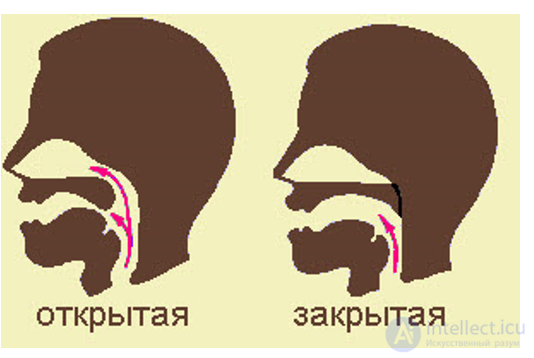
- closed nasality (rinolalia clausa), arising as a result of impaired patency of the nasal cavity or nasopharynx. This defect corresponds to the speech-therapy concepts of rhinophonia/palatophonia (see below➤).
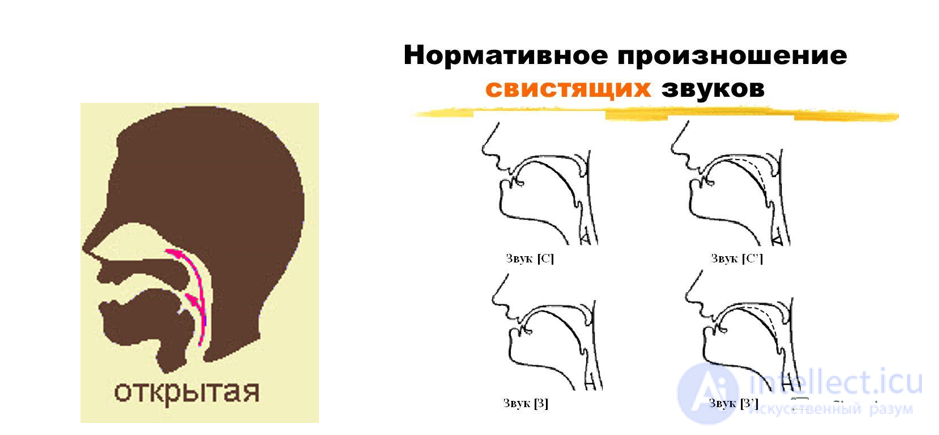
- open nasality (rinolalia aperta), characterized by the fact that during the production of all speech sounds, air passes not only through the mouth, but also through the nose.
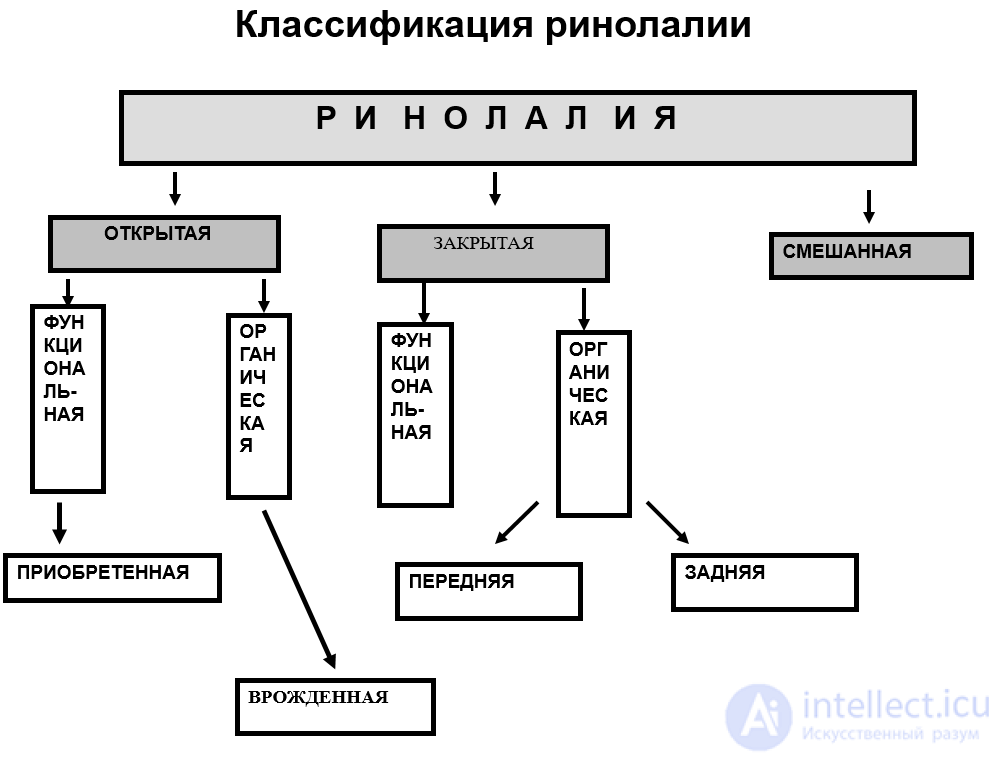
Forms of rhinolalia.
Depending on the nature of the disorder of velopharyngeal closure function, various forms of rhinolalia are distinguished:
Open
Closed
Acquired open rhinolalia
•forms as a result of trauma to the oral and nasal cavity or as a result of acquired paralysis of the soft palate.
•The causes of functional open rhinolalia may be various. For example, it occurs during phonation in children with weak articulation of the soft palate. The functional open form manifests in hysteria, sometimes as an independent defect, sometimes as an imitative one.
habitual open rhinolalia
•One of the functional forms — observed, for example, after the removal of large adenoid growths, arises as a result of prolonged limitation of soft-palate mobility.
•Functional examination in open rhinolalia reveals no organic changes in the hard or soft palate.
•A sign of functional open rhinolalia is also that usually only the pronunciation of vowel sounds is disturbed, whereas in the pronunciation of consonants velopharyngeal closure is good and no nasalization occurs.
•The prognosis in functional open rhinolalia is more favorable than in organic rhinolalia. The nasal timbre disappears after phoniatric exercises, and pronunciation disorders are eliminated by the usual methods used for dyslalia.
Speech-therapy interpretation of the syndrome
Here the syndrome of rhinolalia is differentiated in more detail and is interpreted somewhat more broadly. Speech-therapy specialists give more detailed classifications both of the variants of nasality and of the content of the very definition of the term «rhinolalia»; in particular, in domestic speech therapy it is customary to distinguish rhinolalia and rhinophonia as separate nosological entities and to identify separate forms within these syndromes.
In rhinolalia, the disorder of resonance in the nasal cavity results from an incorrect direction of the voice-exhalation stream, owing either to organic defects of the nasopharynx, nasal cavity, soft and hard palate, or to disorders of the soft palate; open, closed and mixed rhinolalia are distinguished.
- Closed rhinolalia — a disorder of sound production expressed in a change in the timbre of the voice; its causes are organic changes in the nasal or nasopharyngeal area or functional disorders of the nasopharyngeal closure, in connection with which closed organic and functional rhinolalia are distinguished. It arises with reduced physiological nasal resonance during the pronunciation of phonemes; in this case the phonemes [m], [n], [n’] sound like [b], [d], [d’]. one of the external signs of closed rhinolalia is a permanently open mouth.
- Posterior closed rhinolalia — a disorder of sound production that is a consequence of adenoid growths closing off: a)the upper edge of the choanae, b)half of them or one of them, c)both choanae, with the entire nasopharynx filled with adenoid tissue. Posterior closed rhinolalia may be a consequence of fusion of the soft palate with the posterior wall of the pharynx after specific inflammations (chiefly syphilitic ones), sometimes of nasopharyngeal polyps, fibromas or other nasopharyngeal tumors. A congenital cause is the rarely encountered choanal atresia, which completely separates the nasopharyngeal cavity from the nasal cavity.
- Anterior closed rhinolalia — a disorder of sound production caused by a sharp deviation of the nasal septum, nasal polyps, severe rhinitis, etc. It may be transient (with inflammatory edema of the nasal mucosa during a cold) or prolonged (with chronic hypertrophy of the nasal mucosa, with polyps, deviation of the nasal septum, a tumor of the nasal cavity).
- Open rhinolalia — a pathological change in the timbre of the voice and distorted pronunciation of speech sounds, arising when the soft palate lags significantly behind the posterior wall of the pharynx during the production of speech sounds, leaving a substantial gap (shortening of the soft palate, paralyses and pareses of the soft palate) or in the presence of mechanical defects of the hard and soft palate, when a significant part of the air enters the nasal cavity. The term «hyperrhinolalia» is sometimes used as a synonym.
- Mixed rhinolalia — a condition in which, along with nasal obstruction, there is also insufficient velopharyngeal closure; in pronunciation this is reflected by reduced nasal resonance, chiefly for nasal phonemes, with simultaneous distortion of the remaining phonemes, whose timbre becomes as in open rhinolalia; anterior and posterior mixed rhinolalia are distinguished; both forms may be organic or functional.
Rhinophonia
Rhinophonia (Greek rhinos nose + Greek phönê voice) — a nasal (nasality) tinge of the voice, arising because of an incorrect direction of the voice-exhalation stream owing either to mechanical defects of the nasopharynx, soft and hard palate, or to disorders of soft-palate function.
- Closed rhinophonia — rhinophonia in which the nasal consonants acquire oral resonance, the vowels lose sonority, and the timbre becomes unnatural.
- Open rhinophonia — rhinophonia in which there is pathological nasalization of all oral sounds, and a weak, strangled voice.
A number of foreign authors regard nasality as a combination of two main symptoms: palatolalia (palatolalia from Latin palatum palate + Greek lalia speech — an articulation disorder caused by the presence of a soft-palate cleft) and palatophonia (palatophonia) in a condition identical to the domestic speech-therapy interpretation of rhinolalia (rinolalia aperta) and palatolalia (palatophonia from Latin palatum palate + Greek phönê voice), corresponding to rhinophonia in the interpretation accepted in domestic speech therapy (see M. Seeman, 1962; K.-P. Becker, M. Sovák, 1981). Here K.-P. Becker and M. Sovák (1981) distinguish 4 degrees of palatolalia.
Degrees of palatolalia
At degree I there are residual manifestations of palatolalia, expressed in barely noticeable nasality and slight dyslalia; on the whole the speech gives an impression of being normal;
at degree II the nasal overtone and articulation errors are stronger, but not very noticeable in the process of communication;
at degree III palatolalia is clearly expressed, but the speech is still intelligible;
at degree IV palatolalia is strongly expressed, the speech is completely unintelligible, and accompanying facial movements appear.
Acquired open rhinophonia may be a consequence of a complication after the removal of the palatine tonsils. Acquired closed rhinophonia — a consequence of impaired patency of the nasal passages (nasal polyp, deviation of the nasal septum, chronic rhinitis). In this case only the tinge of the voice is affected, while the articulatory and phonetic aspects of speech remain intact.
Speech disorders in congenital cleft of the hard and soft palate (see Articulatory apparatus) manifest as a more complex syndrome, including [general speech underdevelopment], rhinolalia and rhinophonia. In addition, such children have impaired lung ventilation, general physical weakness and a fear of speaking. A concomitant hearing loss is quite often detected. A natural consequence of the defect of the hard and soft palate is difficulty swallowing while eating.
Diagnosis
There are several methods for diagnosing hypernasality.
- The speech therapist listens to and records the child, analyzing perceptual speech. In hypernasality the child cannot correctly pronounce oral sounds (vowels and consonants). Only nasal sounds can be pronounced correctly. It is also advisable to conduct a hearing test.
- A mirror is held up to the nose while the child pronounces vowels. The escape of air through the nose, and consequently hypernasality, is indicated by the mirror fogging up.
- To measure the area of the velopharyngeal opening during speech, the pressure-flow method is used. The patient must be at least three to four years old.
- Nasopharyngeal videoendoscopy makes it possible to observe velopharyngeal function, the movements of the soft palate and the walls of the pharynx. It uses a very small probe placed in the back of the nasal cavity. The physician then asks the child to say a few words. The patient must be at least three to four years old to ensure cooperation.
- Cinefluoroscopy provides dynamic visualization and may be easier to apply to young children, although its drawback is that the patient is exposed to radiation.
- The nasometer calculates the nasality coefficient. The patient wears a headset in which the oral and nasal cavities are separated by a plate. Microphones are located on both sides of the plate. The coefficient calculated by the nasometer indicates the degree of nasality, with a higher coefficient indicating greater nasality
Treatment and speech-therapy correction
This sound-production defect requires a comprehensive medical-pedagogical and orthodontic approach.
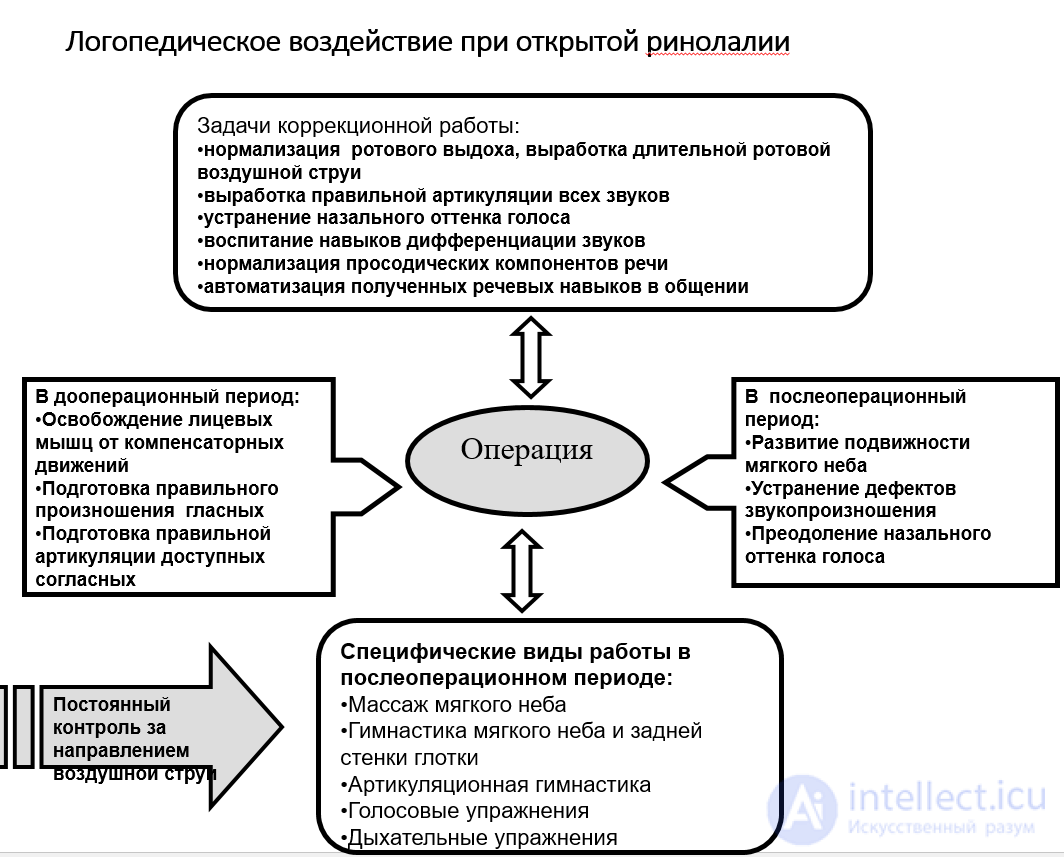
Treatment
Treatment (orthodontic) — closure of the hard and soft palate defect with a temporary obturator. A soft rubber obturator is already needed for feeding the infant. A rigid obturator is made individually and worn until the surgical closure of the defect in the floor of the nasal cavity and the velum. Treatment (surgical) — an operation to restore the integrity of the floor of the nasal cavity. It is used at a later age.
Speech-therapy correction
Speech-therapy work should begin both during the period of wearing the obturator, as preparation of the articulatory apparatus for the operation to close the hard and soft palate defect, and after successful surgical closure. Palate plasty is begun only after all the milk teeth have appeared. According to the figurative expression of the surgeon A. A. Limberg (1925), surgical treatment only builds the walls and valves of the «musical instrument»; teaching how to play it must be taken up by speech therapists.
TASKS AND CONTENT OF CORRECTIVE WORK
•The formation of phonetically correct speech in preschool children with a congenital cleft palate is aimed at solving several interrelated tasks:
•1) normalization of the "oral exhalation," i.e., developing a prolonged oral airstream during the production of all speech sounds except nasal ones;
•2) developing correct articulation of all speech sounds;
•3) eliminating the nasal tinge of the voice;
•4) cultivating sound-differentiation skills with a view to preventing defects of sound analysis;
•5) normalization of the prosodic aspect of speech;
•6) automatization of acquired skills in free speech communication.
In addition to purely training-based and corrective speech-therapy exercises, mechanical devices may also be used in eliminating the symptoms of nasality, for example, M. Seeman's phonendoscope (a tube with two "olives," one of which is inserted into the nostril and the other into the external ear canal), Piskunov's articulators, and A. Hutzmann's and F. Rau's speech-therapy wire probes (see Speech-therapy instruments).
At present, defects of the hard and soft palate are successfully operated on at an early age (starting from several days of life), depending on the type and size of the defect and the overall condition of the newborn. Early closure of the defect promotes normalization of the acts of swallowing and chewing food, and children operated on at an early stage undoubtedly have no speech problems, unlike children whose correction was performed at a later stage. To obtain information about the results of early corrections, it is advisable to make use not only of information from specialists working on this problem, but also to take into account data provided by parents of children operated on at an early stage, who share their experience on forums devoted to these questions ("Planet of Sunny Bunnies," "Our Children's Smiles," etc.)
In correcting the sound aspect of speech, the mastery of correct sound-production skills proceeds through 4 stages
•The first stage — the stage of "pre-speech" exercises — includes the following types of work:
•1) breathing exercises;
•2) articulatory gymnastics;
•3) articulation of isolated sounds or quasi-articulation (since the isolated production of sounds is atypical for speech activity);
•4) syllable exercises.
•At this stage, training in motor skills takes place mainly on the basis of the initial unconditioned-reflex movements.
In domestic speech therapy, methodological approaches have been developed for eliminating rhinolalia
•E. F. Rau, 1933;
•F. A. Rau, 1933;
• Z. G. Nelyubova, 1938;
•V. V. Kukol, 1941;
•A. G. Ippolitova, 1955, 1963;
•Z. A. Repina, 1970;
•I. I. Ermakova, 1984;
• G. V. Chirkina, 1987;
•Volosovets T. V., 1995
the system developed by A. G. Ippolitova
•This system is highly effective in correcting sound production in children who have no deviations in phonemic development.
•A. G. Ippolitova was one of the first to recommend sessions in the preoperative period. Characteristic of her method is a combination of breathing and articulatory exercises, and a sequence of sound practice determined by articulatory interconnectedness.
•The sequence of work on sounds is determined by the readiness of the articulatory base of the language. The presence of complete sounds of one group serves as an arbitrary basis for forming the following ones. So-called "supporting" sounds are used.
•Preparation of the articulatory base of a sound is carried out by means of special articulatory gymnastics, which is combined with the development of the child's speech breathing.
•The distinctive feature of A. G. Ippolitova's method is that, when eliciting a sound, the child's initial attention is directed only to the articuleme.
Content of speech therapy sessions according to A. G. Ippolitova's method includes the following sections:
•1. Formation of speech breathing with differentiation of inhalation and exhalation.
•2. Formation of a prolonged oral exhalation during the articulation of vowel sounds (without voicing) and voiceless fricative consonants.
•3. Differentiation of short and prolonged oral and nasal exhalation in the formation of sonorant sounds and affricates.
•4. Formation of soft (palatalized) sounds.
L. I. Vansovskaya's method (1977)
•L. I. Vansovskaya proposed beginning the elimination of nasalization not with the traditional sound [a], but with the front vowels [i] and [e], since it is precisely these that make it possible to focus the exhaled air stream in the front part of the oral cavity and direct the tongue toward the lower incisors.
• This enhances the clarity of kinesthesia upon contact with the lower incisors; when pronouncing the sound [i], the pharyngeal walls and the soft palate participate more actively.
•The child is required to pronounce sounds in a quiet voice, with the jaw slightly advanced, with a half-smile, and with increased tension of the soft palate and pharyngeal muscles.
• After the nasalization of vowels has been eliminated, work proceeds on the sonorants ([l], [r]), followed by fricative and plosive consonants.
The radiographic method.
•The improvement of methods for correcting speech defects in rhinolalia was influenced by research using the radiographic method. It made it possible to predict the likelihood of restoring palatal function through speech-therapy techniques (N. I. Serebrova, 1969).
•Analysis of the radiographs revealed a dependence of the effectiveness of speech-therapy work on the mobility of the soft palate and the posterior pharyngeal wall; on the distance between the posterior pharyngeal wall and the soft palate; and on the width of the middle part of the pharynx.
•Comparing these data even before speech-therapy work begins makes it possible to decide on the degree to which the speech defect can be compensated for by generally accepted means.
•Techniques of differentiated speech-therapy work, depending on the anatomical and functional features of the articulatory apparatus, were developed by T. N. Vorontsova (1966).
S. L. Taptapova's method (1963), for adults
•For adults, S. L. Taptapova (1963) developed a method that proposes a distinctive regimen of silence — silently articulating vowel sounds to oneself. This removes facial grimaces and prepares the way for pronunciation without nasalization. Vocal exercises are recommended.
•I. I. Ermakova (1980) developed a step-by-step method for correcting sound production and voice. She established the age-related features of functional voice-formation disorders in children with congenital clefts and, in relation to them, modified orthophonic exercises. Special attention was given to the postoperative period, and techniques were recommended for developing the mobility of the soft palate that prevent its shortening after surgical repair.
•
CPAP therapy (CPAP — Constant Positive Airway Pressure)
There is insufficient evidence to support the idea that traditional non-speech oral motor exercises can reduce hypernasality. The patterns of velopharyngeal closure and their underlying neuromotor control may differ for speech and non-speech activities. Therefore, increasing velar muscle movement through blowing, sucking, and swallowing may not transfer to speech tasks. Thus hypernasality persists for as long as the person is speaking. Kuehn proposed a new treatment approach using a CPAP device during speech tasks. The positive pressure created by the CPAP device provides resistance for strengthening the velopharyngeal muscles. Wearing a nasal mask, the person is asked to pronounce VNCV syllables and short sentences. CPAP therapy is believed to be able to increase both muscle endurance and strength, since it overloads the levator veli palatini muscle and involves a regimen with a large number of repetitions of velar elevation. Research findings have shown that in patients with hypernasality caused by flaccid dysarthria, traumatic brain injury, or cleft palate, hypernasality is eliminated after completing this training program.
conversation with parents
•It is parents' everyday duty to encourage any attempt by the child to pronounce a sound or a word, and to try to understand even barely intelligible speech. It is important to draw their attention to the importance of medical care as well.
•Parents must be fully aware that surgical treatment does not by itself provide for normal speech, but only creates full anatomical and physiological conditions for cultivating correct pronunciation.
•It is also necessary to guide parents toward the everyday consolidation of all the results achieved.
•It often happens that a child with rhinolalia's somatic weakness and the presence of a speech defect cause parents constant anxiety, worry over every little thing, a need to overprotect the child, and a lack of trust in the child's abilities. Such an attitude only aggravates the defect, intensifies the child's neurotic reactions, and undermines his or her self-confidence.
•The speech therapist must help such children cope with indecisiveness and an inability to stand up for themselves, and help them get rid of fear and anxiety about the quality of their speech.
• It is no less important to ensure they have full contact and relationships with peers.
•Speech therapy sessions with the child must begin in the preoperative period in order to prevent the emergence of serious changes in the functioning of the speech organs.
•At this stage, the activity of the soft palate is prepared, the position of the tongue root is normalized, the muscular activity of the lips is strengthened, and a directed oral exhalation is developed.
•All of this together creates favorable conditions for increasing the effectiveness of the operation and the subsequent correction. Fifteen to twenty days after the operation the special exercises are resumed; but now the main goal of the sessions is to develop the mobility of the soft palate.
•A study of the speech activity of children suffering from rhinolalia shows that the deficient anatomical and physiological conditions of speech formation, together with the limited motor component of speech, lead not only to abnormal development of its sound aspect but, in a number of cases, to a deeper systemic disorder of all its components.
•As the child grows older, indicators of speech development deteriorate (compared with the indicators of normally speaking children), and the structure of the defect becomes more complicated because of impairment of various forms of written speech.
•Early correction of speech-development deviations in children with rhinolalia is of extraordinarily important social and psychological-pedagogical significance for normalizing speech and for preventing difficulties in education and career choice.
•The formulation of correctional goals is determined by the results of the children's speech examination.
See also
- [[b13146]]
- [[b7244]]
- Rhinolalia clausa
- Nasalization
- Nasalance
- Velotrace


Comments