
Lecture
An analysis of the psychological and pedagogical literature makes it possible to point to various kinds of concepts, as well as ways and methods of educational action. The problems of psycho-pedagogical correction of deviant behaviour were studied by such scholars as E.K. Gracheva, V.P. Kashchenko, G.I. Rossolimo, G.Ya. Troshin, A.F. Lazursky, A.V. Vladimirsky, N.V. Chekhov, N.V. Peresheina and others.
Correction of deviant behaviour is the process of changing a person's undesirable and negative behavioural patterns, aimed at restoring balance and adapting to social norms and expectations. This process can be applied to both children and adolescents and to adults.
Here are some approaches and methods used for correcting deviant behaviour:
Psychological counselling: Working with a psychologist makes it possible to get to the roots of the problem behaviour and to identify psychological factors and coping strategies. The psychologist helps develop a correction plan and deal with the emotional and psychological aspects.
Cognitive-behavioural therapy: This approach focuses on changing negative thoughts, beliefs and behavioural patterns. The person learns to notice destructive thinking and replace it with more positive and constructive thinking.
Family therapy: In cases of deviant behaviour in children and adolescents, the family is often a key factor. Family therapy helps resolve conflicts and improve communication and the supportive environment, which affects the child's behaviour.
Social skills and training: Teaching skills in effective communication, conflict resolution and emotion management can help a person adapt to the social environment.
Rehabilitation programmes: For individuals with serious behavioural disorders, special rehabilitation programmes may be used, which include training in self-control skills, adaptation, alternative ways of responding to stress, and others.
Educational interventions: Special programmes and strategies for working with hard-to-raise children and adolescents may be applied in the educational environment. Individual plans, alternative teaching methods and inclusive approaches can be beneficial.
Influencing the environment: It is important to change and influence the surrounding environment in order to create a supportive and structured atmosphere that will foster positive change.
Professional help: In some cases, the intervention of a psychiatrist or medication may be required, especially if the deviant behaviour is linked to psychiatric disorders.
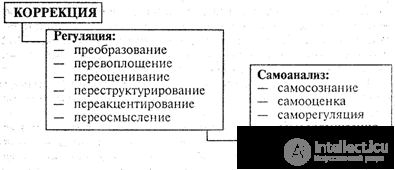
Today, the system of public upbringing of children and adolescents finds itself in the paradoxical situation where all pedagogical and psychological efforts are directed toward correcting emotional disorders, deviant behaviour in particular, rather than toward cultivating peaceableness, empathy, compassion and benevolence.
A strategic approach to solving the problem of deviant behaviour is uniting the efforts of all participants in the educational process (the homeroom teacher, the social pedagogue and educational psychologist, the parents, and so on).
The process of carrying out joint activity by the participants in the educational process to correct a schoolchild's deviant behaviour takes place within a programme that they develop and implement in a defined temporal sequence according to the stages of the life cycle. At each of these stages, the most significant qualitative changes occur in the content and organisation of the joint activity of this category of educational staff. In order to identify the nature of these changes, it is necessary to turn specifically to the problem of the activity and joint activity of the participants in the educational process.
Correction of deviant behaviour is a complex and individually tailored process that requires cooperation between psychologists, teachers, social workers, parents and the person experiencing the difficulties themselves.

Comments