
Lecture
The concept of «anomaly», translated from Greek, means a deviation from the norm, from a general regularity, an irregularity in development. In this sense, the concept exists in pedagogical and psychological science.
Norm and deviation in human development are concepts from psychology and medicine that describe typical developmental pathways and deviations from these typical trajectories. These concepts are widely used in the context of assessing an individual's physical, psychological, and pedagogical development.
Developmental norm: The developmental norm represents the typical and expected pathways of a person's physical, cognitive, emotional, and social development at particular periods of life. The norm is determined on the basis of statistical data and generalized patterns of development of the majority of people. For example, the norm for the development of motor skills in infants may include beginning to lift the head, rolling over, crawling, and so on. The adult norm may include professional development, stable social relationships, and psychological maturity.
Developmental deviation: Developmental deviation means a deviation from the typical and expected pathways of development. A deviation may be physical, psychological, or social. It may include various disorders, delays, or various deviations in behavior, mental abilities, or physical health. Deviations may be temporary or permanent, and their degree and nature can vary greatly.
Deviations can have various causes, including genetic factors, environmental influences, injuries, psychological factors, and others. It is important to note that a deviation is not always a problem. For example, creative geniuses often have atypical development in certain areas, but it is precisely these deviations that can contribute to outstanding achievements.
Correctional pedagogy and special psychology are concerned with studying and working with people who have developmental deviations. The goal of correctional and pedagogical activity is to help such people overcome difficulties, to provide optimal conditions for instruction and socialization, and to develop their individual potential.
The question of anomalies in the development of mental processes and in human behavior can only be considered in the context of knowledge about the normal parameters of these processes and this behavior.
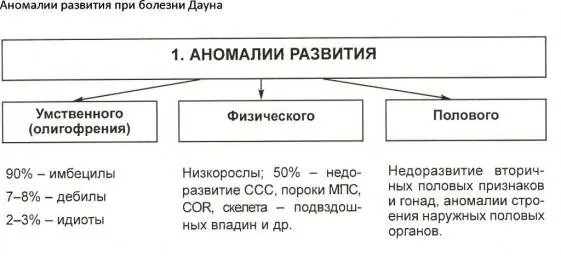
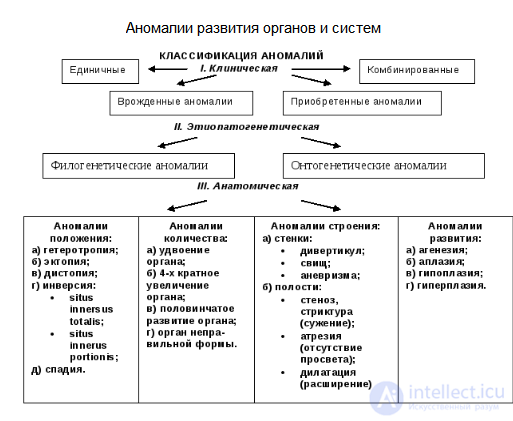
The problem of the norm and its variants is one of the most complex in contemporary psychological science. It includes such questions as the norm of reaction (motor, sensory), the norm of cognitive functions (perception, memory, thinking, etc.), the norm of regulation, the emotional norm, the norm of personality, and so on. This also includes questions of sex and age differences. One of the main meanings of the term «norm» (from the Latin norma) is an established measure, the average value of something. The concept of the norm is relatively constant. Its content depends on culture and changes substantially over time.
The problem of the criteria for the norm, of a person's normal development, acquires particular relevance in the context of correctional-developmental activity and the solving of tasks of upbringing and re-education. In practical psychology and pedagogy today, the following concepts are the ones «in use»:
The category of the norm of mental development, practitioners are convinced, makes it possible to determine approaches to solving correctional-developmental tasks.
The problem of the psychological norm is interdisciplinary. It is addressed by various branches of psychological science: differential psychology, developmental (child) psychology, educational psychology, personality psychology, neuropsychology, and others. Accordingly, there are also various approaches to this problem. Let us turn to what are, in our view, the most significant positions, as presented in neuropsychology, child psychology, and personality psychology.
Contemporary Russian neuropsychology, created through the work of the outstanding Russian neuropsychologist A.R. Luria and his students, relies on one of the central tenets of the theory of the cerebral organization of higher mental functions, namely that the brain, in carrying out any mental function, works as a paired organ. In other words, both hemispheres of the brain are «engaged» in the performance of any mental function, but each plays its own role. The brain functions as a single integrative system, the substrate of mental processes. Interhemispheric asymmetry determines the particular features of the course of various mental processes.
In psychology, in most cases the concept of left-right-hemisphericity is used, considered as left-right-handedness, i.e., a preference for the right or left hand, or their equality, in various acts.
According to a number of specialists, when teaching left-handed children it is necessary to take their individual characteristics into account, which should be reflected in the methods used to teach them. It is important for a teacher to determine the child's dominant hand, which can be complicated by a number of causes, one of which is retraining in preschool age. A left-hander who was retrained in preschool age may experience learning difficulties whose causes are not clear to the teacher. Determining the dominant hand is not so simple. There are children who are equally proficient with both the right and the left hand. Such people are called ambidextrous. It also happens that a child performs everyday actions with the left hand (combing hair, etc.) - «everyday functional superiority» - but writes and draws with the right hand - «graphic functional superiority». In this connection, there can be various combinations of left-handedness and right-handedness.
Since a child's left-handedness is not a deviation from the norm but a manifestation of individuality within the norm, the forced retraining of left-handed children in preschool age, and especially during their schooling (teaching them to write, draw, and perform complex everyday actions with the right hand), together with other negative influences, can be a cause of severe mental illness in the child.
«Double» retraining after the first quarter of grade I is categorically contraindicated, when a left-handed child who has learned to write with the right hand, upon encountering difficulties in learning cursive writing, is retrained again and forced to switch hands. Such a tactic, specialists note, can cause a severe nervous disorder - writer's cramp.
Writer's cramp is a neurosis. It occurs most often starting from grades IV-V. In the primary grades, a special disorder called dysgraphia, is most often diagnosed, in which the ability for spatial synthesis is impaired. The child has difficulty learning to write, but in all other respects is, as a rule, healthy.

Comments