
Lecture
Это окончание невероятной информации про политеизм.
...
most ancient way of conceiving the surrounding reality and the human essence
Rational thought – is a constructive mental process built on logical inferences and directed toward making decisions and achieving goals.
At present we conflate the first and second meanings, whereas a fundamental difference exists between them. Not all traditions should be explained from the standpoint of folk thinking, which clothes in a stable form of Gods any natural phenomena inexplicable from the point of view of formal logic. To consider that all sacred texts, for example, were inspired by various phobias would be an oversimplification of the complex picture of the world possessed by man in antiquity. We ought to hold a certain «presumption of rationality», at least with respect to ancient civilizations.
Myth in the sense of «an unreliable explanation of reality» has the following characteristic features:
This type of myth-making should be distinguished from myth-as-legend, myth-as-history, which conveys to us ancient testimonies and facts for which we may, at our present stage, lack a cipher of interpretation. Myth-legend is rooted in an irrecoverable history. A commonality of such myths among different peoples is observed in their construction and plot. They can be analyzed as archetypes.
The particularities of myths arise from the historical distinctiveness of the lives of different peoples. Researchers distinguish several categories of myth, though only some of them are characteristic of the «religions of man»:
Primitive society passed through several stages of development. This was reflected in the evolution of ancient religious views, in the sequential change of the early forms of belief.
The concept of «early forms of belief» is far from unambiguous. In the literature they are called by various names: primitive, primeval, natural, pagan, animistic. This terminological confusion exists because the scholarly classification of religious beliefs and cults has not been sufficiently developed. Usually all beliefs and rites are assigned to two basic types of religion: religions of pre-class society and religions of class societies.
The basic feature of the early forms of religion, universal in character, as also of the developed ones, is belief in the supernatural. Among each people the early forms of belief functioned as distinctive, evolving worldview systems.
Early religious views arise on a definite socio-economic basis. Their material base is the clan community. Therefore only a comprehensive study of this first social formation at all stages of its development provides the key to understanding the essence of early views. It is generally recognized that the nature of totemism as the most ancient religious worldview can be revealed only through an analysis of the blood-kinship relations of the primitive system. Totemism is characteristic of the early clan society, whose economy was based on hunting and gathering. Its essence consists in the transference of blood-kinship relations onto the outside world.
Primitive beliefs represent a psychic process reflecting the early-clan existence of man. Being powerless before the elemental forces of nature, primitive man endowed the world immediately surrounding him with supernatural properties. Early beliefs, although dependent on the specific social structure of primitive society, at the same time have their own history.
The development of early religious forms is closely connected with, and conditioned by, the evolution of thought, which always depends on the specific forms of people's social-historical activity. The study of the evolution of thought contributes much to the understanding of early forms of religion.
Supernatural conceptions were formed in a manner analogous to thought. The images of the external world were slowly freed from the vividness, the «materiality», of sensory perception. Data from a range of sciences testify that the formation of religious conceptions in the era of the clan system was a process stretched out over millennia. The systems and subsystems of the religious conceptions of primitive man took shape gradually, in stages. It is therefore quite possible to raise the question of the most ancient form of religion.
Archaeological, ethnographic, linguistic and historical data testify that only fetishism could have been the original form of religious belief. And here is why. At first, man could become conscious only of the immediate, sensorily perceived environment, that is, of objects and phenomena directly related to his practical activity. At the outset, objects and phenomena not directly related to human life, that is, that were not objects of gathering or of the hunt, did not enter the sphere of his conscious activity, and he took no interest in them.
L. Feuerbach emphasized that religion is generated by man's feeling of dependence not on nature in general, but above all on the nearest local nature, on the setting in which he has to live and act. Hence, incidentally, comes the diversity of forms of religious conception found among various tribes and peoples living in diverse natural conditions. K. Marx's famous proposition is well known: «Consciousness is, of course, at first merely consciousness concerning the nearest sensuous environment, and consciousness of the limited connection with other persons and things outside the individual who is growing self-conscious...» [233, p. 35].
The personification of and worship toward the forces of nature presupposes a high degree of abstraction. It becomes possible only once agriculture has emerged as an independent sphere of productive activity.
The first stage of personification was fetishization, that is, the endowment of natural objects with supersensory properties. In any object, as it were, two aspects were combined: the sensuous and the supersensuous, and this was not an animistic doubling of the object into a corporeal and a spiritual principle. The fetishist's belief in the material object is based on «sensuous diversity», on craving, desire, representation. This is a «religion of sensuous cravings», not a «theoretical» solution of practical tasks.
The earliest kind of the supernatural, thus, was the unreal, unnatural relation between an object and a person. In this was laid the whole subsequent complication of belief in the supernatural. And although not all the later forms of primitive religion flow from fetishism as their basic foundation, nevertheless it enters into all systems as their most important element; moreover, it gives rise to new elements, for example magical manipulations with objects endowed with supersensory properties.
In solving one or another task, a person is confronted with what is called a problem situation. Mastering it becomes difficult or impossible if the elemental forces of nature stand in the way as an obstacle, giving rise in primitive man to a feeling of powerlessness. In this case he resorts to the religious practice of magic, by means of which he depicts the desired as having actually already occurred.
«Religion-generating» relations in primitive society contributed to the emergence and consolidation of an illusory method of «mastering» the problem situation. The extension of this method to various spheres of human activity led to the elaboration of the first rudiments of irrational worldview systems. L. Lévy-Bruhl was right in noting that in primitive man «various structures of thought» were formed, existing «within one and the same consciousness».
Thus, the doubling of the real world begins with fetishization. Connected with fetishism, too, is the appearance of magic as a set of actions based on the conception of the supernatural properties of objects and things. Magic was originally directed at the fetish. Magical acts always correspond to certain conceptions – fetishistic ones at the early stages, totemic and animistic ones subsequently. It, too, undergoes a long path of complication and differentiation. Within it such subdivisions were formed as harmful magic, healing magic, erotic magic, and so on.
Under favorable conditions, religious illusions acquire a «conceptual» character exerting a noticeable influence on the process of primitive man's cognition. As social existence became more complex, so too did the superstructural, ideological forms reflecting it. Together with the growth of man's cognitive abilities, the epistemological roots of early religious beliefs also became differentiated. Fetishism, too, underwent modification.
In the course of the development of the clan community, human consciousness took shape as collectivist, communal. For a person living under the conditions of the primitive-communal system, communal-clan relations were the clearest and closest to him. It was on this basis that he built his conceptions of nature, the animal world and society. The mechanism for the formation of supernatural bonds with animals is analogous to the mechanism for endowing objects and things with «sensuously-supersensuous» properties. Although totemism does not derive from fetishism, the latter, in sublated form, entered into the system of the totemic worldview. Initially the totem was treated as a fetish, with one property, one particular trait, singled out in it.
The development of totemic conceptions, as with the fetishization of objects, proceeded from the immediate environment. The animal on which primitive man directly depended became sacred. An analysis of ethnographic material on the religion of the Australians, among whom the totemic worldview took on its classical form, shows that the central rite of the totemic cult – the intichiuma (the «multiplication» of the totem and the «increase» of food) – consists of several layers. The most ancient layer of the «multiplication» rite is concern for food and prey, that is, the fetishistic element. The meaning of the depiction of animals in early cave paintings is the taking of prey. The desired was here reproduced as having actually already occurred. Subsequently this motif, «forming the original ground of the magical rite, is given not directly but in mediated form, from the standpoint... of the totemic worldview».
The transference of communal-clan relations onto the animal and plant world is impossible without representing these relations in generalized form. In a given totem, the clan in question is abstracted. In the indicated period of the development of clan society, zoomorphism arises.
From an epistemological point of view, totemism as a form of belief appears later than fetishism. This is evident, if only from the following. In the totemic worldview of the Australians, in kinship relations with the totem «are conceived not only the «people of the black cactus», but also kangaroos, summer and autumn, wind, while the «people of the sea eagle» consider themselves to be in kinship with smoke and honeysuckle. Such «totemistic classifications» simultaneously encompass the basic directions in space (north–south, east–west, up–down) and colors, and so on» [Ibid.] Fetishistic consciousness did not bear such a generalizing character.
The totemic system developed together with the primitive-communal system. During the era of matriarchy, the unification of clans and tribes took place. Clan cults began to grow into tribal ones, in which the basic images of illusory conceptions acquired an anthropomorphic character. Researchers note that in the era of matriarchy the religious system developed along the line of nature cults, where «individual forces and elements of nature are personified in female guise, and the corresponding spirits bear female names» [Ibid.].
The transformation of the fetishistic element of the religious system also continued. Objects endowed with supernatural properties were turned into receptacles for spirits. Totems evolved, reflecting changing social relations. Whereas at first the totem served as the progenitor of a given clan, in a developed clan society the totemic progenitor (master) could already govern both the reproduction of animals and elemental natural phenomena. From the earliest stages of their development, totemic beliefs contained an internal contradiction, for the totem functioned simultaneously as both the «provider» of the clan's means of subsistence and as a collective ancestor. Gradually the economic function of the totem weakened, as it increasingly passed to the cult of ancestors, which came to the fore in the belief system of primitive society.
In the course of the development of primitive society, adjustments were also made to religious myth-making. Drawing on Iroquois and Indo-European cosmogonic myths, the researchers A. M. Zolotarev and S. P. Tolstov demonstrated the syncretic character of the evolution of clan-tribal religious conceptions. Since a tribe consisted of two clans, and kinship was recognized only through the maternal line, it traced its origin to two mythical mothers. «The matriarchal cosmogonic myth of two ancestresses is gradually supplanted by the totemic myth, and then gives way to the dualistic myth of twins» [Ibid.]. The emergence of the latter is connected with the process of the formation of the pair marriage. Researchers note that the intensive anthropomorphization of totemic ancestors began once the father became known.
It should be particularly emphasized that religious myth-making in the era of patriarchy was carried out on the basis of matriarchal mythology. Elements of the latter, in reinterpreted form, persisted for millennia even in class society.
The process of the formation of tribes and tribal unions found peculiar reflection in cult and religious material. Archaeological excavations have yielded an enormous number of cult figurines combining mixed traits; in the Middle Volga and Kama regions, for example, one finds a horned elk with the muzzle of a predator, or a horse with the body of a marten, and so on. In the view of scholars, «figurines with mixed traits of different animals reflect the process of fusion, of the unification of clan groups and tribes» [Ibid.].
G. V. Plekhanov cites analogous examples of unification in the totemic beliefs of the Iroquois, drawing on material from J. Frazer. Similar phenomena occurred among all peoples, though they did not coincide chronologically.
From what has been set out, one may conclude: each stage of society's development produces new formations from «the material life-process, which can be established empirically and which is connected with material premises».
In the period of developed clan society, an animistic system arose within the depths of fetishistic and totemic conceptions. Animism is the most abstract form of early beliefs, representing a rather complex phenomenon. W. Wundt distinguished two sides in animism. The first, in which the «soul» is identified with an object (a legacy of fetishism), and the second, in which the «soul» appears as something purely spiritual. Indeed, an enormous body of ethnographic material makes it possible to trace how, at first, the «soul»
and the «spirit» were entirely material objects, accessible to sensory perception.
The animistic worldview system reached its apogee in the patriarchal-communal period. This was a qualitatively new stage in the development of society. Reverence for the power of the father, the patriarch, became the highest virtue. The rise of men to the fore in social practice led to the development of the cult of ancestors. «The gods of the patriarchal family were ancestor-gods» [Ibid.].
The cult of ancestors, again, does not appear in pure form, but is intertwined with fetishism, totemism, and the cult of nature. Totemic images are organically incorporated into the new animistic system and acquire animistic functions within it. From an epistemological standpoint, the animistic basis of the cult of ancestors represents a more complex phenomenon than the fetishistic basis of the totemic belief system. In the cult of ancestors, to a far greater degree than in the cult of nature, the inevitability of man's subordination to external circumstances is «justified». Whereas in the cult of nature the established social life was sanctified merely by being regarded as an inescapable natural fate, in the cult of ancestors social oppression is interpreted as the command of the ancestors, as their covenant. On these grounds, the cult of ancestors could not have been the earliest form of religion, and one therefore cannot agree with those authors who consider it to be so and derive the origin of religion from the cult of ancestors.
In the patriarchal period of the development of primitive society, the evolution of ideological forms becomes more intensive. Man begins to become aware of his powerlessness and dependence not only on the elemental forces of nature but also on social forces. At the stage of the disintegration of the clan system, a polytheistic system begins to take shape. From the host of spirits and deities, major and minor ones are singled out. Polytheistic anthropomorphic deities are endowed with clearly defined social functions. Propitiatory sacrifices had to be offered to them. A complex ritual of sacrifice is developed. As a variety of polytheism, henotheism develops in the religions of this period. A complex religious mythology arises, characterized by the motif of glorifying new legal and moral norms and condemning certain communal-clan norms that continued to persist. Myths glorify heroes, mighty warriors, fighters for new relations. However, even in the period of military democracy, many myths remain permeated with totemic conceptions and images.
The forming polytheistic system was not able to do away at once with the conceptions and cults of the clan-tribal period. It assimilates them syncretically and pushes them into the background. This process has been traced by ethnographers on the material of the religious beliefs of the peoples of Siberia, the Far East, and the North. Many myths of these peoples, relating to the period of the formation of the polytheistic system, glorify the victory of anthropomorphic deities over zoomorphic totems. The old conceptions and rites are endowed with negative traits.
Religion, having begun its development at the simplest stage of personification – the fetishization of objects and things – grows extraordinarily complex. The syncretization of clan-tribal beliefs and cults orders and groups diverse beliefs into a certain uniform, generalized conception.
In the course of the disintegration of the primitive-communal system and the establishment of class society, diverse systems of beliefs and cults arose among different peoples, developing lawfully and succeeding one another in the process of the evolution of their socio-economic basis. Further assimilation and intermixing of tribes took place. At this stage polytheistic systems took shape.
In this period, an interweaving of tribal conceptions and cults inevitably occurs, and a broad exchange of conceptions and beliefs takes place among peoples differing in culture and level of development. The movement of nomadic pastoral tribes led to their collision with agricultural tribes, and this, in turn, complicated the process of mutual influence among religious beliefs. In the system of the first class society, elements of agricultural religions, as a rule, came to the fore. The German historian T. Mommsen noted that in Roman religion the foremost place is occupied by those festivals «which pertain to agriculture and viticulture, while alongside them the festivals of shepherds play only a secondary role».
Many components of the religion of primitive society passed into the systems of class formations. In an antagonistic society, all elements of the religious system acquire a class orientation. The Roman pantheon, for example, bore a pronounced class character. It did not include such agricultural deities, popular among the lower strata of society, as Ceres, Liber, and Libera. The ideological and political function of religion intensifies. Earthly rulers always turn out to be the direct heirs of the gods. It is interesting to note that a similar genealogy is found among the rulers of various peoples in various regions of the world.
The great diversity of religious forms in class society sets before the history of religion the task of showing both the general and the specific laws governing their formation and dynamics. The illusory-fantastic systems of any class society always represent a new quality. They change most noticeably along with political upheavals. At the same time, religious systems are not fenced off from one another by impassable walls.
The formation of the syncretic systems of class society takes place in the form of gradual quantitative changes.
A systematization of the beliefs of the new formation can be carried out on the basis of the principle of class analysis of social phenomena. In this respect, each system of conceptions can, by its internal structure, be divided into at least two subsystems – those of the ruling and the oppressed classes.
The system of class society passes through a number of stages in its development. Each historical period corresponds to its own modification of the worldview system.
The religious ideology of the classical antique polis is not like the religious ideology of the period of the flourishing of the Roman Empire, and the conceptions
and sacred images of the «time of the community» and of the feudal lords differ substantially from the religious views of the «time of the merchants», traders, and artisans, for during the rise of the cities the style and rhythm of life change substantially. Each of these periods has its own spectrum of social problems, which leaves its imprint on irrational conceptions. Here a regularity manifests itself, according to which «people, in developing their material production and their material intercourse, alter, along with this their actual existence, also their thinking and the products of their thinking».
Researchers of the religion of class society distinguish such forms of it as «national-state» and «world» religions. The former take shape at one and the same historical stage – at the stage of the formation of class
and state society. The latter likewise have stadially similar conditions of their origin and spread.
The formation of class society among different peoples proceeded non-simultaneously and diachronically. Among some peoples it took shape as a slaveholding system, which received its classical development among the ancient Greeks and Romans; among others, slaveholding did not become fully established, as can be seen among the Slavic peoples, and as a result the national-state religions arising in this period acquired a distinctive coloring, being burdened with vestigial forms of clan-tribal religions.
It is well known that national-class religious systems differ owing to the specific character of the social structures of East and West and their chronological incompatibility; nevertheless, there is much in common between them. Both arose on one and the same social basis, at the stage of the formation of class and state order. The socio-stadial commonality of historical development fostered wide-ranging borrowing and mutual influence between the religious systems of the peoples of East and West.
Religious mutual influences took various forms, kinds, and types. What was common was that the formation of the religion of class society took place in a struggle with clan-tribal conceptions. A process of «digesting» the preceding material was underway; a new type of ideas and conceptions was formed, contradicting the previous ideas and attitudes.
In studying the formation of the syncretic systems of class society, it must be borne in mind that any antagonistic formation passes through several stages in its development – formation, developed condition, and decline – at each of which the ideas serving one class or another tend toward conservatism, so that at a new stage they have to be supplemented, corrected, or abandoned altogether. The analysis of these systems is further complicated by the fact that in an antagonistic society a multitude of theological conceptions arise, expressing the interests of particular strata of society, which bring their own emphasis to the general stream of ideological production. The typological unity of the religions of class society presupposes their diversity at each of the stages of the latter's socio-economic development.
Owing to the vastness of the concrete historical material, we shall consider only in general outline the evolution of religion in the Greco-Roman world.
In the slaveholding formation, the processes of social differentiation and integration proceed considerably more intensively than in the primitive one, at all structural levels. The various strata and groups of slaveholding society had their own moral attitudes, their own psychology, their own religious quests and value orientations. At the same time, integrative processes also manifested themselves noticeably already at the early stages of the formation and development of class society.
At each stage in the evolution of the first class society, its own system of beliefs existed. At the early stages, such cults as the veneration of fire, water, and ancestors still persist, that is, all the features of primitive beliefs and rites are present here. This was expressed, in particular, in the scrupulous and literal performance of every element of religious ritual, which, as is well known, is characteristic of primitive cult.
The clan form of social organization proved very tenacious. Each clan had its own cult. All its members offered common sacrifices to the patron-gods of the given clan. The presence of an outsider during the rite was considered an insult to the clan deities. Requirements of respect for a person did not extend beyond the family.
The social process of the formation of the civic community, which supplanted the clan community, contributed to the development of new ideological and moral principles. The slaveholding polis sought to free itself from the old clan authorities. Devotion solely to one's own hearth came to be condemned as wrong and selfish.
A new system begins to form according to the canons of syncretism. In it, faith in family patron-gods still persists, but the patron deities of the state (polis) and the people are already coming to the fore.
Whereas at the early stage of the slaveholding order there still existed independent deities of the elemental forces of nature, patrons of animals and plants, in particular a multitude of Jupiters, Dianas, and Junos, each with independent myths and cults, already at the second stage, in the so-called classical period, when the polis system reached its flourishing, an integration of these deities took place.
Elements of the veneration of animals and elements that persisted in the cults of the higher deities received a different «explanation» in the new system of myths. Along with the erosion of clan ties, the social psychology of the Greeks and Romans also changed. The higher deities begin to determine the orientation and character of the religious system, acquiring a tendency toward universalization.
The religious conceptions of the civic community nonetheless regulated all aspects of people's lives quite rigidly. Their influence was reinforced by the fact that political power among the ancient Greeks and Romans was closely bound up with the performance of religious functions. The union of religion with political and legal norms within a single worldview system enhanced its social significance. Consuls and censors in Rome combined political and priestly duties in one person. This led to the rules of religious cult being formalized as law. At this stage of the development of ancient society, ethnocentrism had not yet been overcome. And one was to venerate only the gods «inherited... from the ancestors», while to venerate «new and foreign» gods meant introducing confusion and unknown sacred rites into religion.
A powerful catalyst for syncretic formations was the Roman conquests. The immense expansion of the state's borders led to the intensification of trade and exchange, and to the accumulation of enormous wealth in the hands of the ruling elite. The creation of the empire strengthened monotheistic tendencies. The most venerated sanctuaries, such as Delphi and Delos, for example, acquired state-wide significance and eclipsed many local sanctuaries. Philosophers, rhetoricians, and thinkers began to put forward worldview concepts more suited to the needs of this period of society's development.
Socio-political shifts found distinctive reflection in philosophy and religion. Plato, Aristotle, and representatives of such philosophical schools as the Cynics and the Stoics did much to overcome the old conceptions. Plato demanded the purification of religion from crude popular fantasy. He interpreted Zeus as the «world soul», the chief organizer of all that exists.
Aristotle taught that one should strive not for what accords with the religious customs of one's fathers, but for the beautiful. Laws, he taught, are reason.
The Cynics rejected the concept of «fatherland». Man is a citizen of the universe, they taught. The Stoics maintained that every person should regard all people as fellow citizens. Duty and virtue reside within the person, not in the state.
The religion of the self-governing community was undermined and faded. The civil wars forced the Romans to include the entire population of Italy within the Roman civic community. The creation of a standing army also shook the economic system of the polis organization, since the right to receive a land allotment came to be determined not by membership in the community but by service in the army.
In the 2nd–1st centuries BCE, the crisis of the polis system came to a close. The Roman pantheon began to expand rapidly. The political process that led to the formation of a «single principle», a centralized state apparatus, to a large extent determined the integrative tendencies in the evolution of religion.
It should be noted that this brief account of the evolution of Greco-Roman religion deals with what is common to the religions of Greece and Rome. It is known, however, that classical ancient Greek, Hellenistic, and Roman civilizations each had their own particularities, reflected in the dynamics of people's religious consciousness, and therefore one cannot fully identify the religious systems of these epochs with one another. A concrete-historical approach to the material under study is necessary here.
In the slaveholding era, a world religion arose in the form of Christianity. It originated in a period of acute socio-economic, political, and moral crisis of the slaveholding order, which led to the downfall of the Roman Empire. The slaveholding mode of production had outlived itself. The further development of large- and small-scale agriculture was constrained by the narrow framework of the slaveholding system.
The profound crisis in the socio-political sphere was accompanied by a crisis in the spiritual sphere, and therefore the emergence of Christianity in the second half of the 1st century was a historically conditioned phenomenon. The establishment of this world religion marked the end of the religion of the civic community. The struggle of the oppressed classes, and the development of new philosophical, moral, and legal ideas, undermined the old religious foundations.
The new religious system represented a contradictory complex of ideas, often not even logically consistent with one another. This was explained largely by the fact that Christianity developed in the course of contacts among many peoples with one another and combined various «models of the world» produced under distinctive socio-economic, cultural, and ethnic conditions.
At the same time, Christianity as a whole, and the Christianity of a particular epoch, form an integral, flexible system. In each new epoch a mechanism of social survival operated, and Christianity found an advantageous compromise solution to the problems arising before it. To reveal the specific character of the formation of the Christian system, one must examine the principal ideological-religious currents of the era in which the main principles of the new doctrine and cult were formed.
Elements of universalism, on the one hand, and the ethnic distinctiveness of many civilizations with their diverse socio-economic structures, on the other, created in the Roman Empire of the 1st century the conditions for the emergence of cosmopolitan syncretic systems. In antiquity the concept of «humanity» was worked out and the idea of humanism took shape. However, the ideas of humanism and equality could be realized at that time only in an abstract religious form, which manifested itself in the moral teaching of Christianity.
It should be noted that in this period many cults, not only nascent Christianity, began to acquire features of universality. The process of the disintegration of local cults began long before the emergence of Christianity.
The epoch «suggested» organizational forms to the emerging Christian system. It suffices to recall the existence of diverse social associations such as thiasoi, collegia, and synods.
Most pagan cults, during the period of the formation of Christianity, had much in common with one another, both in ideological content and in their tendencies of development. Christianity synthesized precisely these common elements. It regrouped in a new way the moral, aesthetic, and religious-philosophical ideas that were widespread in that era. The central ideas of Christianity, around which these common elements were united, were the ideas of cosmopolitanism and redemption, which had not been central in the pagan systems.
In the period of the mounting social and spiritual crisis, Christianity distinguished itself from a number of religious currents of the era chiefly through its rejection of reality. It should be noted that many ideological-religious movements of that time likewise protested against earthly injustice. It suffices to recall Manichaeism and Neoplatonism. The former expressed, in distorted form, the protest of the oppressed lower classes in the form of the struggle between Darkness and Light; the latter mystically formalized the rejection, by the well-to-do strata of the population, of the moral and political norms and order of late antiquity. Christianity incorporated into its system elements of both Manichaeism and Neoplatonism.
The path proposed by Christianity for resolving earthly contradictions was not original or «unexpected». Christianity was far from being a unique and exceptional phenomenon of its kind. In the first centuries of our era, many syncretic systems arose.
Rome, at the end of the 2nd and beginning of the 3rd century, though it did not seek to legally introduce foreign cults, treated them with considerable tolerance, adapting many of them to its official rites and festivals. Researchers note that whereas the Republic had only 66 festival days, under Marcus Aurelius there were already 135. Christianity continued this tradition and, by the time of its dominance, brought the number of festivals up to 175, often merely formally replacing a pagan festival's name with a Christian one. The ancient Roman spring festival of the Lupercalia received, in 494, the name of the Feast of the Presentation of the Lord (Candlemas).
The Roman pantheon was gradually «supplemented» with a multitude of new gods. Lucian drew attention to this fact and mocked it wittily. The chief cult
in the pagan system of the Greco-Roman world in the first centuries of our era was the cult of the Persian deity Mithras. For a time it successfully rivaled Christianity, holding back the latter's spread. In the 3rd century, Mithras was widely recognized as one of the contenders for the title of the empire's single god. Merging with other deities, he was gradually ennobled and acquired socio-moral functions. However, the Mithraic system had a substantial drawback in terms of its competitiveness. The Mithraists sought to perform their rites in secret, which led to the formation of a closed community inaccessible to the uninitiated. Christianity, by contrast, had an accessible cult.
In the pagan system, just as later in Christianity, the syncretization of various conceptions and cults took place both on the theological and on the everyday level of consciousness.
Christians acknowledged all pagan miracles, and pagans, in turn, did not dispute Christian miracles. For Celsus, for example, Moses and Jesus Christ were sorcerers. Among pagans, various kinds of divination and miraculous healings were widespread, as was belief in astrology, in the souls of heroes, and
in the sinlessness of the childish soul. All of this was fully absorbed by Christianity. In this respect it followed a certain tradition which it was unable to ignore.
Researchers note that Gnosticism came close to the teaching of early Christianity. The Apostle Paul's statements on «predestination» (Rom. 8:29-30) and the teaching on the freedom of the elect from the «law of the flesh» (Gal. 5:1-13) are analogous to Gnostic ideas about the «elect of God». However, Christian doctrine is not simple plagiarism from Gnostic teaching. The fact is that
the biblical texts contain ideological elements which, independently of Gnostic ideas, gave their own original answers to the questions posed by the age.
At the same time, an analysis of the New Testament shows that theologians' claims about the complete opposition of Christian doctrine and pagan philosophy are false. In the Epistles of the Apostle Paul one can trace the process of organic syncretization of Christianity and ancient ideology and philosophy. All the basic Christian principles – monotheism, revelation, creation (creationism), and predestination (providentialism) – were grounded in pagan wisdom, mythology, and idealist philosophy. An example of this is the distinctive way in which the Christian worldview assimilated the idea of monotheism. Monotheism fit poorly into the structure of pluralistic Hellenistic-Roman consciousness, and therefore in Christianity, as a product of that era, the struggle against polytheistic ideas ended in the establishment of the compromise idea of the Trinity.
Faith in the Christian principles would have been fragile had theologians propagated it only in the form of abstract ideas. Pagan cult, with its pronounced sensuousness and imagery, came to the aid of the doctrine being established and, on a new basis, revived the dogmatic «truths» in the consciousness of believers.
In the period of the intensive spread of Christianity, when many adherents appeared even among the upper class, the educated circles of the pagan world made an attempt to set the figure of Apollonius of Tyana, a Pythagorean philosopher, against Jesus Christ. He was proclaimed a son of Jupiter, born after his mother was given the «good news» that she would bear a god. From the biography of Apollonius of Tyana, compiled by the philosopher Philostratus the Younger, it followed that his popularity and power rested exclusively on his moral purity. He performed various miracles – he stopped earthquakes, he saved the innocently condemned. Apollonius dressed in linen garments, wore long hair, went barefoot, ate only plant food, abstained from wine, and observed chastity.
Apollonius combined in himself the traits of man and god, of a popular preacher and a philosopher; his teaching was meant to satisfy both educated people and the superstitious crowd. Yet this cult, too, had a significant drawback: it legitimized all local cults with their ritual formalism. Early Christianity, however, did not recognize such regimentation, and so in the struggle with the pagan god-man Apollonius, the god-man Jesus Christ prevailed. To this it should be added that by the 2nd–3rd centuries, pagan mythology had exhausted its ideological capacity to influence the masses. Poets and writers openly mocked the tales of the gods' adventures.
Christianity of the 2nd–3rd centuries was not a passive, contemplative teaching; it actively opposed the spreading syncretic cults and, at the same time, incorporated into its own system elements of the very paganism it refuted.
At the same time, the new doctrine, given philosophical form by such apologists as Origen, Tertullian, Clement of Alexandria, and Cyprian, acquired the capacity to satisfy the demands of the educated part of Greco-Roman society.
Christianity's success was also aided by the fact that it developed not only as a spiritual union of believers but also as their actual unification in the form of a far-reaching church organization. The original Judeo-Christian, prophetic church gradually turned into an episcopal one and subsequently grew into a «universal» (catholic) one.
The Christian system of doctrine and cult contained within itself the possibility of further evolution in various directions, depending on which elements were emphasized by this or that social stratum or group. The system of Gospel texts and themes, endowed with broad grounds and functions, allowed theologians to give «answers» to all the problems raised by society.
Besides Christianity, Buddhism and Islam are usually classed among the world religions. For a religion to be considered a world religion, it must have a substantial number of followers throughout the world, and at the same time must not be associated with any particular national or state community (for example, Judaism – the Jewish people, Hinduism – Hindus, Shinto – the Japanese). World religions meet a number of requirements:
1. Compare the religions of the Ancient East, Ancient Greece, and Ancient Rome. What common features and what particularities do they have? Characterize the social role of clan-tribal religions in developing countries, and acquaint yourself with the ancient Greek myth of the «Achilles' heel».
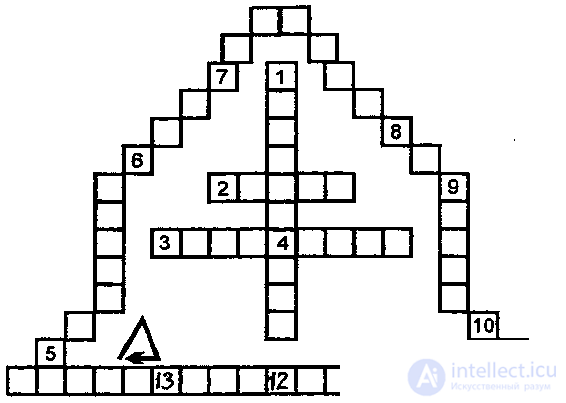
2. Solve the crossword puzzle on the topic.
Primitive Beliefs and Ancient Religions
Часть 1 3. The origin of religion: typology of religions and early forms of religious culture
Часть 2 5. The evolution of beliefs and cult during the transition

Comments