
Lecture 6 min.
Systems analysis is a methodology for studying complex systems and processes in order to identify their structure, functioning and regularities. The main goal of systems analysis is to develop optimal solutions for the management and functioning of systems on the basis of a comprehensive and holistic approach.
Today we are witnessing close integration in all spheres of human activity.
Modern economic, political, social and information processes interact actively; the state and society are becoming more interconnected,
as are production and science, and culture and everyday life. Most modern firms, organizations, enterprises and corporations are integrated into systems of international economic relations, into transnational companies, and into information systems serving the world market.
One can speak of the advent of an era of a scientific, systemic, interdisciplinary approach to problems of science, education, engineering and technology,
an era that focuses attention not only on material and energy aspects but also on systemic and interdisciplinary ones, on the construction and study of a systemic-informational picture of the world, and of the advent of an era of systemic paradigms.
Under such conditions, when studying economic processes, the use of traditional analytical research methods alone is not sufficient; integral,
comprehensive and all-round approaches are needed, which focus attention not only on a particular economic object but also on the study of the environment in which it
operates. One such method is the systems approach, which considers the economy as a complex integral system in various aspects: as a set of elements of different
levels of aggregation (macro level, branches and sectors of the economy, micro level), across spheres of activity (production and non-production) and functions (marketing, finance,
auditing, etc.).
For specialists in information systems and technologies, it is important to solve the
problem of effectively managing large information systems,
which include hundreds of computers, terabytes of information and a wide variety of
system and application software. For such complex systems, the use of classical analytical methods is impossible, and full-scale experiments are very limited. Therefore, the methods of systems analysis are used as the basis for the study and design of
such systems, and experiments are carried out in a computer version, by building and using system simulation models.
The main goal of studying the discipline "Systems Analysis" is to develop
systems thinking and an awareness of the need to apply a systems approach to management and decision-making problems and to the study of complex
phenomena and processes in socio-economic and information systems.
The discipline "Systems Analysis" covers the basic concepts of the
methodology of systems analysis of complex interconnected objects of various nature that function in accordance with a multitude of conflicting criteria and
goals in the presence of substantial risks and uncertainties. This manual
covers the fundamentals of systems theory, the methodology of systems research, methods of
data representation, information aspects of the study of systems, methods of analysis and
forecasting of time series, statistical methods of data processing, systems
analysis of transport networks, conditions of system stability, modeling and forecasting of systems by methods of nonlinear dynamics, methods of decision-making under
uncertainty, and approaches to managing systems.
The aim of this discipline is to provide practical skills in applying systems methodology to the analysis, modeling and forecasting of complex objects,
to the construction of computer information systems; to develop practical skills of
logical-physical modeling and design of information systems; and to familiarize the candidate with the methodology of studying systems with a limited amount of
information.
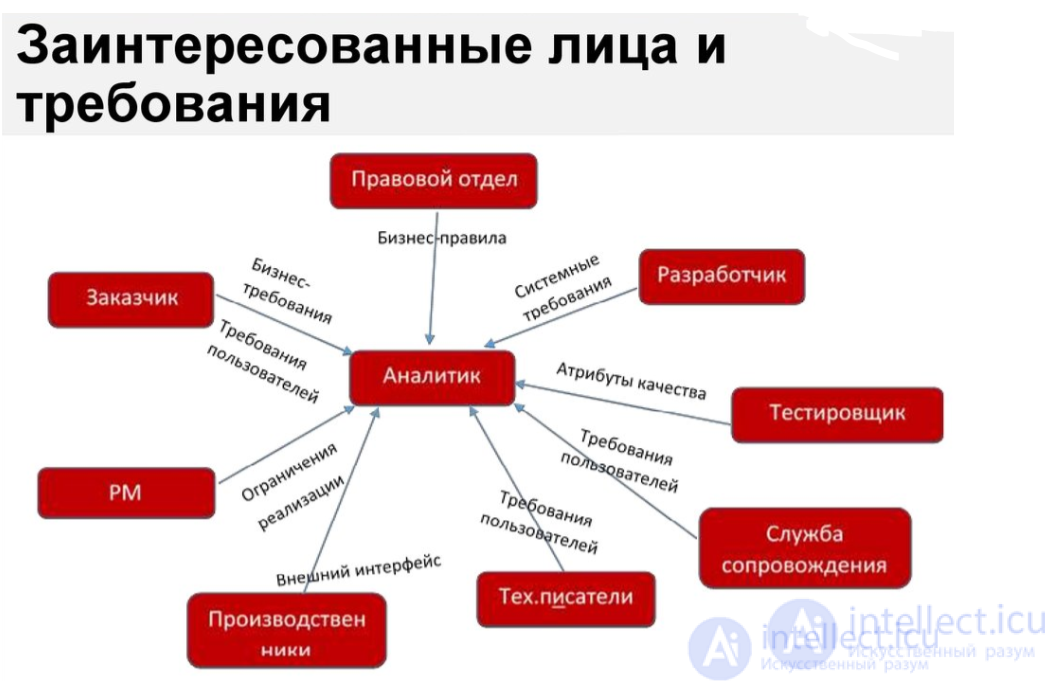
The theoretical foundation for studying the discipline "Systems Analysis"
consists of higher mathematics, discrete analysis, probability theory and mathematical statistics, economic cybernetics, operations research and mathematical programming, graph theory, etc. The technical means of systems analysis and management are
modern computer technology and information systems.
System — a set of interconnected elements that interact with one another to achieve certain goals. Examples of systems: a transport network, a manufacturing enterprise, a biological ecosystem.
System element — a separate part of a system that performs certain functions. Elements can be either simple or complex.
Connections in a system — interactions between elements that determine the behavior of the system as a whole. Connections can be direct (immediate) or indirect (through other elements).
System structure — the organization of elements and the connections between them. The structure determines how the system will function and respond to change.
System goals — the results or states toward which the system strives. Goals can be either explicit (stated) or hidden (implicit).
System environment — external factors and conditions that influence the functioning of the system. The environment can be static (unchanging) or dynamic (changing).
Problem statement — defining the problem that needs to be solved. At this stage, goals and constraints are formulated.
System description — collecting and analyzing information about the system, its elements and connections. This includes building models and diagrams and describing the structure and functions.
System modeling — creating abstract or mathematical models that describe the behavior of the system under various conditions. Models help to forecast the development of the system and to assess the influence of various factors.
Model analysis — studying the models in order to identify the strengths and weaknesses of the system, its stability and adaptability. At this stage, methods of simulation modeling, statistical analysis and optimization are often applied.
Developing recommendations — on the basis of the analysis, recommendations are formulated for improving the system and optimizing its structure or processes.
Implementing solutions and monitoring — carrying out the proposed changes and monitoring their effectiveness.
Systems analysis is used in various fields, such as:
Systems analysis helps to better understand complex systems and to make well-founded decisions on the basis of a comprehensive consideration of all the interconnections and factors that influence the system.

Comments