
Lecture
Objective: to give students knowledge of the methods of sanitary treatment of people and the decontamination of clothing, footwear, and protective equipment.
Sanitary treatment – a set of measures aimed at decontaminating a person's body, their clothing, personal belongings, and dwelling, when these are contaminated with the causative agents of infectious diseases, insect vectors, radioactive substances, or chemical warfare agents.
Sanitary treatment is carried out to prevent or maximally reduce injury to people, primarily in cases where the degree of contamination of the body surface exceeds the permissible levels.
Clothing, footwear, and individual protective equipment that have been contaminated can be sources of injury to people and are subject to decontamination, degassing, and disinfection.
Decontamination may be partial or complete.
Protective equipment and safety measures during special treatment
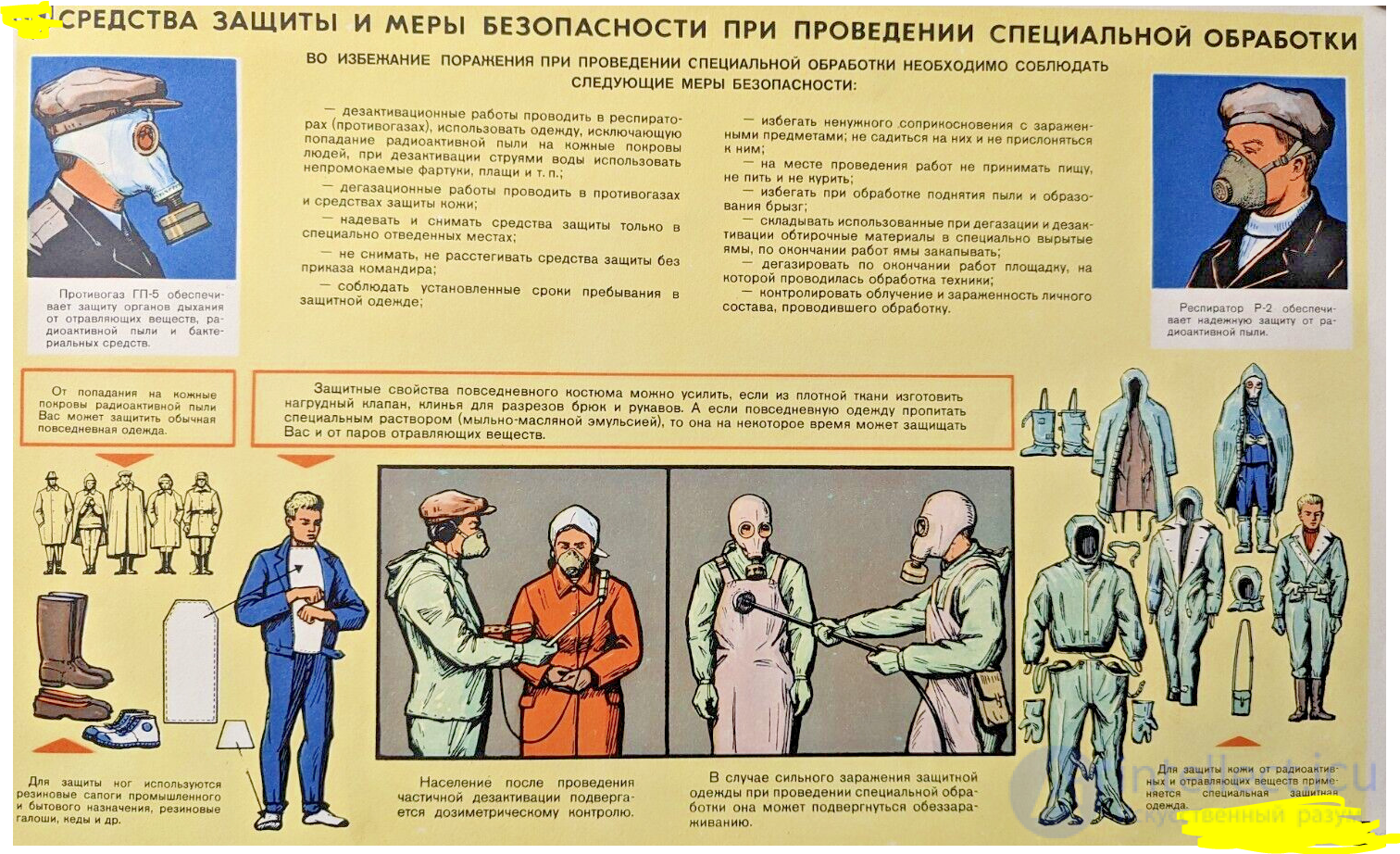
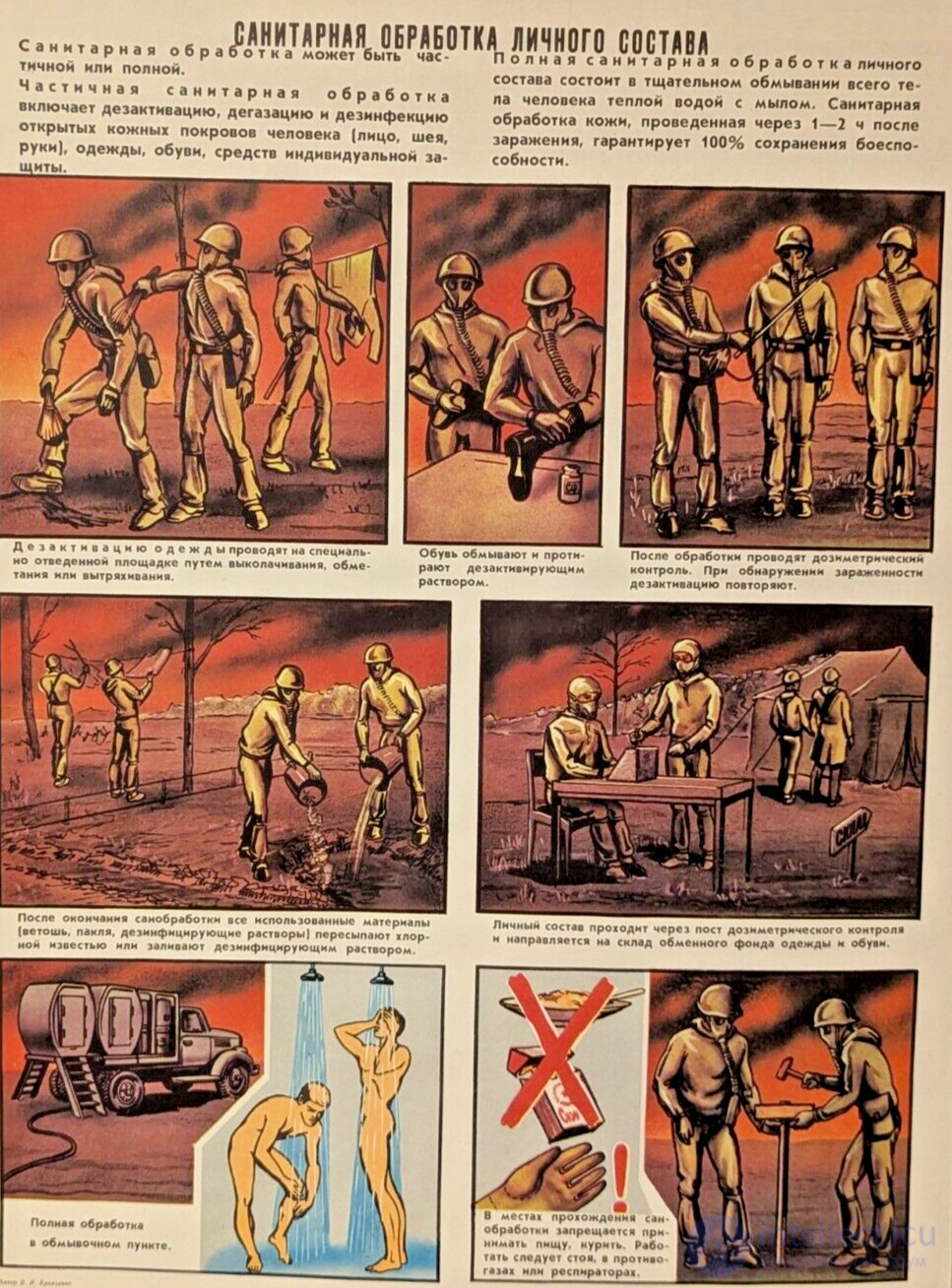
Partial decontamination is carried out in the event of dangerous contamination and is performed at the first opportunity, after leaving the affected area, using the simplest methods. This is a preliminary measure before complete decontamination.
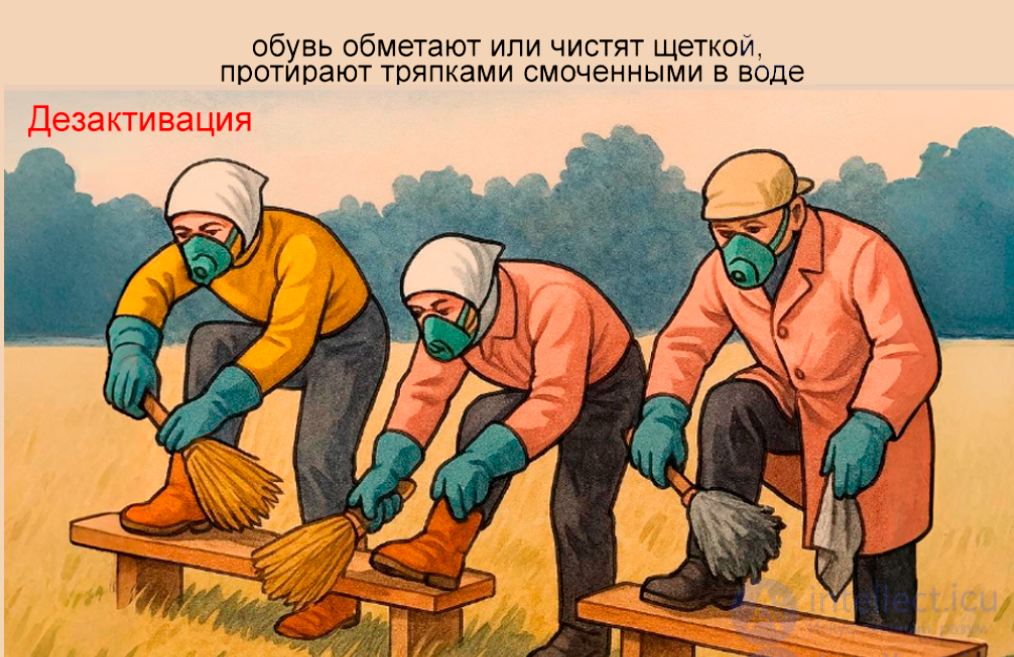
Before starting partial sanitary treatment, partial decontamination of clothing, footwear, and available individual protective equipment is carried out first. To do this, capes, cloaks, coats, or other outerwear are carefully removed and cleared of radioactive dust by shaking, beating, and brushing with available means. Footwear is then wiped down or washed with water.
After completing the partial decontamination of clothing, footwear, and protective equipment, gas masks, respirators, or other respiratory protective equipment used are removed. The facepieces and canisters of the gas masks are thoroughly wiped and placed in previously cleaned gas mask bags.
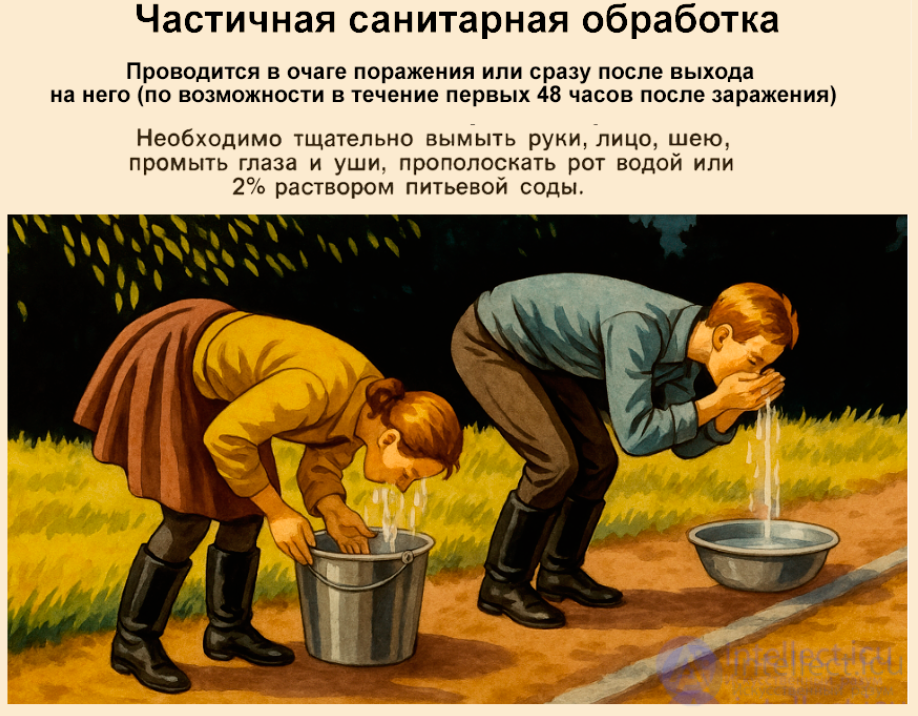
Next, sanitary treatment of exposed parts of the body is carried out directly. First, hands soiled during decontamination are washed as thoroughly as possible with clean water, and then the face, neck, eyes, and ears are carefully washed. To remove radioactive dust that has entered the mouth and nasopharynx cavity, the nose is rinsed with water and the mouth is rinsed several times with uncontaminated water.
If there is no water, or if the available water is itself dangerously contaminated, partial sanitary treatment should be carried out using other available means. Thus, hands, face, and exposed parts of the body contaminated with radioactive substances are carefully wiped and dusted off, without excessive force, using a handkerchief, a clean cloth, grass, leaves, or other available materials.
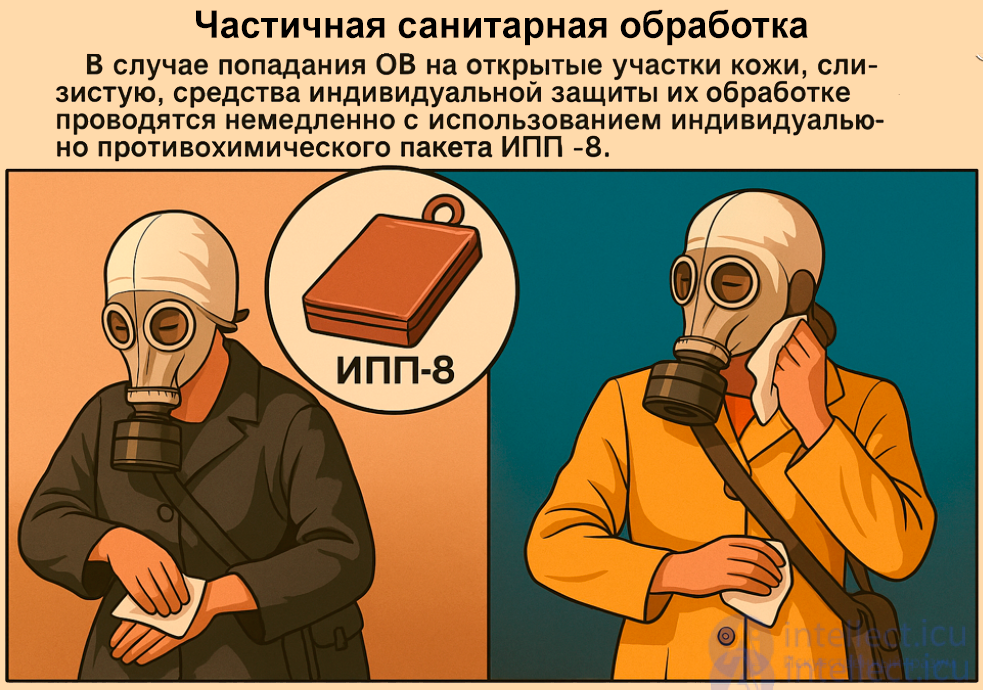
In the event of contamination with chemical warfare agents, partial sanitary treatment consists of degassing the CWA that has landed on the skin, clothing, footwear, and protective equipment.
The individual anti-chemical packet should be considered the best means of carrying out partial sanitary treatment. The size and shape of the packet make it convenient for practical use and for carrying in the pocket of the gas mask bag.
The packet is intended for degassing CWA on exposed areas of skin (face, neck, hands) and on individual parts of clothing (collar, cuffs). In addition, in certain cases it is also possible to degas the facepiece of the gas mask and small parts and items that present a hazard.
When using individual anti-chemical packets, it should always be remembered that the contaminated areas of skin must be treated first, and only afterwards the clothing and protective equipment. If individual anti-chemical packets are not available, partial sanitary treatment and removal of chemical warfare agents is carried out using every available means and improvised materials.
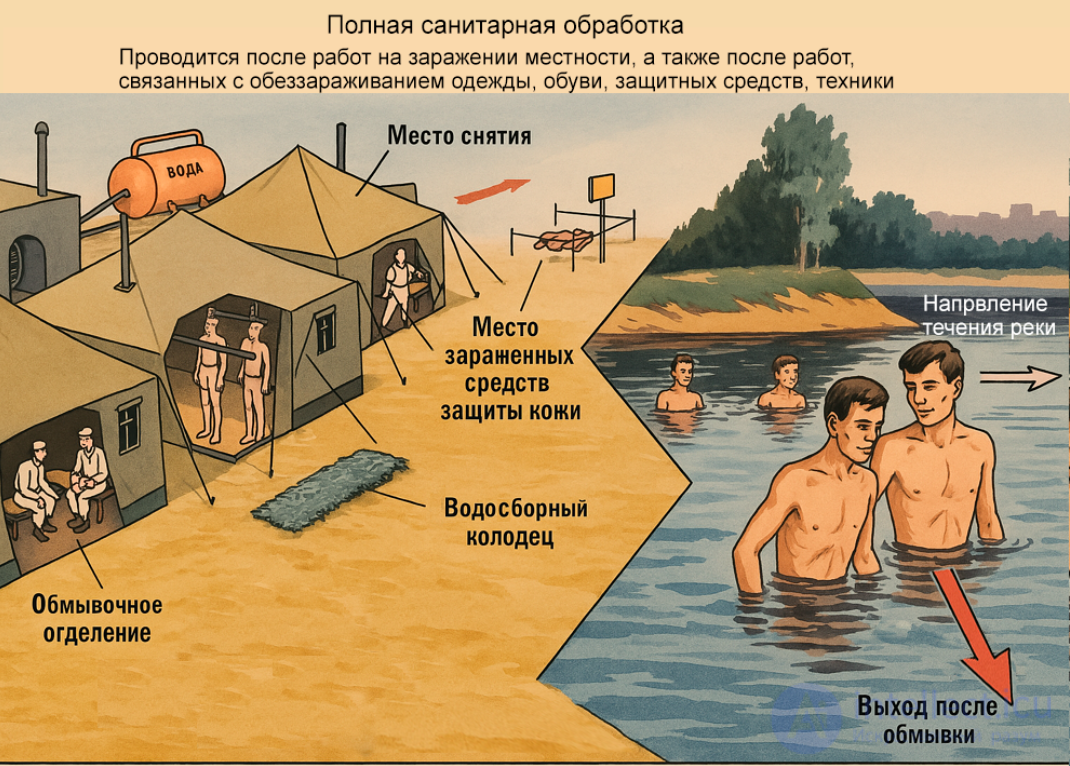
Complete sanitary treatment, like partial treatment, consists of removing radioactive and chemical warfare agents or bacterial agents, but unlike partial treatment, it is a final preventive measure aimed at protecting people from injury and preserving their capacity for work. It is carried out more thoroughly, treating not only individual contaminated areas of skin but the entire surface of the body with water, soap, and a washcloth.
Complete sanitary treatment must be undergone by all people who have been in a contaminated area.
Complete sanitary treatment of people is carried out, as a rule, at pre-equipped stationary washing points, bathhouses, shower pavilions, sanitary checkpoints, or at sites specially deployed for this purpose using mobile equipment.
Under favourable summer conditions, complete sanitary treatment is carried out at open flowing bodies of water or on a river.
People who arrive in contaminated clothing and require complete sanitary treatment are sent to the changing rooms, where they remove their clothing and hand it over to a specially equipped room for collecting contaminated clothing and preparing it for decontamination.
All arrivals then proceed to a room where medical personnel examine the casualties, help them clean the mucous membranes of the eyes, nose, and mouth, and provide any necessary medical assistance to those who need it.
On entering the shower section, people receive soap and washcloths made of soft materials or rags. Approximately 40 g of soap and 30-35 l of water heated to 38-40°C are used per person.
Sanitary treatment takes no more than 30 min (undressing 5 min, showering 15 min, and dressing 10 min). After washing, people move to the dressing room, where they undergo a repeat medical examination and, in the case of radioactive contamination, dosimetric monitoring.
If in this case the residual contamination of people proves to be above the permissible level, they are sent back to the shower, where they undergo repeat washing.
In the dressing room, people who have undergone sanitary treatment receive their decontaminated clothing and footwear, get dressed, and leave the stationary washing point without meeting the flow of people heading to the sanitary treatment point. In cases where the complexity and duration of the clothing decontamination process rule out its timely return to the people who have undergone sanitary treatment, they are issued clean underwear, gowns, slippers, and other items of clothing from the reserve stock of the stationary washing point (exchange fund).
Sanitary treatment of people contaminated with radioactive and chemical warfare agents or bacterial agents, and who have wounds, burns, concussions, and other injuries, is organized by the medical service of civil defence within its own units.
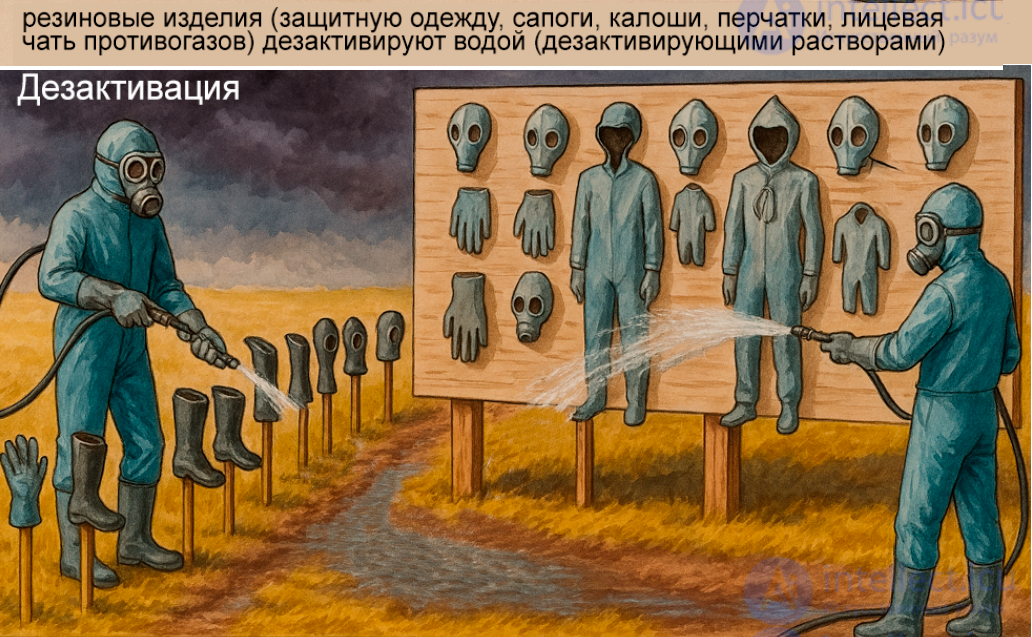
For all types of clothing and footwear, the simplest and most accessible methods of decontamination are brushing off, shaking out, and beating. For items made of rubber, leather, rubberized materials, and synthetic films, wet decontamination methods are more effective and productive.
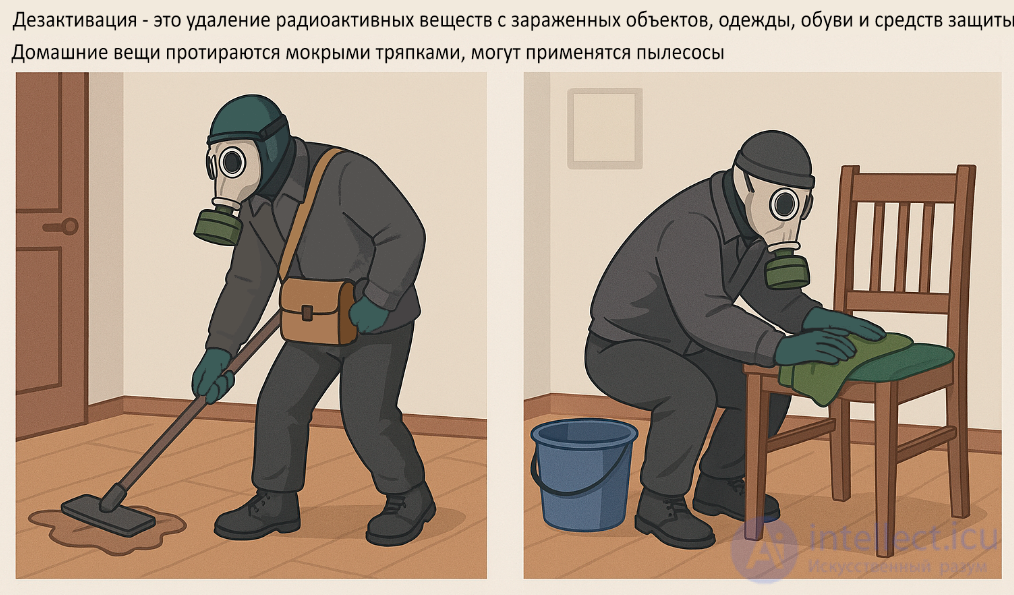
Decontamination is the removal of radioactive substances from contaminated objects, clothing, footwear, and protective equipment. Decontamination is carried out in cases where the degree of contamination exceeds the permissible limits.
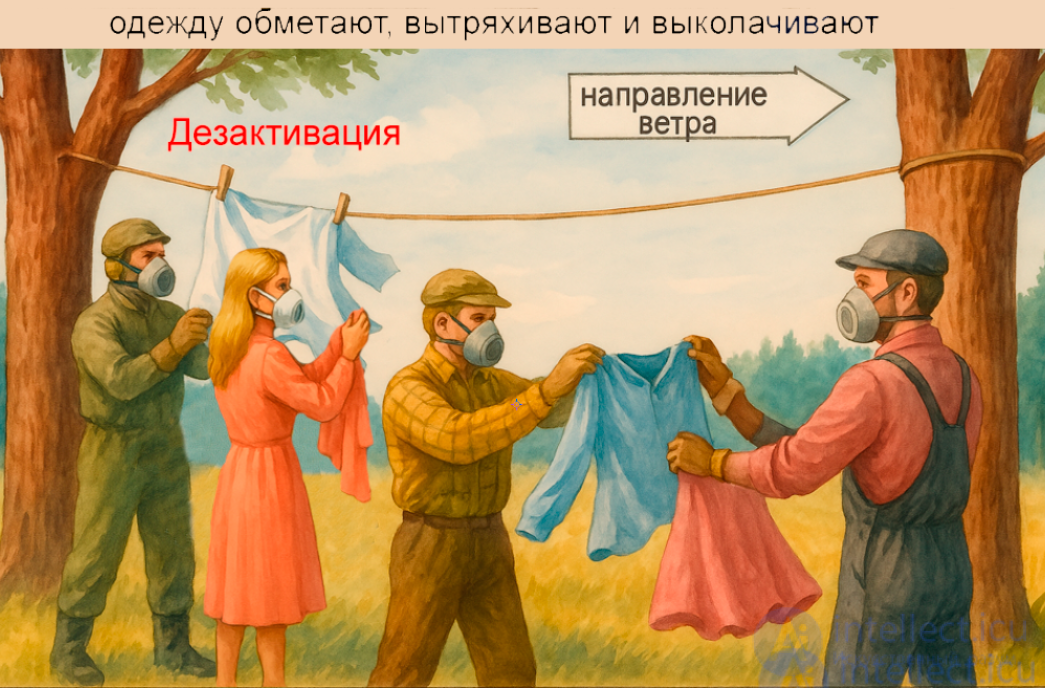
In decontamination by shaking out, beating, and brushing, the contaminated clothing is hung on ropes or crossbars and thoroughly brushed and cleaned with brooms or brushes, or beaten with sticks, for 20–30 min. A special site, chosen with regard to wind direction so as not to dust people and objects nearby, is usually set aside for decontamination by this method. People treating the clothing must wear gas masks or respirators.
Mechanical methods of clothing treatment include decontamination using vacuum cleaners. Their drawback is that, during operation, radioactive dust gradually accumulates on the vacuum cleaner's filter and becomes a source of radiation exposure for the people operating it. To reduce this hazard, the vacuum cleaner's collection unit is removed or moved behind a wall into an adjoining room.
The mechanical decontamination method can be applied to all types of clothing and footwear, except for items made of rubber, rubberized materials, synthetic films, and leather, which are wiped with rags moistened with water or a decontaminating solution.
Wiping with rags moistened with water or decontaminating solutions is used for decontaminating waterproof clothing and footwear made of rubber, rubberized, or synthetic materials.
Washing with a strong stream of water is used for decontaminating clothing and protective equipment made of materials that do not absorb water; this method is simple and quite effective.
Decontamination by laundering provides the most complete removal of radioactive substances. This method is best carried out using washing machines.
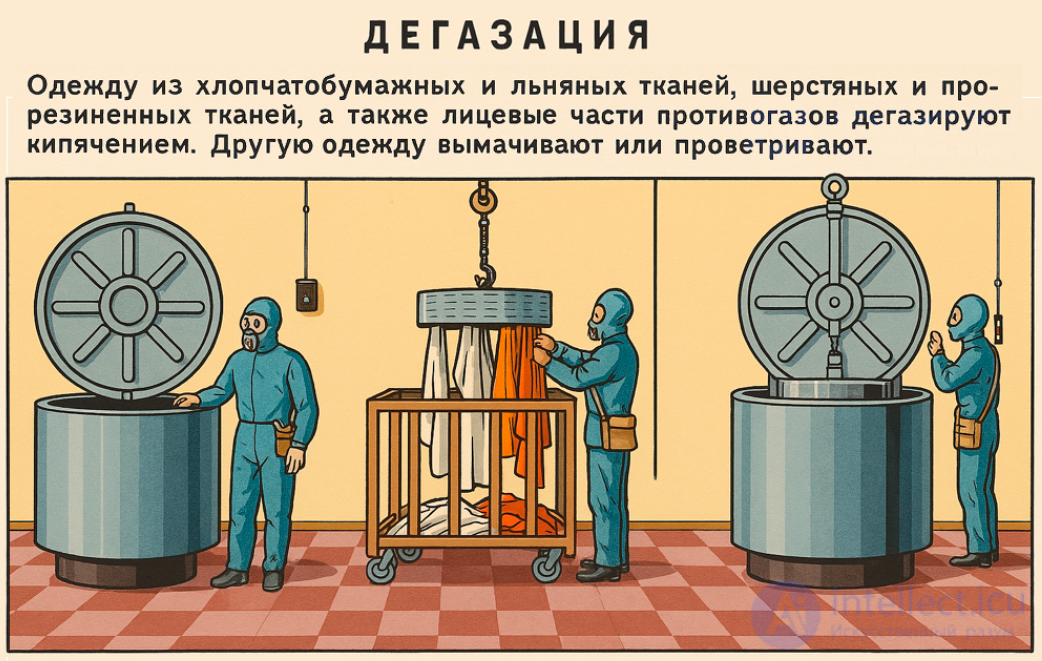
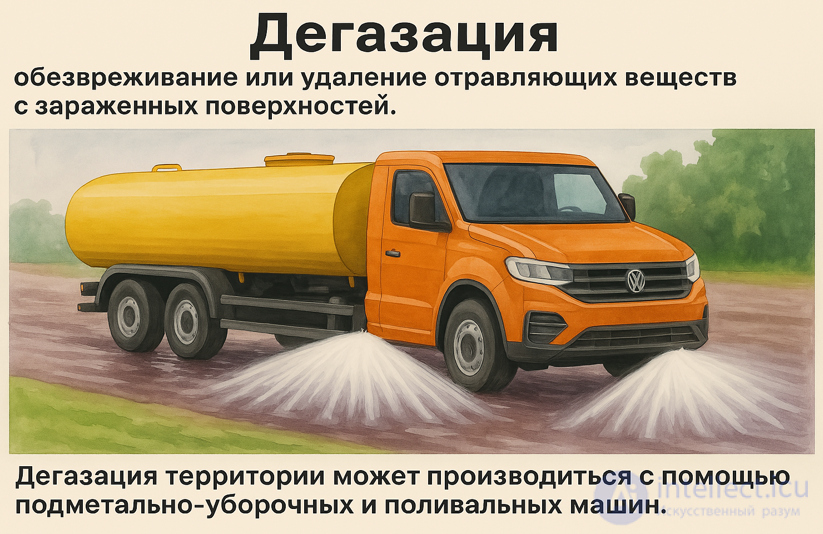
Degassing is the decontamination (neutralization) of chemical warfare agents.
Partial degassing is carried out in the event of dangerous contamination and is performed at the first opportunity, without leaving the affected area, using the simplest methods. This is a preliminary measure before complete degassing.
The simplest methods of degassing clothing, footwear, and individual protective equipment are airing them out and soaking them in water.
In addition, clothing, footwear, and individual protective equipment can be degassed by boiling, treatment with a steam-ammonia mixture, and laundering.
Degassing by airing consists in the vapours of the toxic chemical substance (CWA) gradually evaporating from the contaminated item, but it is a lengthy process (from several hours to several days).
In degassing by soaking, clothing contaminated with vapours of the toxic chemical substance (CWA) is immersed in water for 3–5 min, and then wrung out and dried. In the process, the toxic chemical substance (CWA) partly dissolves in the water and partly reacts chemically with the water (hydrolysis) to form non-toxic products.
Boiling increases the rate of dissolution and hydrolysis. To improve this process and neutralize the acids formed, which have a harmful effect on the clothing, 0.3% of SF-2U (SF-2) powder or 2−4% of sodium carbonate is added.
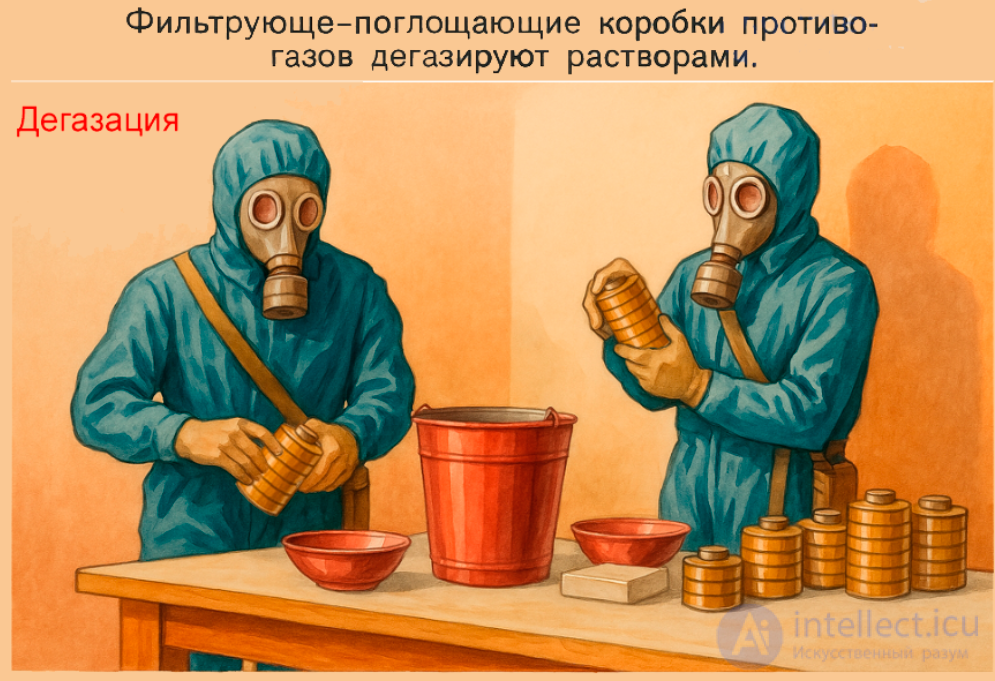
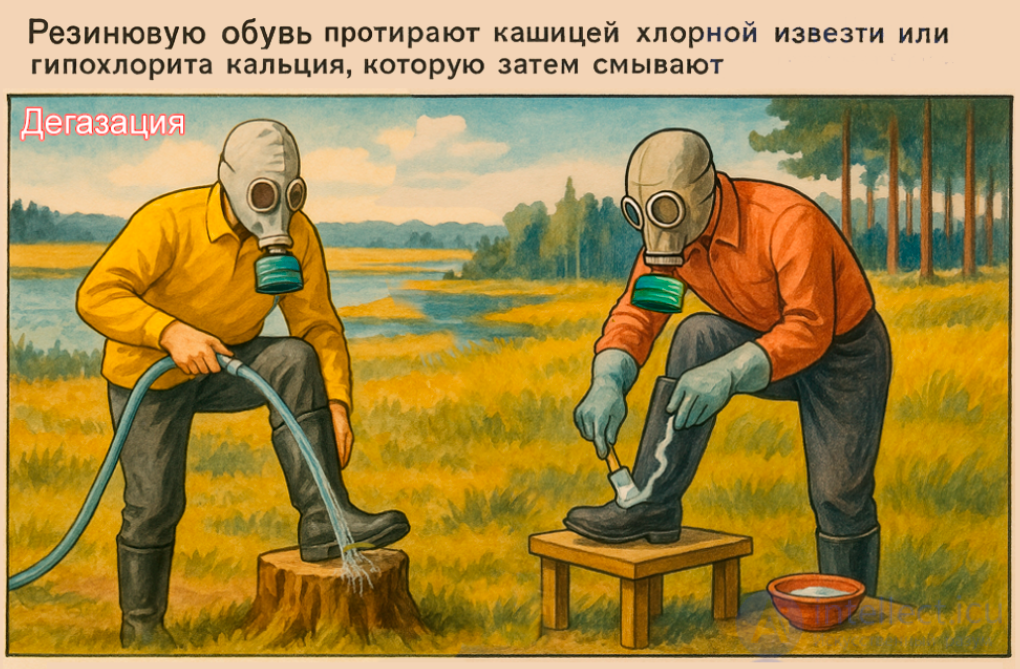
Boiling can be used to degas items made of cotton fabric, rubber, and rubberized protective fabrics (gas mask facepieces, L-1 and OZK suits, rubber boots, gloves). It should be noted that fur and leather items are rendered completely unusable by boiling, since at temperatures above 60°C their protein base coagulates, while woollen and cloth items shrink considerably when boiled, which often makes them unfit to wear.
Steam-ammonia mixture is used to degas mainly woollen items and headwear with artificial fur. The essence of the method lies in the hydrolysis and neutralization by ammonia of the acids formed. This method is lengthy and labour-intensive, and is usually carried out in degassing chambers or containers with small quantities of contaminated property. Thus, degassing with a steam-ammonia mixture is only an auxiliary method.
Degassing of clothing by laundering is carried out in mechanical laundries using washing machines under the same conditions as boiling.
Wiping with degassing solutions is used for partial degassing of small areas of clothing, footwear, and protective equipment on which there are drops or smears of the toxic chemical substance (CWA).
Disinfection is the destruction of disease-causing microbes and the breakdown of toxins.
To disinfect clothing and protective equipment, methods are used such as treatment with hot air, boiling, soaking in disinfecting solutions, and steam-air or steam-formalin mixtures in stationary chambers and disinfection-shower units.
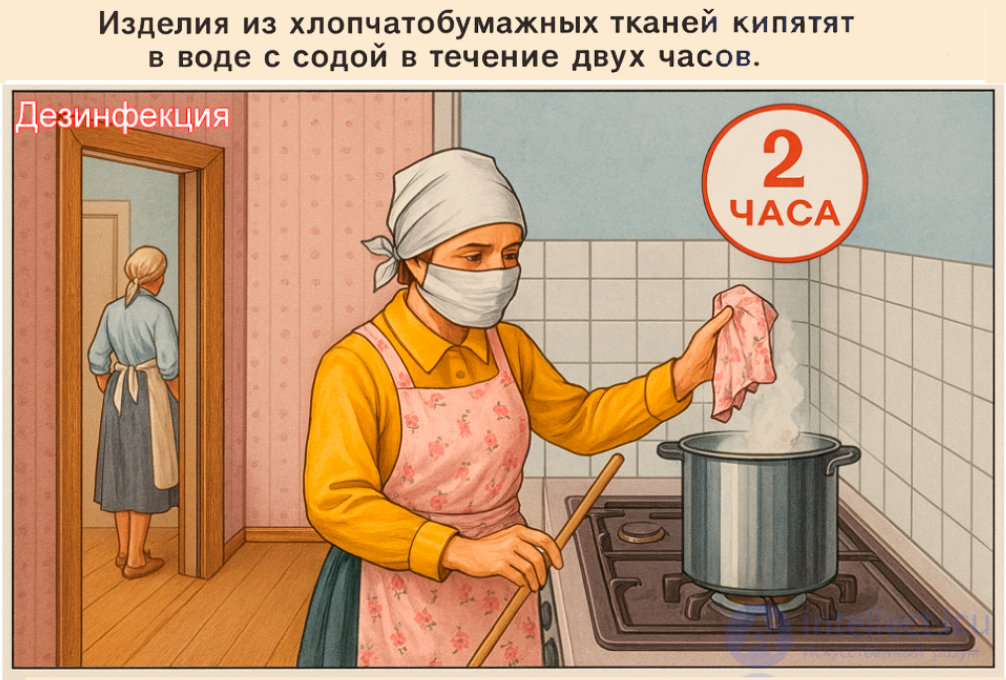
Boiling is used for disinfecting cotton clothing, individual protective equipment, and other property made of rubber and rubberized fabric. Vegetative forms of microbes die in hot water at 60−70°C, while spore forms of microbes are destroyed only at the temperature of boiling water. To speed up the disinfection process, it is recommended to add 1–2% sodium carbonate or 0.3% SF-2 powder.
Soaking in disinfecting solutions can be used to disinfect clothing made of cotton fabric and individual protective equipment. Items disinfected by soaking or wiping must then be thoroughly rinsed with water, and footwear, clothing, and other leather items must also be treated with shoe cream after drying. If contaminated with vegetative forms of microbes, these items must be disinfected using the steam-formalin method.
The steam-air method can be used to disinfect all types of clothing and individual protective equipment contaminated with vegetative and spore forms of microbes, except for leather and fur items, which are damaged by heating in a moist state above 60°C. Since most disease-causing microbes die at a temperature of about 100°C, steam has a strong disinfecting property. When it is introduced into a container (chamber) holding the contaminated items, the steam heats the air and mixes with it, forming a steam-air mixture. As a rule, moist saturated steam is used for disinfection. It has a temperature of 100°C at normal pressure and contains a certain amount of water in the form of fine droplets. Treating contaminated items with a steam-air mixture is an effective and reliable method.
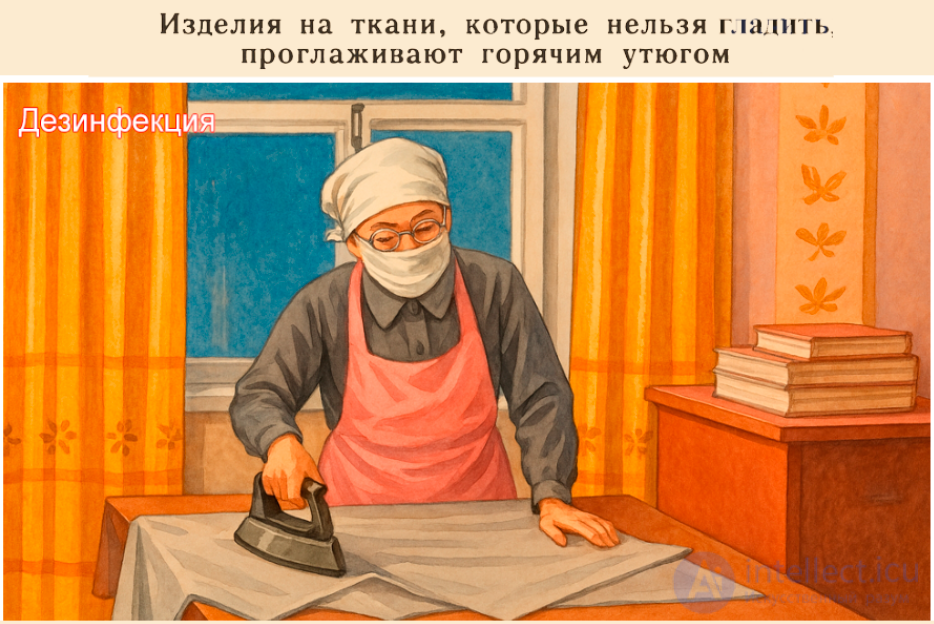
Items that cannot be boiled are pressed with an iron
The steam-formalin method can be used to treat all cotton, horsehair, woollen, rubberized, and other items. However, items made of fur are recommended to be disinfected with the steam-formalin mixture only at a temperature of 58−59°C. Because steam at this temperature has a weaker disinfecting effect than at 100°C, formalin is added to the steam-air mixture, which enhances its disinfecting properties. The duration of treatment depends on the amount and condition of the property and the degree and nature of the contamination.
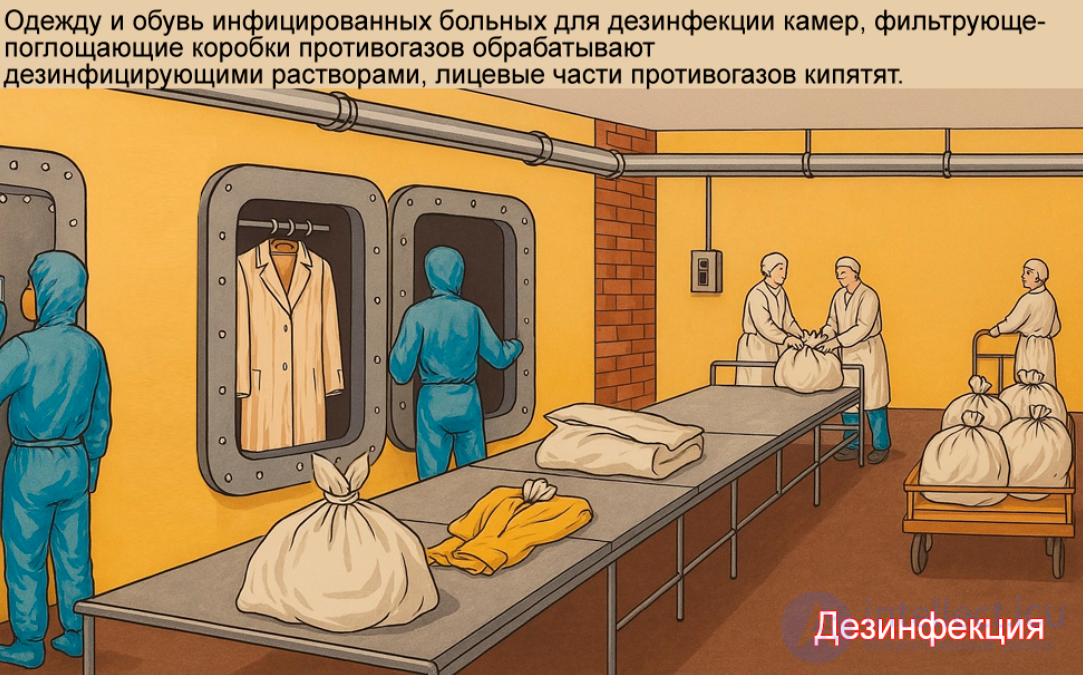
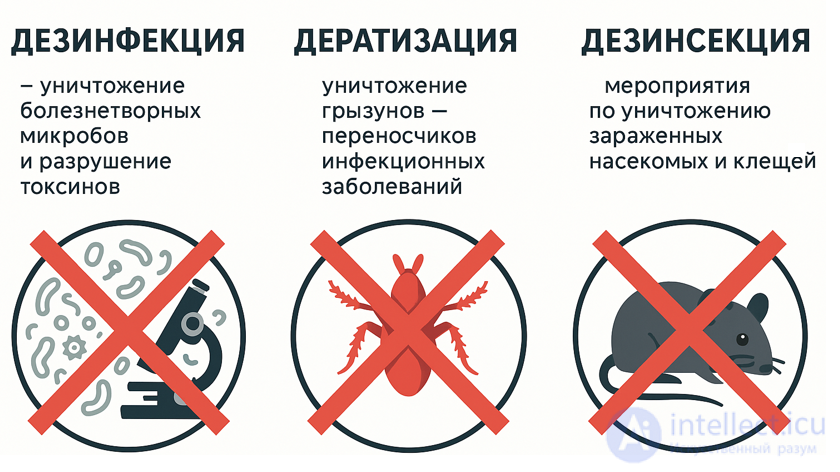
Figure: Disinfection, deratization, disinsection
1. Describe how partial sanitary treatment is carried out.
2. What are decontamination, degassing, and disinfection?
2. Describe the features of disinfection.

Comments