
Lecture
Objective: to develop students' knowledge of the damaging factors of radiation accidents, the signs of radiation sickness, the measures for first aid, and the prevention of radiation injuries.
Ionising radiation (an imprecise synonym with a broader meaning is "radiation") is a flow of photons and other elementary particles or atomic nuclei capable of ionising matter.
Visible light and ultraviolet radiation, which in certain cases can ionise matter, are not classed as ionising radiation. Infrared radiation and radio-band radiation are not ionising, since their energy is insufficient to ionise atoms and molecules in the ground state
Natural sources of ionising radiation
Man-made sources of ionising radiation:
Many stable atoms are converted into unstable isotopes as a result of irradiation and the corresponding induced nuclear reaction. As a result of such irradiation, a stable substance becomes radioactive, and the type of secondary ionising radiation will differ from the original irradiation. This effect is most pronounced after neutron irradiation. A typical example is cobalt, which occurs in nature only as a single stable isotope — cobalt-59. Its thermal-neutron capture cross-section is high, and it readily becomes radioactive cobalt-60, which has a half-life of about 5 years. Natural iron contains the isotope iron-54, which, on capturing a neutron, becomes relatively long-lived (half-life a little over 2.5 years) iron-55, which emits characteristic X-ray radiation and Auger electrons during electron capture.
At the same time, irradiation of matter with X-rays and low-energy (below a few MeV) gamma quanta and beta particles does not lead to induced radioactivity, since their energy is insufficient for the nuclear reactions that convert stable nuclei into radioactive ones.
Background radiation comes from a large number of sources, both natural and man-made. These include cosmic radiation as well as environmental radioactivity from natural radioactive materials (such as radon and radium), together with man-made medical X-ray radiation, global fallout from nuclear weapons testing, and radiation accidents.
| Source of radiation | World | USA | Japan | Russia | Note |
|---|---|---|---|---|---|
| Inhalation of air | 1.26 | 2.28 | 0.40 | 2.0 | Mainly from radon, depends on gas buildup indoors |
| Consumption of food and water | 0.29 | 0.28 | 0.40 | 0.17 (40K), 0.133 (food), 0.038 (water) |
(K-40, C-14 etc. ) |
| External exposure from terrestrial radionuclides | 0.48 | 0.21 | 0.40 | 0.67 | Depends on soil and building materials |
| Cosmic radiation | 0.39 | 0.33 | 0.30 | 0.339 | Depends on altitude |
| Subtotal (natural) | 2.40 | 3.10 | 1.50 | 3.36 | Significant population groups receive 10–20 mSv |
| Medical | 0.60 | 3.00 | 2.30 | 0.62 | The world figure does not include radiation therapy; the US figure is mainly from computed tomography and nuclear medicine. |
| Consumer products | — | 0.13 | — | cigarettes, air travel, building materials, etc. | |
| Atmospheric nuclear testing | 0.005 | — | 0.01 | — | Peaked at 0.11 mSv in 1963 and has been declining since; higher near test sites |
| Occupational exposure | 0.005 | 0.005 | 0.01 | Worldwide, an average of 0.7 mSv only for workers, mainly due to radon in mines; in the US mainly from medical and aviation workers. |
|
| Chernobyl accident | 0.002 | — | 0.01 | 0.006 (14 regions) | Peaked at 0.04 mSv in 1986 and has been declining since; higher near the plant |
| Nuclear fuel cycle | 0.0002 | 0.001 | Up to 0.02 mSv near facilities; does not include occupational exposure | ||
| Other | — | 0.003 | Industry, security, medicine, education and research | ||
| Subtotal (man-made) | 0.6 | 3.14 | 2.33 | ||
| Total | 3.00 | 6.24 | 3.83 | 3.98 | millisieverts per year |
The natural background radiation level varies significantly from place to place. In France, for example, the annual dose from natural exposure is 5 mSv, in Sweden it is 6.3 mSv, while on the beaches of Guarapari in Brazil the annual radiation level is 175 mSv because of the high thorium content of the sand. Since brick and concrete contain small doses of radioactive elements, the average dose for a person increases by a further 1.5 mSv per year. Because of emissions from coal-fired thermal power plants and air travel, a person receives up to 4 mSv per year. From medical diagnostic procedures (X-rays and the like), a person receives roughly a further 1.4 mSv per year. In total, the annual dose received by a person can reach 10 mSv, but on average does not exceed 5 mSv[ . Background radiation has no noticeable biological effect on a person if it does not exceed 3 millisieverts per year. Doses of up to 10 millisieverts are considered completely safe. Changes appear at exposure doses of around 10–100 millisieverts, and manifestations of systemic damage to the body begin from 500 millisievert
In practice, radioactive materials can be encountered in a very wide range of human activities and in unexpected places. Among the most common situations:
These examples show that a knowledge of the basics of radiation safety is needed not only by professionals but also by a wide range of people — from military personnel, patrol officers and customs officers to medical staff and construction workers.
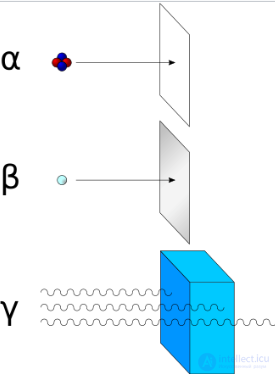
Alpha radiation is a flow of alpha particles — nuclei of helium-4. Alpha particles, produced during radioactive decay, can easily be stopped by a sheet of paper. Beta radiation is a flow of electrons arising from beta decay; to shield against beta particles with energy up to 1 MeV an aluminium plate a few millimetres thick is sufficient. Gamma radiation has much greater penetrating power, since it consists of high-energy photons that carry no charge; heavy elements (lead etc.) are effective for shielding, absorbing MeV-range photons in a layer a few cm thick. The penetrating power of all types of ionising radiation depends on their energy.
At present, around 450 nuclear power units (with a total capacity of more than 350 GW) are in operation in almost 30 countries around the world, of which 46 (as of 1992) are in the CIS countries (total capacity 30 MW). The total amount of electricity generated by nuclear power plants worldwide is about 20%, and in Europe almost 35%.
Over the entire history of the development of nuclear power (since 1954), more than 300 accident situations have been recorded worldwide.
One of the most recent and most terrible accidents is the accident at Fukushima.
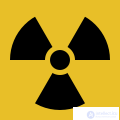
Radiation hazard sign
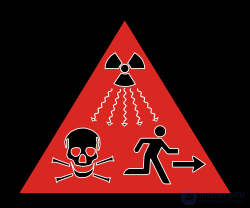
The new radiation hazard sign
The international conventional radiation hazard sign («trefoil», «fan») has the shape of three sectors 60° wide, spaced 120° apart from one another, with a small circle in the centre. It is rendered in black on a yellow background.
The Unicode character table includes a symbol for the radiation hazard sign — ☢ (U+0x2622).
In 2007, a new radiation hazard sign was adopted, in which the «trefoil» is supplemented with the symbols «deadly» («skull and crossbones») and «get away!» (the silhouette of a running person and a pointing arrow). The new sign is intended to be more readily understood by those unfamiliar with the meaning of the traditional «trefoil».
Some scientists are trying to develop a system of long-term warnings about nuclear waste that would be understandable to people even thousands of years from now .
The international conventional radiation hazard sign («trefoil», «fan») has the shape of three sectors 60° wide, spaced 120° apart from one another, with a small circle in the centre. It is rendered in black on a yellow background.
In 2007, a new radiation hazard sign was adopted, in which the «trefoil» is supplemented with the symbols «deadly» («skull and crossbones») and «get away!» (the silhouette of a running person and a pointing arrow). The new sign is intended to be more readily understood by those unfamiliar with the meaning of the traditional «trefoil».
Some scientists are trying to develop a system of long-term warnings about nuclear waste that would be understandable to people even thousands of years from now[37
Since 2004, 26 April has been marked in the CIS member states as the International Day of Remembrance for the Victims of Radiation Accidents and Catastrophes. The world's largest nuclear catastrophe occurred on the night of 26 April 1986 in the city of Chernobyl. An area of almost 160,000 square kilometres was contaminated with radiation: the northern part of Ukraine, Belarus, and the west of Russia. More than 600,000 specialists took part in dealing with the aftermath of the accident. Immediately after the catastrophe, 31 liquidators died of radiation sickness. The remote effects of exposure are still causing deaths to this day. It is therefore very important to know how to behave if you find yourself in a radiation-affected area.
As a result of the effect of ionising radiation, substances with high chemical activity are formed in the body. They disrupt molecular bonds at the cellular level, primarily in the cells of the haematopoietic (blood-forming) system, the intestinal epithelium, and the gonads.
The degree of radiation injury depends on the type of ionising radiation (gamma radiation, neutron radiation, etc.), the dose received, the time of exposure, and the age and sex of the casualty.
The initial period of radiation injuries lasts from several hours to several days. Its symptoms are: reddening of the skin, weakness, nausea, vomiting, headache, and a rise in body temperature.
The next stage — the latent period of radiation injuries - lasts from 2 to 4–5 weeks. Its symptoms are: intoxication, bleeding (most often nosebleeds), and infectious complications resulting from weakened immunity.
In radiation accidents accompanied by the release of ionising radiation and radioactive substances beyond the established boundaries of a radiation hazardous facility, in quantities exceeding its safe operating limits, exposure of the population and radioactive contamination of the environment occur.
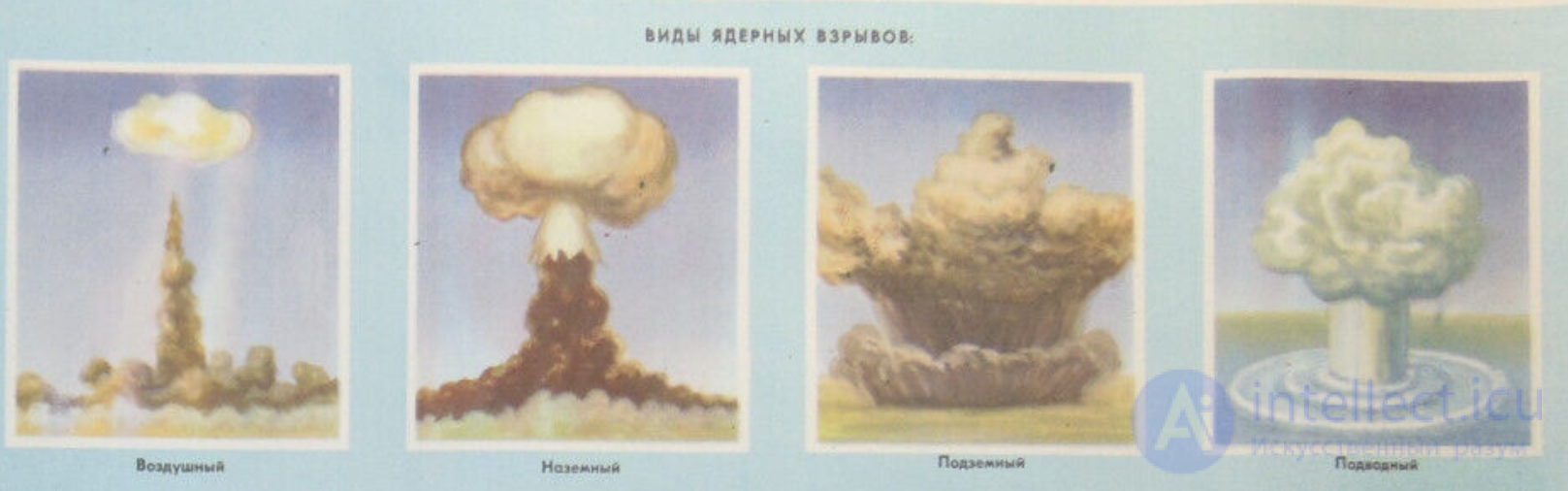
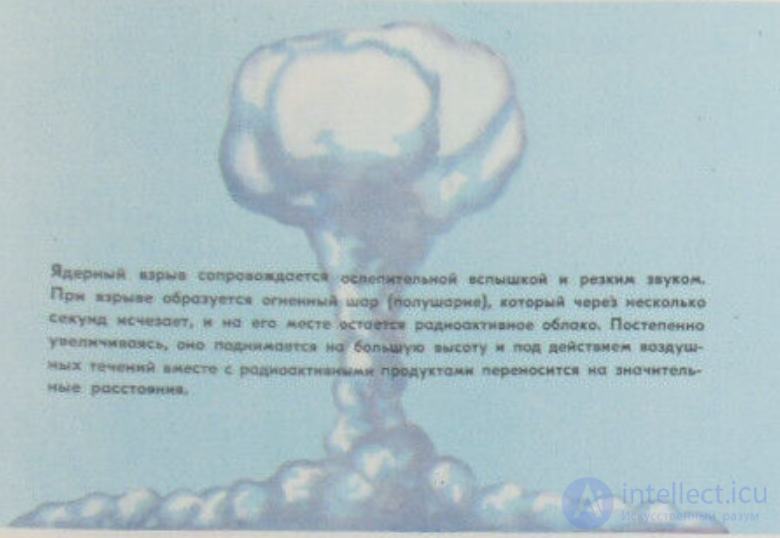
When an adversary uses nuclear weapons, a zone of nuclear destruction arises - a territory where the factors causing mass casualties among people are the air blast wave, thermal (light) radiation, penetrating radiation, and radioactive contamination of the terrain.
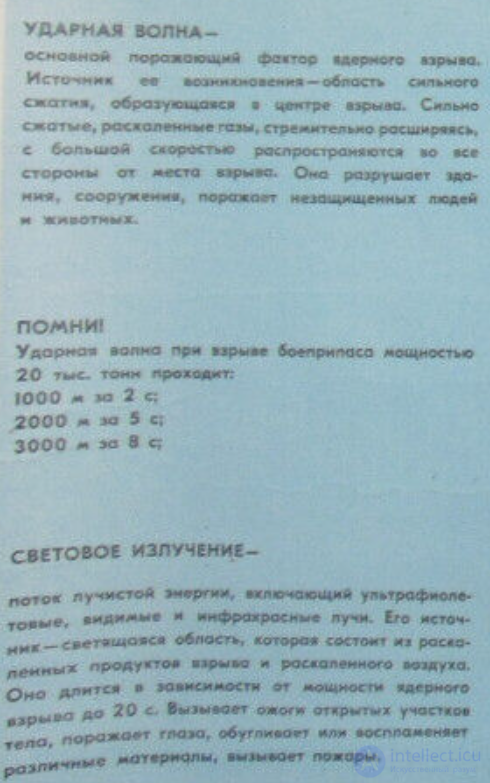
The main damaging factor is the air blast wave, which forms as a result of the rapid increase in the volume of the nuclear explosion's products under the action of a huge amount of heat and compression, followed by rarefaction of the surrounding layers of air. The air blast wave can destroy buildings and injure people at a considerable distance from the epicentre of the explosion.
As a result of the damaging effect of thermal (light) radiation, mass burns and eye injuries can occur. Various kinds of shelter are suitable for protection, and in open terrain, special clothing and goggles.
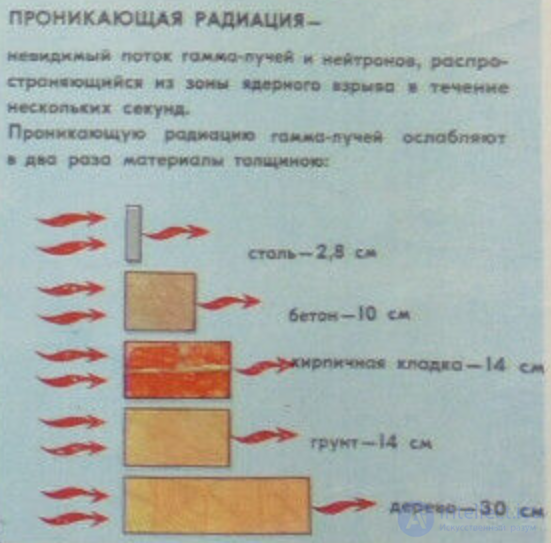
Penetrating radiation consists of gamma rays and a flow of neutrons emanating from the zone of a nuclear explosion. They can travel thousands of metres and penetrate various media, causing ionisation of atoms and molecules. On penetrating body tissues, gamma rays and neutrons disrupt biological processes and the functions of organs and tissues, as a result of which radiation sickness develops.
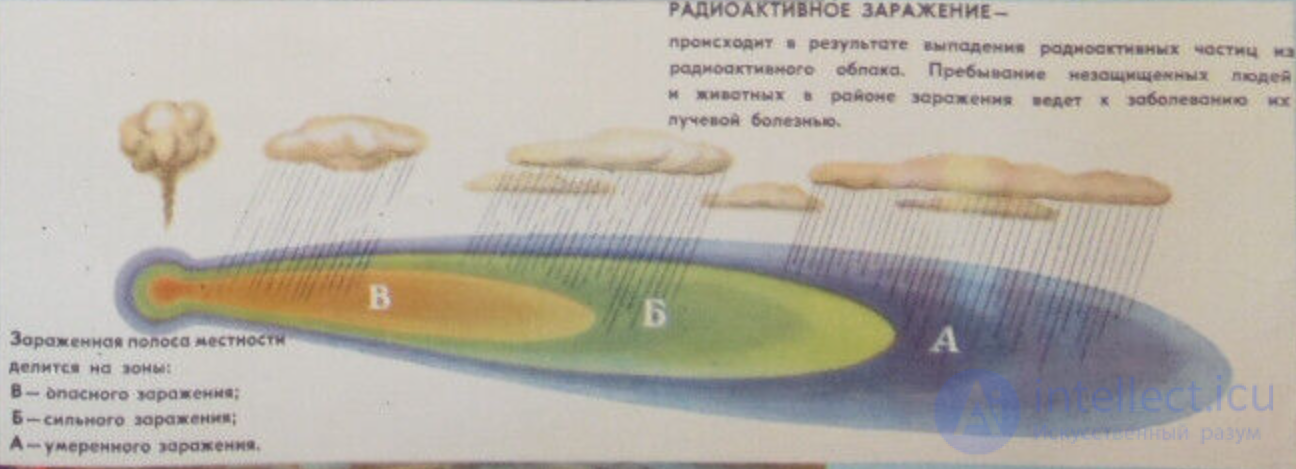
Radioactive contamination of the terrain is created by the adsorption of radioactive atoms onto soil particles (the so-called radioactive cloud, which moves in the direction of air movement). The main hazard for people in a contaminated area is external beta-gamma exposure and the entry of nuclear explosion products into the body and onto the skin.
Under the influence of ionising radiation, damage to or death of the body's cells occurs, as a result of which biological processes arise that disrupt the vital functions of various organs, mainly the organs of haematopoiesis, the nervous system and the gastrointestinal tract, which can lead to illness.
Routes by which radioactive substances enter the body:
On an established radioactive trace, the main source of radiation exposure is external irradiation. Inhalation intake of radionuclides is practically excluded if measures to protect the respiratory organs are taken in time. Intake of radioactive substances into the body is possible mainly with food and water. The main nuclides forming internal exposure in the first days after an accident are radioactive isotopes of iodine, which are most actively taken up by the thyroid gland. The highest concentration of radioiodine is found in milk. It is especially undesirable for children to consume contaminated milk, since a child's body reacts most acutely to radiation exposure. Strict monitoring of the presence of radioactive substances in milk is therefore necessary.
After 2-3 months following an accident, the main source of internal exposure becomes radioactive caesium, which can enter the body with food. In addition, radioactive strontium and plutonium can enter the body, though the areas contaminated with them are limited in scale. By the nature of their distribution in the human body, radioactive substances can be conditionally divided into four groups:
The slow decline in radiation levels significantly hampers human activity in a contaminated area and implies prolonged contamination of soil, vegetation, water, food and animals. In this connection, a special set of measures must be provided for protecting the population from radiation exposure.
The severity of radiation injuries depends on the dose of radiation received and the time during which a person was exposed to ionising radiation. Not every dose of radiation is dangerous. If it does not exceed 0.5 Gy (50 R), even loss of working capacity is excluded. A dose of 2-3 Gy (200-300 R), received over a short period of time, can cause severe radiation injuries. The same dose received over the course of several months will, as a rule, not lead to illness — a healthy human body produces new cells during this time to replace those that died from the radiation.
Total external irradiation of the body, or irradiation of large parts of the trunk or head at high doses of ionising radiation, can lead to radiation sickness.
Radiation sickness is a general disease of the body that develops as a result of exposure to ionising radiation.
A distinction is made between acute radiation sickness (ARS) of various degrees of severity and chronic radiation sickness (CRS). ARS develops after brief (minutes, hours, up to 1-2 days) external whole-body irradiation of a person at doses exceeding the threshold value (more than 1 Gy) and is expressed as combined damage to organs and tissues.
The mild (first) degree of ARS occurs with a single external uniform whole-body radiation dose of 1-2 Gy; the moderate (second) degree of ARS — at a dose of 2-4 Gy; the severe (third) degree of ARS — at a dose of 4-6 Gy; the extremely severe degree of ARS — more than 6 Gy.
In zones of nuclear destruction, as a result of the effects of several damaging factors, combined injuries can arise: trauma, burns and radiation sickness in various combinations.
Chronic radiation sickness occurs with prolonged external irradiation at a cumulative dose of about 1 Gy per year.
The frequency of fatal (lethal) outcomes with simultaneous irradiation in the dose range of 2-10 Gy increases from 5% to 100%; they occur within a period of 5 to 8 weeks.
Casualties in a state of shock need urgent first medical aid. They should be given a painkiller from a syringe tube, which is included in the AI-2 kit.
For pronounced nausea and vomiting, the antiemetic agent from the AI-2 kit is used.
After first medical aid has been given, urgent first physician's aid measures are carried out, in the provision of which rescuers take whatever part they are able.
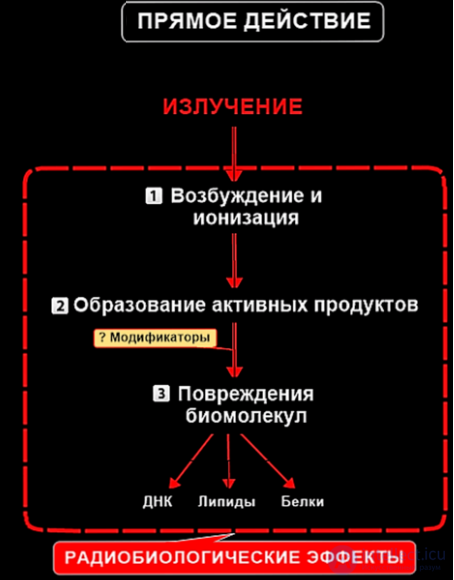
Physical stage. Transfer of radiation energy.
2. Physico-chemical stage. Redistribution of excess energy between excited molecules.
3. Chemical stage. Interaction of active products with one another and with surrounding molecules.
The physical and biological consequences of the effect of ionising radiation on biological objects.
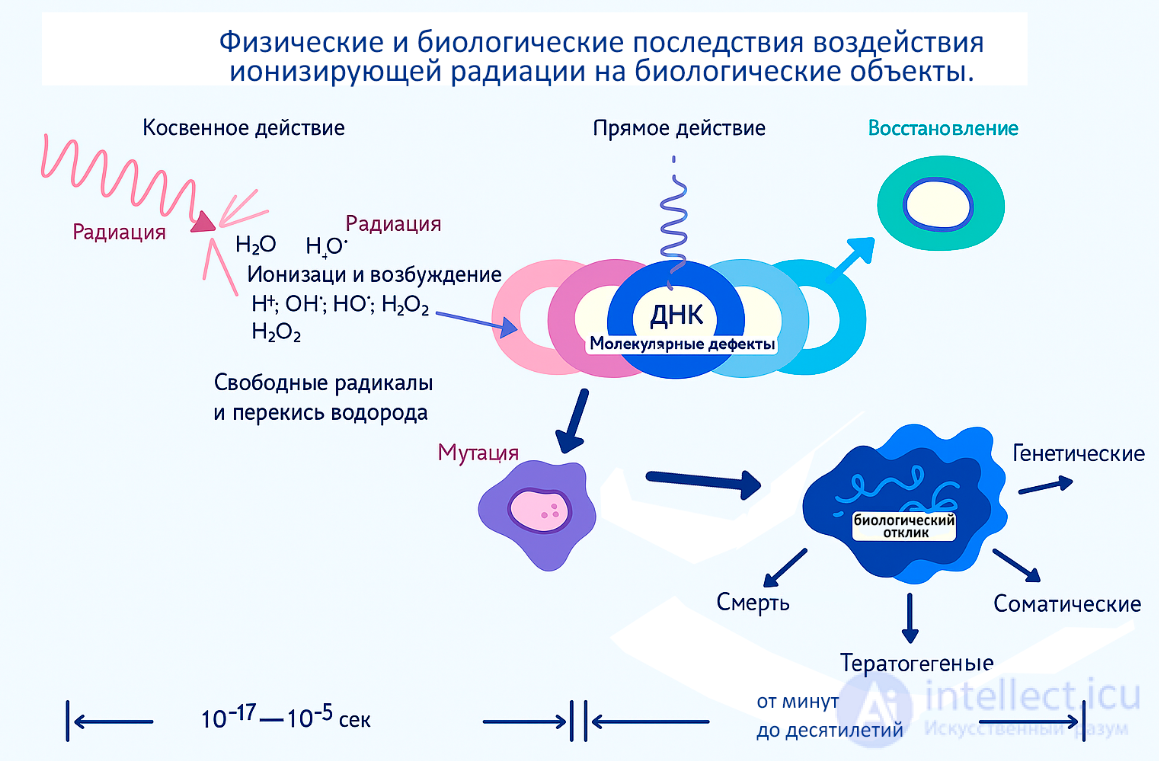
For deterministic effects to occur, a certain dose must be exceeded, after which manifestations such as radiation sickness, skin damage and cataracts can occur. The severity of these effects depends on the degree to which the threshold exposure dose is exceeded.
|
Stage |
Processes |
Duration of stage |
|
Physical |
Absorption of radiation energy; formation of ionised and excited atoms and molecules |
10-1b_ 10 >5 s |
|
Physico-chemical |
Redistribution of absorbed energy within and between molecules, formation of free radicals |
ig1* — yu11 s |
|
Chemical |
Reactions between free radicals and between them and the original molecules. Formation of a wide range of molecules with altered structure and functional properties. |
kg6 - 10 -3 s |
|
Biological |
Sequential development of damage at all levels of biological organisation, from the subcellular level to the whole organism; development of biological amplification processes and recovery processes. |
Seconds - years |
Warning of radiation hazard, use of collective and individual protective equipment, observance of a behavioural regime by the population in a territory contaminated with radioactive substances, protection of food and water from radioactive contamination, use of medical personal protective equipment, determination of the levels of contamination of territory, dosimetric monitoring of population exposure, and inspection of food and water for contamination with radioactive substances.
On warning signals, the population should take shelter in protective structures. As is known, these can fully protect against, or significantly weaken, the effect of penetrating radiation.
Medical prevention of radiation injuries is carried out using radioprotective agents contained in the individual first-aid kit.
Where high radiation levels are present in an area, it is not possible to begin giving first medical aid because of the risk of sustaining radiation injury. In these conditions, self-aid and mutual aid, together with strict observance of the rules of behaviour in a contaminated area, are of great importance.
If medical personal protective equipment was not used in advance, it is taken in accordance with the instructions for use of the individual first-aid kit.
In a territory contaminated with radioactive substances, one must not eat food, drink water from contaminated sources, or lie down on the ground.
The ability to give first medical aid in cases of radiation injury depends, above all, on knowledge of the damaging properties of the ionising radiation produced by nuclear explosions and accidents at radiation hazardous facilities, of the signs and course of the injuries they cause in a person, and of the means, methods and techniques that must be used to give medical aid and protect casualties.
When giving first medical aid in a territory with radioactive contamination, in zones of nuclear destruction, priority must first be given to the measures on which preservation of the casualty's life depends. It is then necessary to eliminate or reduce external gamma exposure, for which protective structures are used: shelters, below-ground premises, brick, concrete and other buildings.
To prevent further exposure of the skin and mucous membranes to radioactive substances, partial sanitary treatment and partial deactivation of clothing and footwear are carried out. Partial sanitary treatment is carried out by washing exposed areas of skin with clean water or wiping them with damp swabs.
The casualty's eyes are rinsed, and they are given water to rinse their mouth. Then, after putting a respirator or a cotton-gauze mask on the casualty, or covering their mouth and nose with a towel, handkerchief or scarf, partial deactivation of their clothing is carried out. In doing so, the direction of the wind is taken into account, so that dust brushed off the clothing does not get onto others
What to do in case of radiation injury.
1. Carry out the measures on which the casualty's life depends at that moment (perform artificial respiration, chest compressions, bring the person out of fainting, etc.).
2. Eliminate or reduce external gamma exposure (move the casualty to a special shelter, or, failing that – to a cellar, basement or any building made of brick or concrete).
3. Remove and destroy the casualty's clothing (in order to prevent further exposure of the skin and mucous membranes to radioactive substances); if this is not possible - carry out partial sanitary treatment and decontaminate the clothing and footwear.
4. Rinse the casualty's eyes, rinse the mouth and lavage the stomach, then give any adsorbent to drink (for example, 5-10 tablets of activated charcoal).
5. Put a respirator or a cotton-gauze mask on the casualty (failing that - cover the mouth and nose with a towel, a handkerchief or a scarf).
6. Seek medical help from a doctor at the first opportunity.
Please note!
Upon population warning signals about a radiation threat, one must immediately take cover in protective structures. This can fully protect against, or significantly weaken, the effect of penetrating radiation.
In an area contaminated with radioactive substances, one must not eat food, drink water from natural sources, or lie down (sit) on the ground.
One should not take large amounts of iodine preparations without a doctor's supervision.
Drinking green tea, taking antioxidants and adaptogens promotes the elimination of radionuclides from the body.
Patient care is of great importance in comprehensive treatment. Nutrition should be rational, taking into account the severity of the illness, and should include foods rich in vitamins and proteins. Preference is given to warm, semi-liquid food. Starting from the first period of radiation sickness, casualties are placed in isolated boxes and an aseptic regimen is created. During the height of radiation sickness, patient care must be especially thorough and attentive to prevent the development of complications.
In order to reduce the intake and deposition of radioactive iodine inside the human body, drug prophylaxis is carried out for the population and rescuers. It begins immediately when there is a threat of air and territory contamination as a result of an accident at a nuclear reactor, a leak, or emissions of products containing radioactive iodine by industrial enterprises into the atmosphere.
For this purpose, non-radioactive (stable) iodine is introduced into the human body. Once absorbed in the intestine, stable iodine, owing to its affinity for the thyroid gland, is deposited predominantly in it, and the excess is excreted from the body. This is why radioactive iodine entering the body after stable iodine has been taken can no longer accumulate in large quantities in the thyroid gland and is mostly excreted naturally from the body. Timely intake of stable iodine reduces the radiation dose to the thyroid gland by almost half, and to the whole body – by tens of times.
In our country, preparations of stable iodine in the form of potassium iodide are used. Potassium iodide tablets have been developed. In particular, such tablets are included in the individual first-aid kit AI-2 as radioprotective agent No. 2. To expand the range of means for drug (iodine) prophylaxis, other iodine preparations are also recommended: 5% iodine tincture and Lugol's solution. They provide protective effects equal to those of potassium iodide when radioiodine enters the body. These preparations are accessible to the population, as they are almost always found in home medicine cabinets.
Potassium iodide in tablet form is used in the following doses:
for adults and children (from 2 years of age and older) – 1 tablet of 0.125 g taken orally daily;
for children under 2 years of age – 1 tablet of 0.040 g taken orally daily;
for pregnant women – 1 tablet of 0.125 g together with a simultaneous dose of potassium perchlorate 0.75 g (3 tablets of 0.25 g).
5% iodine tincture is used as follows:
for adults and adolescents over 14 years of age – 44 drops once a day, or 20 – 22 drops twice a day after meals in half a glass of milk or water;
for children from 5 to 14 years of age – 20-22 drops once a day, or 10-11 drops twice a day in half a glass of milk or water.
Iodine tincture is not prescribed orally to children under 5 years of age.
Iodine tincture can also be applied to the skin. In this case the protective effect of iodine tincture applied to the skin is comparable to taking it orally in the same doses. Iodine tincture is applied with a swab in the form of strips to the forearms and lower legs. This method of iodine prophylaxis is especially suitable for young children (under 5 years of age), since oral iodine tincture is not used for them. To avoid skin burns it is advisable to use 2.5% iodine tincture. For children from 2 to 5 years of age, iodine tincture is applied at a rate of 20-22 drops per day, for children under 2 years of age at half the dose (10-11 drops per day).
Lugol's solution is used in the following doses:
for adults and adolescents over 14 years of age – 22 drops once a day, or 10-11 drops twice a day after meals in half a glass of milk or water;
for children from 5 to 14 years of age – 10-11 drops once a day, or 5-6 drops twice a day after meals in half a glass of milk or water.
Lugol's solution is not prescribed for children under 5 years of age.
Iodine preparations are used until the danger of radioactive iodine entering the human body has passed.
The iodine preparations discussed above, in the recommended protective doses, pose no danger to humans and have no side effects. However, overdosing should be avoided, which is why medical personnel and rescuers need to carry out explanatory work with the population on the procedure for using and storing iodine preparations.
1. What is the mechanism by which penetrating radiation affects the human body?
2. At what single-exposure doses does acute radiation sickness occur, and how is it classified by severity?
3. Into what periods is the course of acute radiation sickness divided?
4. What are the causes of radiation burns?
5. Give a definition of chronic radiation sickness.
6. Which injuries are classified as combined?
7. What measures are taken for the anti-radiation protection of the population?
8. What means are used for the medical prevention of radiation injuries?
9. What does first medical aid consist of in cases of radiation injury?

Comments