
Lecture
Objective: to form students' knowledge of the signs of bites and the rules for providing first medical aid for insect and other animal bites, to form knowledge of the possible causes and signs of poisoning, as well as of the sequence of rules for providing first medical aid for poisoning.
Poisoning occurs when a toxic (poisonous) substance enters the body. A toxic substance can enter the human body by four routes: through the respiratory tract, the mouth, the skin, and as a result of injection (from an insect or animal bite, as well as from the administration of a medicine by syringe).
Poison can enter the human body by 4 routes: through the respiratory tract, the mouth (with food and drink), the skin, and by insect or animal bite. The first signs of poisoning:
First it is necessary to determine the poisonous substance whose effect caused the poisoning, then immediately take measures to remove the poison from the body or neutralise it with antidotes, and carry out measures to support the body's basic vital functions. Call an ambulance.
Removal of poison from the body. If the poison entered through the skin, it is washed with a large amount of water, saline solution, a weak solution of baking soda, or a solution of citric acid (depending on the poisonous substance).
Poison is removed from the stomach by gastric lavage or with the help of emetics.
Before reflex vomiting is induced (pressing on the root of the tongue with the index and middle fingers), it is recommended to drink several glasses of water, or a 0.25-0.5% solution of baking soda (1 incomplete teaspoon of soda per glass of water), or a 0.5% solution of potassium permanganate (2-3 crystals per glass of water, the colour of the solution should be pale pink). Vomiting must not be induced if the casualty is unconscious or in a state of convulsions.
Activated charcoal, potassium permanganate, milk, egg whites have the ability to neutralise poisonous substances. Activated charcoal has a high absorptive capacity for many toxic substances. Activated charcoal is taken (in an amount of no less than 10 tablets) internally as a water-based paste (2-3 tablespoons per 1-2 glasses of water). Potassium permanganate is dissolved in water for washing the skin and stomach.
In various branches of the national economy, as well as at home, there are many chemical substances that poison people. Such substances enter the body through the respiratory organs and the gastrointestinal tract.
The symptoms of poisoning by various substances are typical, namely: abdominal pain, nausea, vomiting, diarrhoea, rapid heartbeat, lowered blood pressure, dizziness and loss of consciousness.
To prevent absorption of the poisonous substance from the gastrointestinal tract into the blood, give the casualty 1.5 l of clean water or a solution of potassium permanganate (1:5000) to drink and induce vomiting. Wash out the stomach until clean water starts coming out during vomiting. After washing, give 4-8 tablets of activated charcoal, several raw eggs, or kissel, or milk to drink.
Alkali poisoning - by caustic or soda ash, ammonia solution - is accompanied by pain behind the breastbone and in the stomach, excessive salivation, vomiting with an admixture of dark-coloured blood, and whitish spots on the lips occur.
The casualty's stomach needs to be washed with water or a vinegar solution (100 ml of vinegar per 1 l of water), or a 2-3% boric acid solution, after which they must be hospitalised
Acids, just like alkalis, when they enter the body, cause death of the mucous membrane of the gastrointestinal tract. This is why pain occurs behind the breastbone and in the stomach, the voice becomes hoarse, nausea, vomiting, and a brown crust from the burn often forms on the lips and in the mouth. Wash the casualty's stomach with water or a 2% aqueous solution of baking soda and send them to a medical facility.
In cases of poisoning by petrol, kerosene or diesel fuel the casualty experiences agitation, headache, nausea, stomach pain, dizziness. Take or carry the casualty out into the fresh air, wash out the stomach with water, give milk, coffee or tea, and send them to a medical facility.
Pesticide poisoning.
Pesticides (preparations containing chlorine, organophosphorus compounds: thiophos, methaphos, chlorophos, karbofos) and other poisonous compounds used to control weeds, agricultural pests, as well as ticks and other insects that are carriers of infections.
First aid:
Alcohol (ethyl alcohol) poisoning.
A dose of 6-8 g of pure alcohol or 15-20 g of ordinary vodka per 1 kg of body weight can cause death.
First aid:
Methyl (wood) alcohol poisoning.
First aid:
Rules for providing first medical aid for nicotine poisoning.
Nicotine – is a strong poison contained in tobacco. When tobacco is smoked, nicotine is absorbed into the body.
Nicotine poisoning is usually observed on the first attempt at smoking, when acute poisoning develops. Acute poisoning can develop in beginning smokers, or with a large number of cigarettes smoked, or with prolonged stay in a smoke-filled room. In acute poisoning, nausea, vomiting, general weakness, and palpitations appear. The casualty must be taken out into the fresh air and given plenty of fluids.
Carbon monoxide, or carbonic oxide, is a colourless, highly toxic gas, often with a burnt smell. Its toxicity is very high – breathing air containing only 0.15-0.20% carbon monoxide for 1-2 hours can lead to severe poisoning, as a result of which the process of transferring oxygen from the lungs to the organs and tissues is disrupted, and acute oxygen starvation sets in. With prolonged inhalation of carbon monoxide, or at its high concentration, oxygen starvation leads to a person's death.
Carbon monoxide is formed during the operation of internal combustion engines, during the slow oxidation of oils contained in paints, during blasting operations, fires, etc. In addition, in cases of insufficient room ventilation, one can be poisoned by carbon monoxide at home from poorly functioning stove flues or premature closing of stove dampers.
Carbon monoxide poisoning usually develops gradually. The initial signs of poisoning are a feeling of general weakness, headache in the forehead and temples, a feeling of heaviness in the head, rapid heartbeat, and reddening of the skin. Then muscular weakness increases, dizziness appears, ringing in the ears, vomiting, drowsiness. The sooner aid is given in cases of carbon monoxide poisoning, the more likely a favourable outcome is.
First aid. Immediately take the casualty out of the poisoned atmosphere into the fresh air, and if possible, give them pure oxygen to breathe. The casualty should be freed from clothing that is tight and impedes free breathing – remove the tie, undo the belt, shirt collar, etc. In cases of pronounced breathing disturbances or its cessation – begin as quickly as possible Poisoning occurs when a toxic (poisonous) substance enters the body. A toxic substance can enter the human body by four routes: through the respiratory tract, the mouth, the skin, and as a result of injection (from an insect or animal bite, as well as from the administration of a medicine by syringe).
Food poisoning - acute non-contagious illnesses arising from the consumption of food heavily contaminated with certain types of microorganisms or containing substances toxic to the body of microbial or non-microbial origin.
Types of food poisoning:
1. Toxic infections (the product is contaminated with living cells and their toxins - salmonella and others). Any product - meat, fish, fruit and vegetables.
2. Microbial toxicosis (the food contains toxins but no live microbes remain — mushrooms, cold-smoked fish).
3. Staphylococcal contamination (staphylococci get onto food from people suffering from purulent skin infections).
Among mushrooms, the poisonous ones include the fly agaric, death cap, false honey fungus, false chanterelles and others. Poisoning by poisonous plants and mushrooms causes general weakness, dizziness, nausea and vomiting, and abdominal pain.
Plants that produce and accumulate poisonous substances causing poisoning in humans and animals are called poisonous. More than 10,000 plant species that can cause poisoning have been described to date. Poisoning by plant toxins occurs mainly in the warm season, from eating unfamiliar plants and mushrooms, often in young children who are attracted by the bright appearance of inedible berries and fruits. Acute poisoning can also occur as a result of self-medication and the use of tinctures made from medicinal plants.
A distinction is made between: truly poisonous plants (which normally contain substances toxic to humans) and non-poisonous cultivated plants that acquire toxicity as a result of a change in their chemical composition due to improper storage or infection with fungi (potato tubers that have overwintered in the field, the kernels of stone fruits such as peach, apricot and cherry, and bread baked from rye infected with ergot).
The toxicity of poisonous plants can change sharply with changes in local environmental conditions (climatic, soil-related, etc.), as well as depending on their stage of development.
Poisoning by nuts from stone-fruit plants (apricot, blackthorn, plum, peach)
Eating the nuts (kernels) from unripe fruit of the above-mentioned stone-fruit plants can cause poisoning due to the presence of the poison amygdalin, which, on entering the intestine, can be converted into hydrocyanic acid, the formation of which leads to lightning-fast death. The antidote for amygdalin poisoning is sugar. This is why eating apricot jam with the kernels does not cause poisoning, since the sugar contained in the jam neutralises the above-mentioned poison.
Examples of poisonous plants and their toxic action.
1. White acacia (roots and bark) — local irritant action.
2. Hogweed (stem and leaves) — dermatitis.
3. Stinking elder (unripe berries) — neurotoxic action.
4. Mezereon (berries, bark, flowers, leaves) — gastroenteritis, dermatitis.
5. Lily of the valley (aerial part) — cardiotoxic action.
6. Male fern (rhizome) — hepatotoxic action, blindness.
7. Greater celandine (milky sap) — gastroenteritis, hallucinations.
8. Henbane, Jimsonweed, Belladonna — psychomotor agitation, extremely severe headache, hallucinations, shortness of breath, hyperaemia of the skin (redness), dilated pupils with no reaction to light, tachycardia.
9. Poison hemlock (water hemlock), Hemlock — nausea, vomiting, abdominal pain, diarrhoea, convulsions, loss of consciousness, collapse, acute renal failure.
Mushroom poisoning very often occurs because people do not know which mushrooms are edible and which are poisonous
According to their effect on the human body, mushroom poisonings can be divided into:
(false honey fungus, bitter bolete, milk-cap mushrooms, the devil's bolete, etc.); 3. poisonings that mainly affect the central nervous system (panther cap and red fly agaric, etc.).
Death cap poisoning.
It contains the following poisons:
The essence of the action of death cap poisons on the body is the irreversible destruction of liver, kidney and heart cells. Symptoms: the period of apparent well-being in death cap poisoning can last up to a day. The clinical picture begins with signs of acute gastroenteritis (inflammation of the stomach and intestines) and is accompanied by persistent vomiting, cramping abdominal pain, profuse diarrhoea, weakness, clouding of consciousness; blood pressure falls, muscle pain appears, and a picture of toxic hepatitis develops (inflammation of the liver as a result of the action of death cap poison), jaundice appears, the stool becomes discoloured, and the urine turns the colour of dark beer).
First aid:
In hospitals, the following are used to treat patients with death cap poisoning:
These mushrooms also contain two poisons
|
|
Helvellic acid Gyromitrin
(soluble in water, so it is removed by soaking) (not soluble in water, may be removed with water) (heat-stable)
The symptoms of poisoning and treatment are practically the same as for death cap poisoning.
Poison: muscarine (heat-stable, not soluble in water)
Symptoms: vomiting, diarrhoea, abdominal pain, disorientation in space, bradycardia, constricted pupils, a sharp drop in blood pressure, collapse (a semi-conscious or unconscious state resulting from a sharp drop in blood pressure), impaired breathing and shortness of breath, increased sweating, cyanosis of the mucous membranes, convulsions, coma, development of pulmonary oedema, death.
First aid:
Folk remedies for fly agaric poisoning:
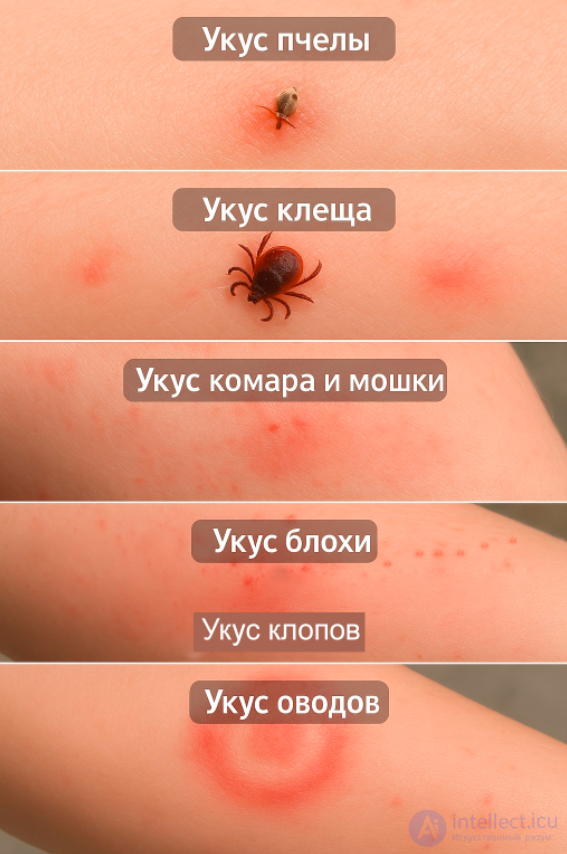
When stung by bees, wasps, hornets and bumblebees, pain and burning develop at the site of the sting, along with swelling and a local rise in temperature. With multiple stings, weakness, dizziness, headache, chills, nausea, vomiting and a raised body temperature appear. People with increased sensitivity to bee venom may develop pain in the lower back and joints, and convulsions and loss of consciousness are possible.
First of all, the insect's sting must be removed from the skin, and the stung area moistened with alcohol. Apply something cold to the stung area (a plastic bag with cold water). Give the casualty plenty of fluids to drink.
For bee, wasp and bumblebee stings, the sting is removed from the wound, and a compress of ammonia solution with water is applied to the wound.
In people prone to allergies, shock may occur 5 minutes to 3 hours later as a result of asphyxia from swelling of the larynx and lungs. To prevent this, the casualty should immediately be given any antihistamine drug — diphenhydramine or amidopyrine — and sent to a medical facility at once.
It is also recommended to apply a hormonal ointment (Advantan, Celestoderm and others) to the bite/sting site. If the casualty's condition causes you concern — for example, marked swelling or severe local redness — it is better to seek medical help.
Note that the most dangerous stings are those of bees, wasps and hornets to the inside of the mouth, which the insect can get into when a person is eating fruit. In such cases urgent help is needed, since the resulting swelling of the larynx and suffocation are life-threatening.
Because of the specific properties of mosquito saliva, small blisters form at the site of the bite, and itching and a burning sensation occur.
The itching can be relieved by moistening the skin with ammonia solution or a solution of baking soda (half a teaspoon of soda per glass of water). Also: apply «Fenistil gel», moisten with a strong solution of baking soda or salt, and apply a cloth soaked in cold water
What to do if a tick has attached itself?
If you find a tick on your body, do not pull it out straight away!
You may squeeze its innards into the wound or tear off its abdomen, and the head left under the skin can cause inflammation and suppuration. It is best to seek help at a medical station straight away, since the process of removing a tick is far from simple.
But if there is no medical help nearby after all, you will have to do everything yourself. Try to grip the tick carefully as close to its mouthparts as possible and twist it in whichever direction is convenient for you. Usually, after 2–3 turns the tick comes out along with its mouthparts.
Be careful, do not make sudden movements, and above all do not yank the tick out sharply.
Be sure to disinfect the wound.
Some sources say that it is worth dripping vegetable oil onto the tick or smearing it with grease, so that it comes out on its own for lack of oxygen. This approach may not work, and may even make the situation worse. The tick will die but remain under the skin.
Do not throw the tick away — put it in a jar or box together with a moistened piece of cotton wool. It is important to deliver the tick to a laboratory alive, where it will be tested for tick-borne encephalitis or tick-borne borreliosis (Lyme disease).

Comments