
Lecture
Post-traumatic stress disorder (PTSD) — a severe mental condition arising from a single event or repeated events that have an overpoweringly negative effect on an individual's psyche. The traumatic nature of an event is closely related to a sense of one's own helplessness stemming from the inability to act effectively in a dangerous situation .
In PTSD, a group of characteristic symptoms persists for more than a month after the psychological trauma, such as psychopathological re-experiencing (flashbacks), avoidance of anything that might activate memories of the trauma, nightmares, and a high level of anxiety. Dissociative reactions and amnesia (absence of memories of the traumatic event) sometimes occur . Symptoms of PTSD may appear either immediately after the trauma or many years after the traumatic event . PTSD can lead to the emergence of problems such as depression, generalized anxiety disorder, panic attacks, addictions, suicidal behavior, and aggressiveness . In children and adolescents, the clinical picture of PTSD depends on age .
The severity of PTSD varies considerably. In the mild form of PTSD, the ability to function well in the professional sphere and in interpersonal relationships is preserved. In the most severe cases, the patient is completely unable to function normally; his condition looks like a chronic mental illness. Sometimes such patients are given a diagnosis of schizophrenia .
PTSD can arise in any person at any age, but in most people PTSD does not develop after psychotraumatic events . The risk of developing PTSD depends on the severity of the trauma , the context of the situation , and the individual's psychological and biological (including genetic) predisposition .
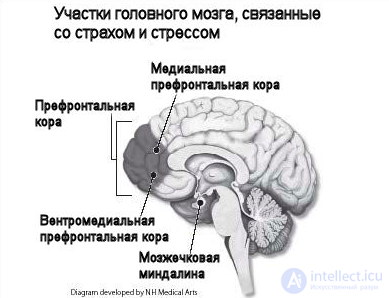
PTSD leads to impairments in the functioning of the brain, the nervous and endocrine systems , and can sometimes have a negative effect on a person's physical health .
The mechanism by which traumatic information is recorded in memory differs significantly from that for ordinary events. In this case, significant disruptions occur in the normal scheme by which the brain processes incoming information . As a result, in the future, anything that even remotely resembles the traumatic event (a "trigger") will automatically (at the level of a conditioned reflex) evoke an immediate defensive reaction of the entire organism, sometimes without conscious comprehension of what is happening and of one's own reaction to it. In this case, re-experiencing the traumatic memory will be perceived as a real danger occurring "here and now", rather than in the past . Because of the particular way information about the trauma is retained in brain structures, traumatic memories (unlike ordinary memories) appear independently of the person's will, often in the form of flashbacks or nightmares. In this case, it is impossible to stop thinking about the event by an effort of will. Traumatic memories do not change as new information comes in. For example, at the moment of the event a person might have thought that he was going to die. Later he understands that he is alive and out of danger, but when the traumatic memory is activated he again feels intense fear, as if he were facing death .
Even if nothing in the current situation resembles the trauma, the organism continues to remain in a state of chronic stress . Often, at the subconscious level, the individual perceives every new situation as similar to the original trauma. He may unconsciously reproduce the defensive reactions that occurred at the moment of the original trauma. For this reason, his defensive reactions become inflexible and inadequate under new circumstances . The constantly heightened activity of the brain's emotional centers inhibits the work of the conscious part of the brain — this makes it difficult to control emotions and prevents the person from using logic to analyze the situation .
Treatment of PTSD includes psychotherapy and sometimes the use of psychopharmacological drugs . A combination of different therapeutic methods is often used, since PTSD is a complex disorder that manifests simultaneously at the psychological, biological, and social levels . Recovery can be complete, but sometimes individual symptoms become chronic . A positive effect of PTSD is sometimes personal growth during the period of recovery from the trauma .
According to research findings, PTSD in a woman can increase the predisposition to the development of post-traumatic symptoms in her future children, including at the level of gene expression .
PTSD can occur in animals as well .
Psychological trauma leads to the development of PTSD in approximately 25—35 % of cases . Approximately 60 % of people who have experienced trauma continue to suffer from significant PTSD symptoms a year after the trauma . It is estimated that, across the population as a whole, approximately 7—10 % of individuals have symptoms of PTSD .
The U.S. Department of Veterans Affairs organized a study in which the records of 4800 service members (equally divided between men and women) were examined, with the researchers selecting for comparison "pairs" of people of different sexes who were maximally similar to one another on various parameters. Parameters taken into account in forming the pairs included age, race, level of education, marital status, branch of the armed forces, military specialty, and rank. At the start of the study, none of these men and women had PTSD. They were interviewed three times, during the periods 2001 to 2003, 2004 to 2006, and 2007 to 2008. All had been deployed to Iraq or Afghanistan at least once. Over the course of the study, PTSD developed in 6,1 % of the men and 6,7 % of the women. According to the researchers, this difference is not statistically significant. The severity of the disorder did not differ between men and women .
Researchers note the similarity of descriptions of the symptoms of psychological trauma across different eras and different cultures . Descriptions of symptoms arising from traumatic events already appeared in antiquity. Written evidence of combat-related mental disorders from the era of the Assyrian kingdom (1300 BCE) has been found . Sources from this period mention "ghosts of enemies killed in battle" that haunted war veterans. In the opinion of specialists, the symptoms described are similar to those observed in soldiers who took part in hand-to-hand combat . Herodotus (450 BCE) describes a case of blindness that appeared in a warrior who experienced intense fright during the Battle of Marathon. Hippocrates (420 BCE), Xenophon (401 BCE), and Lucretius (55 BCE), as well as the medieval French historian Jean Froissart (1388), mention the occurrence of battle-themed dreams in participants of battles. In 1572, after the mass killings of St. Bartholomew's Day, the young King Charles IX said that he was haunted by nightmares and visions of bloodied corpses; when recalling the events, his hair stood on end. In 1654, Blaise Pascal described post-traumatic symptoms that arose in him after the carriage he was riding in nearly went off a bridge. The French psychiatrist Philippe Pinel, at the start of the 19th century, described post-traumatic states in people who had experienced psychological trauma during the French Revolution and the Napoleonic Wars. Surgeons in Napoleon's army described a state of confusion and stupor in soldiers near whom a cannonball had flown past in battle; they called this state "cannonball wind syndrome (French)" [10].
In the United States, the first studies of military post-traumatic stress began during the Civil War[11]. The American physician Jacob Mendez Da Costa described a condition that he called "soldier's heart" .: in this syndrome, cardiac symptoms arose from previously experienced fear or nervous exhaustion.
The American physician Weir Silas also described cases of hysterical symptoms (see Hysteria in men ) among participants in combat operations. In 1888, the German neuropathologist Hermann Oppenheim proposed the term "traumatic neurosis", whose clinical picture included intrusive memories of the event, sleep disturbances, nightmares, selective phobias, and emotional instability. This term was later used by the German psychiatrists Karl Kraepelin (1894) and Richard von Krafft-Ebing (1898) .
At the end of the 19th century, a large number of articles appeared in France and England about the memory loss observed in victims of railway accidents[12]. During this period the diagnosis of "railway spine " (Railway spine) arose, since physicians believed that the psychological symptoms in victims of railway accidents arose from compression of the spine[13]. In the United States this term was replaced by the term "railway brain" (Railway brain). Physicians described symptoms arising in victims of railway accidents, such as changes in thermal sensitivity, gait, reflexes, handwriting, digestion, breathing, memory, sleep rhythms, and sexual potency. In this case, the symptoms could appear either immediately after the accident or considerably later, sometimes even several months afterward .
During this period, Jean-Martin Charcot, Pierre Janet, and Sigmund Freud discovered that some symptoms of hysteria are connected with traumas experienced in childhood, and in this case traumatic memories constantly arise in the consciousness of the adult individual, evoking a feeling of intense fear. Charcot also described a case in which a patient developed paralysis of the legs after being struck by a cart, even though neither his legs nor his nerves had been damaged. In this case, the patient could not remember what happened at the moment of the trauma, apart from the wheels of the cart and the fear that he was about to be crushed[14]. Having linked hysteria to traumas experienced, Charcot rejected the idea, widespread in his time, that hysteria occurs chiefly in women (see Female hysteria (), homosexuals, or men from affluent strata of society.
Janet, who helped Charcot set up a laboratory for the study of hysteria, published the first scientific description of post-traumatic disorder in 1889 in the book "Psychological Automatism" ("Automatisme psychologique"). In particular, Janet found that victims of psychological trauma constantly reproduce the behavior, emotions, and bodily sensations that arose in them at the moment of the trauma[14]. Janet believed that the cause of trauma is the individual's lack of preparedness for the event, which results in a diminished capacity for action or adaptation .
Psychological trauma acquired particular significance during the Russo-Japanese War, owing to the use of state-of-the-art artillery pieces . In 1904, from the very start of the war, Russian psychiatrists insisted that patients with mental disorders should be recognized as ill rather than as malingerers, and for this reason should have the same rights as the wounded. In addition, physicians demanded that these patients be placed in special wards, where they would be spared the mockery and abuse of other patients. However, these demands were met with distrust and sarcasm on the part of the leadership. But the problem became increasingly serious, and eventually, at the request of the military-medical authorities, the Red Cross created a commission of prominent psychiatrists to develop a plan for the care of the mentally ill[16]. This decision is considered the moment of the birth of military psychiatry[17]. The Russian psychiatrists P. M. Avtokratov and N. I. Ozeretsky wrote about the nervous disorders arising in combat participants . In 1908, the German physician Honigman, a Red Cross volunteer in the Russo-Japanese War, introduced the term "war neurosis" . During this period, the Russian press began regularly publishing articles about soldiers who had lost their minds, to the point that entire regiments sometimes went mad. Newspapers also reported on the arrival of psychiatric evacuation trains in cities of European Russia. In parallel, professional medical publications on this subject began to appear[16].
During the First World War, approximately 80 thousand cases of post-traumatic disorders were recorded; some servicemen lost their memory, sight, hearing, sense of smell, taste, or ability to walk. At this point the principal diagnosis became the so-called "shell shock", introduced into use by the English psychiatrist C. S. Myers ( ; this term referred primarily to psychological traumas arising as a result of artillery attacks[16]. In his research, Myers established the distinctions between the neurological disorder resulting from concussion caused by a shell burst and the psychological "shell shock". Myers also found a similarity between war neuroses and hysteria[11]. In one study of First World War veterans suffering from a syndrome called "irritable heart", heart rate was measured before and after presenting the subjects with stimuli resembling the sound of an explosion and flashes of flame during bombardment. In this study, veterans with "irritable heart" syndrome did in fact show an increase in heart rate upon presentation of the stimulus, which was not observed in veterans of the control group[11]. Myers succeeded in securing the creation of rehabilitation centers near the front line; this principle of urgent care was later also used in the American army .
At the same time, the psychoanalyst Sándor Ferenczi described post-traumatic symptoms such as the disappearance of libido, psychological regression (the appearance of less mature and less adequate forms of behavior), and pathological changes in personality. Freud, in his essay "Beyond the Pleasure Principle" (1920), suggested that trauma disrupts the individual's mechanism of psychological defense . In the book "Studies on Hysteria", Freud described the case of his patient Emma Eckstein, who, in Freud's view, began to suffer from hysterical symptoms as a result of psychological trauma she had experienced (at the age of eight she became a victim of sexual abuse). These observations formed the basis of Freud's "seduction theory ("[18].

During the First World War, the recognition of military post-traumatic disorder as an illness led to veterans with this disorder in England, France, and Germany gaining the right to pensions and treatment. At the same time, a large number of literary works on this subject appeared, which drew public attention to the problem. In Russia, at the beginning of the First World War, the "Society of Military Psychology" was established, along with several similar civilian organizations. Russian physicians drew on the experience of the Russo-Japanese War to diagnose and treat traumatic disorders. In 1914, the psychiatrist N. N. Bazhenov published an article in which he described the similarity between military psychological trauma and the condition of the victims of the Messina earthquake and a cyclone in the Sea of Azov. He noted a state of "stunning and torpor", as well as an "indifferent and complacent" attitude toward the death of one's own family in some individuals, and complete amnesia for the period of the catastrophe and the period that followed . Bazhenov also emphasized that in both cases the initial confusion was followed by complete indifference to one's own fate, along with increased irritability, a desire to cry, and an inability to concentrate. In Bazhenov's opinion, this proved that a mentally normal person could fall ill even if no harm had been done to his physical health. In 1914, the psychiatrist O. B. Feltsman compared the mental state of the victims of pogroms with the symptoms observed in wartime[16].

During the Second World War, post-traumatic symptoms were found not only in combat participants but also in former inmates of concentration camps. This condition was called KZ syndrome (KZ-Syndrom, from the German Konzentrationslager-Syndrom). The American psychiatrist Robert Jay Lifton, in 1960, described post-traumatic symptoms in the victims of the atomic bombing in Japan .
In 1940, the American psychologist Abram Kardiner conducted a study of veterans of the First World War and concluded that post-traumatic psychological disorder has distinctive symptoms. Among other things, Kardiner was one of the first to describe the phenomena of dissociation ("flashbacks"). He also identified three symptoms characteristic of this disorder:
In 1945, the term "Two-thousand-yard stare" appeared in colloquial speech in the United States to describe the unfocused gaze often observed in soldiers who had suffered combat psychological trauma.
In addition to research on military trauma, in 1942 an important study of the problem was carried out through work to assist victims of the massive fire at the "Cocoanut Grove" nightclub in Boston. In particular, psychiatrists for the first time described the stages of acute grief .
In the period following the Vietnam War, in addition to the already known symptoms, the emergence of addictions was also described in those who had previously taken part in combat operations. According to statistics, post-traumatic symptoms appeared in 700,000 American veterans of that war . During this same period, the feminist movement in the United States drew public attention to the fact that women who were victims of sexual violence exhibited the same symptoms as veterans of the Vietnam War[20]. Research on the problem led to the term "traumatic neurosis" being introduced into the new version of the Diagnostic and Statistical Manual of Mental Disorders (DSM). In 1968, this term was replaced by the term "post-traumatic stress disorder" (Post Traumatic Stress Disorder, or PTSD) . In the DSM-IV version, post-traumatic disorder was classified among the anxiety disorders, while in DSM-5 a separate category was created for it[21]. The International Classification of Diseases (ICD) also incorporated this term .
In 1987, Gill Straker introduced the term "continuous traumatic stress disorder" (continuous post traumatic stress disorder, or CTSD), also called "prolonged post-traumatic stress disorder", to denote the constant impact on the psyche of people of a high level of violence, conflict, and political repression. This term is also applied to situations involving people's constant exposure to a criminogenic environment, and it extends to representatives of professions associated with constant risk to life (police officers, firefighters, emergency service workers).
In the 1980s, the study of biochemical shifts began, and from the 1990s onward — the study of functional and structural changes in the brain in PTSD using neuroimaging methods.
Prior to the 1980s, PTSD was little known to the general public, but nowadays it is frequently mentioned in the mass media in connection with disasters, military conflicts, violence against children, and so on[24].
In Russia, the psychological problems of participants in the First World War and the Civil War were studied by S. Kraits, P. Gannushkin, F. Zarubin, and V. Bekhterev[11]. During the Great Patriotic War, a large number of diagnostic formulations were used to designate PTSD, such as "exogenous reaction", "reactive state", "reactive psychosis", "reactosis", "reactive neurasthenia", "neurasthenic reaction", "hystero-trauma", "reactive neurosis", "functional neurosis", "persononeurosis", "traumatic neurasthenia", "traumatic psychasthenia", "neurotic psychogenic reactive states", and so on[25] After the war, research on PTSD was continued by V. Gilyarovsky and E. Krasnushkin. The psychological problems of people who had suffered trauma unrelated to the war were studied by L. Brusilovsky, N. Brukhansky, and T. Segalov[11]. According to the military historian E. S. Senyavskaya, Soviet military physicians continued to conduct research in this field, but the information they gathered remained classified, and to this day only a very narrow circle of specialists has access to it[26]. In Russia, the start of active study of the problem coincided with the process of reforms in society. In the early 1990s, a laboratory of post-traumatic stress and psychotherapy was established at the Institute of Psychology of the Russian Academy of Sciences under the direction of N. V. Tarabrina, as well as a laboratory at the Academy of Management of the Ministry of Internal Affairs under the direction of I. O. Kotenev. In 1991, the Psychological Society of Traumatic Stress also appeared in Moscow, its task being to unite the research work of specialists from Russia and the CIS countries in the study of this problem. At the same time, research was conducted at the Main Directorate for Educational Work of the Armed Forces of the Russian Federation[11].
As for PTSD in children, the diagnosis of this disorder in a child under 12 years of age was officially included in the "Diagnostic and Statistical Manual of Mental Disorders" (DSM-III version) in 1980. Before that time, only a very small number of studies had been devoted to this problem; it was believed that the post-traumatic state in a child was transient and had no long-term consequences. Since the 1990s, considerable attention has been paid to the problem, and research has revealed that post-traumatic stress can have a serious and lasting negative effect on a child's development[27].
Usually PTSD arises from events that have an overpoweringly negative effect on an individual's psyche. Sometimes PTSD occurs in cases where the situation itself is not extraordinary, but for various subjective reasons it may turn out to be a serious psychological trauma for a particular person[28]. The traumatic nature of an event is closely related to a sense of one's own helplessness: the individual has no way to respond effectively to what is happening[29]. Trauma can be caused, for example, by:
In a broader sense, psychological trauma can be considered to be any event that remains blocked at the level of the psyche. It can be classified as trauma if it gives rise to a variety of problems at the level of emotions and behavior, as well as physiological symptoms[33].
There are 2 types of traumatic situations that lead to PTSD with dissimilar clinical pictures.
A short-term, typically unexpected event (for example, sexual violence, a natural disaster) that usually poses a threat to the individual and exceeds his capacity for self-protection. Such an event leaves a very vivid, specific, and indelible trace in memory. The individual may subsequently have dreams in which various aspects of the event are present. In traumas of this type, PTSD is generally characterized by the classic clinical picture typical of the disorder. Symptoms such as high physiological reactivity, re-experiencing of the trauma, intrusive thoughts related to the event, and avoidance of anything that resembles the traumatic situation occur more often than in trauma of the second type.
Repeated traumatic situations ("serial traumatization" or "prolonged traumatic disorder"): for example, repeated physical or sexual violence, bullying, combat operations. In this case, the infliction of harm is more likely to be deliberate. The first time, such an event is perceived by the individual as a trauma of the first type. Subsequently, events become increasingly predictable, and the victim experiences fear of the trauma recurring, while feeling a sense of helplessness regarding the possibility of preventing the trauma. As a rule, in this case a state develops that is called "complex post-traumatic disorder (". Owing to the action of the psyche's defense mechanisms, memories of traumas of this type are characterized by vagueness and blurriness. Over time, the individual may develop symptoms of post-traumatic dissociation in order to reduce the impact of the traumatic situation on his psyche. Traumas of this type can give rise to feelings of guilt and shame, to a decrease in self-esteem, and even to a change in the individual's conception of his own personality. Disturbances in relationships with others, detachment, and addictions occur more often than in the previous case[34].

The psychological impact of a traumatic event depends on the child's age.
For an infant, PTSD may be related to the effect of physical pain, separation from the person who cared for him, or the inability of the person caring for him to meet the child's physical and emotional needs (see Maternal deprivation)[35].

For children under 5 years of age, events related to death or the threat of death (see Fear of death) are less traumatic than at an older age. Young children experience the death of a loved one as a trauma of separation: they believe that the deceased will live on in another world or that he may return. By age 5, the child begins to understand that death means final disappearance, but does not imagine that he himself or his parents could die. From his point of view, only elderly people die. Understanding that anyone can die appears in a child between the ages of 5 and 8. Only from this point on do events related to death or the threat of death become truly traumatic for the child. However, a child's ideas about death and the fear associated with it depend on the religious context in which the child is raised.
As for physical injuries, young children do not imagine that these could lead to disability, and do not feel any fear on this account. PTSD at this age is associated more with physical pain, fear of medical intervention, and the fact that hospitalization may leave the child cut off from his family and surrounded by strangers. It can also be traumatic for a child that his parents failed to protect him from physical injury, failed to care for him after the injury, and handed him over to strangers.
A child tends to gauge the danger of an incident based on the emotional reaction of adults: he will be more severely traumatized if the adults appear frightened and unable to cope with the situation. The fear and helplessness of adults at the moment of the event are also in themselves a psychological trauma for the child if, up to that moment, he believed that they were strong, afraid of nothing, and able to protect him.
Between the ages of 2 and 7, a child believes what adults, especially his parents, tell him. For this reason, a threat made in jest or for disciplinary purposes can become a psychological trauma[36].
In young children, PTSD can be caused by prolonged immobilization, for example for therapeutic purposes[30].
As for sexual violence against children, sometimes this event becomes more traumatic later, when, as the child grows up, he becomes aware of the shame associated with it[37].
If, in a traumatic situation, a child does not cry, does not feel pain, and appears subdued, this may very likely indicate a shock reaction with the onset of protective dissociation (repression of the feeling of fear and pain). In this case, the suppressed emotions may not manifest themselves for a long time and may surface considerably later, in a similar situation. In this case, the individual may not be aware of the connection between his symptoms and the childhood trauma; it may even be forgotten at the conscious level[38].
Adolescents generally react to trauma in the same way as adults. They are less dependent than children on the behavior of adults in a traumatic situation. Nevertheless, an adolescent may lose trust in people if, at the moment of the trauma, people who were significant to him displayed cowardice, a lack of compassion, or selfishness[39].
Post-traumatic stress disorder (PTSD) was first identified as a separate nosological entity in 1980, as a specific complex of mental disturbances caused by severe stress .
Psychological trauma can be individual-personal (the death of a loved one, divorce), general (war, catastrophe), or related to natural and technological causes. The probability of developing PTSD depends on the type of traumatic situation. PTSD can develop not only in direct participants in events but also in witnesses, family members of those affected, people connected with extreme events by virtue of their occupation, and staff of hospitals, morgues, and so on; PTSD is also considered a prognostic factor for the development of disorders of the mental sphere . The relationship between PTSD and other kinds of mental and behavioral disorders can be represented as follows (Fig. 1).
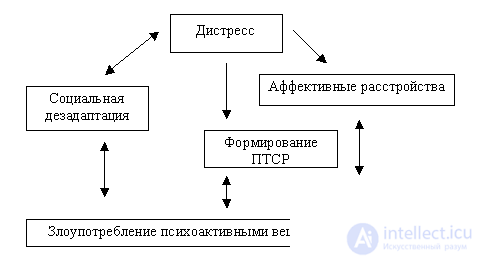
Fig. 1. The relationship between PTSD and other mental disorders
Psychotraumatic events, according to various authors, also lead to the development of affective disorders [4, 5] and social maladjustment of varying degrees of severity . All of this, like PTSD itself , is a factor that provokes abuse of psychoactive substances (sometimes this phenomenon is considered as part of the complex of manifestations of social maladjustment), including alcohol abuse [7, 6]. Some authors even speak of the comorbidity of PTSD and alcohol abuse, driven by the desire to blunt the "sharpness" of memories and feelings. At the same time, it is considered that the influence of comorbid conditions (affective disorders, etc.) on the clinical picture of PTSD is poorly studied . The same can be said of the influence of PTSD on the clinical picture of alcohol dependence.
The traumatic nature of a situation for the psyche depends on the following additional factors:
The period that follows a traumatic event is often of great importance for the further development of PTSD. At this point, the immediate danger disappears. Fear and the symptoms of dissociation become less intense, and the individual becomes aware of what has happened. This can turn out to be an additional psychotraumatic factor, especially if there is no certainty that the dangerous situation will not recur. In particular, the severity of PTSD may depend on the following circumstances:
In the process of becoming aware of what has happened, the events that are more traumatic for the individual are those that:
The subjective psychological impact of a traumatic event is also related to the extent to which the event disrupts a person's basic beliefs about the world and about himself, which in psychology are often called "basic illusions". These illusions help a person protect himself from feelings of anxiety about possible dangers:
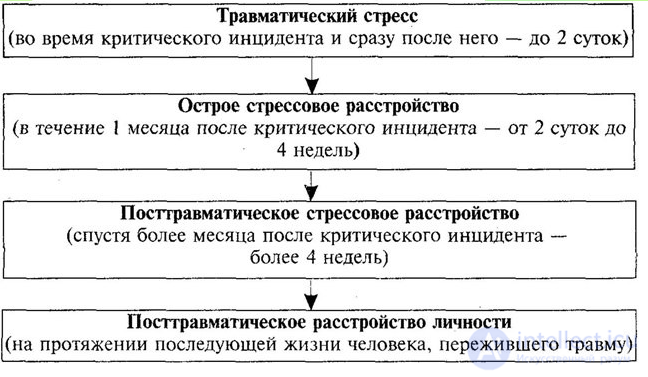
During and immediately after a traumatic event, the individual is in a state of psychological shock. This phase usually lasts no more than a few days. It precedes the emergence of the clinical picture of PTSD, and its features will largely determine the further course of the disorder. The following may occur:
All these reactions are normal for the human psyche in a traumatic situation. Sometimes the symptoms of the acute crisis phase pass after a certain period of time, but in some cases this state subsequently develops into PTSD syndrome[50].
A long-term state in which the classic symptoms of PTSD described below are observed. Studies have shown that at this stage the severity of symptoms depends directly on the intensity of the emotional reactions or dissociative detachment during the acute crisis phase[51].
At this stage, the symptoms disappear or become less intense. The ability to function at the level characteristic of the period before the traumatic event returns. Recovery may be complete or partial.
The idea that suffering and difficult experiences can change a person for the better is ancient and fairly widespread[55]. Such views are found, for example, among ancient Jewish authors, in ancient Greek culture, in early Christianity, and in certain currents of Hinduism, Buddhism, and Islam[56].
The term "post-traumatic growth" was coined in the mid-1990s by the psychologists R. Tedeschi (Richard G. Tedeschi) and L. Calhoun (Lawrence G. Calhoun)[57]. According to Tedeschi, at least 90% of people who had experienced psychological trauma noted at least one positive aspect of this experience for their personal growth: for example, an increased capacity to enjoy their life[58]. This does not exclude the presence of post-traumatic symptoms, which can exist alongside the process of personal growth[59].
It is assumed here that the cause of personal growth is not the traumatic event itself, but the efforts the individual makes to overcome the consequences of the trauma[55]. The type of trauma experienced also matters. For example, studies have shown that victims of sexual violence report post-traumatic personal growth less often than victims of natural disasters[59].
To study this concept, the "Posttraumatic Growth Inventory" was created. It consists of 21 questions, which concern 5 aspects of the individual's life:
Some researchers dispute this concept. They believe that the idea of personal growth after trauma is an illusion on the part of the individual, a psychological defense that he creates so as not to admit to himself how much harm the trauma has caused him. Studies have been conducted showing that this psychological defense is not effective. On the contrary, individuals who believed that they had grown inwardly as a result of their traumatic experience displayed more post-traumatic symptoms than those affected individuals who did not consider the trauma to be a positive experience for their personal development[61].
The Diagnostic and Statistical Manual of Mental Disorders, DSM-5 (Diagnostic and Statistical Manual of Mental Disorders), offers a list of specific criteria for establishing a diagnosis of post-traumatic disorder. These diagnostic criteria apply to adults, adolescents, and children older than 6 years of age. For children aged 6 and younger, additional criteria are specified.











To confirm the diagnosis, the individual must display two or more of the symptoms listed below:
If the symptoms are present for longer than 3 months, the diagnostic code is changed from "acute" to "chronic". If the symptoms appear more than 6 months after the event, this is referred to as "delayed onset"[63]. Symptoms of PTSD can appear either immediately after the trauma or many years after the traumatic event[64].
The psychiatrist Frank Ochberg (, one of the creators of the concept of PTSD, proposed adding to these diagnostic criteria additional criteria ( of victimization, which are more characteristic of victims of violence:
продолжение следует...
Часть 1 Post-Traumatic Stress Disorder (PTSD)
Часть 2 Description of the main symptoms - Post-Traumatic Stress Disorder (PTSD)
Часть 3 Cognitive behavioral psychotherapy for PTSD - Post-Traumatic Stress Disorder (PTSD)
Часть 4 Possible problems and ways to solve them - Post-Traumatic Stress
Часть 5 In culture - Post-Traumatic Stress Disorder (PTSD)


Comments