
Lecture
Это продолжение увлекательной статьи про посттравматическое стрессовое расстройство.
...
alt="Post-Traumatic Stress Disorder (PTSD)" >
In addition, at the moment of the trauma consciousness detaches from the sensations of the body (dissociation), in order not to experience pain and fear regarding one's physical safety. But often, in the period after the trauma, the state of dissociation persists. The person loses the ability to be spontaneous and to feel alive, to experience pleasure. In this case the repressed bodily sensations return in the form of neurotic symptoms (anxiety, muscle tension, headaches, psychosomatic illnesses). In severe forms of PTSD, symptoms of derealization and depersonalization may appear. There is a large number of body-oriented therapy methods for restoring the connection of consciousness with the body and relieving chronic muscle tension. These include, for example:
Research findings show that the body-oriented approach produces improvements with regard to intrusive memories of the traumatic event, avoidance, emotional arousal, anxiety, depressive symptoms and anger. An improvement in stress resilience is also noted.[67]


Art therapy began to be used during the Second World War and in the post-war period for the restorative treatment of servicemen in the USA and Great Britain. It was found that engaging in visual creative activity in art studios has a beneficial effect on the physical and emotional state of patients. In recent decades art therapy has been used ever more actively with various groups of patients.[85] The main limitation on the use of the method is the shortage of qualified art therapists.[86]
In treating PTSD, all types of art therapy through the arts can be used, either separately or in combination with one another (in which case the method is called expressive polymodal or intermodal art therapy).[85]
This method can be used both in individual and in group therapy[87], as well as in family therapy[85]. Art-therapy methods can be used as a supplementary method in cognitive-behavioral, psychodynamic, and other types of therapy[88].
Art therapy is included in the list of psychotherapeutic methods officially approved for use in treatment by psychotherapists. According to the international definition (European Consortium for Arts Therapies Education), art therapy (arts therapies) is understood as a group of treatment and corrective methods using expressive modalities (the visual arts, music, theater art, and dance), applied by specialists with appropriate clinical training:
In a number of countries (for example, in the USA and Great Britain) art therapy is considered a paramedical specialty requiring professional training (2—3 years of postgraduate or master's-level training). In the Russian Federation the legal and professional context for the use of art-therapy methods through the arts has not yet been regulated.[89]
Art therapy allows an individual to become aware of and express traumatic experience in a safe context. Studies have found that traumatic memories are stored in the non-dominant hemisphere of the brain (the right hemisphere in right-handed people). This same part of the brain is intensively activated in various creative activities, for example in painting, sculpting, dance, and so on. It is also known that post-traumatic emotions tend to be expressed in nonverbal form. This accounts for one of the advantages of art therapy for treating PTSD, especially in children. In particular, one result of this method is an improvement in emotional regulation. [88] In addition, symbolic means of self-expression provide fuller access to the nonverbal, implicit, hidden areas of memory and to visual-kinesthetic memories, which are normally processed by the non-dominant hemisphere of the brain. It is hypothesized that traumatic experience and the distorted schemas of mental processes associated with it may be stored precisely in these forms.
At the same time, the dominant hemisphere of the brain (usually the left), responsible for linear and conceptual thinking and verbal self-expression, also takes part in the creative process. Because of this, creative activity promotes the integration of traumatic experiences through the joint activation of both hemispheres. This ensures that memories of the events become linked into a unified picture in the form of a visual and verbal narrative. A gradual correlation of the traumatic experience with the concrete circumstances of the individual's life takes place.[90]
The use of projective means (for example, drawings, objects):
The main psychological mechanisms of art therapy, which ensure the relief of emotional tension, the expression and working-through of traumatic experience, and the restructuring of the system of perceiving reality, are:
Decentering, externalization and symbolization are closely connected with the ability to operate with multiple hypotheses and form new, unusual associations (as opposed to binary thinking, based on the use of only two mutually exclusive hypotheses or two variants of solving a problem). These three mechanisms also help the individual overcome maladaptive defensive reactions (for example, emotional numbing and dissociation), which helps restore inner equilibrium and restructure the system of perceiving reality. This is often accompanied by achieving a better understanding of the deeper meaning of the experiences, and growth in self-understanding and self-acceptance. The expression of feelings through symbolic images can lead to catharsis, even if the content of the artistic product and the meaning of the experiences are not consciously recognized by the person in the process of creating it.[90]
Art therapy is used for all types of trauma.[95] It can be most useful:
At present there is not a sufficient body of research confirming the effectiveness of art therapy for PTSD.[97] This is largely explained by the shortage of qualified art therapists and the relatively small number of programs for training high-level specialists in this field. Foreign publications are predominantly descriptive in character, without the use of statistical data-analysis methods.[97] However, clinical experience shows that art therapy produces good results, is well received by clients, and has no risk factors or side effects, provided it is used by well-trained therapists.[98]
There are studies showing that mastering methods of controlling one's dreams reduces the frequency and severity of nightmares in PTSD. No improvement in the core symptoms of PTSD has been noted in this connection. Training is carried out over the course of 4-6 weeks (once a week), during which the patient is asked to write down his dreams every day. The method includes the skill of "entering into dialogue" or "physical contact" with frightening characters in the dream. This reduces the feeling of terror and helplessness as the patient comes to understand that he can control the images of the nightmare caused by the trauma.[99]

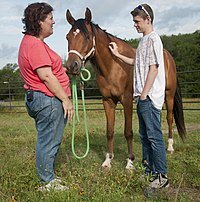
This type of therapy (usually using dogs — canine-assisted therapy, or horses — equine-assisted therapy) is useful for patients who, because of the trauma they have undergone, are too anxious or distrustful to interact with people.[100]
A technique that produces good results teaches the patient, at the moment an episode begins, to concentrate his attention on a vivid distracting memory, which over time forms a habit of automatically shifting consciousness to neutral or positive emotions, bypassing the traumatic experience whenever a trigger appears.
Recent studies have shown the possibility of a positive effect in the treatment of PTSD from combining the memory-reactivation method with playing "Tetris". The technique used weakens the intrusive memories of participants whose memories were reactivated before playing "Tetris". Afterward they were less troubled by intrusive memories compared with the control group.[101]
In persons who have experienced trauma, problems within the family or the couple often come to the forefront.[102] Vicarious traumatization of the patient's family members may also be observed.[103] For this reason it is recommended that couple or family therapy be conducted concurrently with individual treatment of PTSD, or immediately following it. When conducting couple or family therapy, it is recommended that its primary goal be considered to be improving family communication and reducing conflicts among family members.[102] There are two types of couple and family therapy for persons who have experienced trauma:
Physical activity, including sport (if there are no medical contraindications), helps the patient to distract from negative experiences and to restore self-respect and a sense of control[105]. The practice of martial arts (for example, aikido, jiu-jitsu, taekwondo) and team sports with participation in competitions help to express anger in an acceptable form. Relaxing yoga asanas, tai chi and qigong are methods of relaxation in movement[106].
Sometimes persons suffering from PTSD do not express a desire to obtain psychological help for the following reasons:
For this reason, the offer of treatment is often rejected at the initial stage. It happens that the patient seeks help later, for example regarding depression that developed on the basis of PTSD.[107] Sometimes the therapist has to explain to the patient that the symptoms of PTSD should be addressed through psychotherapy or medication rather than through addictive behavior or "acting out" the trauma.[108]
PTSD is characterized by a high rate of therapy discontinuation (after 2–3 sessions the client does not come to therapy). This is related to the following reasons:
On this basis, the psychotherapist should, already at the first meeting, strive to establish a trusting contact with the client and provide information about the possibility of improvement through therapy. It should be kept in mind that in the case of a loss of trust in people (especially among victims of violence), "testing behavior" may occur at the beginning of therapy: the client assesses how adequately the therapist reacts to their account of the traumatic events. For trust to gradually develop, the therapist must acknowledge the difficulties the client has experienced. In severe disorder, clients often use certain rituals to cope with fear (for example, doors and windows must always be open); the therapist should treat this with respect and understanding.
Therapy for PTSD is characterized by psychological difficulties experienced by the psychotherapist themselves. There are 2 extremes in the therapist's reaction to the patient's situation:
It is known that an animal, having experienced a traumatic situation, may, as soon as it finds itself in safety, begin to tremble all over or to perform movements of self-defense or flight if it was unable to carry them out at the moment of the trauma. This allows the animal to discharge the stress activity of the nervous and endocrine systems down to the normal level. In humans this natural process is usually disrupted: people forbid themselves the full expression of emotions of fear or rage. For this reason the nervous system remains in a state of heightened activity corresponding to a reaction to danger, and stress hormones continue to circulate in the blood[136]. As a result the organism continues to remain in the state that arose at the moment of the trauma, and the person continues to feel themselves in danger, as if the threat from the external world were still present. This state leads to hypervigilance: the person focuses attention on whatever evokes fear. They pay no attention to other stimuli that could inform them that they are now safe. The inability to relax in turn keeps the organism in a state of stress. In this way a vicious circle arises, and the symptoms become chronic. The constantly heightened activity of the brain's emotional centers inhibits the functioning of the conscious part of the brain — this makes it difficult to control emotions and prevents the person from using logic to analyze the situation. Not understanding the causes of their inner discomfort, the person regards other people as the cause of this discomfort (which leads to irritability) or explains their condition by shortcomings of their own character (which leads to a loss of self-respect and a feeling of guilt).
In this state a person is unable to act adequately in subsequent stressful situations. Their nervous and hormonal systems remain tuned to a particular defensive reaction, and they unconsciously reproduce the defensive reactions that took place at the moment of the primary trauma. Often, at the subconscious level, they perceive each new situation as similar to the primary trauma. Their defensive reactions become inflexible and inadequate to the new conditions, and for this reason they are usually counterproductive. As a result, new psychological traumas arise, aggravating the clinical picture of PTSD[137].
The clinical picture of PTSD depends to a great extent on which type of defensive reaction of the nervous system took place at the moment of the trauma. The reaction that arose at the moment of danger can become chronic. According to polyvagal theory:
The mechanism by which traumatic information is recorded in memory differs significantly from that for ordinary events. In this case significant disruptions occur in the brain's normal scheme for processing incoming information. The scheme by which the brain processes any incoming information (ordinary or related to danger) generally looks as follows:
In a traumatic situation the hippocampus and the frontal lobe cortex are overwhelmed with incoming information that must be processed very quickly in order to make a decision. Moreover, they cannot function normally because of the intense stress reaction. Often at the moment of the trauma the functioning of the cerebral cortex is so disorganized that the individual cannot think clearly[142]. As a result the memory of the traumatic situation remains recorded in the amygdala without an indication of where and when the event took place (as stated above, attaching the memory to a time and place is the role of the hippocampus), and without it being comprehended (which, in the case of a normal memory, is performed at the level of the frontal lobe cortex). As a result, subsequent reactivation of the traumatic memory will be perceived as something happening "here and now". Anything that even remotely resembles the event (a trigger) will automatically (at the level of a conditioned reflex) evoke an immediate defensive reaction of the whole organism, without the situation and one's reaction to it being comprehended at the level of consciousness.
The amygdala is very sensitive to the slightest signals of potential danger and tends to react to them with exaggerated intensity, since such a reaction provides the best chances of survival. As a consequence, if new information even remotely resembles something associated with danger in the past, the new information will play the role of a trigger for the activation of defensive reactions, often with a re-experiencing of the unpleasant bodily sensations experienced in the past at the moment of danger. Because of this, information stored in the amygdala is closely related to so-called body memory ([143]. As a result, the amygdala's reaction to danger will be automatic, unconscious, and very fast[141].
Studies have shown that a traumatic memory is associated with a high level of adrenaline in the blood at the moment of the trauma. As already noted, this is why the activity of the hippocampus and thalamus, which normally are responsible for the integration of incoming information into memory, is reduced. As a result, traumatic memories are organized in memory differently from ordinary memories. They lack logic and structure; they consist of fragments not connected to one another (sounds, sensations, visual images of individual parts of objects). For this reason it is difficult for the patient to put into words what they experienced. It is also difficult for them to organize their memories of the event into a coherent account. At the same time, fragmentary memories of the traumatic event will be sharper and clearer than ordinary memories. Moreover, ordinary memories lose clarity, become distorted, and eventually are forgotten over time, whereas traumatic memories remain sharp and unchanged even many years after the event. However, if the level of adrenaline in the blood is very high at the moment of the trauma, the process of memorization is disrupted, and no conscious memories remain of what happened (see Suppressed memory ()[144]. Moreover, normally an event is recorded in the brain's autobiographical memory in the form of a sequence of episodes structured in time, and this sequence has an ending (the moment when the threat disappeared). In the case of trauma this process is disrupted, and the traumatic memory is not perceived as an event that took place in the past and has by now already ended[145].
When attempting to recount a traumatic memory, an individual is unable to shorten their account by picking out the main points. Moreover, retelling an ordinary memory usually has a communicative purpose, and the individual is able to modify their narrative depending on their purpose (for example, to obtain help) and the context of the communication. When retelling traumatic memories the individual cannot modify their monologue in accordance with their needs and the specific situation[146].
One study showed that the brain uses different types of kinases when recording an ordinary or a traumatic memory into memory. In experiments on animals, researchers blocked the kinase involved in recording a traumatic memory into memory, and the animal did not develop post-traumatic symptoms[147].
If a traumatic memory is subsequently awakened under the influence of a trigger, activation occurs in the limbic system of the brain and the brainstem (the parts of the brain associated with emotional reactions to danger). This leads to a state of nervous arousal, muscular activation, and the release of stress hormones. At the same time, activation of the frontal lobes of the brain, which are responsible for self-control, decreases. The activity of the areas of the brain responsible for localizing past events in time and space also decreases, and the patient feels as though the traumatic event is happening here and now[144]. The activity of subcortical structures responsible for preparing motor reactions may increase[148], as if the individual were unconsciously preparing to perform a movement that they were unable to carry out or unable to complete at the moment of the trauma (for example, the muscles responsible for self-defense involuntarily tense up)[149]. Tension may arise in the throat, corresponding to a desire to scream or to say something[150]. This results in the individual displaying inadequate or excessive defensive reactions to minor everyday stressors or to trauma-related triggers[150]. In the case of dissociation, "sub-personalities" with mutually exclusive motor defensive reactions may coexist within the individual. As a result, at one and the same moment some groups of muscles may be activated for self-defense while others are activated for flight; at the same time some groups of muscles may become spasmed (a freezing reaction), while other muscles lose tone and become limp (a submission-to-the-aggressor reaction)[151].
The activity of Broca's area, which normally allows one to express one's emotions in verbal form, also decreases. At the same time, when the memory is activated, the activity of the core zone of the visual analyzer (Brodmann cytoarchitectonic area 19) increases; this area normally is responsible for the perception of images entering the brain from the external world for the first time. Normally, visual information entering this zone is very quickly redirected to other areas of the brain, which interpret it and link it to the context of the event. In the case of trauma this zone remains active, as if the brain were again seeing the traumatic event in the external world[152]. The activity of the left hemisphere of the brain, responsible for logical perception, also decreases (see Interhemispheric asymmetry), while the activity of the right hemisphere, associated with emotional perception, increases[153]. Finally, a characteristic feature of post-traumatic memories is that if a trigger has activated a single fragment of the memory, all the elements of the memory of the trauma are immediately activated following it[146].
| Ordinary memory | Traumatic memory[154] |
|---|---|
| the person can retrieve it from memory at will | appears independently of the person's will, often in the form of flashbacks or nightmares |
| the person can choose not to think about the event if they do not want to | it is impossible to stop thinking about the event by an effort of will |
| the memory may change as new information is received | it remains unchanged even if the person learns new information about the traumatic event. For example, at the moment of the event the person may have thought they would die. Later they understand that they are alive and out of danger, but when the traumatic memory is activated they again feel intense fear, as if death were threatening them. |
Under the influence of a trigger, or when a flashback occurs, the organism reacts as though the person were facing real danger. The muscles, including the abdominal muscles, tense up, which impedes deep breathing. Breathing becomes rapid and shallow, leading to a state of hyperventilation. Dizziness may appear; the concentration of CO2 in the blood decreases, which further increases muscle tension and may produce a sense of being unable to act. In response to the state of mobilization of the organism, the hypothalamus sends an "alarm signal" to the nervous system, which intensifies the symptoms, leads to a feeling of losing control over oneself, and, as a consequence, to even greater anxiety. In this case abdominal breathing can reduce the anxiety symptoms[155].
Even outside periods of reactivation of traumatic memories, the activity of the thalamus remains insufficient. Normally the thalamus filters information entering from the external world, screening out minor visual, auditory, and sensory stimuli. This allows the individual to concentrate attention on what is important to them at a given moment. In PTSD this filtering of incoming information does not occur, which leads to an impairment of the ability to concentrate attention on the current task. At the same time the brain is subjected to information overload, since the thalamus does not filter out minor external stimuli. To cope with the state of sensory overload, the patient may begin to use psychoactive substances. It also happens that the patient, by an effort of will, creates a state of extremely narrowed concentration of attention on a task, but this leads to a loss of the ability to perceive pleasant stimuli from the external world[145].
In PTSD, increased activity of the amygdala of the right hemisphere of the brain is observed. There are 2 amygdalae in the brain — in the right and in the left hemisphere. They take part in the regulation of emotions and in the formation of conditioned reflexes, including fear reflexes. The left amygdala is responsible for more detailed processing of emotional stimuli and interacts to a greater degree with the process of conscious thought, whereas the right amygdala (more active in PTSD) is involved in rapid automatic emotional reactions[156]. However, the activity of the amygdala can also be reduced compared to normal in situations of repeated trauma where it is impossible to protect oneself from the aggressor. In such a case, the reduced activity of this area of the brain corresponds to stress reactions of conflict avoidance, freezing, or submission to the aggressor. It is hypothesized that this reduced activity of the amygdala (which is responsible for the feeling of fear and "fight or flight" reactions) may be the cause of the formation of Stockholm syndrome (the tendency of some victims of aggression to continue their relationship with the aggressor, as if they were unaware of the danger associated with it)[157].
In PTSD, a disruption is noted in the activity of the ventromedial prefrontal cortex, which is involved in the control of emotions[158], and of the anterior cingulate cortex, which normally regulates the amygdala's response to emotionally colored stimuli, including those that evoke fear[159] (in particular, it coordinates the interaction of thoughts and emotions)[160]. Normally the prefrontal cortex is responsible for the processes of motivation for achieving goals. Activity of this type produces the desire to achieve a goal, energy, arousal, and pleasure at the thought that the goal may be achieved. However, the brain is constructed such that the need to avoid danger takes priority over the achievement of goals unrelated to self-defense. In PTSD the organism is constantly in a state of anxious activation, as if the individual were threatened by danger. For this reason the motivational system in the prefrontal cortex is deactivated, and the individual has neither the energy nor the desire to achieve goals. The prefrontal cortex is also responsible for planning, for anticipating the possible consequences of an action, and for carrying out the plan. In addition, it plays an important role in recognizing emotions (of other people and one's own), in the feeling of empathy and compassion toward other people, and in the feeling of compassion toward oneself. Finally, normally the prefrontal cortex can attenuate negative emotions that have been activated by the amygdala. These functions of the prefrontal cortex cannot manifest themselves in the case of PTSD[141].
It has been found that in PTSD the brain's response to another person's intent gaze can change. In a healthy individual this activates areas of the cerebral cortex (the dorsomedial prefrontal cortex, the temporoparietal junction, and the temporal pole) responsible for understanding the context of communication and facilitating the establishment of social contact, whereas in PTSD areas of the brainstem associated with the defensive reactions of attack, flight, or freezing from fear may be activated, which makes normal social interaction difficult[161].
Activity is also disrupted in the following areas of the brain:
It is hypothesized that at the moment of the trauma, deactivation of these areas is a defensive reaction that allows fear or pain to be felt to a lesser degree. But if this state persists afterward, it results in the individual being unable to correctly perceive information coming from the external world or from their own body. They also have a weakly expressed sense of their own "self"[160].
There is a reduction in the volume of the hippocampus, the insula, and the anterior cingulate cortex[162].
The concentration is reduced of
The concentration of triiodothyronine is increased, which can increase the sensitivity of the organism to catecholamines and other stress factors[165].
There is increased sensitivity of adrenaline receptors in the prefrontal cortex of the brain, which can lead to the occurrence of flashbacks and nightmares. In parallel with this, adrenaline, unlike normal, does not participate in the process of perceiving the surrounding world; for this reason, at the moment of a flashback the patient experiences emotions unrelated to the safe real situation of the present moment[164].
The level of dopamine can be either increased or decreased, and this determines the type of clinical picture of PTSD:
In PTSD, during the process of recovery the brain does not return to the state that preceded the trauma. In particular, the conditioned reflexes to stimuli associated with possible danger that were formed at the moment of the trauma do not disappear. In PTSD, the amygdala is involved in maintaining these conditioned reflexes. The process of recovery is related to the fact that the prefrontal cortex of the brain becomes able to control the reactions of the amygdala, and this contributes to a reduction of fear and other negative emotions. Experiments on animals have shown that damage to the prefrontal cortex (the ventromedial prefrontal cortex and the orbitofrontal cortex) slows the process of recovery in PTSD. In humans the following pattern is observed: in alexithymia (difficulty verbalizing emotions, which is one of the functions of the prefrontal cortex), the process of recovery may be impeded. In PTSD a decrease in the number of neurons in the anterior cingulate cortex is also noted. Treatment with antidepressants increases the number of living neurons in this area[166].
In general, in PTSD the organism remains in a state of chronically elevated stress load (see Allostatic load), which corresponds to a constantly elevated concentration of stress hormones (adrenaline and cortisol) and often leads to high blood pressure, elevated cholesterol and glucose levels in the blood, and can cause sleep problems. The number of pro-inflammatory cytokines increases, and the number of anti-inflammatory cytokines — peptide signaling molecules involved in the functioning of the immune system — decreases. Thus, PTSD can be one of the risk factors for the occurrence of cardiac disease, diabetes, arthritis, etc. According to some studies, post-traumatic stress can have a negative effect even at the level of DNA, leading to the shortening of telomeres — the terminal segments of chromosomes — which can also lead to a variety of diseases[23].
PTSD can occur in any person at any age. However, in most people PTSD does not develop after psychotraumatic events[108]. The risk of developing PTSD depends on many factors[167].
The vulnerability of the individual's psyche and the characteristics of their reaction to trauma depend on factors that took place in the pre-traumatic period, such as:
It is hypothesized that the genetic factor is involved to approximately 30% in the predisposition to PTSD. At the same time, the same genes are responsible for the predisposition to other psychological problems:
Gamma-aminobutyric acid (GABA) is the most important inhibitory neurotransmitter of the central nervous system (CNS). An insufficient level of its activity may be genetically determined, and this makes the individual more vulnerable to stressors, increasing the risk of developing PTSD[169].
Twin studies have shown that there is a correlation between the severity of PTSD symptoms and a smaller volume of the hippocampus — an area of the brain that interacts with the amygdala in the process of memorizing emotionally colored information (including traumatic information). The hippocampus is also involved in transferring memories into long-term memory. However, it has been found that psychotherapy, yoga, and meditation help increase the size of the hippocampus (with mindfulness meditation practice, hippocampal growth is noted after approximately 2 months, with yoga practice — after approximately 6 months)[170].
One study showed that the risk of developing PTSD increases if there is an elevated number of steroid hormone receptors on leukocytes[171].
Another study found that a low level of cortisol in the period preceding the trauma increases the risk of developing PTSD (cortisol is necessary for restoring the organism's homeostasis after a stress reaction)[172].
It is hypothesized that some symptoms of PTSD are approximately 40% attributable to the genetic factor:
At present, a possible role in the predisposition to PTSD has been identified for the following genes (the list below is not exhaustive, research in this area is ongoing)[174]:
| Gene | Single-nucleotide polymorphism | Neurobiological system |
|---|---|---|
| RD2 (D2R, D2DR) | rs1799732, rs1801028, rs1079597, rs1800498, rs6277, rs1800497 | Dopamine |
| DRD4 (D4DR) | - | Dopamine |
| SLC6A3 (DAT1) | - | Dopamine |
| SLC6A4 (HTT, 5HTT, SERT, 5-HTTLPR) | rs4795541, rs25531, rs57098334 | Serotonin |
| HTR2 (5-HT2A) | rs6311 | Serotonin |
| FKBP5 | rs3800373, rs992105, rs9296158, rs737054, rs1360780, rs1334894, rs9470080, rs4713916 | FK506 binding protein ( |
| BDNF | rs6265 | BDNF |
| NPY | rs16139 | Neuropeptides (Neuropeptide Y () |
| GCCR (NR3C1) | rs6189, rs6190, rs56149945 | Glucocorticoids |
| DBH | rs1611115 | Dopamine |
| CNR1 (CB1,CNR) | rs806369, rs1049353, rs806377, rs6454674 | Endocannabinoids |
| GABRA2 | rs279836, rs279836, rs279858, rs279871 | GABA |
| COMT | rs4680 | Catechol-O-methyltransferase |
| APOE | rs429358 | Apolipoprotein E |
| RGS2 | rs4606 | Regulator of G-protein signaling 2 ( |
According to research, PTSD in a woman may increase the predisposition to the development of post-traumatic symptoms in her future children, including at the level of gene expression[175].
There is a hypothesis that resilience (the ability to survive trauma without developing PTSD symptoms) arose at the genetic level in the process of evolution. Resilience to danger is higher the further back in time a danger of that type first appeared. In particular, the following patterns are noted[176]:
| Type of danger | Risk of PTSD symptoms persisting throughout life | Era of emergence | Frequency of occurrence of PTSD-resilience alleles |
|---|---|---|---|
| Forest fire | 4—5% | 140,000,000 years — the appearance of mammals | very high |
| Physical abuse of a boy | 22% | 20,000,000 years — the appearance of social groups in great apes (aggression toward a male infant by unrelated males is observed in most great apes) | medium |
| Participation in combat | 39% | 12,000 years — the increase in population density and the appearance of tribalism (a form of group separateness characterized by internal insularity and exclusivity, usually accompanied by hostility toward other groups) | low |

One of the first descriptions of PTSD symptoms in animals, as well as the hypothesis of its similarity to this condition in humans, belongs to Ivan Petrovich Pavlov. In 1924, during a flood[177], the cages with experimental dogs in his laboratory were two-thirds flooded with ice-cold water. The animals thrashed about but could not get out. To save them, the laboratory staff had to submerge each dog's head in water down to the level of the cage door[178]. Observing the animals, Pavlov was the first researcher to draw attention to the specific conditions that cause the occurrence of PTSD: at the moment of the trauma the subject experiences a desire to flee to safety but has no such possibility, which can lead to the occurrence of a state of learned helplessness often observed in victims of psychological trauma[179]. Pavlov found that after the flood the dogs showed changes in behavior: some dogs became extremely passive, sitting huddled in a corner of the cage. Other dogs, obedient up to that point, began to attack people[179]. Pavlov wrote:
An extraordinary natural disaster gave us the occasion to observe and study the chronic and pathological state of our dogs that resulted from the influence of this event as an extremely strong external stimulus… Some of the dogs, once the event had passed and they were returned to their former place, remained the same as they had been. Others, namely those of the inhibitory type[note 1], turned out afterward to be nervously ill, and for a very long period.
The animals also often fell into a drowsy state, as had already happened in the laboratory during the hungry years of 1918—1919, when the animals were emaciated[180]. In response to minor stressors the dogs' heart rate became faster or slower[177]. The conditioned reflexes of the dogs that had been developed in the laboratory disappeared, and it took a long time to restore them[178]. For example, the conditioned reflexes to the sound of a bell developed in the laboratory disappeared in the dog; at the sound of the bell the dog became intensely agitated, as if it wanted to run away[178], or displayed defensive behavior[180]. Pavlov hypothesized that the strong stimulus (the bell) recreated the flood situation in the dog's brain[178]. To study the problem, Pavlov began creating, in experiments, a situation resembling the flood[180]. For example, when the experimenters directed a jet of water into the room where the dog was, as soon as the animal noticed water on the floor, it began to choke, squeal, and tremble. Pavlov called this state "experimental neurosis"[178]. The post-traumatic symptoms in the dogs
продолжение следует...
Часть 1 Post-Traumatic Stress Disorder (PTSD)
Часть 2 Description of the main symptoms - Post-Traumatic Stress Disorder (PTSD)
Часть 3 Cognitive behavioral psychotherapy for PTSD - Post-Traumatic Stress Disorder (PTSD)
Часть 4 Possible problems and ways to solve them - Post-Traumatic Stress
Часть 5 In culture - Post-Traumatic Stress Disorder (PTSD)


Comments