
Lecture
The neuropsychology of counting — this is a field that studies how brain functions influence a person's ability to perform mathematical operations and to perceive numerical information. In this field, researchers are interested in how various aspects of cognitive function, such as attention, memory, perception, and language, are related to mathematical abilities.
Neuropsychological research in the field of counting may involve the use of methods such as neuroimaging (for example, functional magnetic resonance imaging, EEG), as well as the testing of patients with brain lesions in order to identify connections between specific areas of the brain and numerical skills.
Within the neuropsychology of counting, various disorders related to mathematics are also studied, such as dyscalculia, as well as the relationships between these disorders and the functional or structural aspects of the brain. The goal of this field of research is a deeper understanding of how the brain processes numerical information and what factors can influence a person's mathematical abilities.
The neuropsychology of writing - this is a field of research concerned with studying how brain functions influence the processes of writing, including the perception of letters, the motor skills of writing, and other aspects of written communication. Neuropsychological research in this field makes it possible to understand which neurological mechanisms are involved in a person's ability to write and what factors can influence these processes.
Examples of topics addressed by the neuropsychology of writing include:
Perception of letters and words: How the brain processes the visual information associated with written text.
Motor skills of writing: Which parts of the brain are responsible for the coordination of the movements needed for writing.
Writing disorders: Study of cases of dysgraphia and other disorders related to writing.
The influence of language on writing: How the lexical and grammatical aspects of language interact with the processes of writing.
The development of writing skills: What neurological changes occur in the brain during the process of children learning to write.
The neuropsychology of writing contributes to an understanding of how the brain controls and interacts with the processes of writing, which can be useful for developing teaching methods and rehabilitation approaches for disorders in the area of written communication.
The neuropsychology of reading - this is a field of research devoted to studying how brain functions influence the processes of reading, text perception, and comprehension of what is read. Neuropsychological research in this field helps to understand which neurological mechanisms are involved in a person's ability to read and what factors can influence these processes.
Examples of topics addressed by the neuropsychology of reading include:
Perception of letters and words: How the brain processes the visual information associated with text.
Phonemic awareness: Which parts of the brain are responsible for recognizing speech sounds in connection with reading.
Semantic comprehension: How the perception and understanding of the meaning of what is read takes place.
Dyslexia: Study of cases of reading disorders and their neurological correlates.
The development of reading skills: What neurological changes occur in the brain during the process of children learning to read.
The neuropsychology of reading plays an important role in the development of methods for teaching reading, as well as in understanding and treating various reading disorders, such as dyslexia.
Thus, we have described the impairment and restoration of the most important mental processes — writing, reading, and counting; we have set out their psychological content and structure, and the history of their development and genesis. The book has also given a psychological analysis of the formation, development, and breakdown of these processes. A number of tasks were set in the work, and the most important questions concerning the impairment and restoration of writing, reading, and counting were formulated. One of the tasks of the book was to substantiate the position that, in order to understand the structure and mechanisms of the impairment of any mental process, and also in order to understand the internal structure of the difficulties that arise in the process of learning to write and read, to count, and in speech, what is needed above all is a qualified psychological analysis of the defect or of the difficulties along the path of the formation of HMF, and an analysis of the internal structure of the affected function and of its interactions within the mental sphere. Knowledge of the structure of the defect, its nature, and its mechanisms is one of the most important conditions for the effectiveness of restorative (or formative) training.
The essence lies in the fact that brain functions play an important role in a person's ability to perform mathematical operations and perceive numerical information. Various aspects of cognitive function, such as attention, memory, perception, and language, influence mathematical abilities. Here are a few key points:
Attention and memory: When a person performs mathematical tasks, attention and memory play an important role. The ability to concentrate on numbers and operations, as well as the memorization of important steps, influence the successful solution of problems.
Perception of numbers: Different areas of the brain are responsible for the perception of numbers. This includes the ability to distinguish between digits, to assess their magnitude, and to understand their place in the numerical sequence.
Language and mathematics: Language skills are also related to mathematical abilities. This includes understanding mathematical terms, correctly reading the conditions of problems, and the ability to express mathematical ideas in words.
Motor skills: Motor skills are important for writing and performing mathematical operations. The coordination of the movements needed to write numbers and solve problems is also supported by corresponding areas of the brain.
Abstract thinking: Mathematics often requires abstract thinking, and various parts of the brain, such as the frontal lobes, are involved in this process.
Thus, an understanding of the relationship between the work of the brain and mathematical abilities makes it possible to develop effective teaching methods, as well as to approach more effectively the solution of problems related to dyscalculia and other mathematical disorders.
The following terms are used to denote counting disorders: Acalculia, Math anxiety, Nonverbal learning disorder, Numerophobia
The essence of a person's ability to perform the processes of writing is related to the complex interaction of various brain functions and motor skills. Here are the key aspects:
Visual perception: The process of writing begins with the visual perception of letters and words. The brain is responsible for recognizing the shapes of letters and their sequences.
Motor skills: The performance of writing requires good motor skills. Various parts of the brain, including the motor areas of the cerebral cortex, are involved in the coordination of the movements needed for writing.
Sensory function: Sensations and tactile feedback play a role in the process of writing. A person uses tactile sensations to control the pressure, size, and shape of the writing.
Phonemic awareness: Understanding the sounds of speech (phonemes) is also related to the process of forming words and letters in writing.
Cognitive functions: The processes of writing also depend on cognitive functions such as attention, memory, and planning. For example, a person must remember the rules for writing letters and keep track of the sequence of words.
Semantics and language: Writing is closely related to semantics and language. A person must understand the meanings of words and use correct linguistic structures when creating text.
Skill development: The ability to write develops in the process of learning and practice. Children acquire writing skills as they develop and learn.
The essence lies in the fact that the process of writing represents a complex interaction between various aspects of the cognitive and motor functions of the brain. This process is subordinated to a balance between perception, movements, and cognitive skills in order to create a clear and communicative written expression. The following terms are mainly used to denote writing disorders:dysgraphia, agraphia, dysorthographia, developmental dysgraphia.
Mathematical disorders can arise as a result of certain types of traumatic brain injury, and in this case the term acalculia is used instead of dyscalculia, which has a congenital, genetic, or developmental origin.
The essence of a person's ability to perform the processes of reading includes a complex interaction between various brain functions and the skills necessary for the effective perception of text. Here are the main aspects:
Visual perception: The process of reading begins with the visual perception of text. The brain is responsible for recognizing letters, words, and their sequences.
Phonemic awareness: The sound perception of speech (phonemic awareness) is important for recognizing sounds and linking them with the corresponding letters.
Eye motor skills and movement: Reading requires the movement of the eyes across the text. The brain controls the motor skills of the eyes and their coordination for smooth and efficient reading.
Semantics and comprehension: Reading includes understanding the meaning of what is read. The brain processes semantic information, links words in context, and forms a general understanding of the text.
Attention and concentration: Effective reading requires sustaining attention and concentration. The brain plays a role in managing attention and focusing on important information.
Memory: Memory is also important for reading, especially when working with long texts. The brain retains information for subsequent use and analysis.
Language skills: Reading is related to language skills. Understanding the grammar, vocabulary, and syntax of a language helps in effectively perceiving text.
The development of reading skills: The ability to read develops in the process of learning. Children and adults develop reading skills, increasing their literacy and their ability to perceive text.
The essence lies in the fact that the process of reading represents a complex interaction of various cognitive and motor functions of the brain, directed toward the effective perception, understanding, and interpretation of text.
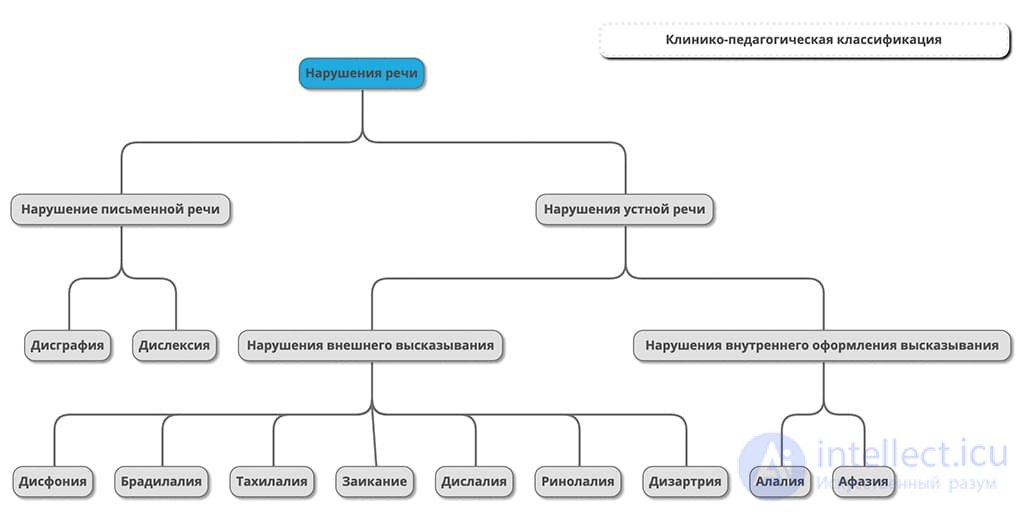
It is known that modern psychology has made enormous advances in the study of the genesis of mental processes and their dynamics in the process of formation and development. It has contributed much that is fundamentally new to our conceptions of the structure of HMF, and to our conception of complex conscious activity as a whole (for example, of the interaction of sensory and motor components in the structure of perception, of the role of movements and object-related actions in the development of speech, and of the role of speech in the development of HMF and of the conscious, voluntary behavior of the subject). And nevertheless we still know little about the internal structure and nature of many HMF, including writing, reading, and counting, about their multilevel, multilink structure, about the complex interactions into which they enter at each stage of development, and about their dynamics and role in the formation of the systemic relations of HMF within mental activity. All of this creates certain difficulties for restorative (and formative) training in these functions. It is precisely in the study of these problems that one of the important places is occupied by a new method of research — the neuropsychological method, which, on the one hand, makes it possible to see the brain structures with which one or another type of mental activity is connected, and, on the other, gives the possibility of seeing the internal structure of HMF and their interaction, and makes it possible to reveal the general structures present in different, seemingly very dissimilar, mental processes.
This, then, was the next task of the present work — to show that the difficulties in studying the internal structure of HMF can be overcome if a new field of knowledge is included in the study of the mental sphere — neuropsychology, which arose at the intersection of several fields of scientific knowledge — psychology, neurology, neurosurgery, physiology, and others. A.R. Luria and his students developed new special methods for studying HMF, based on the syndrome-based qualitative analysis of writing, reading, counting, and other HMF.
The neuropsychological method interacts with the psychological method; it is based on a fine-grained analysis of the changes in mental processes that arise with lesions of the brain, and it allows one to approach the internal structure of HMF (in our case — writing, reading, and counting), their interaction with other HMF, and, what is especially important, their interaction with speech. At the basis of the neuropsychological method lies the syndrome-based (or qualitative) analysis of the defect, which makes it possible to isolate the mechanism (factor) underlying the impairment of one or another HMF. These capabilities of neuropsychology are also significant for the development of psychological science itself. The book demonstrates the productiveness of this approach not only for the study of the internal structure of HMF, for the analysis of its impairments, and for the search for the mechanisms of the deficits, but also for the search for the affected zones of the brain, or those areas of the brain that are in a state of dysfunction or a state of underdevelopment (in children).
This work demonstrates the important role of neuropsychology in developing the most optimal paths and methods of restorative and formative training, and the significant contribution of neuropsychology to the development of pedagogical science. In this part of the book, special attention was given to the necessity of a scientific, rather than an empirical, approach to restorative and formative types of training, and to the connection between science and practice as one of the optimal paths for the restoration or formation of HMF, which requires, in particular, taking into account modern conceptions of HMF as interiorized object-related actions and relations of a social order, of HMF as the basis of the social "structure of the personality, and of the role of writing and reading in the development, restoration, and, above all, the formation of the conscious and voluntary forms of human behavior.
Despite the rapid development of psychology, neuropsychology, physiology, and other fields of scientific knowledge, at present, in the practice of teaching reading, writing, and counting, these processes are still often approached as isolated, outside their systemic structure within the whole mental sphere, without being regarded as elements of complex psychophysiological systems. Partly as a consequence of such conceptions of HMF, a mechanistic approach to the structure of these mental processes also continues to exist, one in which more attention is given to the "technical" side of these most complex forms of mental activity.
The role and place of neuropsychology in the analysis of defects and in the methods of overcoming them were shown using the examples of the impairment and restoration of writing, reading, and counting.
The complexity of the psychology, structure, and functions of writing, reading, and counting has been shown, along with their connection with various brain structures, and the dependence of their impairment on the topography of the lesion of the brain or on the non-formation of one or another structural link in the formation of these skills in children. It is in this connection that different forms of acalculia, agraphia, and alexia exist, depending on the impairment of the factor that in each case underlies the deficit in counting, writing, and reading. Different mechanisms of impairment also require different methods of overcoming it, which must be adequate to the structure of the impairment and to the factor underlying it.
At the present stage in the development of psychology and neuropsychology, it has become known that writing, reading, and counting, despite the full complexity of their genesis and structure, the complexity of their impairments, and the difficulties of teaching them, can be restored in patients (adults and children) with lesions of the brain, but only on condition of knowledge of the mechanism and structure of the defect and command of the neuropsychological qualitative analysis of the impairment of HMF. By knowing the genesis and structure of writing, reading, and counting and their connection with the brain, one can also find the cause of the difficulties in teaching (forming) these mental processes in children. This knowledge and the ability to conduct a neuropsychological examination of children are a powerful instrument in the hands of the educator for finding methods of teaching children at school that are adequate to these and other skills and to various types of scientific knowledge.
We have shown that the most important aspect of any type of training — restorative or formative (in children with developmental problems) — is taking into account the personality of the patient, his affective-volitional sphere, and the sphere of his motives and interests. At the present stage in the development of the theory and practice of restorative training, it has become clear that restorative work cannot begin with the restoration of a part (or element) of a function, but must proceed from the whole to the part, and also from sense to meaning, taking into account the existence of non-verbalized senses and including them in the training. For the full-fledged training of patients, it is necessary to know and take into account the position on the connection of HMF, of writing, reading, and counting, with the work of the brain both as a whole and with the work of its individual zones as parts of the whole. This knowledge is necessary for the correct organization of the formation of new functional systems, or the restructuring of impaired ones, which underlie HMF.
We still do not know a great deal about the human brain, its emergence and development, its structure and the laws of its functioning and breakdown, or about the compensatory mechanisms and the mechanisms of restoration of HMF, but one thing is entirely clear — the brain possesses colossal capacities for the formation and realization of HMF, for the emergence and development of new HMF, and also for the restoration of impaired mental processes. At present, neuropsychology has at its disposal a large body of clinical and experimental data, and material on the restoration of impaired HMF, which shows that the restoration of HMF, of course, depends on the brain and is connected with its functioning and its integrity, but that a full-fledged, productive restoration of HMF, rather than the patient's adaptation to the defect, is possible only if it proceeds from the tasks of restoring the person, his personality, motives, and intentions, rather than separate mental processes, and if it is directed toward the restoration of object-related activity through the activity of the subject.
It is known that assimilation occurs only through the subject's own activity, which is what must first of all be organized and restored in adult patients and in children in the process of their training. The human brain possesses enormous reserves, and our task is to mobilize all resources — mental and cerebral — and to ensure their extraction and use in different types of training — normal and special, restorative and formative, of higher mental functions.
We have described the picture of the impairment of arithmetical operations and the methods for their restoration in patients with lesions of different areas of the cerebral cortex. We have pointed to the existence of different forms of acalculia, whose structure is directly dependent on the topography of the lesion of the brain.
Among these forms, the most frequently encountered is primary acalculia, arising with lesions of the parietal parts of the brain. This form is the fundamental one — here the arithmetical operations are impaired in their essential aspect. Patients lose their understanding of the spatial schemas of counting; their concept of number is impaired, as is their concept of the place-value structure of its notation. These patients often fail to understand the meaning of arithmetical signs and cannot carry out the operations indicated by them.
The training of patients in this group is directed above all at restoring the spatial schemas of counting, restoring the concept of number (its composition and place-value structure), and the understanding of the composition of arithmetical operations, etc. A significant role in this training belongs to external supports, to externalizing the structure of the operations, and to means that promote the gradual interiorization of the operations being restored. At a certain stage of training, an essential role belongs to speech spoken aloud — verbalization.
Arithmetical operations may also prove to be impaired with lesions of the frontal systems of the brain. In this case, their impairments take on a different picture. They do not affect the essential aspect of the operations, but touch on it only secondarily, and are the result of a breakdown of the general forms of intellectual activity. We have made an attempt to show the varieties of "frontal acalculia". Impairments of arithmetical operations are encountered, occurring now within a syndrome of inactivity, heightened inertness of stereotypes, and motor and speech perseverations (lesions of the posterior frontal parts of the brain), now within a syndrome of general disinhibition of behavior, decreased concentration of attention, and impulsivity (lesions of the basal parts of the frontal systems of the brain), now within a syndrome of pathology of orientative-exploratory activity and behavioral strategy, and impairment of the selectivity of connections (lesions of the polar parts of the frontal region of the brain). In all these cases the picture of the impairments is different, and the correction of the deficits requires a different approach. But all these varieties of acalculia have no fundamental differences — all of them are secondary in origin and do not affect the essential aspect of the operations.
The methods for overcoming these deficits, while differing from one another in inessential respects, must be directed above all at restoring the patient's general behavior in the situation of performing arithmetical operations, and the patient's purposefulness, and at creating conditions that allow him to become aware of the need to control his own actions.
Secondary impairments of operations often arise with lesions of the occipital parts of the cerebral cortex and occur within a syndrome of visual perception disorders. Restorative training aimed at overcoming the deficits of the perception of digits and their combinations leads to the restoration of counting. Psychological analysis of this process allows one once again to confirm the complex structure of intellectual activity, which includes in its structure, besides the concrete operations, a general strategy that subordinates the operational components to itself. Both of these aspects of the intellectual act, and their mutual conditioning, are important and necessary. The impairment of one of them inevitably leads to the impairment of the activity as a whole. But the impairment of each of these aspects is accompanied by a different psychological structure of the breakdown of intellectual activity, which is related to the topography of the lesion. The data obtained in the study of acalculia correlate with the data we obtained in studying the breakdown of intellectual activity in solving arithmetical and constructive tasks, as well as in planning a literary text (Luria and Tsvetkova, 1966, 1968; Tsvetkova, 1967).
The neuropsychological method of research holds profound possibilities within it. Restorative training is of special importance for the in-depth study of the structure of higher mental functions and their connection with the cerebral substrate.

Comments