
Lecture
Это продолжение увлекательной статьи про посттравматическое стрессовое расстройство.
...
disorder.
In particular, the following therapeutic approaches may be used:
Cognitive behavioral therapy is currently considered one of the most effective methods for treating PTSD. In particular, this approach is included in the American Psychiatric Association's "Practice Guideline for the Treatment of Patients With Posttraumatic Stress Disorder"[26]. Within cognitive psychotherapy, the patient is taught techniques for reducing anxiety and getting rid of recurring images that lead to distress. Identifying and changing the meaning that the patient attaches to the psychotraumatic event also plays a large role in cognitive therapy.[27] This approach involves working with the patient's negative beliefs and ineffective coping strategies that maintain PTSD symptoms. Therapy includes the following stages:
This method is part of cognitive behavioral therapy. It includes:
This technique helps the patient believe that he is capable of enduring the emotions related to the trauma. For example, the therapist asks the patient to slowly read aloud an account of his trauma, concentrating attention on every detail. As homework, it may be recommended to read the description of the event daily for 30 minutes. Sometimes the "script rewriting" method is also used, in which the patient creates a new image of himself and a new ending. [32]
After imaginal exposure stops causing anxiety, the patient is encouraged to gradually begin, in real life, to do the things that cause him intense fear and avoidance. As anxiety decreases, the patient is asked to stop using "safety behavior" techniques. After each exposure session, the similarities and differences between the new and old impressions are discussed. This helps the patient distinguish the harmless stimuli present at the moment of the event from real signals of danger. Gradually, the traumatic reaction to these harmless stimuli fades. [33]
In the Virtual Reality Graded Exposure Therapy (VRGET) method, a computer program is used to create a virtual approximation of the frightening situation. Therapeutic sessions are conducted with the participation of a therapist. He selects the scenario according to the level of negative emotions that the patient is capable of tolerating at that moment. The method reduces PTSD symptoms and gives good results in patients whom the exposure methods described above have not helped. In particular, the feeling of fear and the degree of nervous-system arousal upon contact with the frightening situation are reduced. [34]
This technique was originally created for the treatment of borderline personality disorder, but a version of it has now been developed for the treatment of PTSD, since both disorders share difficulties with emotion control and problems in relationships with people. Studies have shown the method's effectiveness.[35]
This method was originally developed to reduce the symptoms of anxiety disorder, but it has shown good results in the therapy of PTSD. It includes relaxation techniques, the "thought stopping" technique, and the method of exposure to fear-inducing situations.[35]
This method belongs to one of the varieties of cognitive behavioral therapy. In this approach, the patient is first asked to become aware that his attempts to avoid negative thoughts and emotions about the trauma only intensify the manifestations of PTSD symptoms and prevent him from focusing on the present moment. Instead of avoidance, awareness and acceptance of one's experiences is recommended.[36]
One of the psychotherapeutic methods for treating PTSD is eye movement desensitization and reprocessing (EMDR)[37]. Numerous scientific studies demonstrate the effectiveness of this method. According to meta-analyses, EMDR is no less effective than the best of the other existing methods for treating PTSD, but it appears to be best tolerated and to act very quickly. When applying EMDR, the therapist first evokes in the patient the traumatic memory with all its components — emotional, visual, cognitive, and physical (bodily sensations)[38] — and then stimulates the information-processing system responsible for self-healing in psychotraumatic situations, which had previously failed to process this painful trace[37]. Among the advantages of the method are the following features of this technique:
In the period between the end of the 19th century and the middle of the 20th century, hypnosis was the primary method of treating PTSD,[40], but at present a large number of scientific studies of its effectiveness have not been conducted. However, for example, a study conducted in 2008 in Israel on combat veterans showed a significant improvement in symptoms when hypnotherapy was applied, compared with the use of zolpidem in the control group (especially with respect to improved sleep, reduced depression symptoms, and improved concentration); moreover, the effect of hypnotherapy persisted for at least a month after its application.[41]
An advantage of using hypnosis for PTSD therapy is that it can be applied, for example, in cases of traumatic brain injury, when other therapeutic approaches are ineffective because of the patient's fatigability, as well as problems with memory and concentration.[42]. The effect is often achieved faster than when using cognitive behavioral therapy.[42]
It has also been noted that hypnotizability (that is, susceptibility to hypnosis) is increased in PTSD. This is more characteristic of individuals who have experienced repeated trauma. Apparently this is because, in this case, a symptom of dissociation arises, that is, an altered state of consciousness similar to a hypnotic trance (see Trance disorder). It is assumed that sometimes, in PTSD, the individual consciously uses dissociation to protect himself from difficult experiences. This capacity for trance dissociation, developed as a result of the trauma, can be used purposefully in hypnotherapy[43]. It is also important that, in PTSD, the memory of the traumatic situation remains locked in the amygdala of the brain without any indication of where, when, and why the event took place (see Mechanism of formation of traumatic memories in PTSD). This feature of PTSD can be useful when applying hypnosis and self-hypnosis techniques, since the amygdala is unable to distinguish a real situation from an imagined one. Thus, if the patient imagines himself in a pleasant or safe situation, the anxious activity of the amygdala decreases, and this can contribute to recovery[44].
The following scheme is often used in hypnotherapy:
First stage: stabilization of the patient's condition, reduction in the intensity of symptoms, increase in self-control over the symptoms. At this stage, hypnosis is used for relaxation, so that the patient becomes able to feel a state of calm and safety, and also to maintain this state in his everyday life with the help of self-hypnosis. Hypnotic suggestions may be directed at such PTSD symptoms as, for example, anxiety, physical pain, and sleep disturbances. The "Safe Place" technique may be used[45] (learning to imagine oneself in a place associated with a state of relaxation and calm[46]) and techniques for "ego strengthening."[45]
Second stage: turning to the traumatic memories (in particular, the age regression technique is sometimes used). The transition to this stage is made after a trusting relationship has been established with the patient and when the patient has developed sufficient personal resources to be able to feel safe and to cope with the emotions associated with the memories.[47] The goal of this stage is to work through and integrate all aspects of the traumatic experience (sensations, thoughts, emotions) in a safe context.[48] The patient may be invited to project the traumatic images, sensations, and thoughts onto an imaginary screen (for example, onto the screen of a television or computer, onto the surface of a calm lake, a mirror, or the blue sky). This technique helps separate the memories from physically painful sensations. The patient can also be told that he can control what happens on the imaginary screen (change the colors, the volume of the sound, the speed of movement).[46]. The patient may also be invited to imagine the traumatic event on the left side of the screen, and on the right to place an image of what he did to cope with the situation, to protect himself or someone else (this helps the patient realize that helplessness and humiliation were only one of many aspects of the event).[49] The hypnotherapist may also use the following techniques:
The effect of these methods is related to the so-called Zeigarnik effect: an action that was not completed in the past occupies a greater volume in memory and continues to trouble the mind. The possibility of completing the action, even in imagination, has a positive therapeutic effect. [50]
Third stage: creating the ability for self-development, rather than becoming frozen in traumatic experiences.The individual becomes able to correct his own state himself with the help of self-hypnosis. Some techniques, such as time progression, can help get rid of the feeling of helplessness in the face of the future, and establish realistic goals for the future.[51]
Working with the subpersonalities of the psyche is useful when there is an internal conflict in a person who has experienced psychological trauma. In this case, separate parts of the psyche may have a different perception of the event or different attitudes and goals. For example, one subpersonality embodies the desire to punish the aggressor, another — the fear of showing anger, and a third — shame and self-blame. Also, some subpersonalities strive to express their negative emotions, while other subpersonalities forbid their expression and sometimes even prevent these experiences from rising to the level of consciousness.[52] Also, in PTSD, tertiary dissociation may arise, in which each of the subpersonalities holds a portion of the information about the traumatic experience.[53] Working with subpersonalities allows the patient to restore the integrity of his psyche.[52] Methods of this type include, for example:
«Internal Family Systems
«Ego State Therapy The goal of the method is to reduce the rigidity of the boundaries between different ego states so that they can cooperate for the benefit of the patient. This approach is especially indicated for patients who have experienced severe trauma (physical or sexual abuse, early maternal deprivation), as well as for patients suffering from addictions and eating disorders (anorexia, bulimia). This method uses immersion in a state of hypnotic trance. The therapist then establishes a dialogue with the various ego states. The so-called SARI model is used
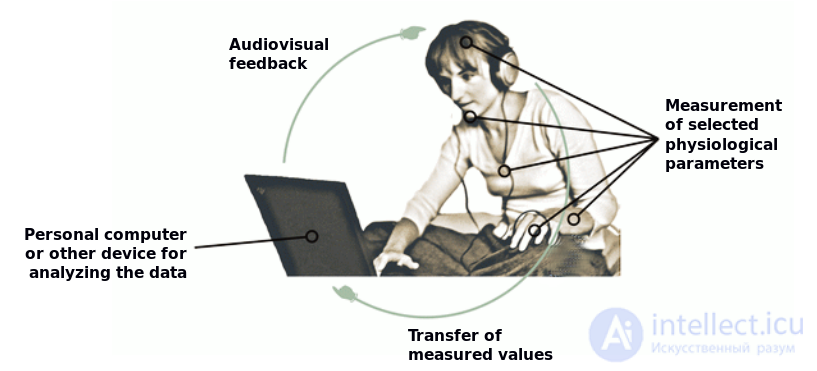
physiological indicators are measured using electrodes and displayed in the form of an image or sound
Biofeedback and neurofeedback methods consist in the fact that information about the state and change of the patient's physiological processes or brain activity is read using electrodes. This activity is then displayed on a computer screen in real time, in graphic form or in the form of a multimedia game interface. This provides the patient with feedback about the functioning of his brain and allows him to learn to control it.
The biofeedback method for improving heart rate variability gives good results (see Biofeedback). [55]
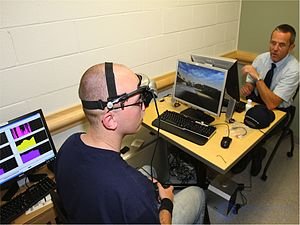
The neurofeedback method uses measurement of brain activity. Various neurofeedback protocols may be applied for treating PTSD, depending on the symptoms observed and the results of an electroencephalographic study of the brain. For example:
People who have experienced psychological trauma often suffer from constant nervous tension. This can cause a state of hypervigilance, irritability, and sleep problems, which in turn leads to fatigue and intensifies anxiety-depressive symptoms. In this case, therapy at the level of consciousness is insufficient, and relaxation techniques may prove useful. These techniques not only improve the patient's condition, but also allow him to overcome the feeling of helplessness about his symptoms: the patient realizes that he is capable of coping with his anxious state.[57]
The use of relaxation techniques is also useful at the beginning of a psychotherapy session. They allow the patient to more easily tolerate unpleasant thoughts and emotions (fear, sadness, a feeling of helplessness) without resorting to repressing them. Thanks to this, the patient more easily becomes aware of his anxious thoughts and his emotional state and can work on them during the psychotherapeutic session.[58]
In PTSD, learning relaxation is sometimes associated with certain difficulties. Constantly subconsciously fearing that he will again find himself in the traumatic situation, the patient is afraid to relax his muscles and reduce conscious control. A state of muscular relaxation may be subconsciously associated with greater vulnerability. Sometimes the patient is afraid to close his eyes. It is also important to keep in mind that sometimes the patient may perceive learning relaxation as something in which he is obligated to succeed, and quickly at that. This can increase his anxiety and state of stress. However, overcoming these difficulties can have an important therapeutic effect: the patient becomes convinced that he can effectively control his condition, and that the state of relaxation does not make him more vulnerable.[59]
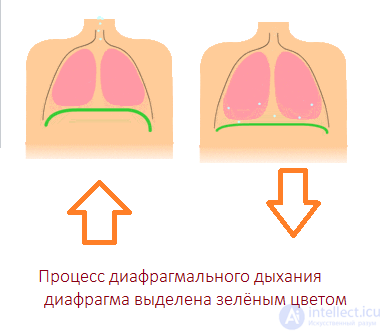
The process of diaphragmatic breathing (the diaphragm is highlighted in green
Abdominal breathing, also called diaphragmatic breathing, has as its goal overcoming the state of hyperventilation and its consequences. The fact is that in a state of stress or when exposed to a trigger, the patient's breathing becomes more frequent and shallow. This is necessary so that the heart and muscles receive a greater amount of oxygen to carry out the instinctive protective "fight or flight" response. But in most cases the person remains passive, the body cannot use up the excess oxygen, and an imbalance arises between the concentration of oxygen and carbon dioxide in the blood. This imbalance leads to a large number of unpleasant symptoms: palpitations, a feeling of suffocation, dizziness, fear of losing consciousness, visual disturbances, etc. Such a state causes even greater fear in the patient. Abdominal breathing slows the breathing rhythm, restores the balance between the concentration of oxygen and carbon dioxide in the blood, reduces the heart rate, and produces a general feeling of calm[60].
Abdominal breathing also affects the vagus nerve. During an abdominal inhalation, the diaphragm descends and slightly compresses the organs located in the abdominal cavity. Branches of the vagus nerve pass between these organs; pressure on them activates the vagus nerve, which leads to a decrease in the activity of the sympathetic nervous system, an increase in the activity of the parasympathetic nervous system, and, as a consequence, to a state of relaxation, calm, and a reduced reaction to stressors[61]
When using the technique, one should not puff out the abdomen; one simply needs to relax the abdominal muscles, allow the breathing to become deeper, and concentrate attention on the sensations of inhaling and exhaling. It is important to explain to the patient that this technique does not guarantee that anxiety will disappear, but it helps him tolerate the state of anxiety more easily and keeps the fear from becoming even stronger.
The technique takes time to master, since at first, even knowing how to breathe this way, the patient involuntarily reverts to shallow breathing when a feeling of fear arises. In the course of therapy the patient usually first learns abdominal breathing in a calm setting. As he masters the technique, he gradually begins to use it in situations that provoke anxiety in him.[60]
This technique is based on the idea that the exhalation phase induces a state of relaxation in the body. The patient is taught to breathe slowly, without inhaling a large amount of air, lengthening the exhalation time and pausing for a count of 4 after each exhalation. During the exhalation he can slowly say, for example, the word "relax". This technique is particularly useful for victims of sexual assault, for whom concentrating attention on sensations in the lower abdomen (which is part of the abdominal-breathing technique described above) provokes anxiety.[62]
In this method the patient learns to tense and then relax various muscle groups. The method is based on the fact that after a period of strong tension any muscle automatically relaxes deeply. It is important to explain to the patient that relaxation of a muscle should not be done slowly and gradually. While relaxing a muscle, he should imagine that he is cutting the string that moves a marionette, and the tension in the muscle instantly disappears. It is also important, while working with one muscle group, to keep all the other muscle groups relaxed (the muscles of the body have a natural tendency to tense when one of the muscles tenses). This technique can be supplemented with the breathing exercises described above: during the muscle-relaxation phase the patient can use the abdominal breathing method. This strengthens the state of relaxation and creates a conditioned reflex between deep breathing and muscle relaxation. Thus, subsequently, the use of abdominal breathing will trigger muscle relaxation.[63]
The therapist often records the instructions in audio format and asks the patient to use this recording for daily relaxation training at home. The advantages of this method are:
In addition, patients with post-traumatic stress disorder often find it difficult to relax while listening to relaxation recordings that use imagery (for example, "imagine the sound of sea waves"). In this case consciousness becomes "adrift", and there is a high likelihood that traumatic memories will arise spontaneously. When using the progressive relaxation method the patient must listen to clear instructions and carry out specific commands, which reduces the possibility of thinking about other topics.[65]
This method helps relieve emotional tension and the associated irritability and anxiety, and improves the quality of sleep. PTSD is often accompanied by somatic symptoms, and autogenic training can be of substantial benefit, for example, in relieving pain and unpleasant bodily sensations and in normalizing heart rate and breathing. The activating exercises of autogenic training can reduce avoidance of trauma-related stimuli, improve concentration of attention, and eliminate feelings of depression, hopelessness, and uselessness, a sense of reduced energy, lack of interest in anything, and lack of motivation .
The practice of meditation reduces the state of excessive nervous arousal characteristic of PTSD. As a result, symptoms of intrusion, avoidance, anger and depression decrease, while self-esteem, energy and the capacity for relaxation increase, and the pain threshold rises.[66] An advantage of this method is the simplicity of learning it and the possibility of using it in group therapy. According to research findings, the psychopathological re-experiencing (flashbacks) and the state of inner numbness characteristic of PTSD respond less well to improvement through meditation than other PTSD symptoms.[67] In addition, there is a risk that re-experiencing of the trauma may appear during meditation. For this reason it is recommended that meditation be limited to 3-6 minutes and conducted under the supervision of a therapist[68].
Mindfulness meditation consists in observing what is happening here and now, including one's own emotions and sensations. In doing so the meditator refrains from any judgments about what is observed. This technique is of Eastern origin. Beginning in the 1980s, it has been increasingly used in psychotherapy in the West. Daily mindfulness practice gradually increases the individual's ability to consciously control the focus of his attention on the safe setting of the present moment, as a result of which he pays less attention to memories of the trauma and is less troubled by stimuli that had previously been triggers evoking PTSD symptoms.
Research findings indicate that as the patient masters the skill of concentrating attention on what is happening "here and now", many PTSD symptoms, such as anxiety and intrusive thoughts, diminish. The ability to observe one's own sensations and emotions while remaining in a neutral, calm state reduces the intensity of negative emotions (for example, shame), of dissociative symptoms, and of mobilization reactions aimed at defending against an imagined threat. As the patient comes to realize that he can calmly experience his negative emotions and sensations, his need for coping strategies and avoidant behavior decreases. Finally, the dissociative fragmentation of the individual's personality diminishes, and the sense of personal integrity and identity is strengthened.
Studies have shown that PTSD is often accompanied by either insufficient or excessive control over the expression of emotions (both processes may coexist in parallel in a patient with PTSD). The practice of mindfulness meditation increases the activity of the prefrontal cortex at the moment negative trauma-related images appear in consciousness (the cortex, in particular, is involved in the conscious and adaptive regulation of emotions). At the same time, the activity of the limbic system (for example, the amygdala), responsible for uncontrolled emotional reactions, decreases. The insular lobe of the brain becomes more active, which, in particular, reduces symptoms of alexithymia and improves the patient's ability to understand his own emotional state. This ability is often reduced in PTSD, and it often occurs alongside a tendency to over-control one's emotions. Thus, the practice of mindfulness allows one to regulate one's emotions in an optimal and adaptive way.
Despite good results, this technique requires caution in its use, since concentrating attention on one's emotions and sensations can lead to destabilization or retraumatization in some patients, in whom memories of the trauma arise easily and who also experience a large number of flashbacks and intrusive thoughts. The method can also be difficult to master for patients who lack sufficient skills to control negative emotions and the capacity to tolerate these emotions. Finally, attention to one's bodily sensations can trigger symptoms of dissociation in victims of sexual assault[69].
The goal of this meditation is the wish that the meditator himself and other people be freed from suffering.[70] The meditation consists of three elements:
In doing so, the focus of attention shifts from the problems to the sense of safety in the present moment.[70]
This meditation technique reduces the feelings of shame, fear and anger characteristic of PTSD, as well as depression, dysphoria and anhedonia. Positive feelings become more intense, such as self-acceptance, hope, motivation, a sense of meaning in life and satisfaction with the quality of life. Relationships with people, stress resilience and the capacity for personal growth improve.[72] Research findings show that using this technique activates the areas of the brain responsible for positive emotions and empathy, and improves their connectivity with the cortex of the left hemisphere.[73] The level of oxytocin and endorphins, which are associated with positive emotions and a sense of safety, increases.[70]
The psychodynamic approach aims to resolve the conflict arising from the discrepancy between the patient's picture of the world and values and the reality of the traumatic situation. Therapeutic correction consists in examining these conflicts and converting the destructive energy contained in them into constructive energy. In particular, subconscious conflicts are brought up to the level of consciousness and worked through emotionally. Projective methods, among others, are used for this purpose. Therapy is also aimed at restoring the integrity of the "Self", and developing self-respect, self-control and a sense of personal responsibility .
One of the basic tenets of this method is Sigmund Freud's idea that psychological trauma creates in the individual a need to repress the suffering into the subconscious, using a variety of psychological defenses. This leads to the appearance of avoidance symptoms and distortions in memories of the trauma. Moreover, these psychological defenses block the Ego's ability to overcome the consequences of the trauma and can lead to various behavioral deviations. .[74] Freud also put forward the hypothesis that the individual's striving to avoid unpleasant experiences leads to a wish to annul any harmful stimulation, both external and internal, even if this means renouncing life itself (the death drive, or mortido).[75]
At present, classical Freudian psychoanalysis is rarely used, since this process is lengthy (up to several years). Contemporary psychodynamic methods are usually not as time-consuming. Moreover, they do not make use of Freud's ideas about sexuality. In PTSD, in most cases the therapist and the client work on strengthening the Ego so that the client gradually acquires the ability to integrate the traumatic experience.[74] An increase in the strength of the Ego is understood as intrapersonal unity and the ability to cope with stress. Psychodynamic psychotherapy also aims to improve self-understanding. In the course of therapy, normal mechanisms of adaptation are activated by turning to the unconscious and gradually making its processes conscious.
Indications for psychodynamic psychotherapy are:
In the absence of the above qualities, as well as in cases of emotional instability or during a life crisis, it is preferable to conduct supportive-type psychodynamic psychotherapy. In the course of supportive psychotherapy the therapist is generally more active; rather than interpreting, he supports the patient's psychological defenses, combining them with the coping strategies that the patient himself considers useful. In addition, the therapist bolsters the patient's self-esteem. The therapist strives less to uncover unconscious conflicts, and more to preserve the patient's intrapsychic equilibrium. Problems are resolved in the context of the present moment, rather than through an in-depth exploration of personal history and intrapsychic structure.
There is also a short-term form of psychodynamic psychotherapy (12-20 sessions). Indications for it are:
In the case of short-term therapy, it is essential that the patient and the therapist reach agreement right away on the goal of the therapeutic work. In psychodynamic psychotherapy for PTSD, the vicarious traumatization of the therapist, who is compelled to listen to the patient's accounts of the trauma he has undergone, is of particularly great importance. In addition, countertransference (see transference (psychology)) toward patients with PTSD can be deep and confusing. Strong countertransference on the part of the therapist may turn out to be a relative contraindication for beginning or continuing therapy. For this reason, when working with patients of this type, the therapist's own self-work is especially necessary (adequate training, continuous reflection, support from colleagues, ongoing supervision, and personal psychotherapy). Given the specific nature of psychodynamic therapy, most psychodynamic studies receive low ratings on the classification of the level of evidence. Moreover, research is conducted mainly on short-term therapy rather than on long-term or supportive therapy. Nevertheless, the psychodynamic literature has substantially contributed to a better understanding of the psychological impact of psychological trauma.[75]
Gestalt therapy is usually used in the form of group therapy, but for PTSD an individual approach is more effective. Gestalt therapy can be applied for the following PTSD symptoms:
The goal of the therapeutic work is to remove the blocks that have arisen because of the trauma and to stimulate the person's process of development, by creating an inner source of support and optimizing the processes of self-regulation. Much attention is devoted to raising awareness of the various psychological attitudes and modes of behavior and thinking that have become fixed in the past. The therapist helps the patient understand their meaning and role in the present. In Gestalt therapy, one of the main sources of the problem is considered to be the individual's inability to complete the traumatic situation at the psychological level. As a result, the individual is unable to make full contact with the surrounding environment and with himself. The Gestalt approach considers 5 basic mechanisms of contact interruption:
The classic "two chairs" technique can also be used to treat PTSD; it consists in the patient acting out unfinished traumatic situations. In doing so the patient takes on various roles, moving between different chairs. For example, this makes it possible to work with nightmares, which often occur in PTSD. In Gestalt therapy, the various elements of a dream are regarded as a projection of separate parts of the personality of the person who has the dream. The dream is viewed as a message that the dreamer addresses to himself. The patient is asked to identify himself successively with different elements of the dream and to reclaim his projections. It is important to reproduce the dream from every point of view, that is, to take on the role of each character in the dream, including inanimate objects. In this way the patient can live through, become aware of, and integrate the parts of his personality that he has been rejecting .
From the point of view of psychologists of this orientation, therapists of other schools (in particular, representatives of the psychodynamic approach and of cognitive-behavioral therapy) primarily seek to enable the individual to control post-traumatic symptoms and to function normally in everyday life. In doing so they do not pay sufficient attention to the important questions that people tend to ask themselves after a trauma (for example: "Why did this happen to me?"), nor to a person's reflections on death, his identity, and the feeling of alienation from people, and so on, which often arise after a traumatic experience. In humanistic and existential therapy it is precisely the search, together with the client, for answers to these questions that takes priority. The therapist also helps the client find hidden inner strengths within himself and become able to be himself — rather than what he, from the standpoint of his former beliefs, "should" be. Great attention is paid to the spiritual aspects of the client's experiences, sometimes in the context of his religious beliefs, since trauma often challenges precisely these aspects of a person's psychic life[76].
In particular, as one of the branches of this movement, logotherapy consists in finding meaning in what has happened. Once meaning has been found, recovery can occur very quickly. Cultural and religious views (for example, the doctrine of karma or the religious meaning of suffering) play an important role here[77].
The method was created in 1989-90. It is currently becoming increasingly widespread, including in the post-Soviet space[78]. The American Psychological Association conditionally recommends this method for the treatment of PTSD, especially for treating complex or multiple psychological traumas. The method can be used both individually and in group therapy (in small groups) and usually comprises from 4 to 10 sessions[79]. Narrative practice is effectively applied in work with people and communities who have survived trauma of any kind, for example: in "hot spots" of conflict, with victims of occupation, genocide, in refugee camps, and so on. Work is also carried out with marginalized population groups, with prison inmates, or with people for whom traditional psychotherapy is inaccessible owing to cultural or religious characteristics[78].
The method consists in the therapist inviting the client to write a chronological account of his life, with emphasis on traumatic events, while also mentioning positive moments. It is necessary to describe in detail one's emotions, thoughts, sensations, and physiological reactions to the events. At the same time, a connection with the present moment should be maintained. For this purpose, constant reminders are used that the emotions and physiological reactions are linked to a specific place and a specific moment in the past[79]. Also recorded is what the person did (for example, various ways of keeping up his spirits, helping others, memories of the past that helped him survive, and so on), how he used his skills and abilities, how this was connected with his values, where those values came from in his life, and how they influenced it. In the narrative approach this is called "double description", or "description from both sides"[80].
During the closing session the therapist hands the client the autobiography written during therapy. It is believed that the narrative method helps organize traumatic memories and anchor them in context. It is known that in PTSD traumatic memories are fragmented and not integrated into autobiographical memory. As a result, the traumatic memory is not perceived as an event that took place in the past and has, by the present time, already come to a successful conclusion (see The mechanism of formation of traumatic memories in post-traumatic stress disorder). The narrative method makes it possible to transform fragmented traumatic memories into coherent autobiographical memories and to integrate them into one's life experience. This also helps the client understand the influence of the events he has undergone on his patterns of behavior. In addition, the sense of personal identity is strengthened, and awareness of one's human dignity and one's rights is heightened. In this method it is important that the therapist display a capacity for active listening, compassion, and unconditional positive regard toward the client[79].
In narrative therapy it is assumed that the client is the expert on his own experience and his own life; he himself knows best how what is happening to him should be described. The therapist's position is decentered, with the client's experience and opinion at the center. The therapist asks guiding questions and bears responsibility for ensuring that the therapy does not lead to the client's retraumatization, but instead opens up opportunities for a new understanding of personal experience. In narrative practice there is no concept of "client resistance", since resistance can arise only if the therapist tries to impose a particular direction of conversation on the client. If the client does not answer the therapist's question, it is assumed that the question fell outside the zone of proximal development (that is, outside the space between what is known and habitual and what it is possible to become aware of at the given moment). In such a case the therapist reformulates the question and uses methods for building a "system of supports" that allow the client to move forward without the risk of retraumatization[78].
A person can also often feel shame, guilt, or a sense of inferiority because something in his personality and behavior does not fit social stereotypes (see Shame and guilt in post-traumatic stress disorder). A narrative therapist can help him become aware of these stereotypes and understand their role in sustaining negative emotions, and the client can then turn to alternative norms that are not dominant at the given moment in his culture[81].
An important technique of the method is the so-called "externalization" (literally — "placing outside"), based on the key idea of the narrative approach: "The problem is not in the person, the problem is in the problem". The point is that if a person believes the problem lies in himself, this adds shame and self-blame to the suffering that already exists. In the narrative approach the therapist separates the problem from the person, presenting the problem as a certain entity that, within the metaphor of the narrative, performs the function of an antagonist in relation to the hero of the story[78].
One of the techniques most specific to narrative practice is holding special ceremonies of acknowledgment of self-determination, in which participants (preferably people united with the narrator by a shared experience) give a witnessing response to the narrator's story. It is also customary for the therapist to tell the client what he himself gains from working with him (for example, the therapist emphasizes that talking with the client helps the therapist look at something in a new way). For a person who has survived a trauma, it can be very valuable that his story has had a certain influence on the lives of others, that what he went through was not in vain, that it turned out to be important and useful for someone[78]. In particular, this can contribute to so-called post-traumatic personal growth[82].
The method can also be applied to children, using drawings and toys[81].
Group psychotherapy is a frequently used method for treating PTSD, often in parallel with individual therapy. There are the following types of such groups:
Advantages of the group approach:
This approach is based on the fact that more severe PTSD symptoms are observed in people who were unable to act actively at the moment of the event. If a person is forced to be passive, the stress hormones are not used by the body for action, and the "fight or flight" state becomes chronic. In body-oriented therapy the patient becomes able to carry out actions that he could not carry out at the moment of the trauma (for example, striking a blow), which leads to a reduction in post-traumatic symptoms[83].
продолжение следует...
Часть 1 Post-Traumatic Stress Disorder (PTSD)
Часть 2 Description of the main symptoms - Post-Traumatic Stress Disorder (PTSD)
Часть 3 Cognitive behavioral psychotherapy for PTSD - Post-Traumatic Stress Disorder (PTSD)
Часть 4 Possible problems and ways to solve them - Post-Traumatic Stress
Часть 5 In culture - Post-Traumatic Stress Disorder (PTSD)


Comments