
Lecture
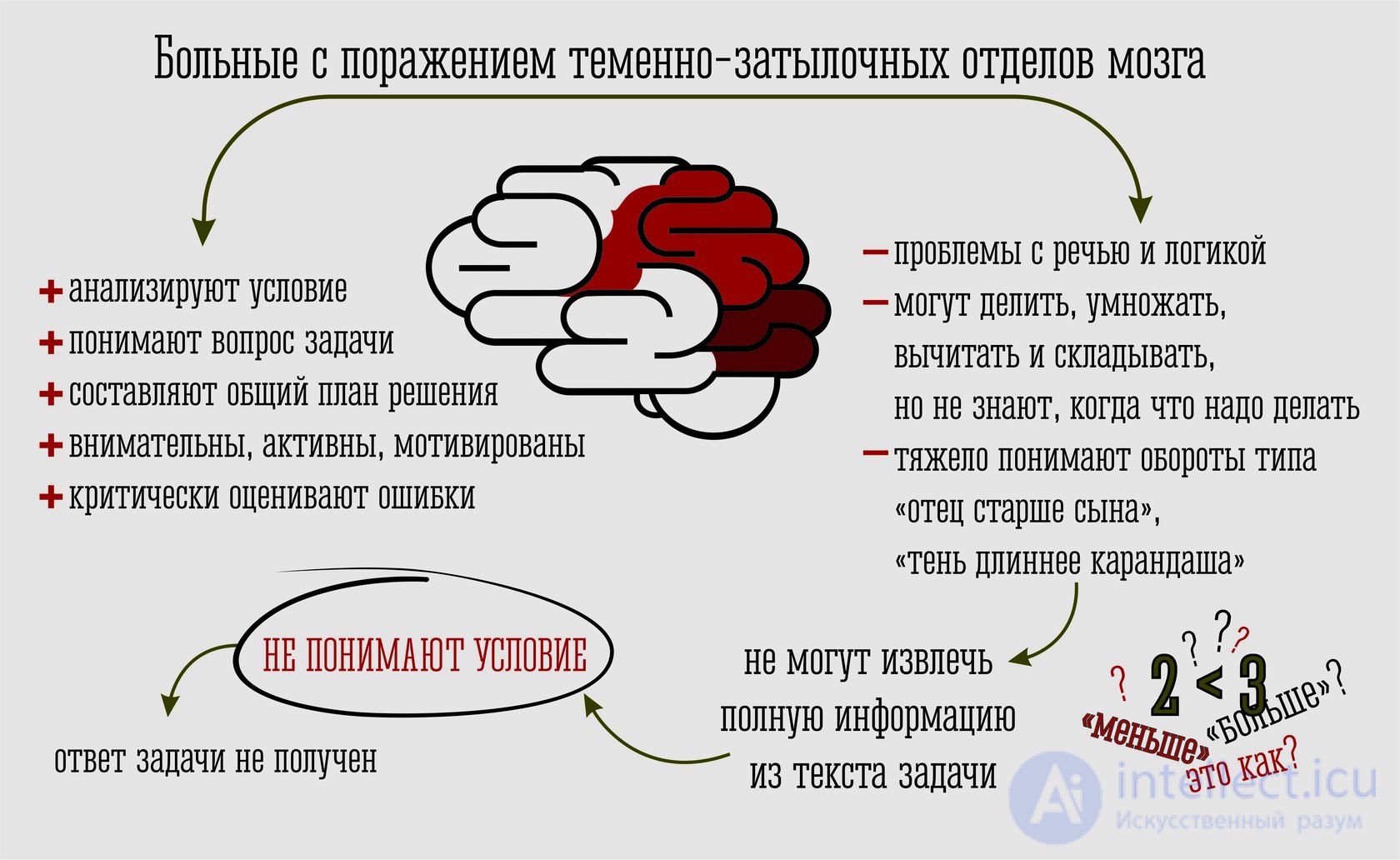
Dyscalculia (Eng. dyscalculia; from Ancient Greek δυς- "badly" and Lat. calculāre "to count") — an inability to learn arithmetic. It is often an independent disorder rather than a side effect of other neurological and mental problems. Dyscalculia is based on the absence of subitizing — the ability to assess the number of objects at a single glance (that is, without counting). This function in the brain is governed by the intraparietal sulcus of the parietal lobe. In people suffering from this disorder, this area of the brain is smaller than in healthy people and is insufficiently active. Such people may also often suffer from dyslexia and attention deficit hyperactivity disorder. In cases of severe brain damage, an extreme degree of the disease manifests itself - acalculia. The person is unable to perform the simplest mathematical operations, confuses the writing of numbers, and loses track when counting aloud.
This syndrome manifests in the following symptoms:
In any case, this is not an indicator of intelligence. People with dyscalculia syndrome often become poets, artists, and sculptors, and, accordingly, have no problems learning languages or writing.
The earliest manifestation of dyscalculia is usually a deficit in the ability to recognize, at a single glance and without counting, how many objects are in a small group (see Subitizing). Children at age 5 can subitize 6 objects, especially when looking at a die. However, children with dyscalculia can subitize fewer objects, and even when they identify the number correctly, they need more time than their peers of the same age. [13] Dyscalculia often looks different at different ages. This becomes more apparent as children grow older; however, symptoms can appear as early as preschool age. [14]Common symptoms of dyscalculia include difficulty with mathematics, difficulty analyzing time and reading analog clocks, difficulty determining sequences of movements involving numbers, and they will often count on their fingers when adding numbers.
Dyscalculia is characterized by difficulty with general arithmetic tasks. These difficulties may include:
Although many researchers believe that dyscalculia is a persistent condition, the data on the persistence of dyscalculia remain mixed. [19] For example, in a study conducted by Mazzocco and Myers (2003), the researchers assessed children on a range of criteria and selected their most consistent criterion as the best diagnostic criterion: a strict cutoff at the 10th percentile on the TEMA-2 scale. [20]They found that even using their best criterion, diagnoses of dyscalculia in children did not persist over the long term; only 65% of students who were ever diagnosed over a four-year period were diagnosed for at least two years. The proportion of children diagnosed for two consecutive years was even lower. It is unclear whether this was because incorrectly diagnosed children improved in mathematics and spatial perception as they progressed normally, or whether the subjects who showed improvement had been accurately diagnosed but displayed signs of an inconsistent learning disability.
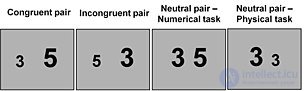
There is very little research on adults with dyscalculia who had a history of it growing up, but such studies have shown that it can persist into adult life. This can affect a large part of an adult's life. [21]Most adults with dyscalculia have difficulty mastering mathematics at the 4th-grade level. At the 1–4 grade level, many adults will know what to do with a math problem, but they often make mistakes due to "careless errors", even though they approach the task carelessly. Adults are unable to process their errors in math problems or are not even aware that they made these errors. These processing errors affect visuospatial input, auditory input, and sensory input. A person with dyscalculia may find it difficult to add numbers in column format, because their mind may confuse the numbers, and it is possible for them to get the same answer twice because their mind processes the task incorrectly.[22] If a person with dyscalculia is asked to choose the larger of two numbers, with the smaller number displayed in a larger font than the larger number, they may take the question literally and choose the number displayed in the larger font. Adults with dyscalculia have difficulty determining direction of travel while driving and managing their finances, which causes difficulties in everyday life.
College students may find it especially hard because of the fast pace and the changing difficulty of the work they must do. As a result, students may develop severe anxiety and frustration. After prolonged experience of anxiety, learners may stop engaging with mathematics and try to avoid it as much as possible, which can lead to lower grades in math courses. Nevertheless, students with dyscalculia often cope exceptionally well with writing, reading and speech.
It is possible to distinguish a child with this disorder from children with ordinary difficulties in mathematics.
Both domain-general and domain-specific causes have been proposed. As far as pure developmental dyscalculia is concerned, domain-general causes are unlikely, since they should not impair abilities in the numerical domain without also affecting other domains, such as reading.
Two competing domain-specific hypotheses have been proposed regarding the causes of developmental dyscalculia - the magnitude representation (or number module deficit hypothesis ) and the access deficit hypothesis .

Dehaene's [25] " Number Sense theory" suggests that approximate numerosities are automatically ordered in ascending order along the mental number line. The mechanism for representing and processing non-symbolic magnitude (for example, the number of dots) is often known as the " approximate number system " (ANS), and a fundamental deficit in ANS precision, known as the "magnitude representation hypothesis" or the "number module deficit hypothesis" has been proposed as the primary cause of developmental dyscalculia. [26]
In particular, structural features of the ANS are theoretically supported by a phenomenon called the "numerical distance effect", which has been reliably observed in numerical comparison tasks. [27] Typically developing individuals are less accurate and slower when comparing pairs of numbers that are close together (e.g., 7 and 8) than pairs that are farther apart (e.g., 2 and 9). A related "numerical ratio effect" (in which the ratio between two numbers changes while the distance remains constant, e.g., 2 vs. 5 and 4 vs. 7), based on Weber's law, has also been used to further support the ANS framework. [28]The numerical ratio effect is observed when people are less accurate and slower comparing pairs of numbers that have a larger ratio (e.g., 8 and 9, ratio = 8/9) than a smaller ratio (2 and 3; ratio = 2/3). A larger numerical distance or ratio effect when comparing sets of objects (i.e., non-symbolic sets) is thought to reflect a less precise ANS, and ANS acuity has been found to correlate with mathematical achievement in typically developing children [28], as well as in adults. [29]
More importantly, several behavioral studies [30] [31] have shown that children with developmental dyscalculia exhibit a weaker distance/ratio effect than typically developing children. Moreover, neuroimaging studies have also provided additional information, even when the behavioral difference in the distance/ratio effect may not be obvious. For example, Gavin R. Price and colleagues [32] found that children with developmental dyscalculia did not show a differential effect of distance on reaction time compared with typically developing children, but they did show a greater effect of distance on response accuracy. They also found that the right intraparietal sulcus in children with developmental dyscalculia was not modulated to the same degree in response to non-symbolic numerical processing as in typically developing children. [32] Given the strong involvement of the intraparietal sulcus in magnitude representation, it is possible that children with developmental dyscalculia have a weak representation of magnitude in the parietal region. Nevertheless, this does not rule out an impaired ability to access numerical magnitudes and manipulate them from their symbolic representations (e.g., Arabic numerals).
Moreover, the results of a cross-sectional study indicate that children with developmental dyscalculia may show a developmental delay of as much as five years in numerical representation. [33] However, the absence of longitudinal studies still leaves open the question of whether the deficient representation of numerical magnitude reflects delayed development or impairment.
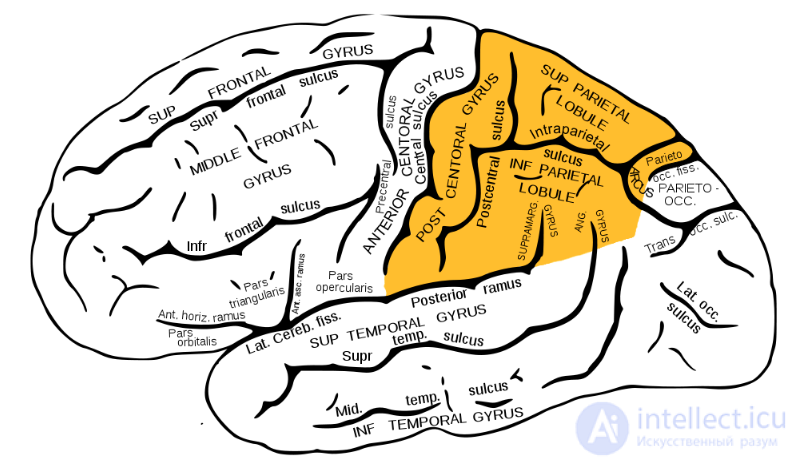
This shows the part of the brain where the sulcus is located in the parietal lobe.
Rousselle and Noël [34] suggest that dyscalculia is caused by an inability to map already existing representations of numerical magnitude onto symbolic Arabic numerals. Evidence for this hypothesis is based on studies showing that people with dyscalculia perform well on tasks that measure knowledge of non-symbolic numerical magnitude (i.e., non-symbolic comparison tasks), but show an impaired ability to process symbolic representations of numbers (i.e., symbolic comparison tasks). Neuroimaging studies have also reported increased activation of the right intraparietal sulcus during tasks that measure symbolic, but not non-symbolic, processing of numerical magnitude. [36]Nevertheless, support for the access deficit hypothesis is not consistent across studies.
At the most basic level, dyscalculia is a learning disorder that affects the normal development of arithmetic skills. [37]
No consensus has yet been reached on suitable diagnostic criteria for dyscalculia. [38] Mathematics is a distinctive domain that is complex (that is, it comprises many different processes, such as arithmetic, algebra, word problems, geometry, etc.) and cumulative (that is, processes build on one another, so that mastering advanced skills requires mastering many basic skills). Thus, dyscalculia can be diagnosed using various criteria, and this often happens; such diversity of diagnostic criteria leads to variability in the samples identified and, consequently, to variability in the results of research on dyscalculia.
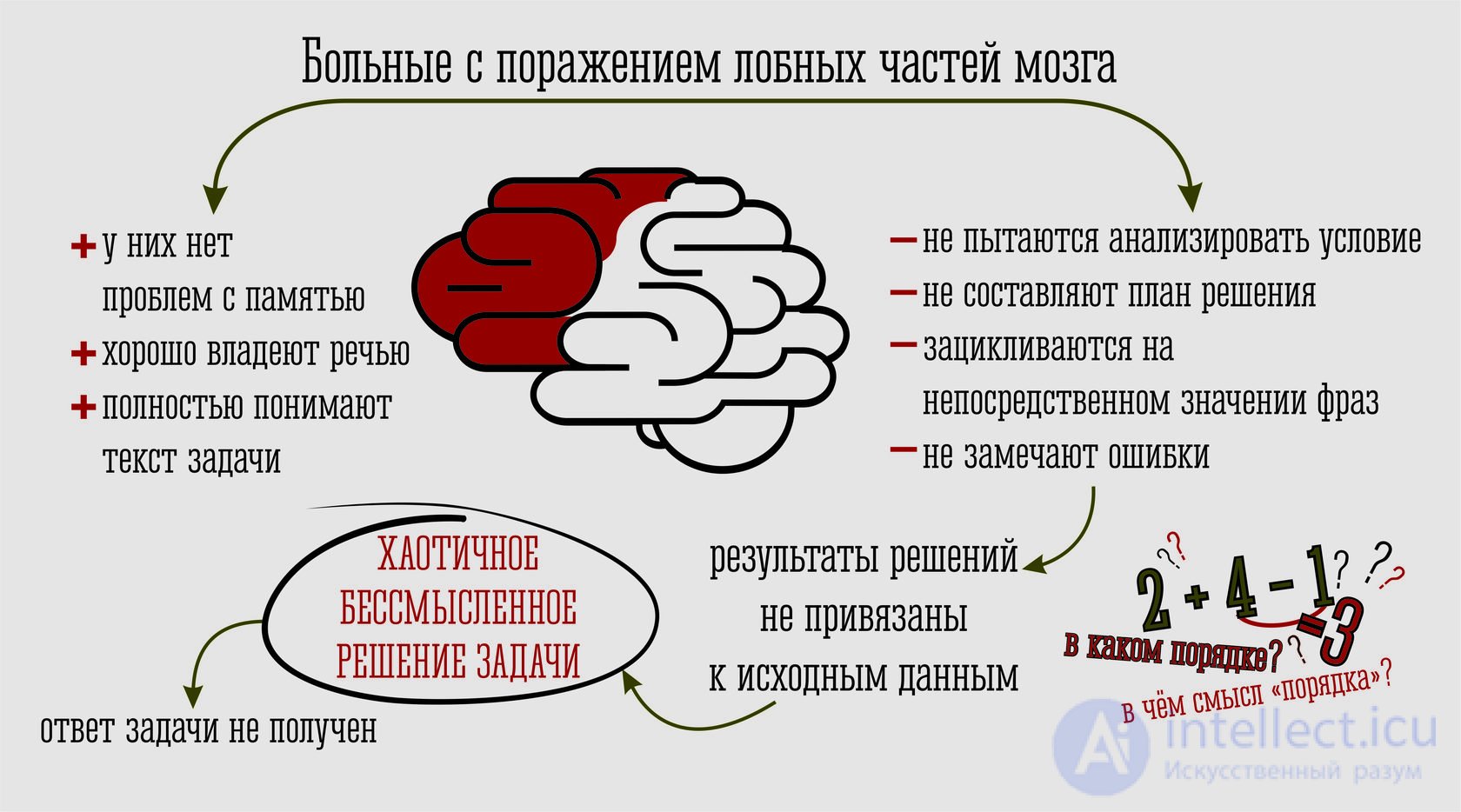
In addition to using achievement tests as diagnostic criteria, researchers often rely on domain-specific tests (e.g., tests of working memory, executive function, inhibition, intelligence, etc.) and teacher ratings to arrive at a more complete diagnosis. On the other hand, an fMRI study showed that the brains of neurotypical children can be reliably distinguished from the brains of children with dyscalculia based on activation in the prefrontal cortex. [39] However, because of the cost and time constraints associated with brain and nervous-system research, these methods are unlikely to be incorporated into diagnostic criteria, despite their effectiveness.
Research into subtypes of dyscalculia began without a unified view; early studies focused on comorbid learning disorders as candidate subtypes. The most common comorbid condition among individuals with dyscalculia is dyslexia. [40] Most studies conducted with comorbid samples, compared with samples containing dyscalculia alone, have demonstrated different mechanisms at work and additive effects of the comorbidity, suggesting that such subtyping may be of little use in diagnosing dyscalculia. At present, however, the findings differ.
Due to high comorbidity with other disabilities, such as dyslexia [44] and ADHD , some researchers have suggested the possibility of subtypes of mathematical impairment with different profiles and causes. [45] Whether a particular subtype is called "dyscalculia", as opposed to a more general mathematical learning disability, is to some extent debated in the scientific literature.
Studies have also shown indications of causes due to congenital or hereditary conditions, [54] , but the evidence for this is not yet conclusive
Special educational computer programs developed on the basis of neurobiological data can help in correcting the disorder.
To date, very few interventions have been developed specifically for people with dyscalculia. Concrete manipulatives have been used for decades to teach basic number concepts for remedial purposes. [55] This method promotes the formation of an internal link between the goal, the learner's action, and informational feedback about the action. An individualized instruction paradigm developed by Lynn Fuchs and colleagues, which teaches concepts of arithmetic, number concepts, counting, and number families through games, flash cards, and manipulatives, has proven successful in children with generalized difficulties in learning mathematics, but the intervention has yet to be tested specifically in children with dyscalculia. These methods require specially trained teachers working directly with small groups or individual students. Classroom instructional time is therefore necessarily limited. For this reason, several research groups have developed computer-based adaptive learning programs designed to address deficits unique to people with dyscalculia.
Software designed to treat dyscalculia has been developed. Although computer-based adaptive learning programs are modeled on individualized interventions, they offer several advantages. In particular, digital intervention allows people to practice more than is typically possible with a classroom or a teacher. As with individualized interventions, several digital interventions have proven successful in children with general difficulties in learning mathematics. Räsänen and colleagues found that games such as "The Number Race" and "GraphoGame-Math" can improve performance on number-comparison tasks in children with general difficulties in learning mathematics.
Several digital interventions have been developed specifically for dyscalculia. Each attempts to target the basic processes associated with mathematical difficulties. Dybuster Calcularis was one of the first computerized interventions aimed at improving the integrity of, and access to, the mental number line. [64] Other digital interventions for dyscalculia adapt games, flash cards, and manipulatives for use through technology.

While each intervention claims to improve basic numerical skills, the authors of these interventions acknowledge that repetition and practice effects may be a factor involved in the reported gains in performance. [63] [64] [65] Another criticism is that these digital technologies lack the ability to manipulate numerical quantities. [57]While the previous two games provide the correct answer, a person using the intervention cannot actively determine, through manipulation, what the correct answer should be. Butterworth and colleagues argued that games such as The Number Bonds, which allow a person to compare rods of different sizes, should be the direction in which digital interventions move. Such games use manipulation to provide intrinsic motivation for the content, guided by research on dyscalculia. One such serious game is Meister Cody - Talasia , an online training program that includes the CODY Assessment - a diagnostic test for detecting dyscalculia. Based on these findings, Dybuster Calcularis was expanded with adaptation algorithms and game forms that allow learners to manipulate. It was found to improve performance on addition, subtraction, and number-line tasks, and was made available as Dybuster Calcularis .
A study used transcranial direct current stimulation (tDCS) of the parietal lobe during numerical training and demonstrated a selective improvement in numerical ability that was still present six months later in typically developing individuals. [69] The improvement was achieved by applying anodal current to the right parietal lobe and cathodal current to the left parietal lobe, and comparing this with the reverse setup. When the same research group used tDCS in a training study with two people with dyscalculia, the reverse setup (left anodal, right cathodal) demonstrated an improvement in numerical ability.
Dyscalculia is believed to be present in 3–6% of the general population, although estimates vary somewhat by country and sample. Many studies have found that prevalence rates are equivalent across sexes. Those that do find sex differences in prevalence rates often find that dyscalculia is higher in females, but some studies have found prevalence rates to be higher in males.
The term "dyscalculia" was coined in the 1940s, but it was not fully recognized until 1974, owing to the work of the Czechoslovak researcher Ladislav Košč. Košč defined dyscalculia as a "structural disorder of mathematical abilities". His research demonstrated that the learning disability was caused by impairments in specific parts of the brain that govern mathematical computation, rather than by the people with the symptoms being "mentally retarded". Today, researchers sometimes use the terms "mathematical dyslexia" or "math disability" when referring to this condition. [73]Cognitive impairments specific to mathematics were first identified in case studies of patients who experienced particular arithmetic impairments as a result of damage to specific brain regions. Most often, dyscalculia arises developmentally as a genetically linked learning disability that affects a person's ability to understand, remember, or manipulate numbers or numerical facts (e.g., multiplication tables). The term is often used to refer to an inability to perform arithmetic operations, but it is also defined by some education specialists and cognitive psychologists, such as Stanislas Dehaene [74] and Brian Butterworth [10].as a more fundamental inability to conceptualize numbers as abstract notions of comparative magnitude (a deficit in " number sense "), which these researchers consider to be the foundational skill on which other mathematical abilities are built. Symptoms of dyscalculia include delayed simple counting and an inability to remember simple arithmetic facts, such as addition, subtraction, etc. Few symptoms are well established, since little research has been conducted on this topic.
The term dyscalculia appeared as early as 1949.
Dyscalculia derives from Greek and Latin and means "to count badly". The prefix " dys- " comes from Greek and means "badly". The root " calculia " comes from the Latin " calculare ", meaning " to count ", and is also related to " calculation " and " computation ".


Comments