
Lecture
Nitrogen — the most important nutrient element for all plants. Nitrogen (N) is one of the key macronutrients in plant nutrition and plays an important role in various aspects of their growth, development and general health. Nitrogen, phosphorus and sulfur, together with carbon, oxygen and hydrogen, are the building material for the formation of organic substances and, ultimately, living tissue.
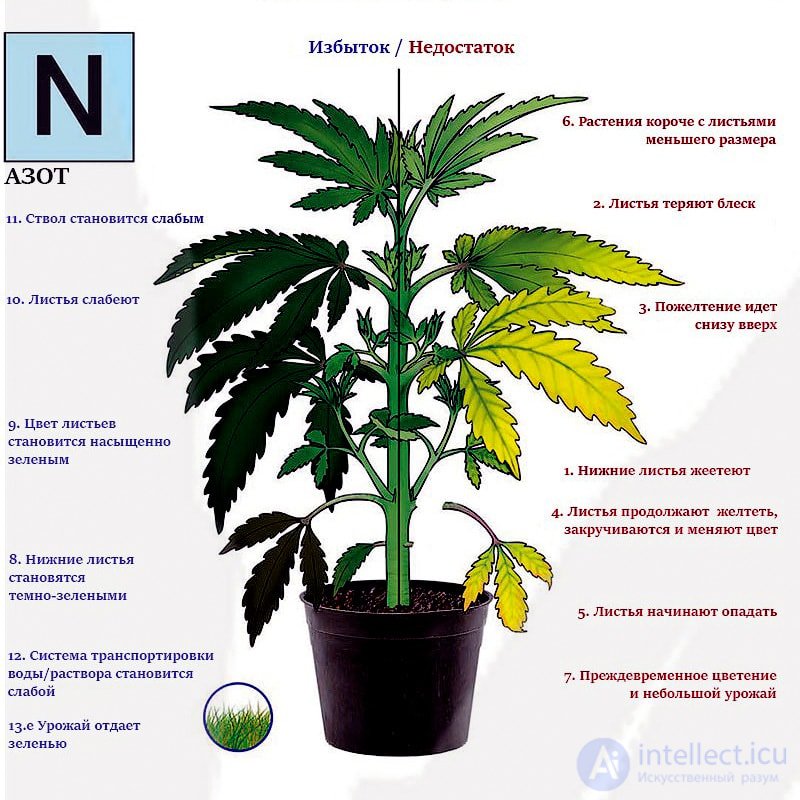
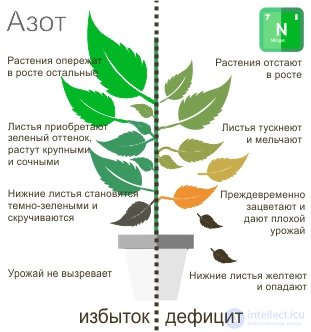
Fig. Nitrogen deficiency or excess
On average, the nitrogen content in a plant is 1 - 3% of dry matter weight. It is part of such important organic substances as proteins, nucleic acids, nucleoproteins, chlorophyll, alkaloids, phosphatides and others. On average, its content in proteins is 16 - 18% by weight. Nucleic acids play the most important role in the metabolism of plant organisms. They are also carriers of the hereditary properties of living organisms. It is therefore difficult to overestimate the role of nitrogen in these vitally important processes in plants. In addition, nitrogen is the most important component of chlorophyll, without which the process of photosynthesis cannot proceed, and consequently the organic substances most important for the nutrition of humans and animals cannot be formed. One cannot fail to note also the great significance of nitrogen as an element that is part of enzymes — the catalysts of vital processes in plant organisms.
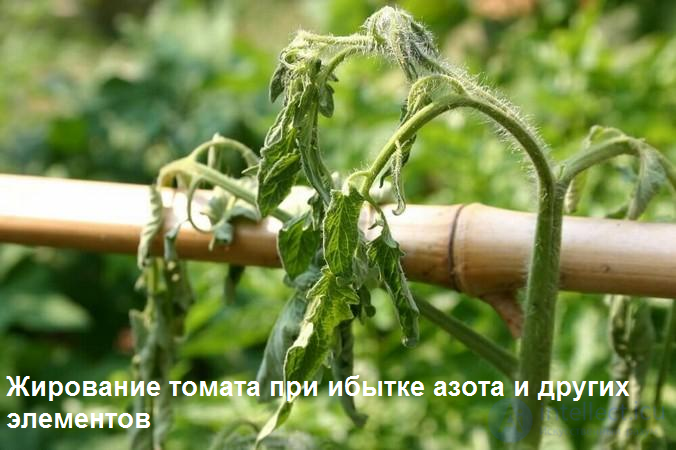
Excessive vegetative growth ("fattening") of tomato under nitrogen excess
Here are some of the main aspects of the significance of nitrogen in plant nutrition:
Formation of proteins and amino acids: Nitrogen is a key building block for the synthesis of proteins, which are the main structural and functional components of cells. Proteins are necessary for a multitude of biological processes, including growth, gene regulation, enzyme formation and even the transport of nutrients.
Growth and development of green mass: Nitrogen plays an important role in stimulating the growth of plants' green mass, since it is part of chlorophyll - the pigment necessary for photosynthesis. This helps plants increase their surface area for absorbing light and carbon dioxide.
Enhancement of photosynthesis: Nitrogen affects the functioning of cells involved in photosynthesis and ensures the efficiency of the photosynthetic process. Owing to this, plants can convert solar energy into chemical energy used for the synthesis of organic substances.
Flowering and fruit formation: Nitrogen affects bud formation and flowering in plants. It also promotes the formation of fruits and seeds. An adequate supply of nitrogen can increase the quantity and quality of the yield.
Regulation of pH and cell charge: Nitrogen compounds, such as ammonium (NH₄⁺) and nitrates (NO₃⁻), can affect soil pH. Nitrogen can also affect cell charge, which is important for various biochemical and transport processes.
Regulation of growth stimulators: Nitrogen can affect the synthesis of growth stimulators, such as auxins, cytokinins and gibberellins, which control various aspects of plant growth and development.
Nitrogen deficiency can lead to yellowing of leaves (chlorosis), slowed growth and general weakening of plants. On the other hand, an excess of nitrogen without balance with other nutrients can cause problems such as excessive growth of green mass without the formation of flowers and fruits.
It is important to maintain the correct ratio of nitrogen to other nutrients to ensure optimal plant health and development.
The nitrogen content in plants varies substantially depending on the plant species, their age, the soil and climatic conditions of crop cultivation, agrotechnical practices, etc. For example, the seeds of cereal crops contain 2 - 3% nitrogen, legumes — 4-5%. The highest nitrogen content is observed in the vegetative organs of young plants. As they age, nitrogenous substances move into newly formed leaves and shoots. In this case, during the first half of the growing season, when the aboveground mass is being formed, nitrogen-containing organic substances are synthesized in the vegetative organs, and the process of new protein formation and plant growth takes place. Later, in wheat, for example, after flowering, more intensive hydrolysis of nitrogen-containing organic substances occurs in the vegetative parts of the plant, and the products of hydrolysis move into the reproductive organs, where they are used for the formation of grain proteins.
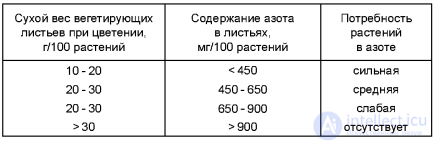
A correlative relationship has been established between the nitrogen content at certain growth phases in the vegetative parts of plants and the yield. This makes it possible to predict the quantity and quality of the yield from the chemical composition of the vegetative organs. An especially high positive correlation between the nitrogen content in the leaves at the end of flowering and plant yield has been established on soils insufficiently supplied with nitrogen. Thus, the correlation coefficient for wheat and barley was 0,80 -0,94, for maize — 0,81 - 0,86, for peas — 0,87, for potato — 0,79, etc. It proved possible to establish a conditional degree of need of cereal crops (wheat, barley) for nitrogen from the absolute nitrogen content in the leaves (Table 4.5). Given a sufficient supply of moisture and phosphorus to wheat, maize and barley plants, the conversion coefficient between the nitrogen content in the leaves at the end of flowering and the nitrogen content in the grain is, for various wheat varieties as well as for maize and peas, 0,90 - 0,96. The strong relationship between nitrogen content in the leaves and in the grain under nitrogen starvation of plants made it possible to carry out a timely late nitrogen top dressing. Nitrogenous compounds available to plants are formed mainly from the soil's organic matter as a result of its decomposition. The amount of organic matter depends on the type of land use. Intensive use of arable land through the introduction of row-crop-fallow rotations leads to a systematic decrease in the organic matter content of the soil. With the introduction of legume grasses into crop rotations, the sowing of green manure crops, or the application of manure, the content of organic substances in the soil increases. Large reserves of nitrogen in organic matter are found in the soil under meadows and hayfields; when they are ploughed up, however, intensive mineralization of these reserves occurs.
4.5. Conditional degree of need of cereal crops (wheat, barley) for nitrogen based on the absolute content of the element in the leaves
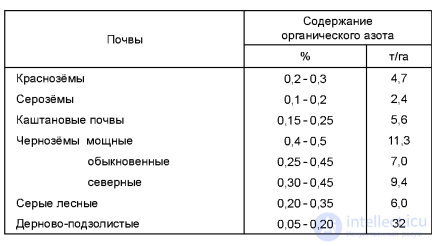
On slopes, losses of humus in the soil increase considerably. This is explained not only by intensive mineralization of organic substances during agricultural use of arable land, but also by the presence of sheet water erosion. For example, on slopes, 35 years after the ploughing-up of virgin land, chernozem loses 3% of its humus or more. The main source of nitrogen in the soil is humus (leaf mould). Humus contains about 5% nitrogen. This nitrogen is the main source of plant nutrition: only a small amount of nitrogen — 1-3% — is present in mineral form. The upper soil layers are richer in humus, and it is from these layers that most of the nitrogen released by the mineralization of humus is used for plant nutrition. The amount of organic nitrogen in the arable layer of various soils can be judged from the data in Table 4.6.
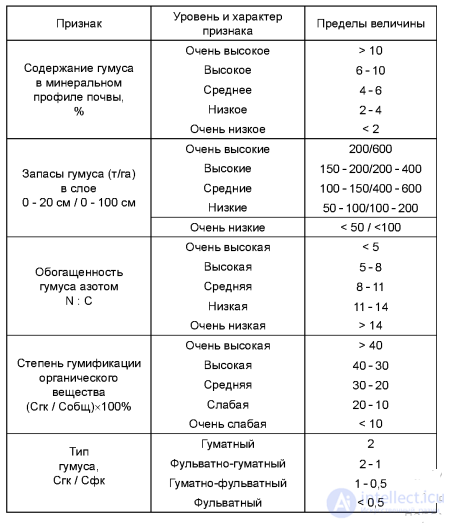
D.S. Orlov and L.A. Grishina (1978) developed a system of indicators of soil humus status, making it possible to assess the direction and rate of humification, the soil's supply of humus and nitrogen, the quality of the humus, etc. These indicators can, to a certain extent, characterize soil fertility. Let us give some of these indicators, which can substantially supplement the agrochemical characterization of the soil (Table 4.7). The nitrogen cycle in the biogeocenosis is shown in Fig. 4.4 (Orlov et al., 2002).
4.6. Content of organic nitrogen in the arable layer (according to Tyurin)
Nitrogen reserves in the soil are replenished mainly as a result of the nitrogen-fixing capacity of free-living and nodule microorganisms and its input with atmospheric precipitation. The largest amount of nitrogen accumulates in the soil owing to the vital activity of the nodule bacteria of legume plants. Per hectare, the annual accumulation of nitrogen can reach 150 - 160 kg when growing clover, 160 - 170 for lupin, 250 - 300 for alfalfa, 100 for soybean, and 70 - 80 kg for vetch, peas and beans. The extent of fixation depends on the type of legume, the yield, soil reaction and other factors.
4.7. Some indicators of the system of characteristics describing the humus status of soils
To increase the productivity of symbiotic nitrogen fixation, nitragin is used — a preparation containing specially bred, highly active strains of nodule bacteria. The need to inoculate legume plants with nitragin is explained by the following reasons. Legume crops introduced for the first time into a given zone, owing to the narrow specificity of the bacteria to the host plant, turn out to be lacking their symbiont and cannot become accumulators of nitrogen from the atmosphere, instead switching entirely to nitrogen nutrition from the soil and fertilizers. In such cases, nitragin treatment is an obligatory agrotechnical practice for legume crops. In addition, prolonged presence of nodule bacteria in the soil without a host plant, as well as under unfavorable environmental conditions (increased soil acidity, drought or waterlogging, a shortage of mineral nutrition elements, sources of energy material, etc.), leads to a decrease in their nitrogen-fixing activity.
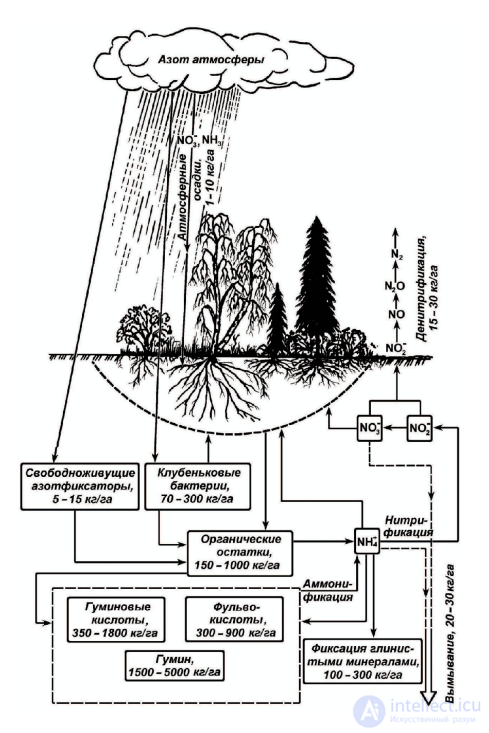
Fig. 4.4. The nitrogen cycle in the biogeocenosis
The expediency of using nitragin is also due to the fact that, alongside active strains of Rhizobium, inactive and low-activity nodule bacteria are quite widespread in soils, and these cannot supply legume plants with biological nitrogen. Inactive and low-activity strains of nodule bacteria make up a third or more. Therefore, the use of nitragin, containing high titers of active, selectively bred strains of nodule bacteria, is one of the principal means of increasing not only the yield of legume crops but also the level of accumulation of total and biologically bound nitrogen in plants and soil. The nodule bacteria preparation is produced mainly on sterile peat, of which 1 g contains, on average, 3 - 4 billion bacteria. On soils where the main legume crops have long been cultivated, the use of nitragin gives the following yield increases: soybean grain — 2-4 centners/ha, peas and lupin — 1-2, green mass of legume crops — 80 - 100, clover and alfalfa hay — 50 centners/ha. The use of this practice also substantially increases the protein content of the legume crop yield. To create optimal conditions for the symbiosis of nodule bacteria, it is often necessary to apply small «starter» (20-30 kg/ha) doses of nitrogen under legume crops. Mineral nitrogen at elevated doses (90-120 kg/ha) plays a negative role. The effectiveness of nitragin treatment increases when the soil has a sufficient content of phosphorus, potassium, and also of the micronutrients molybdenum, boron, cobalt and iron. A neutral or slightly acidic soil solution reaction and optimal soil moisture are also necessary for the inoculated legume seeds that have been sown. Therefore, the application of phosphorus-potassium fertilizers, the liming of acid soils, and the application of molybdenum, boron and cobalt fertilizers create optimal conditions for legume plants and for their symbiosis with nodule bacteria. Nitrogen fixation by non-symbiotic (free-living) microorganisms depends on many causes. The factors limiting the vital activity, and hence the activity, of these microbes are the following: 1) a shortage of assimilable carbohydrates in the soil; 2) an insufficient amount of other nutrients (in particular, phosphorus and potassium); 3) an acidic soil reaction; 4) low temperature; 5) a shortage or excess of moisture in the soil; 6) aeration conditions (Clostridium pasteurianum, for example, lives under anaerobic conditions, while Azotobacter chroococcum and others live under aerobic conditions). The microorganisms listed are capable of accumulating, on average, 5-15 kg of bound nitrogen per hectare per year. The magnitude of nitrogen fixation by free-living bacteria for various soil and climatic conditions ranges from 7,5 to 42,0 kg of nitrogen per hectare per year. The extent of non-symbiotic nitrogen fixation under rice reaches 60 - 70 kg per hectare per year. Atmospheric nitrogen fixed by microorganisms in the rhizosphere of non-legume plants participates in their nutrition, just as does the nitrogen fixed by nodule bacteria. When low doses of nitrogen are applied together with inoculation by soil microorganisms, the assimilation by non-legume plants of nitrogen fixed by microorganisms amounted to 7 - 16% of the total offtake of this element by plants. When high doses of nitrogen are applied, the fixation of atmospheric nitrogen under non-legume crops and its assimilation by plants decrease.
Atmospheric nitrogen can also be fixed by fungi and algae living in symbiosis with certain higher plants. The nitrogen reserve in the soil is, to a certain extent, replenished by the nitrogen of atmospheric precipitation. It usually arrives in the form of ammonia and, in part, nitrates. These nitrogen compounds are formed in the atmosphere, including under the action of lightning discharges. According to most estimates, precipitation delivers from 2 to 11 kg of nitrogen per hectare annually. The sources of replenishment of natural nitrogen reserves listed are undoubtedly of practical interest, but they supply only a part of the nitrogen removed with the yields of agricultural crops. It is therefore necessary to take measures for the optimal increase of soil fertility and, above all, for replenishing its nitrogen reserves. The most tangible and realistic way is the application of organic and mineral fertilizers. A shortage of nitrogen in plant nutrition, as a rule, manifests itself substantially and visually, and is often a factor limiting yield growth. And how can one fail to recall the words of D.N. Pryanishnikov (1945): «Assimilable soil nitrogen, unless special measures are taken to increase its content, is at present the main limiting factor of life on Earth». In nature, there are numerous pathways of nitrogen loss. The main ones are as follows:
1) immobilization, i.e. the consumption of nitrogen by soil microflora;
2) leaching (primarily of nitrate forms of nitrogen) into groundwater;
3) volatilization of ammonia, nitrogen oxides and molecular nitrogen into the air;
4) fixation of ammonium in the soil, or its non-exchangeable sorption.
Especially heavy absorption of nitrogen by soil microorganisms occurs when organic materials with a wide carbon-to-nitrogen ratio are applied. This happens because organic materials applied to the soil, such as straw and other plant residues, contain little nitrogen — 0,5-1,0% (or 1,5-2,0%, when plant residues with a higher content of nitrogenous substances are ploughed in, such as the straw of grain legumes). However, even in the best case, a very wide carbon-to-nitrogen ratio is observed (20:1). At the same time, microbial plasma contains considerably more nitrogen than the organic materials they decompose. On average, microbial plasma contains 3 - 12% nitrogen (a nitrogen-to-carbon ratio of about 1 : 10). The same ratio between nitrogen and carbon is found in the stable fraction of humus. Therefore, when organic materials are applied to the soil (most often post-harvest plant residues or poorly decomposed straw manure), vigorous development of the soil microflora is observed. As a result, in building microbial plasma, given a sufficient supply of energy material, nitrogen is used not only from the organic materials applied to the soil but also from the soil's mineral nitrogen. This leads to a deterioration in the nitrogen nutrition of cultivated plants. Such processes are especially often observed when straw is ploughed in after the harvesting of grain crops followed by re-sowing. Winter crops re-sown in this way, as a rule, experience acute nitrogen starvation. To reduce the immobilization of nitrogen by soil microflora, it is recommended to add 1 - 2% mineral nitrogen (by weight of straw) to plant residues rich in cellulose, such as straw. But the process of soil nitrogen immobilization by microorganisms is not always a negative factor. On light soils, especially in zones of sufficient moisture, mineral nitrogen becomes fixed in the upper layers as a result of immobilization. Later, as the microbial plasma decomposes, part of the nitrogen becomes fixed in the process of humification of organic matter, while part is converted into mineral ammonium nitrogen, which is adsorbed by soil colloids. Part of the ammonia nitrogen, in turn, undergoes nitrification and is converted into nitrate nitrogen. Ammonium and nitrate nitrogen are used by plants as a source of nitrogen nutrition. The negative effect of the immobilization process on cultivated plants is more often observed when stubble or plant residues are ploughed in shortly before the sowing of the next crop and without the application of mineral nitrogen fertilizers.
The leaching of nitrates by precipitation and drainage water occurs because nitrates are usually not part of poorly soluble compounds and are not adsorbed by the negatively charged colloids of the soil. The greatest losses of nitrogen from leaching are observed on soils of light granulometric (textural) composition with a low content of organic matter under high moisture or irrigation. In the latter case, the merging of irrigation water with groundwater should not be allowed. Losses of nitrates under continuously sown crops are sharply reduced or, most often, absent altogether. In this case, the nitrate nitrogen formed, owing to nitrification, is actively used for plant nutrition. In fallow fields in humid regions, the greatest losses of nitrates are observed, since they are not adsorbed by soil colloids and move together with soil moisture; these nitrogen losses can be regulated and sharply reduced. With the correct application of fertilizers, taking soil and climatic conditions into account, losses of nitrates can be avoided altogether. For example, on light soils, especially under increased moisture, nitrogen fertilizers should be applied in split doses during the growing season, at the phases of greatest nitrogen uptake; under irrigation, a reduction in losses of nitrate nitrogen can be achieved by the timely application of fertilizers and by regulating the irrigation regime. To some extent, losses of nitrogen from leaching can be reduced by selecting appropriate forms of mineral fertilizers. For example, ammonia nitrogen is adsorbed by soil colloids and migrates down the profile to a lesser extent. However, adsorbed and water-soluble ammonium, under favorable conditions, is readily converted into nitrates as a result of the nitrification process. Losses of nitrates from leaching can be substantial on sandy soils in regions with an exceptionally humid climate. Under semi-arid and arid conditions, even in well-permeable sandy soils, nitrates usually do not descend below 40 - 50 cm, i.e. nitrogen losses under these conditions are unlikely.
In experiments using the 15N isotope, unaccounted-for losses of nitrogen ranged from 10 to 35% of the dose applied, depending on the form of nitrogen, soil moisture, temperature, pH and the redox potential. Losses of nitrogen due to volatilization average 15% of that applied, sometimes reaching 30%. The largest amount of nitrogen is lost through volatilization in the form of ammonia (NH3), molecular nitrogen (N2) and nitrous oxide (N2O). Losses of nitrogen in gaseous form used to be attributed primarily to the process of denitrification. However, nitrogen in gaseous form can be lost by various pathways, and consequently the causes of such losses can also be various. Part of the nitrogen of the soil and of the fertilizers applied can be lost from the surface in the form of ammonia (NH3). When ammonium salts are applied to carbonate soils, or when urea is applied on the surface without incorporation, losses of ammonia nitrogen are observed. One of the causes of NH3 losses is its alkaline reaction. In addition, the higher the carbonate content of the soil, the greater the losses of ammonia nitrogen. This is explained by the interaction of ammonium salts with soil carbonates and the formation of a highly unstable compound — ammonium carbonate. These losses increase noticeably on light soils and at high temperatures. In practice, especially significant losses of ammonia nitrogen are observed with the application of aqueous and anhydrous ammonia. One of the most important measures for reducing losses of this form of nitrogen is the deep incorporation of applied ammonia and ammonia-nitrate fertilizers. Losses of ammonia nitrogen on carbonate and alkaline soils range from 10 to 40%. They are more often greater when liquid nitrogen fertilizers are used. Considerable volatilization of ammonia is also observed with the surface application of urea, especially on carbonate soils. Losses of the ammonia form of nitrogen upon the application of urea are explained by the fact that, during ammonification, urea is converted into ammonium carbonate, a highly unstable compound, especially on carbonate soils. In addition, the ammonium formed from urea causes local alkalinization of the soil, since carbonate and alkaline soils lack acid anions capable of neutralizing the ammonium formed. Tillage, even harrowing, significantly reduces losses of ammonia nitrogen upon the surface application of urea. A considerable part of the gaseous nitrogen is lost from the soil owing to the process of denitrification. This process of reduction of the soil's nitrate nitrogen to free gaseous nitrogen (N2) occurs as a result of the vital activity of soil microorganisms — denitrifiers (Bact. denitrificans, Bact. stutzeri, Bact. fluorescens and others). The process of denitrification proceeds through a series of intermediate stages:

Molecular nitrogen and nitrous oxide are the main gaseous products of biological denitrification, and it is through their volatilization that nitrogen losses from soils occur. This process arises and develops in the absence of air access and under an alkaline soil reaction. Nitrogen losses during denitrification are explained by the fact that denitrifiers are anaerobic microflora, i.e. they develop actively in the absence of atmospheric oxygen. Therefore, for respiration they use the oxygen of nitrates, reducing the nitrogen to its free molecular form (N2). The reduction of nitrates occurs under the action of the enzymes nitrate reductase and nitrite reductase and is expressed by the equation

The most favorable conditions for denitrification, and consequently for losses of molecular nitrogen, are: 1) an anaerobic environment; 2) an alkaline soil reaction; 3) an excessive amount of organic matter in the soil, rich in cellulose, glucose and other energy material; 4) high soil moisture. The optimal temperature for denitrification is 40 - 75°C, since the active races of denitrifiers are thermophilic bacteria. Therefore, in cold periods, despite high moisture and anaerobic conditions, denitrification processes proceed weakly or do not occur at all, which sharply reduces nitrogen losses. The optimal pH for denitrification is 7-7,5. As a result of denitrification, given a content of 1 million Bact. stutzeri per 1 g of soil, up to 0,5 mg of nitrogen per day can be released from 1 kg of it.
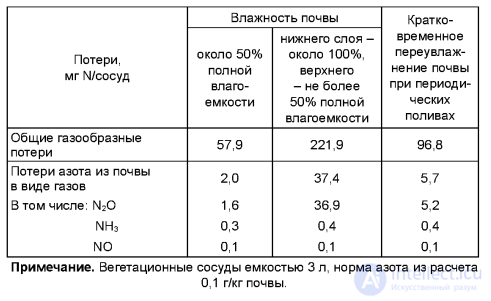
The process of denitrification is very widespread and occurs in almost all soils, since soils with complete aerobiosis practically do not exist. Even under the most optimal conditions of aeration and moisture, denitrification can be observed in well-structured soils. This is explained by the fact that anaerobic conditions can exist inside dense soil aggregates and in structured soils. In addition, the active process of nitrification under aerobic conditions leads to the absorption of atmospheric oxygen and the release of CO2, as a result of which local anaerobic conditions are created, leading to the development of denitrification. The use of a set of agrotechnical practices aimed at keeping the soil in good structural condition, maintaining an optimal water and air regime in it, as well as the correct rotation of crops, contribute to a significant reduction in nitrogen losses due to denitrification. Gaseous losses of nitrogen from the soil and fertilizers are of various composition (NO2, NO, N2O, NH3); they increase as moisture rises above 50% of total moisture capacity (Table 4.8). Besides denitrification, there are other pathways of gaseous nitrogen loss, although they have been studied even less. These losses are mainly attributed to the breakdown of nitrous acid in the soil or its interaction with other chemical compounds in the soil. The most substantial nitrogen losses occur during the breakdown of nitrous acid with the formation of nitric acid and nitric oxide. When the soil is acidified to a pH below 6, this process intensifies. In air, NO oxidizes to NO2. The pathways of gaseous nitrogen loss have so far been little studied, and effective methods for preventing them, which would make it possible to raise the utilization coefficient of nitrogen fertilizers, have not yet been developed.
4.8. Effect of soil moisture on the magnitude of gaseous nitrogen losses (pot experiment, sod-podzolic sandy loam soil, 312 mg nitrogen applied per pot)
Part of the nitrogen applied with fertilizers, or already present in the soil, is absorbed by certain minerals of the hydromica group. The mechanism of the fixation of ammonium in a non-exchangeable form can be represented as follows. When the soil becomes moist, the crystal lattice of the mineral expands, and ammonium is at first adsorbed exchangeably, but it can also penetrate inside the lattice, occupying free radicals. When the soil dries out, the ammonium cations that have entered the mineral lattice become, as it were, compressed, i.e. fixed. It is difficult to displace with various solvents. Nor is it susceptible to the action of nitrifying bacteria. Such fixed ammonium becomes poorly available to plants, and is therefore conventionally regarded as lost. The possibility of the non-exchangeable fixation of soil ammonium has long been known, but there is very little data on the practical significance of ammonium fixation, on the conditions favoring the fixation of ammonium in the soil, on the part of fertilizer ammonium that may be lost as a result of non-exchangeable sorption, and on the part of fixed ammonium that may be released and become available to plants. The content of fixed ammonium in soils varies. Thus, in the arable layer its content ranges from 130 to 350 kg/ha. Moreover, whereas fixed nitrogen accounts for 2-7% of the total in the upper soil layer, its share rises to 30-35% in the subsoil. This is explained by the fact that the amount of humus, and consequently of nitrogen in organic matter, decreases sharply with depth. The proportion of fixed ammonium in the total nitrogen content thus increases noticeably. The percentage ratio between organic carbon and nitrogen in the surface soil layer often remains constant, at 10:1. With depth, this ratio narrows and can reach 5:1, which is explained above all by an increase in the amount of fixed ammonium down the soil profile. According to some data, the ability of a soil to fix ammonium in a non-exchangeable state depends on the nature of the clay minerals it contains, the ambient temperature, the reaction of the soil solution, the presence of humus in the soil, the microbiological activity of the soil, its degree of moisture, and other factors. For example, at a temperature of 20-24°C, ammonium fixation by certain soils amounts to 0,21, and at 100°C — 2,47 mmol/100 g, i.e. almost 12 times more; and with fivefold alternating moistening and drying of samples of podzolic soil at 100°C in the experiments of A.V. Peterburgsky, the amount of fixed ammonium rose to 3,44 mmol/100 g of soil.
The fixing capacity of soils with respect to this cation increases with increasing pH. Therefore, on acid soils, ammonium fixation is considerably lower than on alkaline soils. It is at its maximum on solonetzes. Ammonium fixation also increases in soils with a high humus content, which evidently binds ammonium chemically — something different from the usual understanding of its fixation. In the course of metabolism and respiration, plant roots and microflora release hydrogen ions into the soil, which promotes the extraction and assimilation by plants of the ammonium cation fixed by the soil. The same effect is produced by the cations of calcium, magnesium and sodium, which, when they enter the crystal lattice of the minerals, expand it and thereby improve the plants' assimilation of fixed ammonium. Under given conditions, the fixing capacity of a soil is a fairly constant quantity.
If a soil is pretreated, for example, with a potassium salt, subsequent ammonium fixation will noticeably decrease. Fixed ammonium is present not only in soils but also in parent rocks. In soils it can be naturally fixed or fixed as a result of the application of nitrogen fertilizers; the latter is more available to plants than the former. The ability of soils to fix ammonium manifests itself in the presence of clay minerals with a three-layer crystal lattice, especially vermiculite. Naturally fixed ammonium bound by aluminosilicates is, however, poorly available to higher plants and nitrifying bacteria, whereas ammonium freshly fixed by clay minerals from applied ammonia fertilizers is more mobile and can be assimilated annually to the extent of 10-20%. The nitrification of fixed ammonium, on the other hand, is usually very low and often does not exceed 20% per year even with prolonged composting. Fixed soil ammonium is not irretrievably lost nitrogen, and the task of agrochemical science is to find ways of drawing it as much as possible into the economic nitrogen balance and of increasing its use by plants. The transformation of the nitrogen of mineral fertilizers applied to the soil is shown in general form in Fig. 4.5.
Sources of nitrogen for plants can include the salts of nitric and nitrous acids (nitrates, nitrites), ammonia forms of nitrogen, and certain organic nitrogen compounds — urea and amino acids. Legume plants, as is known, assimilate molecular atmospheric nitrogen (N2) with the help of nodule bacteria. However, whatever form mineral nitrogen enters the plant in, it can take part in the process of plant nutrition — in the synthesis of amino acids, proteins and other nitrogen-containing organic substances — only in reduced form, i.e. as ammonium. Therefore, nitrate nitrogen that has entered the plant is reduced, as a result of carbohydrate oxidation, to the anion of nitrous acid, and then to ammonia. Ammonia nitrogen, on the other hand, whether it enters the plant directly from the soil in the form of an ammonium salt, i.e. as ammonium, or is formed by the reduction of nitrates and nitrites, does not accumulate, but, with the participation of organic acids, is used for the synthesis of various amino acids.
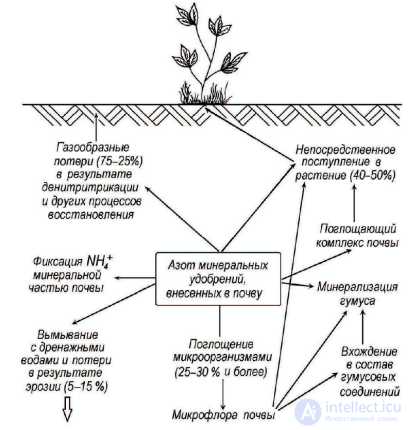
Fig. 4.5. Scheme of the transformation of mineral fertilizer nitrogen in the soil
The synthesis of amino acids takes place both in the roots and in the aboveground part of plants. First of all, ammonium reacts with the keto acids most widespread in plants — pyruvic, α-ketoglutaric and fumaric acids — forming, respectively, such amino acids as alanine, glutamic acid and aspartic acid. Pyruvic, α-ketoglutaric and fumaric organic acids are formed in plants from carbohydrates in the course of respiration. Therefore, a constant relationship exists between a plant's capacity to assimilate ammonia nitrogen and the presence of carbohydrates in the plant. The organic acids formed during respiration play an important role in the nitrogen metabolism of plants, since, by binding ammonium, they are converted into amino acids, which form protein molecules through the peptide bond (-CO-NH-). The formation of amino acids by the addition of ammonia to keto acids, with the participation of the corresponding enzymes, is called amination. Nitrogen is contained in amino acids in the form of an amino group (-NH2). With the participation of the corresponding enzymes, the amino acids alanine, aspartic acid and glutamic acid can transfer their amino groups to other keto acids, as a result of which new amino acids are formed. This is called transamination. The reaction of amino-group transfer takes place with the participation of the enzyme aminotransferase. At present, about 90 amino acids are known; 70 of them occur in plants in a free state and are not part of proteins, while 20 amino acids take part in the formation of the protein molecule. The different combinations and spatial arrangements of amino acids make it possible to synthesize a great variety of proteins from them. In plants, not only is protein synthesized, but proteins also break down through amino acids to ammonia. This depends on the age of the plant, the level of its supply of carbohydrates through photosynthesis, the movement of assimilation products, and the plant's supply of ash elements. In young plants, as well as in young organs, protein synthesis predominates, and their breakdown is insignificant. As plants and their organs age, protein breakdown predominates over synthesis. In this case, the formation of ammonia is observed; however, in plants it does not, as a rule, accumulate, but, as it appears, is attached to aspartic and glutamic acids, forming, respectively, asparagine or glutamine. If, however, there are no organic acids present — for example, in the absence of photosynthesis — then both the formation of amino acids and the binding of ammonia by them are inhibited. In such cases ammonia can accumulate in quantities that poison the plant. These most complex transformations of nitrogenous substances in plants were first determined experimentally by D.N. Pryanishnikov: ...«ammonia is the alpha and omega of nitrogenous metabolism in plants», i.e. the metabolism of nitrogenous substances in any plant both begins and ends with ammonia. This proposition is of major theoretical and practical significance. D.N. Pryanishnikov concluded that plants can use ammonia nitrogen without its prior conversion into nitrates. If a plant uses the ammonia formed from the breakdown of nitrogen-containing organic substances for new synthesis, then ammonia entering from outside can also be consumed by the plant directly, without prior nitrification. Indeed, soil nitrate nitrogen entering a plant must first be reduced to nitrite nitrogen, and then to ammonia nitrogen. This requires a corresponding amount of energy, which the plant usually obtains as a result of carbohydrate oxidation and respiration processes. When ammonia nitrogen enters from the soil, on the other hand, it is immediately incorporated into the synthesis of amino acids and proteins. Consequently, ammonia is not only an available form of nitrogen for plant nutrition but also a more economical source of it than nitrates. Using the method of labeled atoms, it has been proved that the process of amino acid synthesis from ammonia nitrogen occurs quite rapidly: within 15-20 min after the introduction of (NH4)2SO4, labeled with 15N , into solution, amino acids containing 15N are found in the roots of plants. V.F. Turchin gives the following scheme for the transformation of ammonia in plants:
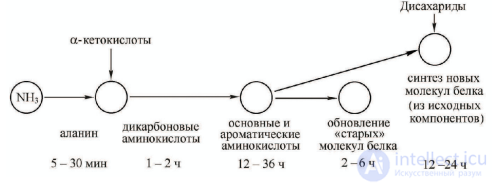
Fig. Scheme of the transformation of ammonia in plants (V.F. Turchin)
Numerous studies confirm the possibility of widely using both ammonia and nitrate forms of fertilizer for plants. The conditions under which one or another form of nitrogen fertilizer proves to be the best have also been determined. The factors that improve plant nutrition with a given form of nitrogen are the biological characteristics of the plants themselves, as well as the agrochemical properties of the soil and the properties of the fertilizers. For example, in plants poor in carbohydrates, the formation of organic acids is delayed and the synthesis of amino acids is halted. In this case, ammonia accumulates in the plant in a free state and often poisons it. It is true that plants are able to bind free ammonia, forming the amides asparagine and glutamine, which, in the process of synthesizing nitrogen-containing organic substances, release ammonium and are converted into the corresponding amino acids used for protein formation. But these processes are possible only when the plant has a sufficient amount of carbohydrates and organic acids; in their absence, the accumulation of free ammonium in plants, causing poisoning, is inevitable. Nitrates, on the other hand, can accumulate in plants up to a certain limit without harm. Moreover, the conversion of nitrates into ammonia takes place as it is used for amino acid synthesis. No synthesis — no formation of ammonia from nitrates. Nitrates are the best form of nutrition for plants at a young age, when the leaf surface is small, as a result of which photosynthesis still proceeds weakly in the plant and carbohydrates and organic acids are not formed in sufficient quantity. As the leaf surface increases, photosynthesis of carbohydrates intensifies, and their oxidation produces organic acids, which in turn promotes the binding of ammonia by dicarboxylic acids with the formation of amino acids, and subsequently of proteins. For crops that contain a sufficient amount of carbohydrates (for example, potato tubers), ammonia and nitrate forms of nitrogen are practically equivalent at the start of plant growth. For crops whose seeds contain little carbohydrate (for example, sugar beet), nitrate forms of nitrogen have an advantage over ammonia forms. The reaction of the medium and the presence of accompanying cations in the soil influence nutrition with ammonia or nitrate nitrogen. For example, a neutral soil reaction and an increased content of potassium, calcium and magnesium cations in it favor better plant nutrition with ammonia nitrogen. Ammonia nutrition is better under a neutral reaction (chernozem and dark gray forest-steppe soils), while nitrate nutrition is better at pH 5,5 and below (i.e. on slightly acid and acid soils). Ammonia nitrogen can be used more effectively than nitrate nitrogen if the side effect of the physiological acidity of ammonium salts is eliminated. Ammonium nitrogen is used by plants for the synthesis of amino acids and proteins more quickly than nitrate nitrogen. Ammonium nitrogen that has entered the roots is almost completely used for amino acid synthesis within 5 - 10 min and enters the leaves as organic compounds for protein formation. When ammonium ions enter a plant, they carry phosphate ions along with them, which promotes better utilization of phosphates against a background of ammonia nutrition compared with nitrate nutrition. It is also important to bear in mind that sources of nitrogen influence the direction of physiological and biochemical processes in plants differently. Under ammonia nutrition, the reductive capacity of the plant cell increases, leading to the formation of reduced organic compounds (oils, fats). With a nitrate source of nitrogen, the oxidative capacity of the cell sap predominates, leading to intensified formation of organic acids. For nitrate nutrition, it is important to supply the plant with phosphorus and molybdenum. A shortage of molybdenum delays the reduction of nitrate nitrogen to ammonia, leading to the accumulation of nitrates in plants in a free state. When using ammonia and nitrate forms of mineral fertilizers, it is important to take into account the growing conditions of the crop (irrigation, degree of moisture, mechanical composition of the soil). Given the higher mobility of nitrates in the soil, the utilization coefficient of nitrogen can be increased through correct timing and methods of fertilizer application and through combining ammonia and nitrate forms. At present, the nitrogen fertilizer industry is based almost entirely on ammonia synthesis. Nitric acid for the production of nitrate fertilizers is also obtained through its oxidation. At present, ammonia and amide forms occupy a significant place in the range of nitrogen fertilizers, in particular, ammonium nitrate and urea.
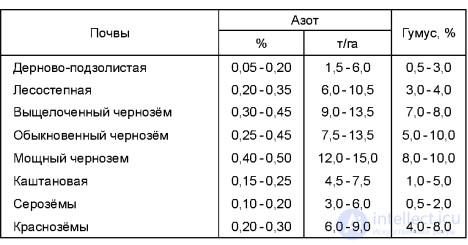
Nitrogen accounts for about 16-18% of the mass of plant proteins. In the arable layer (0-25 cm) of different soils, its amount varies within wide limits (Table 4.9). The nitrogen content of the soil depends on its particle-size composition, degree of cultivation, etc. The total nitrogen reserve in the arable layer of one hectare ranges from 1.5 t in sandy loam sod-podzolic soil to 15 t in a deep chernozem. However, the optimal conditions for the nitrogen nutrition of plants are determined above all by the presence of mineral nitrogen compounds in the soil, since it is this form of nitrogen that is available to plants. Only an insignificant part of the nitrogen, in the form of water-soluble amides and amino acids, can be absorbed by the plant. The bulk of the nitrogen is contained in organic compounds that are unavailable for plant nutrition. Mineral compounds contain 1-3% of the nitrogen, but it is precisely this nitrogen that has great significance in plant nutrition.
The decomposition of organic matter in the soil proceeds according to the scheme:

4.9. Amount of nitrogen and humus in the arable layer (0-25 cm) of different soils
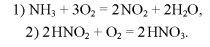
The process of converting the nitrogen of organic matter into ammonia compounds is called ammonification. Under the action of enzymes, microorganisms break down proteins into amino acids. The latter, under the action of the microbial cell enzymes deaminase and deamidase, undergo further decomposition processes (deamination, deamidation), releasing ammonia, which can combine with various acids to form salts ((NH4)2CO3, NH4NO3), and can also be absorbed by soil colloids. Ammonification is carried out by aerobic and anaerobic microorganisms (bacteria, actinomycetes, mold fungi). The most typical representatives are the bacteria Bac. vulgare, Bac. subtilis, Bac. mesenteriesis, Bac. micoides, and the mold fungi Aspergillus, Penicillium, Trichoderma. Ammonia is formed in all soils under different reactions of the medium, both in the presence of air and without it, but under anaerobic conditions with a strongly acidic or alkaline reaction, ammonification slows down considerably. The rate of ammonification is also affected by soil temperature, moisture and other factors. Under aerobic conditions, ammonium salts are oxidized to nitrates. The process of oxidizing ammonia to nitrates is called nitrification. This process is carried out by the aerobic bacteria Nitrosomonas, Nitrosocystis and Nitrosospira, which oxidize it to nitrous acid (the first phase), while the completion of oxidation to nitric acid is carried out by Nitrobacter bacteria (the second phase):
The nitric acid formed is neutralized by calcium or magnesium bicarbonate or by absorbed bases:

The process of nitrification requires certain conditions: access to air, moisture (the best being 60% of capillary moisture capacity), temperature (optimal — 25-30°C) and reaction of the medium (neutral or slightly acidic). Nitrification is an indicator of the cultivated state of the soil, and the nitrification capacity of the soil is an important sign of its fertility.
Nitrogen plays a decisive role in plant nutrition, influencing a great many biological processes, from the formation of proteins and amino acids to the stimulation of photosynthesis and fruit formation. It ensures healthy growth, development and flowering of plants, and also increases yield. However, it is important to maintain a balance of nitrogen with other nutrients in order to avoid problems associated with a deficiency or excess of this element. Agronomists and growers must carefully manage the availability of nitrogen in the soil in order to ensure effective plant nutrition and achieve optimal results in agriculture and horticulture.

Comments