
Lecture
Fertilizer application is a powerful and active intervention in the cycling of nutrient elements in farming, in creating an active
balance in the soil — fertilizer — plant system. Without fertilizers it is impossible
to achieve the expanded reproduction of soil fertility.
The main content of agrochemistry as a science can be represented by
three divisions: plant chemistry, soil chemistry, and fertilizer chemistry. In
the fact that plant chemistry is a branch of plant physiology and
also a chapter of agrochemistry, there is no contradiction at all. Likewise, soil chemistry,
on the one hand, forms part of soil science, being the most important
branch of that science, and on the other hand — is an integral part
of agrochemistry. Fertilizer chemistry has been fully developed by agrochemists.
Scientific research in this field cannot be conducted in isolation
from soil chemistry, plant physiology, and farming.
Agrochemistry cannot be viewed in parallel with soil science,
plant physiology, farming, and microbiology. It penetrates
into these disciplines and in each of them covers what is necessary
for the research needed to create optimal conditions for plant life
with the aim of realizing their potential productivity.
Agrochemistry emerged as an independent discipline precisely
owing to theoretical and practical expediency.
D.N. Pryanishnikov noted that just as it is inexpedient to divide soil science among agrochemistry, agrophysics, and microbiology, it is likewise
inexpedient to dissolve agrochemistry into soil science, plant
physiology, and farming.
The range of agrochemical research is very broad. It includes
the study of the transformation of nutrients in the soil and of their metabolism
in the plant, the optimization of plant nutrition through the application of
fertilizers, the reproduction of soil fertility with regard to the optimal
parameters of its main indicators, the application of fertilizers for a
planned yield, and the regulation of the quality of crop
production.
The multifactor scheme of the content of agrochemistry as a science — the interrelation of climate, soil, plant, and fertilizer, the performance of systemic
research, and the practical application of agrochemistry's achievements — is linked
to a number of other fundamental and applied disciplines (Fig. 1.6).
Figure 1.6 shows a far from complete list of branches
of knowledge with which agrochemistry is closely interconnected in solving
theoretical and practical problems. This can be seen even from
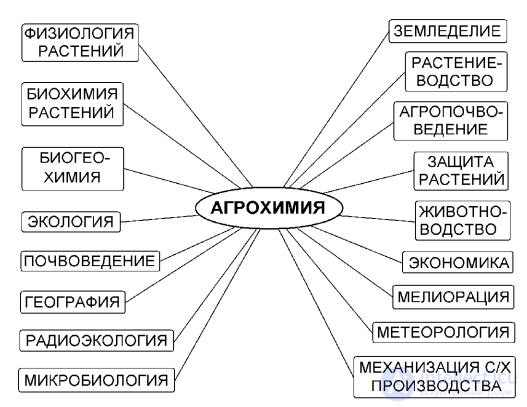
Fig. 1.6. Connection of agrochemistry with other fundamental and applied sciences
a brief list of questions and topics that are of general interest both to agrochemistry and to other related branches of science. For example, it is hard to overstate the close connection between agrochemistry and soil science, since the effectiveness of fertilizers is largely determined by the chemical, physical, and physico-chemical properties of the soil and its biological activity. These indicators are closely related to the content and mobility of nutrients in the soil, which predetermines the fertilizer rates and the ratio of biogenic elements in them. The effect and payback of fertilizers depend on the degree of soil cultivation, its humus status, absorption capacity, buffering, and reaction of the medium. Therefore, one of the most important tasks of agrochemistry is to study the properties and fertility of soil, the nutrient balance in the agrocenosis, the ways of regulating it, and the reproduction of soil fertility. The interrelation of soil properties and fertilizers manifests itself in the processes of mobilization, immobilization, transformation, and migration of nutrients, which are significantly influenced by the plants grown in the agrocenosis.
Agrochemistry is no less closely connected with plant physiology. The plant's two synthetic laboratories — the leaf and the root system — are able to carry out their activity thanks to the root and air (photosynthetic) nutrition of plants. This is linked to the uptake and metabolism of nutrients in the plant, which ensures the formation of the main quality indicators of the produce. The use of agrochemical techniques such as root and foliar top dressings regulates plant nutrition through the roots and leaves, purposefully optimizes the conditions for the most active growth and development of plants, and for forming a larger yield and better-quality agricultural produce. Based on knowledge of the patterns of plant nutrition and the requirement for individual nutrient elements during the growing season, methods of plant diagnostics (stem, tissue, leaf) have been developed for assessing a crop's supply of biogenic elements. Consequently, the physiology of nutrition and metabolism in plants are the most important component of the theoretical foundations of agrochemistry, which are often used for practical purposes to purposefully regulate the formation of the quantity and quality of crop production when conducting fundamental research on the problem of the synthesis of organic compounds and solving practical problems, in particular improving the chemical composition and nutritional value of crop production (Fig. 1.7).
By possessing knowledge of such biochemical processes as the metabolism of biogenic elements, the synthesis of organic compounds, and the coupling of energy exchange in the formation of individual organic substances and their breakdown during respiration, agrochemical inputs can change the chemical composition of cultivated plants: the protein content in wheat grain, the sugar content of sugar beet roots, the oil content of sunflower seeds, the starch content of potato tubers, and so on. Given the periodicity of nutrition in cultivated plants, it is important to create the conditions necessary for the formation of useful organic substances in the plant. Violation of these important scientific principles can lead to negative consequences, a deterioration in the chemical composition and nutritional value of the produce, with a reduced content of proteins, sugars, fats, and other important organic and mineral substances. Many branches of agrochemistry are closely connected with soil biology and with microbiology. For example, the state and regulation of the nitrogen regime in agrocenoses is one of the most important tasks of agrochemistry, but its successful
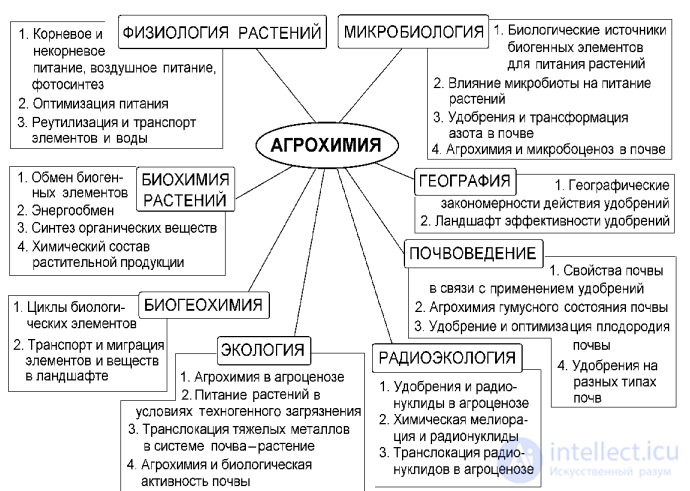
Fig. 1.7. Connection of agrochemistry with the fundamental sciences
solution is possible only with a correct assessment of the biological sources of nitrogen in the soil-plant system: symbiotic and associative nitrogen fixation, as well as fixation by free-living microorganisms. The activity of these processes depends on a correct system of fertilizer application. The transformation of nitrogen in the soil is essentially a microbiological process. An agrochemist must possess this knowledge when developing methods for optimizing the nitrogen fertilization of cultivated plants. Many functions of fertilizers cannot be objectively assessed without knowledge of the microbiological processes in the agrocenosis: the phosphorus nutrition of plants, changes in the soil microbocenosis under the influence of various fertilization systems, changes in the biological and enzymatic activity of the soil under systematic application of agrochemical inputs, the effect of fertilizers on fungal plant diseases, and others. The processes of nitrogen mobilization and immobilization in the soil (ammonification, nitrification, denitrification) proceed under the influence of the soil microbiota.
The same can be said of symbiotic and non-symbiotic fixation of atmospheric nitrogen, of the processes of humification and mineralization of humus, of the role of mycorrhizal fungi and extracellular phosphatase activity in the phosphorus nutrition of higher plants, and so on. To activate biological processes in the soil, special bacterial preparations are used (nitragin, rhizotorphin, and others). All of this must be taken into account when developing fertilization systems in an agrocenosis. Growing negative ecological phenomena in agroecosystems link agrochemistry with ecology. The role of agrochemical inputs in performing ecological functions is increasing. Thus, technogenic contamination of agrocenoses with heavy metals, radionuclides, and other toxic substances makes it necessary to use a set of agrochemical means and methods aimed at reducing the entry of toxicants into plants and into trophic chains. An ecological assessment is especially necessary when applying various non-traditional types of fertilizers — the waste products of industrial branches and municipal services, when using local organic and mineral raw material resources for fertilization. Many ecological functions of agrochemistry — maintaining the biological cycling of substances, preserving biodiversity and improving the soil microbocenosis, immobilizing toxic substances, preserving the biological activity of the soil, activating the nitrogen-fixing capacity of the soil, preventing the eutrophication of natural waters, and others — are closely linked with the corresponding branches of ecology. The creation of optimal cultivated agrolandscapes in various natural zones in accordance with their specialization is possible with the help of agrochemical inputs. By applying fertilizers, regulating the water regime, and mobilizing the internal resources of the landscape, man creates a cultivated agrolandscape with an optimal geochemical regime. Such a landscape is the best from a hygienic standpoint and meets the optimal conditions for human life. When characterizing a geochemical landscape, it is necessary to take into account both the interrelation of the chemical composition of its individual components — soil, vegetation, surface and ground waters — and the factors that influence the migration of chemical elements. The mobility of chemical elements in the biosphere is directly linked with living matter and natural waters, i.e., the synthesis and mineralization of organic substances are processes that make up the cycling of chemical, especially biogenic, elements in the soil — plant system.
Systematic application of agrochemical inputs leads to a change in the chemical composition of the soil, plants, ground water, and so on, and consequently affects the cycling of substances in a given landscape. A newly created agrarian type of landscape is qualitatively different from natural landscapes. Knowing the optimal parameters of the chemical composition of the components of an agrolandscape, it can be substantially improved through the scientifically based application of agrochemical inputs. Under the complex agrochemical influence on the components of such an agrolandscape, it acquires agrochemical content. In these ecological functions of agrochemistry, its close interrelation with geochemistry is noted. V.A. Kona (1984) noted that the behavior of fertilizers in the landscape must be studied using biogeochemical research methods, and that «a new field in science is emerging — agrogeochemistry». He believed that studying the transformation of fertilizers in all components of the landscape makes it possible to obtain the greatest return from fertilizers with the smallest negative ecological consequences. Examples can be given of the connection between agrochemistry and other fundamental sciences. For instance, there are geographic patterns in the action of fertilizers, which are determined by the soil-climatic conditions of the zones. The effectiveness of fertilizers is also determined by the bioclimatic potential of the zone. Here the connection between agrochemistry and geography is noted (Fig. 1.7). The effectiveness of agronomic practices, including the agrochemical inputs applied, is largely determined by weather and climatic conditions, which links agrochemistry with meteorology, etc. There are no purely fundamental and purely applied sciences. Such a division is quite conditional. Major achievements in fundamental fields of knowledge ultimately culminate in the improvement of high-tech, knowledge-intensive technologies and influence the accelerated development of the corresponding applied sciences. As for agro-industrial production, agrochemistry is essentially closely connected with all branches of the agricultural sciences (Fig. 1.8). K.A. Timiryazev (1935) already wrote that farming became what it is only thanks to agronomic chemistry and plant physiology. The connection between agrochemistry and farming is explained by the fact that the fertilization system is the most important link of modern scientific farming. At the same time, it is also the central question
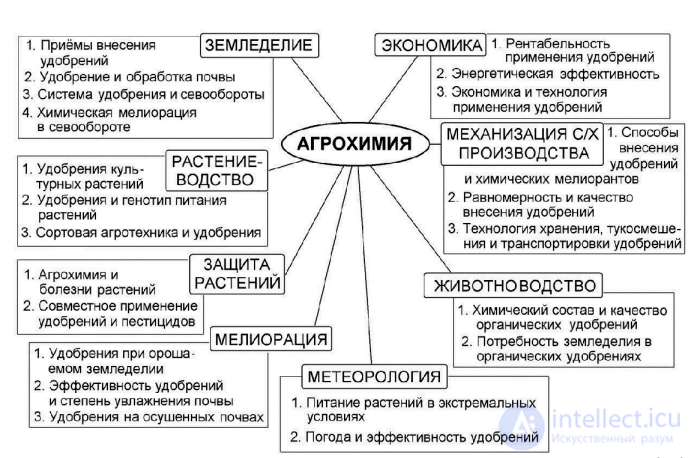
Fig. 1.8. Connection of agrochemistry with applied fields
of applied agrochemistry. For example, the effect of fertilizers is largely determined by the availability of mobile nutrients in the soil, as well as by the state of its water and air regimes. And this depends on the preceding crops and differentiated soil tillage. The same can be said of the system of scientifically based specialized crop rotations, which determines the rates and ratios of fertilizers, and the distribution of mineral and organic fertilizers and chemical ameliorants among the crops of the rotation. Therefore, the systems of crop rotation, fertilization, and soil tillage are the most important interrelated branches of scientific farming. The complex of all agronomic practices during the growing season of a crop, including the application of fertilizers, especially when developing effective, highly productive technologies, is determined by the biological requirements of the crop, weather conditions, soil fertility, the type of preceding crop, and so on. And this links agrochemistry with crop production. In recent years, high rates of yield growth for various agricultural crops in Western European countries and in the leading farms of our country have been observed with the comprehensive, scientifically based application of agrochemical inputs within advanced technologies, based on comprehensive soil-plant
diagnostics of plant nutrition and the application of fertilizers and chemical protective agents, taking into account the phytosanitary state of soils and crops. In this case, the payback of both mineral fertilizers and chemical plant protection agents (pesticides) increases sharply. This reflects the shared interests of two sciences: agrochemistry and plant protection. The greatest effect from fertilizers is obtained under irrigation, with an optimal combination of soil water regime and nutrient elements. Therefore, crops grown under irrigation are, above all, supplied with fertilizers in accordance with scientific recommendations. Under these conditions, the highest payback of the fertilizers applied is observed. The same can be said of the high effectiveness of fertilizers when applied to agricultural crops on reclaimed, drained land, especially with double regulation of the water regime. This attests to the close connection between agrochemistry and land reclamation.
For the expanded reproduction of soil fertility, improving the cycling of substances in farming, and creating an active balance of biogenic macro- and micronutrients in the soil — plant — fertilizer system, it is important to make maximum use of all local fertilizing resources, which will never lose their significance, whatever the pace and volume of mineral fertilizer application may be. Therefore, this task will always remain relevant. Special importance is attached to manure. A well-organized and correct technology for accumulating, storing, and using manure is one of the most important indicators of the level of farming culture. Therefore, an agrochemist must know the fundamentals of animal husbandry and the rational use in farming of the waste products of this branch of agriculture. Without this, there can be no rational application of mineral fertilizers either. The high pace of the chemicalization of farming requires constant improvement of its mechanization and automation, i.e., the improvement of transport for hauling fertilizers; machinery for fertilizer blending and the application of mineral and organic fertilizers; and equipment for accumulating and storing manure, preparing various composts, and transporting and applying them across the fields of the crop rotation. What agricultural machinery should be like in order to carry out the complex of operations and automate the production processes for the rational use of organic fertilizers is largely determined by the agrochemist.
Crop rotation together with a fertilization system has important organizational and economic significance. The effectiveness of fertilizers can be judged only with regard to their agroeconomic evaluation. All the practices associated with the chemicalization of farming can be implemented on a farm only when a set of organizational, economic, and operational measures is carried out and when a material and technical base exists for the transport, storage, blending, and application of fertilizers. All of this requires the agrochemist to know the scientific principles of the organization and economics of agricultural production. The results of the comprehensive use of all farming factors, viewed historically, can be seen in the example of the growth of wheat yields in the countries of Western Europe. In the Middle Ages, under the dominance of the three-field system, the average wheat yield was 7–8 c/ha (Fig. 1.9). The introduction of crop alternation with clover doubled the yield of this crop. In that period, crop alternation was characterized by the presence of clover and root crops. A typical crop rotation of this system was the Norfolk four-course rotation (row crops, spring crops, clover, winter crops). This crop rotation took shape in England in the 18th century. The appearance of the clover-based alternate husbandry rotation doubled grain yields compared with the three-field system, mainly owing to the biological nitrogen fixed by the nodule bacteria of clover. The soil was enriched with nitrogen when the roots and plant residues of clover were plowed under.
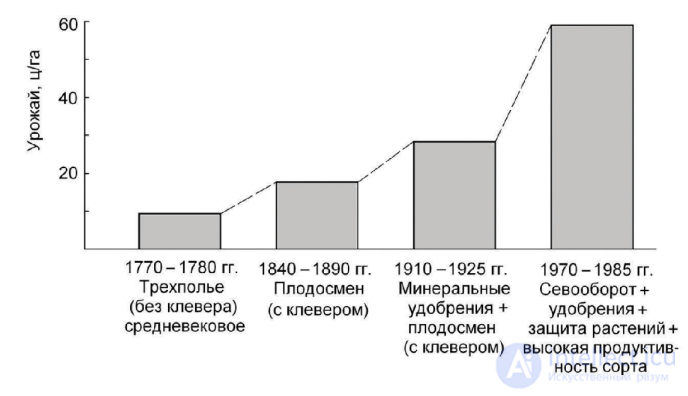
Fig. 1.9. Dynamics of wheat yield growth in Western Europe over 200 years
At the beginning of the 20th century, the doubling of wheat yields in Western Europe was linked to the mass application of mineral fertilizers. In recent years, a dynamic growth in grain crop yields has been observed, reaching 50-60 c/ha, and in some countries even higher, which is explained by a high level of farming culture, a scientifically based system for applying mineral and organic fertilizers based on soil and plant diagnostics, and also by taking proper crop rotation sequencing into account. The integrated system of plant protection against pests, diseases, and weeds undoubtedly plays a positive role, as does significant progress in breeding highly productive varieties of grain and other crops (Fig. 1.9). Thus, the civilized countries of Europe, using a complex of agronomic practices within advanced technologies for growing grain crops, with due regard for the optimal supply of nutrients to grain crops, practically achieve the realization of their potential productivity. In this connection, a direct correlation is noted between the level of fertilizer application in these countries and grain crop yields (Fig. 1.10, Table 1.1).
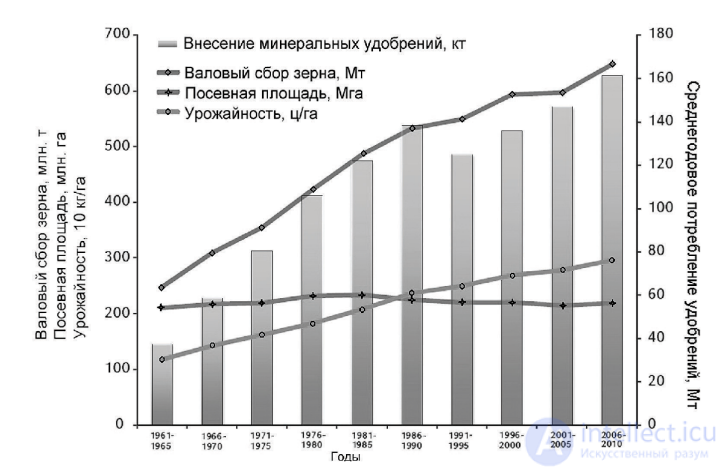
Fig. 1.10. Wheat grain production, sown areas, yield, and consumption of mineral fertilizers (1961-2010) (FAOstat, 2012; IFADATA)
1.1. Wheat grain production, sown area, yield, and fertilizer application in the 20 leading producer countries (FAOstat, 2012; Heffer, 2009; FADATA, 2012, Phillips, Norton, 2012)
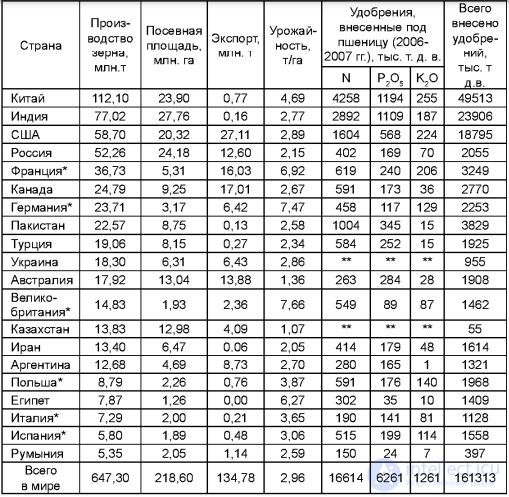
Note: * - the amount of mineral fertilizers applied to wheat in each of the 27 EU countries was estimated from the crop's average fertilizer requirement (Heffer, 2009) and the total amount of fertilizers applied in each country per year. ** - no data
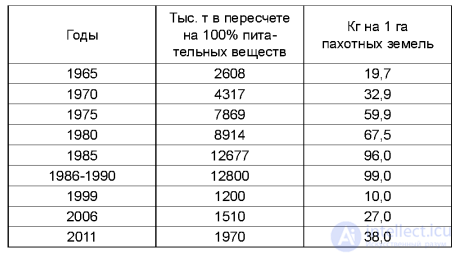
The possibility of obtaining high grain crop yields (50 - 60 and even 70-80 c/ha) under the various soil-climatic conditions of our country is confirmed by experimental production farms, provided that all the links of scientific farming are optimally combined. Given the decisive role of mineral fertilizers in raising the productivity of domestic farming, measures were taken in Russia in the second half of the 20th century to sharply increase their production and application (Table 1.2).
1.2. Dynamics of application (supply) of mineral fertilizers in the Russian Federation
Measures were taken to increase livestock numbers, which led to an increase in the production and application of organic fertilizers (Fig. 1.11). Much attention was paid to chemical amelioration, in particular the liming of acidic soils (Fig. 1.12).
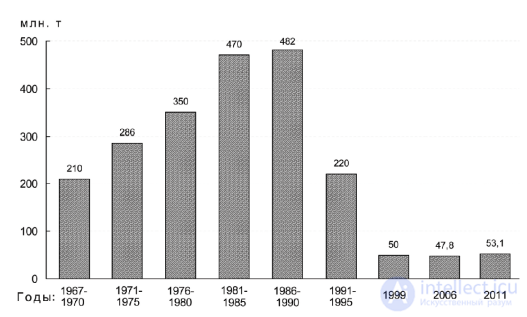
Fig. 1.11. Application of organic fertilizers in the Russian Federation, million t
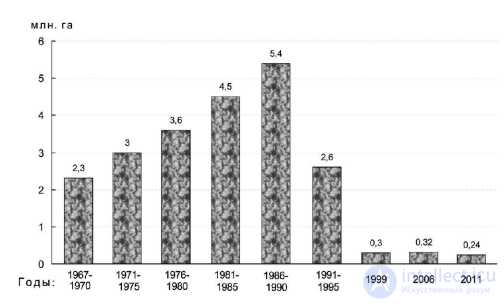
Fig. 1.12. Average annual liming of soils, million ha
The Ministry of Agriculture of the Republic of Kazakhstan has provided the following data on the use — of mineral fertilizers — Table 1.3. In Belarus, in the period from 2006 to 2013, from 250 to 313 kg/ha a.s. of mineral fertilizers were applied per hectare of arable land, or 1.3-1.5 million t a.s. for all agricultural land. The technological requirement for mineral fertilizers for the planned productivity of arable land across the republic as a whole, for the near-term outlook, amounts to 1,939.1 thousand t a.s., including nitrogen fertilizers —
1.3. Use of mineral fertilizers in the Republic of Kazakhstan (according to the Ministry of Agriculture of Kazakhstan)
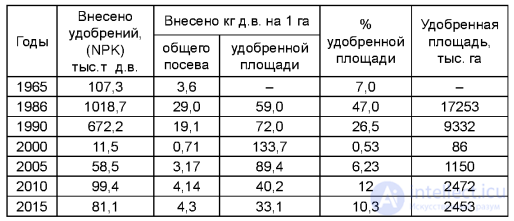
753.3, phosphorus fertilizers — 325.0, potassium fertilizers — 860.8 thousand t a.s. In the future, as soil reserves of phosphorus and potassium increase, the requirement for phosphorus and potassium fertilizers may decrease to the level of the removal of these elements — by the planned yield of agricultural crops, while the requirement for nitrogen fertilizers will remain at the stated level. In the 21st century, Russia and the CIS countries have faced the need for a sharp rise in agricultural productivity and the achievement of food independence from imported food products.
Based on the experience of countries around the world, this can be achieved only if domestic farming is fully supplied with mineral fertilizers in the proper volume and assortment, combined with such important agrochemical measures as the full use of all types of organic fertilizers and other local fertilizing resources, and the phosphatization and liming of acidic soils. The necessary scientific prerequisites exist for this.
Despite the sharp decline in fertilizer application, agrochemical science has produced a number of important fundamental and applied achievements in improving the theory of plant nutrition, the range of mineral fertilizers, in developing advanced technologies for the effective use of agrochemical inputs with regard to soil-climatic conditions, methods of reproducing soil fertility, including the use of various types of non-traditional fertilizers, the development of the ecological functions of agrochemistry, and so on.

Comments