
Lecture
Plant nutrition is the process of supplying plants with the nutrients they need for their growth, development and health. Plants obtain nutrition from the soil, water and air.
Plant nutrition — is the process of absorbing nutrients from the external environment and converting them into compounds necessary for the plant's vital activity, the translocation of initially absorbed nutrients, and their conversion and localization at the sites of subsequent use.
The main nutrients for plants are macronutrients (nitrogen, phosphorus, potassium) and micronutrients (iron, copper, zinc, etc.). Here are some key aspects of plant nutrition:
Macronutrients:
Micronutrients (mineral substances):
Water: Water is a carrier of nutrients and is necessary for photosynthesis, the transport of nutrients, and maintaining the plant's structure.
Photosynthesis: Plants use the energy of sunlight to synthesize organic substances from water and carbon dioxide. This process enables plants to produce sugars and oxygen.
Soil: Soil is a source of nutrients for plants. Plants absorb the elements they need from the soil through their roots.
Fertilizers: Fertilizers can provide plants with additional nutrients, especially when these are not sufficiently available in the soil. Fertilizers can be organic (for example, compost) or mineral (synthetic).
Soil pH: The acidity or alkalinity of the soil (pH) can affect the availability of nutrients for plants. Different plants prefer different pH levels.
Overfeeding and underfeeding: Too large an amount of nutrients can lead to overfeeding, which can be harmful to plants. A lack of nutrients can also cause problems in growth and development.
For effective plant nutrition, it is important to take into account the requirements of specific plant species, the condition of the soil, and other factors. A good understanding of plants' nutritional needs and the ability to manage nutrition properly will help maintain a healthy and productive plant community.
Plant nutrition — is one of the most important factors in their life. In the process of nutrition, an exchange of matter takes place between plants and the environment. Inorganic substances from the soil, the atmosphere and water enter the plant, where they are used in the synthesis of complex organic compounds, while a number of substances are excreted from the plant organism into the environment. Green plants, using solar energy and numerous enzymes, form highly complex organic substances from carbon dioxide, water and simple mineral salts, which in turn serve as food for humans and animals. In the process of nutrition, all green vegetation releases an enormous amount of oxygen during the daytime, which is breathed by all living organisms. All life on Earth is therefore sustained by the creative work of higher and lower plants. The scale of this process in nature can be judged from the following data. The green plants of the globe annually form, calculated as glucose, up to 400 billion t of fresh organic matter, including 115 billion t on land. In doing so, up to 170 billion t of CO2 are fixed, and 130 billion t of water are decomposed by photolysis in plants, releasing 115 billion t of free oxygen. To synthesize organic matter on Earth, plants use up to 2 billion t of nitrogen and 6 billion t of ash elements. The reserves of nitrogen in the atmosphere reach 410 t. However, these do not determine the supply of this element to agricultural crops, since plants mainly use the nitrogen of the soil rather than that of the atmosphere. Plant productivity is accordingly determined by the presence of mineral nitrogen compounds in the soil.
Virtually all ash elements are taken up by plants from the soil, so optimizing their content in the soil in a form available to plants is one of the most important tasks of agrochemistry. Water is necessary to the plant during nutrition not only for photolysis, but also, in a considerably larger amount, for evaporation through the leaves. In forming 1 centner of dry matter of yield, agricultural crops transpire 300-400 centners of water over the growing season. This quantity is called the transpiration coefficient. Under unfavorable conditions of plant growth, the amount of water used to form a unit of dry matter (the transpiration coefficient) increases by 1.5-2 times. Under optimal conditions of plant nutrition with nitrogen and ash elements, water consumption during transpiration can decrease by 15-20% or more.
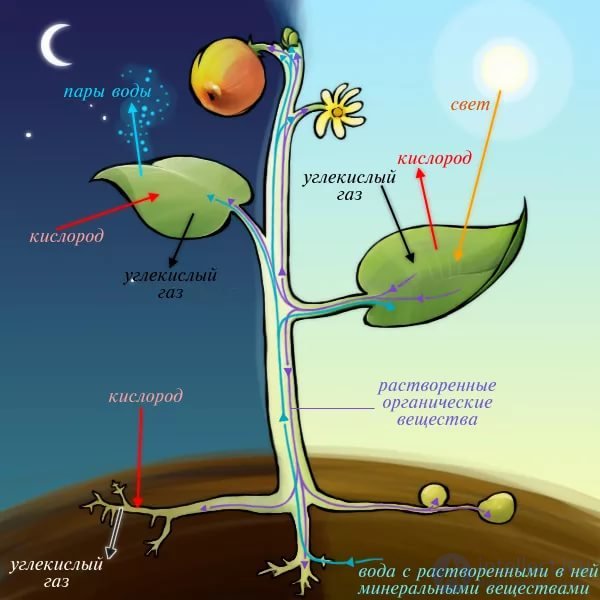
The effect of a nutrient deficiency can range from a slight slowing of growth rates to an obvious deceleration, deformation, discoloration, and even death of the plant. Visual symptoms noticeable enough to be analyzed in identifying a deficiency are rare. Most deficiencies are multiple and moderate. However, although a deficiency of only a single nutrient is rarely encountered, nitrogen, as a rule, is the most commonly deficient nutrient.

Comments