
Lecture
Agrochemistry is the science of optimizing plant nutrition, the application of fertilizers, and soil fertility, taking the bioclimatic potential into account, in order to obtain a high yield and product quality.
The concept of agrochemistry has been continuously refined as the tasks of this branch of science have expanded and its new
ecological functions have taken shape.
This concept of agrochemistry reflects the complex dialectical relationship among the plant, the soil, the climate and agrochemical means. Studying this relationship is the main task
of agrochemistry.
Agrochemistry emerged as an independent branch of knowledge earlier than plant physiology. The basic principles of the theory of root nutrition in plants were worked out by agrochemists, who as early as the late 19th century also drew attention to biological processes in the soil: nitrification and the fixation of molecular nitrogen from the atmosphere by leguminous crops with the participation of nodule bacteria.
Independent disciplines — agrochemistry, soil science, plant physiology and microbiology — cannot replace one another, but agrochemists, possessing deep knowledge of the complex dialectical relationship among soil, weather and climatic conditions, plants and agrochemical means, can purposefully regulate the interaction of factors in the agroecosystem, achieving the maximum economically useful result.
D.N. Pryanishnikov — the founder of the Russian school of agrochemistry — held that the task of agrochemistry is to study the cycling of matter in agriculture and to identify those means of influencing the chemical processes taking place in the soil and in plants that can raise the yield or change its quality.
Fertilizers create an optimal regime of plant nutrition with macro- and microelements and purposefully regulate the exchange of organic and mineral compounds, making it possible to realize the potential productivity of plants in terms of the quantity and quality of the yield. But the fertilizers themselves are also affected by the plants: plants convert their poorly soluble forms into available compounds, and, possessing a selective absorption capacity with respect to individual elements, they create physiological acidity or alkalinity in mineral fertilizers.
Agrochemical means substantially affect the chemical and physical properties of the soil, as well as the intensity and direction of microbiological processes, but at the same time they themselves are altered under the influence of the soil's properties. For example, in acid soils rock phosphate decomposes and the phosphorus passes into a form available to plants. The same happens with the carbonates of lime fertilizers. This principle underlies the chemical melioration (liming) of acid soils, which brings about neutralization of the soil solution. Exchange reactions in the soil between the cations of the applied mineral-fertilizer salts and the soil absorbing complex can produce negative or positive effects. For example, the displacement of aluminum from the absorbing complex by potassium when KCl is applied leads to additional acidification of the soil solution, whereas exchange reactions between the calcium of the applied fertilizers and the sodium of the absorbing complex of alkaline soils substantially improve their physico-chemical properties and increase biological activity. This underlies the chemical melioration (gypsum application) of solonetzic soils.
D.N. Pryanishnikov expressed the relationship among three interacting factors — soil, plant and fertilizer — with a simple diagram (Fig. 1.1) reflecting the essence of the subject of agrochemistry. The task of agrochemistry is to use fertilizer application to create optimal conditions for plant nutrition. The same approach must be taken in evaluating the fertilizer system with respect to the soil as well. Only by satisfying the biological requirements of plants can their potential productivity, built into the genotype of new varieties, be realized.
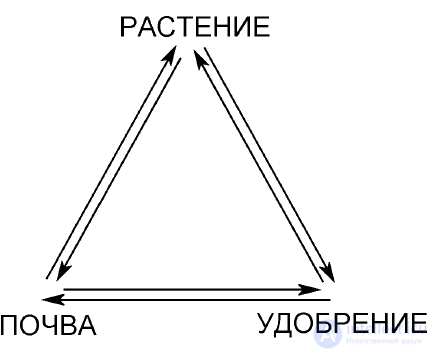
Fig. 1.1. Diagram of the relationships among plants, soil and fertilizers as the essence of the subject of agrochemistry (after D.N. Pryanishnikov)
The well-known Russian scientist K.K. Gedroits noted that yield depends on three factors: climate, soil, and the crop being cultivated itself. Climate is difficult to change, but its effect can be mitigated by improving the properties of the soils found in a given region. By changing the properties of the soil, a person can, to a certain extent, regulate the effect of climatic conditions on plants in the desired direction. K.K. Gedroits likewise viewed the action of fertilizers indirectly, through changes in soil properties. Progress in the development of theoretical principles governing the formation of the quantity and quality of crop production made it necessary to introduce the bioclimatic potential into the concept of agrochemistry. A theory for obtaining programmed yields has been developed and gives positive results in practice; static models of soil fertility, based on a set of optimal agrochemical and agrophysical parameters of its properties, have been created and are being refined, taking into account the yield level of individual crops and the productivity of specialized crop rotations as a whole. Finally, agricultural scientists and biologists are developing models of the production processes of individual crops, the implementation of which will, in the future, make it possible to obtain the highest possible yields. In every case, it is first necessary to determine the bioclimatic potential of the given district or region, after which, using agrochemical means, optimal nutrition conditions for crops can be created. The geographic network of fertilizer trials and numerous experiments conducted zonally according to unified schemes and methods make it possible, to a certain extent, to take into account the most important factor — climate — within the climate — soil — fertilizers — plants system.
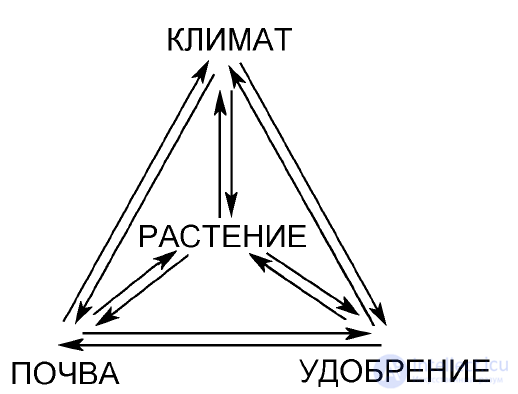
Fig. 1.2. The dialectical relationship of the soil — climate — fertilizers — plants system in the modern conception of the essence of the subject of agrochemistry
The close dialectical relationship among the four factors of agrochemistry can be represented by a diagram (Fig. 1.2). It was for this reason that climate was introduced into the definition of «agrochemistry» by the State Standard in 1983, and in those years it acquired the following wording: «Agrochemistry is the science of the interaction of fertilizers, soil, plants and climate, of the cycling of matter in agriculture, and of the rational application of fertilizers» (Resolution of the USSR State Committee for Standards of 13 July 1983, No. 3110). Underestimating the climatic features of a particular farming district can lead to serious errors in assessing the significance of mineral fertilizers in forming the yield and in objectively evaluating their effectiveness. This must be kept in mind also because in recent years even long-term stationary experiments with fertilizers and multifactor experiments at a number of research institutions have often been carried out without taking account of the main weather indicators during the growing season, which makes it impossible, first, to reproduce the conditions of the experiment, and second, to give a scientific analysis of the reasons for a shortfall in the planned yield and a decline in the payback of fertilizers. Accounting for weather and climatic conditions — is therefore an integral part of a field agrochemical experiment. An analysis of the achievements of agrochemistry and related sciences makes it possible to formulate, in generalized form, the following main tasks of agrochemistry at the present stage in the development of this branch of science: studying the properties and chemical composition of various kinds of organic and mineral fertilizers and their effect on:
1) the cycling and balance of nutrients in agriculture;
2) soil properties and the reproduction of their fertility;
3) plant nutrition and the exchange of organic and mineral
substances in plants during the growing season;
4) the biological activity of the soil and its biodiversity;
5) the formation of the quantity and quality of production;
6) the agroecological functions of agrochemistry within the soil — plant system;
7) the economic and energy indicators of the efficiency of the use of agrochemical means (Fig. 1.3).
The dialectical relationship among this complex of tasks must be taken into account when developing a research program, techniques, or new technologies involving intensive fertilizer application within a system of agronomic measures. In recent years the importance of economic and ecological assessments of fertilizer effectiveness has been growing, and the ecological functions of agrochemistry have been identified and sufficiently studied. The main task, therefore, is to obtain high yields of full-quality production on the basis of deep scientific knowledge, with the smallest expenditure of resources and with improvement of the natural environment.
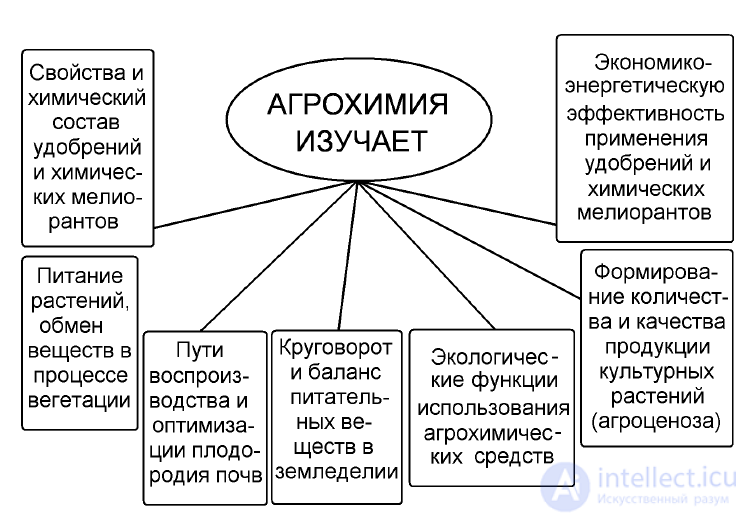
Fig. 1.3. Objects studied by agrochemistry
Agrochemistry studies the complex processes involved in the interrelationship of the factors of plant growth and development under specific soil and climatic conditions. By uncovering the regularities of these processes, it is possible to determine ways of optimizing plant nutrition with the help of macro- and micronutrient fertilizers, and to regulate the exchange of substances in the plant during the growing season in order to obtain a high yield of the crop being grown and to improve product quality. Plant nutrition — is a complex process involving the uptake of individual biogenic elements from the air (for example, through the assimilation of carbon dioxide by leaves during photosynthesis) and the absorption of the bulk of the available mineral salts through the root system from the soil solution and the solid phase of the soil. The difficulty of regulating and optimizing the process of plant nutrition and metabolism lies in the fact that it is closely bound up with weather and climatic conditions, which we cannot always regulate (the temperature regime of the air and soil, aeration, water supply, the relative humidity of the air, etc.). The content of nutrients in the soil, in a form available for uptake by plants, also depends to a considerable extent on these same conditions.
The mobilization or immobilization of individual nutrient elements in the soil is also largely determined by the activity and direction of chemical, physico-chemical and microbiological processes, as well as by the biological properties of the plant itself and the dynamics of the uptake of individual cations and anions during the growing season. Mineral and organic fertilizers exert an active and powerful influence on the complex processes that determine the growth and development of plants. They change the concentration of salts in the soil, the intensity and direction of chemical, physico-chemical and biological processes, the reaction and buffering capacity of the soil, and its absorption capacity. By studying these processes in their dynamics and interrelationship, agrochemistry uncovers the essence of the phenomena and the regularities in metabolism and yield formation, and uses them to purposefully regulate plant growth and realize their potential productivity. The strongest and fastest-acting means available to agrochemistry for the purposeful regulation of these processes, as well as for its intervention in the cycling of matter in agriculture, is the fertilization of soils. Without it, it is impossible to optimize plant nutrition, regulate the size and quality of the yield, or influence the reproduction of soil fertility.
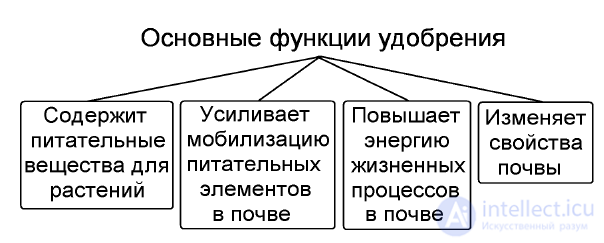
Fig. 1.4. The content of the concept of «fertilizer» (after D.N. Pryanishnikov)
A fertilizer is a substance used for plant nutrition and for increasing soil fertility. In his definition of the concept of «fertilizer», D.N. Pryanishnikov pointed out that it can contain food for plants, enhance the mobilization of nutrients in the soil, increase the energy of vital processes in it, and change the properties of the soil itself, i.e. exert a many-sided direct and indirect effect on the soil and on plants (Fig. 1.4). In keeping with the tasks of agrochemistry, research methods have also expanded (Fig. 1.5). Among them, laboratory methods occupy a special place: chemical and physico-chemical methods of analyzing plants, soils and fertilizers. In recent years, progress has been achieved in developing highly productive and precise physico-chemical and physical methods of laboratory analysis, and correspondingly in modern laboratory equipment.
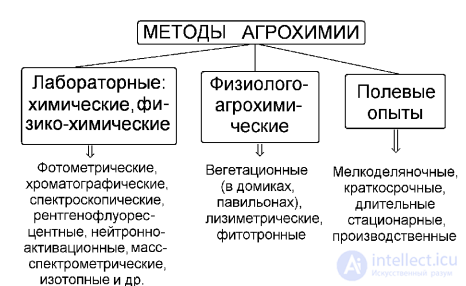
Fig. 1.5. The principal methods of agrochemistry
Such methods as photometry, chromatography, spectroscopy, atomic-absorption spectrophotometry, X-ray fluorescence analysis, neutron-activation analysis, mass spectrometry, and others have become widespread. For more precise studies of metabolism in plants, methods using stable and radioactive isotopes are widely used. Highly productive modern analytical equipment and computers are widely used in mass routine analyses, i.e. in the agrochemical servicing of agricultural enterprises. This makes it possible to apply fertilizers and other chemical means on a sound scientific basis. Portable agrochemical instruments for individual use allow a specialist to determine directly in the field, quickly, the content of some element in a plant or soil, or a soil property (acidity or alkalinity, etc.), and to promptly make adjustments to fertilizer recommendations. In recent decades, integrated soil-and-plant diagnostics of plant nutrition and fertilizer application have come into wide use; these combine laboratory soil analysis on precise modern instruments to establish the optimal rates of the basic fertilizer, with subsequent correction of top-dressing fertilizer rates during the growing season of the crop, following analysis of the plants in the field. This makes it possible to optimize plant nutrition (for example, with nitrogen) using fertilizers throughout the entire growing season and to obtain the planned yield of high-quality production. The second group of methods is physiologico-agrochemical, comprising vegetation methods (experiments conducted in special vessels placed in vegetation pavilions, greenhouses) and lysimetric methods (studies conducted in large vessels — 1x1x1; 1x1x2 m3, etc. — with vertically isolated walls, under conditions close to natural ones). At present the latter method is widely used in research institutions around the world, especially in studying the migration and transformation of nutrient elements in the soil, in balance experiments, in studying changes in soil properties over time, and also in physiologico-biochemical studies, using the isotope method, of the particulars of metabolism in plants and the formation of product quality.
In practice, the vegetation and lysimetric methods are often used in combination and complement one another. Physiologico-agrochemical methods include studies in phytotrons, where all indicators of the plant production process are controlled and regulated: root nutrition, water supply, light intensity and quality, temperature regime, photosynthesis, gas exchange, etc. Such studies are carried out with full automation and recording of plant growth and development parameters by the corresponding instruments. This is the most precise method of physiologico-biochemical and agrochemical research, making it possible to uncover the process of metabolism under a broad research program involving all the factors of plant life, to determine the potential productivity of plants and the ways of realizing it for a specific genotype, and to create a dynamic model of the production process. Phytotrons are therefore also widely used in plant-breeding and genetic research. Successfully conducting experiments in phytotrons and operating them effectively requires highly qualified scientists and specialists from many fields of knowledge. As a rule, they are used at the largest research institutions and institutions of higher education. The third group of methods of agrochemical research is field trials. A field trial with fertilizers is a trial conducted under field conditions to determine the effect of fertilizers on the yield of agricultural crops, its quality, and also on soil fertility. Small-plot trials are conducted for deeper, more often exploratory, experiments. They are often combined with vegetation and lysimetric trials, but under conditions identical or close to natural ones. Small-plot trials often use labeled atoms; models of highly fertile soils are created and tested, and new kinds and forms of fertilizers are tested, in combination with other chemical means or — with microbiological studies, etc. Small-plot fertilizer trials are conducted under field conditions on plots of no more than 10 m2.
In short-term field trials, the effect of fertilizers on the yield and quality of agricultural crops is studied for no less than three years under specific soil conditions. In the Geographic Network of Trials in our country, combinations of new forms and kinds of fertilizers with other chemical means are widely used to study their effectiveness. The data from these trials are widely used to determine the requirement for various kinds and forms of mineral fertilizers on a zonal basis or an administrative one (district, region, republic), and also in determining the country's prospective requirement for various kinds and forms of fertilizers. The results of these trials are entered into a databank, and the necessary information is then produced by computer according to the corresponding program. Small-plot and short-term field trials are also widely used to improve methods of integrated soil-and-plant diagnostics for optimizing plant nutrition and fertilizer application. The country's research institutions conduct an extensive network of stationary and long-term fertilizer trials. A stationary fertilizer trial is a field trial with systematic fertilizer application, conducted on a single plot, within a crop rotation, within a link of a crop rotation, or under continuous cropping. A long-term field fertilizer trial is a stationary trial conducted over more than one rotation of the crop rotation. Long-term stationary trials provide valuable information for assessing the comparative effectiveness of different fertilizer systems in crop rotations, i.e. organic, mineral, and their combinations; the level of saturation of crop rotations with fertilizers; the optimal distribution of organic and mineral fertilizers among the crops of the rotation, and also the forms of fertilizers. These trials form the principal basis for developing static models of soil fertility, for studying the regularities of changes in soil fertility and product quality under long-term fertilizer application, for conducting balance studies, for studying the migration of nutrient elements through the soil profile and the accumulation of ballast toxic elements (including heavy metals in the soil under long-term application of fertilizers and other agrochemical means, i.e. for solving a number of the ecological problems of agrochemistry), etc. The trials are conducted under conditions close to production conditions. Long-term stationary fertilizer trials that are methodologically well maintained are of great value for the development of science and for using the information to determine the prospects for fertilizer application in the country.
Production trials with fertilizers are conducted under production conditions to verify recommendations and to give an economic assessment of the effect of fertilizers on the yield and its quality. Their schemes are, as a rule, brief and are intended for testing and refining scientific recommendations under production conditions, in specific soil and climatic conditions. The results of production trials play a major role in introducing and substantiating the effectiveness of one or a complex of methods of chemicalization of agriculture when preparing practical recommendations.
A sound scientific basis for measures of chemicalization of agriculture requires both an in-depth theoretical study of the questions of plant nutrition, soil and fertilizer chemistry, and practical experience along with the organization of extensive verification of scientific achievements in production. A correct system of fertilizer application on a farm is built on a combination of mineral and organic fertilizers, which makes it possible to improve the cycling of matter in agriculture. Indeed, a substantial part of the nutrient elements of mineral fertilizers already in the first year of their use passes into straw, grain, hay, root and tuber crops, silage and other agricultural products, which subsequently go to feed livestock and end up in manure. The application of manure therefore represents a repeated use of part of the nutrients of mineral fertilizers that earlier came from the chemical industry. However much mineral fertilizer is produced, however much of it is applied in agriculture, manure will always remain the most important element of the fertilizer system. For base-unsaturated and saline soils, the greatest effectiveness is observed when mineral and organic fertilizers are combined against a background of chemical melioration of the soil, i.e. the liming of acid soils and the gypsum application to solonetzic soils. The return from mineral fertilizers on soils with prior liming and gypsum application increases considerably, which is explained above all by a substantial improvement in their chemical, physical and biological properties. The content of mobile forms of nutrients in the soil increases, favorable conditions are created for humification processes, the absorption capacity and buffering capacity of soils improve, and the conditions of nutrition, growth and development of plants improve, so that they become more resistant to unfavorable factors and form a larger yield and produce of better quality. All agrochemical means (mineral, organic, liming, gypsum-containing fertilizers, etc.) form the basis of the chemicalization of agriculture. The task of the agronomist and the agrochemist-soil scientist is to thoroughly study the complex effect of agrochemical means on the soil, the plant and the natural environment, so as to create optimal conditions for the growth of cultivated plants and for realizing their potential productivity, taking into account the reproduction of soil fertility and the improvement of the ecological situation in agriculture.

Comments