
Lecture
Phosphorus (P) is one of the essential macronutrients that plants need for their normal growth and development. It plays a key role in a variety of biochemical processes in the plant and is of great importance in plant nutrition. Here are some aspects of its role:
Photosynthesis: Phosphorus is part of the molecules of ATP (adenosine triphosphate) and NADP (nicotinamide adenine dinucleotide phosphate), which are key energy carriers in the process of photosynthesis. This means that phosphorus helps the plant convert light energy into the chemical energy needed for the synthesis of organic substances.
Energy processes: Phosphorus plays a role in the transfer and storage of energy in plant cells. It participates in reactions associated with the formation and breaking of bonds between phosphates.
Metabolism of nucleic acids and proteins: Phosphorus is necessary for the synthesis of DNA and RNA, as well as proteins. These molecules play a fundamental role in genetic information and metabolic processes.
Root system: Phosphorus promotes root development, which allows plants to absorb water and nutrients from the soil more efficiently.
Flowering and fruiting: Phosphorus promotes the formation of buds, flowers, and fruits. Its deficiency can affect the quantity and quality of the harvest.
Disease resistance: An adequate level of phosphorus can strengthen plants' immune systems and increase their resistance to disease.
Transfer of other elements: Phosphorus participates in the transfer of other macronutrients and micronutrients in the plant, such as nitrogen, potassium, magnesium, and iron.
Because of all these important functions of phosphorus in the plant organism, its deficiency can substantially slow the growth and development of the plant, lead to deformation of the leaves, and weaken the immune system. It is therefore important to provide plants with a sufficient amount of available phosphorus in the soil for their optimal development.
The influence of phosphorus on plant life is very many-sided. With normal phosphorus nutrition, yield increases significantly and its quality improves. In grain crops, the share of grain in the total yield increases and its fullness improves. In vegetables, fruits, and root crops, the sugar content increases, and in potato tubers, the starch content; in flax and hemp, fiber quality improves — its length and strength increase, the fiber becomes finer, with a beautiful oily luster. Phosphorus increases the winter hardiness of plants and speeds up their development and ripening. For example, the ripening of grain crops is accelerated by 5-6 days, which is especially important for regions where they do not ripen before the onset of low temperatures. Optimal phosphorus nutrition promotes the development of the plant root system — it branches more strongly and penetrates deeper into the soil.
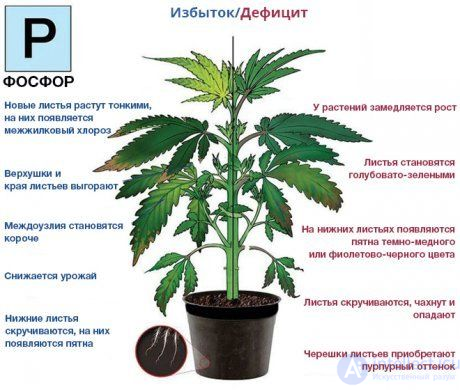
Excess and Deficiency of Phosphorus
This improves the supply of nutrients and moisture to plants, which is especially important for arid conditions. Without phosphorus, as without nitrogen, life is impossible. It is part of various organelles and of the cell nucleus. In plants, phosphorus is found in nucleoproteins and nucleic acids, which, together with proteins, play an important role in the very manifestation of the essence of life — protein synthesis, growth and reproduction, and the transmission of hereditary characteristics. In plants, the content of nucleic acids ranges from 0.1 to 1%. Phosphorus is also found in phosphatides, sugar phosphates, phytin, lipoids, and in mineral compounds, and is part of enzymes and vitamins. Phosphoproteins are compounds of protein substances with phosphoric acid that catalyze the course of biochemical reactions. Phosphatides (or phospholipids) are complex esters of glycerol, high-molecular-weight fatty acids, and phosphoric acid. They form protein-lipid membranes that regulate the permeability of cell organelles and the plasmalemma to various substances. Consequently, they play a very important biological role in the life of plants. Phytin is a derivative of the cyclic compound of the six-atom alcohol inositol and is the calcium-magnesium salt of inositol phosphoric acid. It is a reserve substance. The phosphorus of phytin is used by the developing embryo during germination. Sugar phosphates are phosphoric esters of sugars. They play an important role in the processes of photosynthesis, respiration, the biosynthesis of complex carbohydrates, and so on. Owing to phosphoric acid, sugar phosphates possess high lability and great reactivity.
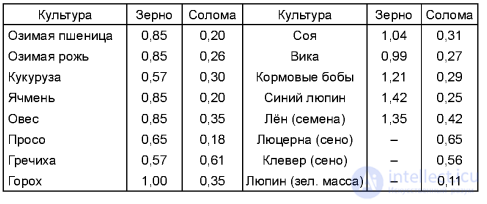
In addition to this, phosphoric acid is a carrier of energy owing to the formation of high-energy bonds. The main role among high-energy compounds belongs to adenosine triphosphoric acid (ATP). ATP takes part in the processes of photosynthesis, respiration, and the biosynthesis of proteins, fats, starch, sucrose, amino acids, and many other compounds. Thus, the processes of photosynthesis, associated with the formation of primary organic substances and reserve energy, the processes of respiration and the synthesis of complex nitrogen-containing organic substances, which play the most important role in the vital activity of plants, as well as the formation of reserve organic substances of secondary origin, proceed with the direct participation of phosphoric acid. A significant part of the phosphoric acid in plants is present in mineral form. Usually these phosphates are found in various parts of plants: more of them in the roots, stems, and leaves, less in the seeds. Mineral phosphorus in plants is a reserve substance, a reserve for the synthesis of phosphorus-containing organic compounds; it increases the buffering capacity of cell sap and maintains cell turgor and other vitally important processes in plants. Phosphorus weakens the harmful action of mobile forms of aluminum on acidic sod-podzolic soils. Mobile forms of aluminum negatively affect metabolism in plants, inhibit the processes of conversion of monosaccharides into sucrose and more complex organic compounds, and delay the process of protein formation, in connection with which the accumulation of non-protein forms of nitrogen in plants noticeably increases. Mobile forms of aluminum suppress the formation of phosphatides and nucleoproteins. Phosphorus, in turn, binds soil aluminum and fixes it in the root system, owing to which the carbohydrate, nitrogen, and phosphorus metabolism in plants improves. Phosphorus is in close interaction with nitrogen and protein compounds and is their companion. The distribution of phosphorus in various plant organs is similar to the distribution of nitrogen. In reproductive organs (seeds), the phosphorus content is 3-6 times higher than in vegetative organs (Table 4.10). Visual signs of phosphorus starvation for some crops are shown in the color illustrations. There are no natural sources for replenishing phosphorus reserves in nature, so a disruption of its balance in the biological cycle of substances may occur earlier than that of nitrogen. Different soils contain unequal amounts of phosphorus — from 0.01% P2O5 in poor sandy soils to 0.20% in deep, humus-rich soils. The upper layers of soil usually contain significantly more P2O5, which is related to the accumulation of phosphorus in the zone where the bulk of the roots die off. Down the soil profile, the content of P2O5 decreases. More of the phosphorus in the soil is in mineral form (Table 4.11). The soils of the northern forest-steppe of the European part of Russia are poorer in phosphorus than the soils of the southern zone. To the north and south of the deep chernozems, the relative amount of organic phosphates in the soil decreases, while that of mineral phosphates increases.
4.10. Phosphorus content in the yield of various agricultural crops, % of total mass
4.11. Phosphorus content in various soils in the 0-20 cm layer
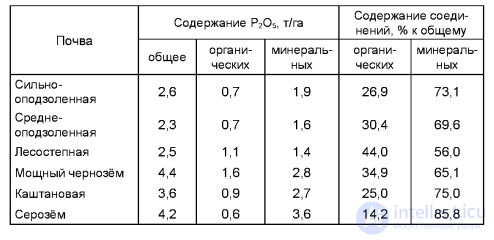
Organic phosphates are found mainly as part of humus. The content of P2O5 in the humus substance of forest-steppe soils is 1.78-2.46%, of deep chernozems — 0.81-1.25%, of ordinary chernozems — 0.90-1.27%, of leached chernozems — 1.10-1.43%, and of dark chestnut soils — 0.97-1.30%. Part of the organic phosphorus is found as part of phytin, nucleic acids, phosphatides, sugar phosphates, and other organic soil compounds. Some part of it is found in the plasma of microorganisms. After their death, this phosphorus becomes available to plants. In humus, the dry mass of microbes reaches 1%; in sod-podzolic soils cultivated through long-term manuring, the weight of organic substances of microbes amounts to 2-3% of the mass of humus. During the decomposition of humus and other organic phosphorus-containing substances, water-soluble phosphorus usually does not accumulate in the soil, but is bound as a result of chemical, physicochemical, and biological absorption. Mineral phosphates are found in the soil in the form of salts of calcium, iron, and aluminum, that is, their composition is to a considerable extent determined by the composition of cations in the soil's absorbing complex. For example, calcium phosphates predominate in neutral and alkaline soils, while phosphates of the sesquioxides of aluminum and iron are widespread in acidic soils. Calcium salts of phosphoric acid are characterized by higher solubility, while the salts of aluminum and iron are less soluble and therefore less available to plants.
With prolonged application of fertilizers, as the agrochemical properties of soils change, the composition of phosphorus compounds may also change somewhat. The sources of plant nutrition with phosphoric acid are various. Organic phosphates become available to plants only after the mineralization of organic matter. If the organic matter contains 0.2-0.3% P2O5, then during its decomposition no accumulation of phosphorus compounds available to plants occurs at all. In this case, the phosphorus is fully bound by the soil microflora. In world science and practice, ever more attention is being paid to the role of soil biota in improving plants' phosphorus nutrition. Soil microflora, forming symbiotic associations with higher plants, significantly improves plant growth in cases where the soil lacks sufficient available phosphorus. Owing to its activity, plants' phosphorus nutrition improves substantially.
Cultures of endomycorrhizal fungi have been isolated from natural and reclaimed soils. Their positive effect on the yield of oats, barley, soybeans, and vetch and on the uptake of phosphorus by these plants has been established when they are grown on soil with a low content of available phosphorus in reclaimed ground. At the Rothamsted Experimental Station (United Kingdom), the results of field experiments on inoculating wheat, barley, white clover, and onion with specially selected mycorrhizal fungi have been summarized. As a result, the grain yield, averaged over the spring crops (wheat, barley), increased by 23% relative to the control yield (without mycorrhization and phosphorus application) of 27.5 c/ha, and for winter crops — by 11% relative to the control yield of 51 c/ha. This made it possible to save almost 60 kg of P2O5 per hectare. Mycorrhization of white clover seeds sown into a grass stand contributed to an increase in hay yield of 17% (with a control yield of 17.8 c/ha) and was equivalent to the effect of P90 in the form of superphosphate. At the same time, the share of clover in the composition of the stand increased. The effect of onion inoculation was especially pronounced on irrigated land: yield increased by 97% relative to the control. Under non-irrigated conditions, it was 30%. Interesting results have been obtained from the inoculation of clover and other legumes with mycorrhiza and nodule bacteria: the former improves plants' phosphorus nutrition, while the latter, owing to their nitrogen-fixing capacity, improve the nitrogen nutrition of leguminous plants. For example, in Wales, with liming and phosphorus top dressing, clover inoculated with mycorrhiza gave a threefold greater yield of dry matter, shoot formation doubled, and the formation of rhizobium nodules increased fivefold. Some plants are able to assimilate phosphoric acid from simple organophosphorus compounds. The roots of a number of plants secrete the enzyme phosphatase, which splits off phosphoric acid from organic compounds. Extracellular phosphatase activity is possessed by peas, maize, beans, and other crops. An increase in phosphatase activity has even been noted in plants during phosphorus starvation, which is apparently related to the adaptive capacity of plant organisms. There is as yet no basis for speaking of the assimilation by plants of organophosphorus compounds without preliminary cleavage of mineral phosphates by the enzymes of microorganisms and root systems, owing to the lack of experiments carried out under strictly controlled conditions. The main source of plants' phosphorus nutrition, however, is mineral phosphorus compounds in the soil.
Salts of orthophosphoric (H3PO4) and metaphosphoric (H3PO4) acids are suitable for plant nutrition. The salts of monovalent cations of phosphoric acid are the most available. Salts of divalent cations formed by the substitution of one hydrogen of orthophosphoric acid (monosubstituted calcium phosphates) are soluble in water and readily assimilated by plants. The salts of metaphosphoric acid are, in this case too, poorly soluble in water. Disubstituted salts of divalent cations (CaHPO4) of orthophosphoric acid are insoluble in water but dissolve in weak acids. This gives grounds to consider them fully assimilable by plants. Through their roots, they secrete weak acids, which causes local acidification of the soil in the rhizosphere. Trisubstituted phosphates with divalent cations are poorly soluble in water and are therefore not assimilated in appreciable amounts by most plants. Freshly precipitated trisubstituted calcium phosphates in the amorphous state are somewhat better assimilated by plants. But as they "age" and pass into the crystalline state, their assimilability by plants declines sharply. Natural trisubstituted calcium phosphates can be used directly as fertilizer only on acidic soils. In this case, when phosphorite interacts with the soil's absorbing complex, the trisubstituted calcium salt of phosphoric acid passes into the disubstituted and even the monosubstituted form, that is, into forms of phosphate fully available for plant nutrition. An increase in the solubility, and consequently in the assimilability, of tricalcium phosphates by plants can be achieved by applying them together with physiologically acidic nitrogen fertilizers. There exists, however, a group of plants that absorb phosphorus well from trisubstituted, poorly soluble phosphoric salts. These include lupine, buckwheat, and mustard; sainfoin, sweet clover, peas, and hemp possess a somewhat lesser ability to assimilate phosphorus from phosphorites. This is explained by the following reasons.
1. The root exudates of these plants are distinguished by increased acidity (for example, the pH of the solution surrounding the root hairs of lupine is 4-5, of clover — 7-8).
2. Plants of this group possess an increased capacity to assimilate calcium. In this connection, the ratio of CaO to P2O5 during the flowering phase in plants that readily assimilate phosphorus from poorly soluble phosphates is greater than 1.3, while in cereals, for example, it is less than 1.3. Calcium, intensively absorbed by plants, converts phosphorus into solution and makes it available to plants. However, the established relationship between the CaO to P,Os ratio in plants and their assimilating capacity cannot be considered absolute, since some crops do not fit this rule. For example, in flax and foxtail millet the ratio of calcium and phosphorus oxides is greater than 1.3, but they are not capable of decomposing phosphorite and assimilating phosphorus.
3. The dissolution of trisubstituted, insoluble phosphorus salts by physiologically acidic mineral fertilizers and by the soil's potential acidity. Phosphorus in the basic salts of trivalent cations of orthophosphoric acid (AlPO4, FePO4) is especially poorly available to plants. A plant can also assimilate a small amount of phosphorus from organic compounds. This is explained by the fact that plants secrete through their roots the enzyme phosphatase, which possesses appreciable activity in the hydrolysis of organic phosphorus-containing compounds. Without preliminary cleavage of mineral phosphates by the enzymes of microorganisms or root systems, phosphorus from high-molecular-weight organic compounds is practically not assimilated by plants. The ability of some cultivated plants to extract nutrients from the soil is as follows:

Alfalfa, clover, and other legumes, and to a lesser degree rye and maize, can dissolve poorly available phosphorus compounds owing to their relatively powerful root system. It has not been possible to explain the assimilation by plants of phosphorus from poorly soluble trisubstituted phosphates by the acidic reaction of root exudates, since a pH in the rhizosphere within the range of 4-5 was noted only in lupine, while in the other crops it was close to neutral. A source of plants' phosphorus nutrition can also be phosphate ions exchange-adsorbed by soils. Some clay minerals of the mineral part of the soil can absorb significant amounts of phosphoric acid ions, which are capable of exchange with other anions. For example, anions of bicarbonate and organic acids readily displace into solution phosphate anions adsorbed by the solid phase of the soil. The ability of plants to feed on phosphate ions adsorbed by the soil is also confirmed by the fact that, as a result of their vital activity, a sufficient amount of carbonic acid anions (HCO3-) is formed in the soil. For example, during respiration, plant roots constantly release carbon dioxide (CO2), which, dissolving in water, forms carbonic acid, dissociating into H+ and HCO3-.
The carbonic acid anion, in turn, is constantly exchanged with soil colloids for H2PO4-. There are also other sources of anions in the soil capable of desorbing exchange-bound soil phosphates into solution, predetermining their high availability to plants. These are humic and other acids that are part of humic substances, and organic and mineral acids formed during the decomposition of plant and animal residues and of organic fertilizers. Nor can one disregard the possibility of exo-osmosis of organic acids from the plant root system. Consequently, in determining the possible sources of plants' phosphorus nutrition, one should also take into account the presence of exchange-adsorbed phosphate ions in the soil. Phosphorus that has entered plant roots is very quickly incorporated into the synthesis of complex organic compounds. In experiments with pumpkin, phosphorus from labeled disubstituted sodium phosphate was already converted, within the first 30 seconds after absorption by the roots, by 30% into organic substances, and after 3-5 minutes — by 70%. In this process, phosphates appeared mainly as part of nucleotides — complex components of phosphoric acids. This requires a constant influx of assimilates from the leaves. Therefore, light, optimal temperature, air and soil humidity, adequate soil aeration, and other factors that determine the normal vital activity of plants have a favorable influence on the absorption of phosphates by plant roots.
When plants are given supplementary feeding with a solution of phosphorus salts through the leaves, its movement to other organs proceeds very slowly and in small amounts. Therefore, normal phosphorus nutrition of plants is provided only through the roots. In nature there are no natural sources for replenishing phosphorus reserves in the soil, as there are, for example, for nitrogen, so the only possible way to increase the content of P2O5 in the soil is the application of phosphorus fertilizers. Owing to the weak mobility of phosphorus in the soil, there are practically no natural pathways for the loss of phosphorus compounds. More than a century of observations at the Rothamsted Experimental Station in England, and research in our country and abroad, show that salts of phosphoric acid are practically not leached out of heavy soils, while from light soils only very little of them is lost.
Almost all soils of Russia are less well supplied with phosphorus than with nitrogen and potassium. The gross reserves of phosphates in soils are one of the indicators characterizing their level of fertility. The gross phosphorus content of the soil is largely determined by the particle-size (granulometric) composition of the soils and their humus content: the lighter the soils in particle-size composition and the lower their humus content, the smaller their reserves of phosphoric acid. At present, there is great interest in finding methods for determining the content of mobile phosphates in the soil that would most objectively reflect the supply of assimilable phosphates available to plants on a given soil, and hence crops' need for phosphorus fertilizers. In developing various methods for determining the content of phosphates available to plants, various solvents have been used: water, weak acids (1-2% citric acid, 2-3% acetic acid, 0.2 N HCl, 0.002 N H2SO4). Distilled water saturated with carbon dioxide is also used to extract assimilable phosphates from the soil. All the methods are designed to imitate the effect on the soil of plant root systems, which secrete carbonic and certain organic acids, creating a locally weakly acidic reaction. However, the comparison between the action of weakly acidic solutions and that of root systems on the solubility of soil phosphates is only conventional in nature, since equilibrium is established when a solution interacts with the soil. Plants, on the other hand, shift this equilibrium as a result of the absorption of phosphoric acid from the solution by the root system, thereby stimulating the appearance of new quantities of phosphates in the solution. As for phosphate salts soluble in water, there are so few of them that one cannot judge the degree to which plants are supplied with phosphorus from them. Weakly acidic solutions cannot be used on carbonate soils. Under these conditions, alkaline salts are used (10% solutions of potassium or ammonium carbonate). This is explained by the fact that solutions of weak acids are consumed in decomposing soil carbonates, while more concentrated acids may convert into solution phosphates that are unavailable to plants. Microbiological, ion-exchange, isotopic, and seedling methods are also used to determine assimilable phosphates in the soil. However, they have not become widely used for various reasons. The seedling and microbiological methods are inferior to the chemical methods mainly because of the length of time they take. The use of ion exchangers — synthetic polymer adsorbents — gives a quite satisfactory correlation when comparing the amount of phosphorus assimilated by plants from the soil in a pot experiment with that extracted by an anion exchanger. The ion-exchange method makes it possible to create conditions closest to those that arise during the interaction of soil and plant roots. Because of its high cost, this method is used only in research institutions. The isotopic method also makes it possible to calculate the content of assimilable phosphates in the soil, the percentage of their assimilation from the soil, and so on. However, the data from these methods need to be refined by setting up field experiments. A method for determining assimilable phosphates in the soil is considered good when a close correlation is observed between the analytical data and plants' response to phosphorus fertilizers. The content of mobile P2O5 in the soil, as determined by various methods, gives an idea of its phosphate capacity, but not of the phosphate level of the soil under study, which can decrease as plants assimilate P2O5 and increase when the soil lies fallow or phosphorus fertilizers are applied. The methods for determining the phosphate level of soil, proposed by N.P. Karpinsky and V.B. Zamyatina, are based on treating soil samples with a weak 0.3 N K2SO4 solution (at a soil:solution ratio of 1:10 and interaction for one hour). The phosphate level after harvesting was lower than before sowing of the crops, as a result of phosphorus removal by the plants. Periodic laboratory analyses using this method made it possible to determine the timing of changes in the phosphate level under the influence of applied fertilizers, fallowing of the soil, and other agrotechnical practices. In recent years, interest in studying the phosphate regime of soils has increased considerably, which also requires the improvement of methods for its investigation, for a more objective assessment of soil fertility based on their phosphorus content and the responsiveness of agricultural crops to phosphorus fertilizers.
About 95% of the phosphates in the earth's crust are represented by fluorapatite (Ca5F(PO4)3), and 5% by phosphates of sesquioxides and other compounds. As a result of the vital activity of higher plants and microorganisms, organic phosphorus compounds also accumulate in soils. The average content of phosphoric acid in the soil is from 0.05 to 0.20% PO5 of the soil mass (depending on the presence of humus, particle-size composition, and fertilizer application). The upper layer of soil contains more PO5 than the underlying layers. In humus it is 1-2%. The main share of the soil's phosphoric acid is present in the form of compounds of low availability to plants. Therefore, the gross content of phosphoric acid in the soil cannot be an indicator of plants' phosphorus supply, but it does characterize its potential fertility. The content of P2O5 in the soil solution reaches 1-2 mg/l. Phosphorus from the solution is absorbed by plants and microorganisms, and also by the soil as a result of the secondary formation of poorly soluble compounds of P2O5 with calcium, magnesium, and sesquioxides. An excessively high concentration of P2O5 in soil solutions is also undesirable. Thus, in water culture, oat seedlings excreted previously absorbed phosphorus back out if its content in the soil solution exceeded 5 mg/l. On chernozem, that is, on base-saturated soils, the salts CaHPO4, Ca3(PO4)2, and MgHPO4 are formed. On acidic soils not saturated with bases, phosphoric acid is bound in the form of AlPO4, FePO4. Carbonic acid and organic soil compounds can convert these compounds back into a form available to plants.
Phosphates of sesquioxides are stable not only in a neutral but also in an acidic environment, and possess low solubility and availability to plants. Phosphorus is part of the soil's organic matter, as well as of crop residues and manure. When these decompose in the soil, the phosphorus released can be used by plants. During the mineralization in the soil of organic substances poor in phosphates, the content of readily soluble salts in it not only fails to increase but even decreases. The processes of transformation and migration of phosphorus in the soil-plant system, and its cycling in ecosystems managed by humans and in natural ecosystems, are shown quite clearly in Fig. 4.6 (Orlov et al., 2002). Regulating the phosphorus cycle in the biological cycle of substances through the application of phosphorus-containing fertilizers is very important, since natural sources for replenishing its reserves in ecosystems are absent.
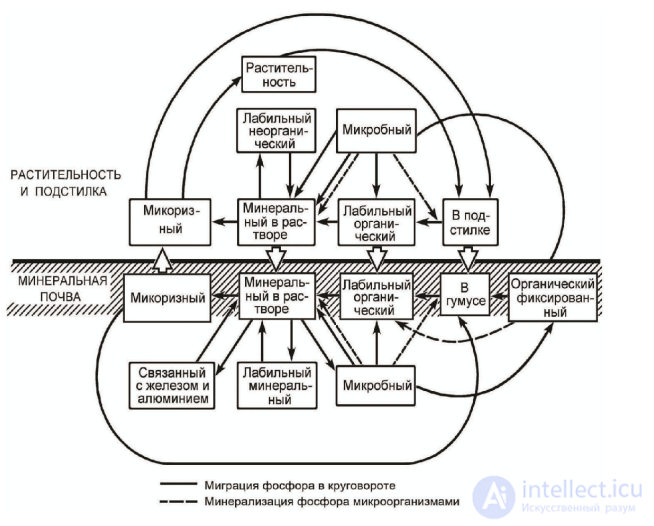
Fig. 4.6. The phosphorus cycle in an ecosystem

Comments