
Lecture
Nowadays, medical practice is unimaginable without the use of treatment-and-diagnostic devices. A physician deprived of the ability to use such devices even for just a single day would find himself in a rather difficult position. This is because the diagnostic and therapeutic tactics of a modern physician are largely determined by the data that can be obtained with the help of various devices. Therefore, before proceeding to describe such devices, let us consider some aspects of the treatment-and-diagnostic process and try to find out to what extent and why its effectiveness has come to depend on the use of the corresponding devices and apparatus.
Medical practice can be viewed as a multi-stage, repeatedly recurring treatment-and-diagnostic process, the purpose of which is to identify the symptoms of a disease and eliminate their causes. Such a process is usually carried out by a specialist or a group of specialists and includes the following stages: data collection, data analysis, decision-making, treatment, and repetition of all or only some of the stages depending on the circumstances. Without the use of technical means in medical and biological organizations and technical support of the treatment-and-diagnostic process, quality treatment cannot be carried out.
All medical equipment can be divided, from the standpoint of the task being solved in the medical technological process, into three large groups: apparatus, instruments, and equipment.
Apparatus, to one degree or another, provides an independent, automated process of interaction with the patient; an instrument acts on the patient in combination with the human hand, being as it were its extension; equipment—auxiliary devices for servicing the patient and ensuring the medical technological process.
Medical apparatus — is the most complex, intensively developing field of medical technology. The greater part of medical apparatus consists of electromedical devices and apparatus, which are electrotechnical or electronic devices based on the use of electrical energy.
There is also apparatus using mechanical energy: of a solid body (usually simply called mechanical)—apparatus for bone traction, for mechanotherapy, and others; of a liquid (hydraulic)—water-therapy installations; of a gas (gas)—anesthesia apparatus, apparatus for artificial lung ventilation, and others.
In the course of its operation, apparatus turns out to be connected with the patient in a certain way. In this case, in the “apparatus—patient” system a movement of energy is established from the apparatus to the patient or vice versa. Depending on the direction of the energy flow, all electromedical apparatus can be divided into two parts—acting apparatus and receiving apparatus.
At the same time, electromedical apparatus, according to its functional characteristic, that is, depending on the purposes for which it is used, can be divided into therapeutic and diagnostic. Products of therapeutic apparatus are customarily called apparatus; products of diagnostic apparatus—devices.
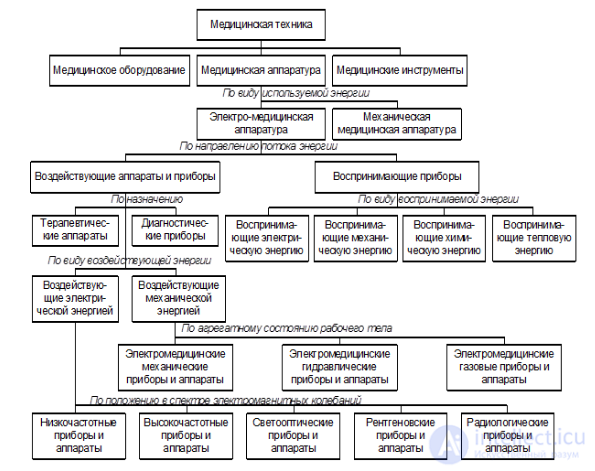
Fig. 1. General classification of medical equipment.
Therapeutic apparatus acts on the patient with the aim of causing desired shifts in his body—a restructuring of the pathological process toward normalization. Surgical apparatus, being part of therapeutic apparatus, is intended for carrying out radical changes in the structure of organs and tissues. Thus, therapeutic apparatus is of the acting type.
Diagnostic devices are intended for studying the characteristics of a living organism in order to establish possible deviations from the norm and
the causes that gave rise to them. Diagnostic devices can be either acting or receiving.
Acting diagnostic devices provide the necessary information from the patient's reaction to a certain effect (for example, diagnostic electrostimulators) or from the disturbance introduced by the patient's body into the energy flow (X-ray transillumination, ultrasonic echography, etc.). In diagnostics with acting devices, an effort is usually made to reduce the effect energy to the minimum possible level in order to exclude side effects harmful to the body. The limit to such a reduction is set by the sensitivity of the body to the effect or the sensitivity of the method for registering the introduced disturbances.
Receiving diagnostic devices provide information about various processes in the body—biopotentials generated by tissues and organs, the sound tones of the heart, body temperature, and others. Receiving diagnostic devices, like any other measuring instruments, must exert a minimal influence on the process being studied and transmit information with the least distortion.
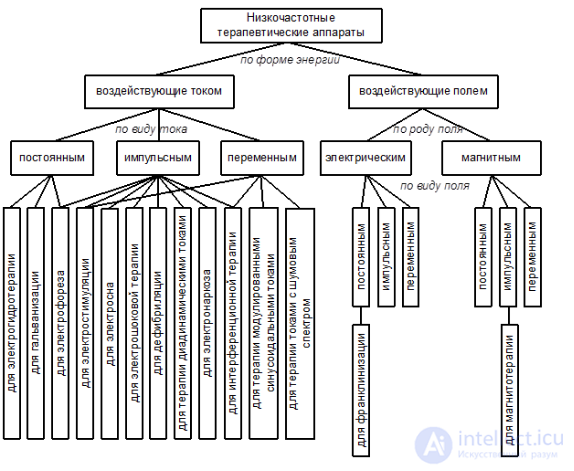
Fig. 2. Classification of low-frequency electrotherapeutic apparatus.
Acting therapeutic apparatus and diagnostic devices are divided, depending on the form in which the energy directed at the patient is used, into those acting by electrical energy and those acting by mechanical energy (according to established terminology, many diagnostic acting devices are customarily called apparatus, for example, X-ray, electrodiagnostic, and others). Apparatus using mechanical energy for its effect can be divided according to the state of aggregation of the working body, i.e., the body directly in contact with the patient. The working body can be solid, liquid, or gaseous. Accordingly, electromedical mechanical, hydraulic, and gas apparatus and devices can be distinguished. The first group includes ultrasonic therapeutic apparatus and diagnostic devices, audiometers, vibromassage apparatus, and others; the second—aerosol apparatus with centrifugal and ultrasonic atomizers; the third—apparatus for artificial lung ventilation with an electric drive.
Apparatus acting by electrical energy, according to the part of the electromagnetic oscillation spectrum used, includes low-frequency, high-frequency, light-optical, X-ray, and radiological apparatus and devices.
Low-frequency therapeutic apparatus (Fig. 2) is divided into two groups, depending on the form of the acting electrical energy (current, field). Among apparatus acting by current, three groups can be distinguished according to the type of current (direct, alternating, or pulsed). Further division of this apparatus is made according to functional characteristics and includes the names of medical techniques.
Apparatus acting by a low-frequency field is divided depending on the kind of field, i.e., the component of the induction field used (electric, magnetic). The next level of classification is determined by the type of field (constant, alternating, pulsed). Further division—by medical techniques.
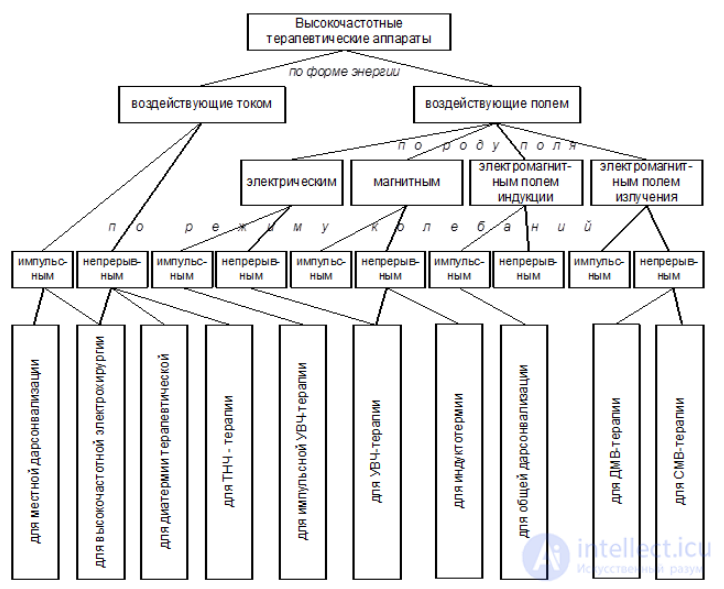
Fig. 3. Classification of high-frequency electrotherapeutic apparatus.
High-frequency therapeutic apparatus (Fig. 3) forms two groups in accordance with the form of energy used (current, field).
Apparatus acting by field is divided into three groups depending on the component of the electromagnetic field used (electric, magnetic, electromagnetic). Further division of apparatus acting both by current and by field—depending on the oscillation mode (continuous, pulsed). The classification of high-frequency therapeutic apparatus concludes with specific medical techniques.
Diagnostic low-frequency and high-frequency acting devices number only a few types. An example of low-frequency devices is devices for electrodiagnostics; an example of high-frequency devices—devices for impedance plethysmography.
The classification of receiving diagnostic devices is based on the form of energy transmitted from the patient to the device. In diagnostics, electrical, mechanical, thermal, or chemical energy may be received.
Electrical energy is received in the form of biopotentials of various tissues and organs (heart, muscles, brain, stomach, and others).
Mechanical energy is transmitted from the body to the device in the form of acoustic heart tones (phonocardiography), slight movements of the whole body as a result of blood impulses in the heart and large vessels (ballistocardiography), displacements of body regions as a result of contraction of the stomach, uterus (hysterography), and so on.
The thermal energy of the body is received when measuring temperature by a contact method (electric thermometers) or a non-contact method (thermography) using infrared radiation from the body.
Chemical energy is used when measuring the concentration of oxygen and hydrogen in the blood with the help of contact electrodes.
Due to the limited scope of the lecture, it presents only the main types of electromedical apparatus and their most common representatives. It should be borne in mind that some types of devices and apparatus have separated out into independent, distinct branches of medical technology, such as, for example, X-ray and radiological equipment, and are covered in separate courses.

Comments