
Lecture
Inhalation — a method of introducing various medicinal substances into the patient's body in the form of aerosols through the respiratory tract. An aerosol is the finest solid and liquid particles dispersed in air.
In physiotherapy, solutions of medicinal substances, mineral waters, herbal preparations, oils, and sometimes powdered medications can be used in the form of aerosols. As a result of comminution (dispersion), medicinal substances acquire new properties that increase their pharmacological activity:
Other advantages of inhalation therapy are: absolute painlessness of drug administration, exclusion of their destruction in the gastrointestinal tract, reduction in the frequency and severity of side effects of medicinal preparations.
Five groups of aerosols are distinguished by degree of dispersion:
1) highly dispersed (0.5—5.0 µm) - practically do not settle on the mucous membrane of the respiratory tract, they are freely inhaled and settle mainly on the walls of the alveoli and bronchioles;
2) medium-dispersed (5-25 µm) — settle mainly in the bronchi of the I and II order, large bronchi, trachea;
3) low-dispersed (25—100 µm) — very unstable (especially droplet ones), settling on the surface, they quickly combine with each other and eventually return to the original state of an ordinary solution;
4) fine-droplet (100—250 µm) — almost completely settle in the nose and oral cavity;
5) coarse-droplet (250—400 µm).
These features of aerosols are taken into account when choosing the degree of dispersion of aerosols for treating diseases of various localizations. For the deposition of aerosols in the respiratory tract, the speed of their movement is important. The higher the speed, the fewer aerosol particles settle in the nasopharynx and oral cavity. It is believed that on average 70—75% of the drug used is retained in the body.
To increase the stability of aerosols in the air and enhance their biological effect, a method of forced charging with an electric charge has been developed. Such aerosols are called electroaerosols. Electroaerosol particles have a free positive or negative charge, and the presence of a free electric charge brings their effect closer to the effect of air ions.
Routes of aerosol administration in medicine:
• intrapulmonary — for their action on the mucous membrane of the respiratory tract and the ciliated epithelium of the lungs (in diseases of the paranasal sinuses, pharynx, larynx, bronchi and lungs);
• transpulmonary — absorption of the medicinal substance from the surface of the mucous membrane of the respiratory tract, especially through the alveoli, for a systemic effect on the body, whereby the absorption rate is second only to intravenous infusion of medicinal agents (for the administration of cardiotonic agents, antispasmodics, diuretics, hormones, antibiotics, salicylates, etc.);
• para-pulmonary (parapulmonary) — action on air and objects, on animals and insects for disinfection and disinsection. In clinical practice, intrapulmonary and transpulmonary methods of aerosol administration are of greatest importance.
Physiological and therapeutic action of aerosols.
The effect on the body is determined by the medicinal agent used, the choice of which is determined by the nature of the pathological process and the purpose of the treatment. Alkalis or alkaline mineral waters, oils (eucalyptus, peach, almond, etc.), menthol, antibiotics, proteolytic enzymes, bronchodilators, glucocorticoids, phytoncides, vitamins, decoctions and infusions of medicinal herbs, etc. are most often used. Aerosols act primarily on the mucous membrane of the respiratory tract along its entire length, on the microorganisms located there, and also on mucus production. Their most pronounced absorption occurs in the alveoli, and less intensively — in the nasal cavity and paranasal sinuses. Upon absorption, aerosols have not only a local but also a reflex action through the receptors of the olfactory nerve, the receptors of the mucous membrane of the bronchi and bronchioles.
As a result of the action of aerosols, the patency of the bronchoalveolar tree improves. This occurs through the use of mucolytic preparations and stimulants of the cough reflex, as well as due to the action of the humidified and warmed inhaled mixture. Gas exchange and vital lung capacity increase, as does the rate and volume of medicinal preparations entering the blood. At the same time, blood supply to tissues and metabolism in them improve.
Electroaerosols (in comparison with aerosols) have a more pronounced local and general effect, since the electric charge enhances the pharmacological activity of substances and changes the electrical potential of tissues. Preference is given to negatively charged aerosols.
The temperature of the aerosol is of great importance. Hot solutions (above 40°C) suppress the function of the ciliated epithelium. Cold solutions (25—28°C and lower) cool the mucous membrane of the respiratory tract and can cause an attack of suffocation in patients with bronchial asthma. The optimal temperature for aerosols and electroaerosols is 37-38°C. The pH of the inhaled solution (optimally 6.0—7.0) and the concentration of the drug in it (no higher than 4%) are also of substantial importance.
With external use of aerosols, the area of active contact of the medicinal substance with the pathological focus increases, which accelerates its absorption and the onset of the therapeutic effect.
Features of the method. For clinical purposes, an aerosol is obtained by dispersion — comminution of the medicinal preparation using mechanical and pneumatic methods. The most promising method is the preparation of aerosols using ultrasound.
Portable devices (individual) — ultrasonic inhalers («Tuman», «Briz», «Musson», «Disonik», «Taiga», UP-3.5, «Thomex», «Nebatur», «UltraNeb-2000»), steam inhalers (IP-1, IP-2, «Boreal») and pneumatic inhalers (IS-101, IS-101P, «Inga», «PulmoAide», «Thomex-L2»). Stationary devices — "UI-2, «Aerozol U-2», «Aerozol K-1», TUR USI-70, «Vapozone» are intended for group aerosol therapy.
For producing electroaerosols — the portable devices «Elektroaerozol-1» and EI-1, stationary devices for group inhalations GEK-1 and GEG-2.
Group inhalations are based on creating a uniform mist in the air of a confined space and are intended for simultaneous exposure of a group of patients; individual ones — for the direct introduction of the aerosol into the respiratory tract of a single patient. Inhalation therapy is carried out in a specially designated room (inhalatorium) with an area of not less than 12m2, which must be equipped with a supply-and-exhaust ventilation system providing a 4—10-fold air exchange.
Types of inhalation: steam, warm-moist, moist (room-temperature aerosols), oil, and powder inhalations.
Steam inhalations are carried out using a steam inhaler (of the IP-2 type), but they can also be carried out at home without special equipment. Inhalations are prepared by obtaining steam from a mixture of readily volatile medications (menthol, eucalyptus, thymol) with water, as well as from a decoction of sage and chamomile leaves. The steam temperature is 57—63°C, but when inhaled it drops by 5—8°C. The inhaled steam causes an increased flow of blood to the mucous membrane of the upper respiratory tract, promotes the restoration of its function, and has an analgesic effect.
Steam inhalations are used for diseases of the upper respiratory tract. Due to the high temperature of the steam, these inhalations are contraindicated in severe forms of tuberculosis, acute pneumonia, pleurisy, hemoptysis, arterial hypertension, and ischemic heart disease.
Warm-moist inhalations are carried out at an inhaled air temperature of 38—42°C. They cause hyperemia of the mucous membrane of the respiratory tract, thin out viscous mucus, improve the function of the ciliated epithelium, accelerate mucus evacuation, suppress persistent coughing, and lead to free expectoration of sputum. Aerosols of salts and alkalis (sodium chloride and bicarbonate), mineral waters, anesthetics, antiseptics, hormones, etc. are used. After the procedure, the patient should cough in a drainage position, perform breathing exercises, or chest vibromassage. Contraindications for warm-moist inhalations are the same as for steam ones.
Moist inhalations — the medicinal substance is sprayed with the help of a portable inhaler and introduced into the respiratory tract without preliminary heating; its concentration in the solution is higher, and its volume is lower, than in warm-moist inhalations. Anesthetic and antihistamine preparations, antibiotics, hormones, and phytoncides are used.
Oil inhalations — spraying of heated aerosols of various oils. Oils of vegetable origin (eucalyptus, peach, almond, etc.) and of animal origin (fish oil) are used. The use of mineral oils (petrolatum) is prohibited. During inhalation, the oil is sprayed, covering the mucous membrane of the respiratory tract with a thin layer that protects it from various irritations and prevents the absorption of harmful substances into the body. Oil inhalations have a beneficial effect in inflammatory processes of a hypertrophic nature, reduce the sensation of dryness, promote the rejection of crusts in the nose and pharynx, and have a beneficial effect in acute inflammation of the mucous membrane of the respiratory tract, especially in combination with antibiotics.
Powder inhalations (dry inhalations, or insufflations) are used mainly for acute inflammatory diseases of the upper respiratory tract; for this purpose, the sprayed preparation is mixed with dry hot air. Powdered, finely ground antibiotics, sulfanilamides, vasoconstrictors, antiallergic, and antiflu agents are used. For spraying, a powder blower (insufflator), spray bottles with a cylinder, or special inhalers (spinhaler, turbohaler, rotahaler, diskhaler, easyhaler, cyclohaler, etc.) are used.
Ultrasonic inhalations are based on obtaining medicinal solutions by means of ultrasound. Ultrasonic aerosols are distinguished by a narrow particle spectrum, high density and stability, a low oxygen concentration, and deep penetration into the respiratory tract.
+All types of instrumental inhalations are carried out daily, only some — every other day. The duration of inhalation is from 5—7 to 10—15 minutes. The course of treatment prescribes from 5 (in acute processes) to 20 procedures. If necessary, a repeat course after 10—20 days.
Children can be prescribed inhalations from the first days of life for the prevention and treatment of respiratory diseases.
Indications — for acute, subacute and chronic inflammatory diseases of the upper respiratory tract, bronchi and lungs, occupational respiratory diseases (for treatment and prevention), tuberculosis of the upper respiratory tract and lungs, bronchial asthma, acute and chronic diseases of the middle ear and paranasal sinuses, influenza and other acute respiratory viral infections, acute and chronic diseases of the oral cavity, arterial hypertension grade I-II, certain skin diseases, burns, and trophic ulcers.
Contraindications — spontaneous pneumothorax, giant cavities in the lungs, widespread and bullous forms of emphysema, bronchial asthma with frequent attacks, grade III pulmonary-cardiac insufficiency, pulmonary hemorrhage, grade III arterial hypertension, pronounced atherosclerosis of the coronary and cerebral vessels, diseases of the inner ear, vestibular disorders, atrophic rhinitis, epilepsy, individual intolerance to the inhaled medicinal substance.
Halotherapy — the use, for therapeutic purposes, of an aerosol of table salt (sodium chloride). This type of aerosol belongs to the highly dispersed group.
Sodium chloride aerosols are able to penetrate the respiratory tract to the maximum depth and stimulate the motor activity of the cilia of the ciliated epithelium and change its permeability down to the level of the bronchioles. At the same time, mucus production decreases and its rheological properties improve, which promotes its better evacuation.
Halotherapy is carried out according to a group or individual method. In the first case, the procedures are performed simultaneously for 4 — 10 patients in halochambers, the ceilings and walls of which are covered with sodium chloride slabs. Air enters such a chamber through a halogenerator (ASA-01.3 and others), inside which a chaotic movement of sodium chloride crystals in the air stream is created (the so-called «fluidized bed»). There are also other methods for producing dry sodium chloride aerosols.
During the procedure in the halochambers, patients sit in comfortable armchairs; their clothing should be loose and should not impede inhalation and exhalation. The procedure may be accompanied by the playing of calm music.
Individual halotherapy is carried out using GISA-01 halo-inhalers and AGT-01 halotherapy devices. It is optimal to carry out the procedure in an individual halo-box.
Procedures lasting 15 — 30 minutes are carried out daily. Course — 12-25 sessions.
Aerophytotherapy — the use of air saturated with aromatic substances (essential oils) of plants that have antibacterial, anti-inflammatory, analgesic, sedative, antispasmodic, and desensitizing effects. As a result of inhaling volatile aromatic substances, the tone of the subcortical centers of the brain, the reactivity of the body, and a person's psycho-emotional state change; fatigue is relieved, work capacity increases, and sleep improves.
Phytogenerators (AF-01, AGED-01, etc.) are used to carry out the procedures, which make it possible to create natural concentrations of volatile aromatic substances in phyto-aeraria. In these devices, forced evaporation of the volatile components of essential oils takes place without heating them. Procedures lasting 30—40 minutes are carried out 1—2 hours after a meal, with a course of 15—20 procedures.
One essential oil or compositions of oils can be used for the procedures.
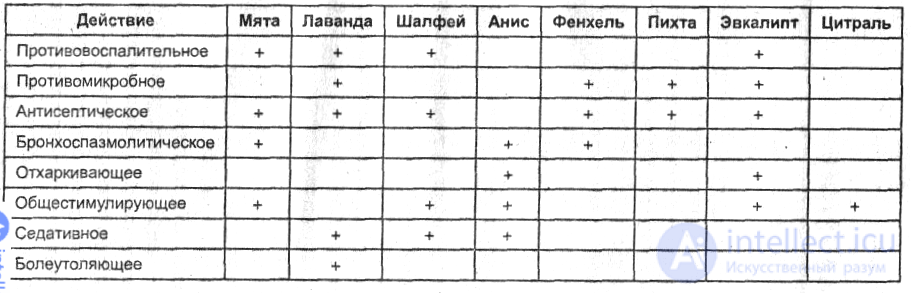
Biological activity of essential oils
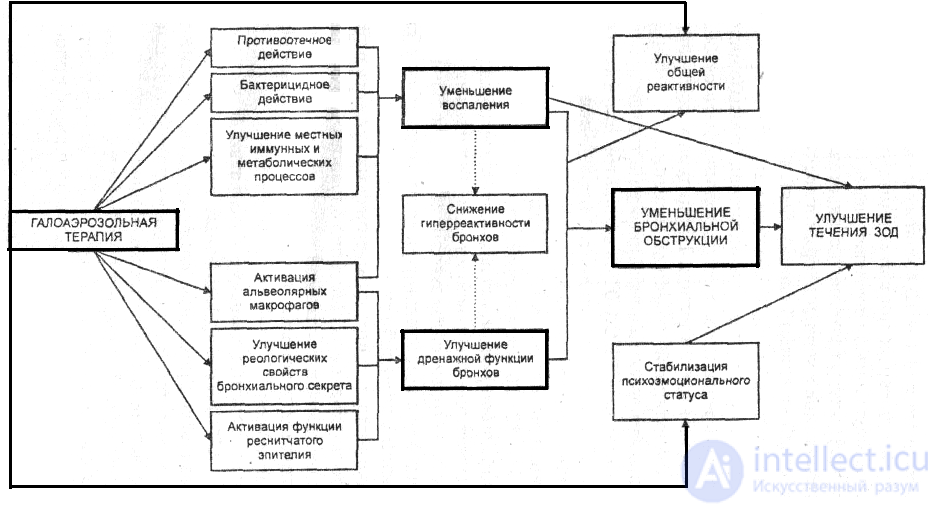
Fig. Diagram of the mechanism of action of halo-aerosol therapy.
Various types of inhalers exist for inhalation therapy, including electronic and steam inhalers. Both types of inhalers have their own features and advantages.
In this regard, it has the following uses
The operating principle of a jet nebulizer is based on the Bernoulli effect (1732) and can be represented as follows. Air or oxygen (the working gas) enters the nebulizer chamber through a narrow Venturi orifice. As it exits this orifice, the pressure drops and the gas velocity increases significantly, which causes liquid to be drawn through narrow channels from the chamber reservoir into this region of reduced pressure. When the liquid meets the air stream, it breaks up into small particles 15-500 microns in size (the "primary" aerosol). These particles then collide with a "baffle" (a plate, a ball, etc.), producing a "secondary" aerosol - ultrafine particles 0.5-10 microns in size (about 0.5% of the primary aerosol), which is then inhaled, while the larger share of the primary aerosol particles (99.5%) settles on the inner walls of the nebulizer chamber and is drawn back into the aerosol-formation process (Fig. 1).
Ultrasonic inhalers use the energy of high-frequency vibration of a piezocrystal to produce an aerosol. The vibration from the crystal is transmitted to the surface of the solution, where "standing" waves form. At a sufficient frequency of the ultrasonic signal, a "micro-fountain" forms at the intersection of these waves, i.e., aerosol formation occurs (Fig. 2). Particle size is inversely proportional to the signal frequency. As in a jet inhaler, aerosol particles collide with a "baffle": larger particles return to the solution, while smaller ones are inhaled. Aerosol production in an ultrasonic inhaler is practically silent and faster compared to jet inhalers; in addition, ultrasonic inhalers make it possible to obtain smaller droplets of the drug and, as a consequence, deeper penetration into the respiratory organs. However, their disadvantages are: inefficient aerosol production from suspensions and viscous solutions; generally a larger residual volume; and an increase in solution temperature during inhalation with the possibility of destroying the structure of the drug.
The main factor determining the deposition (penetrating capacity) of particles in the airways is the size of the aerosol particles. The distribution of aerosol particles in the airways depending on their size can be conditionally represented as follows:
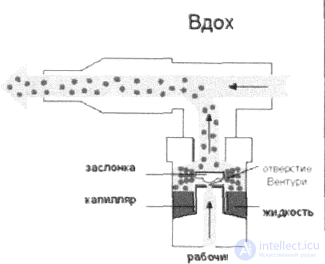
Fig.1. Diagram of a jet inhaler
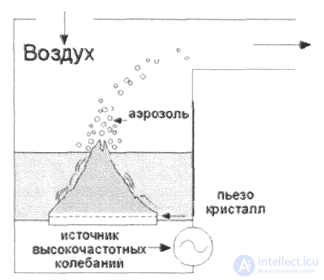
Fig.2. Diagram of aerosol production using ultrasound.
In general, the smaller the particle size, the more distally their deposition occurs: at a particle size of 10 microns, aerosol deposition in the oropharynx is 60%, while at 1 micron it approaches zero [28, 29]. Particles 6-7 microns in size are deposited in the central airways, while the optimal sizes for deposition in the peripheral airways are 2-3 microns.
Aerosol deposition can be influenced by factors such as breathing pattern, nasal breathing, airway geometry, the presence of airway disease, and body position.
Breathing pattern. The main components of the breathing pattern (figure) affecting the deposition of aerosol particles are tidal volume, inspiratory flow, and inspiratory fraction -the ratio of inhalation time to the total duration of the breathing cycle. The average inspiratory fraction in a healthy person is 0.4-0.41, and in patients with severe exacerbation of chronic obstructive pulmonary disease (COPD) - 0.34-0.36. When using a conventional inhaler, aerosol generation occurs throughout the entire breathing cycle, but its delivery to the airways is only possible during inhalation, i.e., it is directly proportional to the inspiratory fraction.
A rapid inhalation with aerosol delivery into the airstream in the middle and at the end of inhalation increases central deposition. In contrast, a slow inhalation, aerosol delivery at the beginning of inhalation, and a breath-hold at the end of inhalation increase peripheral (pulmonary) deposition. An increase in minute ventilation also increases the deposition of aerosol particles in the lungs; however, it may also decrease due to an increase in inspiratory flow.
A particular problem in children is an irregular breathing pattern associated with coughing, crying, etc., which makes aerosol delivery unpredictable.
Breathing through the nose or mouth. Due to its narrow cross-section, sharp changes in airflow direction, and the presence of hairs, the nose creates ideal conditions for inertial impaction of particles and is an excellent filter for most particles larger than 10 microns [49]. Nasal deposition increases with age: in children aged 8 years, about 13% of the aerosol is deposited in the nasal cavity, in children aged 13 years - 16%, and in adults (average age 36 years) - 22% [50].
Inhalation using an ultrasonic inhaler is carried out through a mouthpiece or a face mask. Both types of interface are considered effective; however, nasal breathing can significantly reduce aerosol deposition when breathing through a mask. A mask reduces aerosol delivery to the lungs by roughly half; moreover, at a mask-to-face distance of 1 cm, aerosol deposition falls more than 2-fold, and at a distance of 2 cm - by 85% [31,51]. Given these data, wider use of mouthpieces is recommended, while face masks play the main role in children and in intensive care. To avoid the drug getting into the eyes when using a mask, it is recommended to use mouthpieces where possible for inhalation of corticosteroids, antibiotics, and anticholinergic drugs.
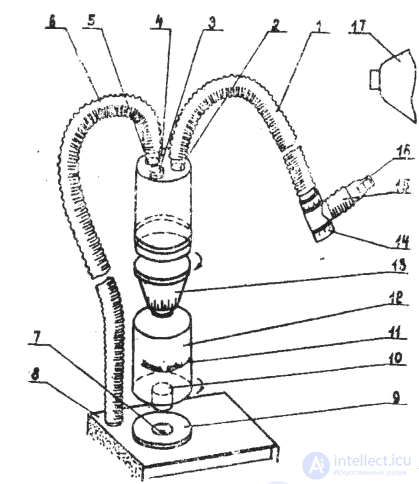
Fig. 3. 1—tube 70 cm long; 2—outlet fitting; 3—bushing, 4— upper vessel of the nebulizing chamber; 5—inlet fitting; 6—curved tube; 7—connector plug; 8—electronic unit housing; 9—heating platform; 10—piezoelement; II—mark; 12—intermediate vessel of the nebulizing chamber; 13—drug vessel, 14—valve; 15 tube 10 cm long; 16—mouthpiece; 17—mask.
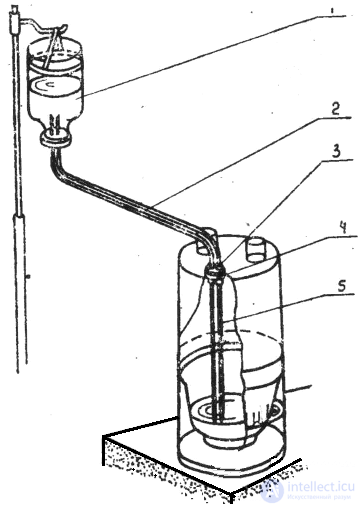
Fig. 4. The needle tips must be immersed in the liquid in vial 1. Insert adapters 3 into bushing 4 until they stop. 1—vial with medication; 2—connecting tube; 3-adapter; 4—bushing; 5—tube.
Design of the high-frequency generator.
The main element of the high-frequency generator design is a piezoelectric transducer, which generates ultrasonic vibrations used to nebulize the drug.
The piezoelement is mounted on the bottom of the intermediate vessel of the nebulizing chamber. Electrical power is supplied to the generator through a detachable contact device on one circuit, and through the heating platform on the other.
Design of the air supply unit.
The air supply unit is designed to dilute the aerosol in a stream of air drawn in from the surrounding environment through a filter located at the fan's inlet opening. The fan rotor is driven by an electric motor, which supplies air through a profiled channel into the nebulizing chamber. The amount of air supplied is regulated by changing the rotor speed using the AIR INFLOW knob.
Design of the thermostat.
The thermostat consists of a heating platform and a heating board attached to it, on which the heaters and thermal relay are located. The thermostat makes it possible to obtain an aerosol heated to a temperature of
(33±5)°C.
Design of the nebulizing chamber:
The nebulizing chamber consists of 3 vessels: the upper, intermediate, and drug vessels; 3 corrugated connecting tubes, a valve, and a mouthpiece (or mask).
The connection of the structural elements of the nebulizing chamber is shown in Figure 1 (for intermittent operation of the inhaler nebulizing a small amount of drug, up to 30 ml) and in Figure 2 (for continuous drug supply through a level stabilizer). Note. The electrical diagram with a list of components is sent upon consumer request.
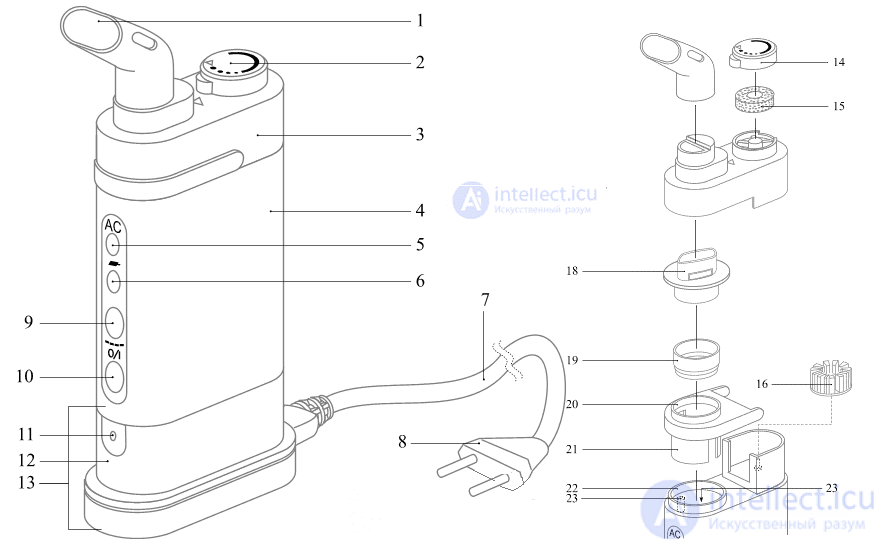
Ultrasonic inhaler OMRON NE U07
Components of the device:
During inhalation, the patient should sit relaxed in front of the device. One should sit upright on a hard chair, not in an armchair or similar, because the airways become deformed and the desired therapeutic effect will not be achieved. If the patient cannot get out of bed, he or she should be supported in a sitting position with pillows.
One procedure should generally not exceed 15 minutes. The duration of the procedure is determined by the attending physician.
During the procedure, be calm and relaxed while breathing. The therapeutic effect occurs some time after the procedure.
You should inhale slowly and deeply – this will allow the medication to penetrate deeper into the bronchial tree. Hold your breath slightly on inhalation, breathe calmly. Do not try to breathe too quickly. Pause the procedure if you feel the need to.
Before using the inhaler for the first time, it must be cleaned strictly according to the instructions.
The device must not operate continuously for more than 30 minutes. Between procedures, the device must remain switched off for at least 30 minutes.
The IP-2 steam inhaler with electric heating is designed for inhalation with liquid medicinal substances. It is used at home, in outpatient clinics, and in medical aid stations.
The inhaler produces aerosol particles ranging in size from 1-8 microns. Liquid (water) throughput is not less than 0.3 g/min. The aerosol temperature at a distance of 10 mm from the outer edge of the guide tube is 40 ± 5°C. Continuous operating time is 1.5 h. The time to reach operating mode after switching on is no more than 33 min. Power is supplied from an AC mains with a frequency of 50 Hz and a rated voltage of 220±22V. The power consumed by the inhaler does not exceed 220 VA. The average service life of the inhaler is not less than 7 years.
Structurally, the inhaler is made in the form of a cylindrical reservoir 11 mounted on housing 1. It is fitted with a plastic handle 6 for carrying. Heater 3, consisting of ceramic with a coil, is located in the cavity of housing 1. The heater is separated from the reservoir by electrical insulation gasket 21, and from below by thermal insulation gasket 22.
The entire assembly (electrical insulation gasket, ceramic, thermal insulation gasket) is pressed against the bottom of the reservoir by metal gasket 23 and nut 24. The ends of the coil and the wire jumpers are connected to screws 4 and clamped with a set of washers and nuts 2. Connection to the mains is made via a power cord with plug 30. Lid 10 with safety valve 9, through which excess pressure generated in the reservoir is released, is located at the top of the reservoir. The safety valve activates at a pressure not exceeding 30 kPa.
The seal of lid 10 with reservoir 11 is achieved by means of rubber gasket 7 when handle 8 is tightened. The lid, heater, and housing are held together by rod 20. Nozzle 14, into which tube 17 is screwed, is soldered into the reservoir housing. Holder 13, which holds glass 19, and holder 16, into which guide tube 15 is fitted, are mounted on the nozzle. Holders 13 and 16 are attached to the nozzle with screw 12. The water level in the reservoir is monitored via tube 5.
Condensed vapor from tube 19 drains into glass 18. The operation of the inhaler is based on the fact that when water heated by electric heater 3 boils, intensive vapor formation occurs in reservoir 11. As vapor exits the reservoir through nozzle 14, a vacuum is created in it, as a result of which the medicinal substance from glass 19 is drawn through tube 17 into the nozzle and is generated as it exits in the form of an aerosol, which is inhaled by the patient through tube 15.
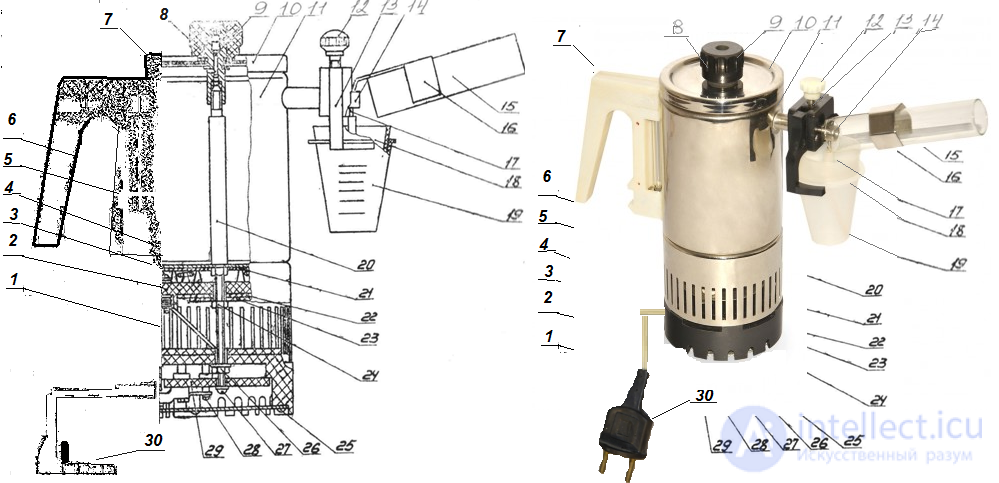
IP-2 steam inhaler:
1-housing; 2 24, 26—nut; 3—heater; 4, 12, 25, 27, 28—screw; 5 15 17-tube; 6, 8-handle; 7, 21, 22, 23-gasket; 9- valve; 10-lid; 11-reservoir; 13, 16-holder; 14-nozzle, 18, 19-glass; 20—rod; 29—panel; 30—plug.
Electronic inhalers, also known as nebulizers, are devices that convert a medicinal substance into fine particles or an aerosol, which is then inhaled by the patient through a special mask or mouthpiece. Electronic inhalers have an adjustable nebulization rate and volume, which allows precise control of the drug dosage. They are widely used in children and adults with various respiratory diseases, including asthma, chronic obstructive pulmonary disease (COPD), bronchitis, and others.
Steam inhalers, such as steam inhalers based on hot vapor or ultrasonic inhalers, work by converting a medicinal substance into vapor, which the patient inhales through the mouth or nose. Steam inhalers are often used to treat colds, runny nose, sinusitis and other upper respiratory tract conditions, as well as to moisten dry mucous membranes of the respiratory system.
Inhalation therapy has several advantages compared to other treatment methods. It allows medications to be delivered directly to the airways, bypassing the gastrointestinal tract, which ensures a faster and more effective action of the drug. In addition, inhalation therapy usually has fewer side effects, since the drugs act locally and do not have a systemic effect on the body.
However, before using inhalation therapy, it is necessary to consult a doctor or pharmacist in order to correctly choose the type of inhaler and medication, as well as to determine the correct dosage and regimen of use. Regular use of inhalers in accordance with the instructions and the recommendations of a specialist will help achieve optimal treatment results and maintain the health of the respiratory system.
Decongestant

Comments