
Lecture
Rehabilitation — is a field of modern medicine which, in its various methods, relies first of all on the personality of the patient, actively attempting to restore functions of the person impaired by illness, as well as his social connections. The term «rehabilitation» comes from the Latin habilis — ability and rehabilis — restoration of ability.
The impetus for the development of rehabilitation as a science was provided by the First World War and the Second World War. Owing to advances in medicine, sanitation and hygiene, morbidity and mortality from acute infectious diseases decreased significantly. At the same time, the acceleration of scientific and technological progress, rapid industrialization and urbanization, environmental pollution, and increased stressful situations led to a rise in severe non-infectious diseases. Today the number of patients with hereditary and congenital pathology, with chronic diseases of the respiratory, digestive and genitourinary systems, with allergic diseases, and with injuries and poisonings is growing. But, alongside the rest of the population, persons with disabilities must have physical, social and economic opportunities enabling them, at a minimum, to lead a life that is full in socio-economic terms and creative in mental terms.
Helping people who are not fully socially protected is an indicator of a society's culture and level of civilization.
The goal of rehabilitation is the effective and early return of patients and persons with disabilities to everyday life and work processes, to society; the restoration of a person's personal qualities. The World Health Organization (WHO) gives a definition of rehabilitation very close to this: «Rehabilitation is a set of measures designed to ensure that persons with functional impairments resulting from diseases, injuries and congenital defects are adapted to the new conditions of life in the society in which they live».
According to WHO, rehabilitation is a process aimed at providing comprehensive assistance to patients and persons with disabilities to help them achieve the maximum possible physical, psychological, professional, social and economic adequacy given their particular condition.
Thus, rehabilitation should be regarded as a complex, socio-medical problem, which can be subdivided into several types, or aspects: medical, physical, psychological, professional (occupational), and socio-economic.
Therefore in the area of the general foundations of rehabilitation the student must:
The first and main direction of rehabilitation (medical and physical) is the restoration of the patient's health through the comprehensive use of various means aimed at the maximal restoration of the body's impaired physiological functions, and, if this cannot be achieved, the development of compensatory and substitutive adaptations (functions).
The psychological aspect of rehabilitation is aimed at correcting the patient's mental state, as well as forming his attitude toward treatment, medical recommendations, and the performance of rehabilitation measures. Conditions must be created for the patient's psychological adaptation to the life situation that has changed as a result of the illness.
The professional aspect of rehabilitation addresses issues of employment, vocational training and retraining, and the determination of patients' working capacity.
Socio-economic rehabilitation consists in returning economic independence and social adequacy to the affected person. These tasks are solved not only by medical institutions but also by social security agencies.
Thus, rehabilitation is a multifaceted process of restoring a person's health and reintegrating him into working and social life. Naturally, the types of rehabilitation should be considered in unity and interrelation. The three types of rehabilitation (medical, occupational and social) correspond to the following three classes of consequences of disease: 1) medico-biological consequences of diseases, consisting of deviations from the normal morphofunctional status; 2) a decrease in working capacity or performance capacity in the broad sense of the word; 3) social maladaptation, i.e. disruption of ties with the family and society. It follows that a patient's recovery after an illness and his rehabilitation are not at all the same thing, since, besides restoring the patient's health, it is also necessary to restore his working capacity, his social status, i.e. to return the person to a full life in the family, society, and workforce.
A characteristic feature of modern pathology is the increasing frequency of transition of acute forms of disease into relapsing and chronic ones, as well as the growth of primarily chronic pathology of internal organs. These diseases are the causes of a decrease (limitation) in vital and social functions. In this connection, the organization of timely diagnosis and of restorative measures is becoming one of the priority tasks of medicine.
+The problem of rehabilitation of patients and persons with disabilities is attracting ever more attention in all countries of the world. For better coordination of the work of specialists working in the field of rehabilitation, WHO proposed the «Guide to the Classification of Consequences of Disease and Causes of Disability», in which not diseases as nosological forms are considered and classified, but the consequences of diseases and injuries suffered.
The International Nomenclature of Impairments, Disabilities and Handicaps (Guide to the Classification of Diseases and Causes of Disability) proposes the following unified concept of the consequences of disease.
The main stages in the development of a disease are:
1. Impairment. The occurrence of changes in the body is the body's reaction to various causal circumstances — the «etiology». The «etiology» gives rise to changes in the structure or functions of the body, i.e. «pathology». The manifestations of pathological changes are defined as «symptoms and signs» and look as follows:
etiology —> pathology —> manifestations.
The person begins to understand that something is happening in his body, i.e. the pathological state manifests itself concretely, becomes materialized. In most cases the person himself is aware of the manifestation of the disease, which can be defined as a «clinical condition».
Thus, the clinical condition includes both the pathological changes, and the manifestations of the disease, and the patient's reaction to his own condition. A long-running disease foreshadows the development of impairments, an abnormal body structure, a change in outward appearance, as well as disorders in the functioning of the body's organs and systems. Impairment represents a disorder at the organ level.
2. Disability. A person's activity or behavior may change as a result of the appearance of impairments. A deficit of physical and social actions arises, i.e. a disability occurs. From the point of view of the functional activity and activity of the individual, a decrease in vital functions represents a disorder at the level of the person (personality).
3. Handicap. The very knowledge of the disease or the changed behavior of the individual, or the limitations of his activity arising from this knowledge, may place a particular person at a disadvantage relative to those around him. Thus, the disease acquires a social character. This level of disease development reflects society's reaction to the condition of the individual; it manifests itself in the relationships of the individual with society, which may include such a specific instrument as legislation. This manifestation reflects social handicap (in other words — social maladaptation). The obvious connection with the significance society attaches to an individual's activity or his condition makes social handicap the most problematic level of disease development among all its consequences.
In a number of cases this sequence may be incomplete, or a break in it may occur at any stage.
The relationships between the individual elements of the consequences of disease are more clearly illustrated by diagram 1, from which it is evident that, as a rule, all of them occur in the same individual simultaneously.
To organize assistance to the patient in restoring health, the following are necessary:
The main task of medical rehabilitation is the full restoration of the functional capabilities of various body systems and the musculoskeletal system (MSS), as well as the development of compensatory adaptations to the conditions of everyday life and work.
The specific tasks of rehabilitation include: 4 restoring the patient's household capabilities, i.e. the ability to move about, self-care and perform simple housework; «restoring working capacity, i.e. the professional skills lost by the person with a disability, through the use and development of the functional capabilities of the motor apparatus; » preventing the development of pathological processes leading to temporary or permanent loss of working capacity, i.e. the implementation of secondary prevention measures.
+The goal of rehabilitation is the fullest possible restoration of the body's lost capabilities, but if this is unattainable, the task becomes the partial restoration or compensation of the impaired or lost function, and in any case — the slowing of disease progression. To achieve these, a complex of therapeutic and restorative means is used, among which the greatest rehabilitative effect is possessed by physical exercises, natural factors (both natural and reformed), various types of massage, exercise equipment sessions, as well as orthopedic devices, occupational therapy, psychotherapy and autogenic training. Even from this list it is evident that the leading role in rehabilitation belongs to methods of physical influence, and the further it progresses from stage to stage, the greater their significance becomes, eventually forming a branch, or type, called «physical rehabilitation».
Physical rehabilitation — is an integral part of medical, social and vocational rehabilitation, a system of measures for restoring or compensating physical capabilities and intellectual abilities, improving the functional state of the body, improving physical qualities, psycho-emotional stability and the adaptive reserves of the human body by means and methods of physical culture, elements of sport and sports training, massage, physiotherapy and natural factors.
Physical rehabilitation should be regarded as a therapeutic-pedagogical and educational process, or more accurately, an educational process. The main means of physical rehabilitation are physical exercises and elements of sport, and their application is always a pedagogical, educational process. Its quality depends on how well the instructor has mastered pedagogical skill and knowledge.
PRINCIPLES OF MEDICAL AND PHYSICAL REHABILITATION
The patient's medical rehabilitation program includes:
One of the ways of creating more advanced prostheses and control systems for them is the use of microprocessors. The main difficulty here lies in obtaining a reliable signal from various parts of the body to control the prosthesis (and, consequently, for its reliable operation).
At present, development is underway on a microprocessor-based hand prosthesis (University of California), a knee joint prosthesis, a control system for an artificial upper-limb prosthesis after above-elbow amputation is being created (University of Colorado), as well as a prosthesis control system operating on programs already embedded in a microprocessor (University of Wisconsin).
The control system for the lower-limb prosthesis is shown schematically in Fig. 13. In the original version of the system, a minicomputer (Computer Automation Alpha) was used, which was later replaced by an F8 microprocessor. Through an A/D converter, the computer reads the instantaneous value of the desired knee flexion angle (odes), indicated on the scale of the electrogoniometer (K), and the instantaneous value of the actual prosthesis flexion angle (θPROS), sensed by a feedback potentiometer (J) located on the axis of the prosthetic joint. According to the control program, the block diagram of which is shown in Fig. 2, the computer instantaneously calculates the prosthesis position and rotation speed errors. In addition, the changes in valve (H) position required to achieve the desired joint flexion are determined. Signals from the microprocessor pass through the D/A converter (C), the interface (D) and are fed to the solenoid controller (E), and then to the solenoid (F). The whole process is repeated approximately 930 times per second, so that the prosthesis directly and quickly «responds» to the desired control signal.
The system developed at the University of Colorado includes an Intel 8080 microprocessor, an interface for communicating with the object via input/output ports, and 4 Kbytes of semiconductor memory (Fig. 3). To increase the speed of multiplication and division operations (which take up a significant percentage of the microprocessor’s operating time), it is paired with a multiplier unit based on Fairchild 934X2-bit multiplier modules. The multiplication time is 350 ns, rather than 1 ms as with the microprocessor.
The system’s operation is based on acquiring electromyographic signals. Using a 12-bit data acquisition system, EMG signals are read at a sampling rate of 5000 Hz, and the data is fed to the microprocessor in digital form. The control algorithm is based on a time-sequence identification method for parameter discrimination.
Development of upper-limb prostheses at the University of California, Los Angeles was initially based on a Teledyne TDY-52 microcomputer, which was later replaced by an RCA COSMAC microcomputer. The microcomputer decodes patterns of myographic signals coming from nine electrodes. Using pattern-recognition algorithm maps for the signals picked up from the electrodes, coordinated hand movements are controlled for any possible combination of motor activations. The two subsystems, the computing subsystem and the pattern-recognition subsystem, form a single control system whose organization resembles that of the human brain.
The microcomputer runs on the COSMAC microprocessor and uses 1 Kbyte of RAM to store the program. An analog multiplexer (CD 4067) selects the input of signals from the electrodes before feeding them to the A/D converter. The microprocessor controls three motors — elbow, wrist and hand — in various combinations.
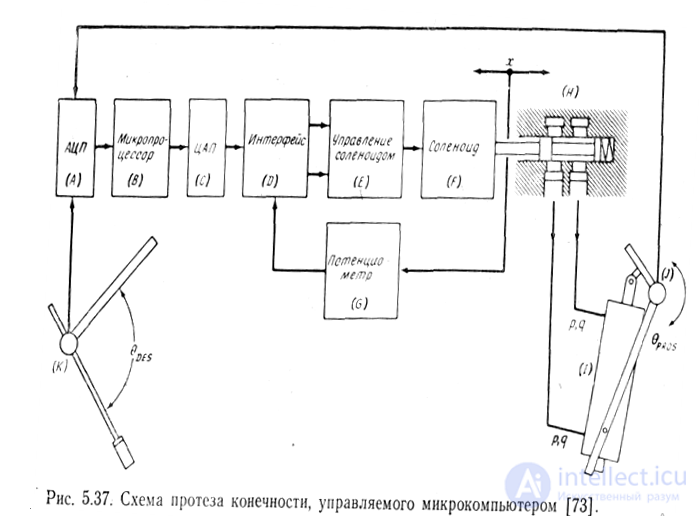
Fig. 1. Diagram of a limb prosthesis controlled by a microcomputer
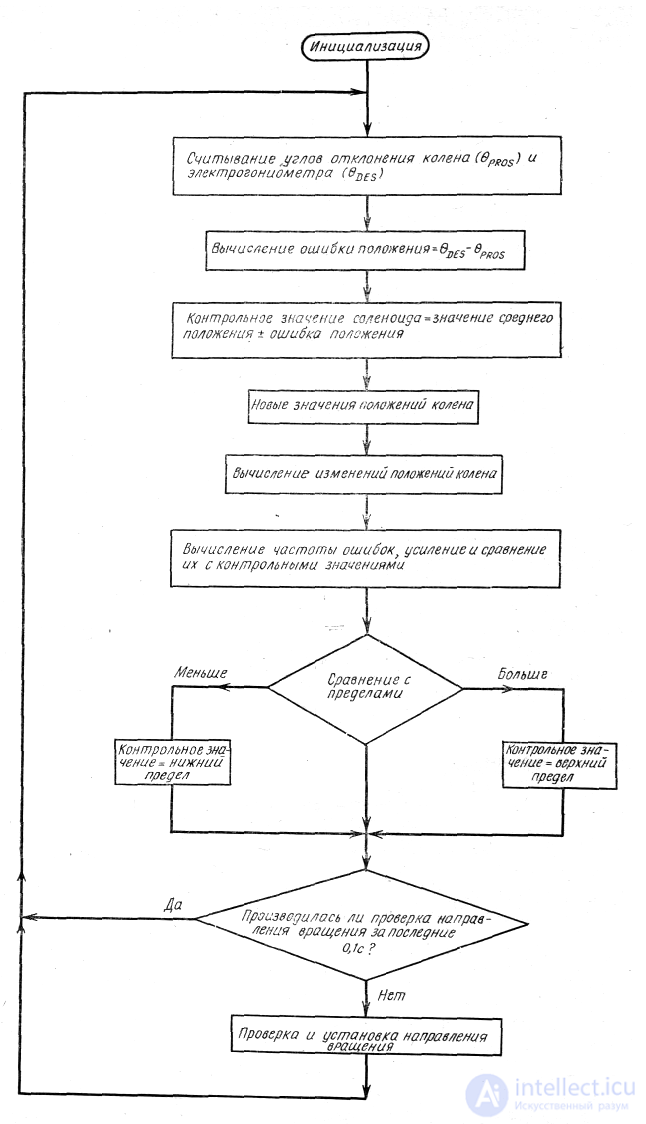
Fig. 2. Block diagram of the limb prosthesis control algorithm.
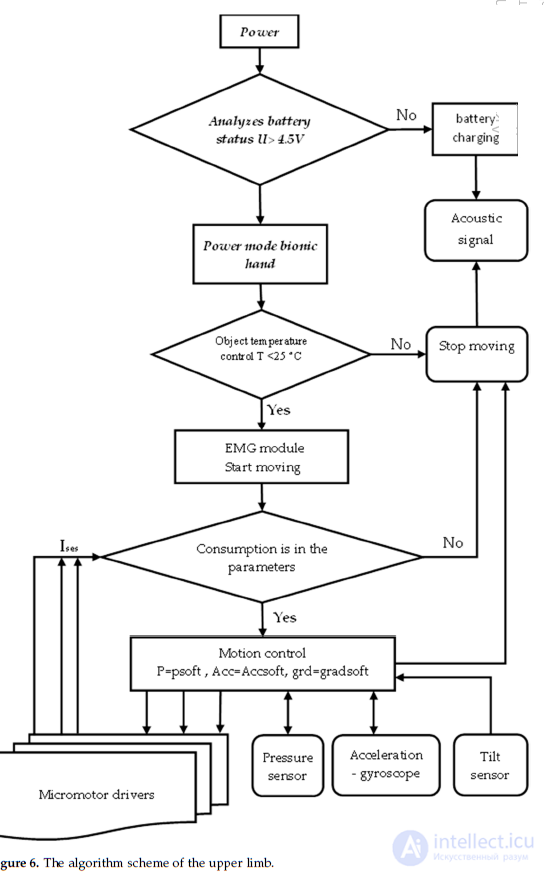
Fig 3 Block diagram of the limb prosthesis developed at the University of Colorado.
Suppose it is necessary to create a microprocessor-controlled forearm prosthesis providing the following three degrees of freedom of the wrist joint: control of hand closing-opening, control of up-down hand movements, and control of hand movements in different directions. Carrying out the relevant experiments made it possible to establish that eight electrodes, placed at various points on the arm, are required to achieve the desired degree of control over electromyogram (EMG) recording. Suppose that the signals coming from each electrode are converted by an analog interface circuit into a series of pulses. Then a continuous stream of pulses will come from the electrode at which the EMG level exceeds the threshold value. Let us try to design this system using a COSMAC microcomputer.
The most effective way to build such a prosthesis would be to use four flag lines to detect eight electrode signals. To match these eight control signals to four lines, a multiplexer must be used. Commands on line Q sequentially enable one of the four electrodes. Three stepper motors, connected to the three output lines N0, N1 and N2, will give us three degrees of control freedom. The duration of the output pulse (8 µs) can be extended to the value required for the stepper motor to operate by means of a one-shot multivibrator.
A diagram of such a system is shown in Fig. 4, and a block diagram of its operating algorithm is shown in Fig. 5.
Next, it is necessary to establish the time required to carry out one operating cycle. For example, each input channel (when EMG is present) receives pulses generated at a frequency of 10 Hz. The maximum pulse frequency for the stepper motors is 50 Hz. The clock frequency of the central processor is 2 MHz.
Let us perform the simplest calculations: with eight active channels, the number of flags that must be checked equals 8٭10 per second, or 80 per second (selecting the multiplexer requires two commands: SEQ and REQ). The normal flag-check sequence will be represented as Bl Addr, i.e., there is a short branch to Addr if flag EF=1 (two machine cycles). This must be followed by (or preceded by) the condition BN1 Addr, i.e., a short branch if flag EF1=0 (two machine cycles). Consequently, the minimum time to check all the flags will equal

After checking all the flags (in 272 µs) it is possible to determine logically which motor must be switched on and at what frequency. Suppose 100 commands are executed. Then the time required for this will equal 100X8X2 µs=1600 µs. Consequently, the total time between two output commands will be 1600+272 = 1872 µm. Since, however, commands must be issued at a frequency of 3X50= 150 per second, the required time is 7 ms. This time is quite sufficient to carry out the required prosthesis control cycle. In fact, the available logic allows approximately 400 commands to be executed.
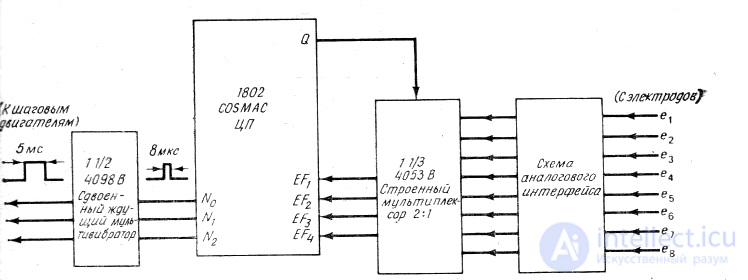
Fig. 4. Control of an arm prosthesis using a microprocessor.
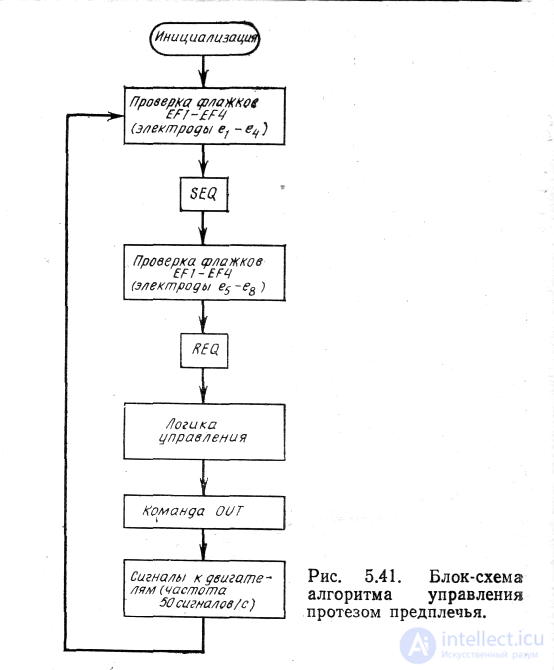
Fig. 5.. Block diagram of the forearm prosthesis control algorithm.
In ninety cases out of a hundred, a brace is sufficient to correct the spine in scoliosis patients. In the remaining cases, radical surgical intervention is required. One of the possible methods of such correction involves preliminary removal of the tissue surrounding the affected vertebra and securing a titanium wire to that vertebra (by tightening the wire, the surgeon clamps the affected vertebra between the adjacent vertebrae). This leads to straightening of the spine and, at the same time, to its partial immobilization. Monitoring the degree of wire tension after the surgical intervention is carried out using a microprocessor system developed at the Massachusetts Institute of Technology.
The implanted strain gauge changes its resistance in direct proportion to the degree of tension in the titanium wire. A second strain gauge is used to compensate for the effects of temperature fluctuations and serves as a reference against which the actual tension can be calculated. The implanted strain gauge has no power source of its own. The value of the sensor’s resistance is determined from the change in the load impedance of the external electromagnetic field emitter (Fig. 6). This field source is inductively coupled to an implanted rectifier that supplies direct current to a relaxation oscillator. The strain gauge’s resistance is part of the resonant circuit and determines the oscillator’s frequency. Since the power drawn from the electromagnetic field source changes as the oscillator frequency changes, the strain gauge’s resistance can be determined by controlling the oscillator. The electromagnetic field used to activate the reed switch serves to select one of two different strain-gauge circuits. A detector and processor convert the period of the electromagnetic field power oscillations into digital form. These changes are caused by fluctuations in the load impedance of the implant, with the impedance value being directly proportional to the strain gauge’s resistance.
The Motorola MC6800 microprocessor has 512 bytes of ROM and 128 bytes of RAM. Wire tension values are displayed on a 4-digit LED indicator. Tension values in analog form can be recorded on a tape recorder.
The device can operate in one of three modes. In reference, mode, the reference strain gauge is checked; in active mode — the active strain gauge, with the modes selectable manually. The processor can also be switched to automatic mode, in which both the reference and the active sensors are checked. Hardware periodically generates synchronizing pulses used by the microprocessor to determine the start and end of a measurement. The microcomputer calculates the number of clock pulses over a set number of periods to determine the average time interval, and then calculates and displays the tension value.
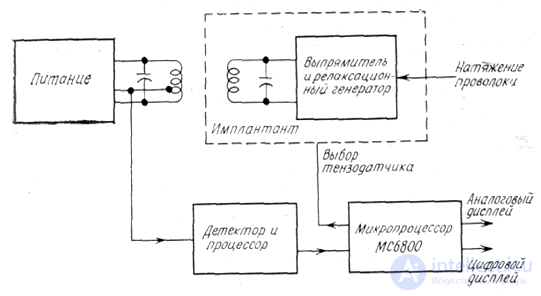
Fig. 6. Implantable biotelemetric system for measuring the tension of a titanium wire attached to a vertebra.
Signals from the active and reference strain gauges sequentially modulate the period of the relaxation oscillator’s oscillations; the ratio of each two consecutive periods is directly proportional to the wire tension.
. A programmable exerciser is used to monitor the speed at which exercises are performed and to provide feedback to the subject indicating the desired load level. The exerciser is a cycle ergometer (a stationary seat with pedals, like a bicycle) with pedal resistance regulated by an electronic braking device. The 4-bit Rockwell PPS-4/2 microcomputer uses a central processor, an input/output chip, 4 Kbytes of ROM and 128 bytes of RAM. The electronic circuitry is powered by a rechargeable battery. Pedaling drives an AC generator, which recharges the battery and powers the pedal-load electronic circuitry. Through a keyboard, with information simultaneously displayed on screen, the patient enters relevant personal data (sex, age or weight). The exercise begins with a training mode (for the patient’s initial familiarization with the procedure), and after a few minutes the load is increased on command from the microprocessor. The microprocessor also makes it possible to monitor heart rate, information about which comes from a solid-state sensor attached to the earlobe, or from three chest electrodes. One of the LED indicators lighting up indicates the end of the initial stage of the procedure, whether the load given was correct, or whether an overload occurred. The subject can give the necessary command to the computer at any time, and then the 4-digit LED indicator will display the calories expended, the time since the start of the exercise, the number of rotations, the current heart rate, the desired heart rate, the workload, or the originally entered parameters. During the last three minutes, the subject’s readings are compared with the average readings of a group of the same sex, weight and age. The final result is evaluated on a scale of the patient’s overall physical condition.
A microcomputer system was developed at Vanderbilt University that can be used to design, select and dose psychomotor tests and monitor their performance. This also involves assessing blood residual nitrogen levels, since patients with high residual nitrogen content show a worse response to the test than patients with normal nitrogen content. The microcomputer performs four types of tests: reaction time (two kinds), attention, and short-term memory.
The system uses an Intelligent Systems Corp. 8080 microprocessor. A model 8001 terminal is used to store the program and to display various images on the screen. To respond, the subject must press a button. Besides the terminal, the system uses only one peripheral device — a key.
The microprocessor offers the following tests. In a random sequence, one of four possible symbols must be chosen. If the symbol chosen and displayed on the screen matches the target, the patient presses the key. Reaction time is measured by the microcomputer. To assess attention (scanning ability), the number of times the subject recognized a given symbol when it was presented three times in a row of 16 symbols is counted. The short-term memory test consists of determining whether the symbol shown on the screen had been presented before. The program generates random numbers for each test, reproduces the individual test, and calculates the average reaction time for subsequent evaluation. The program is loaded directly from another computer.
With age, short-term memory often weakens or is lost. As a result, patients who need to restrict their diet and take medication themselves cannot manage without outside help. A 6502 microcomputer with 4 Kbytes of RAM is used to build a reminder device that displays information. By pressing a button, the patient sees on their television screen the day’s schedule and the times for performing necessary procedures, for example: an insulin injection, breakfast menu, four capsules of medicine, measuring and recording blood pressure, a nurse’s visit, a dentist’s visit, a meal from the meal cart. If the patient forgets to perform the procedure at the specified time or to cancel it, an alarm will sound. New information is periodically entered by the person looking after the patient.

Comments