
Lecture
Electric current is the directed movement of electrically charged particles (electrons, ions). It can vary in direction, voltage and strength. An electric current that does not change its direction is called direct current (Fig. 4).
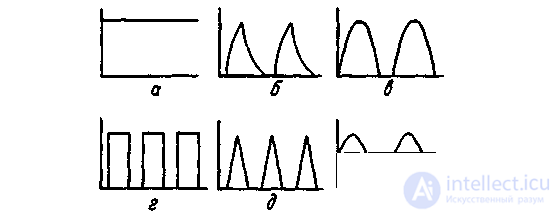
Fig. 4. Graphic representation of the types of electric current:
a — galvanic; b — pulsed exponential; c — pulsed half-sine; d — pulsed rectangular; e — pulsed triangular; f — alternating
Of the methods based on the use of continuous direct current, galvanization and medicinal electrophoresis are the best known.
GALVANIZATION
Galvanization — the application to the body of a continuous direct electric current of low strength (up to 50 mA) and low voltage (30—80 V) through electrodes placed in contact with the patient's body. In honor of the famous Italian scientist Luigi Galvani, such a current is customarily called galvanic.
Physicochemical basis of the action of direct current
Intact human skin has a high ohmic resistance, so current penetrates into the body mainly through the excretory ducts of the sweat and sebaceous glands and the intercellular gaps. Since their total area does not exceed 1/200 of the skin surface, most of the current's energy is spent overcoming the epidermis, which has the greatest electrical resistance. This is why the most pronounced primary (physicochemical) reactions to direct current exposure develop here, and irritation of nerve receptors is more pronounced. Having overcome the resistance of the epidermis and the subcutaneous fatty tissue, the current then spreads along the path of least resistance, mainly through the intercellular spaces, blood and lymphatic vessels, nerve sheaths and muscles, deviating considerably from the straight line that could conventionally connect the two electrodes.
The most significant physicochemical process, determined by the nature of the factor and playing an important role in the mechanism of action of direct current, is considered to be a change in the ionic conjuncture, the quantitative and qualitative ratio of ions in the tissues. In the direct current field, positively charged ions (cations) move toward the cathode (negative electrode), while negatively charged ions (anions) move toward the anode (positive electrode). Due to differences in the physicochemical properties of ions (charge, radius, hydration, etc.), their rate of movement in the tissues will not be the same. As a result, after galvanization, ionic asymmetry arises in the body's tissues, affecting cell vital activity and the rate of biophysical, biochemical and electrophysiological processes occurring in them. The most characteristic manifestation of ionic asymmetry is the relative predominance of monovalent cations at the cathode and divalent cations at the anode. It is with this phenomenon that the well-known irritating (excitatory) action of the cathode and, conversely, the soothing (inhibitory) action of the anode are associated.
Galvanization causes an increase in ion activity in the tissues. This is due to the transition of part of the ions from a state bound to polyelectrolytes into a free state. This process promotes an increase in the physiological activity of the tissues and is regarded as one of the mechanisms of the stimulating action of galvanization.
An important role among the primary mechanisms of action of direct current is played by the phenomenon of electrical polarization — the accumulation of oppositely charged ions at membranes, forming an electromotive force directed opposite to the applied voltage. Polarization leads to a change in the dispersity of protoplasmic colloids, cell hydration and membrane permeability, and affects the processes of diffusion and osmosis. Polarization fades over the course of several hours and determines the aftereffect of the factor.
One of the physicochemical effects of galvanization is considered to be a change in the acid-base state of the tissues due to the movement of positive hydrogen ions toward the cathode and negative hydroxyl ions toward the anode. This affects the activity of enzymes and tissue respiration, the state of the biocolloids, and serves as a source of irritation of the skin receptors.
+Along with the movement of ions, galvanization is accompanied by the movement of fluid (water) toward the cathode (electro-osmosis). As a result, edema and loosening are observed under the cathode, while in the area of the anode there is shrinkage and compaction of the tissues, which should be taken into account, especially when treating inflammatory processes. These and other physicochemical effects of galvanic current determine its physiological and therapeutic action.
In the body, under the action of direct current, various reactions of a local, segmental or generalized nature arise. They depend on the parameters of the exposure, the initial functional state of the body, and the placement of the electrodes.
Local changes occur mainly in the skin. Hyperemia is noted in the exposure zone, more pronounced in the area of the cathode, which promotes improved metabolism and enhanced reparative processes, and has a resorptive effect. In addition, under the cathode the content of histamine, acetylcholine, adrenaline, heparin, sodium and potassium increases, while the activity of cholinesterase and the content of chlorine decrease, which increases tissue activity (catelectrotonus). Under the anode, opposite shifts occur, and the excitability of the tissues, on the contrary, decreases (anelectrotonus).
The redistribution of ions, the accumulation of electrolysis products, the formation of biologically active substances, as well as the direct action of the current on nerve endings and receptors, lead to the occurrence of afferent nerve impulses. With low-intensity exposures, the reflex response involves organs and systems belonging to the same spinal cord segment as the irritated skin surface.
Intense irritation, exposure of large receptor zones, and galvanization with the electrodes placed on the head lead to afferent impulses reaching the central nervous system — the limbic-reticular complex and the cerebral cortex. As a result of this afferentation, their functional state changes, intracortical induction relationships and a number of other processes are activated. This is manifested by an enhancement of the regulatory and trophic function of the nervous system, improved blood supply and metabolism in the brain, and accelerated regeneration of damaged nerve structures.
The endocrine system plays an important role in the body's response to galvanization. Therapeutic current dosages stimulate the function of the adrenal glands, pituitary gland and thyroid gland, with the maximum shifts noted when the electrodes are placed over their cutaneous projection.
+The change in the functional state of the CNS and the emergence of a new level of functioning of the endocrine system that occur during galvanization have a normalizing effect on the state of the internal organs and metabolism. Thus, when current is used according to general or segmental-reflex techniques, a decrease in elevated blood pressure, improved blood circulation and lymphatic drainage, enhanced secretory and motor function of the stomach and intestines, a bronchodilator effect and stimulation of ciliated epithelium activity, and improved liver and kidney function are observed. The content of ATP and oxygen tension in the tissues increases, oxidative phosphorylation processes are activated, and blood cholesterol content decreases, among other effects. Under the influence of direct current, the phagocytic activity of leukocytes increases, the reticuloendothelial system is stimulated, the activity of humoral factors of nonspecific immunity rises, and antibody production is enhanced. The normalizing and stimulating action of galvanization is most clearly manifested in functional disorders and with the use of small therapeutic current dosages (0.03—0.05 mA/cm2).
Electrodes, which are connected to different poles of the galvanization apparatus, are placed on the area of the body to be treated. The electrode consists of an electrically conductive plate made of sheet lead or carbon fabric and a somewhat larger hydrophilic pad (gauze, flannel, baize) at least 1 cm thick. Rods of pressed carbon wrapped in gauze (in gynecology), special electrode baths (in ophthalmology), and gauze swabs whose ends are connected to current-carrying electrodes (for galvanization of the nose or external auditory canal) may also be used as electrodes. The hydrophilic pads are designed to prevent skin damage from electrolysis products and to reduce its initial resistance. Before the procedure they are evenly moistened with warm water, and after use they are thoroughly rinsed under running water, sterilized by boiling, and dried. The electrodes must be fixed on the patient with elastic bandages, the patient's own body, or sandbags. The areas of skin on which the electrodes are placed must first be inspected (damaged areas of skin are insulated, or the procedure is not carried out) and thoroughly degreased.
The placement of the electrodes on the patient's body is determined by the location, severity and nature of the pathological process. Longitudinal (on one surface) and transverse (on opposite sides) electrode placement are mainly used. The former is used when superficial or extensive exposure is required, the latter for exposure to deep-lying tissues. Transverse-diagonal electrode placement is used less often. Depending on the exposure area (which can vary from several cm2 to several hundred cm2) and the placement of the electrodes, local, general and segmental-reflex procedures are distinguished. In local exposure, the electrodes are placed so that the lines of force of the electric field pass through the pathological focus. In general techniques, most of the body is exposed. In segmental-reflex techniques, the electrodes are placed on areas of skin reflexively connected with certain organs and tissues. The layout of the electrodes for individual galvanization techniques is shown in Fig. 5.
Electrodes of equal area are usually used for galvanization. However, electrodes of different areas may also be used. In this case, the electrode with the smaller area is considered active, and it is for this electrode that the current density is calculated. If two electrodes are connected to one pole of the apparatus, their areas are summed for the purpose of calculating current density.
Galvanization procedures are dosed by the strength (or density) of the current and the duration of exposure. The maximum permissible value of current density (the current per 1 cm2 of the area of the electrode's hydrophilic pad) is considered to be 0.1 mA/cm2. For general and segmental-reflex exposures it is usually lower than for local procedures (0.01—0.05 mA/cm2 and 0.03—0.1 mA/cm2, respectively). However, the main criterion for a normal or optimal intensity of exposure is the patient's sensations: a feeling of "pins and needles," slight tingling, or very mild burning at the site of electrode application. In cases of reduced patient sensitivity to the current and in pediatric practice, the densities given above may serve as a criterion for the recommended and permissible value of this parameter. The duration of the procedure can range from 10—15 minutes (for general and segmental-reflex exposures) to 30—40 minutes (for local procedures). A course of treatment usually consists of 10—12 to 20 procedures, carried out daily or every other day. Repeat courses are conducted no sooner than 1 month later.
We give a description of some of the most frequently used galvanization techniques.
Galvanization of the collar zone (galvanic collar according to A. E. Shcherbak). Patient position — lying down. One electrode in the shape of a shawl collar is placed on the upper back so that its ends cover the shoulders and collarbones down to the second intercostal space anteriorly. The second electrode, with an area of 300 cm2, is placed in the lumbosacral region. The collar electrode is most often connected to the positive pole of the galvanization apparatus. With each procedure the duration of exposure is increased by 2 minutes and the current strength by 2 mA, starting from 6 minutes and 6 mA and bringing them up to 16 minutes and 16 mA.
General galvanization (according to S. B. Vermel). In this technique, with the patient lying down, an electrode measuring 15x20 cm is placed in the interscapular region and connected to one of the apparatus's terminals; two other electrodes — 10x15 cm each — are placed on the calf muscles and connected to the second terminal of the apparatus. Current strength from 5—10 to 15—30 mA. Duration of procedures 15—30 minutes.
Galvanization according to the orbito-occipital technique (according to Bourguignon). Patient position — sitting or lying down. Two electrodes 30—40 mm in diameter are placed on the skin of the orbits and the upper eyelid with the eyes closed, and are connected by a bifurcated wire to one of the apparatus's terminals. The second electrode, measuring 5x12 cm, is placed on the back surface of the neck and connected to the other terminal of the apparatus. Current strength from 1 to 5 mA, procedure duration 10—20 minutes.
Galvanization of the eye. Carried out with the patient sitting, the torso slightly inclined forward, using a special eye-bath electrode with a capacity of 10—15 ml. A carbon electrode is inserted into the bath through an opening. The bath is filled with boiled water at a temperature of 28—32°C and pressed firmly against the orbit. The patient immerses the open eye in the water. The bath electrode is connected to one of the apparatus's terminals, and the second electrode, measuring 5x12 cm, is placed on the back of the neck and connected to the other terminal of the apparatus.
Intranasal galvanization. Patient position — sitting or lying down. Cotton wool or gauze wicks moistened with water are inserted either into both lower nasal passages to a depth of 1—2 cm, or into the nasal vestibule. A metal electrode measuring 1x3 cm is applied to the free ends of the wicks and connected to one of the apparatus's terminals. The second electrode, measuring 8x10 cm, is placed on the back surface of the neck and connected to the other terminal of the apparatus. Current strength — 0.5—1 mA, procedure duration — 10—30 minutes.
+Galvanization of the facial area (according to Bergonié). Patient position lying down. One electrode in the shape of a half-mask with cutouts for the eye and mouth, with an area of 180—200 cm2, is placed on the affected half of the face and, for neuralgia, connected to the positive terminal of the apparatus, while for facial nerve neuropathy it is more often connected to the negative terminal. The second electrode, of the same size, is placed on the opposite shoulder (forearm) and connected to the other terminal of the apparatus. Current strength 3—5 mA. Procedure duration from 10—15 to 20—30 minutes.
Galvanization is used in the treatment of: injuries and diseases of the peripheral nervous system (plexitis, radiculitis, mono- and polyneuropathies, neuralgias, etc.); injuries and diseases of the central nervous system (craniocerebral and spinal cord injuries, disorders of cerebral and spinal circulation, meningitis, encephalitis, etc.); vegetative dystonia, neurasthenia and other neurotic states; diseases of the digestive organs occurring with impaired motor and secretory function (chronic gastritis, colitis, cholecystitis, biliary dyskinesia, gastric and duodenal ulcer disease); hypertensive and hypotensive disease, angina pectoris, atherosclerosis in the initial stages; chronic inflammatory processes in various organs and tissues; certain dental diseases (periodontal disease, glossalgia, etc.); eye diseases (keratitis, uveitis, glaucoma, etc.); chronic arthritis and periarthritis of traumatic, rheumatic and metabolic origin, bone fractures, chronic osteomyelitis, etc.
Contraindications to galvanization are: neoplasms or suspicion thereof, acute inflammatory and purulent processes, systemic blood diseases, severe atherosclerosis, decompensated cardiac activity, fever, eczema, dermatitis, extensive disruption of skin integrity and disorders of skin sensitivity at the sites of electrode application, pregnancy, cachexia, and individual intolerance to galvanic current.
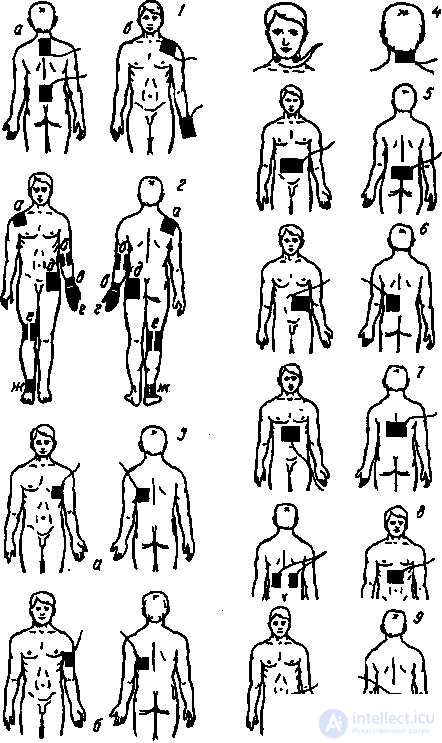
Fig. 5. Placement of electrodes for galvanization and medicinal electrophoresis:
+1 — spine region (a) and brachial plexus region (b); 2 — joint regions (a — shoulder, b — elbow, c — wrist, d — hand, e — hip. f —knee, g—ankle); 3—heart region (a and b—variants); 4— tonsil region; 5 —intestinal region; 6— spleen region; 7—stomach region: 8 — kidney region; 9 — bladder region

Comments