
Lecture
The Maillard reaction is a complex chemical process that occurs between amino acids and reducing sugars upon heating. It underlies the formation of the golden crust on bread, the seared surface of meat, and the rich aroma of coffee. First described by Louis-Camille Maillard in 1912, this reaction became the foundation of modern food chemistry. In this article, we will examine the mechanisms of the reaction, its influence on the organoleptic properties of foods, as well as the risks and methods of control.
The Maillard reaction is a chemical reaction between amino acids and reducing sugars, resulting in the formation of melanoidins — compounds that give browned food its characteristic flavor. This reaction is involved in seared steaks, fried dumplings, cookies and other kinds of biscuits, bread, toasted marshmallows, falafel, and many other foods. It is named after the French chemist Louis Camille Maillard, who first described it in 1912 while attempting to reproduce the biological synthesis of protein. The reaction is a form of non-enzymatic browning, which usually proceeds rapidly at temperatures between 140 and 165 °C (280 to 330 °F). Many recipes call for a sufficiently high oven temperature to ensure that the Maillard reaction takes place. At higher temperatures, caramelization (the browning of sugar, a separate process) and subsequent pyrolysis (final breakdown, leading to burning and the appearance of acrid off-flavors) become more pronounced.
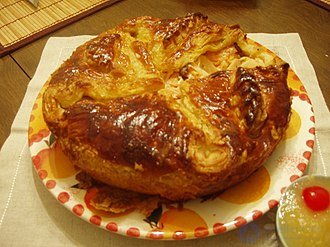
A golden crust on a pie is a consequence of the Maillard reaction
The Maillard reaction can occur even with very small amounts of proteins and carbohydrates — there is no strict minimum percentage composition. The presence of free amino acids (or proteins) and reducing sugars is enough for the reaction to begin upon heating.
Proteins/amino acids: free amino groups are needed. Even a small amount (fractions of a percent) can initiate the reaction.
Carbohydrates: reducing sugars (glucose, fructose, lactose) are required. They possess a free carbonyl group.
Temperature: usually above 140–150 °C for noticeable browning and the formation of aromatic compounds.
Moisture: the optimum is moderate. At too high a moisture level the reaction slows down, and at too low a level the food can dry out.
The Maillard reaction is qualitative, not quantitative: it is triggered when the reactants are present, even in small concentrations.
Its intensity depends on:
The ratio of sugars to amino acids (for example, meat contains a lot of protein and little sugar, but the reaction still proceeds).
Temperature and heating time — the higher the temperature and the longer the heating, the more active the process.
The pH of the medium — an alkaline environment accelerates the reaction.
| Product | Proteins | Carbohydrates | Maillard reaction |
|---|---|---|---|
| Meat | High protein content | Low sugar content | Yes, a crust forms during frying |
| Bread | Moderate protein (gluten) | High starch content → sugars during baking | Yes, a golden crust |
| Milk | Proteins (casein, whey) | Lactose | Yes, during boiling and condensing |
The reactive carbonyl group of the sugar reacts with the nucleophilic amino group of the amino acid, forming a complex mixture of poorly understood molecules responsible for the range of aromas and flavors. This process is accelerated in an alkaline environment (for example, in the lye used to brown pretzels; see lye roll), because the amino groups (RNH3+ → RNH2) are deprotonated and therefore have increased nucleophilicity. This reaction is the basis of many recipes used in the flavoring industry. At high temperatures, acrylamide, a carcinogen, may form. This can be avoided by heating at a lower temperature, adding asparaginase, or introducing carbon dioxide.
During cooking, Maillard reactions can form hundreds of different flavor compounds depending on the chemical components of the food, the temperature, the cooking time, and the presence of air. These compounds, in turn, often break down to form even more flavor compounds. Flavor specialists have used the Maillard reaction for years to create artificial flavorings, with most patents relating to the production of meat-like flavorings. According to Nobel laureate in chemistry Jean-Marie Lehn, «the Maillard reaction is undoubtedly the most widespread chemical reaction in the world».
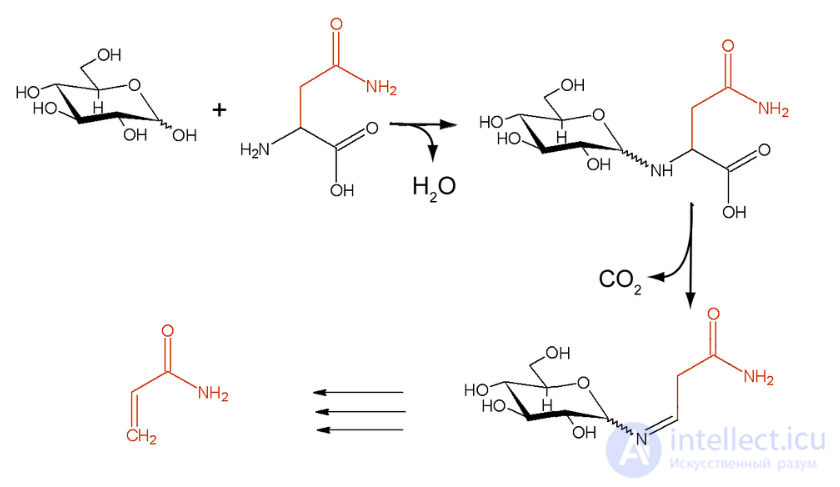
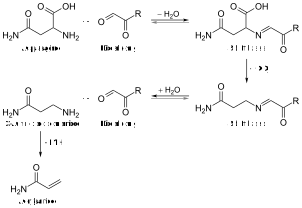
One of the initial stages of the Maillard reaction: the conversion of asparagine into acrylamide
In 1912, Louis Camille Maillard published a paper describing the reaction between amino acids and sugars at elevated temperatures. In 1953, chemist John E. Hodge of the U.S. Department of Agriculture established the mechanism of the Maillard reaction.

6-Acetyl-2,3,4,5-tetrahydropyridine
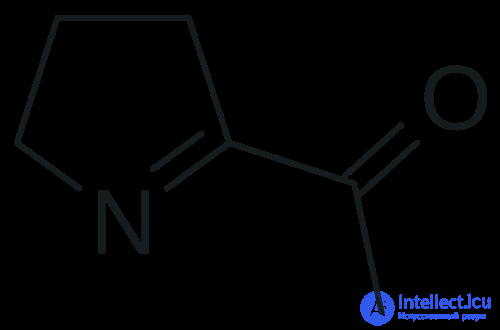
2-Acetylpyrroline
The Maillard reaction is responsible for many of the colors and flavors of food products, such as the browning of various kinds of meat when grilled, the browning and umami flavor of fried onions and roasted coffee. It contributes to the browning of the crust of baked goods, the golden-brown color of French fries and other chips, the browning of the malted barley found in malt whisky and beer, as well as the color and flavor of dried and condensed milk, dulce de leche, toffee, black garlic, chocolate, toasted marshmallows, and roasted peanuts.
6-Acetyl-2,3,4,5-tetrahydropyridine is responsible for the biscuit or cracker flavor present in baked goods such as bread, popcorn, and tortillas. The structurally related compound 2-acetyl-1-pyrroline has a similar smell and also occurs in nature without heating. This compound gives the characteristic aromas to various kinds of cooked rice and to the pandan plant (Pandanus amaryllifolius). The odor threshold of both compounds is less than 0.06 nanograms per liter.
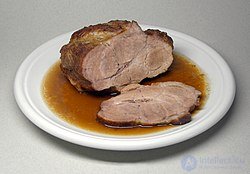
Roast pork, seared using the Maillard reaction
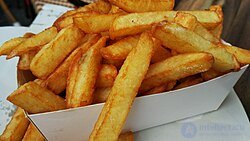
Cooking French fries at high temperature can lead to the formation of acrylamide.
The browning reactions that occur when meat is fried or seared are complex and take place mainly through the Maillard reaction, along with other chemical reactions, including the breakdown of the tetrapyrrole rings of the muscle protein myoglobin. Maillard reactions also occur in dried fruit and during the aging of Champagne in the bottle.
Caramelization is a completely different process from browning caused by the Maillard reaction, although the results of the two processes are sometimes similar, as can be seen with the naked eye (and by the taste buds). Caramelization can sometimes cause browning of the same foods in which the Maillard reaction occurs, but the two processes are distinct. Both processes are accelerated by heating, but the Maillard reaction involves amino acids, whereas caramelization is the pyrolysis of certain sugars.
During silage making, excessive heat causes the Maillard reaction, which reduces the amount of energy and protein available to the animals that eat it.
In archaeology, the Maillard process occurs during the preservation of bodies in peat bogs. The acidic environment of the peat causes a tanning or browning of the skin, and can also give the hair a red or reddish coloration. The chemical mechanism of the process is the same as in food browning, but it develops slowly because of the acidic action of the bog on the body. It is commonly observed on Iron Age bodies and results from the interaction of anaerobic, acidic, and cold (usually 4 °C (39 °F)) sphagnum acid with polysaccharides.
The Maillard reaction also contributes to the preservation of paleofeces.
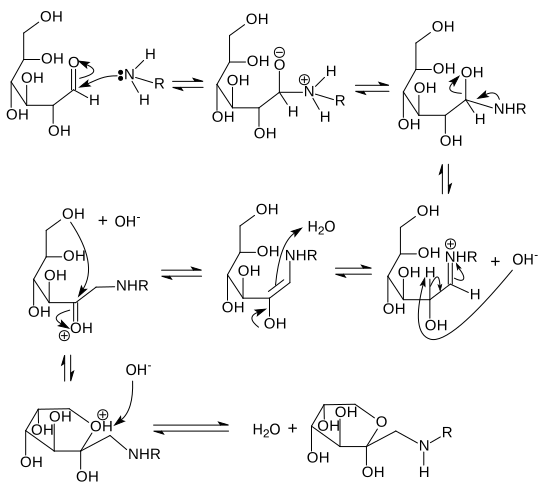
Open-chain Amadori products undergo further dehydration and deamination to form dicarbonyls. This is an important intermediate.
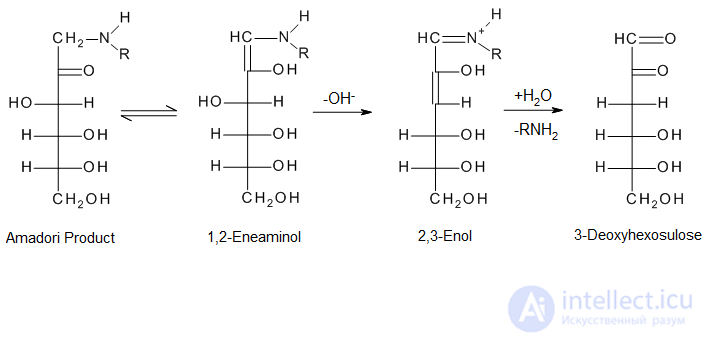
The dicarbonyls react with amines, forming Strecker aldehydes via Strecker degradation.
Acrylamide, a possible human carcinogen, can form as a by-product of the Maillard reaction between reducing sugars and amino acids, especially asparagine, which are present in most food products.
The Maillard reaction is not merely a culinary effect but a powerful tool in the hands of food technologists and chefs. It makes it possible to enhance flavor qualities, give foods an appetizing appearance, and create unique aromas. However, it is important to keep the balance in mind: excessive formation of reaction products can lead to the formation of undesirable compounds such as acrylamide. Understanding the mechanisms of the Maillard reaction opens the way to safer and tastier food — both in the home kitchen and in industrial production.
There is no minimum percentage threshold: the reaction begins in the presence of even traces of amino acids and reducing sugars.
For practical purposes, it can be assumed that any food containing proteins and sugars will undergo the Maillard reaction when heated above 140 °C.
What matters more is not the percentage content but the heating conditions and the type of sugar/amino acid.

Comments