
Lecture
8.1 Free and bound water
Water is an important constituent of food products. It is not a
nutrient, but water is vitally necessary as a stabilizer of
body temperature, a carrier of nutrients, a reagent and a reaction medium
in many biochemical transformations, and a stabilizer of biopolymers. Owing to
physical interaction with proteins, polysaccharides, lipids, and salts, water
makes a large contribution to the texture of food products. Water is present in
plant and animal products as a cellular and extracellular component, as
a dispersing medium and solvent; it affects the consistency, structure,
appearance, and storage stability of a product.
Ensuring the storage stability of products is determined to a large
degree by the ratio of free to bound water.
Free water is water that is not bound by a polymer and is available for
the occurrence of biochemical, microbiological, and chemical processes.
The amount of free water can be significantly reduced by drying,
freezing, or concentration.
Bound water is associated water that is firmly bound to the
components of food – proteins, carbohydrates, and lipids – through chemical and
physical bonds. According to the form of bonding with the food components and in order of decreasing
binding energy, it is divided into three groups: chemical, physicochemical, and
mechanical.
Chemically bound water is part of the dry matter; for example, in grain
it is the water of crystalline hydrates of polysaccharides. It possesses the greatest binding
energy, is very strong, and is broken down only with great difficulty and at high temperatures.
Physicochemical water is formed as a result of the attraction of water dipoles by
the polar groups of protein and lipid molecules. Such water forms a hydration
shell around the hydrophilic groups of proteins and lipids. The physicochemical bond
affects the stability of protein and lipid systems in products.
Physicochemical water does not freeze at low temperatures (- 40 0C), does not
dissolve the nutrients of the product, is almost never removed from the product during drying,
and is inaccessible to microorganisms.
Mechanically bound water is water retained in the capillaries and
matrix structures of the product's constituent parts. Most food
products have a fairly large capillary diameter and retain such
water poorly. Mechanically bound water is retained by pectin, starch, and protein through
hydrogen bonds, is not released from the food product, but in certain
technological processes it behaves like free water. It can be removed
by drying and can be frozen.
8.2 Water activity
It was observed that products with the same moisture content spoil differently.
It turned out that great importance is attached to how firmly water is bound
with the components of the product. The more strongly water is bound, the less capable it is of
participating in hydrolytic and other processes that break down and spoil the
product.
To describe properties in food products, the term «water
activity» is used. Water activity represents the portion of the total amount
of water contained in the product that is not bound by substances dissolved
in it. This portion of moisture, which can also be designated as the chemically
unbound water of the food product, has a direct effect on
the ability of microorganisms to multiply, on their metabolism, and also on
their resistance, for example, to thermal effects or irradiation.
Water activity determines the ability of water to volatilize from the
surface of a moist product relative to the ability of water to volatilize from the
surface of pure (distilled) water at the same temperature. Both above
the surface of the product and above the surface of the water, water vapor pressures are created.
The ratio of these pressures is the water activity indicator (formula 2).
,
0 P
a PW
W (2)
where a W – water activity;
P W – water vapor pressure above the surface of the product, Pa;
P 0 – vapor pressure of the pure solvent (distilled water) above the water
at the same temperature, Pa.
Distilled water has a W = 1, and a completely dehydrated substance
has a W = 0. Water activity in food products is presented in Table 7.
Table 7 – Water activity in food products
Products Moisture content, % Water activity
Fruits 90-95 0.97
Eggs 70-80 0.97
Meat 60-70 0.97
Cheese 40 0.96
Jam 30-35 0.82-0.94
Bread 40-50 0.95
Cake 20-28 0.83
Flour 16-19 0.80
Honey 10-15 0.75
Caramel 7-8 0.65
Cookies 6-9 0.60
Chocolate 5-7 0.40
Sugar 0-0.15 0.10
8.3 Water activity and the critical water activity limit for
the development of microorganisms
Depending on the relationship of microorganisms to water (by the water
activity indicator), they are divided into three groups (Figure 34).
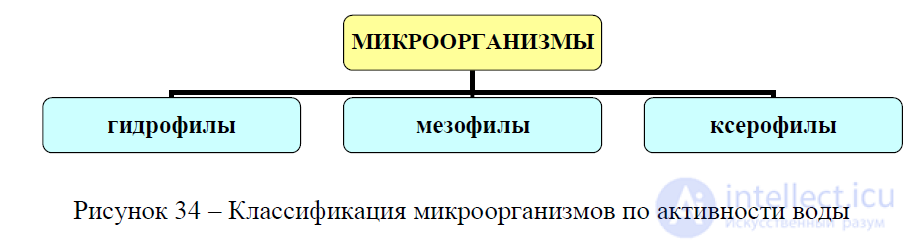
Figure 34 – Classification of microorganisms by water activity
Hydrophiles – moisture-loving microorganisms – (mainly bacterial
microflora) – 1.00-0.92.
Mesophiles – moderately moisture-loving microorganisms – (for the most part
various races of yeast) – 0.88-0.85.
Xerophiles – dryness-loving microorganisms – (microscopic fungi) –
0.70-0.65.
Analysis of water activity values allows the conclusion that if
water activity is greater than 0.65, the development of microflora is possible.
8.4 Water activity and the stability of food products
Many food products contain a large amount of moisture, which
adversely affects storage stability. Since water
participates directly in hydrolytic processes, its removal or binding
by increasing the content of salt or sugar leads to the slowing and even to the
cessation of many reactions and inhibits the growth of microorganisms. All this
contributes to increasing the shelf life of products.
By water activity, all food products are divided into three groups
(Figure 35):
- products with active moisture (meat, cheese, fruits) – 1.0-0.9;
- products with intermediate moisture (flour, honey, cakes) – 0.9-0.6;
- products with low moisture (coffee, sugar) – 0.6-0.0.
The water activity value in products with high and intermediate
moisture is above 0.65; consequently, in these products the development
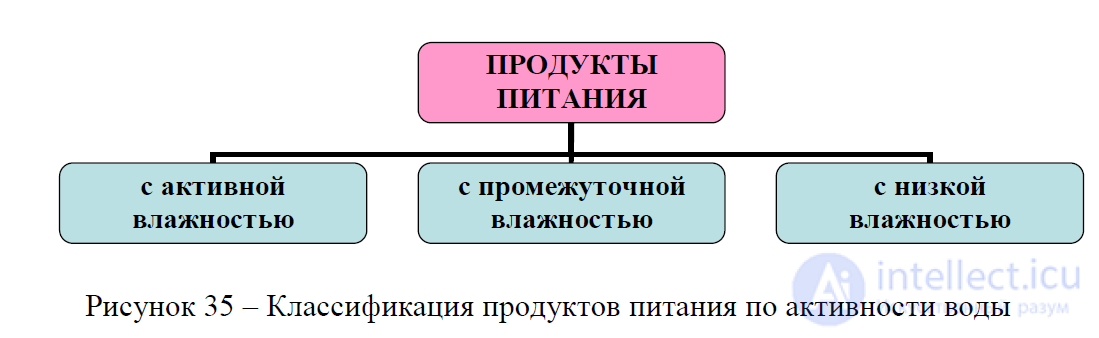
Figure 35 – Classification of food products by water activity
of microorganisms is possible, and hence microbiological spoilage as well. But this is not the only
cause of the instability of food products during storage.
Let us list the types of spoilage of food products with different water activity.
1. Products with high water activity are subject mainly to
microbiological spoilage, which plays the decisive role.
2. Products with intermediate water activity:
- microbiological spoilage;
- enzymatic spoilage – spoilage caused by the activity of enzyme
systems (for example, the hydrolysis of lipids under the action of lipase is accompanied by
the accumulation of free fatty acids, which is the souring of fats);
- non-enzymatic browning – the melanoidin-formation reaction, during
which brown-colored pigments – melanoidins – are formed.
3. Products with low water activity:
- enzymatic spoilage – spoilage caused by the activity of enzyme
systems (for example, the oxidation of lipids under the action of lipoxygenase is
accompanied by the accumulation of primary (peroxides and hydroperoxides) and secondary
(aldehydes, ketones, alcohols, carboxylic acids) oxidation products, i.e.
rancidity of the fat is observed);
- non-enzymatic browning – during the melanoidin-formation reaction,
which does not require moisture to take place, brown-colored pigments
– melanoidins – accumulate;
- oxidation of fats – the process proceeds in the presence of oxygen, and the
rate of lipid oxidation is affected by the presence of variable-valence metals
(lead, copper, iron, manganese, cobalt), hydrogen ions,
elevated temperature, and the presence of light;
- loss of water-soluble substances – obtaining products with low
water activity is associated with the removal of moisture from the product, which leads to a reduction in
the content of water-soluble substances, for example, water-soluble vitamins.
8.5 The importance of water for the vital activity of the human body
The modern understanding of the role of water in nutrition is connected, above all, with its
great importance as a cleansing agent for the body. Therefore, particular importance
should be attached to the quality of water. The sources and dietary forms of water are diverse,
including natural, i.e. those that have not undergone additional processing, and those processed
by various methods. Beverages act as a powerful factor in the nutrition and improvement of the
body's health. They quickly enter the stomach and are quickly absorbed in the intestine.
Water is not a nutrient, but it is vitally necessary as a
stabilizer of body temperature, a carrier of nutrients and wastes formed during
the digestion of food, and a reagent and reaction medium in a number of chemical transformations.
The body of an adult with a body mass of 65 kg contains, on average, 40 L of
water, of which about 25 L are located inside cells, and 15 L – in the composition of the body's extracellular
fluids. With age, the amount of water gradually decreases: in the body of
a three-month-old fetus there is 95 % water, in a five-month-old – 86 %, in a newborn child – 70 %,
in an adult – 55-65 %. As a person ages, the amount of water in the body continues to
decline. It is believed that one of the causes of the body's aging is the reduction in the
ability of certain substances of the body, especially proteins (colloidal ones), to bind
water.
Water serves as a medium and an obligatory participant in the reactions and processes
that ensure the maintenance of human life. A loss by the body of more than 10 % of its water
is threatening to the body. An adult's requirement for water is
about 40 mL per 1 kg of body mass per day; in infants it is significantly higher and
reaches 120-150 mL per 1 kg of body mass per day. The average requirement of an adult
for water is 2.5 L per day. This requirement is satisfied from three sources:
1. Free liquid (soup, tea, compote, etc.) – 1-1.5 L.
2. Water contained in food products – 1-1.5 L.
3. Endogenous water – water formed in the human body during the oxidation of
macronutrients (proteins, fats, carbohydrates) – 300-400 mL.
For example, during the oxidation of carbohydrates, water is released:
C6H12O6 + 6O2 → 6CO2 + 6H2O + energy
The amount of water generated by the human body is presented in Table 8.
Table 8 – Amount of water formed in the body during metabolism
Name of macronutrient Amount of endogenous water,
g/100 g of macronutrient
Fats 107
Carbohydrates 55
Proteins 41
The amounts of water consumed and eliminated from the body are approximately equal.
Water losses can increase with certain deviations in the state of health: vomiting,
fever, in patients after surgery, and in extensive burns.
A negative effect on the body is exerted not only by a water deficit but also by its excessive
intake. Excessive consumption creates increased loads on the heart and
kidneys; together with the water, mineral substances and vitamins dissolved in it are removed from
the body. With insufficient water consumption, the elimination of toxic substances from the
body is reduced. Sodium chloride (table salt) promotes the retention of
water in the body, whereas potassium and calcium salts, on the contrary, promote the elimination of water.
The loss by the body of a large amount of fluid is accompanied by thickening of the blood,
which leads to the emergence of a feeling of thirst.
8.6 Requirements for water used for food purposes
Water at food enterprises is used for technological,
utility, and heat-engineering purposes. In technology, water can be a
raw material that is part of the finished product, a solvent for certain types of
raw material, and a medium for carrying out production operations.
Water exerts an enormous influence on the organoleptic properties of food
industry products. Water used in production must be clean,
transparent, colorless, and free of foreign taste and odor.
The quality indicators of water suitable for use in the food
industry are regulated by SanPiN 2.1.4.1074-01 "Drinking water.
Hygienic requirements for the quality of water of centralized systems of drinking
water supply. Quality control" and SanPiN 2.1.4.1116-02 "Drinking water.
Hygienic requirements for the quality of water packaged in containers. Quality
control" (Table 9).
Water containing suspended matter or not meeting sanitary
requirements is purified and decontaminated.
Review questions
1. What are free and bound water?
2. What is water activity?
3. Which water does the «water activity» indicator quantitatively characterize?
4. The water activity of which product equals one?
5. Into what groups are microorganisms subdivided by water activity?
6. Which group of microorganisms is called hydrophiles?
7. Which group of microorganisms is called mesophiles?
8. Which group of microorganisms is called xerophiles?
9. Into what groups are food products subdivided by water activity?
10. What types of spoilage are food products with high
water activity subject to?
Table 9 – Basic requirements for water quality (per SanPiN 2.1.4.1116-02 and SanPiN 2.1.4.1074-01)
| Indicator | Unit | MPC per SanPiN 2.1.4.1074-01 |
MPC per SanPiN 2.1.4.1116-02 Category 1 |
MPC per SanPiN 2.1.4.1116-02 Category 2 |
|---|---|---|---|---|
| Odor at 20 °C | point | 2 | 0 | 0 |
| Odor at 60 °C | point | not reg. | 1 | 0 |
| Color | degree | 20 (35)* | 5 | 5 |
| Turbidity | mg/dm³ | 1.5 (2)* | 1.0 | 0.5 |
| pH (hydrogen index) | pH units | 6–9 | 6.5–8.5 | 6.5–8.5 |
| Permanganate oxidizability | mg/dm³ | 5.0 | 3.0 | 2.0 |
| Aluminum | mg/dm³ | 0.5 | 0.2 | 0.1 |
| Boron | mg/dm³ | 0.5 | 0.5 | 0.3 |
| Barium | mg/dm³ | 0.1 | 0.7 | 0.1 |
| Nitrites | mg/dm³ | 3.0 | 0.5 | 0.005 |
| Nitrates | mg/dm³ | 45 | 20 | 5 |
| Total hardness | meq/L | 7.0 (10) | 7 | 1.5–7.0 |
| Total mineralization | mg/dm³ | 1000 (1500)* | 1000 | 200–500 |
| Chlorides | mg/dm³ | 350 | 250 | 150 |
| Sulfates | mg/dm³ | 500 | 250 | 150 |
| Total iron | mg/dm³ | 0.3 (1.0)* | 0.3 | 0.3 |
| Fluorides | mg/dm³ | 1.5 | 1.5 | 0.6–1.2 |
| Calcium | mg/dm³ | not reg. | 130 | 25–80 |
| Magnesium | mg/dm³ | not reg. | 65 | 5–50 |
| Sodium | mg/dm³ | 200 | 200 | 20 |
| Alkalinity | meq/L | 7.0 | 7.0 | 1.5–7.0 |
| Manganese | mg/dm³ | 0.1 (0.5) | 0.05 | 0.05 |
| Free chlorine | mg/dm³ | 0.3–0.5 | 0.05 | 0.05 |
| Petroleum products | mg/dm³ | 0.1 | 0.05 | 0.01 |
| Polyphosphates | mg/dm³ | 3.5 | 3.5 | 3.5 |
| Hydrogen sulfide | mg/dm³ | 0.003 | 0.003 | 0.003 |
| Surfactants (surface-active substances) | mg/dm³ | 0.5 | 0.05 | 0.05 |
| Copper | mg/dm³ | 1.0 | 1.0 | 1.0 |
| Arsenic | mg/dm³ | 0.05 | — | — |
| Lead | mg/dm³ | 0.03 | 0.01 | 0.005 |
| Strontium | mg/dm³ | 7.0 | 7.0 | 7.0 |
| Potassium | mg/dm³ | not reg. | 20 | 2–20 |
| Dissolved oxygen (not less than) | mg/dm³ | not reg. | 5 | 9 |
* Values marked with an asterisk may be changed by decision of the Chief State Sanitary Physician for specific water supply systems.
11. What types of spoilage are food products with intermediate
water activity subject to?
12. What types of spoilage are food products with low water
activity subject to?
13. What is the average daily water requirement of an adult?
14. What is endogenous water?
15. Which documents regulate the quality indicators of water?

Comments