
Lecture
Nutrition is one of the most important physiological needs of the body.
Nutrition includes the sequential processes of the intake, digestion,
absorption, and assimilation of nutrients in the body.
Nutrients enter the human body as part of food products.
Food is necessary for the building and continuous renewal of cells and tissues,
for replenishing the body's energy expenditure and the substances from which
enzymes, hormones, and other regulators of metabolic processes and vital activity are formed. Metabolism, as well as the function and structure of all cells, tissues, and
organs, depends on the nature of one's diet.
There are several theories of nutrition. Some appeared earlier, others somewhat later. A.A. Pokrovsky's theory of balanced nutrition is the
foundation of modern nutritional science. But nutritional science does not stand still; it
continuously develops, as new knowledge and data emerge. This has become
the basis for new theories and concepts of nutrition.
Nutrients are the nutritive substances that the body obtains from food and uses for energy, growth, repair, and the maintenance of health. They include macro- and micronutrients, vitamins, minerals, and even water.
Role in the body:
They provide energy for vital activity.
They serve as building material for cells and tissues.
They support immunity and regulate mood, sleep, and cognitive functions.
| Type | Examples | Main functions |
|---|---|---|
| Macronutrients | Proteins, fats, carbohydrates | Energy, growth, tissue repair |
| Micronutrients | Vitamins, minerals | Regulation of metabolism, support of immunity |
| Water | — | Hydration, transport of substances, thermoregulation |
Nutrient balance
An excess or deficiency of nutrients can lead to health problems: from reduced energy to chronic diseases.
It is important to maintain a balanced diet that includes a variety of foods: vegetables, fruits, grains, meat/fish, dairy products, and water.
The theory of rational nutrition is based on the theory of balanced
nutrition, developed by A.A. Pokrovsky. It is aimed at providing
the body with all necessary substances in sufficient quantity and
optimal proportions. At present, it is also the foundation for other
theories of nutrition.
The theory of rational nutrition is based on three main principles
(figure 38).
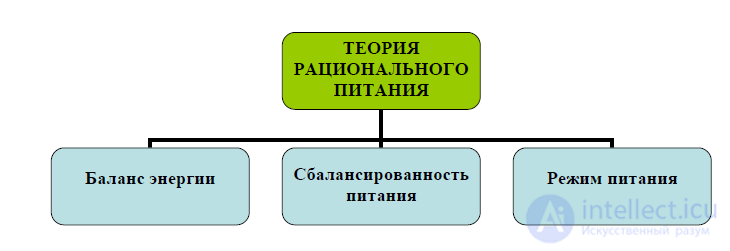
Figure 38 – Principles of the theory of rational nutrition
1. Energy balance. The energy supplied daily by food must
correspond to the energy expended by a person in the course of their vital activity.
The energy that the body is provided with through the consumption and assimilation of
nutrients (table 11) is expended on carrying out three main
functions associated with the vital activity of the human body: basal metabolism,
digestion of food, and muscular activity (figure 39).
Table 11 – Energy value provided by nutrients
Energy value provided by
Labor intensity group nutrients, %
Proteins Fats Carbohydrates
1 12 30 58
2 12 30 58
3 11 30 59
4 11 30 59
5 11 33 56
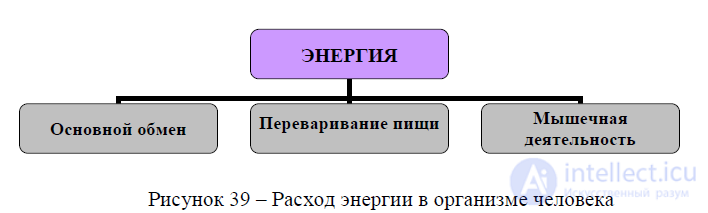
Figure 39 – Energy expenditure in the human body
Basal metabolism is the minimum amount of energy needed
by a person to sustain life at rest (during sleep). For men this
energy amounts to 1600 kcal, for women – 1200 kcal.
140-160 kcal make up the energy expenditure on the digestion of food, mainly
proteins, and to a considerably lesser degree – carbohydrates and fats.
Digestion of food is associated with the specific dynamic action of food in
the absence of muscular activity.
The energy expenditure on muscular activity depends on the nature of
one's occupational and household work, and the particulars of a person's rest. It should
be noted that energy expenditure progressively decreases with age, which is due to
a decline in metabolic processes and the degree of physical activity. On muscular
activity an average of 1000-2500 kcal is expended.
For carrying out all the body's functions, a person expends in total
2200-2400 kcal (women) and 2600-2800 kcal (men). Under heavy
physical loads (sports, the work of miners, builders, etc.)
a person's energy expenditure increases to 3500-4000 kcal. In the case of
a positive energy balance over a long period of time, the excess
incoming energy is accumulated as fat in adipose tissue, which leads to
excess body weight.
By the degree of energy expenditure, 5 labor intensity groups have been identified (table 12).
Work with especially heavy physical loads, belonging to the 5th labor
intensity group, is not envisaged for women. In women of all
occupational and age groups, the requirement for nutrients (except
iron) and energy is on average 15% lower than in men.
2. Meeting the body's needs for the optimal quantity and
ratio of nutrients (balance of the diet).
Nutrition is called balanced when the qualitative and
quantitative composition of the food corresponds to the body's needs. A complete
diet must include nutrients of five
classes: proteins (including essential amino acids), carbohydrates (including
dietary fiber), lipids (including essential fatty acids), vitamins,
and minerals, i.e., the diet must be varied.
Table 12 – List of the main occupations belonging to the various labor intensity groups
| Labor intensity group | Type of work | List of main occupations |
|---|---|---|
| Group 1 | mental work | Heads of enterprises and organizations, engineering and technical workers (without physical activity), medical workers (except surgeons, nurses, orderlies), teachers and educators (except sports instructors), research staff, writers, media, cultural, and educational workers, planners and accountants, secretaries, dispatchers, control panel operators |
| Group 2 | light physical work | Engineering and technical workers with some physical effort, operators of automated processes, radio electronics technicians, seamstresses, agronomists, livestock specialists, veterinarians, nurses, orderlies, sellers of manufactured goods, service and communications workers, telegraph workers, watchmakers, sports instructors and coaches |
| Group 3 | work of medium heaviness | Machine operators (metal- and woodworking), fitters, adjusters, surgeons, chemists, textile workers, shoemakers, drivers, food industry workers, utility workers, food sellers, tractor operators, railway workers, water transport workers, hoisting-equipment operators, printing workers |
| Group 4 | heavy physical work | Construction workers, agricultural workers and machine operators, surface miners, oil and gas workers, metallurgists and foundry workers (except group 5), pulp and paper workers, woodworkers, slingers, riggers, carpenters, building-materials workers (except group 5) |
| Group 5 | especially heavy physical work | Underground miners, steelmakers, tree fellers, timber-processing workers, bricklayers, concrete workers, diggers, loaders without mechanization, building-materials workers (non-mechanized labor) |
The daily requirement of the human body for proteins on average amounts to
70-90 g, including no less than 50 g of proteins of animal origin. Proteins
supplied with food perform the functions of building material,
ensure hormonal metabolism, and are a source of energy. For
normal nutrition the amount of essential amino acids in the diet
should be 36-40%, which is ensured by a ratio in food products of
proteins of plant and animal origin of 45% : 55%.
The daily requirement of the human body for carbohydrates on average amounts to
350-400 g, with sucrose accounting for 10-20% of the total amount of carbohydrates.
Carbohydrates are the main source of energy for humans. Dietary
fiber (cellulose, pectin, hemicelluloses) stabilizes the activity of
the digestive tract. Cellulose and hemicelluloses cleanse the intestines, while
pectin binds and removes harmful substances (heavy metals,
radionuclides) from the body. The daily requirement for dietary fiber is no less than
25 g, and for pectin – 5 g.
The daily requirement of the human body for lipids on average amounts to
80-100 g, including 72 g of plant lipids. Lipids are the main source of
energy and participate in the synthesis of cholesterol and other steroids. The optimal
ratio of plant to animal fat is 7:3. This
ensures a balanced supply of various fatty acids: 30%
saturated, 60% monounsaturated, and 10% polyunsaturated fatty acids.
The daily requirement for essential fatty acids (linoleic, linolenic)
amounts to 3-6 g. Physiologically valuable are phospholipids, which are
necessary for the renewal of cells and intracellular structures. The daily
requirement for phospholipids amounts to 5 g.
Thus, the ratio of proteins, fats, and carbohydrates on average amounts to – 1:1:4.
Vitamins and vitamin-like substances participate in the metabolism of substances in
the human body, are part of coenzymes and enzymes, and affect the processes
of metabolism in the human body. The daily requirement for vitamins
is given in table 4.
Minerals are necessary for normal nutrition; they
perform various functions: they are part of the structure of bone tissue, are
electrolytes in maintaining the water-salt composition of the blood and tissues, are
active groups in the structure of enzymes, and affect the processes of metabolism in
the human body. The daily content of minerals in the diet
is presented in table 6. The optimal ratio of the main
macroelements – calcium, phosphorus, and magnesium – should be 1.0:1.5:0.5 or in
grams 800:1200:400.
There is a group of substances that are called essential nutritional factors:
3. Meal regimen is the observance of a certain time and number of meals, and the rational distribution of food at each meal.
The meal regimen is based on four rules:
Table 13 – Distribution of the daily diet
Meal time Share of daily diet, % 3 meals a day 4 meals a day 5 meals a day
Breakfast 30 25 20-25
Second breakfast - 15 10-15
Lunch 45 35 30
Dinner 25 25 20-25
Second dinner - 5-10
If necessary, the second breakfast can be moved to an afternoon snack.
The recommended amounts of daily consumption of food products
are given in table 14.
Table 14 – Recommended norms of daily consumption of food products
| Food products | Consumption norm, g/day |
|---|---|
| Bread and bread products (in terms of flour) | 279 |
| Potatoes | 310 |
| Vegetables and melons/gourds | 381 |
| Fruits and berries | 194 |
| Sugar | 112 |
| Meat and meat products | 232 |
| Fish and fish products | 65 |
| Milk and dairy products (in terms of milk) | 1096 |
| including whole milk | 337 |
| skimmed milk | 35 |
| butter (coef. 21.7) | 16.7 |
| cottage cheese (coef. 4.0) | 24.9 |
| sour cream and cream (coef. 9.0) | 17.8 |
| cheese, brynza (coef. 8.0) | 16.7 |
| Eggs, pcs. | 0.8 |
| Vegetable oil, margarine | 33 |
* In parentheses - the coefficient for converting the product into milk.
The theory of adequate nutrition was proposed by A.M. Ugolev.
The theory is based on four fundamental propositions:
The term «dietary fiber» encompasses the biopolymer components
of plant food, which include indigestible polysaccharides
(cellulose, hemicelluloses, pectins) and compounds of a polyphenolic nature -
lignins. Celluloses and hemicelluloses are practically insoluble
components, while pectic substances and lignins belong to the soluble
polymers.
These components, during the technological processing of plant raw materials, are for the
most part removed. Examples may include the technology of processing grain into
flour, the polishing of rice, the pressing of juice from fruits, and extraction. In accordance with the theory
of balanced nutrition, these components were considered ballast (unnecessary,
useless) substances, and their removal from food during technological processes
was considered necessary. When this became technically possible, many refined products
appeared in human nutrition. After some time this negatively
affected the health of the population – the prevalence of
obesity, diabetes, atherosclerosis, and colon cancer increased significantly.
At present the necessity of consuming dietary fiber
is not in doubt. The daily requirement for dietary fiber is no less than 25 g.
The specific physiological properties of dietary fiber:
The functions of soluble and insoluble dietary fiber differ:
celluloses and hemicelluloses act mainly as stimulators of
peristalsis, while pectins are sorbents and a nutritive substrate for
the intestinal microflora.
1. What is nutrition?
2. Describe the distinctive features of the theory of rational nutrition.
3. Characterize the principle of «energy balance».
4. What is basal metabolism?
5. How much energy is expended on the digestion of food?
6. How many labor intensity groups have been identified?
7. What kind of nutrition is called balanced?
8. State the daily requirement of the human body for carbohydrates.
9. State the daily requirement of the human body for dietary fiber.
10. State the daily requirement of the human body for lipids.
11. State the daily requirement of the human body for proteins.
12. What are essential nutritional factors? What else are they called?
13. Characterize the principle of «meal regimen».
14. Describe the distinctive features of the theory of adequate nutrition.

Comments