
Lecture
Food chemistry studies the composition and properties of food products at the molecular level, including such important components as volatile organic compounds (VOCs). These compounds determine the aroma, taste, and freshness of food, and also play a key role in shaping the organoleptic characteristics of products. VOCs are formed during biochemical reactions that occur in plant and animal tissues, as well as during technological processing and storage of products.
The VOCs found in food products can be divided into several main groups:
| Compound group | Examples | Role in food |
|---|---|---|
| Aldehydes | Hexanal, benzaldehyde | Impart a fresh, grassy, or almond aroma |
| Ketones | Diacetyl, acetoin | Form creamy and buttery notes |
| Alcohols | Ethanol, isoamyl alcohol | Contribute to fruity and floral aromas |
| Esters | Ethyl acetate, isoamyl acetate | Provide sweet fruity nuances |
| Terpenes | Limonene, pinene | Characteristic of citrus and coniferous aromas |
| Sulfur-containing compounds | Methanethiol, dimethyl sulfide | Determine the smell of garlic, onion, cabbage |
Volatile organic compounds (VOCs) are organic compounds that have a sufficiently high saturated vapor pressure under normal conditions to evaporate and enter the air. It is these compounds that form the odors and aromas perceived by the olfactory system. They include aldehydes, alcohols, ketones, esters, terpenes, aromatic hydrocarbons, aldehydes, terpenoids, and many other compounds.
Aromatic substances in food are a broader class of compounds that create the flavor and smell of a product. Most of them are indeed VOCs, since it is precisely their volatility that ensures they reach the nasal cavity and produce the perception of smell. However, there are also inorganic odorous substances (for example, ammonia, hydrogen sulfide) that likewise produce a smell but are not classified as organic VOCs.
The term VOC is more commonly used in English-speaking countries, in the context of regulation (especially legislative regulation by the EPA in the United States) of atmospheric air pollution levels, in ecology; but also in relation to volatile substances (VSs) naturally produced by forests — such as phytoncides and essential oils. This term applies both to specific organic compounds and to their mixtures. Sometimes the same term is used to denote the concentration of the sum of the so-called «volatile organics», or «volatile organic compounds», expressed in terms of elemental carbon — «volatile organic carbon» — «organic carbon», but at present this meaning is used less and less frequently.
| Category | Examples | Volatility | Role in food |
|---|---|---|---|
| Volatile organic compounds (VOCs) | Vanillin, limonene, diacetyl, ethyl alcohol, isoamyl acetate | High — evaporate easily and are perceived by the nose | Form odors and aromas (vanilla, citrus, creaminess, fruity notes) |
| Non-volatile organic flavorings | Monosodium glutamate, nucleotides (IMP, GMP), some peptides | Low — do not evaporate, act through taste (umami, bitterness) | Enhance taste but produce no smell |
| Inorganic odorous substances | Ammonia, hydrogen sulfide, sulfur dioxide | High — volatile, but inorganic | Provide specific smells (for example, rotten eggs, preservatives) |
| Mineral taste substances | Table salt (NaCl), carbonates | Non-volatile | Affect taste (saltiness, alkalinity), but produce no smell |
The concept of food taste is closely linked to the sense of smell
A simple experiment
Try this:
pinch your nose
eat a piece of apple or candy
release your nose
you will feel how the real taste suddenly appears
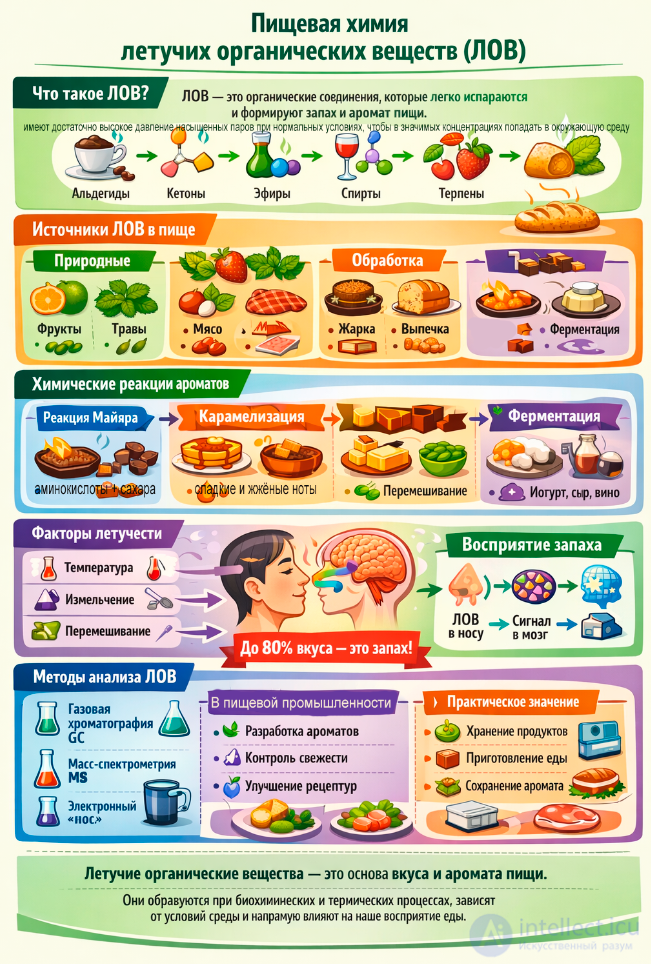
Enzymatic processes: the lipoxygenase pathway leads to the formation of aldehydes and alcohols from unsaturated fatty acids.
Microbiological reactions: lactic acid bacteria synthesize diacetyl and acetoin, shaping the flavor of fermented dairy products.
Thermal processing: Maillard reactions and caramelization create complex mixtures of aromatic compounds.
Lipid oxidation: leads to the appearance of aldehydes and ketones, often associated with rancidity.
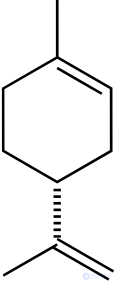
Limonene, a common biogenic volatile organic compound, is emitted into the atmosphere predominantly by trees growing in coniferous forests.
Aroma formation: VOCs determine the uniqueness of the flavor of wine, coffee, chocolate, and cheese.
Quality control: analysis of volatile substances is used to assess the freshness and degree of spoilage of products.
Storage technologies: regulating conditions (temperature, humidity, packaging) makes it possible to slow the formation of undesirable compounds.
Creation of food additives: synthetic and natural flavorings reproduce or enhance natural smells.
Respiratory, allergic, or immune effects in infants and children are associated with anthropogenic volatile organic compounds and other indoor or outdoor air pollutants.
Some VOCs, such as styrene and limonene, can react with nitrogen oxides or with ozone to form new oxidation products and secondary aerosols, which can cause symptoms of sensory irritation. VOCs contribute to the formation of tropospheric ozone and smog.
Health consequences include irritation of the eyes, nose, and throat; headaches, impaired coordination, nausea, hearing impairment, and damage to the liver, kidneys, and central nervous system. Some volatile organic compounds (VOCs) are suspected or known to cause cancer in humans. Key signs or symptoms associated with exposure to VOCs include conjunctival irritation, nose and throat discomfort, headache, allergic skin reaction, shortness of breath, decreased serum cholinesterase levels, nausea, vomiting, nosebleed, fatigue, dizziness.
The ability of organic chemicals to cause health effects varies greatly, from highly toxic to those with no known health effects. As with other pollutants, the extent and nature of the health effects depend on many factors, including the level of exposure and the duration of exposure. Irritation of the eyes and respiratory tract, headaches, dizziness, visual disturbances, and memory impairment are some of the immediate symptoms that some people have experienced shortly after exposure to certain organic substances. At present, little is known about the health effects that arise at the levels of organic substances typically found in homes.
Although the concentrations of benzene, toluene, and methyl tert-butyl ether (MTBE) in breast milk samples were zero compared with the concentrations found in indoor air, they increase the concentration of VOCs to which we are exposed throughout the day. One study notes a difference between VOCs in alveolar breath and inhaled air, suggesting that VOCs enter the body, are metabolized, and are eliminated via an extrapulmonary route. VOCs also enter the body through drinking water at various concentrations. Some VOC concentrations exceeded the Environmental Protection Agency's National Primary Drinking Water Regulations and China's National Drinking Water Standards established by the Ministry of Ecology and Environment.
The presence of volatile organic compounds (VOCs) in air and groundwater has prompted additional research. Several studies have been conducted to measure the effects of dermal absorption of specific VOCs. Dermal exposure to VOCs such as formaldehyde and toluene reduces the activity of antimicrobial peptides in the skin, such as cathelicidin LL-37, human β-defensin 2 and 3. Xylene and formaldehyde aggravate allergic inflammation in animal experiments. Toluene also increases the dysregulation of filaggrin: a key protein in dermal regulation. This was confirmed by immunofluorescence to confirm the loss of protein and by Western blotting to confirm the loss of mRNA. These experiments were conducted on human skin samples. Exposure to toluene also reduced the water content in the transepidermal layer, which makes the skin layers vulnerable.
Emission limit values for VOCs in indoor air are published by AgBB, AFSSET, the California Department of Public Health, and other organizations. These regulations have prompted a number of companies in the paint and adhesive industries to adapt their products by reducing VOC levels. VOC labeling and certification programs may inadequately assess all VOCs emitted by a product, including some chemical compounds that may be significant for indoor air quality. Each ounce of colorant added to tinting paint can contain 5 to 20 grams of VOCs. However, obtaining a dark color may require 5 to 15 ounces of colorant, which amounts to 300 or more grams of VOCs per gallon of paint.
VOCs are also found in hospitals and healthcare facilities. In these settings, these chemicals are widely used for cleaning, disinfection, and hygiene of various areas. Thus, healthcare workers such as nurses, doctors, sanitation staff, etc., may experience adverse health effects, for example, asthma; however, further research is needed to determine the exact levels and factors influencing exposure to these compounds.
The concentration levels of individual VOCs, such as halogenated and aromatic hydrocarbons, vary significantly between areas of the same hospital. As a rule, ethanol, isopropanol, ether, and acetone are the main compounds indoors. Following the same logic, a study conducted in the United States found that nursing assistants are exposed to the greatest levels of compounds such as ethanol, while those who prepare medical equipment are exposed to the greatest levels of 2-propanol.
As for the exposure of cleaning and hygiene staff to VOCs, a study conducted in 4 hospitals in the United States showed that workers engaged in sterilization and disinfection are associated with exposure to d-limonene and 2-propanol, while those responsible for cleaning with chlorine-containing products are more likely to be exposed to higher levels of α-pinene and chloroform. Those who perform floor and other surface cleaning work (for example, floor polishing) and who use quaternary ammonium compounds, alcohol, and chlorine-containing products are associated with higher levels of VOC exposure than the two previous groups, that is, they are particularly associated with exposure to acetone, chloroform, α-pinene, 2-propanol, or d-limonene.
Other healthcare facilities, such as nursing homes and elderly care institutions, have rarely been the subject of studies, although elderly and vulnerable populations may spend a significant amount of time in these settings, where they may be exposed to VOCs generated by the frequent use of cleaning agents, sprays, and air fresheners. One study identified more than 200 chemicals, of which 41 have adverse health effects, and 37 of these are VOCs. Health consequences include skin sensitization, reproductive and organ-specific toxicity, carcinogenicity, mutagenicity, and endocrine-disrupting properties. In addition, another study conducted in the same European country found that there is a significant association between shortness of breath in the elderly and increased exposure to VOCs, such as toluene and o-xylene, in contrast to the rest of the population.
Hospitality workers are also exposed to volatile organic compounds from various sources, including cleaning agents (air fresheners, floor cleaners, disinfectants, etc.), building materials and furniture, as well as fragrances. One of the most common volatile organic compounds found in the hospitality sector are alkanes, which are a main ingredient of cleaning agents (35%). Other products present in the hospitality sector that contain alkanes are laundry detergents, paints, and lubricants. Housekeepers, in particular, may also be exposed to formaldehyde, which is present in some fabrics used to make towels and bed linen, however, exposure decreases after several washes. Some hotels still use bleach for cleaning, and this bleach can form chloroform and tetrachloromethane. Fragrances are often used in hotels and consist of many different chemicals.
Exposure to volatile organic compounds (VOCs) in the hospitality sector is associated with many negative health effects. VOCs contained in cleaning agents can cause irritation of the skin, eyes, nose, and throat, which can lead to dermatitis. VOCs in cleaning agents can also cause more serious conditions, such as respiratory diseases and cancer. One study showed that n-nonane and formaldehyde are the main causes of irritation of the eyes and upper respiratory tract, while chloroform and formaldehyde increase the risk of developing cancer. It has also been shown that some solvent-based products can damage the kidneys and reproductive organs. One study showed that a hotel's star rating can influence VOC exposure, since hotels with a lower star rating tend to use lower-quality materials for furnishings. In addition, due to a trend among high-end hotels toward greater environmental friendliness, there is a shift toward using less aggressive cleaning agents.
Another similar environment that exposes workers to VOCs is retail spaces. Studies have shown that in retail spaces the concentration of VOCs is higher than in all other indoor environments, such as homes, offices, and vehicles. The concentration of the VOCs present, as well as their types, depends on the type of store, but common sources of VOCs in retail spaces are vehicle exhaust, building materials, cleaning agents, merchandise, and fragrances. One study showed that the concentration of VOCs was higher in retail storage areas compared with sales areas, especially formaldehyde. In retail spaces, the concentration of formaldehyde ranged from 8.0 to 19.4 µg/m³ compared with 14.2–45.0 µg/m³ in storage areas. Occupational exposure to VOCs also depends on the task being performed. One study showed that workers were exposed to peak VOC concentrations when removing plastic film from new merchandise. This peak was 7 times higher than the peak values of total VOC concentration during all other tasks, which contributed significantly to VOC exposure among retail workers, despite the fact that this was a relatively short task.
One way to minimize the concentration of volatile organic compounds in retail and food service is to ensure proper air ventilation. Employers can ensure proper ventilation by arranging furniture in a way that improves air circulation, as well as by checking whether the heating, ventilation, and air conditioning (HVAC) system is working properly to remove pollutants from the air. Workers can make sure that ventilation openings are not blocked.
Gas chromatography (GC) — the main method for separating and identifying VOCs.
Mass spectrometry (MS) — makes it possible to accurately determine the structure of compounds.
Sensory analysis — assesses the human perception of smell and taste.
Obtaining samples for analysis is a complex task. VOCs, even at hazardous concentrations, are in a diluted state, so preliminary concentration is usually required. Many components of the atmosphere are mutually incompatible, for example, ozone and organic compounds, peroxyacyl nitrates and many organic compounds. In addition, the collection of VOCs by condensation in cold traps also results in the accumulation of a large amount of water, which, as a rule, must be selectively removed depending on the analytical methods used. To collect VOCs at low concentrations for analysis, solid-phase microextraction (SPME) methods are used. For breath analysis, the following methods are used for sampling: gas sampling bags, syringes, evacuated steel and glass containers.
In the United States, standard methods were developed by the National Institute for Occupational Safety and Health (NIOSH) and another by the Occupational Safety and Health Administration (OSHA). Each method uses a single-component solvent; however, butanol and hexane cannot be sampled on the same sample matrix using NIOSH or OSHA methods.
Volatile organic compounds (VOCs) are quantified and identified by two main methods. The primary method is gas chromatography (GC). GC instruments make it possible to separate gaseous components. Combined with a flame ionization detector (FID), GC can detect hydrocarbons at parts-per-trillion levels. Using electron capture detectors, GC is also effective for detecting organohalogen compounds, such as chlorinated hydrocarbons.
The second main method associated with VOC analysis is mass spectrometry, which is usually combined with GC to form the hybrid GC-MS method.
Direct-injection mass spectrometry methods are often used for the rapid detection and accurate quantification of VOCs. PTR-MS is one of the methods most widely used for online analysis of biogenic and anthropogenic VOCs. It is reported that PTR-MS instruments based on time-of-flight mass spectrometry achieve detection limits of 20 pptv after 100 ms and 750 ppqv after 1 min of measurement (signal integration) time. The mass resolution of these devices ranges from 7000 to 10,500 m/Δm, which makes it possible to separate most common isobaric VOCs and quantify them independently.
Human exhaled air contains several thousand volatile organic compounds and is used in breath biopsy as a VOC biomarker for the diagnosis of diseases, such as lung cancer. One study showed that «volatile organic compounds... are mainly transported by the blood and therefore make it possible to track various processes in the body». And, apparently, VOC compounds in the body «can either be formed as a result of metabolic processes or inhaled/absorbed from exogenous sources», such as environmental tobacco smoke. Chemical fingerprinting and analysis of exhaled air for the presence of volatile organic compounds have also been demonstrated using chemical sensor arrays, which use pattern recognition to detect the components of volatile organic compounds in complex mixtures, such as exhaled gas.
To ensure the comparability of VOC measurements, reference standards traceable to SI units are required. For a number of VOCs, gaseous reference standards are available from suppliers of specialty gases or from national metrology institutes, either as cylinders or by means of dynamic generation methods. However, for many VOCs, such as oxygenated VOCs, monoterpenes, or formaldehyde, standards at the relevant concentration are lacking due to the chemical reactivity or adsorption of these molecules. At present, several national metrology institutes are working to address the missing standard gas mixtures at trace-level concentration, minimizing adsorption processes and improving the zero gas. The ultimate goals are to ensure traceability and long-term stability of standard gases in accordance with the data quality objectives (DQO, the maximum uncertainty in this case is 20%) required by the WMO / GAW program.
Volatile organic substances are the key molecules of food chemistry, shaping the aromatic palette of products. Their study is important for understanding the processes of ripening, storage, and processing of food, as well as for developing new technologies and improving the quality of nutrition.

Comments