
Lecture
Lipids are derivatives of fatty acids and alcohols, constructed by
means of ester, ether, glycosidic, amide, and other
bonds. Lipids are defined as a complex mixture of organic compounds with similar
physicochemical properties.
Lipids are insoluble in water (hydrophobic) but readily soluble in
organic solvents (gasoline, chloroform). A distinction is made between lipids
of plant and animal origin. In plants they accumulate in
seeds and fruits, most of all in nuts (up to 60 %). In animals, lipids
are concentrated in subcutaneous, brain, and nervous tissues. Fish contains
10-20 % lipids, pork up to 33 %, and beef – 10 %.
Edible fats and oils are an essential component of food,
a source of energy and building material for humans, and a supplier
of necessary substances such as: unsaturated fatty acids, phospholipids,
fat-soluble vitamins, and sterols.
The recommended fat content in the human diet by calorie count
is 30-33 % or, on average, 80-100 g per day. Moreover, 1/3 should consist of
unheated vegetable oils (sunflower, olive, flaxseed, pumpkin,
peanut, etc.). The second third – animal fats (butter or products
of animal origin with a corresponding percentage of fat content). No
more than a third may be accounted for by so-called cooking fats, i.e. fats
used for preparing food (spreads, blended fats, margarines, etc.).
The digestion of 1 gram of lipid releases 9 kcal or 37.66 kJ of energy.
Classification by physical state. By physical state,
lipids can be:
- liquid lipids – most vegetable oils (for example, coconut oil is an
exception); vegetable oils are liquids because they contain
a high proportion of unsaturated fatty acids (oleic, linoleic, linolenic,
arachidonic acids);
- solid lipids – animal fats; animal fats are solid because
they contain a high proportion of saturated fatty acids (lauric, myristic,
palmitic, stearic, arachidic acids).
Classification by structure and composition. By structure and composition, lipids
are divided into three classes (Figure 24).
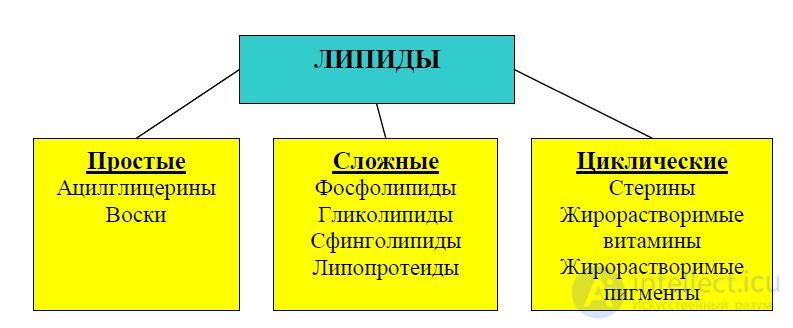
Figure 24 – Classification of lipids by structure and composition
Acylglycerols (glycerides) – esters of the trihydric alcohol glycerol
and high-molecular-weight carboxylic acids (Figure 25). In essence, they are
fats.
Waxes – esters of high-molecular-weight monohydric alcohols and
high-molecular-weight monobasic carboxylic acids. Depending on
their origin, a distinction is made between plant, animal, waxes produced
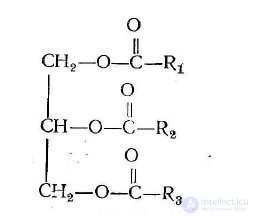
Figure 25 – Formula of an acylglycerol
by insects, and fossil waxes. Waxes are widely distributed in nature. In plants
they cover the leaves, stems, trunks, and fruits with a thin layer, protecting them from
wetting by water, drying out, and the action of microorganisms. Among plant waxes
of industrial importance are the waxes covering palm leaves and the lipid waxes
of rice and sunflower. Among waxes of animal origin, the most significant are
spermaceti and spermaceti oil, and wool fat; among insect waxes – beeswax.
The first two products are extracted from the oily mass contained in the head
of the sperm whale and in the long canal running along the entire body. «Wool fat» –
is the yolk (grease) of sheep's wool. Lanolin is obtained from it. Beeswax is obtained from
honeycombs. Fossil waxes – mountain wax (ozokerite), brown-coal wax.
Phospholipids – compounds whose hydrolysis, along with
alcohols (most often glycerol) and high-molecular-weight fatty acids, yields
phosphoric acid, nitrogenous bases, amino acids, and a number of other compounds.
Phospholipids are an obligatory component of plants and animals.
Glycolipids – a group of neutral lipids whose molecules
contain residues of monosaccharides and their derivatives. Glycolipids are widely
distributed in plants, animals, and microorganisms. They perform the functions
of structural lipids, taking part in the construction of membranes; they play an important role
in the formation of wheat gluten, which determines the baking quality
of flour.
Sphingolipids – a group of lipids whose molecules are based on
amino alcohols, the most common of which is sphingosine.
Lipoproteins contain protein residues, are part of cell membranes
and cell protoplasm, and affect metabolism.
Sterols – consist of fused rings; an example is
cholesterol.
Fat-soluble vitamins – retinol (vitamin A), calciferol
(vitamin D), tocopherol (vitamin E), phylloquinone (vitamin K).
Fat-soluble pigments – lipids belonging to this group are
insoluble in water but soluble in organic solvents. Carotenoids
(colored yellow or orange) impart color to many lipids –
to most vegetable oils, butter, beeswax, etc.
They are precursors of vitamin A. Chlorophyll (a green pigment)
imparts color to olive oil.
Classification by relation to alkalis. Depending on the relation
of lipids to alkalis, they are divided into two large groups:
- saponifiable lipids – simple and complex lipids that, upon interaction
with alkalis, are hydrolyzed to form salts of high-molecular-weight acids,
which have been given the name soaps;
- non-saponifiable lipids – these include compounds that do not undergo
alkaline hydrolysis (sterols, fat-soluble vitamins, ethers, and
etc.).
Classification by functions in the body. According to their functions in a living
organism, lipids are divided into structural and storage:
- structural lipids (mainly phospholipids) form complex
compounds with proteins and carbohydrates, from which the membranes of the cell and
cellular structures are built, and take part in a variety of processes occurring in the cell;
in addition to phospholipids, structural lipids include glyco-, sulfo-, and
some other lipids;
- storage lipids (mainly acylglycerols) are the energy
reserve of the body and take part in metabolic processes; in plants they
accumulate mainly in fruits and seeds, and in animals and fish in
subcutaneous fatty tissues and tissues surrounding internal organs, as well as in
the liver, brain, and nervous tissues.
Classification by origin. By origin, lipids are divided into:
- plant lipids – lipids of vegetable oils, plant wax, and
etc.;
- animal lipids – animal fats, spermaceti, spermaceti oil,
wool fat, beeswax, etc.
Comparison of saturated and unsaturated fats
Saturated fats are found mainly in animal products and, in excess, increase the risk of cardiovascular diseases. Unsaturated fats (mono- and polyunsaturated) are found in vegetable oils, nuts, and fish and are beneficial for the heart, blood vessels, and brain.
| Type of fats | Sources | Physical properties | Effect on the body | Recommendations |
|---|---|---|---|---|
| Saturated | Meat, dairy products, butter, coconut and palm oil | Solid at room temperature | Raise the level of «bad» cholesterol (LDL), increase the risk of atherosclerosis and coronary heart disease | Limit to ~10% of the total caloric intake of the diet |
| Monounsaturated | Olive oil, canola oil, avocado, nuts | Liquid at room temperature, thicken in the refrigerator | Lower LDL levels, raise «good» cholesterol (HDL), support vascular health | Recommended for inclusion in the diet as the main source of fats |
| Polyunsaturated | Fish (salmon, mackerel), flaxseed oil, seeds, walnuts | Liquid at room temperature | Contain omega‑3 and omega‑6, important for the brain and vision, reduce inflammation and the risk of cardiovascular diseases | Include regularly, especially omega‑3 (fish 2–3 times a week) |
| Trans fats (artificial) | Margarine, fast food, industrial baked goods | Solid, produced by the hydrogenation of oils | Sharply increase the risk of cardiovascular diseases, diabetes, and inflammation | Avoid completely |
Saturated fats are needed in small amounts, but their excess is harmful.
Unsaturated fats (especially omega‑3) are vital for the functioning of the brain, heart, and immune system.
Trans fats — are the most dangerous; it is best to exclude them completely.
Balance: approximately 1/3 saturated and 2/3 unsaturated fats in the diet is considered optimal.
Excessive consumption of saturated fats → elevated cholesterol, risk of heart attack and stroke.
Deficiency of unsaturated fats → problems with memory and concentration, dry skin, hormonal imbalance.
Practical tip: replace part of your butter and fatty meat with olive oil, nuts, and fish.
Lipids are chemically highly reactive substances.
Hydrolysis of lipids. Three variants of lipid hydrolysis are distinguished:
- acid hydrolysis proceeds in the presence of acid solutions;
- alkaline hydrolysis proceeds in the presence of alkali solutions;
- enzymatic hydrolysis proceeds under the action of lipolytic
enzymes (lipase).
As a result of lipid hydrolysis, the ester bonds are broken.
From triacylglycerol, diacylglycerol and a molecule of
fatty acid are first formed, then monoacylglycerol and a molecule of fatty acid, and further
the trihydric alcohol glycerol and a molecule of fatty acid.
The hydrolysis of an acylglycerol under the action of lipase can be represented as a
scheme:
triacylglycerol → diacylglycerol + fatty acid → monoacylglycerol
+ fatty acid → glycerol + fatty acid
The overall equation of the glyceride hydrolysis reaction is presented in
Figure 26.
The accumulation of free fatty acids gives the product a sour taste and
aroma, and therefore the reaction of fat hydrolysis is called the reaction of souring.
The hydrolytic breakdown of the lipids of food products is one of the causes
of the deterioration of their quality and, ultimately – of their spoilage. The processes of lipid hydrolysis
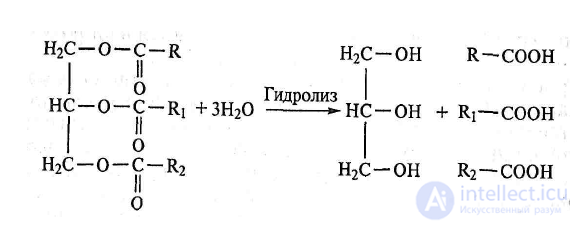
Figure 26 – Overall equation of the glyceride hydrolysis reaction
are accelerated at elevated humidity and storage temperature, in the presence
of hydrogen ions, metals of variable valence (lead, copper, manganese,
iron, cobalt), and the enzyme lipase.
Interesterification of lipids. This reaction leads to the exchange of
fatty acid residues in lipids (Figure 27). A distinction is made between intramolecular
interesterification, when an acyl radical migrates within a lipid molecule, and
intermolecular interesterification, when an acyl radical migrates between
different lipid molecules. This reaction leads to a change in the physico-
chemical properties of fat mixtures.
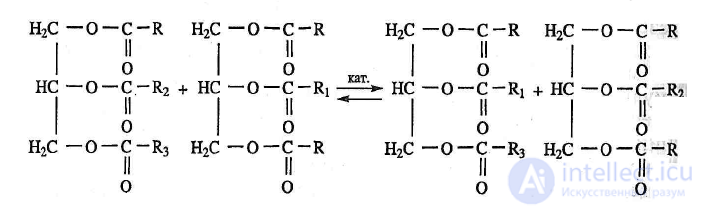
Figure 27 – Equation of the intermolecular interesterification reaction of
glycerides
The interesterification of high-melting animal fats with liquid
vegetable oils makes it possible to obtain plastic fats, which are the
basis for producing margarine. It is also possible to obtain an analog of milk
fat and confectionery fat.
Hydrogenation of lipids. During the hydrogenation of lipids, the multiple
bonds of the fatty acid residues are broken with the addition of hydrogen
(Figure 28). In this way, the fatty acid composition of the
original lipid can be changed in a directed manner. First of all, the multiple bonds of linolenic
acid are cleaved, then those of linoleic, then of oleic. Ultimately,
stearic acid is formed.
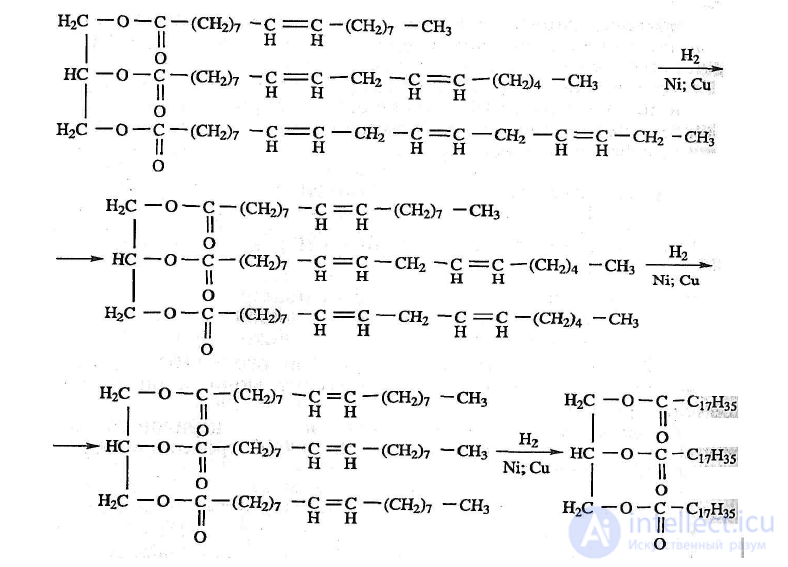
Figure 28 – Equation of the glyceride hydrogenation reaction
As a result of the hydrogenation reaction, a product with predetermined
properties is obtained; it is called hydrogenated fat (salomas). Hydrogenated fats are used in the production of margarine
and spreads.
Oxidation of lipids. Lipids undergo oxidation by atmospheric oxygen.
The process proceeds in two stages.
The primary products of oxidation are hydroperoxides and peroxides,
which become incorporated into the carboxylic acid radical. The action occurs fastest
on the carbon nearest to the double bond, while in saturated fatty
acids the middle of the fatty acid chain is attacked by oxygen. The primary oxidation products formed
are unstable, and as a result of their transformation
the carbon atom chain is broken, and secondary oxidation products are formed:
alcohols, aldehydes, less often ketones, and carboxylic acids with a carbon chain
shorter than that of the fatty acid.
The lipid oxidation process can be represented as a scheme:
fatty acid → hydroperoxide → peroxide → alcohols →
aldehydes → carboxylic acids
The oxidation of lipids by atmospheric oxygen is an autocatalytic
process. Oxidation proceeds by a chain mechanism; the oxidation products are able
to react with one another and form polymers. The direction and depth of
oxidation depend on the composition of the fatty acids. As the degree of
unsaturation of the fatty acids increases, the rate of their oxidation increases. The oxidation
of saturated fatty acids proceeds significantly more slowly than that of
unsaturated ones. Free fatty acids oxidize more easily than the corresponding
bound ones.
The rate of lipid oxidation is increased by the presence of moisture, metals
of variable valence (lead, copper, manganese, iron, cobalt), hydrogen ions,
the enzyme lipoxygenase, elevated temperature, and the presence of light.
Lipid oxidation may also proceed under the action of biological
catalysts – enzymes. In the process of enzymatic lipid oxidation,
the enzymes lipase and lipoxygenase participate jointly. At the first stage of oxidation,
lipase carries out the hydrolysis of triacylglycerols. This stage is also called
enzymatic souring. Then lipoxygenase catalyzes the formation
of hydroperoxides and peroxides of unsaturated fatty acids (most often these are linoleic and
linolenic acids). Upon the breakdown of hydroperoxides and peroxides, substances
similar to the products of oxidation by oxygen are formed – secondary
oxidation products are formed: alcohols, aldehydes, less often ketones, and carboxylic acids with a
carbon chain shorter than that of the fatty acid.
The presence of antioxidants slows down or prevents the oxidation process.
Antioxidants include substances whose presence leads to the termination of the chains
of oxidation. Instead of active radicals, which would initiate the process
of oxidation, stable radicals are formed that do not take part in this
process. Among natural antioxidants, tocopherol (vitamin E) is often used;
among synthetic ones – compounds of a phenolic nature: butylated hydroxytoluene,
butylated hydroxyanisole. When antioxidants are added in an amount of 0.01 %, the resistance
of fats to oxidation increases by a factor of 10-15.
The accumulation of primary and secondary oxidation products gives the product
a bitter aroma and taste, and therefore the reaction of fat oxidation is called the reaction of
rancidification. The oxidation products cause the destruction of pigments, which leads
to a change in color. At the same time, a tallowy off-taste appears (tallowing),
caused by the formation of diol groupings (fragments
of dihydric alcohols). As a result, the nutritional and physiological
value decreases, and the products may become unfit for food (food spoilage
of fats). The least stable during storage are butter, margarine, and cooking
fat.
Fatty acids containing two or more unsaturated bonds are called
polyunsaturated fatty acids (PUFAs). The most important are
linoleic, linolenic, and arachidonic acids.
CH3-(CH2)4-CH=CH-CH2-CH=CH-(CH2)7-COOH
linoleic acid
CH3-CH2-CH=CH-CH2-CH=CH-CH2-CH=CH-(CH2)7-COOH
linolenic acid
CH3-(CH2)4-CH=CH-CH2-CH=CH-CH2-CH=CH-CH2-CH=CH-(CH2)3-COOH
arachidonic acid
Linoleic and linolenic acids are not synthesized in the human body;
arachidonic acid is synthesized from linoleic acid with the participation
of pyridoxine (vitamin B6). For this reason they have been given the name of indispensable or
essential fatty acids. The complex of PUFAs is a vitamin-like
compound – vitamin F.
PUFAs perform the following functions:
- they participate as structural elements in the phosphatides and lipoproteins
of cell membranes;
- they are part of connective tissue and the sheaths of nerve fibers;
- they affect cholesterol metabolism, stimulating its oxidation and elimination from
the body, and also form esters with it that do not precipitate out of solution and,
consequently, are substances with a preventive action against
atherosclerosis;
- they exert a normalizing effect on the walls of blood vessels;
- they participate in the metabolism of B-group vitamins (pyridoxine and thiamine);
- they stimulate the body's defense mechanisms (increase resistance to
infectious diseases, the effects of radiation, etc.).
Arachidonic acid has the greatest biological activity. Its
main source is sunflower oil. The average content of PUFAs in
the diet, calculated as linoleic acid, should amount to 4-6 % of the total
caloric intake of food. An excess of PUFAs, like a deficiency, has a negative effect on
human health.
At present, unsaturated fatty acids are subdivided into
ω-families (omega-families). The number of the ω-family – is the number of the carbon atom next to
which the first double bond is located relative to the methyl group in
the PUFA molecule. The most important are the unsaturated fatty acids
of the ω-3 and ω-6 families. The acids of the ω-3 family: α-linolenic, eicosapentaenoic,
docosahexaenoic. Linoleic, γ-linolenic, and arachidonic acids belong to the
ω-6 family.
A clear inverse relationship has been established between the daily intake of ω-3
fatty acids and the degree of atherosclerotic lesions of the blood vessels. Moreover, the
more ω-3 is contained in the body's tissues, the fewer the manifestations of atherosclerosis.
ω-3 fatty acids lower the level of triglycerides in the blood serum, reduce
the risk of blood clot formation in the vessels, promote the synthesis of substances that support
the body's immunity, and are necessary for the normal function of the adrenal glands and
the thyroid gland.
ω-3 acids are found in fish fat, flaxseed and soybean oils, and in walnut
oil; the source of ω-6 fats is sunflower and corn oil. It is very important
to maintain an optimal ratio between ω-3 and ω-6 fatty
acids. The recommended dietary ω-6:ω-3 ratio for a healthy
person is 10:1, and for therapeutic nutrition – from 3:1 to 5:1.
4.5 Physiological functions of lipids
In the human body, lipids perform a whole range of diverse functions.
1. Structural function – lipids are part of the cellular and
extracellular membranes of all tissues.
2. Energy function – the oxidation of 1 g of lipids releases 9 kcal
or 37.66 kJ of energy.
3. Protective function – lipids protect the body from overcooling, since
they prevent the loss of heat, as well as from mechanical damage
(for example, the kidneys); lipids secreted by the sebaceous glands give the skin
elasticity and protect it from drying out and cracking.
4. Solvents of fat-soluble vitamins – lipids are
solvents of retinol (vitamin A), calciferol (vitamin D), tocopherol
(vitamin E), and phylloquinone (vitamin K); they promote their absorption.
5. They ensure the directedness of nerve signal flows – this function
is performed by the lipids that are part of nerve cells and their processes.
4.6 Indicators characterizing the quality of edible fats
Quantitatively, the quality of lipids is assessed by indicators that
are called numbers (values).
The acid number – is the number of milligrams of potassium hydroxide
spent on neutralizing the free fatty acids contained in 1 g
of fat. This indicator characterizes the amount of free fatty acids
contained in the fat. The storage of food products containing fats and oils
is always accompanied by the hydrolysis of the latter, and therefore the magnitude of the acid
number can be used to judge their quality.
The saponification number – is the number of milligrams of potassium hydroxide
needed to neutralize the free and bound fatty acids
contained in 1 g of fat. From the saponification number one can judge the average
molecular weight of the fatty acids that make up the fat and determine
the amount of alkali needed for saponifying the fat.
The iodine number – is the number of grams of iodine that enters into interaction
with 100 g of fat. It characterizes the level of unsaturation of the fatty acids that are part
of the fat. The iodine number is used to determine the type of fat, its ability
to «dry», and to calculate the amount of hydrogen needed for its
hydrogenation.
The peroxide number indicates the presence and level of content of fat
derivatives of a peroxide nature (peroxides and hydroperoxides) formed during
the storage and processing of food raw materials and food products.
During the production and storage of food products, both in industry and in
domestic conditions, in the course of the technological flow the lipids of the original raw material
undergo diverse transformations. All this affects their composition and,
consequently, the nutritional and biological effectiveness of the finished products.
The depth and intensity of these processes depend on the chemical composition of the lipids,
the nature of the accompanying, added, and formed substances (for example,
antioxidants), the humidity, the presence of microorganisms, the activity of enzymes,
contact with atmospheric oxygen and, consequently, on the method of packaging the fat and many
other factors. All of the above indicates the diversity and complexity of the processes
occurring in the lipid complex. Thus, in vegetable oils containing
a significant amount of unsaturated fatty acids, the processes
of autoxidation by atmospheric oxygen mainly occur.
Owing to their low humidity and the absence of mineral substances, vegetable
oils are not affected by microorganisms and, in the dark, can be stored for a relatively
long time. The best conditions for their preservation are: a temperature of 4-6 0C,
a relative air humidity of – 75 %. At home they should be stored in closed
glass containers in the dark, leaving a minimal air space in the bottle.
Animal fats (beef, pork, mutton), by their fatty acid composition,
should have high stability during storage. But they practically
contain no antioxidants, and this reduces their stability during storage. The most
unstable are butter, margarines, and combined (blended) oils.
High humidity and the presence of protein and mineral substances promote the development
of microflora and, consequently, the intensive development of processes of biochemical
rancidification. Among the main factors ensuring the preservation of butter
and margarine are a low temperature and the absence of light, and the addition
of preservatives and antioxidants.
No less complex processes occur during storage in the lipid complex
of food raw materials and finished products. Thus, during the storage of wheat flour,
processes of hydrolytic and oxidative rancidification take place, and the products formed
interact with proteins, affecting the baking properties of wheat flour. During
the development of oxidative processes in products, substances undesirable for
human health accumulate, and therefore the protection of lipids from oxidation is an important
task.
1. What is the chemical nature of lipids?
2. What is the energy value of lipids equal to?
3. State the daily requirement of the human body for lipids.
4. What underlies the classifications of lipids? What classifications
of lipids do you know?
5. Into what groups are lipids divided by origin? Give examples.
6. Into what groups are lipids divided by structure and composition? Give examples.
7. Give a characterization of simple lipids.
8. Give a characterization of complex lipids.
9. What are waxes? What is their biological role and distribution in nature and food raw materials?
10. Characterize cyclic lipids.
11. Into what groups are lipids divided by physical state? Give examples.
12. Into what groups are lipids divided by their relation to alkalis? Give examples.
13. Into what groups are lipids divided by their functions in the body? Give examples.
14. Write the equation of the glyceride hydrolysis reaction.
15. List the intermediate products of glyceride hydrolysis.
16. What are the enzymes that accelerate the hydrolysis of fats called?
17. What factors promote the hydrolysis of fats?
18. What is the reaction of fat hydrolysis otherwise called? What indicator makes it possible to monitor the process of fat hydrolysis?
19. Write the equation of the lipid interesterification reaction. For what purpose is it used in industry?
20. Write the equation of the lipid hydrogenation reaction.
21. What is hydrogenated fat (salomas)?
22. Write the equation of the fat oxidation reaction.
23. List the products of fat oxidation.
24. What is the enzyme that accelerates the oxidation of fats called?
25. What other factors promote the oxidation of fats?
26. What is the reaction of fat oxidation otherwise called? What indicator makes it possible to monitor the oxidation of fats?
27. What are the substances that slow down the oxidation of fats called?
28. Which fatty acids are called polyunsaturated? List their functions in the human body.
29. Indicate the differences in the structure of saturated and unsaturated fatty acids.
30. List the physiological functions of lipids.
31. By what indicators is the quality of fats assessed? What does an increase in the values of these indicators during the storage and processing of fats indicate?
32. Describe the food spoilage of fats.

Comments