
Lecture
Logotherapy is a type of existential psychotherapy based on the search for and analysis of the meanings of existence. It was developed in the middle of the 20th century. The founder of logotherapy is Viktor Frankl. Logos is a Greek word that means both "meaning" and "spirit," with the second meaning carrying no religious connotation whatsoever. People are meaning-seeking beings, and the search for meaning is not in itself pathological. Existence confronts people with the need to find meaning in life. The main goal of logotherapy is to help clients in their search for meaning.
Viktor E. Frankl was born on March 26, 1905 in Vienna, Austria, into a Jewish family. The creation of logotherapy was rooted in Frankl's desire to find meaning in his own existence. Frankl proposed the term "logotherapy" in the 1920s. From 1938 to 1942 he worked as a neurologist and psychiatrist at the Jewish Hospital in Vienna, later becoming head of its neurology department. During this time Frankl wrote a draft of his first book. In 1942-1945 Frankl endured the agonizing experience of imprisonment in Nazi concentration camps, including Auschwitz and Dachau. For three years he fought for his life and managed to survive despite grueling daily forced labor, beatings, malnutrition, and illness. Frankl fully experienced all the hardships of fate and learned to find existential meaning in his suffering. During this period Frankl was able to observe how human nature manifests itself under extreme circumstances. Most prisoners chose merely to vegetate. However, in other prisoners the spirit rose; such people regarded the hardships of camp life as a test of their inner strength. They rose to the search for meaning in their lives. Despite their dire circumstances, these prisoners retained the ability to freely choose their inner life and their attitude toward others, turning their tragedies into triumphs.
Frankl wrote more than 30 books, some of which have been translated into many languages, along with numerous articles. Some of his major books are the following: "The Doctor and the Soul: From Psychotherapy to Logotherapy" and "Man's Search for Meaning: An Introduction to Logotherapy," among many others.
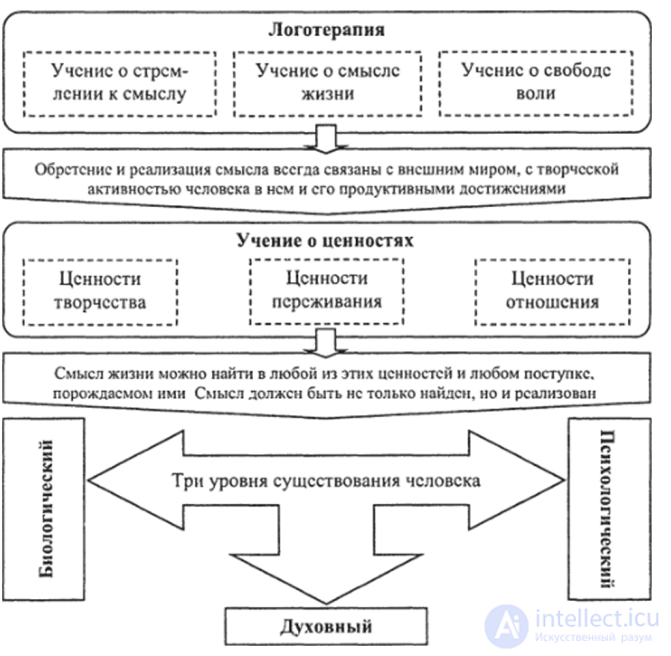
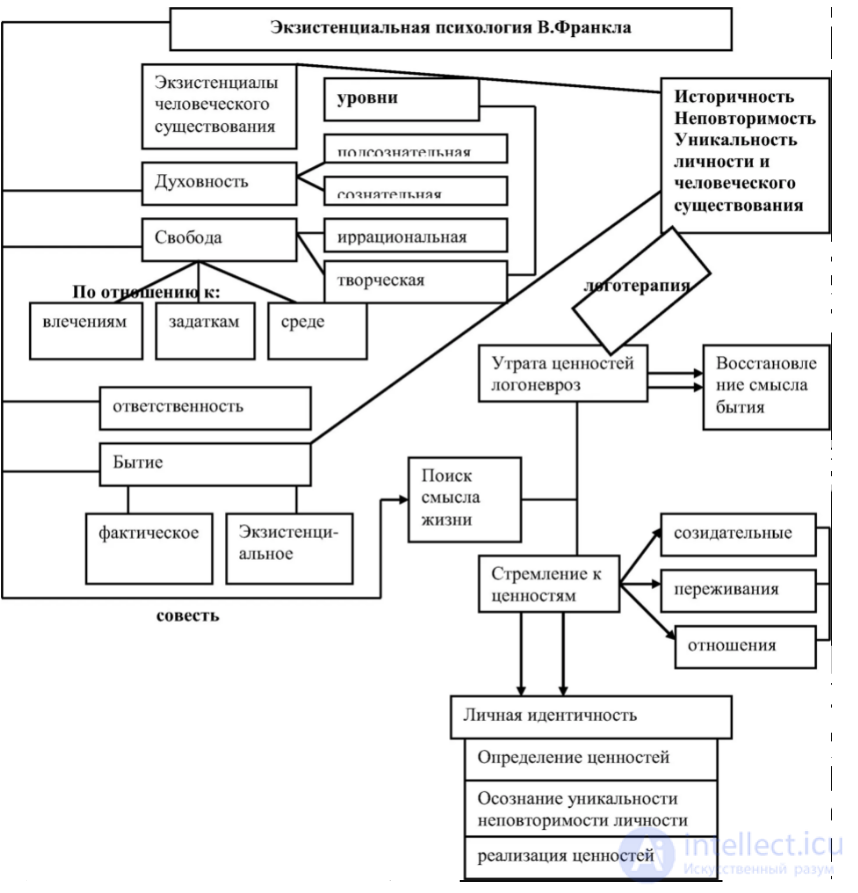
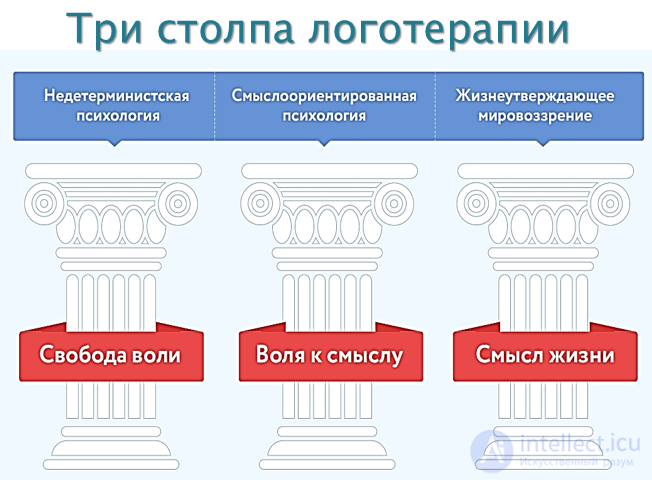
Freedom of will. Life is transient, temporary. However, this transience does not make life meaningless. The changing aspects of life are at the same time potentialities. People must understand what their transient possibilities are. People are constantly choosing which of the mass of transient potentialities will be realized and which will be "condemned" to non-realization.
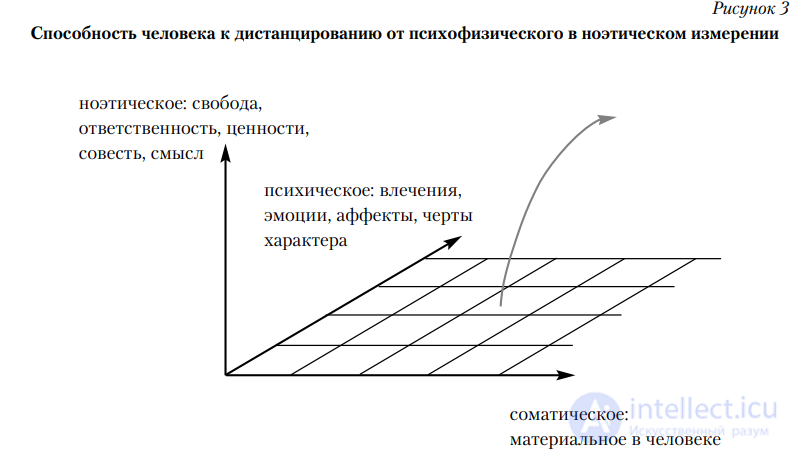
People possess freedom of will. Among living creatures, they alone are capable of self-detachment. People can reflect on the choices available to them and evaluate them. What matters is not the specific traits of people's character or their drives and instincts, but their point of view on what is happening to them and on themselves. When people rise above the bodily and psychic dimensions of their existence, they enter a new dimension, the so-called noological dimension. This noological dimension encompasses precisely human functions such as reflection, the ability to turn oneself into an object, and self-awareness.
The will to meaning is a fundamental motivational force. Frankl asserts that the striving to find meaning is the primary force in human life. This meaning is unique and specific to each individual. As Frankl discovered during his time in the concentration camp, people need something to live for. People are beings who encounter other people and arrive at meanings worth fulfilling. However, meaning does not coincide with being; rather, it is a kind of platform for being. Human existence is placed in jeopardy unless people view the world from a position of transcendence, oriented toward something beyond their own "self."
Logotherapy focuses on the will to meaning. People can actualize themselves only to the extent that they fulfill meaning.
Consciousness and the unconscious. The search for meaning involves both conscious activity and establishing contact with the unconscious layers of the "self." Logotherapy focuses on the spiritual existence of the human being. In this context, the word "spirit" carries no religious connotations whatsoever. Spiritual movements in people can be either conscious or unconscious. Consciousness implies awareness. The goal of logotherapy is to increase clients' awareness of their spiritual "self." People must be aware of personal responsibility, given the unique meaning of their lives, for their actions in particular situations that arise.
The goal of logotherapy is to help a person focus on the task that life sets before them and successfully accomplish it. Illness, loss, and suffering are not accidental—they contain meaning.
Frankl developed many methods for the interaction between therapist and client, but two are the most popular in contemporary science: dereflection and paradoxical intention.
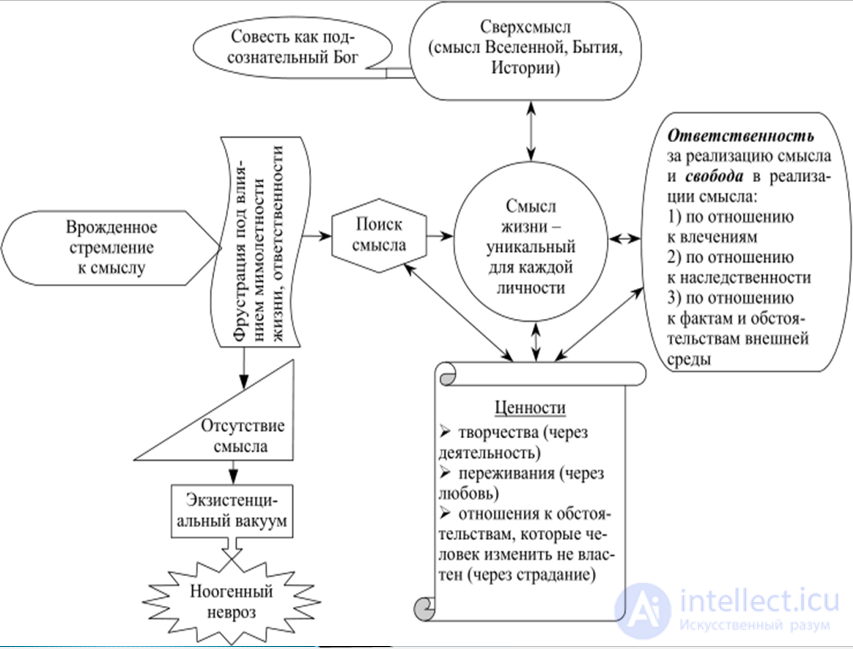
Conscience has its origins in the spiritual unconscious. Frankl believes that love and art are rooted not only in moral consciousness but also in the emotional, intuitive, non-rational depths of the spiritual unconscious. Conscience is the «voice» of transcendence, and conscience itself is transcendent.
Religious subconsciousness. Unconscious religiosity, or the religious unconscious, exists within the spiritual unconscious. People always relate to transcendence in a certain way, even on an unconscious level. This «unconscious God» is hidden in two ways. First, human attitudes toward God are hidden. Second, God himself is hidden. Even extremely irreligious people possess a hidden religiosity. The suppression of religiosity, like the suppression of other aspects of the unconscious, leads to neurosis.
The meaning of life. People contain within themselves many potential possibilities; they are not fully determined. Rather, people are free at every moment to decide what they will become in the next instant. In making decisions, they themselves determine which of their potential possibilities will be realized. At no stage of life can people avoid choosing among possibilities. People are always constrained by biological, sociological, and psychological limitations, yet they can either resist these constraints and shape them as needed, or consciously submit to them. Frankl writes: «To be human means to be responsible for fulfilling the meaning potentially inherent in a given life situation»68.
The meaning of death. Logotherapy notes that death does not deprive life of meaning. Death is inseparable from life and gives it meaning. Understanding the finitude of one's earthly existence prevents indefinite procrastination and fosters awareness of responsibility for one's own life.
Self-transcendence – an essential characteristic of human existence, embodying a person's striving to go beyond themselves. People become most fully human when they go beyond their own «I», either by fulfilling meaning or by encountering love for another person. Frankl believes that the fundamental human need is the search for meaning rather than the search for one's «I». A person can attain their essence only by taking responsibility for fulfilling meaning.
The opposite of neurotic suffering caused by difficulties in self-transcendence is a person finding meaning by going beyond the boundaries of their own Ego.
Sources of meaning. Frankl speaks of three main ways in which people can find meaning in life: 1) giving something to life (creative values); 2) taking something from life (experiential values, values of love); 3) taking a particular stance toward a fate that cannot be changed, for example, in the case of inoperable cancer (attitudinal values). In addition, people can find meaning in past experiences and in religion.
The main area in which people can go beyond themselves is work. What matters most is how people use their unique human qualities in performing their work, although some kinds of work are largely routine. The meaning of creativity can be sought in activities a person engages in during leisure time. Unemployment is an example of the effect of a lack of creative meaning.
In logotherapy, love is not regarded as a phenomenon secondary to sex. Sex can be an expression of mature love, but it is not in itself a form of love. Love as a form of self-transcendence has various characteristics. Love implies relating to another person as a spiritual being, understanding or grasping the inner core of the other's personality. A person moves into the depths of their own spiritual being under the influence of their partner's spiritual core. Infatuation rarely lasts long.
Love implies the ability to see potential in a loved one and to help him (or her) realize that potential. In genuine relationships based on love, there is no room for jealousy, since the other person is not treated as property. Frankl emphasizes that, in his view, love is not the only, nor even the best, way to fill life with meaning.
Fate can be shaped when this is possible. Otherwise it must be accepted. When people cannot change their circumstances—for example, in the case of an incurable illness or internment in a concentration camp—they can change their attitude toward these circumstances and toward life as a whole. Frankl uses the concept of «attitudinal values» in this connection. Through attitudinal values, even the tragic aspects of life can be transformed into something positive and creative. However, people should not accept their fate too readily, and should turn to attitudinal values only when they have become firmly convinced that they are powerless to change their fate.
Inevitable adverse situations give people the opportunity to «actualize the highest value, to fulfill the deepest meaning, the meaning of suffering» (Frankl, 1963, p. 178)71. People can respond to suffering in different ways. This depends on their choice. Some people are able to grow spiritually and become stronger through suffering. They can exercise their inner freedom for the purpose of turning difficult situations into achievements on a human level.
The search for meaning is, above all, oriented toward the future. But sometimes the past, too, can be a source of meaning. People sometimes devalue their past experiences as a source of meaning, although the understanding that nothing from the past is lost but merely stored away as an inviolable reserve can in itself fill a person's life with meaning.
Supra-meaning. Frankl (Frankl, 1963, 1988) uses the term «supra-meaning» when speaking of the ultimate meaning of suffering and of life. People are incapable of grasping the ultimate meaning of human suffering; they cannot break through the boundaries between the human world and the divine world. However, this does not mean that suffering has no such ultimate meaning. Supra-meaning can be grasped only through faith, not through intellectual means. Faith in God precedes the development in people of the capacity to have faith in the higher meaning of life. Frankl sees meaning in creating a deeply personalized religion that would allow people to address the supreme being in their own individual language.
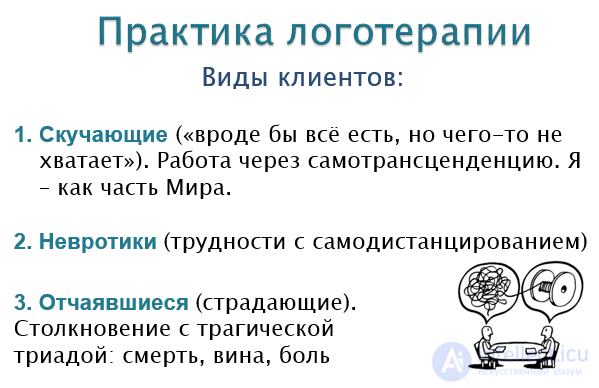
Existential frustration arises when the striving for meaning is frustrated. It is neither pathological nor pathogenic. Its main characteristics are apathy and boredom.
Existential vacuum. This term is used to describe a state in which people complain of inner emptiness, a sense of meaninglessness. Factors that sustain the existential vacuum include the suppression of the striving for meaning, avoidance of responsibility, the destruction of traditions and values, reductionist models in the sphere of education, insufficient striving for self-transcendence, and the neuroticization of humanity. Frankl noted that the destruction of traditions plays the main role in creating and sustaining the existential vacuum. Reductionist models in the fields of psychology and education lead people to begin believing that they are determined rather than that they themselves determine.
Existential frustration is linked to the suppression of the striving for meaning, as well as to the suppression of one's spirituality and religiosity.
Because of this suppression, people lose contact with their spiritual centers, which are the deepest sources of the sense of meaning.
The mechanisms for avoiding responsibility for the search for meaning are conformism, totalitarianism, and flight into depression, addiction, and aggression.
Many trends in contemporary psychology focus on self-actualization and self-expression, displacing from people's awareness the understanding that happiness and the realization of potential possibilities are «by-products» of self-transcendence—the ability to forget oneself rather than to focus excessively on oneself.
Noogenic neurosis is defined by Frankl as «a neurosis based on a spiritual problem and a moral or ethical conflict, for example a conflict between the super-ego and true conscience...». Existential frustration plays a major role in the development of noogenic neuroses. Such neuroses are the result of spiritual conflicts and the frustration of the striving for meaning.
Frankl speaks of the neuroticization of humanity, brought about by the presence of the existential vacuum, using the term «mass neurotic triad» to describe three main effects: depression, addiction, and aggression. As regards depression, there is objective evidence that the suicide rate is rising, especially among young people. Frankl sees the cause of this in the spreading existential frustration. As for addiction, people with low life goals are more likely to try to find meaning in drugs than those who have clearly defined high goals in life. Drug addicts often claim that they turned to drugs seeking to find meaning in life. Many alcoholics likewise suffer from a sense of meaninglessness. Frankl is also convinced that the statistical data support his hypothesis that people are most likely to become aggressive when they are overtaken by feelings of emptiness and meaninglessness.
+A sense of meaninglessness can be part of the human reaction to life. Frankl believes that the existential vacuum and existential frustration are spreading more and more widely with each passing year. Individuals living today are more likely to experience a sense of meaninglessness because they grow up in cultures and societies in which it is harder than in the past to find meaning. The breakdown of traditional values and the growing tendency toward reductionism make it difficult for many people to find meaning in life. Because relatively few people in society have found meaning in life, young people may suffer from a lack of role models in their environment. Despite Frankl's belief in the potential humanity of people, "humane people" are a minority and are likely to always remain a minority."
The goals of logotherapeutic counseling are the same regardless of whether an existential vacuum exists by itself or is an element of a noogenic neurosis. The significance of logotherapy lies in the fact that it focuses clients' attention on the choices that allow them to cope with the existential vacuum and helps clients find meaning in life. Logotherapeutic counselors seek to help clients become aware of their life tasks and reorient them toward addressing these tasks, teaching clients to take responsibility for the search for meaning in life.
Logotherapy sets the task of helping unblock clients' striving for meaning, which is more likely to allow them to find paths to self-transcendence through the values of creativity, experience, and attitude.
A "by-product" of the search for and discovery of meaning is the disappearance of the symptoms of apathy and boredom.
In the presence of psychoses such as endogenous depression and schizophrenia, psychotherapists may apply logotherapy in combination with drug therapy, which allows for the correction of somatic disorders. Logotherapy itself deals with the healthy part of the personality.
Important conditions for providing effective psychological help in overcoming the existential vacuum in V. Frankl's approach are the creation of humane relationships, attentive diagnosis of the patient's condition, and mastery of methods for deepening existential awareness and methods for focusing on the search for meaning.
Counseling presupposes the presence of both strategies and "I-thou" relationships. The logotherapist teaches clients to take responsibility precisely in the context of relationships filled with a sense of duty and care, which reflect respect for the uniqueness of each client.
Logotherapists pay close attention both to explicit signs of the existential vacuum (for example, to the client's words: "My life lacks meaning") and to hidden symptoms, such as apathy and boredom, which indicate that clients feel an inner emptiness.
Methods for deepening existential awareness.
Methods for deepening existential awareness include "explanation," "offering maxims," and "the use of comparisons."
Explanation is aimed at actualizing an understanding of the transience of life. One of Frankl's main maxims (concisely stated principles, rules of conduct) is the following: "Live as though you were living for the second time and had acted as wrongly the first time as you are about to act now"73. When using comparisons, clients can be invited to imagine their life as moving pictures being filmed on movie film. Clients come to realize that life is irreversible when they hear from the counselor that they cannot "cut out" anything and that nothing can be changed "after the fact." Clients can be offered another comparison — let them imagine themselves as sculptors who have limited time to create their works of art but do not know when the deadline will arrive.
Methods for focusing on the search for meaning.
Frankl emphasizes that the task of the logotherapeutic counselor is to broaden clients' fields of vision so that the entire spectrum of life's meanings and values becomes visible to them. Clients must learn that meaning can be found and cannot be given. Counselors cannot give clients meaning, but they can cite examples of other people's searches for meaning.
Methods used for focusing on the search for meaning include posing questions about meaning to clients and Socratic dialogue. Counselors can ask clients what creative achievements they might attain and help them search for answers to the questions posed. In addition, counselors can help clients discover meaning in their relationships and in their suffering.
Logotherapeutic counselors can help clients acquire a broader understanding of the sources of meaning.
Discovering meaning through logodrama. As an example of the use of logodrama, Frankl (Frankl, 1963) describes a therapeutic case in a counseling group that allowed a patient to discover meaning in her life situation. The woman had been placed in a clinic after a suicide attempt, having lost her younger son, who died at the age of 11, and being left alone with her older son, who was afflicted with infantile paralysis. Frankl first asked another woman in the group to imagine that she was 80 years old and to look back on a life lived without children, but with much financial success and prestige. This woman ultimately admitted that her life had been aimless. Frankl then asked the mother of the disabled son to look back on her life in the same way. In answering, the client realized that her life had been full of meaning, because she had made her crippled son's life fuller and easier.
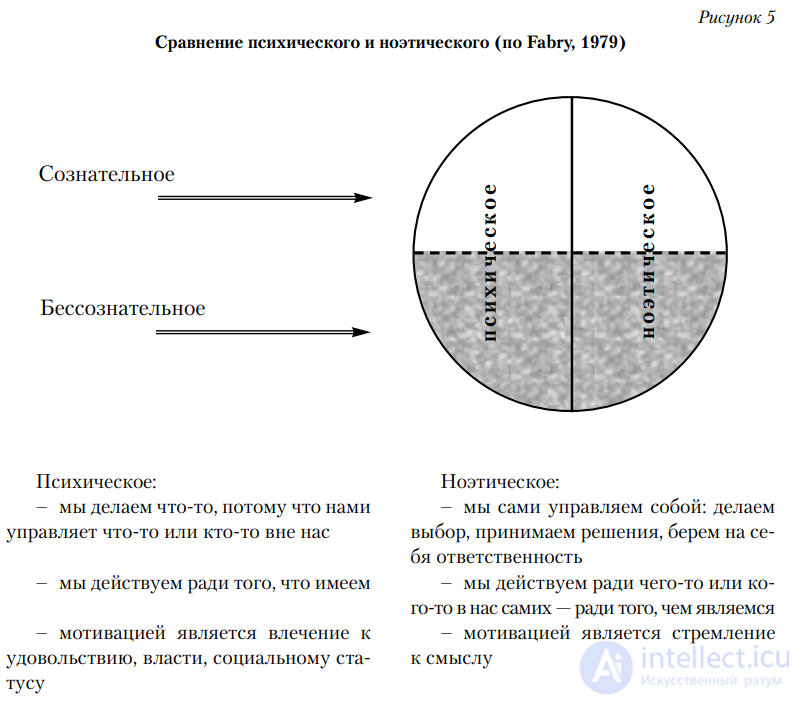
For the term «noetic» (from the ancient Greek for mind, spirit), Frankl offers the following explanation: «…we must follow the human being into the dimension of exclusively human phenomena, which is the spiritual dimension of being. To avoid the confusion that may arise from the fact that the concept of “spiritual” usually carries a religious connotation in English, I prefer to speak of noetic, as opposed to psychic, phenomena, and of the noetic, as opposed to the psychic, dimension» (Frankl, 2000a, p. 77). And further: «What we understand as the noetic dimension is anthropological, not theological» (Frankl, 2000a, p. 229). Let us consider the three dimensions and their interaction in more detail. Everything material in a human being is connected with the somatic. As a physical being, a person strives to maintain the health of their body, a striving regulated by the needs for food, drink, sleep, and so on. As a psychic being, what matters to a person is the sense of vital strength, the experience of pleasure, and the absence of tension. The psychic dimension is expressed in psychodynamic drives, moods, emotions, and affects, which are not subject to a person's free will. A person experiences the noetic dimension as an inner spiritual force and, at the same time, as a source of motivation — the striving for meaning. This dimension pertains to the deepest inner essence of the human being, to that which is properly human and distinguishes them from animals. The three dimensions of the human being are interconnected. Thus, illness, hunger, cold, and other physical deprivations can worsen life to such an extent that all other problems become insignificant; a moral conflict can have bodily consequences in muscle tension and psychic consequences in a feeling of displeasure; bodily suffering that is not experienced as meaningful can cause depression at the psychic level or despair at the noetic level, and so on. However, these dimensions are relatively independent of one another and can develop divergent motivational dynamics, as Frankl's model clearly demonstrates (Fig. 2). For example, something that gives pleasure may simultaneously be perceived as ethically impermissible; in embodying what is experienced as meaningful, a person may sacrifice their life. And the task of the human being consists
in finding a balance among their diverging aspirations. The leading role in this belongs to the third dimension, as Scheler formulated it: «Only the human being — insofar as he is a person — can rise above himself as a living creature and, proceeding from a single center as if beyond the spatiotemporal world, make everything, including himself, an object of his own knowledge» (Scheler, 1988, p. 60). Frankl develops this thought: «A human being is free to rise above the plane of the bodily and psychic conditions of their existence. In doing so, they open up a new dimension. The human being enters the sphere of the noetic, in opposition to bodily and psychic phenomena. They become able to take a position not only toward the world, but also toward themselves» (Frankl, 2000a, p. 11).
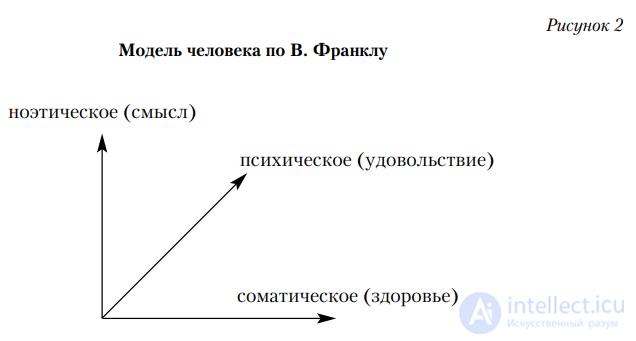
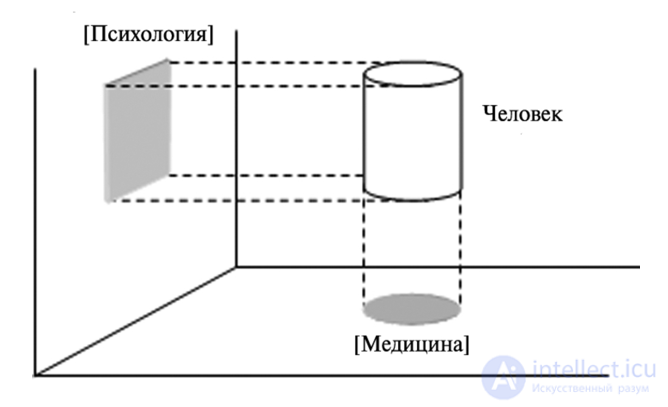
In Frankl's view, models composed of layers (Models of the human being according to N. Hartmann (A) and M. Scheler (B)) fail to reflect either the wholeness of the human being or the interaction between different forms of human existence. In his own model, Frankl presents the human being as a unity of three orthogonal dimensions: the somatic, the psychic, and the noetic. Frankl illustrates his model with the following example: «If a three-dimensional glass is projected onto a two-dimensional plane below it, the result is a circle. The same glass, projected from the side, will appear on a two-dimensional plane as a rectangle. But no one would claim that the glass consists of a circle and a rectangle. In the same way, we cannot claim that a human being consists of such parts as body and soul. This is a violence done to the human being — to project them from the purely human sphere onto the plane of the bodily and the psychic. The image of dimensions and projections allows us to speak, on the one hand, of the wholeness and unity of the human being, and, on the other hand, of the differences between bodily, psychic, and noetic processes» (Frankl, 2000a, p. 132).
Logotherapy has developed the method of logoanalysis for studying the patient's life and values. It was developed by the American James Crumbaugh (James C. Crumbaugh), one of Viktor Frankl's students. The method allows for a detailed, as Crumbaugh puts it, inventory of the patient's life. Logoanalysis uses two main techniques: expanding the field of consciousness and stimulating creative imagination.
For the treatment of phobias and obsessive-compulsive disorder, Frankl proposed the method of paradoxical intention . Within this technique, a patient who has, for example, a specific phobia is invited to make a paradoxical attempt to wish for the very thing they fear most. This may be an object, an action, or a situation in which the patient is very afraid of finding themselves.
7 steps
The purpose of the dereflection method is to overcome the obsessive tendency toward self-observation, which becomes excessive. The person is advised to shift their attention from themselves to the meanings and values they can realize in the surrounding world. Frankl himself characterized dereflection as follows:
Through dereflection, the patient gains the ability to ignore their neurosis by focusing their attention on something external. They direct their attention toward a life full of potential meanings and values that are directly related to their personal abilities
These methods are based on appealing to such important human qualities as self-transcendence and self-detachment.
Paradoxical intention. The purpose of using paradoxical intention is to help clients ridicule the symptoms of neurosis they have. This method helps reduce the severity of anticipatory anxiety in phobias.
The method consists in clients being asked to deliberately do the very thing they fear. This engages the clients' sense of humor and strengthens the sense of detachment from their neuroses, as clients begin to laugh at them.
Frankl describes the case of a young doctor who was afraid that he would begin to sweat excessively when meeting people. Once, upon meeting a person who had previously caused him anticipatory anxiety, this client said to himself: "I used to secrete only a liter of sweat, but now I'm going to secrete at least ten liters!" After a single session of paradoxical intention, this young man was freed from the phobia.
Dereflection. Dereflection can be used to counteract hyperreflection, or excessive attention. The purpose of using dereflection is to help clients ignore the symptoms of neurosis. Sexual neuroses, such as frigidity and impotence, are one area where dereflection is applied. Clients should be re-reflected (reoriented) from their anxiety toward solving a task available to them.

Comments