
Lecture
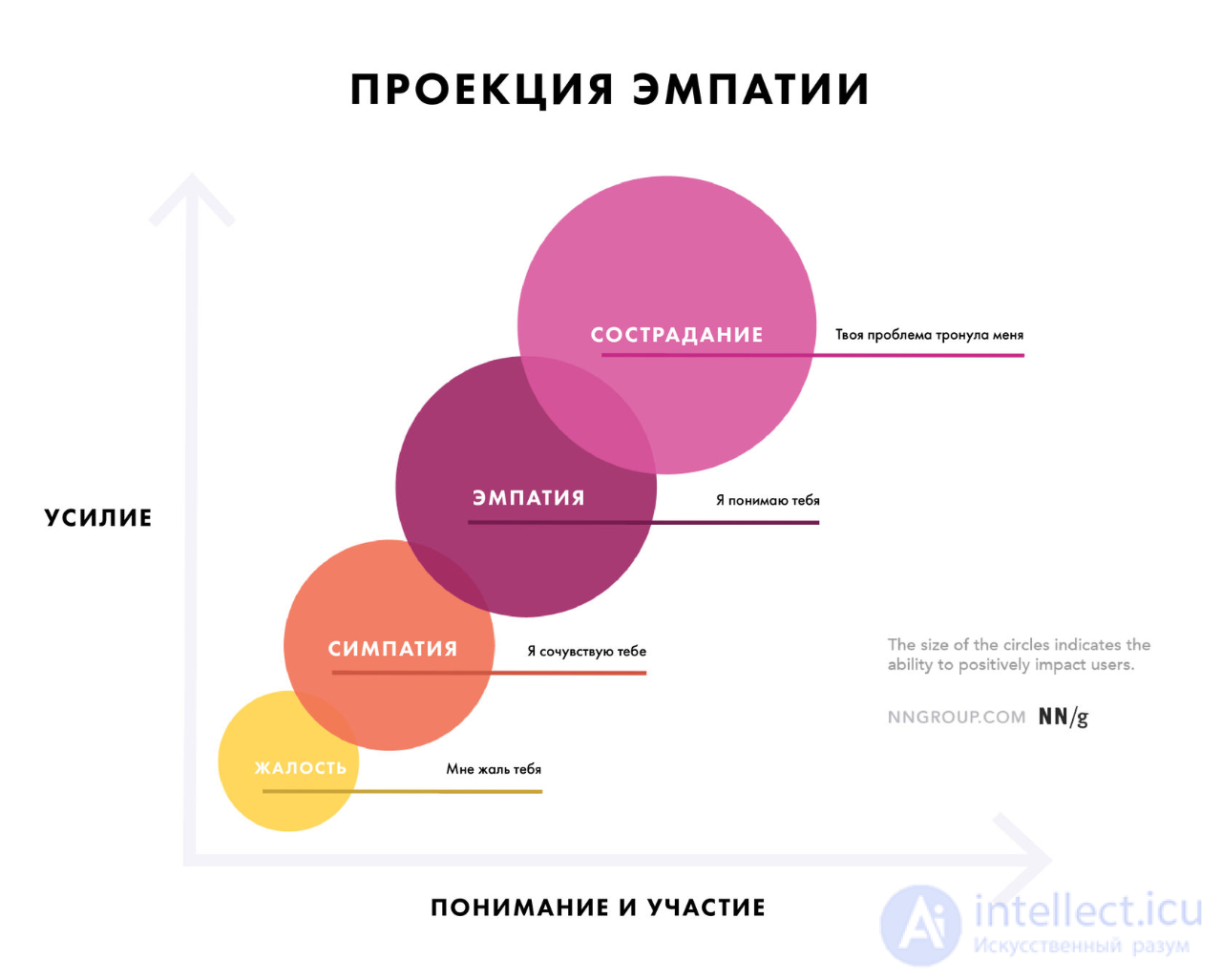
Empathy (Greek ἐν — "in" + Greek πάθος — "passion", "suffering", "feeling") — conscious empathizing with the current emotional state of another person without losing awareness of the origin of this experience. Accordingly, an empath is a person with a developed capacity for empathy.
The word "empathy" is not tied to any particular emotions (as, for example, is the case with the word "compassion") and is equally applied to denote empathizing with any emotional states.
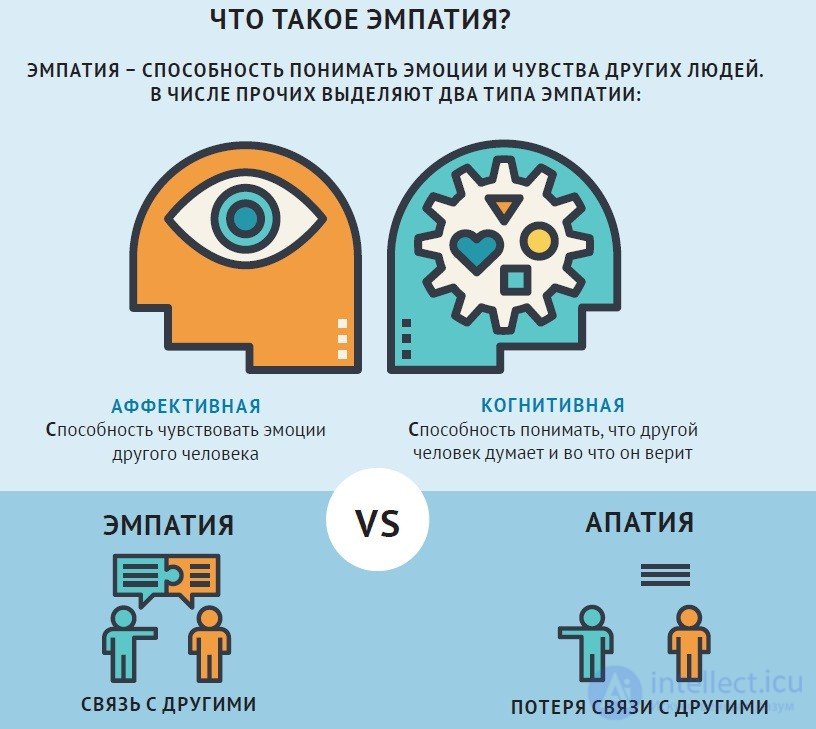
The meaning of the term may vary somewhat depending on the context. Thus, in medicine, empathy is often used to refer to what in psychology is called "empathic listening" — understanding another person's emotional state and demonstrating that understanding. For example, when a doctor interviews a patient, showing empathy means, first, understanding the patient's words, feelings, and gestures, and second, expressing this understanding in such a way that the patient becomes aware that the doctor recognizes his experiences . Thus, the emphasis is placed on the objective side of the process, and possessing the skill of empathy means the ability to gather information about the patient's thoughts and feelings. The purpose of such empathic listening is to make the patient understand that he is being listened to and to encourage him to express his feelings more fully, allowing the doctor, in turn, to form a fuller picture of the subject of the account.
From a psychological point of view, the capacity for empathy is considered the norm. There are methods for identifying a person's level of capacity for empathy and even for individual aspects of this capacity . The range of manifestations of empathy varies quite widely: from a mild emotional response to complete immersion in the world of feelings of one's communication partner . It is believed that empathy occurs through emotional responsiveness to perceived external, often almost imperceptible, manifestations of another person's emotional state — actions, speech, facial expressions, gestures, and so on .
A number of researchers emphasize the aspect of empathy whereby the empathizer is aware that the feelings he is experiencing are a reflection of the feelings of his communication partner. If this does not occur, then, from their point of view, such a process is not empathy but rather identification with the interlocutor. It is precisely the ability to understand that one's current feelings reflect the state of another person that allows the empathizer to use this ability for a deeper understanding of the partner, and to distinguish his individual emotions from those that arose in response to the partner's emotions .
In works of fiction, the capacity for empathy is often associated (to varying degrees) with various manifestations of extrasensory perception, which are not available to everyone. For the most part, the empathy described there most closely resembles emotional telepathy and may include the ability to perceive emotional states "directly," even without contact with the person, the ability to transmit emotional states, and much more . In reality, the existence of such forms of empathy has not been scientifically confirmed — experimental attempts to detect them have either failed or such experiments could not be replicated with the same result.
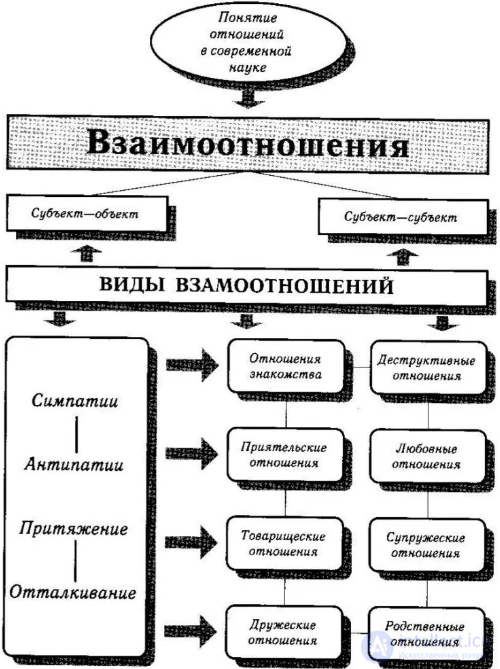
Relationships between people
The following types of empathy are distinguished:
Empathizing and sympathy are distinguished as special forms of empathy:
The term "empathy" was introduced by Edward Titchener, who calqued the German word Einfühlung, used in 1885 by Theodor Lipps in the context of a theory of the effect of art .
One of the first definitions of empathy was made in 1905 by Sigmund Freud: "We take into account the patient's mental state, put ourselves into that state, and try to understand it by comparing it with our own." In accordance with the norms of the Russian literary language, the stress in the word always falls on the suffix "i" [12].
A well-developed capacity for empathy is a professionally important quality for people whose work directly involves interacting with others (caregivers, officials, executives, salespeople, HR managers, educators, psychologists, psychotherapists, and others) .
For psychotherapists, a well-developed capacity for empathy has proven important enough that a technique of empathic listening has been developed to help understand the interlocutor's emotional state.
Brain activity that reflects the state and actions of other beings is often described as the activity of mirror neurons. These neurons were first recorded in the early 1990s in the premotor cortex of monkeys by the Italian scientists Rizzolatti, Gallese, and their colleagues from the University of Parma[14]. It has been suggested that mirror neurons are also involved in the neurophysiological mechanisms of empathy[15][16][17][18][19]. More on this below.
Viewed from a neurophysiological perspective, the capacity for empathy is associated with the hypothalamus and the cingulate gyrus of the human brain and is characterized by the inferior frontal gyrus and the insula. Empathy is "triggered" by the presence of visual, auditory, or olfactory ("fear pheromones") cues. When a person reacts to pain experienced by another, visual neurons are activated in the amygdala, the periaqueductal gray matter of the midbrain, and the cingulate gyrus. Interestingly, this capacity is enhanced against a background of existing attachment. In other words, a person shows greater empathy toward relatives and acquaintances than toward people they do not know or are seeing for the first time.
According to Simonov's classification of needs, empathy belongs to the zoosocial needs of humans.
People suffering from alexithymia have extremely limited capacities for empathy, since they find it difficult to distinguish even their own ordinary emotions.
There are several questionnaires for measuring empathy. The most modern are the «Empathy Quotient», developed in 2004 by S. Baron-Cohen and S. Wheelwright, and its translation «Level of Empathy», adapted for Russian-speaking samples by V. Kosonogov.
To identify the level of empathic tendencies, when answering (agreeing or not) each of the 36 statements, rate your answers as follows: for the answer «I don't know» – 0 points, «no, never» – 1, «sometimes» – 2, «often» – 3, «almost always» – 4, and for the answer «yes, always» – 5 points. You must answer all items.
Questionnaire text
The total score is calculated. But first you need to check the respondent's degree of candor. If they answered «don't know» to statements 3, 9, 11, 13, 28, 36 and «yes, always» to statements 11, 13, 15, and 27, this indicates a desire to appear better and insufficient candor. The test results can be trusted if the respondent gave no more than three insincere answers.
A total score of 82 to 90 points indicates a very high level of empathy, 63 to 81 points – a high level, 37 to 62 points – an average level, 12 to 36 points – a low level, and 11 points or less – a very low level of empathy.
One of the most important components of properly building the communication process is empathy as the ability to empathize with the feelings of one's interlocutor (Fig. 3.13).
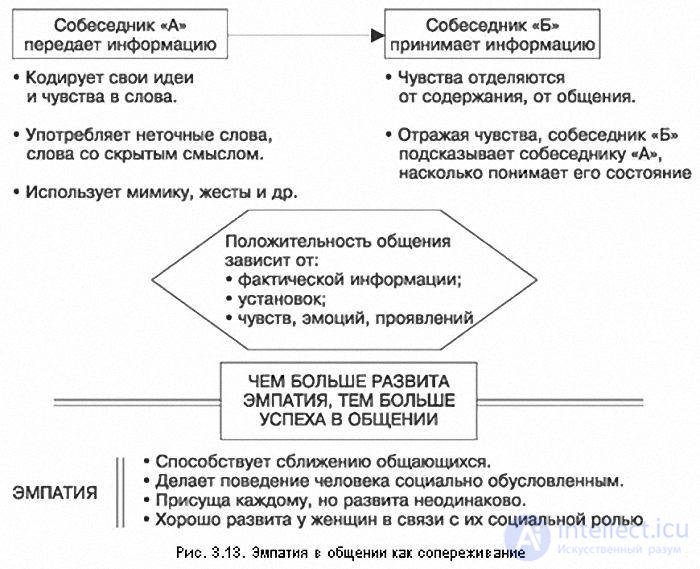 Fig. 3.13. Empathy in communication as empathizing
Several key conditions for empathic communication can be identified.
It is pleasant to talk with a sensitive interlocutor who shares our emotions and experiences.
The development of empathic abilities is determined by:
How does empathy develop as a person grows up? During the first 6 months, emotional communication with the mother predominates. The child reacts to the parents' emotional expressions, imitating them, mimicking their facial expressions and speech sounds, without being aware of their meaning.
By age 3, the child separates themselves from the surrounding environment. They form a self-image, and situational-verbal imitation is also observed. The child begins to evaluate their own actions the way adults evaluated them: talking to themselves, they scold or praise themselves. The child, as it were, uses the social roles of others, transferring their «self» onto the characters of their imagination.
At age 5-7, a child's understanding of adult life is enriched through role-play. Together with peers, children act out situations from their parents' lives, trying to make sense of them.
As thinking and speech develop, the decentration of one's own «self» increasingly takes place «internally,» silently. The child plays out roles in their imagination, endowing the characters with accompanying experiences. The material for these enactments is drawn:
The period from 10 to 17 years is characterized by the gradual accumulation, as adolescence approaches, of a large repertoire of role relationships, and this repertoire is broader the richer the individual's social and emotional experience.
Empathic qualities develop more intensively, richly, and diversely the more a teenager's understanding of other people grows, since understanding others is linked to self-knowledge.
A great help in learning empathic understanding can be the ability to «read» a conversation partner's facial expressions, gestures, postures, glances, handshakes, and gait.
Reflecting feelings is most useful in conflict situations. If we manage to show a person that we understand their feelings, the «accusatory intensity» of their speech will most likely subside.
Reflecting feelings also helps the speaker — they begin to recognize their own emotional state better and more fully, which marks the beginning of overcoming the crisis.
1. When reflecting feelings, the emphasis is placed not on the content of the message but on the emotional state of the conversation partner. This distinction is not always easy to grasp, but it is fundamentally important. Compare two phrases: «I feel hurt» and «I think I am hurt».
One can understand a conversation partner's feelings in various ways:
Sometimes it is more valuable to understand and stay silent than to intrude into a conversation partner's soul with one's own «understanding».
A great help in learning empathic understanding can be the ability to «read» a conversation partner's facial expressions, gestures, postures, glances, handshakes, and gait.
Situation. A mother, meeting her son Seryozha (age 7) from school, saw that he was shaking from the troubles that had happened to him. The mother said: «I'll close the window, or you'll be chilled through by the cold wind.» As soon as the window was closed, the trembling stopped.
What happened?
Solution. This situation illustrates an example of the mother expressing empathy. In addition, this case vividly demonstrated a psychological mechanism such as the creation of an «anchor» along the lines of a conditioned reflex. The mother's words linked his trembling (caused by the troubles he had experienced) to the cold air from the window and formed what is called an «anchor». And as soon as the window was closed, as soon as the «cause» was eliminated — the trembling immediately disappeared, although objectively no significant change in air temperature and so on had actually occurred. The «anchor», by substituting the true cause of the trembling with another one, managed to «deceive» the son's body. After that, the mother was able to calmly talk with her son to find out the reasons for his troubles.
Situation. Children instantly pick up on our bad mood. Worrying about their parents, they often blame themselves for the adults' bad mood.
What is the preferable way to act in this situation?
Solution. Sincere words about the feelings we are experiencing will help the child stop worrying excessively and feel confident: «If parents can have gloomy thoughts, then it's normal that I have them from time to time too.» But the child does not need the details, otherwise there is a risk of forming anxiety, fear, and a tendency toward depression in them.
Even when experiencing a low mood, parents are able to convey optimism to their children — not so much about their own future as about the children's future. «I know that you can be happy and succeed in life» — it is precisely such encouraging words, combined with expressions of support, love, and a willingness to listen in everyday life, that give a child faith in themselves and their future.
Situation. Dima is an only child in the family. He enjoys listening to his mother, who often tells him about her maternal love and about what a good boy he is. At such moments the thought occurs to him: «She is my mother and wishes me well.» But when Dima looks at his mother, he clearly sees cold, distant eyes, and her voice then seems harsh to him, and the boy feels a certain anxiety.
How does such contradictory behavior on the mother's part affect the child's personality?
Solution. Dima developed an intrapersonal conflict as a result of the contradiction between the positive content he hears from his mother's lips and the joyless facial expression he sees on his mother's face.
The child senses contradictions and discrepancies between what is said and what is displayed also when observing the mother's actions and deeds. The inconsistency of her behavior may also be expressed in the fact that sometimes she is calm and loving, understands everything and forgives everything, while at other times — she is nervous, distant, and unwilling to understand or forgive anything.
Such behavior on his mother's part frightens Dima. Not understanding the reasons, he blames himself: «I did something wrong, and mom stopped loving me.»
The mother's ambivalent attitude toward the child significantly hinders his personal development. This also affects the formation of his inner self-image, as well as his attitude toward himself. The child does not know how to evaluate himself: «Am I good or bad?», «Smart or stupid?», «Strong or weak?».
When you feel overly anxious, try to step back a little from your own sensations and show empathy toward someone else. Put yourself in the other person's place, think about what they are thinking and feeling. This shift in perspective helps change your relational strategy.
Parents should pass on a positive outlook to their children, even when they themselves do not always have enough presence of mind.
Task (distinguishing speech intonation). Prepare an audio recording of the same phrases spoken with different intonations expressing uncertainty, confusion, aggression, indignation, and so on.
Task (understanding the emotional content of printed text). Prepare a sheet of paper divided into two parts.
On the left, write some text reflecting a process of communication; on the right, the names of the feelings expressed in it.
Task (understanding the emotional side of spoken speech). Observe people communicating from the outside and try to determine the emotional coloring of the participants' statements.
Situation. When evaluating a child's actions, you can say to them: «Knowing you, I was sure you would do everything well» or: «Knowing you and your abilities, I think you could have done this better».
Which of these statements should be preferred? What is the difference in their psychological meaning?
Answer. The first type of address provides psychological support, whereas the second expresses disappointment. For normal development, a child often needs psychological support. To provide it, you need to:
When communicating with a child, follow certain rules, applying empathic listening.
Ask about:
Let the child think about how the dog communicates with the person who takes care of it.
Talk with the child about why people need pets, and pets need us. Ask the following questions.
3. Talk about the child's family, about what each of its members needs.
4. While tossing a ball back and forth, ask the child to say kind
words that lift people's spirits and help in times of trouble.
The psychological basis of humane relationships is emotional empathy, which represents a combination of experiencing, compassion, and an impulse to act.
The empathy map was created many years ago by Dave Gray — founder of the company XPLANE, creator of the «Gamestorming» brainstorming methodology, and author of books on visual thinking practices. The map template consists of 7 blocks, numbered in the order they are filled in.
Today, the empathy map is actively used in Agile approaches and design thinking, and is part of the Stanford d.school toolkit.
Business consultant Alexander Osterwalder mentioned the empathy map in his book «Business Model Generation» as a tool for understanding the customer:
«It will help you go beyond purely demographic characteristics of the consumer and better understand their environment, behavior, problems, and joys. As a result, you will get a more successful business model, since the customer profile will help you create a better value proposition and more convenient, more suitable channels of interaction for clients. Ultimately, you will be able to better understand what the consumer is truly willing to pay for».
If empathy is compassion for another person's current emotional state, then the empathy map is a way to structure the process of building empathy, making it more visual and understandable.
By filling in block after block, you systematize the key characteristics of the target audience into a coherent ecosystem: environment, problems, aspirations, experience, fears, feelings, and so on.
The empathy map is relevant wherever you need to look at the product through the client's eyes:
If you are already familiar with the audience, the empathy map details the context of product use, and at the start of a project shows where the data gaps are.
At «Original Works» we use this tool not only when developing our core product, but also when preparing speakers for presentations, planning publications, creating a white paper, or putting together a commercial proposal.
You can find many different versions of the empathy map online, which often differ from the original source in the set of questions and the order in which they are filled in.
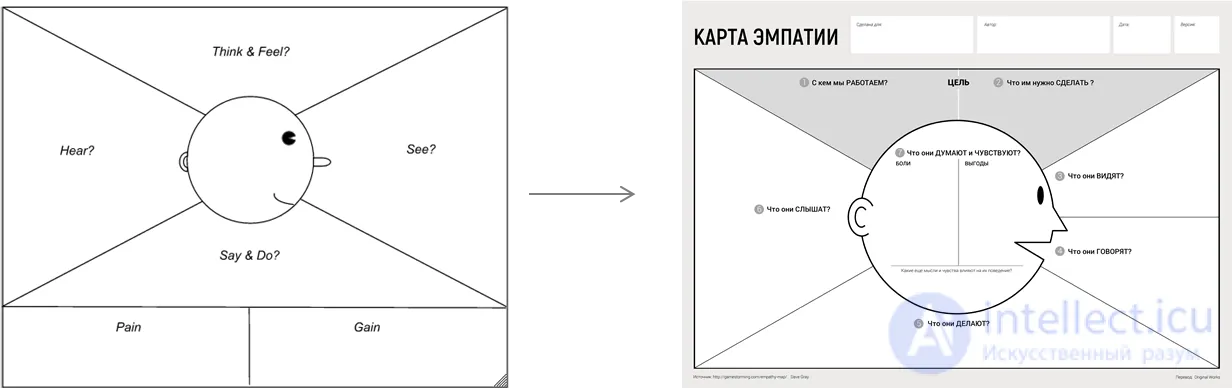
numbering - the order of filling in
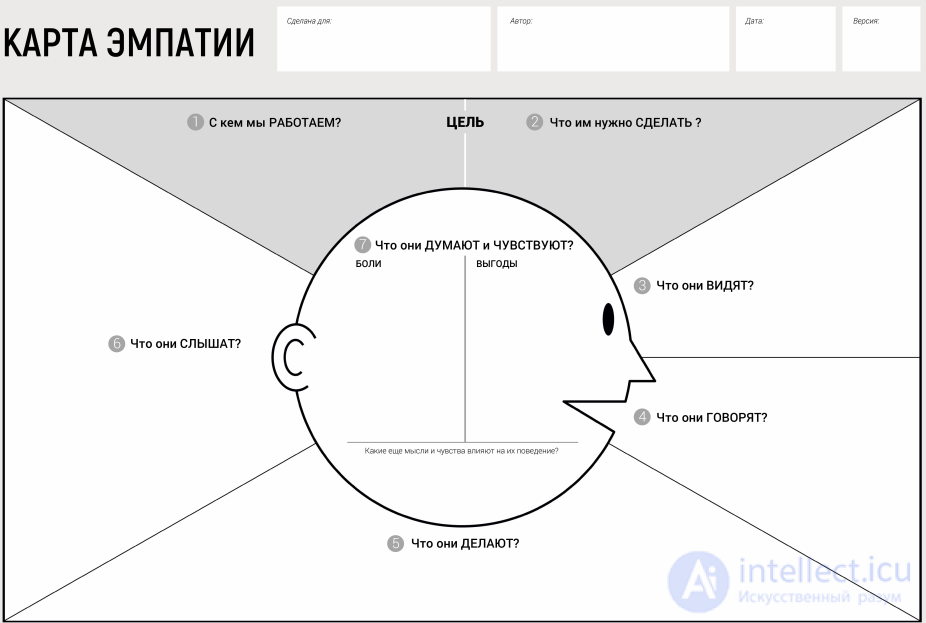
We recommend sticking to the original author's methodology to get the most benefit from this tool.
Let's take a closer look at the order in which it is filled in.
Preparation
The empathy map is a brainstorming tool. For teamwork to be effective, it is important to:
How to fill it in
To build an empathy map, we fill in all the blocks of the map in sequence — the numbering of the blocks corresponds to the order in which they are filled in.
You can fill in a template printed on paper — this option is suitable for work in small groups.
For a large team, it is optimal to use a flipchart or whiteboard. If you are building the map in a large format, it is convenient to record the points on sticky notes — they are easy to remove or move to another spot.
You can use a flipchart for brainstorming
Where to get the data
To build an empathy map, you need to gather information about the client's experience and personal opinion. Some of this data you will get from the participants of the working group. Narrow specialists will only be able to fill in some sectors well. Therefore, for large-scale tasks it makes sense to involve more employees with a variety of competencies whose experience is relevant to the task at hand.
Where you can get additional data about the client for building the map:
Working group for building the map: analyst, sales manager, head of the loyalty department, account manager, lawyer, head of the optimization department, and marketer
Setting goals
We start building the empathy map with the goals: with whom are we building empathy, and what should this person, in our opinion, do.
To do this, we draw a circle in the center (it will represent the hero of our map), give them a name, and note additional characteristics. The latter are needed if you are building several maps for different audience segments.
In Dave Gray's template, a person's profile — the embodiment of the client — is already drawn in the center of the map. The author recommends adapting it, adding character traits, emotions. You can add details (glasses, hairstyle, tie, etc.), use a photo of a real person or a character. When the profile on the map starts to look more like a real user, it will be easier for you to project their experience onto yourself.
At this stage there is a risk of slipping into an easier task and starting to think not about «what we want this person to do», but about «what we want them to understand». Focus on what you are actually looking for: action. Ask yourself or the group «what will happen once they understand?».
Filling in the outer blocks
Next, we sequentially fill in the «Sees», «Says», «Does» and «Hears» blocks. Each block introduces a separate aspect of our persona's sensory experience.
For example, when we were preparing a presentation on competitor analysis, it was important to understand whether the audience conducts competitor analysis and how exactly they do it, which information sources they trust, what exactly is written about competitor analysis on those platforms, what the audience hears about this topic from their environment, and so on.
In total, four outer blocks need to be filled in:
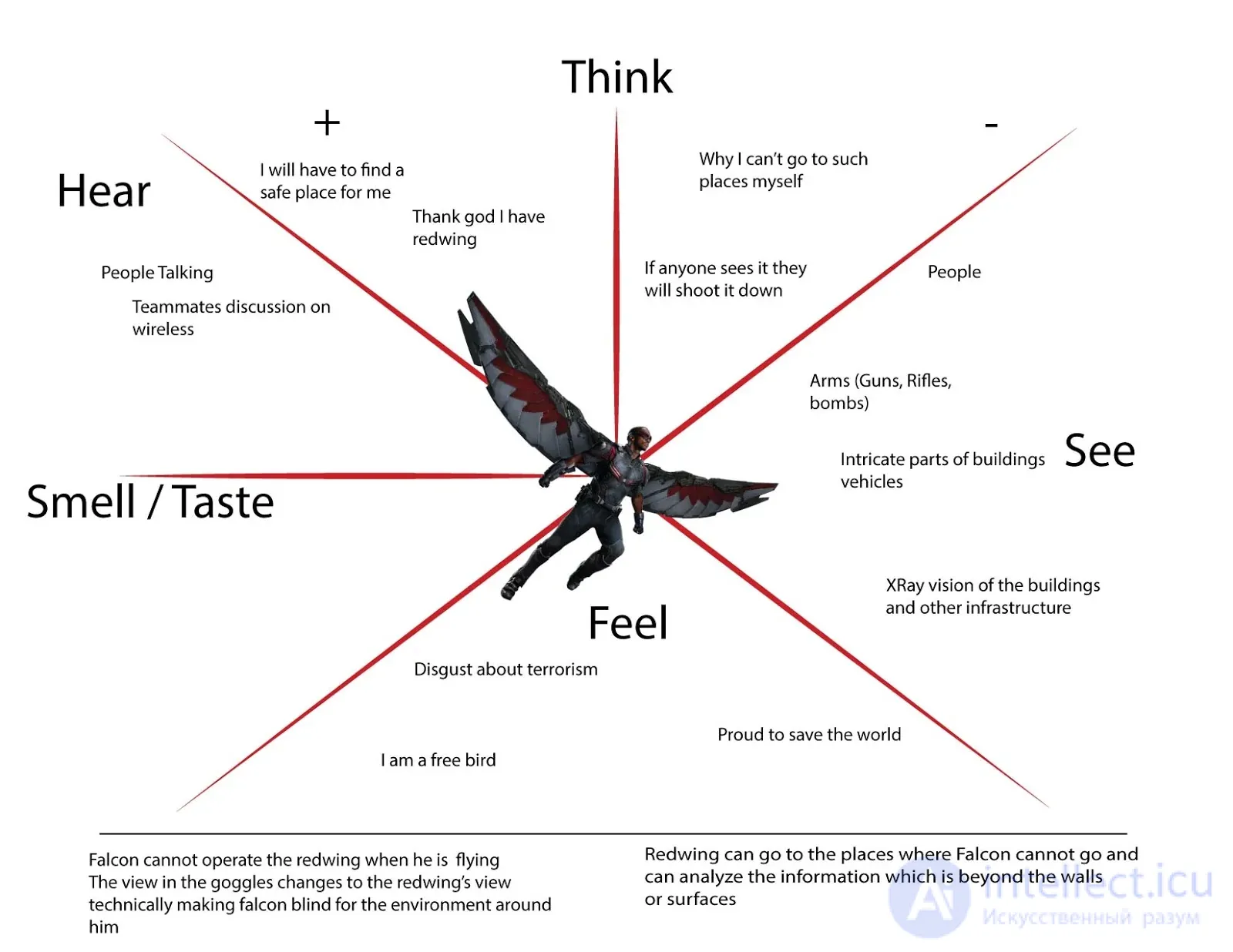
One example of an empathy map created for interface design
At this stage, we analyze which thoughts and feelings influence our clients' behavior.
The block is divided into two sections:
If the outer blocks represent the user's experience, then these blocks reflect our client's inner world. By the way, Dave Gray believes that versions of the map where the «Thinks» and «Feels» blocks are placed at the edges are mistaken. In such maps the filling order is disrupted, and the main goal of the exercise takes a back seat.
The purpose of the Empathy Map is to feel from the inside what it means to be your client. When you first fill in the outer blocks and only then move on to the inner ones, you will feel the full potential of this exercise.
Important: if the process of filling in the map stalls, change the format slightly — have someone from the working group take on the role of the client, while the other participants in the brainstorm ask them questions.
The empathy map gathers and visualizes the deep characteristics of the target audience: needs, motives, values, problems, and so on.
You can refer to the completed map every time you need to understand the client's point of view regarding a product, a service, and many other matters.
Make the empathy map accessible, update it regularly, and gather feedback from the team. Then the tool will not lose its effectiveness.

We kept the latest empathy map on display — convenient for referring to the notes during project discussions
An empathy map works better when it is built on real data. That is why it is best compiled based on relevant experience, after studying interviews and gathering personal opinions.
As a rule, creating an empathy map is a quick (30−60 minute) exercise, not an exhaustive study. Although the map is not a complete psychological portrait, it definitely helps you understand the client more deeply. It is one of the most effective brainstorming formats.

Comments