
Lecture
A solid-state generator of ultra-wideband microwave noise oscillations is proposed. A distinctive feature of the generator is its stable operation under conditions of potentially possible variations in its supply voltages. A prototype of the generator has been developed. The generation of a noise signal in the frequency range from 9 kHz to 5 GHz has been experimentally demonstrated, with an output signal power of 20 mW and a spectral characteristic non-uniformity across the range within 10 dB.
Among radio-electronic devices, noise generators, which make it possible
to obtain wideband and ultra-wideband noise signals,
occupy their firmly established niche. They are actively used in various fields: from measurement technology to electronic countermeasure
systems and radio-technical masking, including means of active protection of informative components of spurious electromagnetic
emissions of electronic computing equipment [1-2]. In recent years,
new areas of application for noise oscillations have emerged, predominantly in the microwave range, which are associated with the regulatory authorization
of the use of wideband and ultra-wideband signals in modern communication systems. Depending on the intended purpose and, accordingly, on the requirements placed on noise sources, generators are implemented in both vacuum and solid-state designs. They
may have various operating frequency ranges and bandwidths of generated
signals, and differ from one another in the magnitude of the non-uniformity of their spectral characteristics and in the power levels of their output signals. Along with these characteristics, current trends in the development of radio-electronic equipment bring to the fore a number of other characteristics important from the standpoint of the practical application of generators and
the possibility of their mass production. Among them: energy efficiency, small mass and dimensional characteristics, the possibility of using low-voltage power supply, design, and reliable operation under changing external conditions. The latter property is associated with the presence of wide
zones in the space of the generator's control parameters, ensuring stable generation of noise oscillations under sufficiently large
variations of parameters from their nominal values. From this property there also follows another consequence, important from a practical point of view –
the absence of any need to tune (adjust) the generator when supply
operating voltages are applied to it. The development of a generator that ensures reliable operation with the required characteristics is the goal of this work.
This paper proposes the structure of an ultra-wideband
noise microwave oscillation generator and its practical implementation, and also discusses the results of an experimental study of its typical operating modes.
Analysis of the characteristics and design options for sources of UWB signals of nanosecond duration. At present, there is a significant number of works on the generation of signals of sub-nanosecond duration.
The creation of microwave generators based on powerful emitters of vacuum high-current electronics makes it possible to generate electromagnetic radiation of nanosecond duration with various frequency and
energy characteristics (Table 1).
Table 1 presents results that make it possible to provide a comparative assessment of emitters by frequency (f), radiated power (Pr),
and efficiency (COP).
It can be seen from the table that the presented types of generators make it possible to generate radiation of sufficiently high peak power and a certain efficiency.
| Generator type | Frequency ff, GHz | Power PvP_{\text{v}}, GW | Efficiency, % |
|---|---|---|---|
| Vircator | 2 – 20 | 0,1 – 1 | 2 – 5 |
| Carcinotron | 1 | 0,1 – 1 | 10 – 15 |
| Ubitron | 1 – 100 | 0,1 – 1 | 10 – 15 |
| Magnetron | 3 – 10 | 0,5 – 1 | 25 – 30 |
| Virtod | 3 – 10 | 0,5 – 1 | 15 – 20 |
| Traveling-wave tube | 30 – 40 | 0,5 – 1 | 15 – 20 |
A characteristic feature of such generators is the high
frequency of the generated oscillations and the resonant nature of the process
of energy exchange between the beam electrons and the excited electromagnetic
field, which does not allow them to be used for generating a UWB signal.
Such generators, however, can be used in the functional suppression of the onboard equipment of air attack weapons, i.e., in the case where there are no
requirements to limit the lower frequency of the spectrum.
To excite a UWB pulse, shock (non-resonant) mechanisms can be used, as well as the spontaneous transition radiation of electron bunches known in physics, which arises when a charged particle passes through an impedance inhomogeneity.
It is known that a characteristic feature of the transition radiation of a point
charged particle flying into a screen and out of it is a broad frequency spectrum of the scattered electromagnetic field with
a constant spectral density. From this it follows that the δ-shaped
current of a point particle excites a signal of the same shape, i.e., the pulse
of the electromagnetic field of the transition radiation should have a shape
close to the shape of the beam current pulse. Modulated beams (sequences of electron bunches) can be obtained using
linear accelerators. In this case, the efficiency will amount to tens of percent.
The proposed generator is based on a device that was proposed in
and intended for the active masking of spurious electromagnetic emissions and pickups of electronic computing equipment. It consists of four mutually coupled self-oscillating systems,
each of which represents the simplest generator based on a bipolar transistor performing the function of an active element. The device provides the generation of noise oscillations in the frequency range 10 kHz – 2 GHz.
To achieve the goal set in this work, two additional generators have been introduced into the structure of the proposed generator compared with. Fig. 1 presents the general circuit diagram of the generator. As
the active element in all partial generators, a BFP 620 bipolar transistor is used. The coupling between the generators is carried out on an «each-with-each» principle, thus forming
a complex multi-loop self-oscillating system.
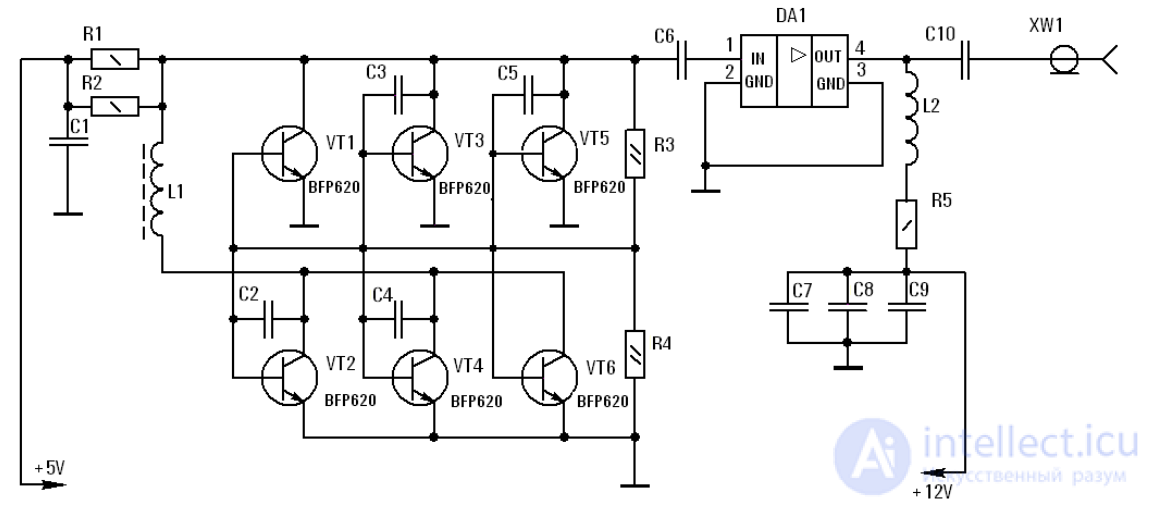
Fig. 1. Circuit diagram of the generator
The power supply of the collector and base circuits of all transistors used is provided by a single power source with a voltage of 5 V through resistors R1, R2 and R3, R4, respectively. Capacitances C2, C3, C4, C5 serve as the feedback elements of the partial generators. A buffer amplifier stage DA1 is connected to the output of the generator (VT5), intended for matching the generator to the load and improving the energy characteristics of the generator.
Fig. 2 shows the prototype of the generator, fabricated on a board measuring 40*25 mm from double-sided copper-clad fiberglass laminate 1.0 mm thick, using microstrip lines.
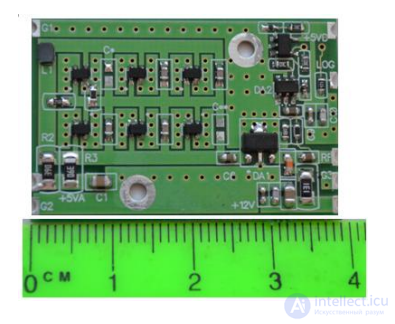
Fig. 2. Photograph of the generator prototype
When the generator prototype is connected to voltage sources of 5 V (the generator itself) and 12 V (the buffer amplifier), ultra-wideband noise oscillations are observed at the generator output, the power spectrum
of which is shown in Fig. 3:
As follows from the presented spectrum, the effective generation band occupies the frequency range from 9 kHz to 5 GHz, and within the frequency band 9 kHz – 4 GHz the non-uniformity of the spectral characteristic does not exceed 10 dB. Fig. 4 shows an example of the time realization of the generated noise signal for the mode indicated above and the distribution function of its instantaneous values. Moreover, the estimate of the entropy quality coefficient of the noise signal at the generator output yields a value of no less than 0.9887. The measured power level of the output signal on a 50 Ohm load is no less than 20 mW, which corresponds to a device efficiency of 1.5%:
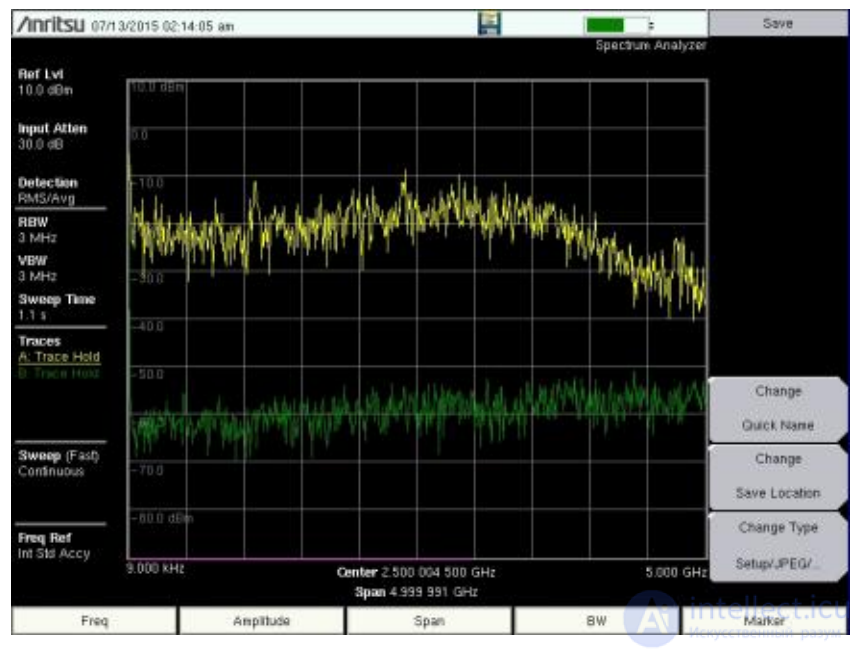
Fig. 3. Power spectrum of the noise oscillations at the generator output
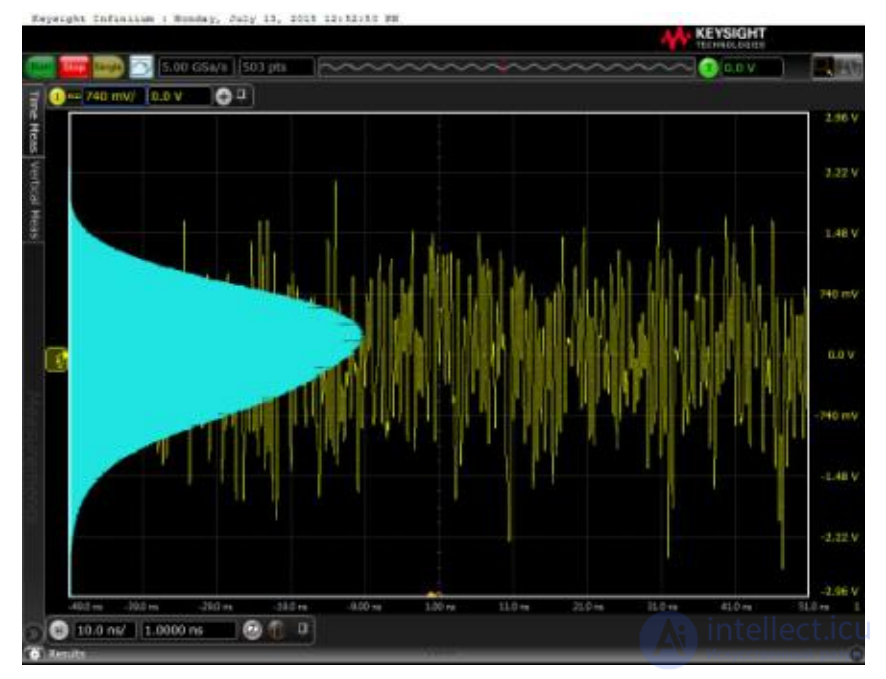
Fig. 4. Example of the time realization of the generated noise signal and the distribution function of its instantaneous values
It is important to note that, compared with the base analog, the proposed generator has made it possible to substantially increase the bandwidth of the noise signal (up to 5 GHz). Moreover, this property has an effect along with the achievement of another goal set in this work – improving the reliability of the generator's operation under conditions of potentially possible variation, during operation, of its supply voltage. In the experiment, it was established that the mode of generation of ultra-wideband noise oscillations, with its inherent power spectrum and distribution of instantaneous values, is preserved when the nominal supply voltage of the generator is varied within 20% (4-6 V). On the other hand, the mode described above arises immediately after voltage is applied to the generator and requires no additional adjustment by means of the elements included in its composition.
A noise generator has been proposed and implemented in the form of an experimental prototype, stably generating noise-like signals in the frequency range from 9 kHz to 5 GHz. Moreover, the non-uniformity of the spectral characteristic within the indicated range does not exceed 10 dB, while the output power reaches 20 mW. The generator's operability is preserved when the supply voltage is varied within 20% of the nominal value.
The small dimensions of the generator, together with the characteristics indicated, make it promising for various applications as a source of ultra-wideband noise signals.
Funding sources and acknowledgements
The authors express their sincere appreciation and gratitude to the staff of the FSUE SDB IRE RAS, D.V. Sosnin and Yu.F. Kvylinsky, for their assistance in conducting the experiments.
Authors: V.P. Ivanov, N.A. Maksimov, A.I. Panas

Comments