
Lecture
The article discusses Honeywell's first laser particle sensor of the HPM series.
A comparison is given between laser and LED technologies for detecting airborne particles.
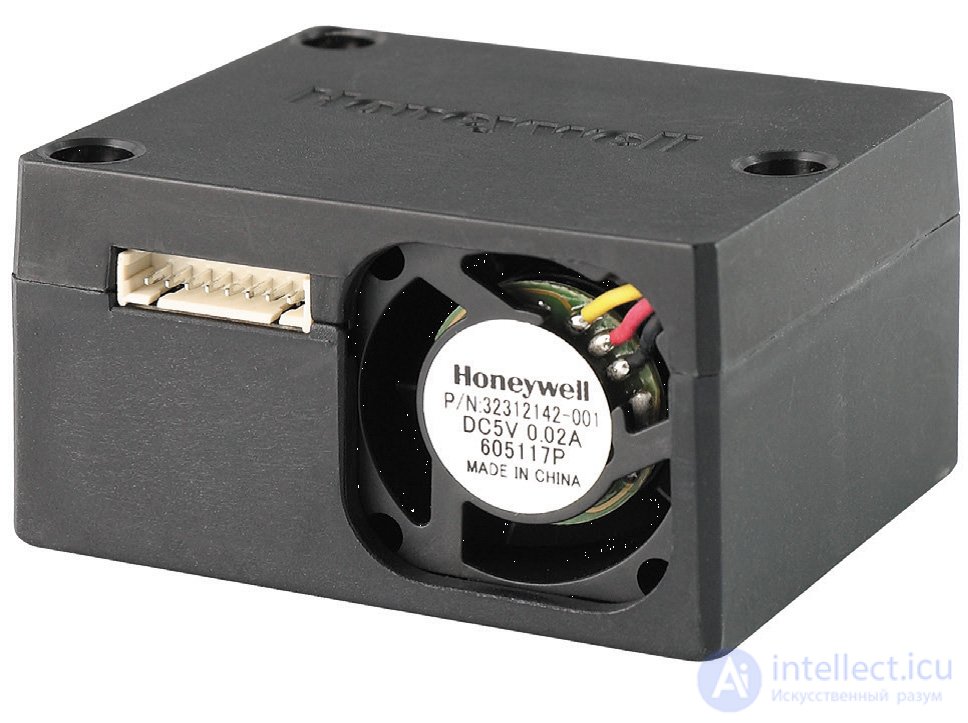
Fig. 1. HPM series airborne particulate matter detection sensor
Honeywell has developed a new sensor for detecting airborne particulate matter (Fig. 1).
The HPM series sensor is a device built around a laser, which uses the light-scattering method to ensure reliable and accurate detection of contaminant particles in the ambient air. As a rule, contaminant particles are formed as a result of burning various types of organic fuel and a number of technological processes associated with the operation of industrial enterprises. Such particles can remain in the ambient air for a long time, reaching concentrations of up to 1000 µg/m3. The sensor analyzes the ambient air and presents the result as an estimate of particle concentration in the air in real time.
HPM sensors can detect contaminant particles suspended in an air sample with sizes from PM2.5 to PM10. Examples of airborne contaminants are shown in Figs. 2 and 3. These are dust, dirt, soot, smoke, liquid droplets, etc.
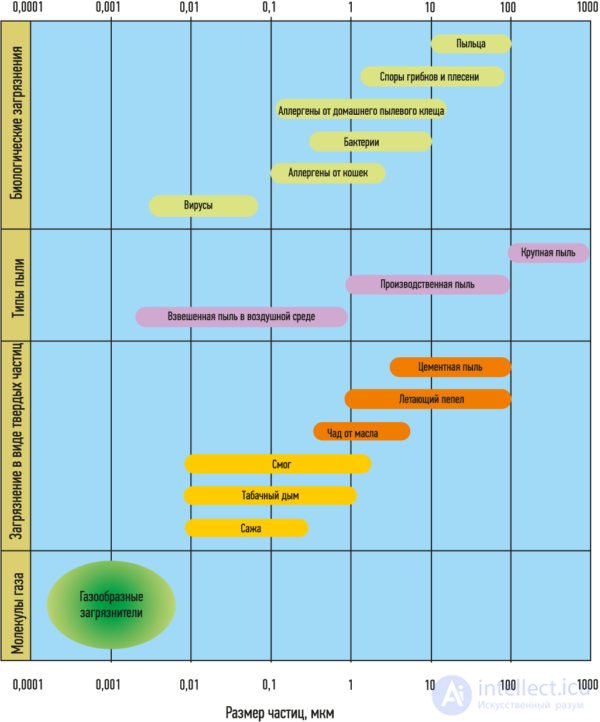
Fig. 2. Types of suspended particles polluting the air
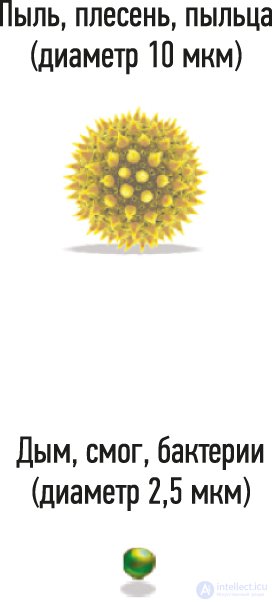
Fig. 3. Categories of airborne particulate matter by size, PM10 on top, PM2.5 below
The operating principle of the HPM sensor is shown in Fig. 4. Air from the ambient environment is drawn in by a fan and enters the sensor through the air sample inlet (1). The air sample passes through the laser beam, which is projected by a lens onto a photodiode (2). The photodiode transmits information to the photoelectric converter (3), where the sizes and repetition rate of the particles suspended in the air sample are determined. This data is sent to the microcontroller unit (4), where it is processed according to a programmed algorithm and output as a digital value in µg/m3.
Some sensors that use LED technology are significantly inferior in accuracy to sensors built on lasers. The reason is that most LED emitters have a wide radiation pattern, and the light captures a wider zone inside the device's chamber. Excessive light scattering negatively affects the sensor's ability to detect particles suspended in the air flow. A laser, in contrast, generates a thin, high-intensity beam of light, which allows HPM series sensors to more accurately determine particles and transmit data to the control device in real time. Comparative characteristics of the HPM sensor and competing solutions based on LED technology are given in the table.
|
Parameter |
Laser Sensor |
LED Sensor |
|
Size of detectable particles |
PM2.5, PM10 category |
No less than 1 µm |
|
Measured particle concentration, µg/m3 |
0–1000 |
0–800 |
|
Error, µg/m3 |
No more than ±15 |
From ±20 to ±60 |
|
Calibration |
At the factory |
Not applied |
|
Response time, s |
No more than 6 |
No more than 30 |
|
Supply voltage, V |
5 ± 0.2 |
5 ± 0.5 (with ripple <30 mV) |
|
Standby current draw, mA |
No more than 20 |
Not specified |
|
Operating current draw, mA |
No more than 80 |
90 |
|
Permissible humidity, % |
0–95 |
No more than 95 (without condensation) |
|
Measurement results |
PM2.5, concentration in µg/m3 |
Analog voltage |
|
Output protocol |
UART or I2C |
UART or PWM |
|
Service life |
20 thousand hours continuous, or 60 thousand hours intermittent |
Up to 7 years |
|
Overall dimensions, mm |
43?36?23.7 |
59?45?22 |
The transition from LED particle sensors to laser sensors provides the following advantages:
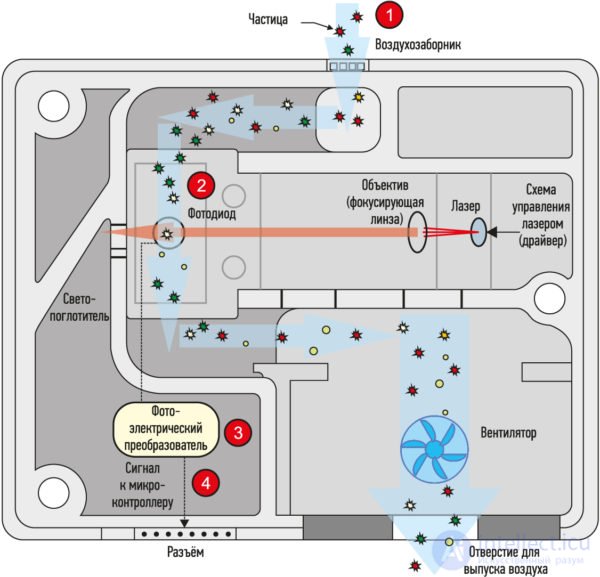
Fig. 4. Diagram of the particle sensor's operation
VKontakte
Google+
04/27/2018 | Sensors and Detectors

Comments