
Lecture
Existential analysis (or existential therapy) is a form of psychotherapy and counseling that is based on the principles of existential philosophy and psychology. This form of therapy was developed on the basis of the work of existentialist philosophers such as Jean-Paul Sartre, Martin Heidegger, Friedrich Nietzsche, and Viktor Frankl.
The basic principles and concepts of existential analysis include the following aspects:
Meaning and purpose: Existential analysis helps clients explore questions about the meaning and purpose of life. The therapist and client work together to identify and become aware of their own values, goals, and beliefs.
Freedom and responsibility: Existential analysis recognizes free will as a fundamental aspect of human nature. Clients discuss their choices and decisions and take responsibility for their actions.
States of angst and anxiety: Therapy can help clients come to terms with states of anxiety and angst that may arise from an awareness of the uncertainty and finitude of life.
Meaning of life and personal development: Existential analysis fosters discussion of the meaning of life and the possibility of personal development. Clients may examine their life paths and search for new directions of development.
Authenticity and genuineness: Therapy supports the process of arriving at authenticity, which means being true to oneself and one's values. Clients learn to express their feelings and thoughts and to be candid with themselves.
Reflection and self-understanding: Existential analysis fosters reflection and the exploration of the client's inner world. It helps clients better understand their emotions, beliefs, and motivations.
Dialogue and relationship: The relationship between therapist and client plays an important role in existential analysis. Open and trusting dialogue helps clients express their feelings and thoughts and become aware of their needs and desires.
Existential analysis is based on the following principles for the consideration and definition of the personality
a) the dynamic principle,
b) the basic problems of existence,
c) the intrapersonal conflict between awareness of oneself and awareness of the ultimate givens of one’s existence
(death, freedom, isolation, and meaninglessness).
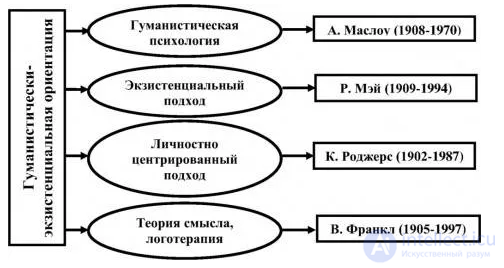
Existential analysis is of great importance in crisis psychology, since both approaches focus on the deep aspects of human life, meaning, and personal responsibility. Existential analysis can be a useful tool for working with people experiencing crises and traumatic events. Here is how it can be applied in crisis psychology:
Exploring meaning and purpose: Crises often raise questions about the meaning of life and one's goals. Existential analysis can help clients become aware of and explore these questions, which fosters the process of meaning-making and adaptation to new circumstances.
Freedom and responsibility: During periods of crisis, people may feel a loss of control and a restriction of freedom. Existential analysis reminds clients that they still possess free will and responsibility for their decisions and actions, even in difficult situations.
States of angst and anxiety: Crises can be accompanied by intense emotional experiences such as anxiety and angst. Existential analysis can help clients explore and understand the sources of their emotions and develop strategies for managing them.
Authenticity and genuineness: In a crisis situation, people may conceal their feelings or act in accordance with the expectations of others. Existential analysis supports the process of arriving at authenticity and genuineness in expressing one's emotions and needs.
Meaning of life and personal development: Crises can be moments when clients begin to ask important questions about the meaning of life and directions of development. Existential analysis fosters discussion of these themes and the search for new paths of development.
Death and mortality: Existential analysis helps clients gain a deeper understanding of their attitude toward death and become aware of how it affects their lives. This is especially important when working with people facing loss or the threat of death.
Dialogue and support: In existential analysis, openness and trusting dialogue between therapist and client are important. This approach fosters the creation of a safe space where clients can share their emotions and experiences.
In the domains of basic conflicts analyzed by
existential psychology are: death, freedom, isolation,
meaninglessness,
Death is the most obvious and most easily recognized ultimate given.
The confrontation between the awareness of the inevitability of death and the desire
to go on living is the central existential conflict.
Freedom. Freedom is usually seen as an unambiguously positive,
desirable phenomenon. It is what a person longs for and strives toward
throughout the whole of human history. However, freedom as a primary
principle also gives rise to horror. “Freedom” is the absence of external structure,
the absence of any support. The first breath of freedom accompanies the newborn’s first cry
upon coming into the world. This is a cry proclaiming a new “I,” one that
has become free — and then what? Human life can be regarded as
the gradual attainment of freedom, up to complete freedom from life itself. A person
harbors the illusion that he arrives in a well-organized world. In reality,
the individual bears responsibility for his own world; he himself is its creator.
It turns out that no one organized the world for him, and no one was waiting for him.
The world is prepared to do something for you, but only on condition that you give up
your freedom in return.
Freedom is nothing other than the horror of emptiness, of the abyss. Beneath us there is
no ground at all, nothing for us to rest on. Freedom is the absence of external
structure. Here lies the essence of the existential conflict, running between
the striving toward freedom throughout the whole of human life and the horror
felt before the freedom once attained, behind which there is no support, no organization, nothing at all.
Isolation is not merely isolation from other people, with the loneliness
it produces, nor is it merely an inner isolation from parts of one’s own personality.
It is a fundamental isolation from other beings and from the world. However
close we may be to someone, an unbridgeable gulf remains between us.
Each of us comes into this world alone and must
leave it alone. The existential conflict is a conflict between
the absolute isolation that is created and the need for contact, for protection, for
belonging to some larger whole. Perhaps this is why a person
is so prone to surrogates of belonging — conformism and irresponsibility.
A person always wants to hand over responsibility for himself to someone
else, or to others, thereby loosening the bonds of isolation.
An irresponsible person is a collectivist person, a person of the crowd,
where the crowd overcomes isolation and loneliness on our behalf, often taking away
reason and morality.
Meaninglessness. The fourth ultimate given of existence. We
are finite, we must die, we ourselves are the constructs of our own lives, the creators
of our own universe, and each of us is doomed to loneliness in this indifferent
world. What, then, is the meaning of our existence? How and why should we live?
If nothing has been predetermined from the outset, then each person must himself create
his own life’s design. Each has his own road (“No one may enter here
—
these gates were meant for you alone!” cries the gatekeeper of the Law with all his might
to the dying countryman in F. Kafka’s novel
“The Trial”).
But how are we to create something enduring, something able to withstand our
life? This existential dynamic conflict is generated by the dilemma
facing a person in search of meaning who has been thrown into a meaningless
world.
Existential psychology proposes the following formula
for a person’s existence in the world:
Awareness of the ultimate given — anxiety — defense mechanism.
Here, anxiety, as indeed in psychoanalysis too, is the driving force of development.
But whereas in psychoanalysis anxiety is provoked by a drive (an impulse), in
existential psychology it is provoked by awareness and fear — fear of the future.
Thus, the four ultimate factors of human being: death, freedom,
isolation, and meaninglessness — determine the basic content
of existential psychodynamics, of existential analysis.
Existential analysis is the examination of the personality in the whole fullness
and uniqueness of its existence. It is a phenomenological analysis
of the actuality of human being.
The goal of existential analysis is the reconstruction of the inner world
of experience. The authentic being of the personality is revealed through a deepening into
oneself for the purpose of choosing one’s “life plan.”
Existential psychology (the problem of depth).
To examine this question one must turn to
classical psychoanalysis. For S. Freud, inquiry is always bound up with
the concept of depth. The goal of psychoanalysis is to reach back to the early events of a
person’s life. The deepest conflict — is the earliest conflict. Thus,
the “fundamental” sources of anxiety are considered in psychoanalysis to be the earliest
dangers — separation and castration. In this way,
the psychodynamic process is set in motion by the person’s own development.
The existential approach (existential dynamics) to the human being
is not defined by development. From the existential point of view, to investigate deeply
does not necessarily mean to investigate the past. “This,
means setting aside everyday concerns and reflecting deeply on one’s own
existential situation. That means reflecting on what lies outside time
– on the relationship between one's consciousness and the space around it” [I. Yalom]. The depth
of existential analysis is the depth of awareness of one's being in this world
and the inevitability of the advent of non-being.
The question is not how we came to be the way we are,
but what we are.
The first part of the question (how we came to be) can find an answer
in psychoanalytic psychology.
The question of what we are is answered by behaviorism and neobehaviorism.
The question of what we are has, in psychology, for a long time not so much gone
unanswered as gone unasked.
Our past is, admittedly, often a source of various
dangers, a source of unmotivated anxiety. Memory of the past
matters only insofar as it is part of our present
existence.
In existential psychology the principal tense is the “future
becoming present.” Unlike psychodynamic psychology,
which seeks in the past the answers to today's problems,
existential analysis tries to answer the cause, or the root cause,
of the fear, the dread, that overtakes a person on encountering real or
imagined non-being. The answer to the cause of fear and dread can be found
ahead, in the future. And it gives the one correct answer, one that requires
courage to accept.
The foundational role of time and its structure is manifested with full
clarity in existential experiences of fear and in one's relation to
death. It is precisely by analysing time and the experiencing of time that one can attain
an understanding of what, “in the depth of depths,” human being itself is.
Psychic crises constitute just such a liminal experience, and
they are capable of affecting one's individual sense of time. Changes
in the sense of time frighten and bewilder many people
The timeless character of existential psychology is defined
by the fact that it concerns the “situation” of the human being in the world.
L. Binswanger identifies the following modes of being, on the basis of
which he investigates personality.
The mode of the future. A person's authentic existence is bound up with
future time, into which the person transcends his own limits. He
chooses his own path, on which the limits of his existence depend.
The mode of the past. If this openness disappears, a person begins
to cling to the past, seeking there the causes of his failures. His
life, his life's failures, he explains from the standpoint of determinism, rather than
from his own miscalculations, his unwillingness to choose.
The mode of the present. If the mode of present time predominates, then
a person “falls” into das Man, becomes depersonalized.
Premises (foundations) of existential analysis.
1. The authentic personality – is free from causal ties to
the material world, the social environment.
2. A personality closed off from the future is a neurotic. A neurotic is a person
who feels “abandoned,” whose inner world narrows,
and for whom possibilities for development slip from direct view.
What happens the person explains by determinations of past events. (Here
the personality is a personality in spite of, rather than because of. In its degree of expression, the neurotic personality is
close to the narcissistic type.)
3. Psychic ill health is the loss of continuity
of self-becoming; an extreme degree of inauthenticity, of remoteness from
free transcending. Neurotics do not “see” the probabilistic
character of being (“the Being of possibility”).
Modes of being-in-the-world.
1. Umwelt – the landscape, the physical world, which all
living organisms share with us;
2. Mitwelt – the social world, the sphere of communication with other people, clearly
distinguished from the social world of animals;
3. Eigenwelt – the world of selfhood (including the bodily), which belongs
to humans alone. This is not simply a subjective world, but the basis on which
the relation to the two other modes is built.
The concept of transcendence.
“Transcendence” literally means going beyond the limits of something.
The category of “transcendence” is regarded by psychologists of the existential orientation
as a fundamental capacity of the human being,
given by ontological structure and lying outside the bounds
of causal explanation. Transcendence presupposes a relation to oneself as
both object and subject at once, the capacity to look at oneself from
the outside. Through transcendence the boundaries of time and
space are overcome. The essence of personality is the capacity to carry
the past into the present, to bring the future closer. Through introducing the concept
of “transcendence” psychologists emphasise the activeness of the human
personality, its creative principle.
The concept of “transcendence” made it possible to clarify such an important
characteristic of personality as psychic health. L. Binswanger held
that the norm of psychic health should be derived from the continuity
of self-becoming, self-development, self-actualization. This thesis brings L.
Binswanger close to A. Maslow and his self-actualization as the highest stage
of human development, and to V. Frankl, who regarded self-actualization
as self-transcendence of oneself in the world.
Stopping along this path (L. Binswanger) can lead to
“ossification” and the absolutizing of some “attained”, achieved
state. Hence, by L. Binswanger's definition, psychic illness is
the highest degree of inauthenticity. Illness and health stand in direct
dependence on the authenticity or inauthenticity of the choice a person
has made. The individual himself chooses his existence as ill, and all
events of his inner world are linked to this choice. Illness is interpreted
as the state of a person who has renounced the free projecting
of his own future, who has renounced the foundational principle
of human existence - the principle of transcendence.
Thus, transcending emerges as the principal
characteristic of psychic health.
At the same time, in the process of transcending, a person goes beyond
the limits of himself toward the world. Then his consciousness is always consciousness of something,
since the very act of transcending constitutes both the world and the
person himself.
Time. From the concept of transcendence it is easy to move on to the analysis of the concept of
time, as existentialist psychologists understand it. Following Heidegger,
existentialists emphasize that the future, in contrast to the present and
the past, is the basic pattern of time for a person. Here is a fundamental
difference between existential psychology and psychoanalysis. The past has, or
more precisely acquires, significance only in light of the project of the future, since even
events of one's life course are selectively retrieved from memory. Hence
the significance of past events is not, after all, so fatal for human life
as orthodox Freudians believe.
The loss of a time perspective becomes fatal in the genesis
of psychic disorders. Our experience shows that the effect of a foreshortened
future is a symptom of psychic traumatization of the personality. Loss of
the future, or unwillingness to build a future, leads to depression and
anxiety.
World-project - a term introduced by L. Binswanger to designate
the all-encompassing pattern of the individual mode of “being-in-the-world”. A person's world-project makes it possible to understand how he will act in a given
situation. The boundaries of the project can be narrow and constricted, or they can be
broad and expansive. Outwardly this category resembles the concepts of
attitude, set, and disposition (V. Yadov).
The world-project represents a reference point by means of which we
can interpret every action of the personality. It is fundamentally important
that the world-project, while determining the personality's behaviour, itself remains outside the bounds of
consciousness.
L. Binswanger examines the categories that distinguish a healthy
world-project from a sick one.
The most important category – “continuity.” Any rupture
of continuity can evoke a feeling of fear. In what cases does
a rupture of continuity occur? When a person encounters
such events of his life course as disturb his intrapersonal
equilibrium, and interprets the social situation as
traumatic. In such cases the client's inner world narrows, his
personality is depleted, he tries to react as simply as possible, or not
to react to the dangerous world at all. He retreats into a deep neurosis.
Another important category among the characteristics of the world-project is the category of
diversity. L. Binswanger notes that when the world-project is defined
by an insignificant number of categories, the threat is stronger than when it is more
diverse. The diversity of human worlds makes it possible to leave a world in
which a threat exists for a world where that threat is absent. One world
provides support for a person threatened by the world.
The world-project can be regarded as a life strategy, or more
narrowly as a strategy for overcoming crisis situations (a coping strategy).
Modes of being in the world. There undoubtedly exist many modes
of being in the world. A mode of being is a way of self-interpretation,
self-understanding, and self-expression.
Binswanger identifies several modes of being in the world.
The dual mode is a state attained by two people in love.
The authentic mode of human being, when I – Thou becomes We.
The singular mode is the strategy of an individual living exclusively for
himself.
The anonymous mode – the strategy of an individual hiding in the crowd.
As a rule, a person has not one but many modes of existence.
Modes of existence somewhat resemble social roles that
a person plays out in his life. The fundamental difference between these
concepts is that roles are a function of the microenvironment, while modes are a
function of a person's being in the world through self-expression and self-interpretation.
Freedom. This category is the most important in the psychology
of existentialism. Freedom is the categorical imperative of human
existence. A person is free because he is confronted with
the sole necessity (in philosophy the category of “freedom”
coexists with the category of “necessity”) - to choose all the time; he is, as
it were, condemned to be free.
Existential analysis is intended to help clients better understand themselves, find meaning in their lives, and cope with emotional and psychological difficulties. This form of therapy suits those who are interested in the philosophical and spiritual aspects of their lives and who strive for personal growth and self-understanding. It can help clients make sense of crisis events, find new sources of meaning, and develop as individuals under conditions of uncertainty. This approach emphasizes the importance of inner growth and development, which can be especially valuable in times of crisis and traumatic experience.
Questions:
1. The basic principles on which crisis psychology is based
2. Principles of the analysis and definition of personality
3. The basic conflicts examined in existential psychology.
4. The formula of human existence in the world
5. Problems of depth in existential psychology and in psychoanalysis.
6. “The fundamental question” of existential psychology

Comments