
Lecture
Grief - this is the process of experiencing that a person goes through in response to the loss of something important, usually associated with the loss of a loved one, but it can also relate to other types of loss, such as divorce, loss of a job, loss of health, or other significant losses. Grief is a natural and normal reaction to loss, and it can involve a variety of emotions, thoughts, physical symptoms, and changes in behaviour. It is important to understand that grief is an individual and unique process for each person.
Here are some general characteristics of the grieving process:
Emotions: Grief can trigger a wide range of emotions, including sorrow, anger, fear, guilt, relief, and even a feeling of emptiness. These emotions may come and go, and they may replace one another over the course of the grieving process.
Physical symptoms: Grief may be accompanied by physical symptoms such as fatigue, insomnia, loss of appetite, stomach aches, or headaches. These symptoms may be caused by the stress that accompanies grief.
Thoughts: During grief people may experience intense thoughts about the loss, the deceased person, or the circumstances of the death. They may also spend a great deal of time reflecting on the past and the future.
Social behaviour: Grief can affect social behaviour. Some people may seek support from loved ones, while others prefer solitude. At times grieving people may feel alienated from those around them.
Stages of grief: In the process of grief, different stages may be distinguished, such as denial, anger, bargaining, depression, and acceptance. However, it is important to understand that not every person goes through all of these stages, and they may overlap or change order.
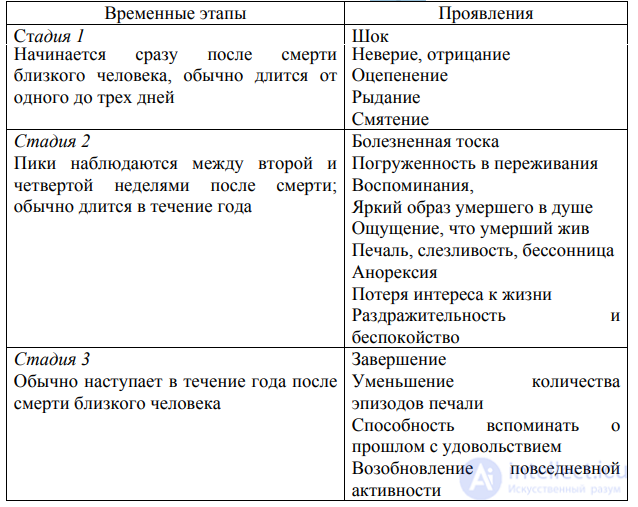
Grief is the process of experiencing the state of loss, of the death of loved ones. The process of grief has been described as a phenomenon consisting of three stages: the first stage includes shock and refusal to believe that the loved one has died, accompanied by crying and the most severe distress; the second stage is characterised by painful longing for the deceased and thoughts about them; the third stage is characterised by a decrease in sorrow and a return to normal activity. Numerous studies have been conducted examining the relationship between grief and subsequent illness and death of the bereaved. Modern research has identified several factors associated with an increased risk of mortality in people who have lost loved ones: loneliness, lack of a social support network, and reduced immune system effectiveness (especially in men who have experienced grief).
The main stages of grief
Grief is an individual and unique experience, and each person may live through it in their own way. It is important to allow oneself and others the opportunity to live through grief and to find ways of coping with it, whether through the support of loved ones, consultations with specialists, or other self-help methods. Over time, most people find ways to adapt to the loss and move forward, but everyone does so at their own pace.

Comments