
Lecture
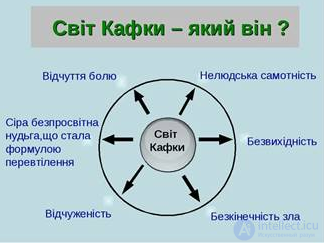
The Kafka principle is not a formal philosophical or scientific principle, but rather a concept associated with the work of Franz Kafka, the Czech writer, and with his distinctive style and philosophy. The term "Kafka principle" is usually used to describe an atmosphere of meaninglessness, bureaucracy, absurdity, and a sense of helplessness that is present in many of Kafka’s works. Here are several key aspects of the "Kafka principle":
Bureaucratic absurdity: Kafka’s works often depict situations in which the hero becomes entangled in bureaucratic structures and processes that seem meaningless and illogical. This creates a sense of absurdity and hopelessness.
A sense of helplessness: Kafka’s heroes often feel helpless and deprived of control over their own fate. They may encounter incomprehension and apathy on the part of the authorities or society.
Alienation: As a rule, Kafka’s heroes feel alienated from the surrounding world and from themselves. They may sense that they are "strangers" in their own world and unable to influence their own fate.
Metamorphosis and symbolism: Many of Kafka’s works include symbolic elements, such as metamorphosis (for example, in "The Trial", the hero turns into an insect), which serve to express the sense of human loss and the absurdity of existence.
Philosophical questions: Kafka’s works often touch on philosophical questions about the meaning of life, personal identity, power, and human existence.
This occurs when everything set out by the first two principles fails to be fulfilled, despite the presence of external signs and object nominations and the observability of their natural referents (object correspondences). This is a degenerate or regressive variant of a “zombie” situation, the product of which is a human being distinct from Homo sapiens — that is, one who does not know good and evil, a “strange person,” an “indescribable person.” To such a person the categories of good and evil do not apply; his behavior lies outside moral laws. Of such a person one cannot say that he has performed a good deed, since he has not acquired, directly through his own experience, the category of good and the principles of behavior within the bounds of good.
A good deed may be the consequence of an instruction in which rules of behavior are laid down that have not become his own rules, that have not passed through the path of interiorization. Thus, the general sense of the principle of the three “K”s. The problem of human existence lies in the fact that something must again and again be turned into a situation capable of yielding to meaningful evaluation and decision — for example, in terms of ethics and personal dignity — that is, into a situation of freedom or of the refusal of freedom as one of its possibilities. In other words, human existence is defined by the fact that life, and every fragment of it, still needs to be turned into a situation, to bring being to life. “Living being” is possible only if a person, following the first two principles, realizes himself and bears responsibility for everything that he has made of himself or failed to make of himself.
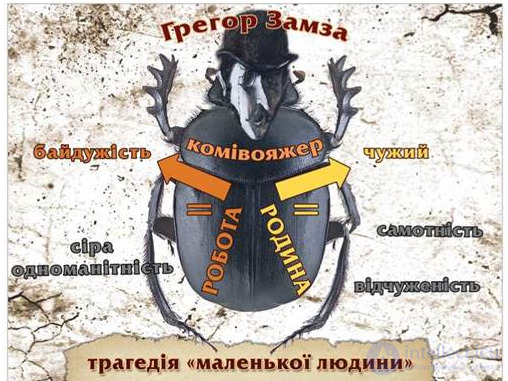
the transformation of the "little man"
The Kafka principle is not confined to literature alone; it also influences culture, philosophy, and the understanding of human existence. This principle emphasizes the sense of meaninglessness and helplessness in a world that sometimes seems alien and incomprehensible.
Questions:
1. The essence of anthropological catastrophe as the loss of inner knowledge
2. The principle of Kant.
3. The principle of Descartes
4. The principle of Kafka

Comments