
Lecture
The state is the political form of the organisation of society within a defined territory, a sovereign organisation of public power possessing an apparatus of administration and coercion to which the entire population of the country is subordinate.
Neither in scholarship nor in international law is there a single, universally recognised definition of the concept of the "state". "Country" is a closely related but not identical term, generally understood more broadly than "state". The largest international organisation, the United Nations, has no authority to determine whether a given entity is a state or not; this is a matter of international legal recognition by other states and governments. One of the few documents that gives a definition of the "state" in international law is the Montevideo Convention, signed in 1933 by only a few American states.
STATE POWER (English state power) - a variety of social power, having a volitional character, embodied in state-legal institutions, which is exercised directly by the state in the person of its bodies and officials or delegated or else sanctioned by it, that.is. is carried out on its behalf, by its authorisation and with its support.
President (from Latin praesidens, genitive praesidentis — one sitting in front, at the head; chairman) is the elected head of state in countries with a republican or mixed form of government, elected for a fixed term (established, for example, by the constitution) with powers limited by law.
In presidential republics the president is elected by non-parliamentary means: through indirect (the USA) or direct (Russia, Argentina) elections. In presidential republics the president possesses extensive actual powers, since he combines in his hands the functions of head of state and head of government.
In parliamentary republics the president is elected either by parliament or by a special college composed principally of members of parliament. The constitutions of parliamentary republics (with the exception of South Africa, where the president is elected by parliament and is head of government) formally vest the president with broad powers, but in practice these are exercised by the prime minister.
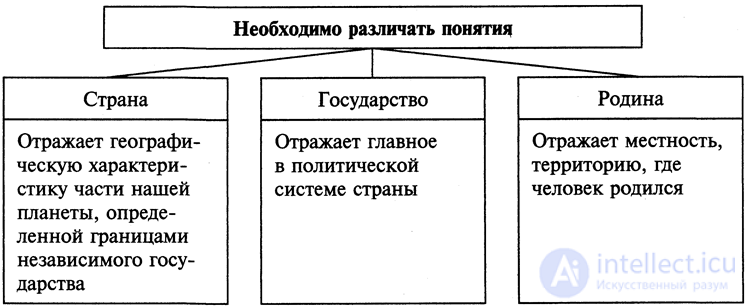
The word "государство" (gosudarstvo, "state")" in Russian derives from the Old Russian "государь" (gosudar, "sovereign")" (the title given to the ruling prince in ancient Rus), which in turn is connected with the word "господарь" (gospodar, "lord, master")" (which gave rise to "господарьство" (gospodarstvo)»).
The Old Russian "господарь" (gospodar)" derives from "господь" (gospod, "the Lord")". Thus practically all researchers agree on the connection between the words "государство" (gosudarstvo, "state")" and "господь" (gospod, "the Lord")» . The precise etymology of the word "господь" (gospod)", however, is unknown.
It may be supposed, however, that since the derivatives "государство" (gosudarstvo)», «господарьство" (gospodarstvo)" appear later than the already firmly established meanings of "государь" (gosudar)», «господарь" (gospodar)", in the Middle Ages "государство" (gosudarstvo)" was usually perceived as directly connected with the domains of the "государь" (gosudar, "sovereign")».
«The "государь" (sovereign)" at that time was usually a specific person (a prince, a ruler), although there were notable exceptions (the contractual formula "Lord Novgorod the Great" in 1136—1478 or the "seal of the Sovereign State of Pskov").
Most states have two names: a full (official, protocol) name and a short (geographical) one , although in a number of cases the full and short names are identical (for example, the United Arab Emirates, Bosnia and Herzegovina, Hungary, Georgia).
The full name (for example, the Czech Republic, the Grand Duchy of Luxembourg, the United Kingdom of Great Britain and Northern Ireland) is used when the state is referred to as a legal person (a subject of law), for example in treaties, laws and other official documents. But even in these cases the short form is sometimes given in the text by means of the phrase "hereinafter referred to as… [short name]».
The short name (for example Czechia, Luxembourg, the United Kingdom) is used when the state is mentioned geographically or economically (for example, Workers residing in France., Exports from Greece…)
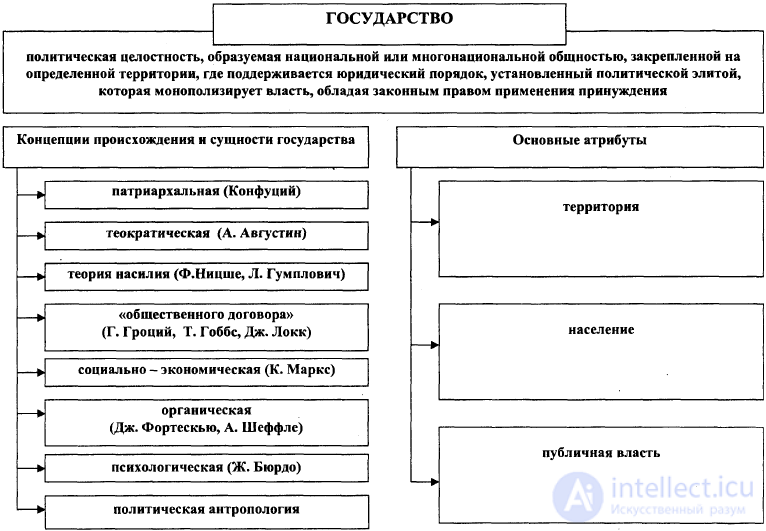
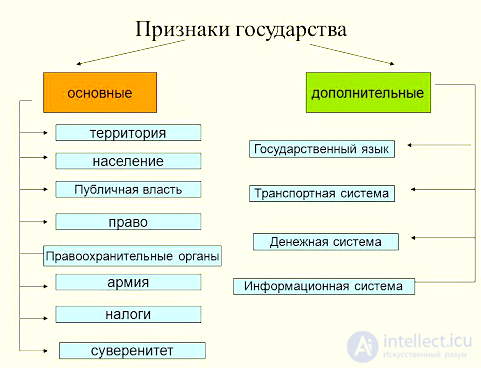
The state is a social institution that ensures the maintenance of order in relations between its members, resting on laws and traditions. It has a number of features distinguishing it from other social institutions .
The general purpose of the state consists in maintaining the rule of law, protecting human rights and freedoms, and seeking ways to soften and overcome the existing contradictions between the various social forces, towards a social compromise between different strata of society. This basic purpose determines the functions of the state, that is, the main directions of its activity. The internal ones include the economic-organisational and social functions and the functions of protecting public order and ensuring the security both of the individual and of the state .
The economic-organisational function is carried out by defining the tasks of economic strategy, the means of implementing which are the maintenance and development of the basic branches of the economy; the creation of conditions for the existence of a single economic space and for evening out the development of different territories; the regulation of economic activity, ensuring the population's interest in it, and the creation of the most favourable conditions for economic development .
The social function consists in creating conditions in which people would have the opportunity to secure for themselves an existence that is normal for the given level of the society's development. It covers such spheres as education, science, health care, demographic policy and so on. The state ensures the mitigation of social contradictions and the social protection of persons who genuinely need material assistance .
The function of protecting public order and ensuring the security of the individual and of the state consists in defending legality, law and order, sovereignty, and the rights and legitimate interests of citizens and their property, as well as in ensuring the state's own territorial integrity. The state ensures the preservation of the existing political system and legal order, combats crime and helps to resolve various conflicts .
The external function consists in defending one's own interests on the international stage and includes economic, political and military aspects .
The goals and tasks of the state, unlike its functions, relate to a specific state and reflect the main directions of its strategy in a given period. They are chosen by one government or another, which determines the mode of political strategy and the means of implementing it.
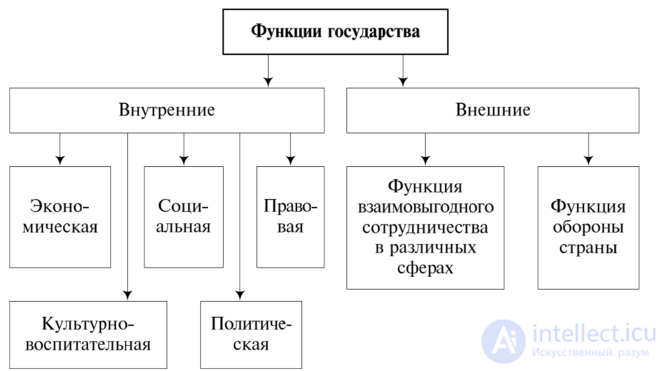
The functions of the state are subdivided:
The principal classification is the division of the state's functions into internal and external.
Internal functions of the state:
External functions of the state:
A distinction is also drawn between:
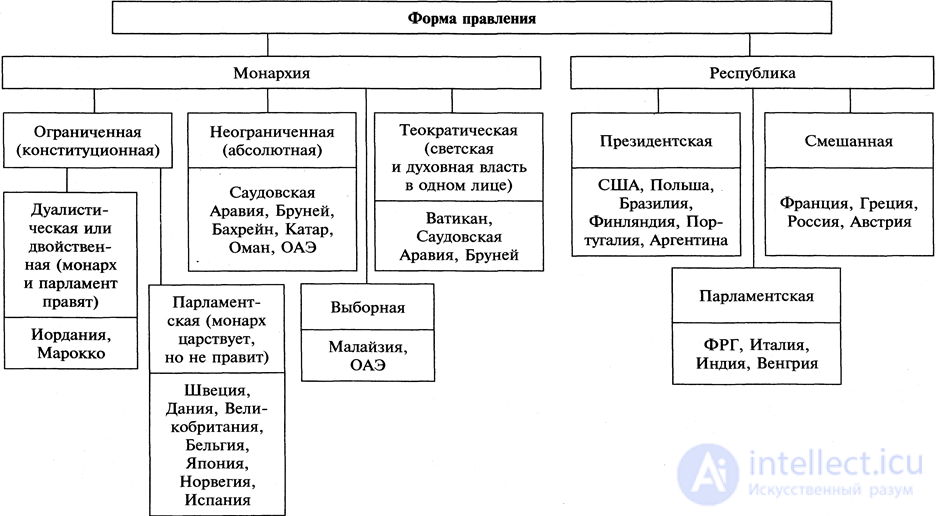
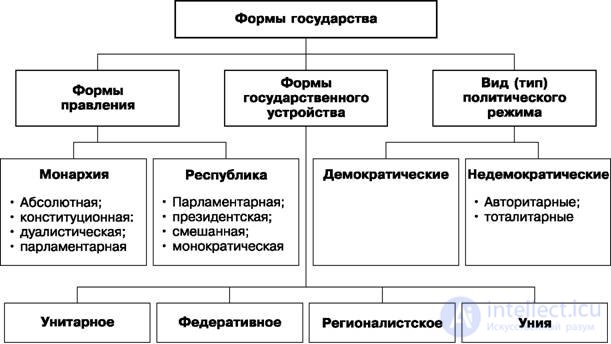
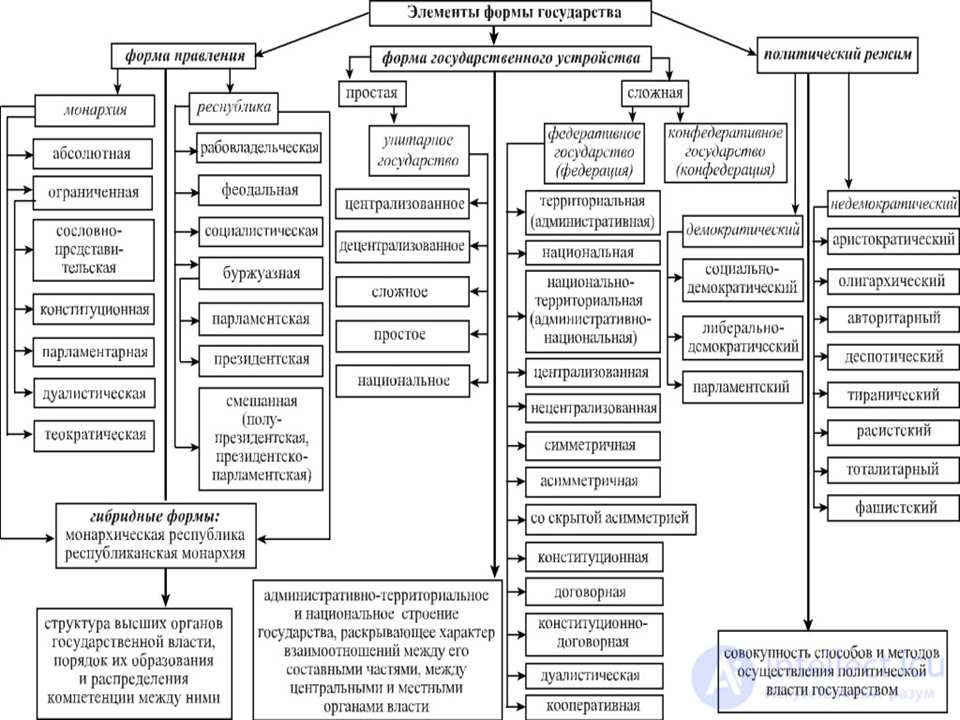
FORM OF GOVERNMENT is the manner of organising the highest bodies of state power.
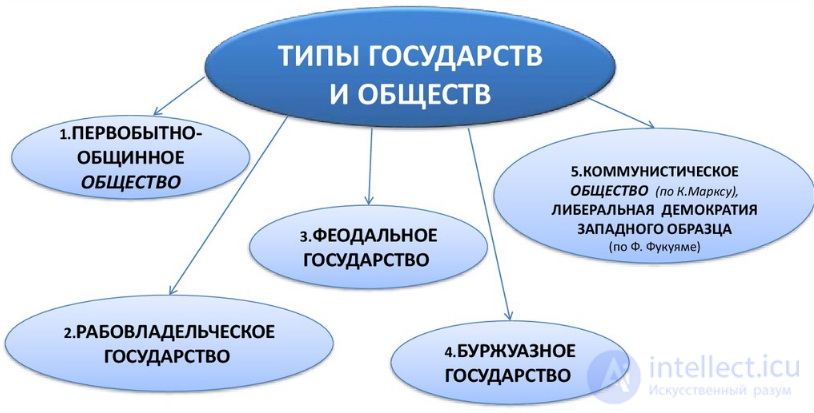
The type of a state is determined by the level of historical development of its civilisation and also depends on cultural and historical traditions. Two main methodological approaches to the typology of states predominate in the scholarly literature :
Recently a tendency towards the convergence of these approaches has appeared
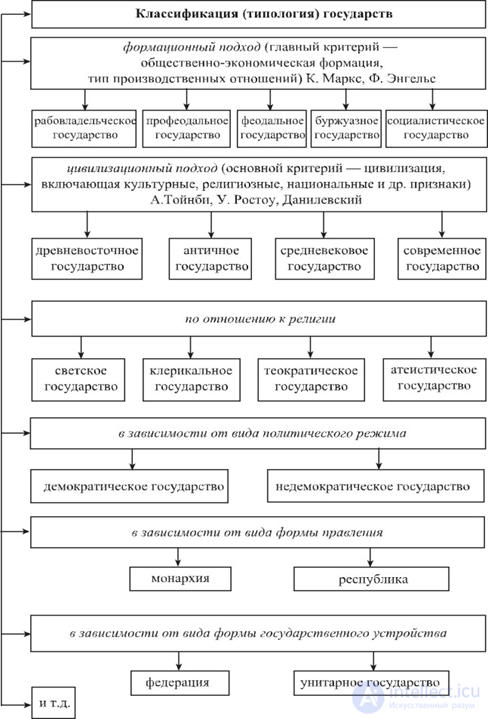
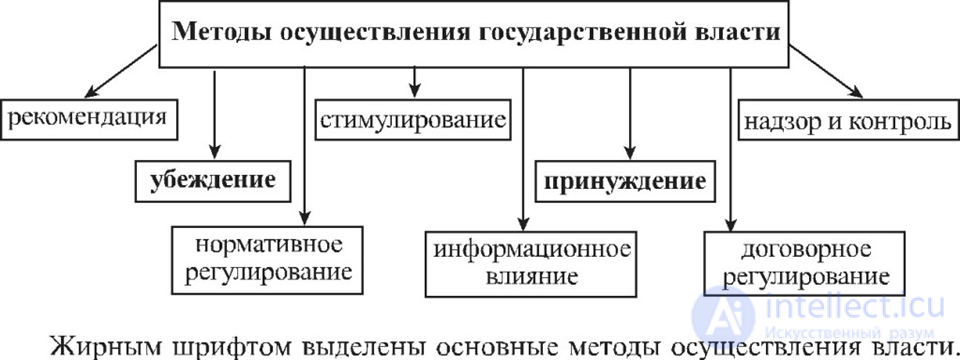
The form of the state is the structure, a definite model of the internal arrangement of the state, encompassing its territorial organisation, the principles and methods of forming and of interaction between the bodies of state power, as well as the methods of exercising power that ensure the pursuit of a particular state policy . The following main parameters for classifying forms of states are distinguished :
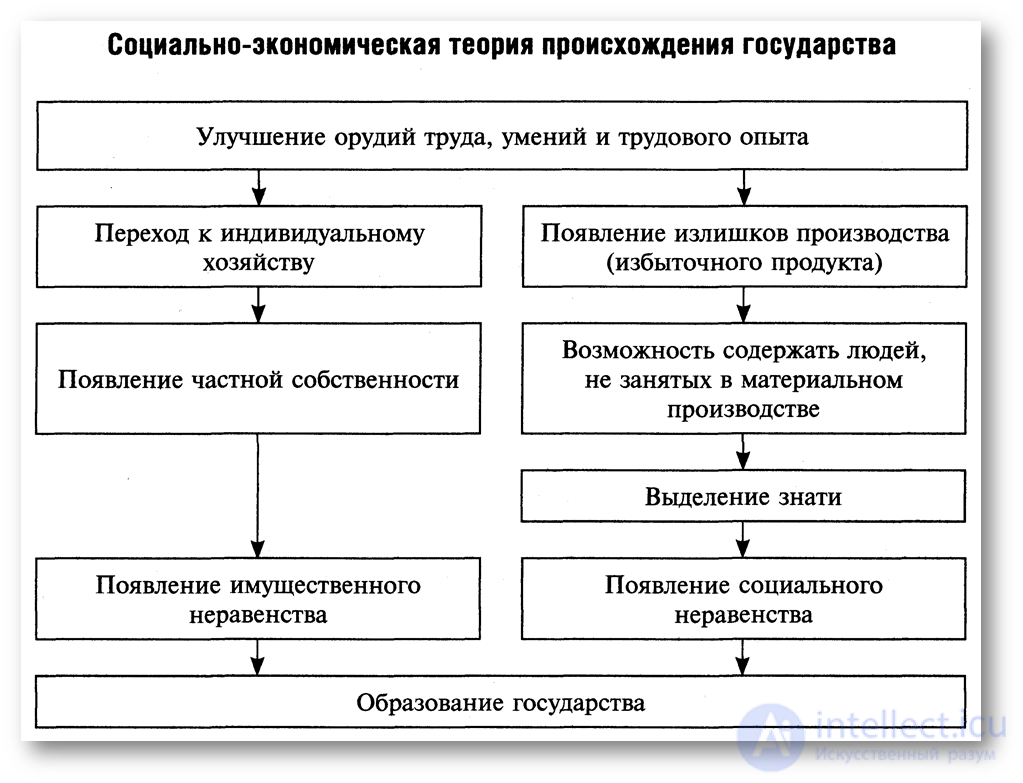
Forms of institutions of power and generally binding norms of conduct first took shape as early as the primitive stage of society's development. That period was characterised by the absence of political power and state institutions. Social norms in this period had the character of customs, traditions, rites and taboos. In scholarship the question of whether these social norms can be regarded as law or proto-law is a matter of debate.
The most ancient known states in the modern sense of the concept are the states of the Ancient East (in the territory of present-day Iraq, Egypt, India and China). There is no single opinion on the causes of the emergence of states: there are several theories, such as social contract theory and materialist theory, which explain the origin of the state, but none of them can be the final truth.
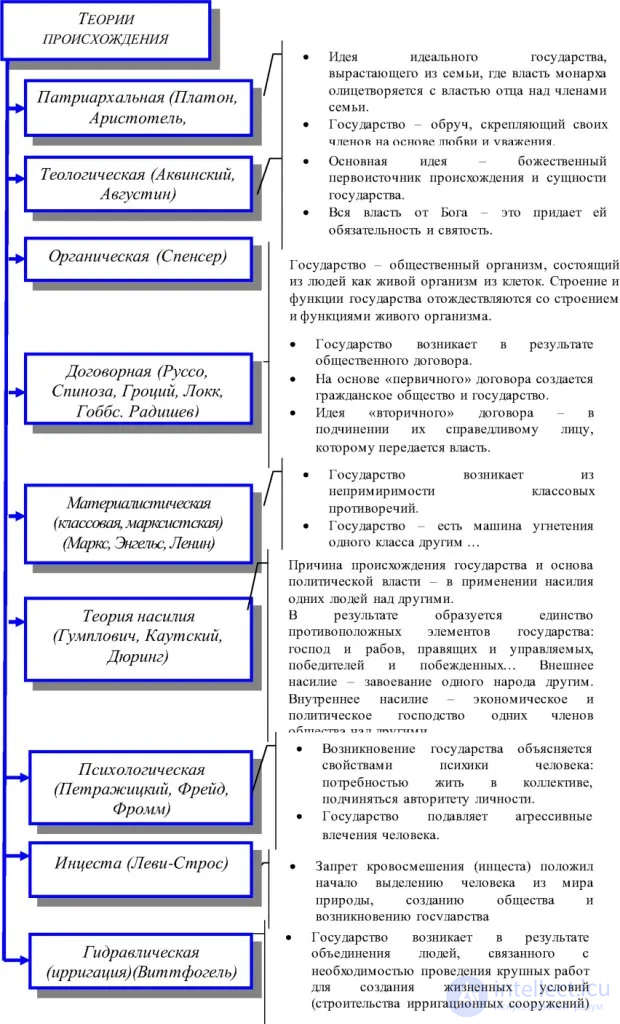
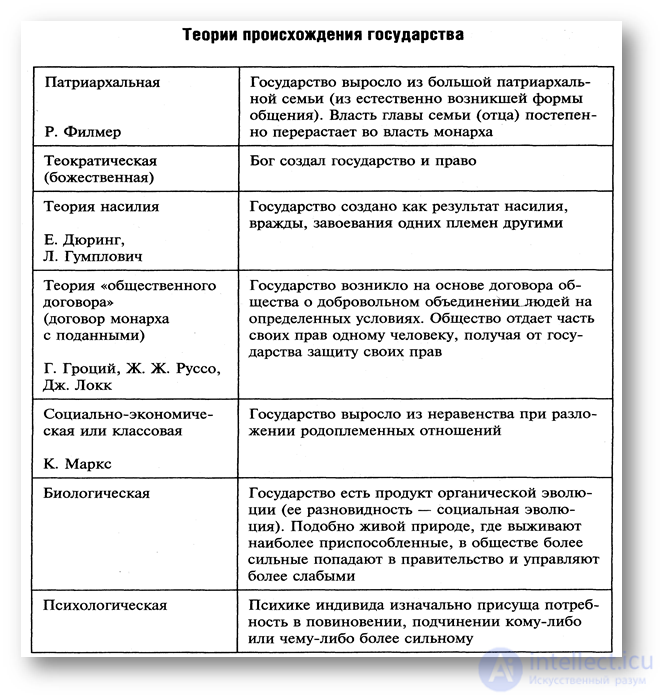
Three main stages in the development of the state are distinguished
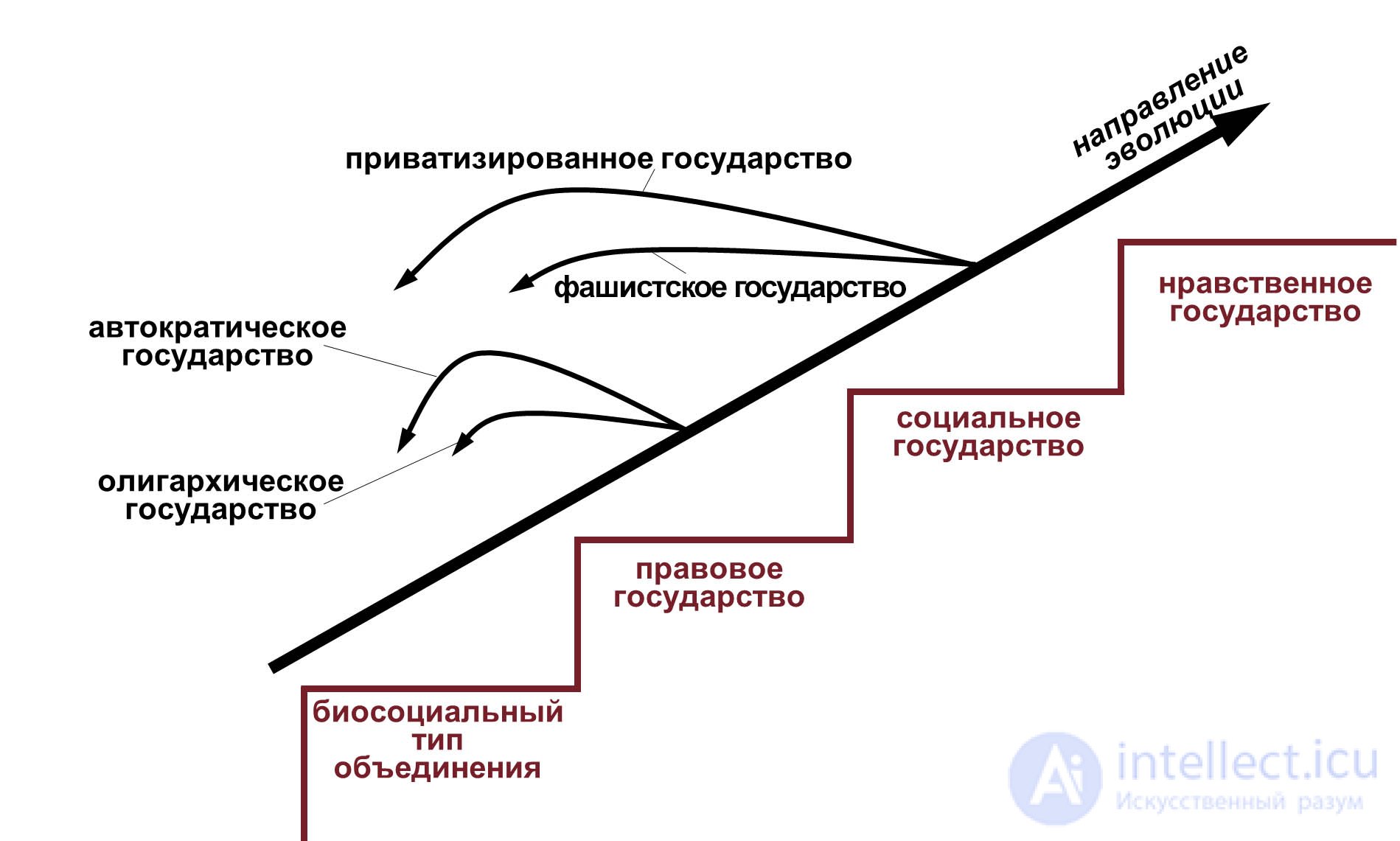
Fig. 1. The historical development of the state and involutionary models
Internationally recognised states are generally considered to be those that are either members of the United Nations or have a real opportunity to become members but voluntarily decline such an opportunity. As of February 2018 there are 195 such states[12]. All of them, apart from the Vatican and Palestine, are members of the UN.
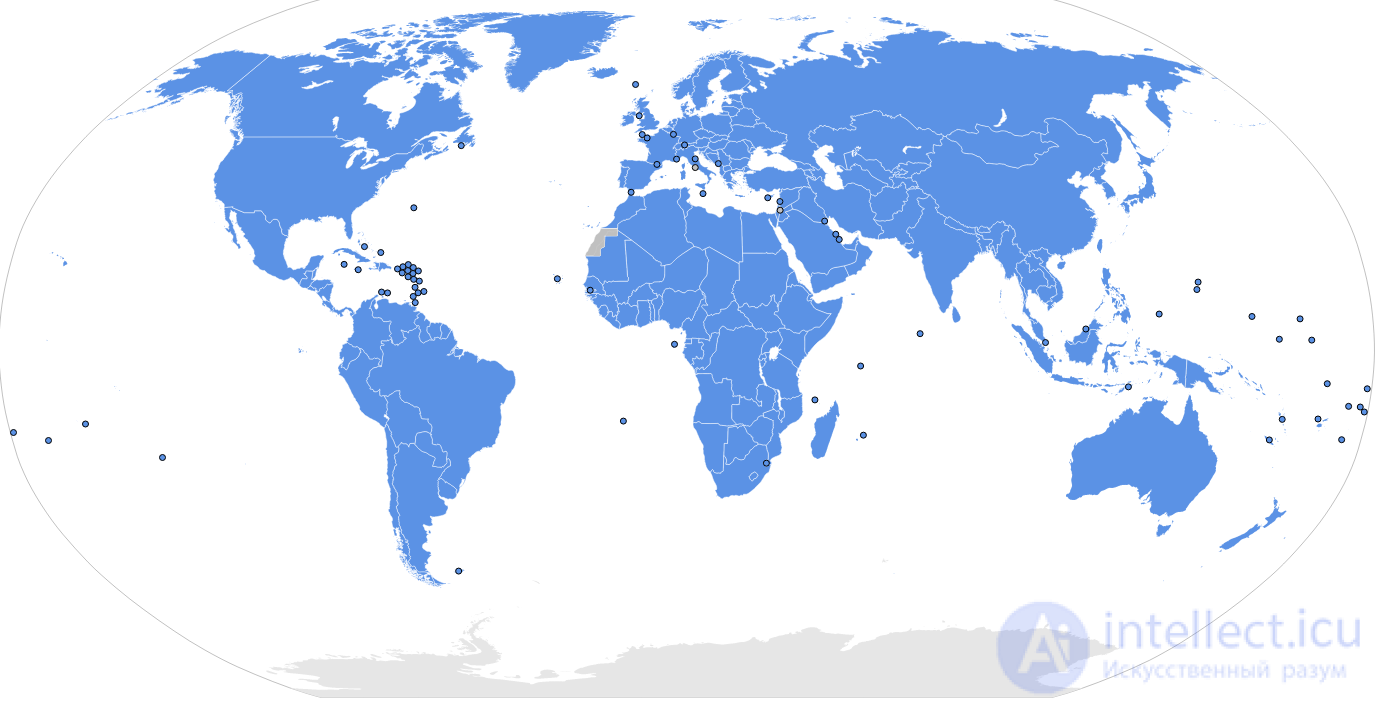
Member states of the UN (including dependent territories) are shown on the map in light blue
Besides the recognised states there are territories which, according to UN resolutions, have the right to self-determination but are unable to exercise it because of occupation. Such territories include Palestine (more precisely, its Arab part — the West Bank of the Jordan and the Gaza Strip) and Western Sahara.
The Republic of Kosovo, recognised by the majority of UN member states but not recognised by Russia and China — permanent members of the UN Security Council, which makes Kosovo's entry into that organisation impossible, although it leaves open the possibility of obtaining observer state status (the vote on joining UNESCO in 2015 ended unsuccessfully for the republic[13]).
There are also other entities with limited recognition of their independence by other states: Taiwan, Abkhazia, South Ossetia, Transnistria, Northern Cyprus, Nagorno-Karabakh, the DPR, the LPR and Somaliland.
The status of some entities cannot be unambiguously identified. The European Union and the Union State of Russia and Belarus likewise have features of a state and of a confederation, yet in international law they are not regarded as a state or a subject of international law.
States with a small territory or population are called microstates.
At the origins of a thought-out classification of forms of states stand the ancient thinkers Aristotle and Plato, who were the first to describe the main forms of states. European political and legal thought was based on their conceptions of the state for a long time. Although the understanding of the categories and concepts they worked out has changed, their elaborations have still not lost their significance .
In the course of the bourgeois revolutions in Europe in the 17th—18th centuries, which destroyed absolute monarchies and estate distinctions, the concept of civil rights appeared; in the Age of Enlightenment (the most notable contributions were made by J. Locke and C. L. Montesquieu) the concepts of natural law and the separation of powers appeared, as a result of which a theoretical and political basis emerged for the formation of ideas about the law-governed state .
As a result of the transition to industrial society, the traditional relations between people that had existed for many centuries were destroyed and social contradictions sharpened, which made active state participation in the regulation of social relations necessary. Since the second half of the 20th century the concept of the social (welfare) state has been widely used — that is, a state that actively redistributes material and other goods in accordance with the principle of social justice. It is used in such international documents as the Universal Declaration of Human Rights, the International Covenant on Economic, Social and Cultural Rights, the European Social Charter and others, and is present in the constitutions of some countries .
In connection with the processes of globalisation, the concept of state identity is changing in the modern world. The new geopolitical picture of the world is based on three fundamental realities :
In the era of continuing globalisation and the establishment of post-industrial society, the institution of the state is undergoing a number of substantial changes. There is no consensus among scholars as to what form the state will be transformed into and whether it will exist at all in the sense familiar today. Moreover, it can be said that the modern institution of the state is experiencing a certain crisis amid the accelerated modernisation of society.
The institution of the state is also being pushed towards substantial modernisation by changes in people's ideas about the state. Whereas previously, throughout practically the whole of history, the state was perceived as something looming over people, surpassing them in strength and subordinating them, today this paradigm is being completely overturned. Now the state itself is perceived as a set of institutions enabling society to function smoothly and serving the good of citizens, while political power and those who hold it no longer represent anything that makes the people tremble; a desacralisation of the state and of power has taken place. Distrust of rapidly obsolescing state institutions has grown in society. The wave of totalitarian and authoritarian regimes that swept the 20th century makes people watch the activity of state entities warily so as not to allow the sad experience to be repeated. The inertia of many states towards contemporary trends and their inability to adapt quickly to digitalisation — all this leads to the crisis of the traditional state.
One of the first to begin reflecting on qualitative changes in the position of the state in the world was the futurologist A. Toffler. In his book The Third Wave he speaks of two opposing tendencies at work in the modern world: on the one hand, an ever deeper decentralisation of states is taking place, and on the other, greater power is passing into the hands of supranational corporations, in which conditions a crisis of the state is emerging. In addition, the philosopher also spoke of the nation-state, which in his view is becoming a relic of the past and no longer holds its former positions on the international stage. He linked this above all to the fact that, within his theory, the nation-state belongs to the second stage or "wave" of the formation of society, and within modern "third wave" society it can no longer exist. Huntington also spoke of a crisis of the nation-state, discussing the actively unfolding process of the "clash of civilisations".
Another scholar, M. van Creveld, spoke of a crisis not only of the nation-state but also of the social state and, in principle, of the whole set of established models of state institutions. He linked this to a number of causes:
— first of all, the emergence of transnational corporations and large influential associations of states;
— the emergence of organisations that, although within the state, nevertheless enjoy great autonomy from it, in particular thanks to the market economy and private property.
The crisis of the state is attested not only by the development of transnational corporations and the separation of individual organisations from it. Within the states themselves, centres of international trade are actively emerging that increasingly resemble city-states — megacities. Such large cities as New York, Tokyo and others are in effect becoming ever more economically independent of any centre whatsoever. This tendency reflects the theory of the region-state or city-state.
Besides this, there exists and is being actively elaborated the theory of the corporate state. The growing role of the mass media and of non-governmental organisations consequently gives rise to numerous hybrid entities that are associations of state and non-state structures aimed at more effective interaction.
In addition to the above, there are also theories of the civilisation-state or geocivilisation. Proceeding from an analysis of the process of globalisation, scholars working within this paradigm conclude that in the future there will be a single planetary civilisation, and states in the customary sense — including, of course, the national state — will simply not exist as they are currently understood.

Comments