
Lecture
Elections are a key mechanism of a democratic society, determining which political forces and leaders will represent the interests of citizens. Victory in elections depends on a multitude of factors, among which the main criteria can be singled out. Elections are a procedure for choosing someone by means of open or secret ballot. Elections are one of the most widespread forms of participation by people (citizens and so on) in the social and political life of a state, a country, a region (regional elections), an organisation and so forth, and an important institution in the functioning of the political system and the political regime and in their legitimacy.
Elections are not merely a process in which citizens choose their representatives, but also a complex political mechanism in which every element affects the result.
Victory in elections is the result of a whole series of factors and of the use of particular techniques.
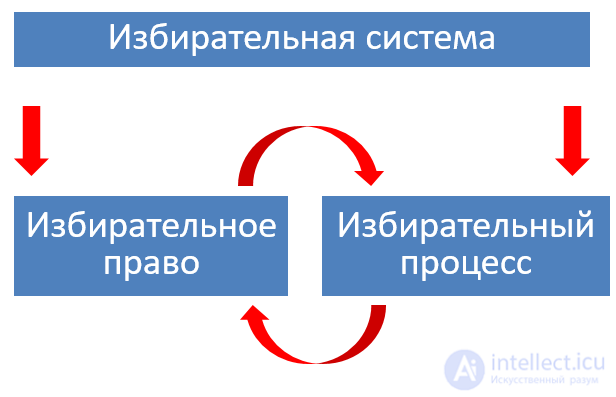
Electoral right – the political right of a citizen to elect (the active right) and to be elected (the passive right).
Criteria for the victory of political parties and presidents in elections:
One of the most important criteria of a successful election campaign is the recognition index of a candidate or party. This is a measure reflecting the degree to which a politician is known among the electorate. The higher this index, the greater the likelihood of attracting voters' support. Recognition can be increased by means of:
An active presence in the media and on social networks
Public speeches and debates
Participation in socially significant events
Running advertising campaigns
The higher the recognition index, the greater the likelihood of attracting voters' support. Recognition can be raised by various methods. For example, an active presence in the media and on social networks allows a candidate to remind voters of himself regularly. Television interviews, newspaper publications, maintaining personal pages on social networks and placing targeted advertising all help to create a recognisable image and convey the campaign's key messages to the audience. Public speeches and debates also play an important role. Appearing on television, taking part in discussions, speaking at rallies and meeting with voters provide an opportunity not only to attract attention but also to demonstrate competence and persuasiveness. Another effective instrument is participation in socially significant events. For example, a candidate may organise a charitable campaign, support local initiatives or speak at a thematic forum, all of which help to form a positive image. Finally, running advertising campaigns remains one of the key ways of raising recognition. The use of billboards, television and radio spots, and advertising publications on the internet and in the print press makes it possible to reach a wide circle of voters and fix the candidate's image in their minds.
1. An active presence in the media and on social networks.
Regular appearances in news broadcasts, television interviews, newspaper publications and active management of social networks help a candidate to remain constantly within voters' field of vision. For example, Barack Obama made active use of Twitter and Facebook in his presidential campaign, which allowed him to establish direct contact with young voters and respond promptly to important events. In Russia, Alexei Navalny's YouTube blog gathered millions of views, which made him recognisable even among those who take no interest in politics.
2. Public speeches and debates.
Open discussions, televised debates, rallies and meetings with voters are ways not only to raise recognition but also to demonstrate one's views and leadership qualities. A striking example is the debates between John Kennedy and Richard Nixon in 1960. Many experts believe that it was precisely Kennedy's persuasive performance before the television cameras that helped him win the election. In Russia in 1996, Gennady Zyuganov and Boris Yeltsin took part in televised debates, which significantly affected voters' perception of the candidates.
3. Participation in socially significant events.
Candidates often take part in charitable campaigns and environmental initiatives and support local projects in order to show their involvement in society's problems. For example, George W. Bush was actively engaged in volunteer work after leaving the presidency, which helped preserve his positive image among the electorate. In Russia many politicians take part in community clean-up days, organise campaigns to plant greenery in cities or help veterans, which increases their popularity.
4. Running advertising campaigns.
Advertising remains one of the most powerful instruments for raising recognition. It may take the form of billboards, television spots, and advertising on the internet and in the print press. For example, Volodymyr Zelensky's election campaign used creative video clips that spread rapidly on social networks, helping him win a broad audience. In the United States, Donald Trump made active use of outdoor advertising and campaign materials in the style of vivid slogans such as "Make America Great Again".
Thus a candidate's recognition index can be significantly raised by using a combination of different strategies. The more actively and skilfully a politician works with the public, the higher his chances of success in the electoral race.
Elections are won by those who offer a clear, comprehensible and attractive programme reflecting society's current needs. The programmes of successful parties and candidates usually include:
Socio-economic reforms
Improvement of the healthcare and education systems
Solutions to employment problems
Foreign policy priorities
Victory in elections depends on a clear, comprehensible and attractive programme corresponding to society's current demands. Successful candidates and parties formulate a programme that includes socio-economic reforms aimed at raising living standards, supporting small and medium-sized business, and modernising industry and agriculture. One of the key aspects is improving the healthcare system, ensuring the accessibility of medical services, developing technology in medicine and supporting medical workers. In the sphere of education the emphasis is on raising the quality of teaching, modernising curricula, digitalising the educational process and supporting teachers. Solving employment problems involves creating new jobs, developing retraining programmes and supporting youth entrepreneurship. An important element of the programme is foreign policy priorities, including the strengthening of international ties, the promotion of national interests at the global level, the development of diplomatic relations and economic cooperation with key partners. The ideology of the election winner is built on the principles of justice, stability, development and the trust of citizens, which makes his programme attractive and feasible.
Examples of successful programmes that led to electoral victory:
Franklin D. Roosevelt (USA, 1932) – his "New Deal" programme included measures to combat the Great Depression: job creation, social guarantees, state regulation of the economy. Clear reforms and a comprehensible ideology carried him to victory.
Margaret Thatcher (United Kingdom, 1979) – her programme was based on economic liberalism: privatisation, tax cuts, and a weakening of the influence of the trade unions. These ideas attracted business and the middle class, securing her victory.
Volodymyr Zelensky (Ukraine, 2019) – his campaign was built on the promise of fighting corruption, renewing those in power, reforming the economy and making state services accessible. Simplicity, clarity and anti-establishment rhetoric secured him broad support.
Emmanuel Macron (France, 2017) – he proposed a combination of a market economy and social justice, European integration, and reform of labour legislation. His programme found support among young people and the business community.
In all these cases the programmes and ideology reflected society's current demands and were clear and realistic, which secured the candidates victory.
A broad base of supporters is an important factor in victory. To achieve it one must:
Understand the expectations of various social groups
Work effectively with public opinion
Recruit volunteers and activists for campaigning
Victory in elections depends in large measure on the support of the electorate, which is formed through a broad base of supporters. To achieve this it is necessary to understand the expectations of various social groups, which makes it possible to build a strategy corresponding to society's needs. Effective work with public opinion plays a key role, since it allows one not only to convey one's position to voters but also to adapt the election campaign in accordance with current demands. An important element is also the recruitment of volunteers and activists for campaigning, since their participation helps to spread information, strengthen trust in the candidate and mobilise voters.
For example, during Barack Obama's 2008 presidential campaign, his team actively analysed the expectations of various social groups: young people, workers, small business owners and ethnic minorities. This made it possible to build a strategy based on promises of social reform and affordable healthcare, which resonated with millions of voters.
In working with public opinion, Donald Trump's team in 2016 made active use of social media and targeted advertising to convey the key messages of his campaign to different audiences, paying particular attention to citizens dissatisfied with existing policy.
As for recruiting volunteers and activists, a successful example can be seen in Emmanuel Macron's campaign in France in 2017. His movement «Forward!» (En Marche!) staked everything on thousands of volunteers who held mass events, met with voters and distributed information about the candidate's programme, which helped to create the effect of «popular support».
Financial resources play a key role in an election campaign, determining its scale, audience reach and the effectiveness of campaigning activities. Political struggle requires substantial investment, and without sufficient funding it is difficult for a candidate to compete with opponents. Let us consider the main aspects of the influence of financial resources on winning elections. Funding an election campaign plays an important role, since it makes it possible to:
Organise advertising on television, radio and the internet
Hold mass events and rallies
Produce campaign materials (leaflets, banners, video clips)
One of the main items of expenditure in an election campaign is advertising campaigns in various media. Funding makes it possible to:
Place advertising clips on television, radio and the internet.
Create high-quality media content (video addresses, interviews, debates).
Buy advertising on social media, targeting it at the required audience.
Use SEO and contextual advertising to promote the candidate in search engines.
Mass communication through the media increases a politician's name recognition and shapes his image among voters.
Financial resources make it possible to organise rallies, meetings with voters, conferences and other events that help to consolidate support. This includes:
Renting venues for assemblies and rallies.
Providing logistics and security for events.
Bringing in specialists to work with the public and the media.
Personal communication with voters helps to strengthen trust in the candidate and to create the effect of a «living presence» in the political life of society.
Political campaigning is impossible without high-quality informational materials, which require expenditure on production and distribution. Funding makes it possible to:
Design and print leaflets, posters and booklets.
Produce banners and billboards in key locations.
Record campaign clips and audio messages.
Effective campaigning helps to convey the candidate's programme to voters and to raise the level of support for him.
An election campaign is a complex process requiring the work of a team of professionals. Financial resources make it possible to:
Hire political consultants, analysts and advisers.
Pay for the work of canvassers and volunteers.
Organise sociological research and public opinion polls.
A sound strategy based on data and analysis substantially increases the chances of success.
Financial resources have a decisive influence on the course of an election campaign. They make it possible to convey one's programme to voters effectively, to organise large-scale events and to provide professional support for the campaign. However, alongside finances, the right strategy, the candidate's charisma and the trust of voters are also important. Only the combination of all these factors leads to victory in elections.
A well-constructed campaign strategy includes:
Effective work of the campaign team
Sound allocation of resources
The use of modern technologies, including big data analysis
Organisational capabilities play a key role in winning elections. A well-constructed campaign strategy includes effective work of the campaign team, sound allocation of resources and the use of modern technologies such as big data analysis. These elements make it possible to target efforts precisely, manage processes effectively and take well-founded decisions, which taken together substantially increases the chances of victory. In addition, effective allocation of resources helps to optimise costs, directing funds to the most important and strategically significant areas of the campaign. This may include advertising campaigns, work with voters, and also the strengthening of the candidate's image. The use of modern technologies, including big data analysis, makes it possible to forecast voter behaviour more accurately, to identify key problems and moods, and also to conduct targeted work with the electorate. All these factors taken together contribute to achieving maximum effectiveness at every stage of the election campaign and increase the probability of victory.
In the history of elections there are several striking examples where organisational capabilities and modern technologies played a decisive role in candidates' victories.
The US presidential election, 2008 — Barack Obama: Barack Obama's 2008 campaign became an example of the successful use of modern technologies, especially data analysis. Obama made active use of social media, online resources and mobile applications to mobilise supporters and raise funds. His team also used advanced big data analysis methods to study voter preferences and improve targeting. Effective allocation and management of resources allowed Obama to reach a broad audience and win the election successfully.
The US presidential election, 2012 — Barack Obama again: During his repeat campaign in 2012, Obama continued to use the methods that had led to his success in 2008, but with refinements. Particularly notable was the use of big data analysis technology to determine voter preferences in real time. Obama's team analysed data from social media and other sources, which made it possible to improve targeted work with various groups of voters.
The Russian presidential election, 2018 — Vladimir Putin: Vladimir Putin's 2018 campaign made active use of both traditional and modern methods. Particular attention was paid to managing information flows and using technologies to create the image of a strong leader. The application of big data analytics helped to better understand voters' moods, while the effective work of the campaign team made it possible to ensure a high level of mobilisation of the electorate.
The British election, 2015 — the Conservative Party (David Cameron): In 2015 the Conservative Party under the leadership of David Cameron successfully used technological tools for targeting and data analysis. The campaign made active use of platforms for collecting data and feedback from voters, and also adapted its strategy depending on analysis of the electorate's preferences. This allowed them to win the election despite forecasts of a possible defeat.
These examples show how organisational capabilities, sound allocation of resources and the use of modern technologies for precise data analysis and strategic planning became the key factors of success.
Leadership qualities, personal charisma and the trust of voters are important elements of success. Voters pay attention to:
Oratorical ability
The candidate's history and reputation
The manner of communicating with citizens
The candidate's personal image and charisma play a key role in achieving victory in elections. In the modern political process the most important factors of success are leadership qualities, charisma and the trust of voters. A candidate's oratorical ability has a strong influence on the perception of his personal position, his programme proposals and his overall image. The more convincingly and vividly a candidate sets out his thoughts, the greater the chances that he will be perceived as a strong and capable leader.
No less important a role is played by the candidate's history and reputation. People tend to trust those who have a transparent and respectable biography, who have proved themselves in the past as people capable of taking responsible decisions and leading others. Reputation in politics is an asset that is difficult to build in a short time, but it can play a decisive role at the moment of choice.
The manner of communicating with citizens is also a significant aspect. Candidates who are able to establish trusting relations with voters tend to win their sympathy. It is important not only what you say, but also how you say it. Openness, accessibility and the ability to listen to people create an atmosphere of mutual understanding and respect, which in turn increases the likelihood of support at the elections.
Thus a candidate's personal image is the totality of factors, including his charisma, leadership qualities, oratorical ability and reputation, that help him to win the trust and support of voters.
Examples from the history of elections where personal image and charisma played an important role can be found in different countries and historical periods. Here are several striking cases:
John Kennedy and the 1960 election
During the US presidential election of 1960, John Kennedy was able to attract voters' attention thanks to his charisma and oratorical ability. Kennedy was young, energetic and possessed a strong capacity for public speaking. A particularly important moment was his televised debates with Richard Nixon, which for the first time in history were broadcast live. Voters who watched the debates on television noted that Kennedy looked confident and attractive, whereas Nixon, in the opinion of many, looked tired and less confident. This played a decisive role in his victory.
Nelson Mandela and the 1994 election
Nelson Mandela, on becoming president of the Republic of South Africa in 1994, became a symbol of the struggle against apartheid. His personal charisma and leadership qualities inspired millions of people around the world. Mandela was a man who not only fought for equality and the rights of black people, but also managed to establish peaceful relations with white South Africans, which brought him great popularity. He demonstrated an incredible capacity for forgiveness and for uniting the nation, which became an important factor in his election victory.
Vladimir Putin and the elections in Russia
In the early 2000s Vladimir Putin managed to win the elections in Russia, in large part thanks to his image as a strong and decisive leader. He positioned himself as a stabiliser after the economic and political crisis of the 1990s. Putin used his charisma and his ability to communicate with the masses, which became an important factor in his success. His ability to project confidence and resolve proved very attractive to voters, and his rating at the elections was high.
Barack Obama and the 2008 election
Barack Obama in the 2008 US presidential election likewise demonstrated exceptional oratorical ability, charisma and leadership qualities. His speeches, full of inspiring and unifying messages, attracted a large number of voters. Obama was able to inspire trust and hope for change, which in conditions of economic crisis became the decisive factor in his victory.
These examples show how a candidate's personal image, his charisma, his ability to communicate with people and his oratorical skills can substantially influence the outcome of elections and help to win the trust and support of voters.
Election results also depend on:
The level of dissatisfaction with the current authorities
The number and strength of competing candidates
The influence of external and internal political factors
Victory in elections is the result of successfully taking account of various factors, the most important of which are the level of dissatisfaction with the current authorities, the number and strength of competing candidates, and also the influence of external and internal political factors. Let us examine each of them in more detail.
One of the key factors influencing election results is voters' attitude to the incumbent authorities. In conditions where citizens are dissatisfied with the socio-economic situation, corruption, a low standard of living or political repression, there is a high risk that the party or candidate representing the authorities will face serious difficulties at the elections. If voters feel that the current authorities are not coping with their tasks or have not lived up to their expectations, this creates favourable conditions for the emergence of a political opposition, which can gain popularity and support.
However, dissatisfaction can be both a powerful and an unpredictable factor. In some cases opposition candidates may fail to offer a real alternative, which leads to the stabilisation of support for the incumbent politicians. In other cases, the presence of mass dissatisfaction can lead to revolutionary changes.
Competition at elections is determined not only by the number of candidates, but also by their capabilities in the political and social spheres. Every new participant in an election represents a potential threat to established leaders. In conditions of a diversity of political forces, it is important that competitors should be able to attract voters' attention effectively and stand out against the rest.
Strong candidates who have the support of influential parties, are provided with financial resources and have well-prepared campaigns can substantially change the balance at the elections. At the same time, a large number of candidates can lead to a dispersal of votes, which may play into the hands of the existing leaders. In such cases, elections become not so much a struggle of ideas as a struggle for attention and resources.
Election results are also strongly affected by the influence of external and internal factors, such as international relations, the economic situation, natural disasters, social unrest or events taking place in neighbouring countries.
External political factors, such as international sanctions, economic alliances and the geopolitical situation, can influence voters' choices. For example, if a country faces economic sanctions or political isolation, this may lead to support for more nationalist and isolationist candidates.
Internal political factors, such as the country's economic condition, the level of crime, social tension and public protests, play no less important a role. If the economic situation deteriorates or a crisis arises, this often leads voters to look for new solutions that alternative candidates may offer.
Political technologies – algorithms of action that increase the effectiveness of the actors in the struggle for power.
Rational choice requires answers to a number of questions:
Populism (from the Latin populus – the people) is a style in politics that makes it possible to gain the support of voters thanks to the susceptibility of the masses to simple explanations of complex questions and to primitive but outwardly attractive slogans; politics that appeals to the broad masses and promises them a swift and easy solution to acute social problems.
Political marketing is a set of means aimed at creating an image of a candidate that is acceptable to the majority of the electorate.
Political image is an emotionally coloured image of a political leader that has taken shape in the mass consciousness and has the character of a stereotype.
«Dirty» political technologies are unethical political techniques based on the distortion of the truth.
Absenteeism (from the Latin absens, absentis – absent, English absenteeism) is the avoidance by voters of participation in political activity, but what is chiefly meant is the avoidance of their direct electoral functions.
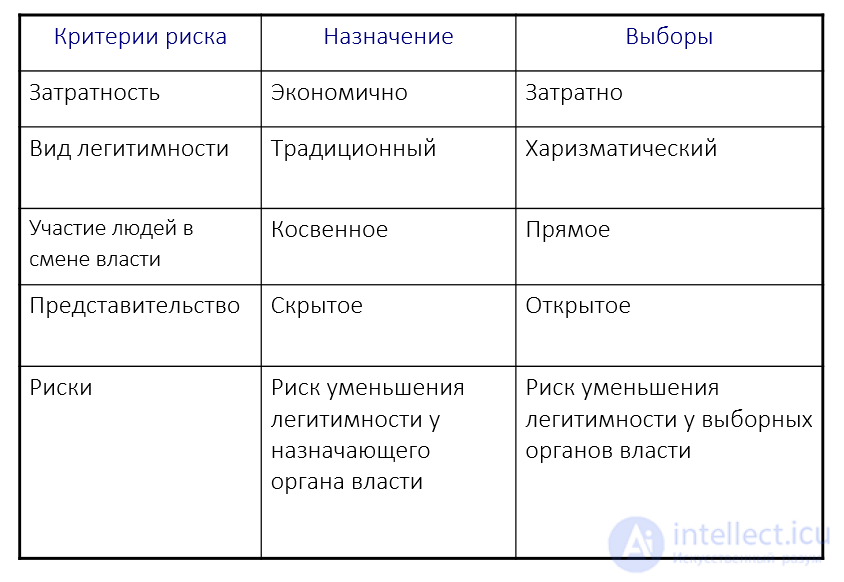
Technologies for reducing risks at elections
Victory in elections is the result of a comprehensive approach that includes name recognition, a strong programme, popular support, financial resources and sound campaign organisation. Political parties and candidates that pay attention to each of these aspects significantly increase their chances of success.
Financial resources play a key role in an election campaign, determining its scale, audience reach and the effectiveness of campaigning activities. Political struggle requires substantial investment, and without sufficient funding it is difficult for a candidate to compete with opponents. Let us consider the main aspects of the influence of financial resources on winning elections.
Victory in elections is the result of a complex interaction of many factors, the most important of which are the degree of dissatisfaction with the incumbent authorities, the strength of the competition and the influence of external and internal political factors. Voters do not take decisions in a vacuum; their choice is always conditioned by the dynamic context in which they live. Elections are not merely a referendum on the actions of politicians, but also a reflection of the state of society at a particular moment in time.

Comments