
Lecture
Political violence in the system of power
Political violence is violence employed by state or non-state actors in order to achieve particular political aims. It is physical coercion used as a means of imposing the will of an agent for the purpose of seizing power — above all state power — and of using, distributing and defending it
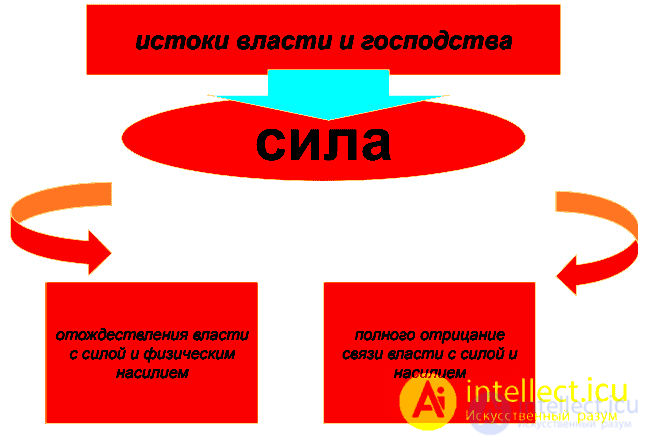
the origins of power and domination
force
identifying power with force and physical violence
complete denial of any link between power and force or violence
SANCTIONS
the “Laws of Manu” noted:
“Punishment is the king, it is the male, it is the leader and it is the chastiser...
If the king did not tirelessly inflict Punishment on those who deserve it, the stronger would roast the weak like fish on a spit...
The whole world is kept in order (only) by means of Punishment...
All the varnas would be corrupted, all barriers would be shattered, and there would arise a revolt of the whole people from wavering in (the infliction of) Punishment.
Where black, red-eyed Punishment goes, destroying criminals, there the subjects are not troubled, provided the leader keeps a good
watch.”
Political violence as a phenomenon admits of a broad interpretation depending on its subject and object, as well as on the context of its use. In scholarly discourse there is no single understanding of the essence of political violence and no generally accepted definition of it. According to I. M. Lipatov: “Political violence is the ideologically conditioned and materially supported activity of classes, nations, social groups and of the social institutions that realize their aims, directed at the use of means of coercion for the purpose of conquering, retaining and using state power, of achieving political dominance in the international arena, and of managing social processes in class interests” .
In the encyclopedic dictionary “Political Science”, political violence is defined as “state violence and violence in the direct sense of the word. Violence in the first sense is state power resting on law and limited by law. The second interpretation is a mode of action aimed at deliberately inflicting harm on the agents of action or on things, or at destroying the latter” .
In the view of A. Yu. Pidzhakov, “political violence” as a phenomenon of a political character cannot be understood apart from its connection with such a key phenomenon as “power”. The essence of violence should therefore be analysed with regard to its role and place within power relations . Thus, M. Weber used the terms “violence” and “physical violence” when he examined the means of political power . Accordingly, by political violence we understand the use of physical coercion to carry out the will of power or to seize power .
Since many groups and individuals believe that their political systems do not meet their political demands, they resort to one of the human rights indirectly recognized in the Declaration of Independence of the United States (1776) and, explicitly, in the constitutions of the French Revolution of 1789 and 1793, namely that of resistance to oppression, in order to change the form of government in whole or in part (some particular provision) by means of force. Consequently, it is a form of activism, propaganda, pressure or persuasion among many others that are less contentious in terms of ethical criteria, such as civil disobedience or nonviolence.
The role of political violence in history has been studied by theologians, philosophers, historians, political scientists and sociologists, such as Thomas Aquinas, who in the thirteenth century sanctioned popular revolt against tyrannical governments, and, in the sixteenth century, Niccolò Machiavelli, for whom reasons of state sometimes justify committing a lesser evil in order to avoid a greater evil, and for whom cruelty may be justified in a good government, since politics is a reality alien to any morality if one is to govern people. In the nineteenth century Karl Marx maintained that “violence is the midwife of history” and thereby sanctioned class struggle and historical materialism, while his friend and follower Friedrich Engels wrote an unfinished essay on the subject, “The Role of Force in History” (1888). The sociologist Georges Sorel also studied this phenomenon in his “Reflections on Violence” (1908), in a certain way sanctioning terrorism with a political and social aim. The legitimacy of violent political action is proposed a posteriori from its success. As Pedro Calderón de la Barca wrote in his play “Life Is a Dream”,when on the third day civil war breaks out, “in such battles / the victors are loyal / the defeated are traitors”.
As a result, individuals, groups, religions and certain political regimes often hold that some or all of the various types of political violence are not only justified but necessary for achieving political ends, and political violence is used by some governments to intimidate their populations and bring them to acquiescence. Government inaction or passivity can also be regarded as a form of political violence — as, for example, on the eve of the Spanish Civil War, when the Republican government took a position of non-intervention in the face of the burning and looting of churches and, subsequently, was very late in suppressing the violent actions of communist and anarchist paramilitary groups, which rose up against the insurgents and which it allowed itself to arm. Over the course of history the twentieth century was probably the most violent century of this kind. However, at least on the left, there was the revisionism of Marxist political philosophy by Eduard Bernstein and Jean Jaurès, which rejected the idea of a violent revolution for achieving socialism and opted instead for evolution — attaining it through trade unions and political action.
The Welsh School . of critical theory proceeds, in defining political violence, from the premise that the state is not the ultimate object of political violence, especially where violence in the form of terrorism is concerned . In the traditional discourse of security issues the state is always posited as the ultimate object of political violence, and therefore the state is perceived as the principal object of protection from violence, which is unjust. Wyn Jones (Wyn Jones) refutes the status of the state as the principal object of protection and puts the human being in its place. Thus, from the standpoint of the Welsh School, any act of violence aimed at achieving political change that has an impact on a wider audience than its immediate target must be considered terrorism, regardless of whether it was committed by a single individual, a non-state actor, a state, or an interstate organization (NATO, the African Union, ASEAN, etc.)
The great questions of the age are decided not by speeches and majority resolutions, but by iron and blood
The state and violence
T. Hobbes: the chief attribute of the state lies in its “monopoly on coercion and violence.
J. Locke: political power is “the right of making laws with penalties of death and consequently all less penalties for the regulating and preserving of property, and of employing the force of the community in the execution of such laws, and in the defence of the state from foreign injury — and all this
only for the public good.
R. Jhering: the state possesses an absolute monopoly on coercion
M. Weber: The state is that human community which, within a certain territory... claims (successfully) the monopoly of legitimate physical violence.
THE STATE — “an association of domination organized on the model of an institution, which within a certain sphere has succeeded in monopolizing
legitimate physical violence as a means of domination and, to this end, has concentrated the material means of the enterprise in the hands of its leaders, and has
expropriated all those functionaries of the estates who formerly disposed of these by their own arbitrary will, together with their powers, and has itself taken the highest positions in their stead”
INSTRUMENTS OF THE COERCIVE ENFORCEMENT OF STATE POLICY
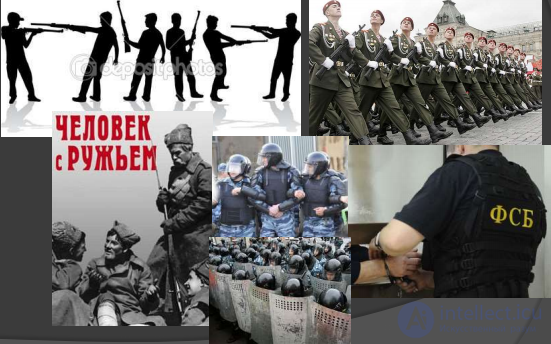
THE LEGITIMACY OF STATE VIOLENCE
BUT:
power manifests itself not only in violence, but also in various dynamic forms of dependence, independence and interdependence between one person and another, between the individual and society, between social groups, classes, states and blocs of states
The interrelation between power and violence: violence is nothing other than the crudest expression of power
All politics is a struggle for power; the ultimate kind of power is violence — Charles Wright Mills
Max Weber: the state is the rule of people over people, based on the means of legitimate, supposedly legitimate violence.”
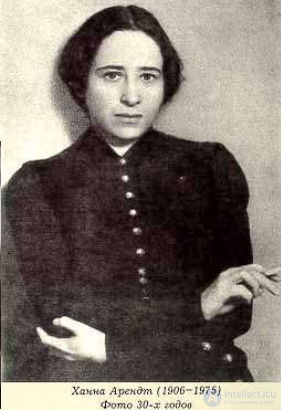
H. ARENDT ON VIOLENCE
THE PARADOX OF POWER
the means of power
Power in the form of force
Coercion as a form of power
POWER AS INDUCEMENT
Power as persuasion
.
Power as manipulation
The source of the object’s submission to the subject is bound up with the subject’s ability to exert a hidden influence on the object, one that the object does not recognize. In manipulation the subject acts upon the object without expressing its wishes concerning the object’s activity. Manipulation can also occur in cases where there is no communication at all between subject and object, even in situations where the object does not know of the subject’s very existence. There are two basic forms. First, the subject exercises hidden control over the object in the process of communication
Its other kind is bound up with the subject’s ability to alter the object’s environment
Manipulation — force — persuasion?
POWER AS AUTHORITY
THE SPECIFIC NATURE OF VIOLENCE AMONG THE MEANS OF POWER
Violence is coercion by means of physical impact.
This means,
THE SPECIFIC NATURE OF VIOLENCE AMONG THE MEANS OF POWER
,
CONDITIONS FOR THE EFFECTIVENESS OF VIOLENCE
Forms of intra-state violence in politics
There are many authors who propose their own typology of “political violence”. Thus, J. Galtung distinguishes aggressive and defensive, intentional and unintentional political violence. Galtung also proposes another typology of political violence, dividing it into two large types: direct and structural. Direct violence has both a precise addressee and a clearly identifiable source of violence. Structural violence, in its turn, is built into the social system: “… People are not merely killed by direct violence, they are also killed by the social order” .
T. Gurr distinguishes political violence of the state and its agents, and violence of the masses and classes themselves. State violence, according to Gurr, is the use of violence for the purpose of preventing deviant behaviour by citizens and maintaining internal calm. Violence of the masses and classes, in its turn, includes turmoil; conspiracies (organized political violence with a limited number of participants, which includes assassinations, terrorism, small-scale guerrilla wars, mutinies, insurrections, coups); and internal wars (organized political violence with broad mass participation, aimed at overthrowing the regime or destroying the state, accompanied by systematic violence — terrorism, guerrilla war and revolution) .
A more systematic typology of political violence is offered by I. M. Lipatov. He divides violence on various grounds: by subject (state and oppositional), by object (intra-state and interstate), by means (armed, legal, economic, ideological, etc.), by aims (revolutionary and reactionary), by results (constructive and destructive).
A typology of political violence (after Galtung) — criterion: participation of the people
A typology of political violence after I. M. Lipatov — Lipatov, Ivan Mikhailovich. The essence and basic forms of political violence in
contemporary conditions: (A philosophical-sociological analysis)
A typology of political violence after P. Wilkinson
By scale and intensity:
By goals and objectives:
As early as the beginning of 1954 a memorandum was drawn up in the USSR Ministry of Internal Affairs, addressed to N. S. Khrushchev, on the number of persons convicted of counter-revolutionary crimes, that is, under Article 58 of the Criminal Code of the RSFSR and under the corresponding articles of the criminal codes of the other union republics, for the period 1921–1953. (The document was signed by three men — Prosecutor General of the USSR R. A. Rudenko, Minister of Internal Affairs of the USSR S. N. Kruglov and Minister of Justice of the USSR K. P. Gorshenin.)
The document stated that, according to the data available to the USSR Ministry of Internal Affairs, over (this) period 3,777,380 persons were convicted of counter-revolutionary crimes by the OGPU Collegium, the NKVD troikas, the Special Board, the Military Collegium, the courts and military tribunals, including 642,980 sentenced to the supreme measure of punishment (see: State Archive of the Russian Federation (GARF). F. 9401. Op. 2. D. 450).
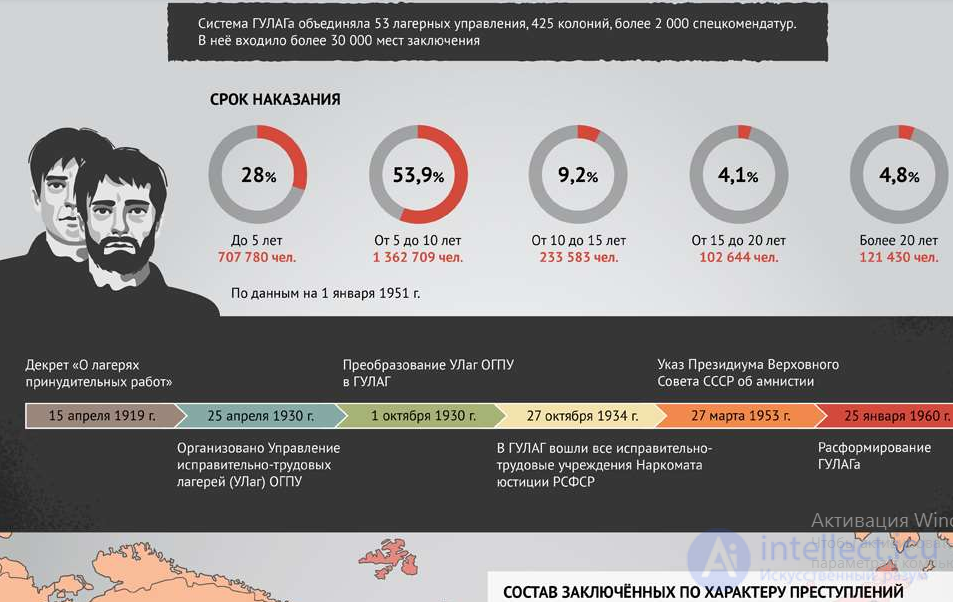
The Gulag in figures and facts
Political violence varies widely in form, brutality and practice. In political science the general organizing framework is to consider the types of violence used by the respective actors: violence between non-state actors, one-sided violence committed by a state actor against civilians, and violence between states.
Fighting between non-state actors without state security services playing a direct role in the conflict.
Ethnic conflict is waged between ethnic groups. Although sometimes a particular ethnic group may have support (formal or informal) from the state (or, conversely, a particular ethnic group may become a target of the state), ethnic conflict can also take place between two groups without direct intervention by the state, or despite the state’s attempts to mediate between the groups.
Terrorism may be directed by non-state actors against political targets other than the state (for example, the stabbing attack at the gay pride parade in Jerusalem, the Charlie Hebdo shooting). Since terrorism is a tactic often used by the weaker side in a conflict, it can also fall under violence between a state and a non-state actor.
Despite the absence of a specific definition of terrorism, the United States Department of Defense nevertheless defines terrorism as “the deliberate use of unlawful violence or the threat of unlawful violence to instil fear; intended to coerce or intimidate governments or societies in the pursuit of goals that are generally political, religious or ideological in nature". What is and what is not counted as terrorism is itself a contentious political question, since states have often used the label of terrorism exclusively to demonize the actions of their enemies while concealing “lawful” violence carried out by the state (for example, The Troubles, the CPP–NPA–NDF rebellion, the 2014 Israel–Gaza conflict).
The use of force by an organized armed group, whether a governmental or a non-state group, resulting in the deaths of civilians is considered one-sided. According to the Human Security Report Project, a campaign of one-sided violence is recorded whenever violence against civilians committed by a single group results in at least 25 reported deaths in a calendar year.
One form of political violence is genocide. Genocide is usually defined as “the deliberate and systematic destruction, in whole or in part, of an ethnic, racial, religious or national group” , although what constitutes a sufficient “part” to qualify as genocide has been subject to considerable debate among legal scholars. Genocide is usually carried out with either the open or the covert support of the governments of the countries in which the genocidal acts take place. The Holocaust is the most frequently cited historical example of genocide.
Torture is the act of inflicting severe pain (physical or psychological) as a means of punishment, revenge, extracting information or a confession, or simply as an act of cruelty. Torture is prohibited by international law and by the domestic legislation of most countries of the 21st century. It is regarded as a violation of human rights and declared unacceptable by Article 5 of the UN Declaration of Human Rights. The signatories of the Third Geneva Convention and the Fourth Geneva Convention formally agreed not to torture prisoners in armed conflicts. National and international legal prohibitions on torture derive from the unanimous view that torture and similar ill-treatment are immoral and impractical. Despite the international conventions, torture cases continue to arise, such as the 2004 Abu Ghraib torture and prisoner abuse scandal, perpetrated by personnel of the US Army military police. Organizations such as Amnesty International and the International Rehabilitation Council for Torture Victims monitor human rights violations and report widespread violations involving the torture of people by states in many regions of the world. Amnesty International estimates that at present at least 81 of the world’s governments practise torture, some of them openly.
Capital punishment is a death sentence handed down to a person by the state as a punishment for a crime. This does not include extrajudicial killing, that is, the killing of a person by state bodies without the sanction of any judicial proceedings or trial. The use of the death penalty varies by country, but according to Amnesty International 58 countries still actively use the death penalty, and in 2010, 23 countries carried out executions and 67 imposed death sentences. Methods of execution in 2010 included beheading, electrocution, hanging, lethal injection and shooting. In 2007 the UN General Assembly introduced a UN moratorium on the death penalty, calling for the abolition of capital punishment worldwide.
Police brutality is another form of political violence. It is most often described in conjunction with the term excessive force. Police brutality can be defined as “a violation of civil rights that occurs when a police officer acts with excessive force, applying force toward a civilian beyond what is necessary”. Police brutality and the excessive use of force are observed all over the world, and in the United States alone 4,861 cases of police misconduct were recorded in 2010 (see also Police brutality (USA)). Of these, there were 6,826 injured and 247 killed.
Famine may be initiated or prolonged in order to deprive of resources, force submission, or reduce the settlement of a region by a recalcitrant or unreliable population.
At least one of the warring parties is the government of a state.
A riot may be described as a violent disturbance by a group of individuals formed to protest perceived grievances and / or injustices. These may range from poverty and inequality to unemployment and state oppression. They may manifest themselves in different ways, but most often as damage to property. Riots are characterized by the unpredictability and the anonymity of their participants. In both cases it is difficult for the authorities to identify the participants. [17]
Riots have been analysed in various ways, but most recently, in the context of the frustration–aggression model theory, it has been shown that the aggression observed in most riots is a direct result of a group’s frustration with a particular aspect of its life. Widespread and prolonged rioting may lead to and / or result in an insurrection or a revolution. There are also a number of different types of riots, including but not limited to police riots, race riots, prison riots and sports riots.
In political science, a revolution is a fundamental and relatively sudden change in political power and political organization that occurs when a population rises up against the government, usually because of perceived oppression (political, social, economic) or political incompetence. [18]
In revolutions political violence is a common occurrence. Political violence is usually used to achieve a revolutionary goal, and during a civil war in order to challenge the status quo. The aims of political violence may vary — for example, to strengthen a group’s position or to weaken the opposing side.
A civil war, also known as an intra-state war, is a war waged within a single state or country between organized groups. Less often it may be fought between two countries that were created out of a single formerly united state. Often these conflicts involve one group that wishes to take control of a region or that voices grievances against the government. Usually there is a desire to overthrow the existing authority or at least to change some of its policies. In many cases an external power may intervene on behalf of one side if it shares that side’s ideology or condemns the methods / motives of its opponents.
Counterinsurgency, another form of political violence, describes the range of actions taken by the recognized government of a state to contain or suppress an insurgency directed against it. [22] There are many different doctrines, theories and tactics employed with regard to countering insurgents, which are aimed at protecting the government’s authority and reducing or eliminating the supplanting authority of the insurgents. Since it may be difficult or impossible to distinguish an insurgent, a supporter of the insurgency who does not take part in the fighting, and wholly uninvolved members of the population, counterinsurgency operations have often rested on a confused, relativistic or otherwise situational distinction between insurgents and non-combatants. Counterinsurgency operations are common during war, occupation and armed uprisings.
Electoral violence includes any acts of, or threats of, coercion, intimidation or the infliction of physical harm carried out in order to influence the electoral process or arising in the context of electoral competition. [23] It is used to influence the outcome of elections; to delay, disrupt or derail the polls; and to contest election results or to suppress protests against election results. Electoral violence is used to influence the outcome of elections because parties cannot win by fraud alone [24], and because candidates cannot rely on fraud agents to perpetrate fraud for them, since fraud is covert whereas violence is not. [25]
War is a state of organized, armed and often prolonged conflict between states, nations or other parties a typical example of which is extreme aggression, social instability and usually high mortality. [26] War should be understood as actual, deliberate and widespread armed conflict between political communities, and it should therefore be defined as a form of political violence. [28] Three of the ten costliest wars in terms of human losses occurred in the past century: the death toll of the Second World War. The number killed in that war is estimated at more than 60 million people, twice the number of those killed in war. It is estimated that between 1985 and 1994 war killed 378,000 people annually [29].
Research and data show that violence has declined. ] Since the Second World War the number of battle deaths has fallen, and since the Cold War the number of conflicts has fallen. [31] Recently scholars have begun to question this long-standing belief.
Since the Second World War the number of battle deaths has declined, and since the Cold War the number of conflicts has declined. [31] Between 1992 and 2005 the number of violent conflicts worldwide fell by 40 per cent. [33] In The Better Angels of Our Nature, Steven Pinker argues that this decline has occurred not over the past 60 years, but over the past millennia. [34]
Datasets on political violence have shown similar trends.
For example, the Center for Systemic Peace found that in the post-Second World War era armed conflict reached its peak when the Soviet Union collapsed. [35] From the 1990s to the early 2000s the level of armed conflict declined. More recently armed conflicts have begun to mount, as political violence in the Middle East and Africa begins to grow. [35]
The Uppsala Conflict Data Program (UCDP), another project that collects data on armed conflicts, has also found similar trends. The UCDP defines an armed conflict as a conflict involving the government of a state that “results in at least 25 battle-related deaths in a single calendar year”. [36]
In its survey of armed conflicts, the UCDP found that the number of armed conflicts in the world decreased after the end of the Cold War, yet recently some upward trends have been observed. Over the past ten years the UCDP has found a trend toward an increase in internationalized armed conflicts, “conflict between the government of a state and internal opposition groups with the intervention of other states”.
Recently the received view that violent conflicts have been in decline has been called into question. Some scholars argue that current data on the number of battle deaths per country per year are misleading.
Tanisha Fazal argues that wars have become less deadly thanks to medical advances that help keep more people alive during wars. Thus the battle-death threshold used by the UCDP and other organizations to identify cases of armed conflict is misleading. A conflict “that produced 1,000 battle deaths in 1820 would probably yield far fewer total casualties (where casualties, properly understood, include the killed and the wounded) than a conflict that produces 1,000 battle deaths today”. [38] The current data create the impression that wars are becoming rarer, although this is not the case.
Bear F. Braumoeller argues that analysing per capita mortality data is a “misleading and irrelevant statistic”, because it does not tell us how wars actually come about. [40] A decrease in the number of battle-related deaths may mean that population growth is outpacing the number of war deaths, or that “fewer people are exposed to the risk of dying from war”. [40] Instead, we should examine a state’s readiness for war. Braumoeller creates a new metric for conflict situations, called the “use of force”, which is the number of militarized disputes that reached at least level 4 on the 5-point scale of the Correlates of War militarized interstate disputes. He finds that the use of force held steady from the 1800s until the First World War, but that after the First World War the use of force rose steadily. Braumoeller creates another metric, called the “use of force per relevant dyad”, which is the use of force between neighbouring states or states with one great power. [40] Using this metric, he finds that there is no downward trend in the rate at which conflicts arise since the post-Second World War period. In addition, he finds that the rate of conflict has remained stable over the past two hundred years, and that the small increases and decreases in the use of force are random.
The UCDP estimates that in 2014 organized violence killed 126,059 people, the highest death toll of the post-Cold War period. Syria experienced the most violent conflict, followed by Iraq and Afghanistan. In addition, 40 armed conflicts took place in 27 regions of the world. This is the largest number of conflicts since 1999.
By region, the largest number of violent conflicts was in Asia (14 that year), followed by Africa (12), Europe (six), the Middle East (six) and the Americas (two).
That year four new conflicts began, all in Ukraine. Three conflicts were resumed by new participants in Egypt, Lebanon and Libya. In addition, six conflicts were resumed by previously recorded participants in “Azerbaijan (Nagorno-Karabakh), India (Garoland), India–Pakistan, Israel (Palestine), Mali (Azawad) and Myanmar (Kokang)”. Finally, seven conflicts that existed in 2013 ceased to exist in 2014. These conflicts took place in the Central African Republic, Ethiopia (Oromia), Malaysia (Sabah), Myanmar (Karen), Myanmar (Shan), Mozambique and Turkey (Kurdistan). [37]
Of the 40 conflicts, 11 were classified as wars, meaning that at least 1,000 people were killed in a single calendar year. The conflict between India and Pakistan was the only interstate conflict, a conflict between two or more states. Of the remaining 39 conflicts, 13 were internationalized — that is, a conflict between a government and an internal opposition group in which other states intervene. The share of internationalized conflicts is 33% (13/39), the largest proportion of external actors in intra-state conflicts since the period after the Second World War.
Just as with armed conflict, the number of victims of terrorism has increased. In 2014 the US State Department reported 13,463 terrorist acts worldwide. As a result of these attacks at least 32,700 people were killed and 34,700 were wounded. In addition, more than 9,400 people were kidnapped or taken hostage. Compared with 2013, the number of terrorist attacks rose by 35%, and the total number of deaths rose by 81%.
In 2014 the five countries subjected to the largest number of terrorist attacks were Iraq, Pakistan, Afghanistan, India and Nigeria. In 2013 Iraq, Pakistan, Afghanistan, India and the Philippines were the countries that experienced the most terrorist attacks.
In 2013 and 2014 the perpetrators of most terrorist attacks were ISIS, the Taliban, Al-Shabaab, Boko Haram and the Maoists. Fifty-five per cent of the targets were either private individuals, private property or the police. 66% of the attacks in Nigeria and 41% of the attacks in Iraq targeted private individuals and property. [41]
According to estimates by the Global Terrorism Database, between 2004 and 2013 about 50% of all terrorist attacks and 60% of deaths resulting from terrorist attacks occurred in Iraq, Afghanistan and Pakistan.
Theories of political violence can be systematized according to their level of analysis:
Social conflict theory is a social theory based on Marxism, which holds that social systems reflect the self-interest of those who own and control resources. The people in power use political and economic institutions to exploit groups with less power. This leads the rest of society to become alienated, or psychologically separated, from the people in power. Revolutions occur in order to break down the social and economic division between the people in power and the people who are exploited, and to “achieve equality and social unity”. [43]
The puzzle of the inefficiency of war explains why states go to war even though war is costly. In “Rationalist Explanations for War” by James Fearon, he argues that war is costly and that this creates an incentive to bargain with the other side. However, states do not bargain and instead enter into war because of private information about fighting capabilities and incentives to misrepresent that information. [44]
Functionalism regards society as “an organism whose whole system must be in good working order to maintain systemic equilibrium”. [43] However, when the system is shaken, society becomes disoriented and permits collective violence. [43]
Mass society theory holds that violent social movements come from people who are isolated socially and from political institutions. Alienated people are easily persuaded to join radical or extremist movements.
Resource mobilization is a social movement theory that emphasizes the ability of competing groups to organize and use adequate resources to achieve their aims. [43] Resources may be time, money, organizational skills and certain social or political opportunities. Political violence occurs when people are able to mobilize sufficient resources to take action.
Primordialism is an explanation of ethnic violence and ethnic conflict. “Interethnic differences based on racial, linguistic, religious, regional characteristics and other visible markers give rise to interethnic conflicts, because members of the same group identify emotionally with their own group but do not feel such identification with those outside their ethnic group.” [43]
Instrumentalism is an explanation of ethnic violence and ethnic conflict. Ethnicity is not inherent in human nature. Conflict arises when leaders manipulate ethnicity for the sake of political power or economic gain. [45]
Constructivism is an explanation of ethnic violence and ethnic conflict. Ethnic and national identities are socially constructed and are formed in the course of social, economic and political processes such as colonization and conquest. Ethnic conflict is a product of the factors that shape ethnic identity, rather than of ethnicity itself. [45]
ЗДПЙ occurs when there is a disproportionate percentage of a state’s population aged between 15 and 24. This happens when infant mortality falls and the birth rate rises. This youth wave increases the working-age population; however, this does not mean an increase in the number of jobs, which leads to severe unemployment. This will cause the young adult male population to “prolong dependence on parents, lower self-esteem and stoke frustration”. [46] This prompts young people “to seek social and economic advancement by alternative, extralegal means”, which means that the opportunity cost of joining armed movements is low. [46]
Rational choice theory is an approach to decision-making in which decision-makers compare the expected utility of competing options and choose the option that yields the most favourable outcome. Political violence occurs when the benefit of participating in political violence exceeds the cost.
In Why Men Rebel, Ted Robert Gurr uses relative deprivation theory to explain why people commit acts of violence. As Gurr explains, relative deprivation is “defined as actors’ perception of a discrepancy between their value expectations and their value capabilities”. In other words, relative deprivation is the gap between the desires and needs we feel we deserve, compared with what we are able to “get and keep”. Collective discontent, the gap between expected and attained welfare, drives people to resort to violence.
Collective action theory explains why people take part in rebellions. An individual decides to take part or not to take part in a rebellion on the basis of benefits and costs. Usually people decide to be free riders rather than to take part in a rebellion. These people will still benefit from the rebellion, since the benefit is a public good. However, if people expect to receive private goods, such as material reward or power, then that individual is expected to rebel.
Greed versus grievance offers two explanations of why people will fight. Individuals are said to be driven by greed when they decide to join a conflict in order to improve their position, and find that the advantages of joining a rebellion or any kind of collective violence outweigh those of not joining. [49] People are said to experience grievance when they fight because of “high inequality, a lack of political rights, or ethnic and religious divisions in society”. In their work “Greed and Grievance in Civil War”, Paul Collier and Anke Hoeffler argue that greed is a better predictor of participation in violence than grievance.
After political violence, numerous changes occur in the state, in society and in the individual.
Social science literature that examines how political violence affects a region, a state, a nation and society.
Charles Tilly argues that "war making", the elimination of rivals outside the territory, "state making", the elimination of rivals within the territory, "protection", the protection of subjects within the territory, and "extraction", the extraction of resources to "[carry out] the first three activities" are what define the state. All four assets depend on the state's ability to use and monopolise violence. In other words, politically and non-politically motivated violence is necessary for state building and for building fiscal capacity .
There is a growing body of social science research examining how political violence affects individuals and households. It is important to remember that what happens at the individual and household level can affect what happens at the macro level. For example, political violence affects a person's income, health and level of education, but together these individual consequences can affect the economic growth of a state or country. In other words, the macro and micro consequences of political violence do not arise in a vacuum.
There is empirical research linking violence to increased participation in political life. One natural experiment examines the effect of abductions by Joseph Kony's LRA on participation in political life. An abducted Ugandan youth, or in other words a former child soldier, was more likely to vote in Uganda's 2005 referendum and to be a community mobiliser / leader than a Ugandan youth who had not been abducted. [52]
This effect, however, is not limited to Uganda alone. Another natural experiment on the consequences of the civil war in Sierra Leone showed that affected households, households whose members had been killed, wounded, maimed, taken captive or become refugees, were more likely to register to vote, attend community meetings and take part in local political processes and community groups than households that had not been exposed to violence.
A study of the consequences of the civil war in Sierra Leone showed that affected households, households whose members had been killed, wounded, maimed, taken captive or displaced, experienced no long-term impact on asset ownership, child nutrition, consumer spending or income. [53]
The Armed Conflict Location and Event Data Project (ACLED) is a project that has collected data on political violence and protest in developing countries from 1997 to the present. As of early 2016, ACLED had recorded more than 100,000 individual events, with ongoing data collection focused on Africa and ten countries in South and South-East Asia. These data can be used for medium- and long-term analysis and mapping of political violence in developing countries thanks to the use of historical data going back to 1997, and also to inform humanitarian and development work in crisis and conflict settings through real-time data updates.
ACLED defines "political violence" as "the use of force by a group with a political purpose or motivation". The database uses this definition to catalogue a range of political events in Africa and South-East Asia. Political events are described as "a single encounter in which force is often used by one or more groups for political ends. The data project catalogues nine different event types.
The Human Security Report project, or HSRP catalogues global and regional trends in organised violence, their causes and consequences. Research findings and analytical materials are published in the Human Security Report series, the Human Security Brief series and the miniAtlas of Human Security in Vancouver, Canada.
Using data from the Uppsala Conflict Data Program , the report tracks 5 types of violence.
one of the opposing parties is the government of a state. Interstate conflicts are conflicts between two states. Intrastate conflicts occur within a state, as in a civil war.
neither of which is the government of a state
CONCLUSIONS
Political violence is a radical form of coercion emanating from the state with the aim of ensuring legality, resolving political conflicts and carrying out the modernisation of the political system without obstruction. The medium in which political violence manifests itself is state power
In modern societies political violence has been transformed into a means of organising social order, becoming an effective and legitimate means of constructing power, population and territory. The phenomenon of political violence is traditionally defined by the mechanisms of coercion used by the state and by society's answering violence

Comments