
Lecture
Diplomacy is the activity of heads of state, governments and special organs of foreign relations in carrying out the goals and tasks of states' foreign policy, as well as in protecting the interests of the state abroad . Diplomacy is a means of implementing the foreign policy of states. It constitutes the totality of practical measures, techniques and methods applied with regard to specific conditions and to the nature of the tasks being addressed.

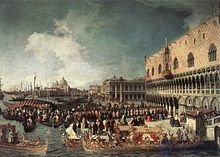
The word "diplomacy" is thought to derive from the Greek word díplōma, the name given in Ancient Greece to doubled tablets bearing writing, which were issued to envoys as credentials and as documents confirming their powers. Literally the word meant "I double", from the way in which they were folded. Ambassadors sent to negotiations in Ancient Greece received instructions and letters confirming their powers, written on two folding tablets, which they handed to the official of the city (the ancient polis) in charge of international affairs. Hence the word "diplomacy".
In everyday speech the word "diplomacy" is sometimes used to denote several quite different things. For example, diplomacy is sometimes understood to mean the foreign policy of a state. In other cases diplomacy is understood to mean negotiations, and sometimes the word is taken to mean the totality of procedures and the apparatus by means of which negotiations are conducted. It is also used to denote the overseas establishments that form part of the ministry of foreign affairs. Finally, the word "diplomacy" denotes a particular human ability, manifested in the art of securing advantage in the conduct of international negotiations, or in adroitness in the good sense of the word and, in the bad sense, in guile in such matters. These five senses of the word "diplomacy" are especially current in English-speaking countries.
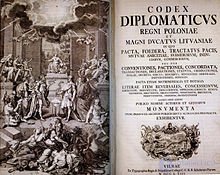
The word began to be used on its own from the end of the 16th century. The first instance of the use of the word diplomacy in England dates to 1645. Later the great German scholar Gottfried Leibniz applied the word "diplomatic" (in Latin diplomaticus) in the collection of diplomatic law he published ("Codex Juris Gentium Diplomaticus") in 1693. Since then it has come to mean "relating to international relations".
Later the word "diplomacy" in the sense we now attach to it began to be used by the French diplomat François de Callières, who had been Louis XIV's ambassador in several states. In 1716 he published the book On the Manner of Negotiating with Sovereigns, in which he used the word "diplomacy" in its modern meaning. Callières's book is still used in the training of diplomats in many diplomatic schools. In this work diplomacy is considered as the art of negotiation, founded on certain moral principles and underpinned by a definite theory. Before this, in the times of Ancient Greece and Ancient Rome, as well as of Byzantium and the Middle Ages, the art of lying and deception in international affairs had been brought to perfection. Callières set against this honest negotiation founded on high intelligence. He wrote in this book: "Deceit is in fact an indication of the narrowness of mind of the one conducting the negotiations. It is no secret that lies have always been used to achieve success. They have always left drops of poison behind them, and even the most brilliant successes of diplomacy achieved by deception rest on shaky ground. Honest negotiations successfully conducted on the basis of high intelligence will give a diplomat enormous advantages in the subsequent dialogue he will conduct".
There are several definitions of the concept of "diplomacy". The Oxford Dictionary gives the following definition: "Diplomacy is the conduct of international relations by means of negotiation; the method by which these relations are regulated and conducted by ambassadors and envoys; the work or art of the diplomat". At the same time there are also other definitions of the concept of "diplomacy". For example, E. Satow's book A Guide to Diplomatic Practice states: "Diplomacy is the application of intelligence and tact to the conduct of official relations between the governments of independent states, or, more briefly still, the conduct of business between states by peaceful means".
The Diplomatic Dictionary (editor-in-chief — the USSR minister of foreign affairs A. A. Gromyko) gives the following definition: "Diplomacy is the principled activity of heads of state, governments and special organs of foreign relations in carrying out the goals and tasks of the foreign policy of the state, as well as in protecting the rights and interests of the state abroad"
Summing up the various points of view on the definition of diplomacy, it may be defined as the science of international relations and the art of conducting negotiations by the leaders of states and governments and by special organs of foreign relations (ministries of foreign affairs, diplomatic missions), the participation of diplomats in determining the country's foreign policy course and in putting it into effect by peaceful means. The chief aim of diplomacy is the protection of the interests of the state and its citizens.
Diplomacy as a method of regulating and establishing relations between groups of people evidently existed as far back as prehistoric times. According to H. Nicolson, as early as the 16th century theorists maintained that the first diplomats were angels, since they performed the duties of ambassadors between heaven and earth .
Even in prehistoric times it is quite likely that there were occasions when one tribe made war on another tribe and, in order to pick up the wounded and bury the dead, negotiations were conducted for a temporary cessation of the battle. Even then it was clear that negotiations of this kind would be impossible if the envoy of one side were eaten by the other side before he had delivered his message. Hence, probably, arose certain rights and privileges for negotiators. The person of such envoys or messengers, duly authorised, had to be in some respect special. From these customs arose the privileges enjoyed by modern diplomats .
In slave-owning society, which constantly used military conquest to replenish its labour force, military means of carrying out states' foreign policy predominated. Diplomatic ties were maintained only episodically, by embassies that were sent to particular countries with a specific mission and returned once it was accomplished.
Under conditions of feudal fragmentation, the "private" diplomacy of feudal sovereigns became widespread; in the intervals between wars they concluded peace treaties, entered into military alliances and arranged dynastic marriages. Byzantium maintained extensive diplomatic ties. In the middle of the 15th century, with the development of international relations, permanent representations of states abroad gradually appeared.
The distinctive features of the diplomacy of states in the modern era are determined by the new goals of their foreign policy under conditions of the development of a capitalist (market) economy. For large states this is the struggle to conquer foreign markets, to divide and then to redivide the world. For small states and peoples it is the formation of national states and the defence of their independence and integrity. Under the new conditions the scale of diplomatic activity expands considerably; it becomes more dynamic and is used by the state to create a broader base of support among the leadership and the ruling elite of foreign states, and to establish contacts with particular political parties and the media. Diplomacy, alongside military means, played an important role in the struggle to realise the goals of the anti-feudal, democratic and national liberation movements, in the formation of national states in Latin America and the Balkans, and in the unification of Germany and Italy. In contemporary history the preservation of peace, the development of diverse negotiating formats and the creation of supranational regulatory bodies — the League of Nations, the UN, the G8, the G20 — have become a new and paramount direction of diplomacy.
It is generally accepted that the watershed in the development of diplomacy was the First World War and the events that followed it . These include: US President Woodrow Wilson's proclamation of his 14 points of open diplomacy and the economic equality of states, Soviet Russia's abrogation of the so-called "enslaving treaties" and its renunciation of secret diplomacy. The birth of the new diplomacy was influenced by such factors as the drive to create international organisations (first and foremost the League of Nations and the UN) aimed at preventing wars, the collapse of the existing empires and of the world colonial system, the emergence and coexistence of two systems (capitalism — socialism) and other events that occurred after the First and Second World Wars. The role of the public and of the mass media, and their influence on diplomacy, changed considerably .
Diplomacy is an extremely codified and formalised activity, conducted on the basis of the 1961 Vienna Convention on Diplomatic Relations.
Depending on the goals of a state's foreign policy and the ways of achieving them, the following types of diplomacy are distinguished.
The essence of this variety of diplomacy consists in appeasement, that is, in an unwillingness to sharpen or inflame the contradictions that exist between countries. This variety of diplomacy involves various concessions to the opposing side on minor and non-fundamental questions.
The example most often cited of this diplomacy is the policy of England and France on the eve of the Second World War, when they attempted to counter Hitler's aggressive designs.
The essence of gunboat diplomacy consists in a demonstration of force in order to achieve one's foreign policy goals. It takes its name from the word "gunboat" — a small vessel with serious artillery armament. An example of this policy is the use by the United States of America of gunboats in China at the beginning of the 20th century, and also in Latin America. Nowadays any use of naval forces to achieve foreign policy goals has come to be called gunboat diplomacy.
Shuttle diplomacy is one of the means of peacefully resolving disputes between states by means of a series of negotiations involving a third state (a mediator) and on the basis of the terms it puts forward.
At the beginning of 1974 the US Secretary of State Henry Kissinger began the first round of what later came to be called "shuttle diplomacy" between Jerusalem and the capitals of the Arab countries .
Civil diplomacy is a term denoting activity on the international stage that is an alternative to the classical conception of state diplomacy, directed at fulfilling goals of the state's foreign policy that coincide with those of official state diplomacy, but through instruments, channels and institutions different from the classical ones. This means that Track II Diplomacy diverges from the activity of professional diplomats as representatives of the official governmental bodies of various states in conducting formal negotiations. The sources of Track II Diplomacy are non-governmental actors of various kinds — educational, cultural and sporting institutions and other types of non-governmental actors, even private individuals . The absence of a direct link between the activity carried out and governmental bodies is the distinguishing feature of civil diplomacy.
Track II Diplomacy (also called civil diplomacy in this context) is a term encompassing other forms of conducting foreign relations that do not belong to governmental diplomacy, such as public diplomacy, economic diplomacy, people's diplomacy, guerrilla, scientific, cultural and digital diplomacy, cricket diplomacy and chequebook diplomacy; Track II Diplomacy may also run in the same direction as a policy of appeasement and other varieties of classical diplomacy.
This variety of diplomacy involves the use of economic methods (for example, loans) to achieve one's goals.
US President William Howard Taft (1909—1913) figuratively characterised dollar diplomacy as "a policy in which dollars are to play the role of bullets". The phrase was first used in 1909, when the US government stimulated the construction of railways in China with investments and loans. This policy was extended by the USA mainly to the underdeveloped countries of Latin America (Haiti, Honduras and Nicaragua), where repayment of the loans was guaranteed by the US armed forces present in the country.
Public diplomacy is understood to mean actions directed at achieving the goals of national foreign policy by establishing long-term relationships, studying public opinion abroad and informing foreign audiences with the aim of a better understanding of one's own state's values and institutions abroad. Public diplomacy advances national interests and ensures national security by studying moods abroad and influencing those who shape that opinion.
Corridor, or behind-the-scenes, diplomacy is diplomacy with elements of backstage and unofficial deals made by representatives of ruling circles close to members of parliament, or by heads of government or their representatives, often without protocol and without disclosing the details to the public.
People's diplomacy in the broad sense of the word is understood to mean the historically continuous process of communication, of peoples coming to know one another, and of the mutual influence and mutual enrichment of cultures .
Economic diplomacy, or trade diplomacy, is a branch of diplomatic work based on trade and economic relations .
Trade diplomacy as a branch of a state's foreign relations played a major role in France in the time of Louis XIV. The king's adviser Jean-Baptiste Colbert actively developed this area, thanks to which the French treasury, exhausted by wars, was saved by means of commercial, trade diplomacy .
This type of diplomacy is of particular importance in modern conditions, when, thanks to the process of globalisation, the well-being of practically all states depends very heavily on participation in world trade and economic relations.
A whole range of factors contributes to increasing the effectiveness of economic diplomacy. The key one among them is the consistently pursued policy of developed and developing countries, as well as countries with economies in transition, of strengthening national competitiveness, which serves as the material basis of successful economic diplomacy. Among other important factors is the elaboration of a nationwide foreign economic strategy, especially when this strategy contains, alongside the main goals, the methods of achieving them, and also defines specific tasks with regard to major segments of foreign economic relations, individual regions and markets, and provides for effective instruments for accomplishing the tasks set. Of great importance is the correct ordering of the priorities of economic diplomacy and its appropriate financial, organisational and staffing provision. At present economic diplomacy, as one of the most important functions of the state under conditions of globalisation, is acquiring a comprehensive, systemic character, interacting closely with a wide range of state structures, public organisations and the trade and industrial structures of entrepreneurs.
Digital (electronic) diplomacy (Digital diplomacy, e-diplomacy) is the use of the capabilities of the Internet and information and communication technologies (ICT) to accomplish diplomatic tasks. Digital diplomacy makes use of new media, social networks, blogs and similar media platforms on the global network. Electronic diplomacy involves government agencies — above all foreign-policy governmental bodies — as well as non-governmental organisations whose activities are connected with implementing the foreign-policy agenda. The main goals of digital diplomacy are the promotion of foreign-policy interests and information propaganda through Internet television, social networks and mobile telephones, directed at mass consciousness and at political elites.
Non-standard types of diplomacy are approaches to international relations that go beyond the framework of classical state diplomacy. They include unofficial, creative and indirect methods of influence. Here are several examples:
Business diplomacy comprises a set of key skills required for the professional management of interaction with stakeholders and for influencing them in order to advance the interests of a particular organisation. It aims to build strong and long-term ties with a variety of partners, including the government bodies responsible for licensing.
It is important to distinguish between business diplomacy and corporate diplomacy, since these concepts are often confused. Business diplomacy is responsible for the interaction of transnational companies with external structures, including government bodies, trade unions and public organisations in the countries where they operate. Corporate diplomacy, in turn, is directed at internal communication between the divisions of a multinational corporation.
The key task of specialists in this field is to conduct successful international negotiations, take part in shaping state policy, exert influence on the development of global standards, cooperate with external stakeholders and effectively resolve conflicts between business and society relating to environmental, social and other issues.
Military diplomacy is the use of the armed forces and of military interaction to achieve political and strategic goals without direct military conflict. It includes various forms of cooperation, pressure and displays of force.
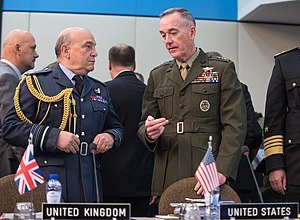
Military diplomacy is an organisational military-political instrument for implementing a state's foreign-policy course, a set of techniques and methods for achieving military-political goals, a mechanism of relations between sovereign states at the level of their armed forces, based on the mutual exchange of defence attachés and of military, naval and air attachés.
The actors of military diplomacy are the totality of special military-diplomatic bodies, as well as the career diplomats working in them. The objects of military diplomacy are particular countries (groups of countries) and the various components of their military, military-political, military-economic, military-technical and military-scientific life, which are the subject of study and analysis by diplomats in order to accomplish the tasks assigned to them.
Military diplomacy, like state diplomacy in general, belongs to the socio-political sphere of public life. The activity of all components of a state's military-diplomatic system is inseparably linked with its national interests, including the interests of the individual and of society. As a component of national diplomacy, military diplomacy is a tool for satisfying the corresponding needs of the individual, society and the state. These needs determine the main functions, forms and methods of military diplomacy. In contemporary international law the principal sources codifying the military-diplomatic branch are:
The sources of the law of external relations also include bilateral agreements on military-diplomatic matters and agreements (protocols) on the opening of military missions.
The main function of military diplomacy is, as stated in the Vienna Convention on Diplomatic Relations of 1961, representing the armed forces of the accrediting state in the receiving state, as well as ascertaining by all lawful means the conditions and events in the receiving state and reporting on them to the government of one's own state. Its permanent functions include the military attaché's role as adviser to the ambassador on military, military-political and military-technical matters.
Historically, military diplomacy has been inseparably linked with the activity of military attachés. For this reason the functions of military diplomacy are often considered through the prism of military attachés' activity. The legislative acts of various states give no direct answer to the question of what functions a military attaché performs. The main functions of military diplomacy may be divided into the following.
Besides obtaining information, the informational function of military diplomacy should also be taken to include its analysis and evaluation. Contemporary requirements for analysis and analytical assessments of events differ substantially from those of past years, and this is determined above all by the complexity of today's problems. A good many new factors have arisen that did not exist before and that military diplomacy must take into account. The great changes that have recently taken place on the international stage, in the structure of the armed forces, in military technology and in the forms and methods of waging war indicate that the importance of analysis and forecasting on military and military-political matters is growing.
The content of the functions, forms and methods of military diplomacy depends on the character of international relations, particularly when resolving questions of war and peace, settling conflict situations and so on.
The forms of military-diplomatic action have different content, which depends on the levels of the hierarchical structure of military diplomacy. This concerns the work of the staff of military attachés' offices and of permanent military missions to international organisations, as well as the work of groups of advisers holding diplomatic status. Depending on the available forces and resources and on the scale and character of the tasks being carried out, each of these types of activity has a management system corresponding to the content of a particular form of military diplomacy.
Among the forms of military diplomacy the following are distinguished: public (open), secret or covert, or mixed (confidential negotiations between military diplomats accompanied or concluded by public declarations, information about the agreements reached and so on).
A separate form of military-diplomatic activity is secret diplomacy, which has traditionally been an unavoidable and therefore necessary means of intergovernmental interaction, since a practice of open agreements alone usually negates the benefit of official diplomacy (because in that case purely propagandistic functions come to the fore).
Essence: The stationing of troops, nuclear deterrence and the demonstration of military might in order to prevent aggression.
Examples:
Essence: The use of military force or the threat of its use to put pressure on another country.
Examples:
Essence: The use of covert methods — cyberattacks, information warfare, private military companies (PMCs).
Examples:
Essence: The use of military forces to settle conflicts and ensure stability.
Examples:
Essence: Arms sales, military technologies and the training of allies' armed forces.
Examples:
Essence: The formation of military alliances and unions.
Examples:
Essence: The use of the fleet to demonstrate force, conduct patrols and protect trade routes.
Examples:
Essence: The use of satellite technologies, missile defence systems and anti-satellite weapons.
Examples:
Essence: The use of cyberattacks to put pressure on an adversary.
Examples:
10. missile diplomacy — as a way of inducing a country to enter peace negotiations or to capitulate
The most widespread methods of military diplomacy in practice are:

Comments