
Lecture
Это продолжение увлекательной статьи про метаболизм в организме.
...
Carbohydrate Metabolism" >
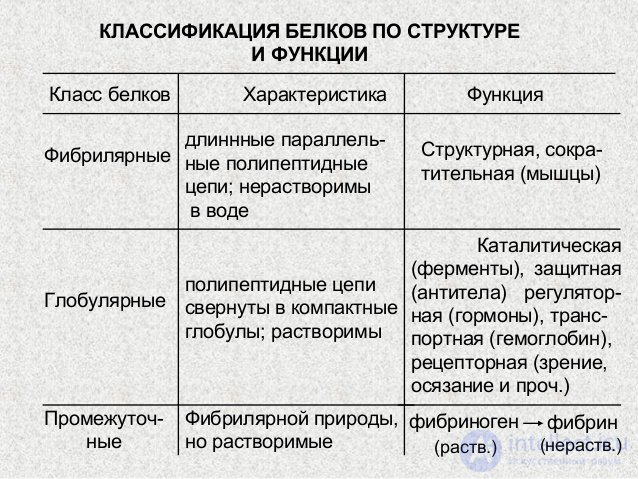
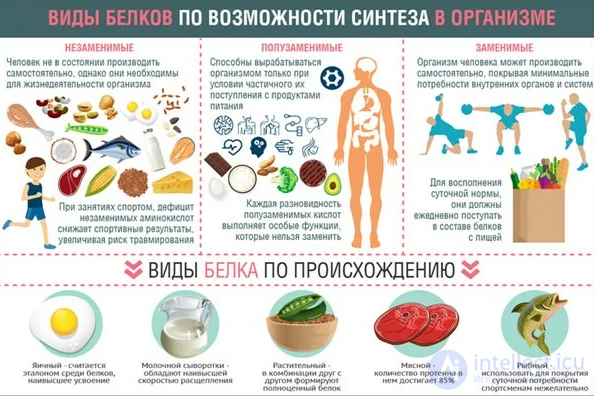
Protein metabolism
Protein metabolism is the use and transformation of amino acids from proteins in the human body.
The oxidation of 1 g of protein releases 17.2 kJ (4.1 kcal) of energy.
However, the body rarely uses large amounts of protein to cover its energy needs, since proteins are needed for other functions (the main function is structural). The human body needs not the proteins of food themselves but the amino acids of which they consist.
During digestion, dietary proteins are broken down in the gastrointestinal tract into individual amino acids, which are absorbed in the small intestine into the bloodstream and carried to the cells, where new proteins characteristic of the human body are synthesized.
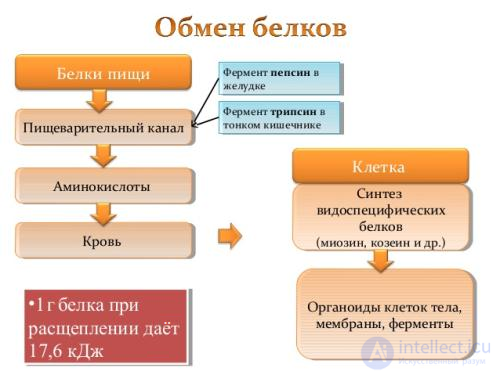
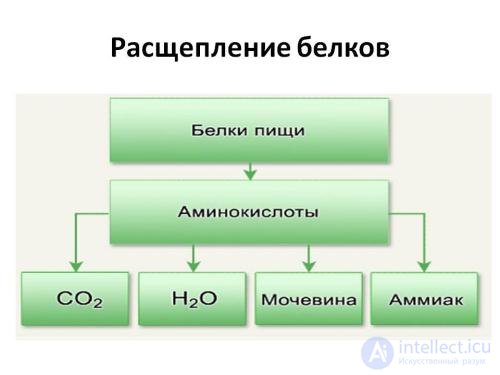
The level of amino acids in the blood is regulated by the liver. When broken down, amino acids form water, carbon dioxide and toxic ammonia. In liver cells, urea is synthesized from the resulting ammonia (it is then excreted with water by the kidneys in the urine and partly through the skin), while carbon dioxide is exhaled through the lungs.
The remnants of amino acids are used as an energy source (converted into glucose, the excess of which is turned into glycogen).
Carbohydrates are organic substances containing a carbonyl group and several hydroxyl groups. The name of this class of compounds comes from the words "hydrates of carbon"; it was proposed by Carl Schmidt in 1844. The name arose because the first carbohydrates known to science were described by the gross formula Cx(H2O)y, being formally compounds of carbon and water. The composition of most of them is reflected by the formula Cx(H2O)y, where x, y ≥ 3.
Classification of carbohydrates
All known carbohydrates can be divided into two large groups: simple carbohydrates and complex carbohydrates. A separate group consists of carbohydrate-containing mixed polymers, for example glycoproteins, complexes with a protein molecule, glycolipids, complexes with a lipid, and others.
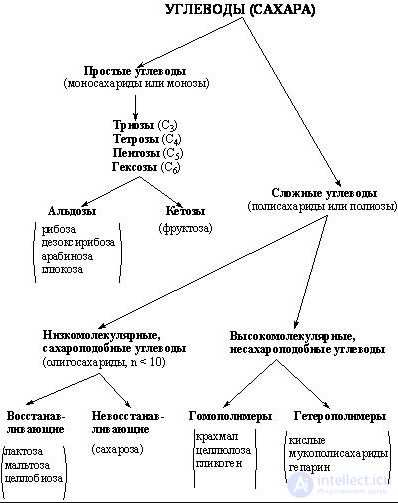
Fig. Classification of carbohydrates
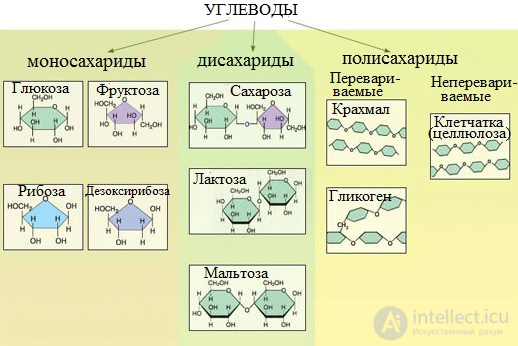
Fig. Classification of carbohydrates
Functions of carbohydrates
The biological functions of polysaccharides are highly diverse.
1. Energy and storage function
Carbohydrates contain the main share of the calories a person consumes with food. The main dietary carbohydrate is starch. It is found in bakery products, potatoes and cereals. The human diet also includes glycogen (in liver and meat), sucrose (as an additive to various dishes), fructose (in fruits and honey), and lactose (in milk). Before being absorbed by the body, polysaccharides must be hydrolyzed by digestive enzymes to monosaccharides. Only in this form are they absorbed into the blood. With the blood flow, monosaccharides reach organs and tissues, where they are used to synthesize the body's own carbohydrates or other substances, or are broken down to extract energy from them.
The energy released by the breakdown of glucose is stored in the form of ATP. Two processes of glucose breakdown are distinguished: anaerobic (in the absence of oxygen) and aerobic (in the presence of oxygen). The anaerobic process produces lactic acid 
, which accumulates in the muscles during heavy physical exertion and causes pain.
In the aerobic process, by contrast, glucose is oxidized to carbon dioxide and water: 
Aerobic breakdown of glucose releases considerably more energy than anaerobic breakdown. Overall, the oxidation of 1 g of carbohydrate releases 16.9 kJ of energy.
Glucose can undergo alcoholic fermentation. This process is carried out by yeasts under anaerobic conditions: 
Alcoholic fermentation is widely used in industry to produce wines and ethyl alcohol.
Humans have learned to use not only alcoholic fermentation but also lactic acid fermentation, for example to make dairy products and to pickle vegetables.
The bodies of humans and animals lack enzymes capable of hydrolyzing cellulose; nevertheless, cellulose is the main component of the diet of many animals, in particular ruminants. The stomachs of these animals contain large numbers of bacteria and protozoa that produce the enzyme cellulase, which catalyzes the hydrolysis of cellulose to glucose. The latter can undergo further transformations that yield butyric, acetic and propionic acids, which can be absorbed into the blood of ruminants.
Carbohydrates also serve a storage function. Thus starch, sucrose and glucose in plants and glycogen in animals are the energy reserves of their cells.
2. Structural, supportive and protective functions
Cellulose in plants and chitin in invertebrates and fungi perform supportive and protective functions. Polysaccharides form the capsule of microorganisms, thereby strengthening the membrane. Bacterial lipopolysaccharides and glycoproteins on the surface of animal cells ensure the selectivity of intercellular interactions and of the body's immunological reactions. Ribose serves as a building block for RNA, and deoxyribose for DNA.
Heparin performs a protective function. This carbohydrate, being an inhibitor of blood coagulation, prevents the formation of blood clots. It is found in the blood and connective tissue of mammals. Bacterial cell walls, formed by polysaccharides cross-linked by short amino acid chains, protect bacterial cells from adverse effects. In crustaceans and insects, carbohydrates take part in building the exoskeleton, which performs a protective function.
3. Regulatory function
Dietary fiber enhances intestinal peristalsis, thereby improving digestion.
Carbohydrate metabolism is the set of processes by which carbohydrates are converted and used.
Carbohydrates are the main source of energy in the body. The oxidation of 1 g of carbohydrate (glucose) releases 17.2 kJ (4.1 kcal) of energy.
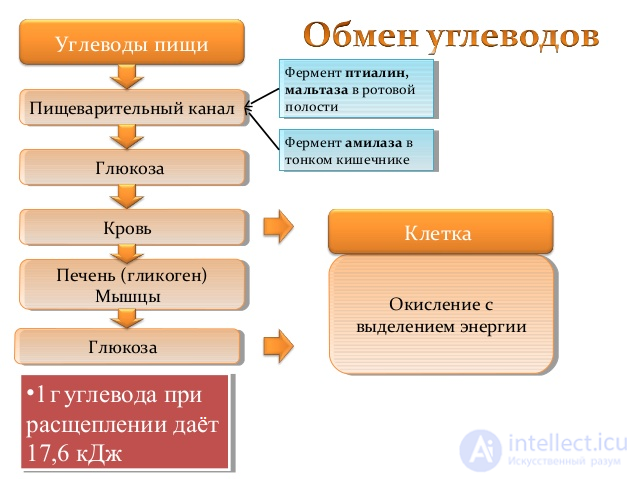
Carbohydrates enter the human body in the form of various compounds: starch, glycogen, sucrose or fructose, and others. All of these substances are broken down during digestion to the simple sugar glucose, which is absorbed by the villi of the small intestine and enters the blood.
Glucose is necessary for normal brain function. A drop in the blood plasma glucose concentration from 0.1 to 0.05% leads to rapid loss of consciousness, convulsions and death.
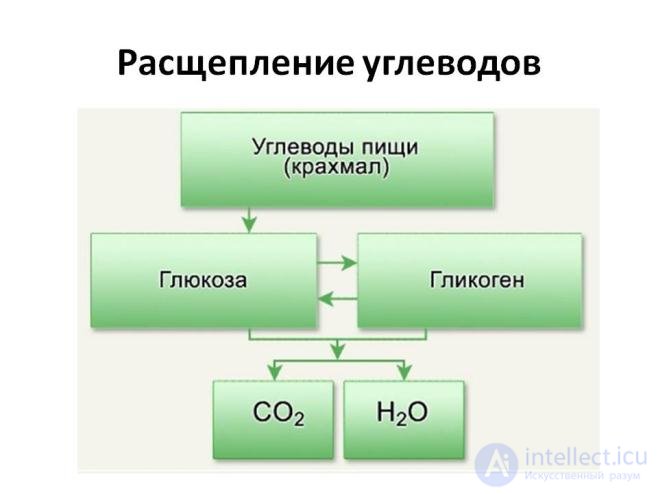
Most of the glucose is oxidized in the body to carbon dioxide and water, which are eliminated from the body through the kidneys (water) and the lungs (carbon dioxide).
Part of the glucose is converted into the polysaccharide glycogen and stored in the liver (up to 300 g of glycogen can be stored) and in the muscles (glycogen is the main energy supplier for muscle contraction).
The blood glucose level is constant (0.10–0.15%) and is regulated by hormones, including insulin (produced by the pancreas). When insulin is deficient, the blood glucose level rises, which leads to a serious disease — diabetes mellitus.
Insulin also inhibits the breakdown of glycogen and promotes an increase in its content in the liver.
Another pancreatic hormone, glucagon, promotes the conversion of glycogen to glucose, thereby raising its blood concentration (i.e., it has an effect opposite to that of insulin).
When the diet contains a large amount of carbohydrates, the excess is converted into fat and deposited in the human body.
1 g of carbohydrate contains considerably less energy than 1 g of fat. But carbohydrates can be oxidized quickly, providing energy rapidly.
The glycemic index is the rate at which carbohydrates are absorbed by the body and raise blood sugar levels.
The concept of the glycemic index (abbreviated GI) came into dietetics and sports from medicine. It was first discussed in the 1980s, when Professor David J. A. Jenkins of Canada, while researching the most beneficial diet for people with diabetes, found that different foods raise glucose levels differently.
Every food has its own GI, which does not depend on its caloric content or on the amount of carbohydrates it contains. This indicator reflects how quickly the blood glucose level changes after eating a given food, compared with consuming an equivalent amount of glucose — that is, the rate at which carbohydrates are converted to glucose and enter the blood.
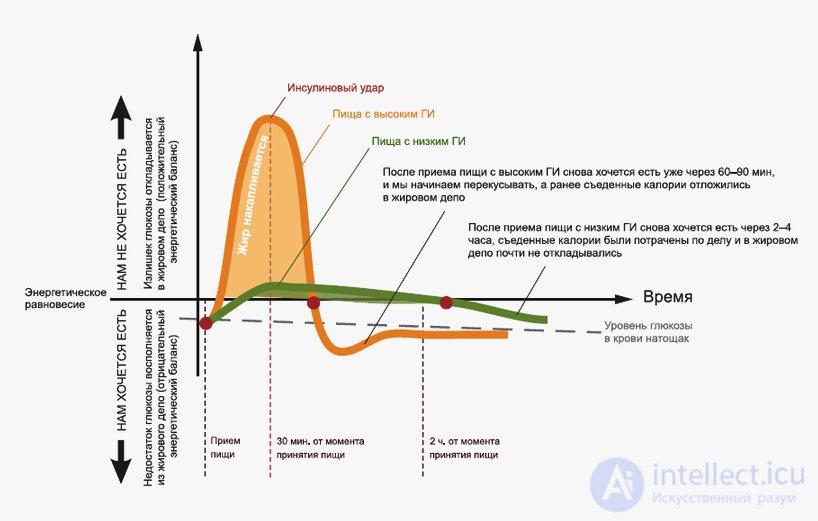
Fig. What is the glycemic index
As we have already established, the glycemic index affects the blood sugar level, and the amount of energy in the body in turn depends on it. If the glucose level is below normal, a person feels a loss of strength and hunger. If it is above normal, the body launches increased insulin production and converts the excess glucose into fat stores.
Another property of insulin is the suppression of the activity of enzymes needed to break down glycogen and fat cells. Therefore, consuming foods with a high GI leads not only to the formation of excess fat but also to a slower rate of its burning. In addition, foods with a high GI are mostly high in calories, which also adversely affects body shape and well-being.
Foods with a low GI, on the contrary, ensure a steady supply of glucose and its expenditure in energy-consuming processes. Provided the daily calorie intake is kept within the norm, they help normalize energy metabolism, improve well-being and gradually get rid of excess kilograms.
Monitoring the glycemic index makes it possible to:
Monitoring the glycemic index is necessary not only for people with diabetes or obesity. The ability to use this indicator when planning a daily diet will help anyone normalize their nutrition, improve mental and physical performance, and improve overall well-being.
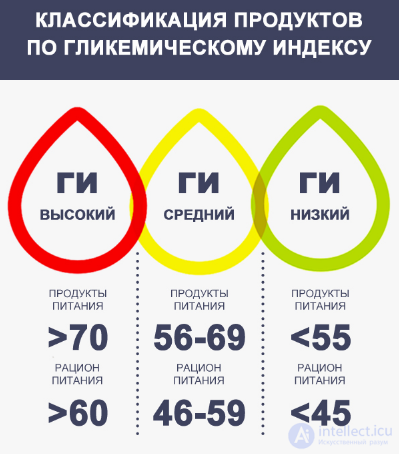
Fig. What is the glycemic index
The most important meal for an athlete is the post-workout one. It is known that after training it is best to "close the anabolic window" with a gainer (a high-carbohydrate shake). This raises the insulin level, and the hormone begins to perform its transport function — distributing nutrients to the cells (in particular, delivering "building material" to the muscles).
As it turns out, the presence of carbohydrates without a complete set of amino acids means that mTORC1 signaling will be impaired, and the insulin response to a carbohydrate load will not lead to protein synthesis (but will lead to an increase in fat), which means that new muscle will not be built.
mTOR is an intracellular protein that regulates muscle development and hypertrophy. It is a kind of signal for gaining mass (triggering the growth of muscle tissue). Activators of mTOR are growth factors (for example, IGF-1, insulin-like growth factor) and protein (amino acids, especially BCAAs). To increase mTOR activity, in addition to a balanced diet, one should additionally take the amino acid leucine, forskolin (a plant-derived alkaloid, a dietary supplement) and the mineral zinc.
All foods are divided by glycemic index into 3 categories: foods with a low, medium and high GI. Different sources give different values for each group. According to the Glycemic Index Foundation ("GIF"), two classifications should be distinguished.
• Low GI — up to 55.
• Medium GI — 56 to 69.
• High GI — over 70.
• Low GI — up to 45.
• Medium GI — 46 to 59.
• High GI — over 60.
This division is due to the fact that a diet includes vegetables and fruits with a low GI, which reduce the overall value even when foods with an extremely high GI (over 100) are consumed. That is why the "GIF" proposes reducing the consumption of high-GI foods and classifying diets with values below 45 as low-glycemic.
Fats, also called triglycerides or triacylglycerols (abbr. TAG), are organic substances, the products of esterification of carboxylic acids with the trihydric alcohol glycerol. In living organisms they perform primarily structural and energy functions: they are the main component of the cell membrane, and the body's energy reserve is stored in fat cells.
The classification of fats is based on several criteria.
1. By origin
2. By physical state
3. By chemical structure
4. By consistency.
5. By physicochemical properties (by drying property).
6. By nutritional quality (depending on which fatty acids they contain.)
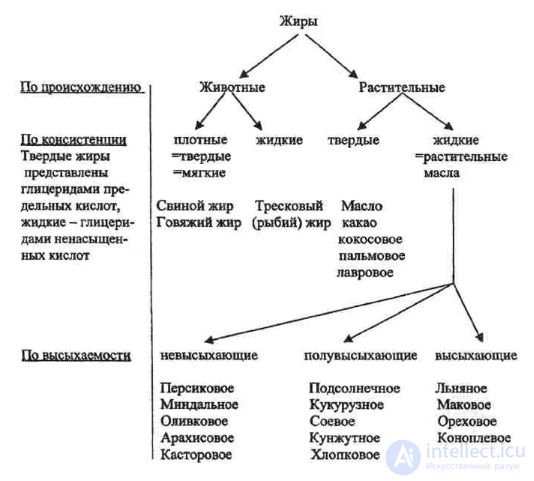
Fig. Classification of fats
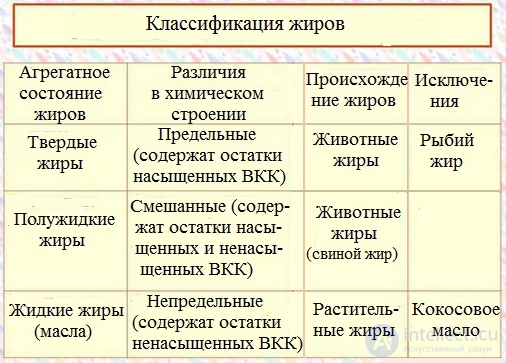
Fig. Classification of fats
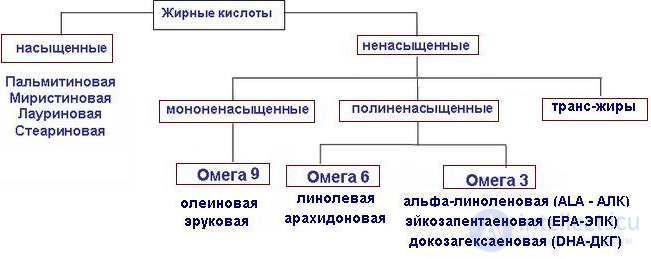
Fig. Classification of fatty acids
Each group of fats has its own beneficial qualities.
Saturated fats are mainly used to build cell membranes — and this is needed not only by a growing body but also by adults, because the cells of our body are constantly renewed and require building material in the form of protein and fat.
When consuming unsaturated acids, it is important to remember that it is the ratio of OMEGA-3 to OMEGA-6 fatty acids that is the key factor in their benefit. It has been shown that a ratio of 1:4 is the most beneficial from the standpoint of dietetics. In the modern diet, our compatriots, unfortunately, receive them in a ratio of 1:20. An excess of OMEGA-6 fatty acids can lead to inflammatory diseases and is even a risk factor for cancer. OMEGA-6 fatty acids are found in large amounts in sunflower oil and margarine.
Among unsaturated fatty acids, OMEGA-3 fatty acids are considered the most deficient and beneficial — they lower cholesterol, give elasticity to blood vessels, prevent the formation of blood clots, have an antioxidant effect, improve the condition of ligaments, and have an anti-inflammatory action.
OMEGA-3 fatty acids are found in fatty fish from northern seas — mackerel, herring, trout, salmon, tuna. They are also found in large amounts in flaxseed and flaxseed oil.
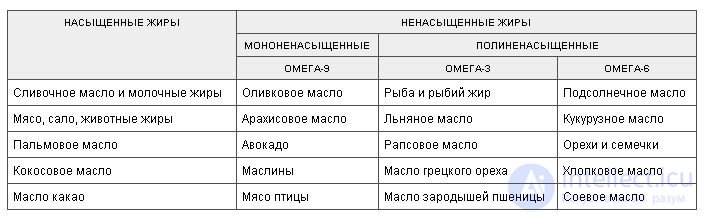
Content of various fats in foods
Scientists have shown that docosahexaenoic acid, found in the fat of marine fish, prevents excess weight gain and regulates the proliferation of fat cells, so during these periods fatty fish should definitely be included in children's diets.
However, flaxseed oil oxidizes very quickly and becomes harmful to the body, so when buying flaxseed oil, always check the production date, buy it in a glass bottle and store it in the refrigerator; it is better to buy it in small quantities so that it is used up sooner. It should be used only raw and must not be used for frying, since oxidation occurs and carcinogenic substances form. You can also buy flax seeds and add them to salads, porridges, soups, etc. It is better to grind the seeds immediately before use.
The daily requirement of OMEGA-3 for a person is about 1 g. OMEGA-3 fatty acids can also be obtained from food supplements, but they are of course better absorbed from natural foods.
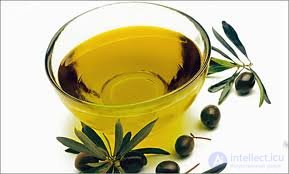
Olive oil
Summing up the topic of fats, the main thing is to consume fats wisely — to know the measure and proportion of the fats eaten. For a person who is not obese, fats should make up 30% of the total caloric content of the diet. This is approximately 95 g of fat per day for men and 70–80 g for women. For a person who is trying to lose weight, this amount should be halved, to 30–40 g per day.
As for the ratio of plant to animal fats — at a young age, 30% of them should be plant fats and 70% animal fats, while in old age it is the opposite. It is also necessary to remember the correct ratio of unsaturated fats: OMEGA-3 to OMEGA-6 should be 1:4 or 1:3.
Fat metabolism
Fat metabolism is the set of processes by which fats (lipids) are converted and used.
The breakdown of 1 g of fat releases 38.9 kJ (9.3 kcal) of energy (twice as much as the breakdown of 1 g of protein or carbohydrate).
Fats are compounds consisting of fatty acids and glycerol. Under the action of enzymes of the pancreas and small intestine, and with the participation of bile, fatty acids are absorbed into the lymph in the villi of the small intestine. Then, with the flow of lymph, lipids enter the bloodstream and then the cells.
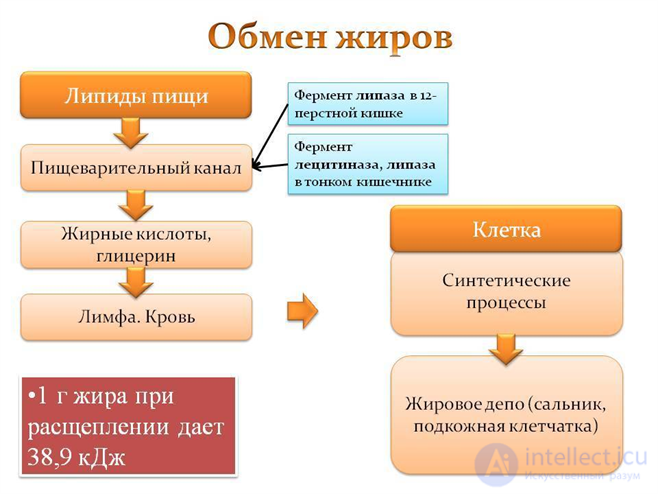
Like carbohydrates, fats are broken down to carbon dioxide and water and are eliminated in the same way.
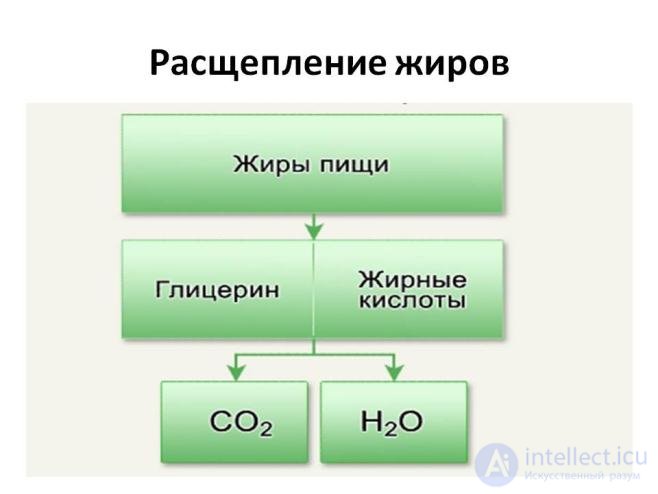
The endocrine glands and their hormones take part in the humoral regulation of fat levels.
Importance of fats
The need for fats is determined by the energy needs of the body as a whole and averages 80–100 g per day. Excess fat is deposited in the subcutaneous adipose tissue, in the tissues of some organs (for example, the liver), and also on the walls of blood vessels.
WHY NOT STOP EATING FAT, SINCE CARBOHYDRATES AND PROTEINS ARE RARELY STORED AS FAT?
There is one more case in which carbohydrates are converted to fat through de novo lipogenesis. This happens when calories from fat fall below 10% of the total calories consumed during the day. For example, on a 2,500-calorie diet, this occurs when we eat fewer than 250 calories from fat (less than 27 grams of fat).
So if you have a calorie surplus but decide not to eat fat (which is the most easily stored as body fat), you will still gain weight: when the amount of fat is too small, the body begins to convert carbohydrates into fat.
If the body lacks some substances, they can be formed from others. Proteins can be converted into fats and carbohydrates, and some carbohydrates into fats. In turn, fats can become a source of carbohydrates, and a shortage of carbohydrates can be made up from fats and proteins. But neither fats nor carbohydrates can be converted into proteins.
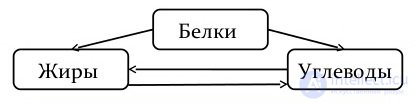
It has been calculated that an adult needs at least 1,500–1,700 kcal per day for normal vital activity. Of this amount of energy, 15–35% goes to the body's own needs, and the rest is spent on producing heat and maintaining body temperature.
Remember that in order to maintain the proper functioning of all organs and systems, a good appearance and well-being, you need to maintain a harmonious balance of proteins, fats and carbohydrates (PFC). This helps avoid fat deficiency, protect the nervous system, and preserve the health of the skin and internal organs.
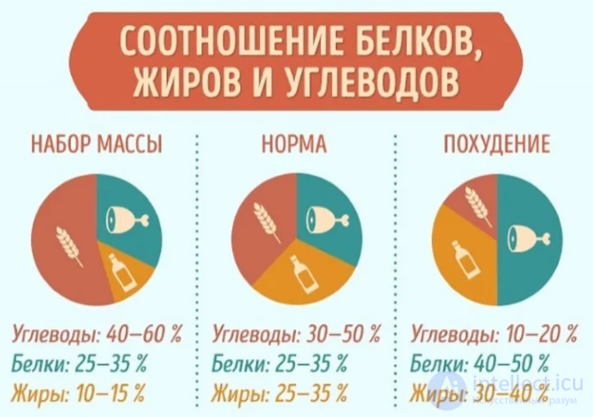
Undesirable foods
To lose weight or "cut", a large number of dishes that are usual for an ordinary person are removed from the daily menu. Here is the main list:
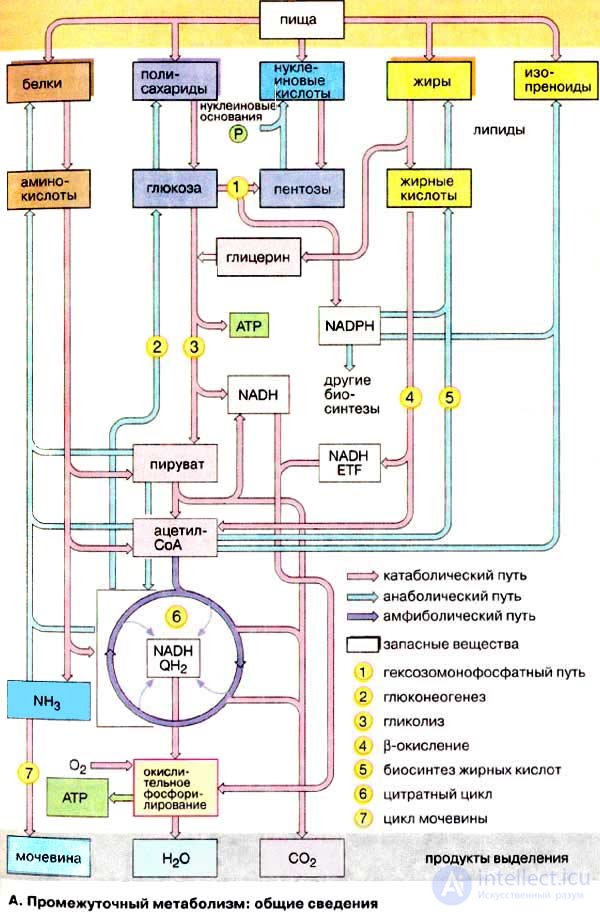 Hundreds of chemical reactions take place in every cell; their totality is called metabolism. The chemical compounds participating in metabolism are called metabolites. Outside the cell, almost all of these transformations would proceed very slowly and undirected. Ordered sequences of chemical reactions proceeding with high efficiency, the so-called metabolic pathways, are possible only because of the presence in the cell of specific enzymes (see p. 94).
Intermediary metabolism: general overview
A number of basic metabolic pathways are common to most cells and organisms. These pathways, through which the synthesis, degradation and interconversion of the most important metabolites take place, as well as the storage of chemical energy, are called intermediary metabolism. A greatly simplified scheme of these processes is presented here.
Living cells constantly need organic and inorganic substances as well as chemical energy, which they obtain mainly from ATP (see below). According to how they meet these needs, organisms are divided into autotrophic and heterotrophic. Autotrophic organisms, which include plants and many microorganisms, can synthesize organic molecules from inorganic precursors (CO2), for example by means of photosynthesis (see p. 130).
Heterotrophs, for example animals and fungi, depend on obtaining organic substances from food. Since most of these nutrients (proteins, carbohydrates, nucleic acids and lipids) cannot be utilized directly, they are first broken down into smaller fragments by the catabolic pathway (red arrows in the diagram). The resulting metabolites (sometimes collectively called the "metabolite pool") are then catabolized with the release of free energy or used in anabolic pathways (blue arrows) to synthesize more complex molecules. Of the numerous metabolites, only the three most important representatives are shown here — pyruvate, acetyl-CoA and glycerol. These three compounds are the link between the metabolism of proteins, carbohydrates and lipids. The metabolic pool also includes the intermediate metabolites of the citric acid cycle (6). This cyclic pathway plays both a catabolic and an anabolic role, i.e., it is amphibolic (see p. 140). The end products of the breakdown of organic substances in animals are carbon dioxide (CO2), water (H2O) and ammonia (NH3). Ammonia is converted into urea and is excreted from the body in this form (see p. 184).
The most important form of chemical energy storage in cells is adenosine triphosphate (ATP, see p. 124). Energy must be expended for the formation of ATP, i.e., the reaction is endergonic. At the same time, when ATP is split into ADP and phosphate, free energy is released. Through exergonic hydrolysis, ATP provides energy coupling (see p. 22) for energy-dependent (endergonic) processes. Energy-dependent processes include, for example, most anabolic pathways, as well as movement and transport processes.
The most important pathway of ATP synthesis is oxidative phosphorylation (see p. 142). In this process, electrons are transferred from reduced coenzymes, produced during catabolism, to an oxygen atom. These exergonic catabolic processes are used indirectly for ATP synthesis. Most organisms can, under anaerobic conditions, i.e. in the absence of oxygen, obtain ATP through glycolysis (3). This less efficient way of synthesizing ATP is called fermentation (see p. 148).
Only NADH is used in oxidative phosphorylation, whereas the chemically very similar coenzyme NADPH + H+ serves as the reducing agent in anabolic pathways. NADPH + H+ is formed mainly in the hexose monophosphate pathway (1, see p. 154).
At present, the following unfavorable trends in dietary patterns, common to civilized humanity, can be clearly identified:
Below is a structured table showing what happens with normal, excessive and insufficient intake of key nutrients, with an explanation of the reasons :
| Nutrient | Deficiency | Normal intake | Excess |
|---|---|---|---|
|
Proteins animal plant |
- Loss of muscle mass - Weakened immunity - Edema (↓ albumin) - Reduced enzymatic activity |
- Tissue growth and repair - Resistance to infections - Fluid and enzyme balance |
- Increased load on the kidneys - Thirst and dehydration - Accelerated metabolism - Risk of gout (↑ uric acid) |
|
Fats saturated unsaturated |
- Hormonal imbalance - Dry skin, brittle hair - Reduced absorption of fat-soluble vitamins (A, D, E, K) |
- Long-lasting energy - Protection of organs - Hormonal balance |
- Obesity - Elevated cholesterol - Inflammatory processes - Impaired insulin sensitivity |
|
Carbohydrates high GI low GI |
- Fatigue, weakness - Impaired brain function - Loss of muscle mass (with energy deficiency) |
- Quick energy - Support of brain function - Glycogen for muscles |
- Sharp spikes in glucose - Insulin overload - Obesity, type 2 diabetes |
|
Fiber water-soluble water-insoluble |
- Constipation - Disturbed microbiota - Increased risk of colorectal cancer |
- Regular bowel movements - Lower cholesterol - Support of the microbiome |
- Bloating, gas formation - Impaired mineral absorption - Diarrhea (in excess) |
|
Water with mineral salts without impurities |
- Dehydration - Reduced cognitive function - Impaired thermoregulation |
- Optimal metabolism - Elimination of toxins - Support of all body systems |
- Electrolyte imbalance - Hyponatremia (rare) - Increased load on the kidneys |
Why this matters: Each nutrient is like an instrument in an orchestra. A shortage of one, and the whole system begins to play out of tune. An excess, and the sound is overloaded. But balanced intake is a symphony of health.
There is a huge number of exercise variations, and for any of them there are always four or five different ways to change the stimulus to the muscle (by changing the grip, the foot position, the speed of movement, etc.).
The choice of exercises, their intensity (the weight used, when applicable), volume (the number of sets and repetitions), duration and frequency (the number of sessions per week) are determined by a person's individual capabilities and goals.
Strength exercises, such as weightlifting and pull-ups, aim to increase muscle mass and give the muscles greater strength
Types of physical training
Perform balanced aerobic and anaerobic exercise
Aerobic exercise is any type of physical exercise of relatively low intensity in which oxygen is used as the main source of energy to sustain muscular activity. "Aerobic" (literally "with air") means that oxygen alone is sufficient to adequately meet the energy demand during exercise. As a rule, exercise of light or moderate intensity, which can be sustained mainly by aerobic metabolism, can be performed for a long period of time. The opposite of aerobic exercise is anaerobic exercise. Aerobic exercises include walking or hiking, running, jogging in place, swimming, skating, stair climbing, rowing, skateboarding, roller skating, dancing, basketball and tennis.
Anaerobic exercise is a type of physical activity in which energy is produced by the rapid chemical breakdown of "fuel" substances in the muscles without the participation of oxygen. This mechanism works instantly, but quickly depletes the stores of ready "fuel" (0.5–1.5 min), after which the mechanism of aerobic energy production is activated (see Anaerobic energy metabolism in human and animal tissues).
A diet helps to burn excess fat, but only when combined with healthy physical activity.
What fitness supported by a high-protein diet provides:
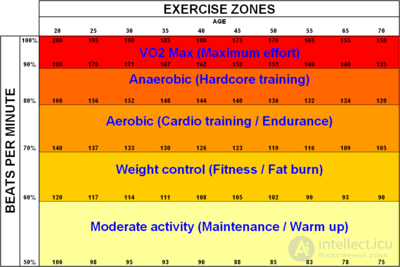
The Fox-Haskell chart shows the relationship between aerobic (light orange) and anaerobic (dark orange) exercise and heart rate.
Typical examples of anaerobic activity are strength training and sprinting. The differences between the two types of activity arise from the different duration and intensity of muscle contractions. These determine the way in which energy is produced within the muscles.
Initially, under increased load, muscle glycogen is broken down to glucose in the process of glycolysis, forming pyruvate, which then reacts with oxygen (the Krebs cycle) to produce carbon dioxide and water, releasing energy. When oxygen is lacking (for example, during explosive movements, which are anaerobic exercise), carbohydrates are consumed faster, because pyruvate is metabolized to lactate. When carbohydrate stores are depleted, fat metabolism increases to generate fuel via the metabolic pathways of aerobic glycolysis. Anaerobic exercise often refers to the initial phase of activity, occurring at the start of physical exertion or during any abrupt bursts of intense effort. At this intensity of exertion, glycogen is used without the participation of oxygen, and this process is less efficient.
Very many types of physical exercise are aerobic. For example, long-distance running at a moderate pace is a typical example of aerobic exercise, while short-distance sprinting is anaerobic. In addition, special exercises have been developed that combine aerobic and anaerobic loads — fartlek and aerobics.
Benefits provided by regular aerobic training:
The training effect appears only when a person performs the exercise with sufficient intensity and sufficiently often. Most commonly, at least 20 minutes three times a week is recommended.
Aerobic exercise does not produce as significant a gain in physical strength as anaerobic exercise. Therefore, for professionals — athletes, military personnel, firefighters and police — a combination of both types of training is necessary. The mechanism of muscle energy supply under heavy and abrupt load can be developed only through anaerobic training. Nevertheless, aerobic exercise makes an excellent contribution to the development of the cardiovascular system, which is necessary for endurance.
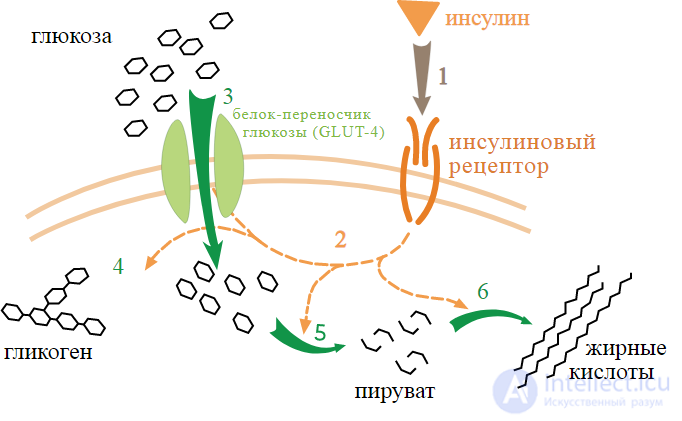
The effect of insulin on glucose uptake and metabolism. Insulin binds to its receptor (1), which in turn triggers a cascade of reactions activating many proteins (2). These include: translocation of the GLUT4 transporter to the plasma membrane and entry of glucose into the cell (3), glycogen synthesis (4), glycolysis (5) and fatty acid synthesis (6)
It includes
All exercises are performed for the maximum number of repetitions in 2 minutes
*Exercises for men, for the maximum number of repetitions in a single set
9.3 Fartlek and Aerobics
Fartlek (Swedish fartlek — "speed play") is a variety of interval cyclic training that varies from anaerobic sprinting to aerobic slow walking or jogging. Fartlek is usually associated with running, but can also apply to other cyclic sports: cycling, rowing and swimming.
This program was developed by the renowned Swedish athlete Gösta Holmér for runners competing in cross-country races, although each program must be adapted to the specific task and the specific individual. As a general rule, the exercise intensity should be between 60% and 80% of maximum heart rate. This means that the exerciser should not feel too much discomfort during training. In addition, to improve results and prevent injuries, an adequate warm-up and cool-down must be included in the program.
Aerobics and its exercises. Aerobics (also known as rhythmic gymnastics) is a form of gymnastics consisting of aerobic exercises performed to rhythmic music, which helps to keep the rhythm of the exercises.
The set of exercises includes walking, running, jumping and flexibility exercises. The result of regular aerobics is keeping the body toned, training of the muscles and skin, and general improvement of the body's health. It is used for preventive and therapeutic-health purposes.
A routine, or composition, is a dance using the basic elements of aerobics, performed in synchrony by a team of 8, 6 or 3 people, by a male-female pair, or solo. The duration of a routine, from 1 minute to 3.5 minutes, is set by the rules of the particular event.
The main components of a routine: jack, lunge, skip, jump, knee-up, step, run, chassé, mambo, hamstring curl (kick-back), forward kick, side kick, tap and others.
Elements of the dance are physical exercises or jumps, the number of which is determined by the competition rules and the category to which the team belongs.
The number of elements and the degree to which they are performed depend on the age and sport category of the team.
A distinction is made between health aerobics, sport-health aerobics and sport aerobics. There are also basic aerobics (without additional equipment or elements), step aerobics (using a step platform) and fitball aerobics (aerobics on stability balls).
One cannot eat only proteins. The human brain needs carbohydrates. To maintain normal functioning of the body, 50 to 100 g per day is needed. A diet of proteins and fats is possible, but its maximum duration is 1 month, sometimes 5 weeks.
The harm of overuse of simple sugars lies in the risk of diabetes, disturbances of the endocrine system and problems with the pancreas. Moreover, buns and sweets cause dependence.
Carbohydrates do not make a person fatter directly and are not converted into fat. But when you eat more carbohydrates, you burn more carbohydrates and less fat. So an excess of calories from carbohydrates affects excess weight indirectly, by preventing fat from being burned.
The same is true of proteins. Protein is not converted directly into fat. But if you eat a lot of protein, the body will use it to obtain energy, so fats go into storage and stay there. So an excess of calories from protein also makes a person fatter, just not directly, but through a reduction in the oxidation of other nutrients.
First of all, metabolism is important not for weight loss but for the health of the body. And to lose weight, it is important to follow a proper diet and lead an active lifestyle!
Weight can be reduced by decreasing calorie intake, but not below the vital minimum, by increasing active physical exertion, by increasing water intake within the normal range, and also by using cold. But cold alone is not enough to ensure weight loss, although it is very beneficial. The modest calorie expenditure due to cold may also contribute to success in weight loss.
The main conditions for speeding up metabolism are a balanced diet, meeting the body's need for water and moderate exercise.
1. Thus, we begin with diagnostics and measurements.
Measurements
| Date | xxx.xx.xx |
| Height | |
| Weight | |
| Neck | |
| Chest\Chest (flexed)* | |
| Waist | |
| Hips | |
| Thigh R\Thigh L | |
| Calf R\Calf L | |
| Ankle R\Ankle L | |
|
Biceps R\Biceps L |
|
| Forearm R\Forearm L | |
|
Wrist R\Wrist L |
|
| BMI | |
| Body fat %, root mean square | |
| intracellular water ICW | |
| extracellular water ECW | |
|
Skeletal muscle mass index (SMI) |
2. Then we draw up a balanced eating plan
| Date | xxx.xxx.xxx |
|
BMR basal metabolic rate, kcal |
|
|
intake, kcal |
|
| incl. proteins | |
| incl. fats | |
| incl. carbohydrates | |
| plain water | |
| additional energy expenditure, kcal |
3. We constantly monitor changes in the measurement results
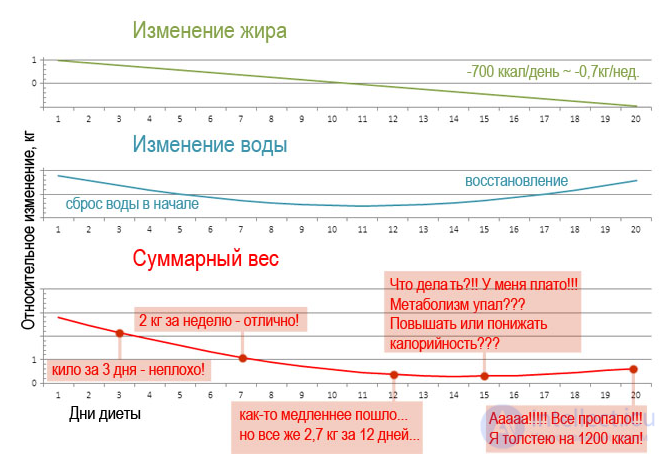
Fig. Example of monitoring the most important indicators — body weight and visceral and subcutaneous fat
Nothing complicated — everything is in your hands!
1. ATP IS FORMED IN THE PROCESS OF
2. WHICH OF THE LISTED COMPOUNDS IS A POLYSACCHARIDE?
3. WHICH OF THE LISTED COMPOUNDS IS A MONOSACCHARIDE?
4. IN WHAT FORM ARE CARBOHYDRATES STORED IN THE HUMAN LIVER?
5. THE CARBOHYDRATE STORE IN HUMANS IS
6. WHEN A RAPID INCREASE IN THE BLOOD PLASMA GLUCOSE CONCENTRATION IS NEEDED, THE FOLLOWING OCCURS
7. LIVER GLYCOGEN IS FORMED DIRECTLY FROM
8. IN THE HUMAN BODY, GLYCOGEN PERFORMS THE FUNCTION OF
9. IN WHICH PART OF THE NERVOUS SYSTEM IS THE CENTER RESPONSIBLE FOR THE DEVELOPMENT OF THE SENSATION OF HUNGER WHEN BLOOD PLASMA GLUCOSE CONCENTRATION FALLS?
10. IN WHICH OF THE LISTED STRUCTURES ARE THE RECEPTORS INVOLVED IN REGULATING THE BLOOD PLASMA GLUCOSE LEVEL LOCATED?
11. WHICH OF THE LISTED HYPOTHALAMIC RESPONSES WILL BE OBSERVED WHEN BLOOD PLASMA GLUCOSE CONCENTRATION FALLS?
12. IN WHICH OF THE LISTED CASES IS THE ENERGY USED BY THE BODY FOR ATP SYNTHESIS RELEASED?
13. THE HYPOTHALAMUS PLAYS A ROLE IN REGULATING BLOOD GLUCOSE LEVELS, IN PARTICULAR, BECAUSE IT CONTAINS
14. CHOOSE THE CORRECT STATEMENT
15. A DECREASE IN BLOOD PLASMA GLUCOSE CONCENTRATION WILL LEAD TO THE PANCREAS RELEASING INTO THE BLOOD
16. AN INCREASE IN BLOOD PLASMA GLUCOSE CONCENTRATION WILL LEAD TO THE PANCREAS RELEASING INTO THE BLOOD PLASMA
17. RELEASE OF GLUCAGON BY THE PANCREAS INTO THE BLOOD PLASMA
18. RELEASE OF INSULIN BY THE PANCREAS INTO THE BLOOD PLASMA
19. WHICH OF THE FOLLOWING HORMONES LOWERS THE GLUCOSE CONCENTRATION IN BLOOD PLASMA?
20. WHICH OF THE FOLLOWING SUBSTANCES IS A LIPID?
21. WHICH OF THE FOLLOWING SUBSTANCES IS NOT A
продолжение следует...
Часть 1 Diet and Metabolism: Catabolism, Anabolism and Protein, Fat and Carbohydrate Metabolism
Часть 2 8.2 Carbohydrates, Their Classification, Functions and Carbohydrate Metabolism - Diet
Часть 3 See also - Diet and Metabolism: Catabolism, Anabolism and Protein,

Comments