
Lecture
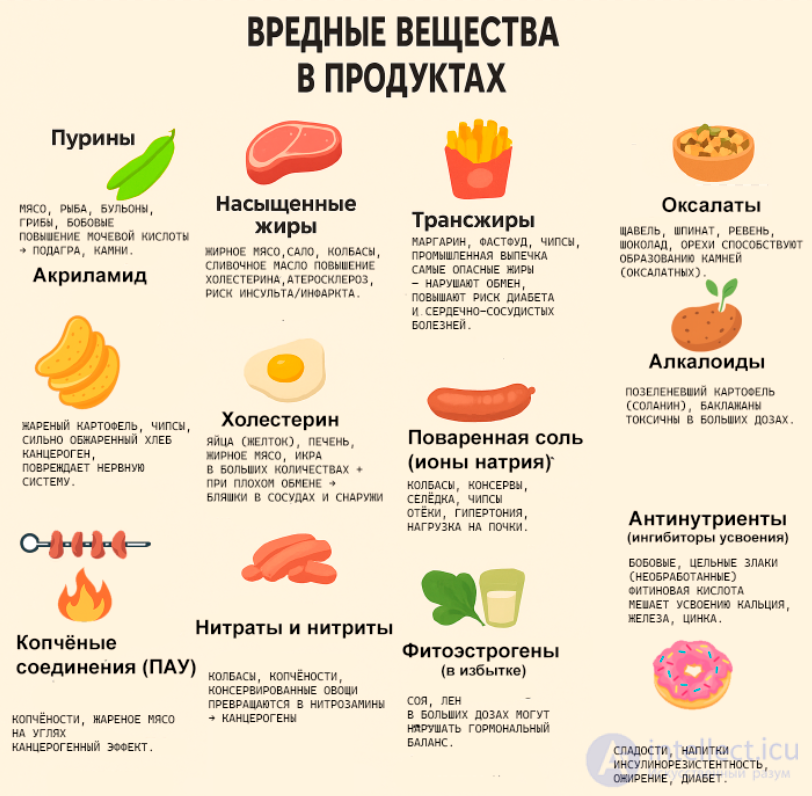
In the modern world, food has become not just a source of energy but a major part of lifestyle. However, along with beneficial nutrients, many foods contain components that can harm health when consumed regularly or in excess. Some of them form naturally in the foods themselves, others are added during processing and storage, and still others arise during frying, smoking, or other cooking methods. Such compounds include purines, saturated and trans fats, excess salt and cholesterol, nitrates and nitrites, acrylamide, smoke-derived compounds, and various antinutrients and oxalates. These substances can raise blood levels of uric acid and cholesterol, provoke cardiovascular disease, increase the burden on the liver and kidneys, disrupt metabolism, and even raise the risk of cancer. A conscious approach to nutrition and an understanding of the hidden threats that may be present in familiar foods help build a healthier diet, reduce risks to the body, and maintain good well-being in the long term.
| Group | Where found | Why dangerous |
|---|---|---|
| Purines | Meat, fish, broths, mushrooms, legumes | Elevated uric acid → gout, stones. |
| Saturated fats | Fatty meat, lard, sausages, butter | Elevated cholesterol, atherosclerosis, risk of stroke/heart attack. |
| Trans fats | Margarine, fast food, chips, commercially baked goods | The most dangerous fats — they disrupt metabolism and raise the risk of diabetes and cardiovascular disease. |
| Cholesterol | Eggs (yolk), liver, fatty meat, caviar | In large amounts, combined with poor metabolism → plaques in the blood vessels. |
| Excess salt (sodium) | Sausages, canned foods, herring, chips | Edema, hypertension, strain on the kidneys. |
| Nitrates and nitrites | Sausages, smoked foods, canned vegetables | Converted into nitrosamines → carcinogens. |
| Smoke-derived compounds (PAHs — polycyclic aromatic hydrocarbons) | Smoked foods, charcoal-grilled meat | Carcinogenic effect. |
| Acrylamide | Fried potatoes, chips, heavily toasted bread | Carcinogen, damages the nervous system. |
| Phytoestrogens (in excess) | Soy, flax | In large doses may disrupt hormonal balance. |
| Oxalates | Sorrel, spinach, rhubarb, chocolate, nuts | Promote the formation of (oxalate) stones. |
| Antinutrients (absorption inhibitors) | Legumes, whole grains (unprocessed) | Phytic acid interferes with the absorption of calcium, iron, and zinc. |
| Alkaloids | Green potatoes (solanine), eggplants | Toxic in large doses. |
| Sugar (fructose, glucose in excess) | Sweets, beverages | Insulin resistance, obesity, diabetes. |
Meat and fish → purines, saturated fats, cholesterol.
Sausages, canned foods, smoked foods → nitrites, salt, carcinogenic compounds.
Fast food and baked goods → trans fats, acrylamide, sugar.
Vegetables and nuts are beneficial, but in excess they may supply oxalates or phytates.
Frying and smoking make foods more harmful than they originally were.

Comments