
Lecture
Water-electrolyte metabolism — the set of processes of intake of water and salts (electrolytes), their absorption, distribution in the internal environments, and excretion from the body
The cells of the human body contain about 72% of the water (about 2/3 of body weight); 28% is part of the blood, lymph, and interstitial fluid.
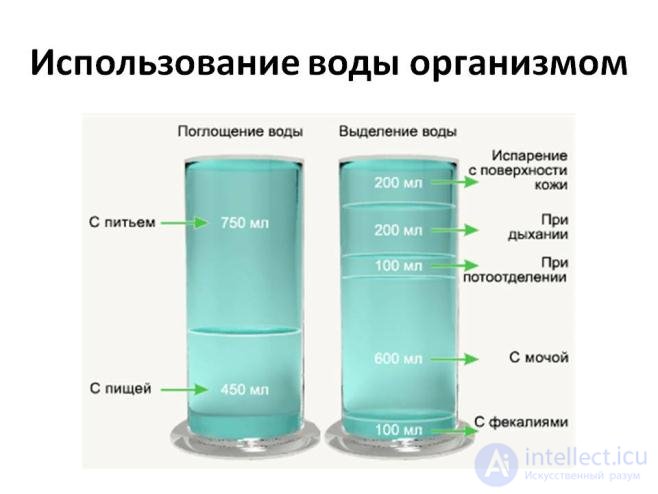
Water performs transport, excretory, and thermoregulatory functions. It is the medium in which chemical reactions take place and determines the physical properties of the cell. An adult's water requirement is 2–3 L per day. Water enters the body with food and with fluids (water, tea, juices, and other beverages).
Metabolic water is formed in the cells of the human body (as a product of the oxidation of organic compounds). Normal water metabolism implies a balance between the amount of water taken in and the amount excreted.
Water leaves the body in sweat, urine, as water vapor, and through the intestines.
The need for water (thirst) causes excitation of the drinking center in the brain (in the hypothalamus), while the satisfaction of thirst inhibits this center.
Mineral salts are an important component of the human body. Salts help maintain the pH of the body's internal environment, take part in the excitability of nervous and muscle tissues, and form the basis of the intercellular substance of bone tissue.
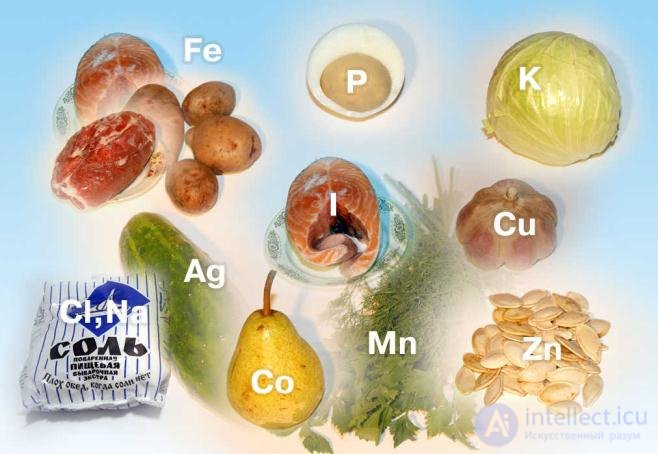
Every day the body needs salts of calcium, sodium, potassium, chlorine, phosphorus, iron, and other elements.
Example:
calcium salts are necessary for blood clotting, potassium and calcium participate in the mechanism of muscle contraction, etc.
The source of mineral salts is ordinary foods. They contain all the mineral substances the body needs in sufficient amounts, except for sodium chloride, which is added to food (table salt).
The body of an adult is 65% water (60–70% of body weight). The fluid is divided into:
Distribution of fluid in the human body by salt composition:
Salt composition of the intracellular, interstitial, and vascular spaces:
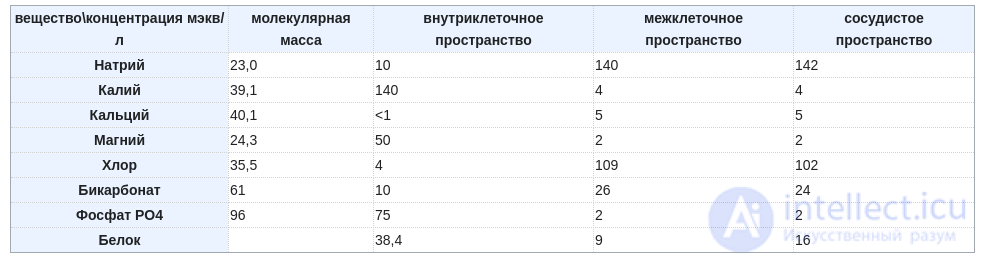
In medical practice, vascular and interstitial fluid are often treated as equivalent.
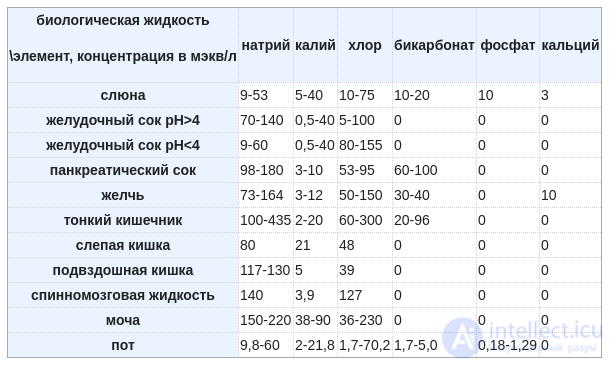
Salt composition of transcellular fluid:

Comments