
Lecture
An emergency is a situation arising in a particular territory as a result of a hazardous event of a natural, technological, biological-social, or other nature that may lead, or has already led, to loss of life, harm to people's health, significant material damage, and disruption of living conditions.
Emergencies are classified as follows:
Natural emergencies: earthquakes, floods, hurricanes, volcanic eruptions, landslides.
Technological emergencies: industrial accidents, transport disasters, fires, explosions.
Social emergencies: mass disorder, acts of terrorism, armed conflicts.
Biological-social emergencies: epidemics, epizootics, epiphytotics.
Criteria for classifying emergencies
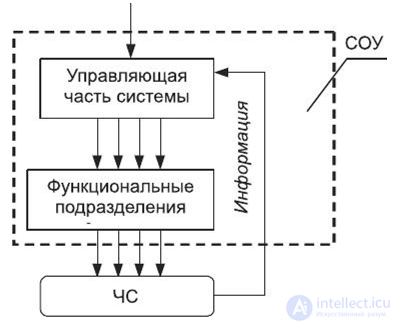
Fig. 4.1. Structure of the operational management system under emergency conditions
Functional units (FUs) are the executive part of the system and take direct part in emergency response. Working information on the results of FU activity and on the current state of the emergency as the object of management is transmitted promptly to the managing part of the system, which has its own internal structure, shown in Fig. 4.2.
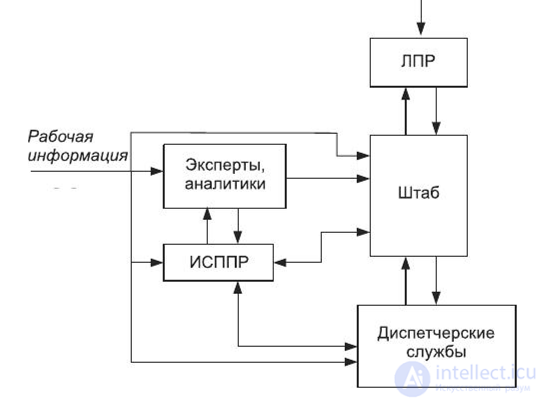
Fig. 4.2. Structure of the managing part of the emergency operational management system
The managing part of the system is responsible for taking operational decisions relating to the planning of actions, their coordination, and the direction of the FUs, as well as to the allocation of resources among the FUs and the forecasting of how the emergency will develop. Operational decisions are formulated by the Emergency Control Centre as a group decision based on an analysis of the current situation and the reconciliation of management decisions produced by independent experts and analysts. The Control Centre's decisions are submitted to the head of emergency management and response operations as the responsible decision maker. It is he who takes the final decision and bears personal responsibility both for the results of the operations and for the consequences of implementing the decisions taken.
Functionally, the dispatch services, as elements of the managing part of the system, interpret and convey the decisions taken by the head of operations to each FU.
It is well known that the effectiveness of operational management under emergency conditions depends on the resources available, on the morale and psychological state of personnel, on the condition and readiness of technical equipment, on the organisational experience and skill of FU staff, and on management decisions being taken promptly and correctly. The latter, however, is impossible without the use of modern information technology, on which the decision support information system (DSIS) is built (see Fig. 4.2).
Drawing on working and a priori information as well as analytical methods, the DSIS addresses tasks relating to optimising the planned allocation of resources among the FUs, modelling various types of emergency and assessing the consequences of the decisions taken in them, quantitatively forecasting different scenarios for the development of an emergency, and evaluating the effectiveness of the processes for coordinating FU activity. The results of these tasks are used to formulate various management decision options. Having analysed these options and selected the acceptable ones, the analysts submit their final decisions to the Emergency Control Centre, where they compete with the decisions produced by independent experts. The Control Centre then reconciles all the decision options, both independently and with the aid of the DSIS, and presents the possible options to the decision maker, who formulates the final, single decision.
Emergencies are characterised by the following features:
Scale: the extent of territory affected and the number of casualties.
Rate of development: sudden or gradual.
Duration: short-term or prolonged.
Intensity of impact: the strength of the destructive factors.
Resource requirements: the need to bring in additional forces and assets.
Natural emergencies such as earthquakes and floods can destroy infrastructure, trigger humanitarian crises, and cause considerable environmental damage. Technological disasters, including accidents at chemical plants and nuclear power stations, often have long-term consequences, such as environmental contamination or the creation of exclusion zones.
The following measures are used to prevent emergencies:
Developing and operating monitoring and forecasting systems.
Establishing a regulatory framework for managing emergency risk.
Holding regular drills and exercises.
Informing the public about how to act in an emergency.
Emergency response includes:
Conducting emergency rescue operations.
Evacuating the population from hazardous areas.
Providing medical assistance to the injured.
Rebuilding damaged infrastructure.
Protection of the population is a set of measures aimed at minimising the consequences of an emergency. Its principal elements are:
Information and warning: timely notification of an approaching hazard.
Evacuation: the organised movement of people to safe areas.
Individual protection: the use of protective equipment such as respirators and gas masks.
Collective protection: sheltering people in specially equipped shelters.
Industrial accident: an emergency involving a disruption of technological processes at industrial facilities, for example an explosion at a chemical plant.
Technological disaster: a major accident resulting in large-scale destruction and significant loss of life, for example the accident at the Chernobyl nuclear power plant.
Natural disaster: an act of nature, such as a tsunami or a hurricane, capable of destroying infrastructure, killing people and animals, and causing environmental change.
Natural disasters such as floods, earthquakes, and hurricanes can cause:
Destruction of buildings and infrastructure.
Deaths and injuries among the population.
Environmental contamination.
Economic losses.
One example is the aftermath of Hurricane Katrina in the United States, which caused large-scale destruction and loss of life and required a lengthy recovery.
Effective management under emergency conditions combines preventive measures, operational response, and recovery. Particular attention should be paid to educating the public, developing safety infrastructure, and improving monitoring and risk management systems. Only a comprehensive approach can minimise the consequences of emergencies and safeguard people's lives and health.

Comments