
Lecture
Conflicts are an inherent part of any social interaction, including the sphere of public administration. They arise as a consequence of clashes between the interests, values and goals of the various participants in the administrative process — state bodies, citizens, business and civil society organizations. In the context of public administration, conflicts represent not only challenges but also opportunities to improve the system, provided they are managed competently.
Public administration treats conflicts as an object of intervention aimed at their prevention, regulation and resolution. The principal task is to minimize the negative consequences of conflicts, such as reduced effectiveness of the state apparatus, loss of public trust and destabilization of society. At the same time, conflicts can become a catalyst for positive change by helping to identify problem areas and stimulate reform.
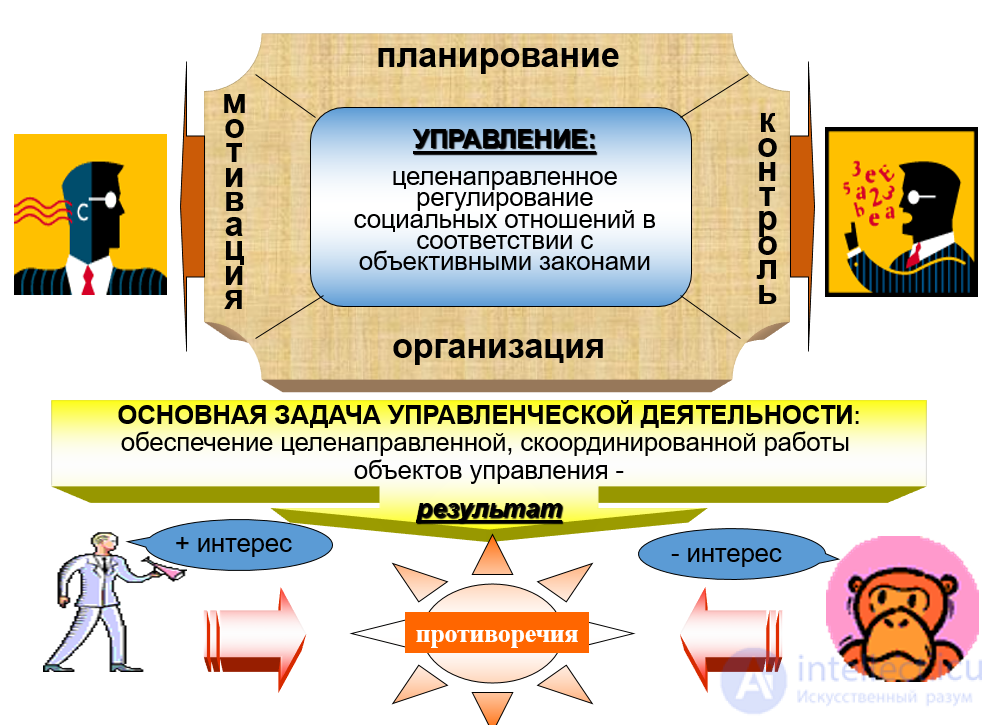
The institutionalization of conflict is the process of creating formal mechanisms and procedures for regulating it within the state system. It involves developing a legal and regulatory framework, establishing specialized bodies and introducing standards for conflict resolution.
Examples of the institutionalization of conflict include:
Judicial bodies that resolve disputes between citizens and the state.
Ombudsmen who protect citizens' rights in their dealings with state structures.
Dispute settlement boards operating within individual agencies.
The institutionalization of conflict makes it possible to prevent escalation and ensures transparency, legitimacy and predictability in conflict resolution.
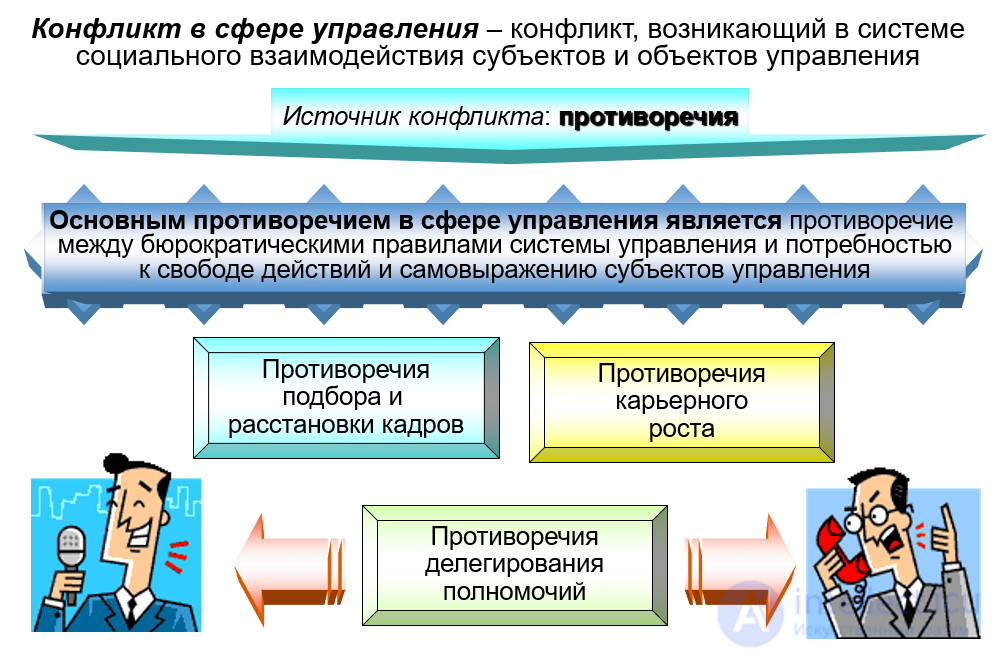
Non-institutional conflict management involves the use of informal methods of intervention, such as:
Negotiation and mediation.
Public consultations and deliberations.
Involving civil society and experts in the settlement process.
This approach is particularly important in situations where formal mechanisms are ineffective or absent. Non-institutional methods are often more flexible and make it possible to take account of the specific features of each conflict.
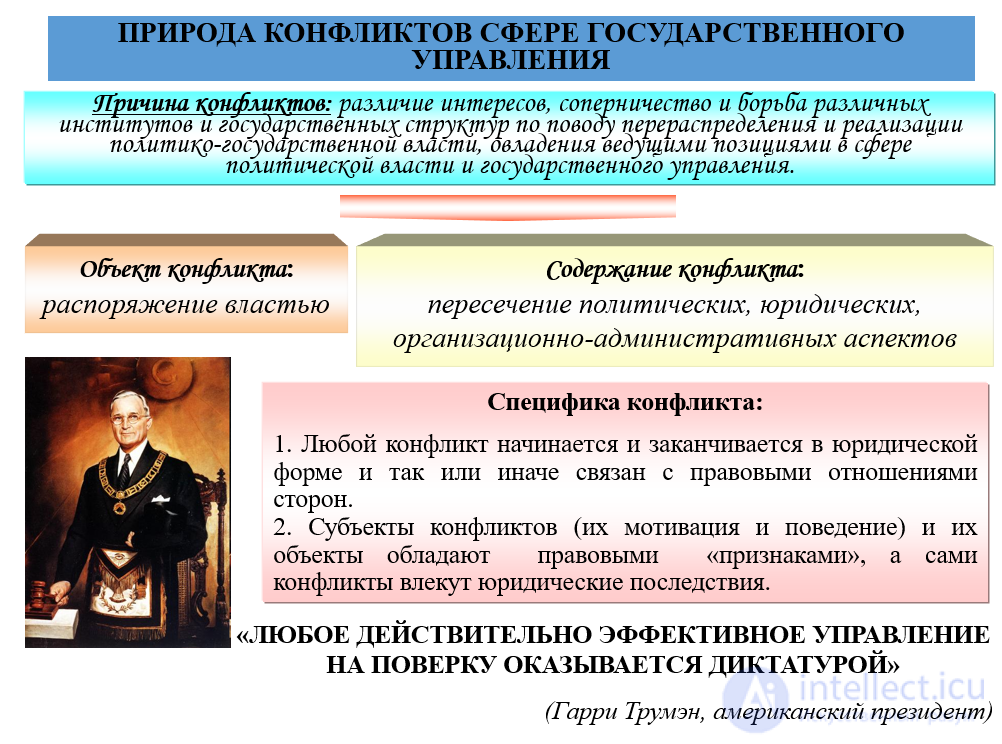
A conflict within a state organization refers to disagreements arising inside the structure of a state body, such as disputes between employees, departments or management.
A conflict in the sphere of public administration is a broader term encompassing any conflicts related to interaction between citizens, business and the state.
A conflict in the state-administrative sphere emphasizes contradictions arising in the course of exercising administrative functions, such as issuing permits, control and oversight.
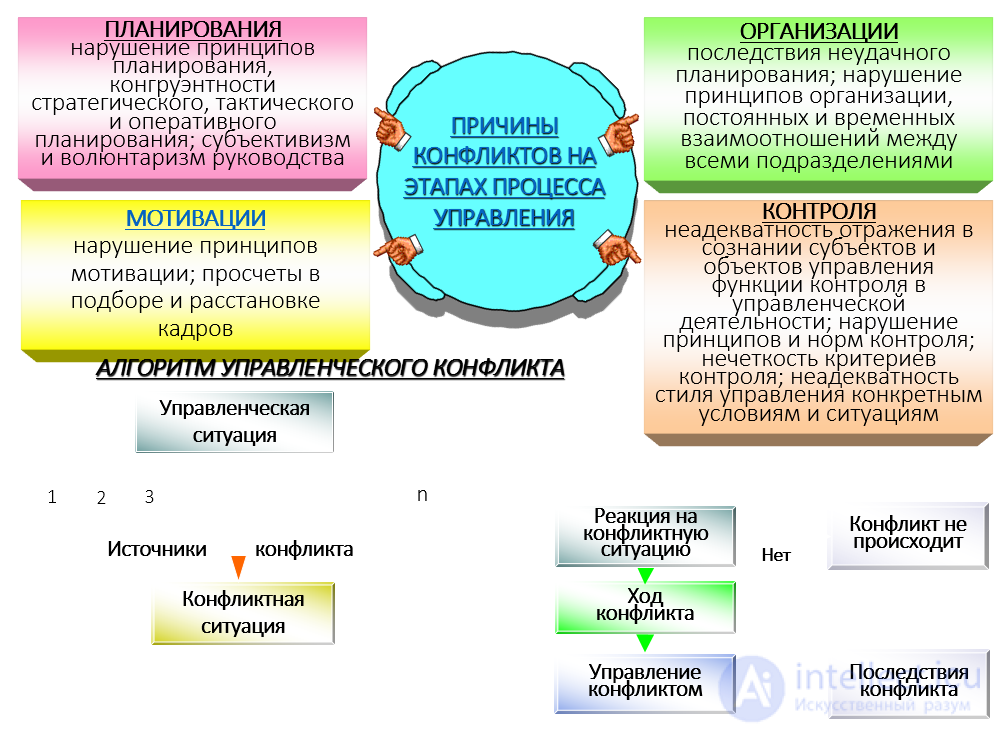
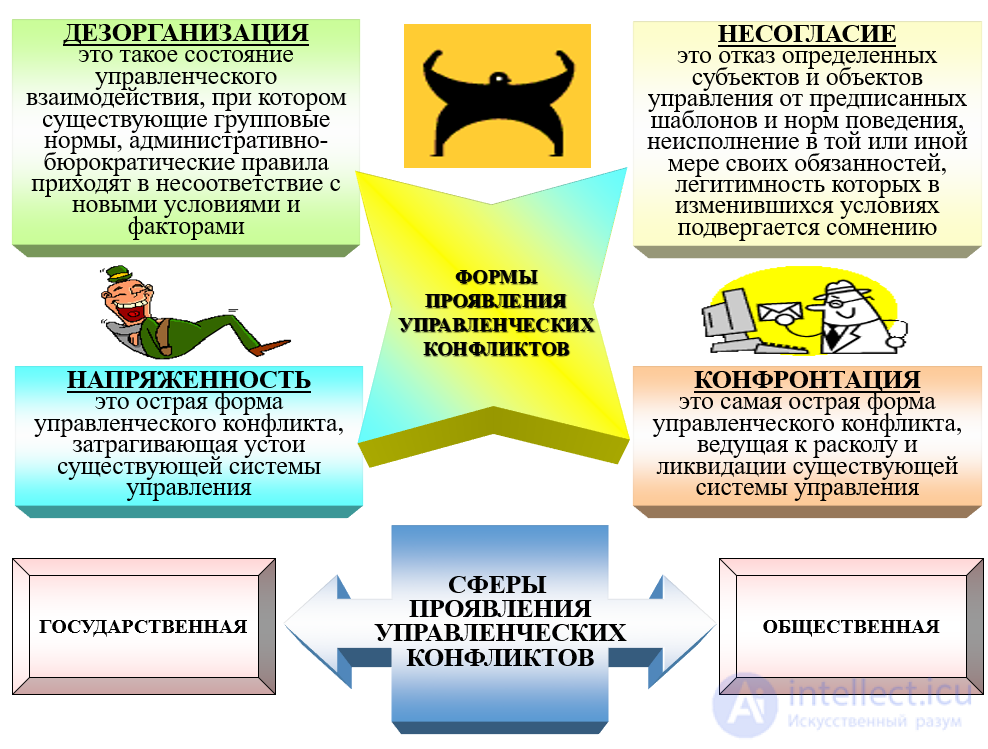
Conflicts in the state-administrative sphere have a number of distinctive features:
A high degree of formalization of interactions and procedures.
The salience of the public interest, which requires taking account of the views of various social groups.
Asymmetry of power, in which the state body possesses greater resources and authority than the citizen or organization.
Political sensitivity, especially in conflicts involving the rights and freedoms of citizens.
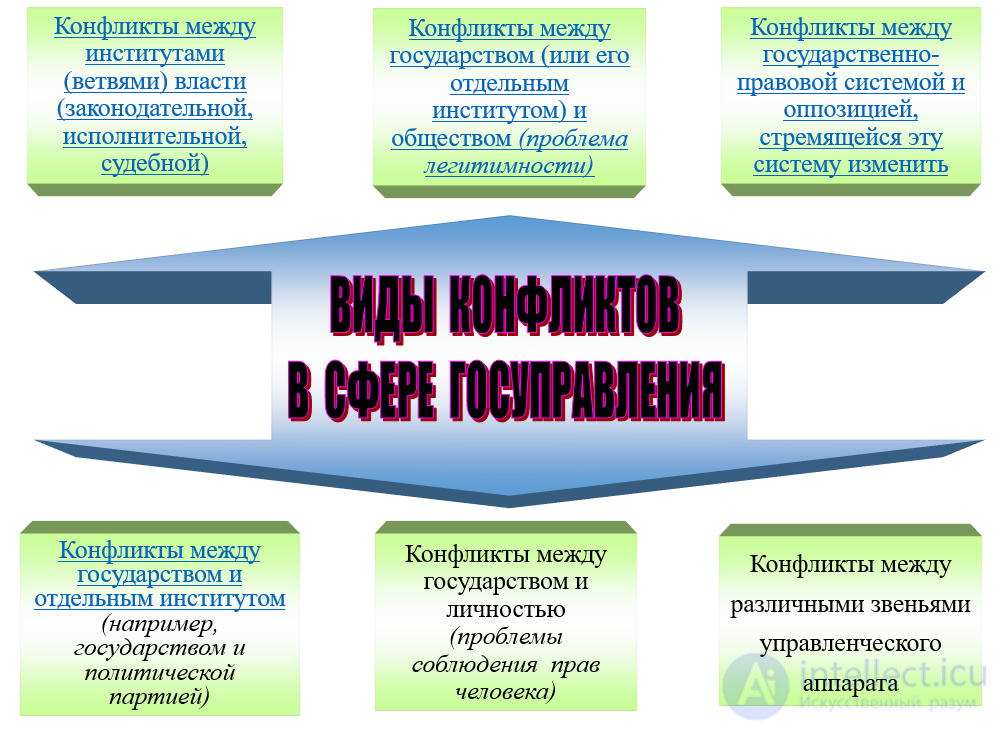
By actors:
Between state bodies (intra-agency and inter-agency conflicts).
Between the state and citizens.
Between the state and business.
By causes:
Conflicts arising from a shortage of resources.
Conflicts arising from deficiencies in legislation.
Conflicts related to corruption or abuse of power.
By intensity:
Latent (concealed).
Open.
By level:
Local.
Regional.
National.
Effective conflict management involves the use of the following technologies:
Prevention:
Monitoring public opinion.
Developing and implementing anti-corruption programmes.
Increasing the transparency of public administration.
Regulation:
Creating platforms for dialogue.
Using mediation and arbitration tribunals.
Applying restorative justice methods.
Resolution:
Rapid response to crises.
Imposing sanctions or awarding compensation.
Improving the legal and regulatory framework.
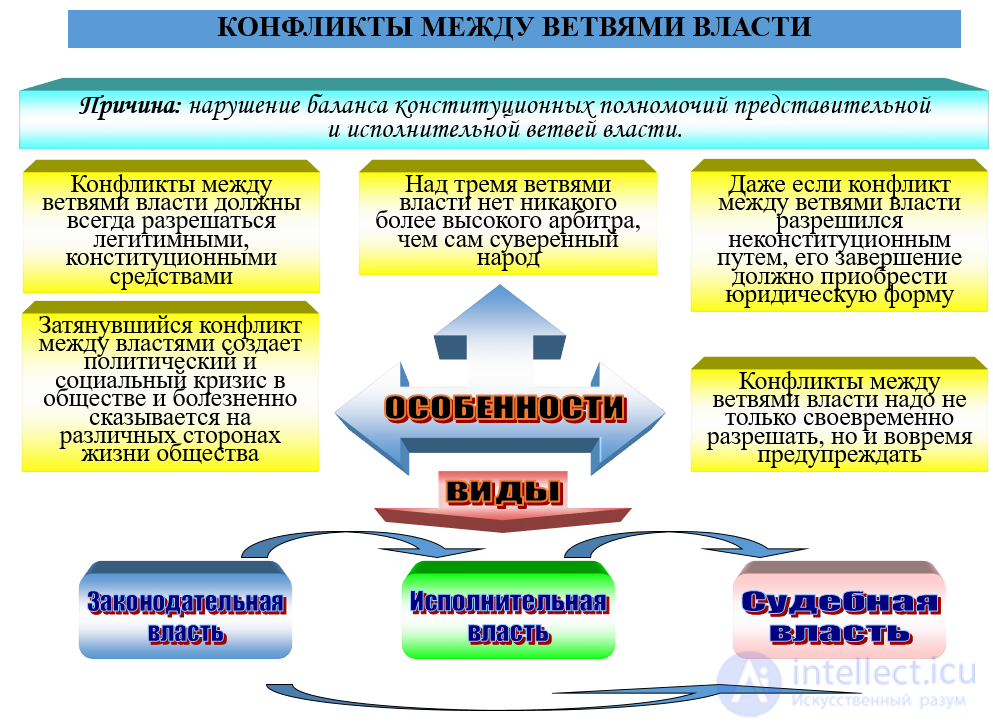
CONFLICTS BETWEEN THE BRANCHES OF GOVERNMENT
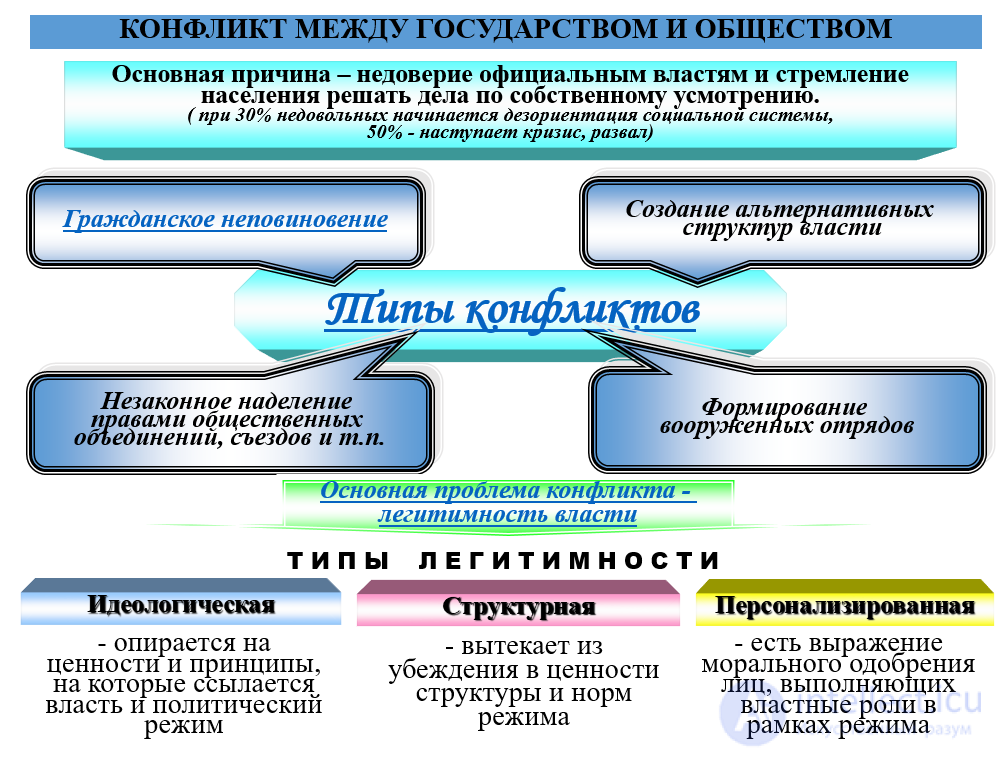
CONFLICT BETWEEN THE STATE AND SOCIETY
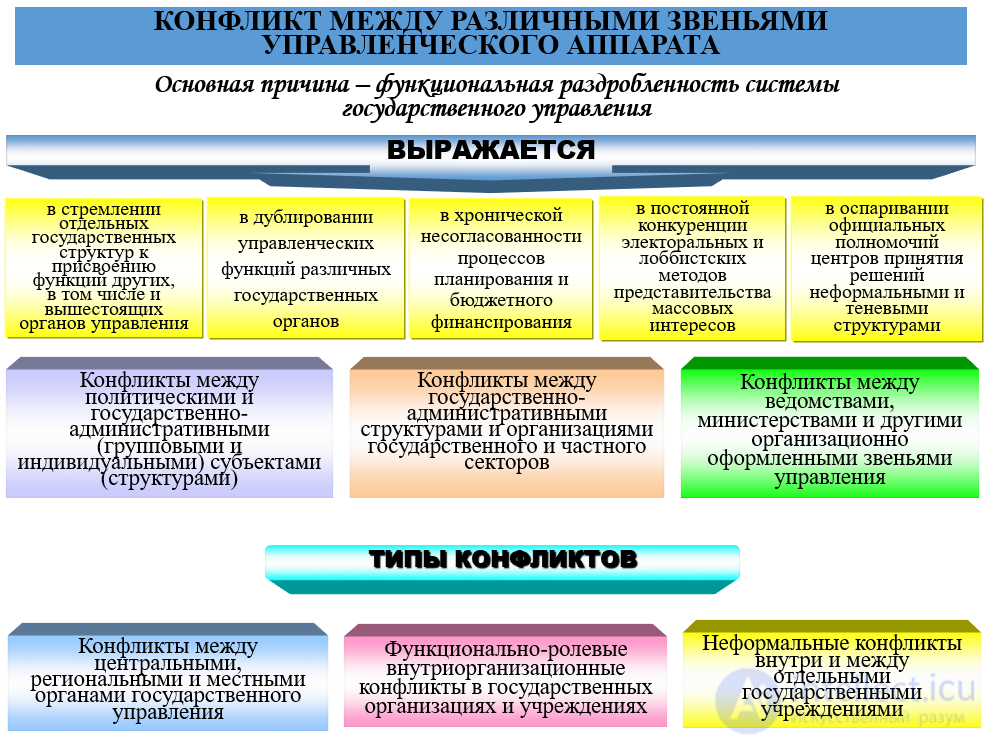
CONFLICT BETWEEN DIFFERENT TIERS OF THE ADMINISTRATIVE APPARATUS
THE CONCEPT OF ORGANIZATIONAL AND MANAGERIAL CONFLICT
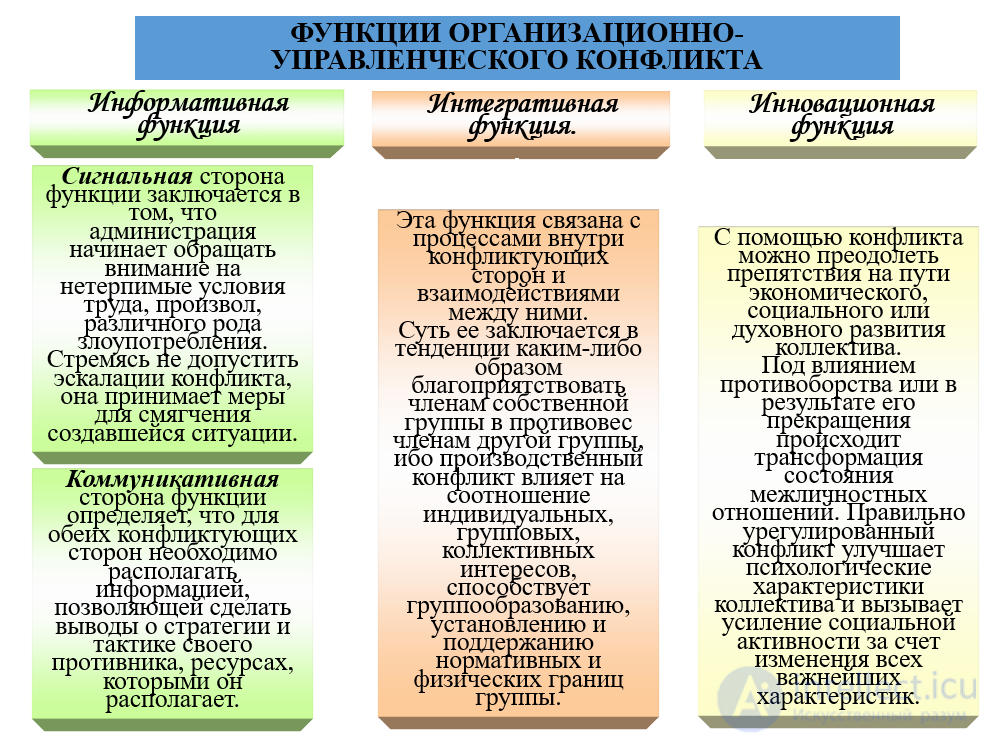
An organizational and managerial conflict is a conflict between members of a governing organization, between managers and subordinates, between the primary groups formed within it, and between different units of a given management system, concerning the goals, methods and means of managerial and organizational activity as well as its results and social consequences.
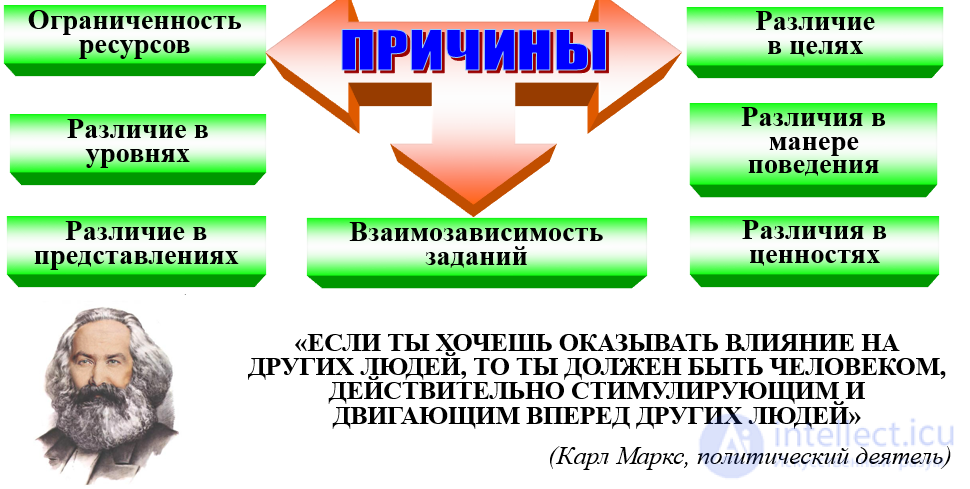
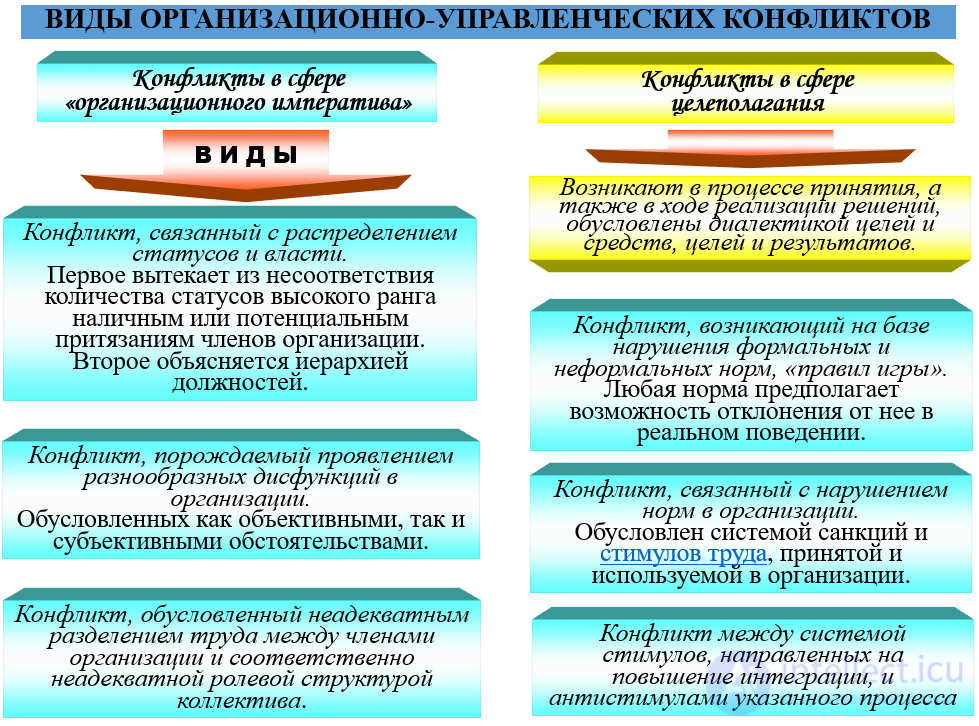
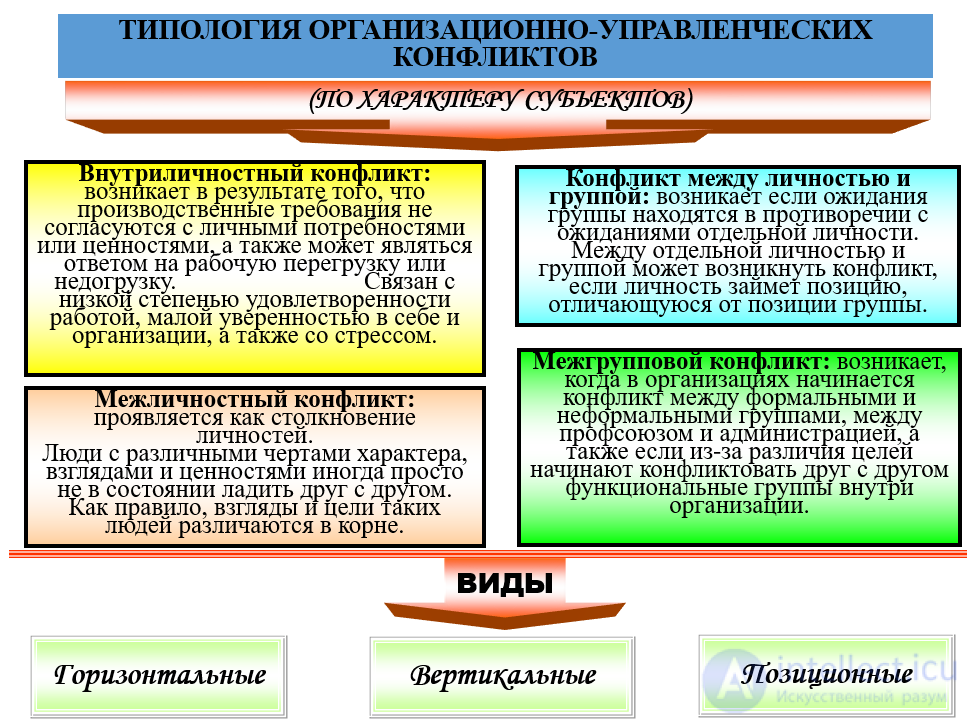
TYPES OF ORGANIZATIONAL AND MANAGERIAL CONFLICTS
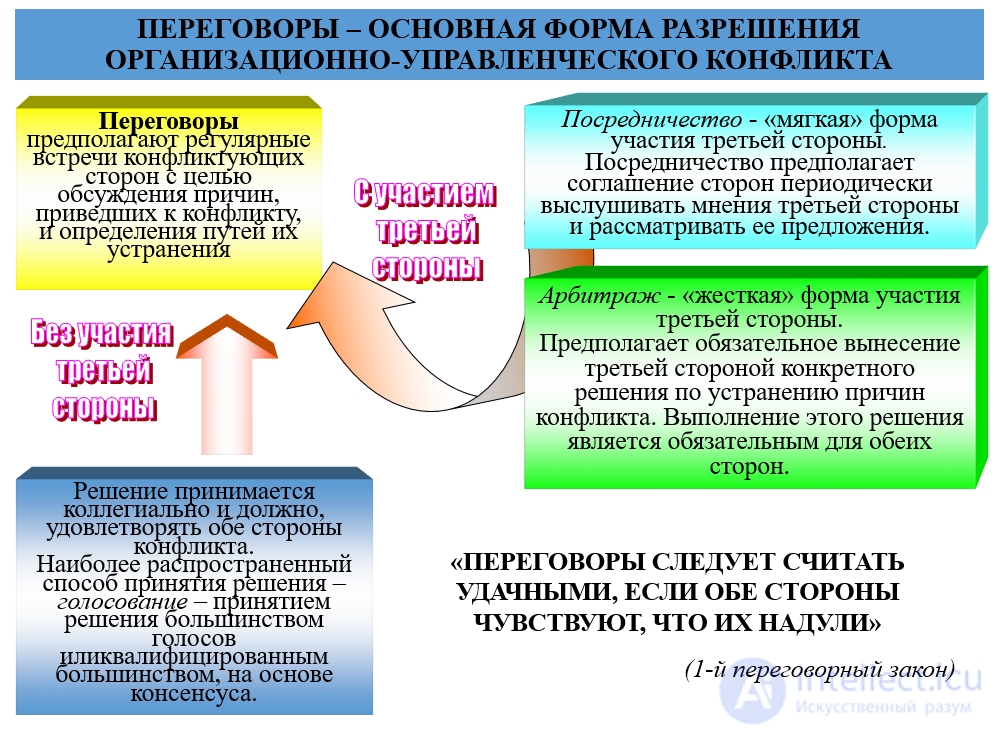
NEGOTIATION AS THE PRINCIPAL FORM OF RESOLVING ORGANIZATIONAL AND MANAGERIAL CONFLICT
NEGOTIATIONS SHOULD BE CONSIDERED SUCCESSFUL IF BOTH SIDES FEEL THEY HAVE BEEN SHORT-CHANGED" (the 1st law of negotiation)
Conflicts in the sphere of public administration are inevitable; however, managing them competently makes it possible to minimize their negative consequences and to use them as a tool for improving the system of public administration. Institutional and non-institutional methods complement one another, providing a comprehensive approach to regulating conflicts in the interests of society.

Comments