The concept of management as a social phenomenon
Management as a social phenomenon is a process of purposeful influence on society, social groups and individuals aimed at ordering their behaviour and achieving particular goals. It constitutes an integral part of social organization and helps to maintain stability and order, to foster development and to resolve emerging problems.
In the social context, management encompasses a system of mechanisms and methods through which influence is exerted on collective and individual behaviour in order to achieve socially significant goals.
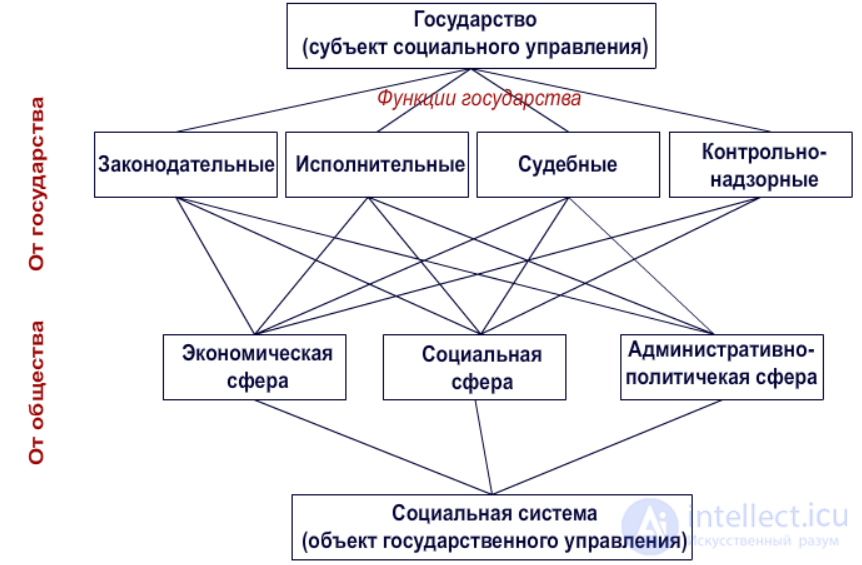
Characteristics, types and functions of social management
Characteristics of social management:
- Purposefulness – every managerial intervention is directed towards achieving a particular goal.
- Systemic character – social management is carried out within a system consisting of interrelated elements (for example, the state, public organizations, enterprises).
- Hierarchy – the presence of different levels of management, from the highest (the state) to the lowest (local groups).
- Organization – management is subordinated to a definite structure, to laws and to norms.
- Public orientation – management pursues socially beneficial goals and is aimed at improving the conditions of society's existence.
Types of social management:
- Public administration – the activity of state bodies aimed at realizing public interests.
- Civic management – management carried out by public organizations and associations and aimed at addressing a variety of social tasks.
- Corporate governance – management within individual organizations and corporations.
- Self-government – a process of management in which the members of a group or community make decisions independently and regulate their own activity.
Functions of social management:
- Forecasting – determining long-term and short-term goals on the basis of a social forecast.
- Planning – developing programmes and strategies for achieving the goals that have been set.
- Organization – ensuring the coordination of the actions of the participants in the social process.
- Motivation – encouraging the members of a society or group to achieve the goals.
- Control – monitoring the fulfilment of the planned tasks and adjusting activity accordingly.
The concept and types of state power
State power is the capacity and the right of the state to govern society, to adopt decisions that are binding for execution and to maintain order, resorting where necessary to coercive measures. State power is directed towards maintaining public order and the rule of law, realizing public interests and protecting the rights and freedoms of citizens.
Types of state power:
- Legislative – concerned with the adoption of laws and regulatory norms. It is exercised through the activity of parliament and legislative bodies.
- Executive – directed towards the execution and implementation of laws. It is exercised by the government and state institutions.
- Judicial – it oversees compliance with the laws, resolves conflicts and guarantees the protection of citizens' rights. It is exercised through the judicial system.
The legitimate character of state power
The legitimacy of state power is the recognition by citizens and by the international community of the lawfulness, legality and moral justification of the actions of the authorities. Legitimacy is the foundation of the stability of the political system and of public order.
Types of legitimacy (according to Max Weber):
- Traditional legitimacy – based on traditions, customs and historically established norms (for example, monarchy).
- Rational-legal legitimacy – based on rationally created laws and procedures (modern democratic states).
- Charismatic legitimacy – based on the personal qualities of a leader, on his charisma and his influence over the people.
The legitimacy of power enables the state to govern society effectively, to minimize social conflicts and to ensure the stable development of society.
The unity of state power and the separation of its branches
The unity of state power means that power in the state functions as an integral system despite the existence of its separate branches. State power serves the common interests of society and strives to achieve target objectives such as maintaining the rule of law, protecting citizens' rights and ensuring stability.
The separation of powers is the principle according to which state power is divided into three main branches: legislative, executive and judicial. This principle is designed to prevent the concentration of power in a single body and to create a system of checks and balances, which is the foundation of democratic governance.
- The legislative branch creates laws and oversees their execution.
- The executive branch executes the laws and carries out administrative management.
- The judicial branch oversees compliance with the laws, resolves disputes and protects citizens' rights.
Thus, the unity of power is manifested in the coordination and interaction between the branches of power, while the separation makes it possible to avoid abuses and ensures balance in the governance of the state.
The concept and distinctive features of public administration
Public administration is the activity of state bodies and officials aimed at organizing, regulating and coordinating social processes in order to achieve socially significant goals. It includes the formulation and implementation of state policy and oversight of its execution.
Distinctive features of public administration:
- Public character – administration is carried out in the interests of society as a whole and is aimed at addressing public tasks.
- Organization and hierarchy – administration is built on the principles of subordination and the division of responsibilities among the various levels of government bodies.
- Legality – the activity of public administration is carried out within the framework of the legislation in force.
- Goal orientation – administration is oriented towards achieving the specific goals and objectives defined by state policy.
- Coercive capacity – the possibility of applying coercion, including administrative and judicial sanctions, in order to secure the implementation of state decisions.
The functions of public administration
The functions of public administration reflect the directions of activity of state bodies and serve to accomplish the tasks of the state. The principal functions include:
- Regulation – the creation of legal norms and standards that ensure the ordering of social relations and processes.
- Organization and coordination – structuring and coordinating the work of the various state bodies and spheres of society.
- Control and supervision – verifying that actions and decisions conform to established norms and goals, and preventing and suppressing violations of the law.
- Safeguarding and protecting citizens' rights – creating the conditions for the realization of citizens' rights and freedoms and protecting them against violations.
- Forecasting and planning – anticipating the future needs of society and developing strategies and programmes to meet them.
The subjects and objects of public administration
The subjects of public administration are the bodies and persons vested with the authority to carry out managerial activity. The principal subjects are:
- State bodies – the government, ministries, agencies and local self-government bodies.
- Officials – civil servants and other representatives of state structures vested with the authority to take managerial decisions.
- The president and heads of government – the persons occupying the highest posts in the system of state administration.
The objects of public administration are the spheres, processes and groups towards which the influence of the subjects of administration is directed:
- Social institutions – education, health care, culture and so on.
- Economic processes – state regulation of the economy, the tax system, production.
- Citizens and social groups – the population of the country, which is subject to established norms and rules.
- Territorial and administrative units – regions, provinces and cities over which the authority of state bodies extends.
Thus, the subjects of administration direct their activity towards regulating, organizing and controlling the objects, thereby performing the functions of public administration in order to maintain order and accomplish the tasks that have been set.
Public administration as a means of exercising state power
Public administration is the mechanism through which state power realizes its functions of governing society, functions directed towards ensuring public order, protecting citizens' rights and achieving socially significant goals. It is a managerial activity carried out by state bodies on the basis of laws and legal norms. Public administration encompasses a wide range of tasks: from the creation of legal norms and their execution to the control and coordination of all spheres of public life.
Within the system of public administration, power is exercised through influence on the various spheres of society, which enables the state to:
- Establish and maintain the rule of law,
- Protect the interests and rights of citizens,
- Control economic and social processes,
- Respond to public needs and challenges.
The concept, characteristics and aims of the executive and legislative branches
The legislative branch
The legislative branch is the branch of state power whose principal function consists in creating laws and establishing normative acts that regulate social relations. It is exercised by parliaments, congresses or other legislative bodies, which represent the interests of citizens and establish the legal framework for the activity of the other branches of power.
Characteristics of the legislative branch:
- The right to create laws – the legislative body has the exclusive right to draft and adopt laws.
- Representativeness – it expresses the will of the people, since it is formed through elections.
- Publicity and openness – the law-making process is open to society, which promotes transparency and accountability.
Aims of the legislative branch:
- To provide legal regulation of all spheres of public life.
- To protect the interests of society and the rights and freedoms of citizens.
- To create the legal basis for the functioning of the state and its bodies.
The executive branch
The executive branch is the branch of state power whose principal task consists in executing the laws and managing social processes in accordance with the norms established by the legislative branch. The executive branch is represented by bodies such as the government and ministries, which implement state policy and provide administrative services.
Characteristics of the executive branch:
- Functional orientation towards the execution of laws – the executive branch acts within the framework of the laws created by the legislative branch.
- Responsiveness – it ensures that decisions are taken and implemented promptly.
- Subjection to control and accountability – the executive branch is accountable to the legislature and to citizens, which ensures that it is limited and supervised.
Aims of the executive branch:
- The implementation of state policy and the execution of laws.
- The maintenance of public order and security.
- Ensuring the protection of citizens' rights and freedoms.
- Addressing pressing tasks of a social and economic nature.
The principles and functions of the executive and legislative branches
Principles of the legislative branch
- Democratic character – the legislative body must be elected by the people and express their will.
- Openness and transparency – the activity of legislative bodies is transparent and open to public scrutiny.
- Equality before the law – laws must be just and binding on all.
Functions of the legislative branch:
- Legislative – the adoption of laws.
- Oversight – supervision of the activity of the executive branch.
- Budgetary – approval of the state budget and oversight of its execution.
- Representative – the expression of the interests of society through deputies elected by the people.
Principles of the executive branch
- Legality – the execution of laws and subordinate normative acts.
- Effectiveness and responsiveness – rapid response to emerging public needs.
- Hierarchy – strict subordination within the hierarchy of executive bodies.
Functions of the executive branch:
- Administrative – the implementation of laws and managerial decisions.
- Regulatory – the regulation of various spheres of public life.
- Organizational – ensuring order within public administration.
- Oversight – monitoring compliance with legislation at the local level and in various spheres.
The place of the executive and legislative branches in the mechanism of the separation of powers
In the system of the separation of powers, the legislative and executive branches perform different roles, which ensures their balanced functioning and prevents the usurpation of power.
-
The legislative branch is the supreme body in the creation of legal norms and the determination of the general directions of state policy. It develops the legal basis for the activity of the state and establishes the rules under which the executive branch operates.
-
The executive branch is responsible for implementing the decisions and laws adopted by the legislature. It possesses the organizational structure and the powers needed to address the pressing tasks of governing the state.
The system of checks and balances allows these branches of power to control one another: the legislature can oversee the execution of laws and the budgetary activity of the executive, while the executive has the right to introduce legislative initiatives and to take part in the legislative process. This interaction is designed to prevent the concentration of power and to protect democratic values.
The state as the principal institution of political governance
The state is the principal institution of political governance, possessing sovereignty, the right to use coercion and the power to establish norms that are binding on society. The state regulates social processes, maintains the rule of law, protects citizens' rights and ensures social and economic development.
The principal functions of the state:
- Political – organizing the political system and maintaining order and stability.
- Legal – establishing and protecting legal norms and ensuring the supremacy of the law.
- Social – protecting social rights and supporting socially vulnerable categories of the population.
- Economic – managing the economy, regulating economic processes and supporting stable development.
- Defence – protection against external threats and the maintenance of the armed forces and the national security system.
Thus, the state performs the function of governing society and acts as an intermediary in relations between different social groups, serving as the guarantor of the observance of rights and the protection of interests.
State policy as a reflection of group interest
State policy is the totality of the actions and decisions of state bodies aimed at achieving public goals and meeting public needs. The formation of state policy is influenced by a system of group interests representing various social, economic and political groups.
Group interest is the totality of goals and values shared by particular social or professional groups. As a result of the political process, the representatives of these groups may lobby for their interests and influence the adoption of state decisions. In this sense, state policy may reflect a compromise between different interests, maintaining a balance of interests within society.
Examples of groups whose interests may be reflected in state policy:
- The business community – interested in a stable economy, low taxes and favourable conditions for business.
- Social groups – workers, pensioners and students demand social protection, the safeguarding of labour rights and access to education.
- National and cultural groups – may seek the preservation of cultural identity and the right to use their native language.
The system of concepts used to designate state policy
Several key concepts are distinguished within the study of state policy:
- The political process – the totality of actions and decisions taken by state bodies in order to achieve political goals.
- A political programme – a set of measures and actions that the state plans to implement in order to achieve specific goals in the social, economic or foreign policy sphere.
- Public policy – policy oriented towards public interests and the maintenance of public order, including social policy, health care, education and security.
- A development strategy – a long-term policy aimed at achieving overarching goals such as economic growth, sustainable development and technological renewal.
- A policy course – the general direction of policy that determines the actions of the state in various spheres.
- The priorities of state policy – the most important directions of policy to which the state channels its principal resources and efforts.
The managerial activity of the state ("governance")
Governance (the managerial activity of the state) is the process of exercising power and administration, which includes the formulation, execution and monitoring of state decisions. Governance encompasses all levels of the state system, ensuring interaction between the authorities, the economy and society.
Features of governance:
- Transparency – ensuring the openness and accessibility of information about the government's actions.
- Accountability – a responsible approach by state bodies to the discharge of their duties and the provision of reports on their activity.
- Effectiveness – ensuring the most efficient possible use of resources and the achievement of the goals that have been set.
- Engagement – the participation of various stakeholders in decision-making, including civil society and the private sector.
- Stability and legality – the activity of the state is built on the principles of legality and is aimed at maintaining stability.
The functions of governance:
- Decision-making – the drafting and approval of laws, programmes and normative acts.
- Organization – the coordination of the activity of various state structures and bodies.
- Control and supervision – monitoring the execution of laws and normative acts and ensuring the accountability of public bodies.
- Provision of feedback – creating mechanisms for taking public opinion into account and adjusting policy accordingly.
Thus, governance constitutes a system of actions by means of which the state manages social processes and coordinates the work of various state bodies, taking into account the interests of all participants in the process and relying on the principles of openness and accountability.
The use of the term "public administration" to designate state policy
Public administration usually denotes the organization and execution of governmental decisions, as well as the management of state bodies and services in order to achieve the goals of state policy. This term is not always a synonym for "state policy" (public policy), but it is closely connected with it: public administration is responsible for implementing policy, as well as for its formulation and execution.
Public administration includes:
- The preparation and organization of the processes of implementing state policy.
- The management of state resources and the provision of public services.
- Ensuring public order and the observance of citizens' rights.
The policy of the state and of other public organizations aimed at meeting the needs of the population (public policy)
Public policy (state policy) is the activity of the state and of public organizations aimed at meeting the needs of society. It comprises the totality of strategies, plans, programmes and decisions directed towards achieving socially significant goals.
Examples of public policy:
- Social policy – measures aimed at providing social protection for the population and support for low-income categories.
- Economic policy – measures aimed at maintaining the stability of the economy, developing infrastructure and raising the level of employment.
- Environmental policy – aimed at protecting the environment and addressing the problems of pollution and the sustainable use of natural resources.
- Education policy – measures to ensure accessible, high-quality education for all strata of society.
Thus, public policy covers a wide range of issues that are important for ensuring the well-being of the population and creating a sustainable society.
State policy as the activity of the government in preparing and executing political decisions concerning public resources and goods
State policy, as an activity of government, is directed towards:
- The allocation of public resources – determining the priority areas to which resources are channelled for the maximum benefit of society (for example, health care, education, infrastructure).
- The production of public goods – ensuring the production of such goods as education, medical care and security, which meet public needs.
- Distribution and redistribution – the distribution of goods and resources among different groups, as well as redistribution aimed at reducing social inequality.
State policy makes it possible to manage the distribution of resources in such a way that public goods and services are accessible to all members of society.
The structure of state policy
The structure of state policy includes several key components:
-
Problems and goals – identifying the specific problems that require solution and establishing the goals towards which the policy is directed.
-
Priorities – identifying the most significant areas that require primary attention and resources.
-
Means and mechanisms – the choice of the instruments and methods by which the policy will be carried out (for example, legislation, taxation, subsidies).
-
Implementing agents – identifying the responsible bodies and persons who will take part in implementing the policy (ministries, local administrations, agencies).
-
Resources – planning and allocating the financial, material and human resources needed to accomplish the policy tasks.
-
Evaluation and monitoring – developing criteria for assessing the effectiveness of the policy and monitoring its implementation in order to make adjustments and improve results.
-
Feedback – a mechanism for taking into account the views of citizens, public organizations and the business community, which makes it possible to adapt policy in response to changes and to the needs of society.
The structure of state policy is designed to ensure the consistent planning, implementation and adjustment of the state's actions so as to use resources as effectively as possible and to meet the needs of society.
The procedure for forming the subjects of state policy
The subjects of state policy are the state and non-state structures, organizations and individuals that influence the process of formulating and implementing state policy. Their formation and activity depend on the political system and the structure of governance within the state.
The process of forming the subjects of state policy includes:
- Elected bodies – parliament, deputies and representatives of local self-government are formed through democratic elections, expressing the interests of various strata of society.
- Appointed bodies – the government, ministries and agencies are formed by appointment by the executive branch. These bodies manage administrative processes and carry out state policy in various spheres.
- Advisory structures – groups of experts, public councils and working groups that develop recommendations and conduct analysis in order to improve the effectiveness of policy.
- Non-state actors – public organizations, research centres, business representatives and trade unions may likewise influence state policy through dialogue with state bodies, participation in working groups and the lobbying of interests.
This procedure ensures multi-level interaction and takes into account the interests of various social groups, which enables the state to formulate a more balanced and flexible policy.
The development of a strategic course and the adoption of state decisions
The strategic course of the state is a long-term conception defining the key directions and goals of state policy in such spheres as the economy, social protection, education, science and defence. The development of a strategic course is aimed at achieving stable development and resolving the principal problems of society.
The process of developing a strategic course and taking decisions includes several stages:
- Analysis and identification of problems – studying existing problems, threats and opportunities in order to determine priorities.
- Formulation of goals – establishing the specific long-term and short-term goals that need to be achieved.
- Development of alternative solutions – devising and discussing possible strategies, programmes and measures aimed at achieving the goals.
- Decision-making – the approval of the state strategy and of political decisions at the highest level (parliament, president, government).
- Monitoring and adjustment – the continuous tracking of the implementation of the strategic course and the introduction of the necessary adjustments in line with changing conditions and new challenges.
Administrative means of implementing managerial decisions
Administrative means are the instruments and methods by which state bodies secure the implementation of their managerial decisions. They make it possible to organize and regulate various processes in society effectively.
The principal administrative means include:
- Legislative and normative acts – laws, regulations, orders and directives that create the legal basis for managerial activity.
- Oversight measures – inspections, audits and monitoring of compliance with requirements and of the implementation of state decisions.
- Regulation and licensing – the establishment of binding norms and standards, as well as the issuing of permits and licences for particular types of activity.
- Financial instruments – taxation, subsidies, grants and budgetary funding, which stimulate or restrict particular activities.
- Coercive measures – administrative and judicial sanctions applied in order to ensure compliance with established rules and standards.
These administrative means help the state to maintain order, to execute the decisions it has adopted and to achieve the goals it has set.
State control and arbitration; ensuring the self-correction of the political regime and feedback from the objects of state governance
State control is the activity of state bodies aimed at verifying and assessing compliance with laws, standards and managerial decisions, as well as at detecting and eliminating violations.
The functions of state control:
- Supervision of the execution of laws – monitoring compliance with laws and rules in all spheres of state activity.
- Ensuring the accountability of public authorities – monitoring the actions and expenditures of state bodies and officials.
- Evaluation of the effectiveness of state programmes – verifying the results of the implementation of state projects and programmes.
Arbitration is a procedure for resolving disputes that arise between government agencies, enterprises and citizens in the course of carrying out their functions. Arbitration ensures the fair resolution of conflicts and strengthens trust in state institutions.
Self-correction of the political regime and feedback is a mechanism that enables the state to receive feedback from citizens and organizations, to adjust its policy in response to changes in society, and to remedy shortcomings.
Instruments of self-correction and feedback:
- Surveys and public consultations allow the state to obtain feedback from citizens and to take their views into account in the policymaking process.
- Analysis of statistical data helps to assess changes in the social, economic and political environment.
- Monitoring and reporting: annual or periodic reports on the implementation of programmes and plans.
- Recording citizens' complaints and proposals allows the state to respond to the current demands and grievances of the population.
These mechanisms ensure the flexibility of public policy and its adaptation to changing conditions, while also increasing citizens' trust in government bodies and improving the effectiveness of public administration.
The main goals of public policy
The goals of public policy are aimed at securing the public good, improving citizens' living conditions and developing the state across various spheres. The principal goals include:
- Social well-being: protecting and improving citizens' living conditions, reducing poverty, and ensuring access to healthcare, education and social protection.
- Economic growth and stability: stimulating sustainable economic development, supporting employment, attracting investment and fostering innovation.
- Law and order and security: maintaining public order, protecting citizens from crime, and ensuring state and national security.
- Environmental sustainability: preserving and protecting the environment, ensuring the sustainable use of natural resources, and combating climate change.
- Infrastructure development: constructing and modernizing transport, energy and communications infrastructure to ensure a high standard of living and economic growth.
- Improving the quality of public administration: enhancing the efficiency and transparency of government bodies, fighting corruption, and developing civil society.
These goals are aimed at creating a stable, just and sustainable society in which citizens can realize their rights and opportunities.
Stages in the formulation and implementation of public policy
The formulation and implementation of public policy proceed through several stages:
-
Problem identification: analysing and identifying problems that require state attention, on the basis of data, public demands and expert assessments.
-
Formulation of goals and objectives: defining the goals to be achieved and the objectives aimed at solving the identified problems.
-
Development of policy options: generating and evaluating alternative courses of action, with an analysis of their effectiveness, costs and consequences.
-
Decision-making: approval of the selected options at the legislative or executive level (by parliament, the government, the president, etc.).
-
Policy implementation: the direct execution of adopted decisions through state structures, including the drafting of regulations, the allocation of resources and the organization of programmes.
-
Monitoring and evaluation: oversight of policy implementation and assessment of the results achieved, making it possible to adjust measures where necessary.
-
Adjustment and updating: making changes to policy on the basis of the data obtained, as well as changes in the conditions and needs of society.
These stages ensure a systematic and consistent approach to managing social processes and enable the state to respond flexibly to change.
Key characteristics of public policy
Public policy has several important characteristics that define its content and its role in society:
-
Public character: public policy is formulated and implemented to serve public interests and the common good, not those of particular groups or individuals.
-
Official status: policy is formulated and implemented within the framework of established legal norms and rules, which ensures its legitimacy and binding force.
-
Comprehensiveness: policy covers all significant spheres of social life and aims to ensure stability and sustainable development.
-
Flexibility: public policy must be adaptive, capable of changing in response to external and internal factors.
-
Duration: political decisions often have a long-term effect, and their implementation requires time and a systematic approach.
-
Hierarchy: policy is formulated and implemented at different levels (federal, regional, local), with coordination maintained between them.
These characteristics make public policy an effective instrument for managing socio-economic processes and maintaining public order.
Areas of public policy
Public policy encompasses many areas oriented towards different aspects of social life. The principal areas include:
-
Social policy: aimed at improving living conditions, supporting socially vulnerable groups of the population, and ensuring access to healthcare and education.
-
Economic policy: includes measures to stimulate economic growth, maintain stability, and regulate the market and the tax system.
-
Legal policy: oriented towards maintaining legality and the rule of law, protecting citizens' rights and freedoms, and improving the judicial and legal system.
-
Foreign policy: aimed at strengthening international relations, defending national interests on the world stage, participating in international organizations and resolving conflicts.
-
Defence policy: includes measures to defend the country and to maintain the combat readiness of the armed forces and national security.
-
Environmental policy: aimed at protecting the environment, ensuring the sustainable use of resources, and combating pollution and climate change.
-
Cultural and educational policy: promotes the development of culture and the arts, supports national identity, improves the education system and raises the quality of professional training.
These areas help the state to regulate and sustain the functioning of society, achieving strategic goals and ensuring stability and well-being for all citizens.
State social policy
State social policy aims to ensure a decent standard of living, social well-being and equal opportunities for all citizens. It covers such areas as healthcare, social protection, education and employment. The main goals of social policy include:
- Social protection: support for socially vulnerable groups of the population (pensioners, people with disabilities, low-income households), and the provision of social benefits and allowances.
- Healthcare: ensuring accessible, high-quality medical care and improving disease prevention and health conditions.
- Education: developing the education system, improving its accessibility and quality, and supporting schools, universities and vocational education.
- Employment and the labour market: promoting employment, regulating working conditions, supporting the underemployed and the unemployed, and providing retraining programmes.
- Housing policy: programmes to provide affordable housing, subsidies for low-income citizens, and infrastructure development.
State social policy is aimed at improving the well-being of the population, minimizing social inequality and securing the right to a decent life.
State economic policy
State economic policy is a set of measures aimed at regulating the economy, ensuring stable growth, increasing employment and maintaining a favourable investment climate. The main goals of economic policy include:
- Economic growth: stimulating production and industry, and supporting innovation and investment in order to increase GDP.
- Macroeconomic stability: controlling inflation, maintaining a stable exchange rate for the national currency, and keeping the budget deficit in check.
- Support for employment: creating new jobs, supporting entrepreneurship and small business, and reducing unemployment.
- Fiscal and tax policy: setting tax rates and managing the budget and public expenditure for the effective redistribution of resources.
- Foreign economic policy: regulating imports and exports, concluding international trade agreements, and supporting domestic producers on foreign markets.
State economic policy promotes the development of the economy, improves conditions for business and raises the population's standard of living.
State nationalities policy
State nationalities policy is aimed at maintaining harmony and stability in a multi-ethnic society and at protecting the rights and cultural distinctiveness of various national groups. The main goals of nationalities policy include:
- Promoting inter-ethnic accord: creating conditions for the peaceful coexistence of different nationalities and preventing conflict and discrimination.
- Preserving cultural diversity: protecting national cultures, languages and traditions, and supporting cultural events and educational programmes.
- Guaranteeing equal rights: protecting the rights of all ethnic and national groups and ensuring equal opportunities in education, employment and social security.
- Managing migration: creating conditions for the adaptation of migrants, regulating migration flows and supporting integration into society.
State nationalities policy sustains the unity of the country and promotes the integration of ethnic and cultural groups while preserving their distinct identities.
The state's international policy
A state's international policy comprises the external actions and decisions aimed at defending the state's interests on the international stage, strengthening ties with other countries and ensuring security. The main areas of international policy include:
- Ensuring national security: preventing external threats, participating in international alliances and military unions, and maintaining the country's defence capability.
- Economic diplomacy: developing international trade, attracting foreign investment, and participating in international economic organizations.
- Political diplomacy: establishing and maintaining diplomatic relations with other countries, participating in peacekeeping operations, and resolving international conflicts.
- Protection of human rights and humanitarian assistance: promoting compliance with international human rights standards and supporting international humanitarian initiatives.
- Support for citizens abroad: protecting the rights and interests of citizens outside the country and providing assistance in emergency situations.
A state's international policy is oriented towards defending national interests, strengthening the country's position on the world stage, and establishing stable and peaceful relations with other states.
Graham Allison proposed three classic models for interpreting public policy: the rational policy model, the organizational process model and the bureaucratic politics model. These approaches make it possible to analyse how state decisions are made and implemented, taking into account the various factors that influence political processes.
1. The rational policy model (Rational Actor Model)
The rational policy model rests on the assumption that state decisions are the result of rational choice, with the state treated as a unitary actor acting purposefully to advance its interests.
Key characteristics of the model:
- Goal rationality: the state's actions are directed towards clearly defined goals, and the state is treated as a unitary, rational actor.
- Analysis of alternatives: in making a decision, the state evaluates all possible alternatives and selects the one that maximizes benefit and minimizes cost.
- Optimal decision: the choice is based on an objective analysis of data and expected outcomes, which makes it possible to arrive at an optimal decision.
This model is useful for analysing strategic and long-term decisions, such as those in foreign policy, since it assumes that the state acts purposefully and consistently.
2. The organizational process model (Organizational Process Model)
The organizational process model explains state decisions in terms of the functioning of various government organizations, each of which has its own standards, procedures and protocols.
Main features of the model:
- Decentralization of decision-making: decisions are taken at the level of individual organizations or units that operate according to established rules and procedures.
- Routine and standards: decisions are often standardized and follow protocols, since this reduces uncertainty and increases efficiency.
- Limited flexibility: it is difficult for organizations to depart from their standard operating procedures, which can slow adaptation to new conditions and reduce innovation.
This model is useful for analysing decisions connected with everyday administrative tasks and routine processes, such as the work of ministries or large government agencies.
3. The bureaucratic politics model (Bureaucratic Politics Model)
The bureaucratic politics model views decision-making as the outcome of interaction and struggle among individual bureaucratic structures and their leaders, each with its own interests and priorities.
Key features of the model:
- Competition of interests: representatives of different departments and organizations have their own interests and often compete for resources, influence and power.
- Bargaining and compromise: decisions are reached through negotiation, in which participants are obliged to make compromises, and this shapes the content of the final decision.
- Political influence and power: personal connections, reputation and participants' ability to lobby for their interests take on considerable importance.
This model explains how decisions are formed in politics when various actors, such as the heads of ministries or agencies, push their own interests. It is especially important in analysing complex, multi-layered issues where reconciling positions requires considerable effort.
Each of these models illuminates different aspects of state decision-making. The rational policy model is suited to strategic analysis, the organizational process model explains the influence of standards and procedures, and the bureaucratic politics model highlights the impact of the struggle of interests within the state. Together, the three models provide a deeper understanding of how state decisions are formed and carried out, and they are used in political science to analyse real cases and situations.
V. Kozbanenko's typology of models of public policy
V. Kozbanenko distinguishes several types of models of public policy that explain how decisions are made in public administration and how policy is implemented. The main models in Kozbanenko's typology are the "top-down" model, the "bottom-up" model and the mixed model.
1. The "top-down" model (Top-down model)
The "top-down" model assumes that the making and implementation of public policy begin at the highest levels of authority and descend to the lower levels (for example, from the government or the president to the regions and local authorities).
- Key characteristics:
- Centralized decision-making: decisions are taken by the highest bodies of state power, such as central ministries, the president or parliament.
- Direct administration: authorities at the top level formulate goals and objectives, which are then passed down to subordinate bodies for implementation.
- Control from above: oversight and monitoring of the execution of decisions are carried out through bureaucratic structures.
- Advantages: rapid implementation of decisions, a high degree of control, and coherence of action.
- Disadvantages: the risk of ignoring local specifics and needs, and low flexibility.
2. The "bottom-up" model (Bottom-up model)
The "bottom-up" model emphasizes that the processes of formulating and implementing public policy begin on the ground, with citizens or local authorities, after which information and initiatives are passed upwards.
-
Key characteristics:
- Decentralized decision-making: grassroots and local authorities play an important role in shaping policy by conveying their proposals and initiatives to central bodies.
- Understanding of real problems: local authorities, having a better grasp of the needs and specifics of their territories, are able to propose more appropriate solutions.
- Active citizen involvement: decisions may be taken through the participation of society and local organizations.
-
Advantages: a more accurate reflection of the population's needs, and greater effectiveness and legitimacy of decisions.
-
Disadvantages: slower policy implementation, difficulties with nationwide coordination, and possible problems with funding and resources.
3. The mixed model (Mixed model)
The mixed model combines elements of both "top-down" and "bottom-up" approaches. In this model, two-way communication and cooperation between the various levels of authority are essential, and decisions may originate at either the highest or the lowest levels.
-
Key characteristics:
- Hybrid character: the mixed approach makes it possible to combine centralized direction with attention to local realities.
- Two-way communication: both central bodies and local authorities can put forward proposals and influence the shaping of policy.
- Flexibility in application: it allows a balance to be struck between nationwide uniformity and adaptation to local conditions.
-
Advantages: a balance between effectiveness and consideration of local interests, and flexibility in decision-making.
-
Disadvantages: difficulties in coordinating action, and the risk of duplicated effort or contradictions in policy.
Political governance
Political governance is the process of exercising state power, including the formulation and implementation of policy, the management of state resources and institutions, and interaction with citizens and other actors in society. Political governance comprises:
- Development of a policy programme — on the basis of an analysis of social problems and needs, plans, strategies and measures are developed to address current issues.
- Execution of decisions — the direct introduction and implementation of political decisions through administrative structures.
- Oversight and monitoring — continuous tracking of the policy implementation process in order to identify deviations from the stated goals and to adjust actions accordingly.
- Feedback — the creation of channels for obtaining information from the population about the results of political actions and how they are perceived.
The purpose of political governance is to ensure stability, maintain public order and address social, economic and cultural problems.
Public policy
Public policy is the activity of state authorities directed at realizing the tasks, interests and goals of the state. It comprises the set of principles, strategies and concrete actions that determine the development of various spheres of social life, such as the economy, social security, culture, education, the environment and others.
- The main functions of public policy:
- Regulation — the creation and introduction of legal and regulatory acts governing social relations.
- Organization — establishing and sustaining the work of state institutions and organizations.
- Decision-making — the development and adoption of key decisions that determine the country's direction of development.
- Oversight — exercising control over the execution of adopted decisions and adjusting them where necessary.
Public policy affects every aspect of social life and is directed towards achieving sustainable development and the well-being of citizens.
Public administration
Public administration is the system of actions and processes by which state bodies and institutions organize and implement policy, take decisions and manage public resources in order to ensure stability, the rule of law and the well-being of citizens.
Key characteristics of public administration:
- Goals: the primary goal of public administration is to meet public needs and to resolve social, economic and political problems.
- Structure: it comprises the state bodies, institutions and structures that perform various administrative functions at different levels (central, regional, local).
- Processes: these include the development and implementation of policy decisions, the management of state resources, the coordination of the actions of various authorities, and the monitoring and evaluation of results.
- Principles: the principles of public administration include legality, democratic governance, accountability, transparency and efficiency.
Public administration involves not only taking decisions but also implementing them, monitoring their execution and making timely adjustments in order to improve outcomes.
Public management
Public management (or public administration in the narrow sense) is the management of processes within the civil service, aimed at the effective use of resources to implement policy and achieve the goals set by state authorities. It is a management system that covers management not only in the traditional sense but in the public sector as well.
The main aspects of public management:
- Goals and objectives: unlike those of commercial organizations, the goals of public management are oriented towards the public good, the creation of conditions for civic development and the country's sustainable development.
- Resource management: this involves the effective use of public finances, personnel, time and other resources in order to implement state programmes and projects.
- Operational management: applied to decision-making at all levels of public administration, taking political and socio-economic factors into account.
- The role and functions of the public manager: a public manager must possess competencies in project management, process organization, leadership and decision-making. He or she must also be able to coordinate the work of various departments and to monitor the implementation of state programmes.
A comparison of public administration and public management
- Public administration is the broader concept, encompassing all aspects of the work of state authority, including political leadership and the management of the social and economic spheres.
- Public management is more often used to denote managerial practice in the public sector, aimed at ensuring the effective execution of policy decisions and organizing the work of state institutions. It includes project management, human resource management, budgeting, strategic planning and other processes.
It can therefore be said that public management is a specialized form of management within public administration, directed at the efficiency and effectiveness of the work of state structures and at the implementation of public policy.
Policy Sciences and Administrative Sciences
-
Policy sciences constitute an interdisciplinary field of research focused on the analysis, development and implementation of policy decisions and state programmes. These sciences study how various political, social, economic and cultural factors influence the shaping of policy and the management of social processes.
- Goals: the policy sciences seek to answer questions about how to develop effective policies, what mechanisms ensure the successful implementation of policy decisions, and how to measure their success or failure.
- Fields of research: these sciences include political theory, policy analysis, the study of social change, the management of political risks, and the influence of social groups and institutions on the shaping of public policy.
-
Administrative sciences constitute the field of scholarship that investigates the organization and activity of administrative bodies, their relations with citizens and other state structures, and the processes of managing public resources. This discipline focuses on the effective functioning of the bureaucratic and state institutions that implement policy decisions.
- Goals: the administrative sciences are oriented towards optimizing the work of state institutions, improving decision-making procedures, and increasing the efficiency and transparency of government bodies.
- Fields of research: these include questions of organizational behaviour, the management of state institutions, issues of public administration, corporate governance within state structures, and the reform of state institutions.
Applied policy analysis ("Policy Analysis")
Applied policy analysis is the process of researching and evaluating various policy options for resolving specific social problems. It involves collecting, processing and analysing data in order to provide recommendations on the choice of the best policy, as well as an assessment of possible consequences and risks.
- Goals: the primary goal is to provide objective, evidence-based recommendations for policy decision-making.
- Process: applied policy analysis involves defining the problem, researching alternative solutions, assessing the impact of the various options and selecting the most effective approach.
- Tools: these include methods of statistical analysis, modelling and expert assessment, as well as various approaches to data analysis and the forecasting of consequences.
Policy Making
Policy making is the process of formulating and adopting strategies and programmes aimed at solving governmental and social problems. This process involves working out the decisions that will determine the development of a country, region or local community.
- Goals: the primary goal is to create a long-term and short-term programme of action that will address key problems and move the country or society in the desired direction.
- Process: this includes developing strategic and tactical goals, formulating policy initiatives, and coordinating the actions of various authorities and civil society organizations.
- Influence: policy making is closely bound up with the analysis of social needs, political and economic trends, and the interests of various groups and parties.
Political Management
Political management is the management of political processes and campaigns, as well as the management of the activity of political leaders, parties and state structures in order to achieve political goals. It encompasses both the
продолжение следует...
Продолжение:
Часть 1 State Policy and Administration: Theory and Practice
Часть 2 See also - State Policy and Administration: Theory and Practice


Comments