
Lecture
Devices of a very particular kind were developed, resembling neither the cameras of that era nor today's digital cameras. These were telephotometers, "hybrids" of television cameras and scanners, which made it possible to obtain a full circular panorama of the surrounding terrain. Here is the history of these devices and of the results obtained with them .
Sixty years ago humankind first "reached out" to another celestial body. In 1959 three spacecraft were launched in quick succession: Luna-1, the first to escape Earth's gravity, which flew past the Moon and became a satellite of the Sun; Luna-2, the first in history to reach the Moon; and Luna-3, the first in the world to fly around the Moon and transmit photographs of its far side back to Earth.
The goal, of course, was not the soft landing as such, but what it could deliver. And so a technical specification was drawn up for the development of a special television camera to transmit images of the lunar surface.
The television equipment had to provide a circular view of the terrain, the number of lines in a single frame had to be no fewer than 250, the mass of one television equipment set was limited to 7 kilograms, and total power consumption to 60 watts. Two cameras, however, were planned for the spacecraft for the sake of redundancy.
The task was taken up by VNII-380 (the All-Union Research Institute of Television), where a first version of the camera was prepared with a mass of about 10 kilograms and a consumption of 30 watts. By its description it was similar to the camera that American engineers later installed on the Surveyor lunar lander (the American model weighed 7.31 kilograms).
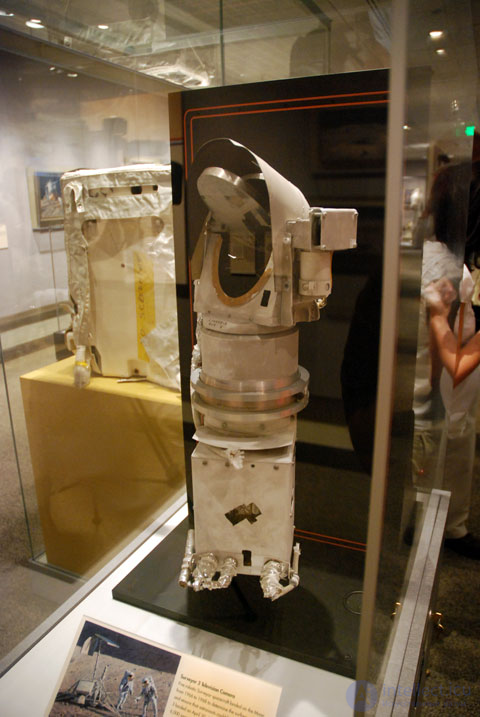
The television camera of the Surveyor 3 lander, removed from the spacecraft by the astronauts of Apollo 12. From the collection of the National Air and Space Museum.
NASA
ShareThe device had a fixed television camera pointing upward; the circular view of the terrain was obtained by rotating a mirror, and the area to be photographed was selected by tilting it. Panoramas could then be assembled from the individual frames.
On the whole the idea was logical, had its advantages and was rather elegant. But the staff of VNII-380 did not settle on the chosen arrangement and set about modifying it to reduce mass.
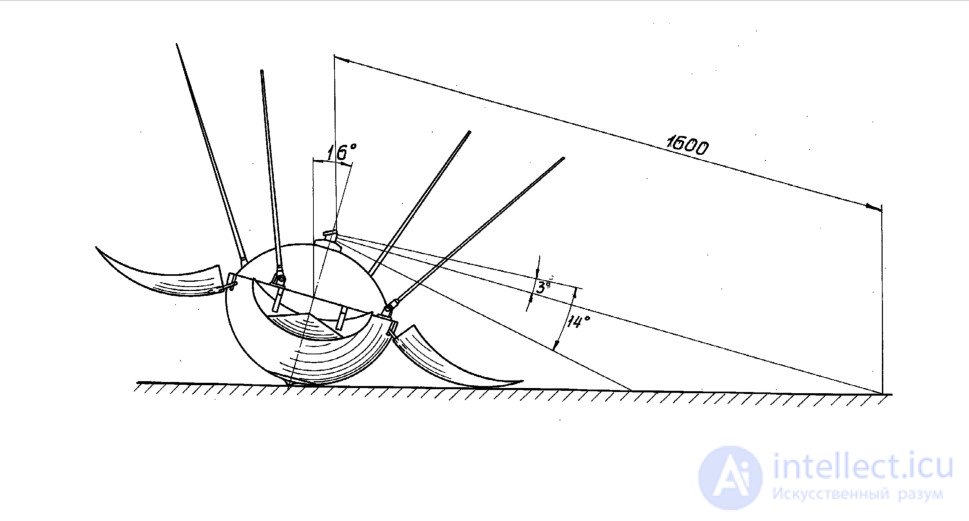
Diagram of a fixed camera imaging by means of a movable mirror
Illustration from the book "Luna-9. A Collection of Documents"
ShareJudging by the final report on the Volga camera, several dozen different arrangements were considered during its development, and design studies were carried out for at least ten of them. In the end the engineers managed to create a far lighter camera, named the telephotometer, capable of producing a circular view of the terrain in a single pass with minimal distortion and good definition.
Their idea was based on the fact that the Moon rotates about its axis very, very slowly - it completes a full turn in practically a month. Transmitting all the images during a circular survey was expected to take on the order of several hours, so the task could be treated as imaging a stationary scene under a constant level of illumination. That meant the angular scanning rate could be low.
It was here that the core idea of the device was formulated, the one that makes it closer to a modern scanner than to a camera.
What is a camera? It is a system that uses a lens and a shutter to project an image onto some kind of sensor. Back then these were television tubes such as the vidicon; today they are CCDs. The sensor provides the resolution of the picture, both vertically and horizontally.
A scanner, by contrast, has only a single linear array, which provides the vertical resolution. Horizontal resolution is obtained by moving that array along the document.
In the telephotometer, likewise, horizontal resolution was provided by rotating its head about its axis. The vertical scan was also produced mechanically, by rocking a mirror. So in the telephotometer, in modern terminology, there was just a single receiving pixel onto which the surrounding terrain was projected with minimal distortion, and the radiation detector used was a vacuum tube - a highly sensitive photomultiplier tube (PMT).
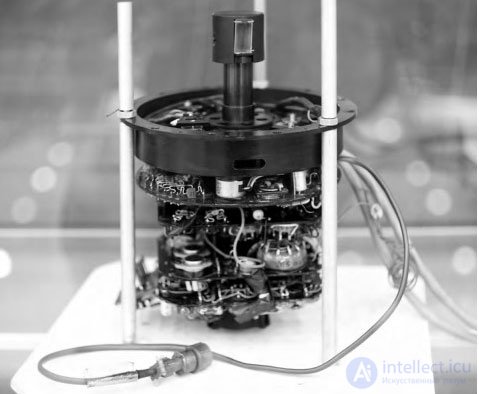
The Volga telephotometer
Pavel Shubin
ShareSome types of photomultiplier can register individual photons. In the 1960s the following example was cited: if the Earth had no atmosphere, a PMT could detect the light of a match struck on the Moon.
Thanks to its sensitivity, the PMT is one of the few vacuum devices still in use today, even though it requires a fairly high voltage to operate.
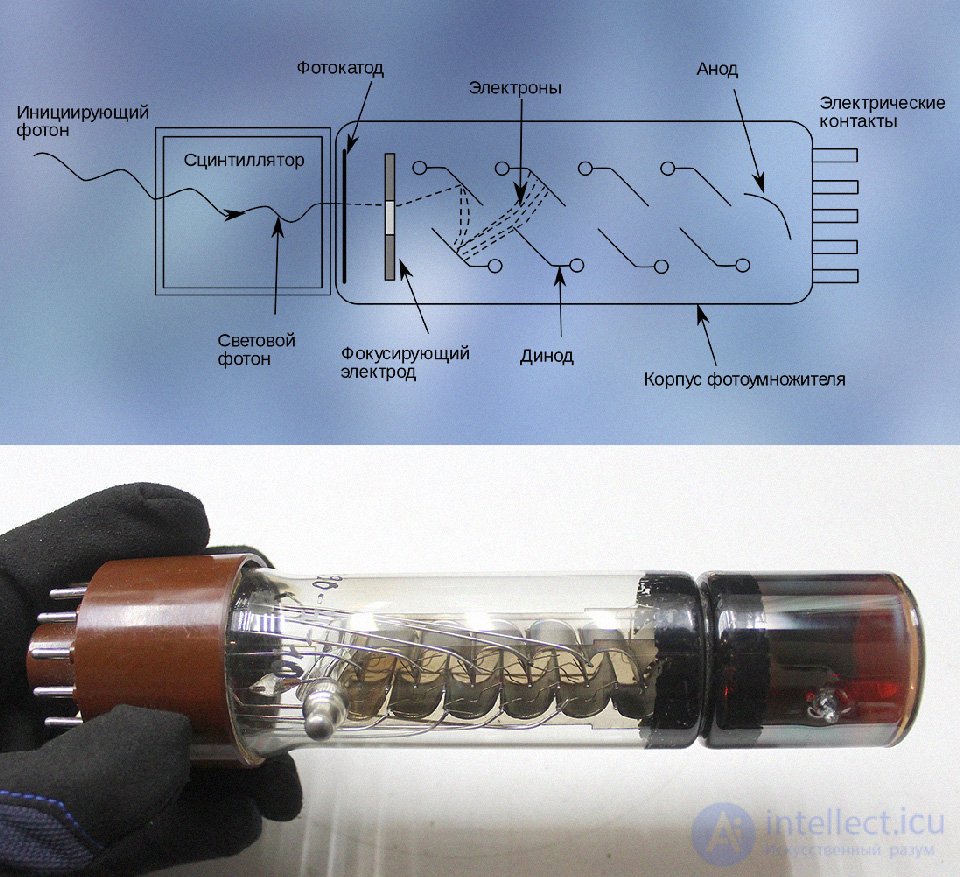
Diagram and photograph of a photomultiplier tube
ShareThe low surface scanning rate made it possible to synchronize it with the data transmission rate. In other words, information about the selected patch of the lunar surface was sent to Earth immediately and printed there on a tape. Intermediate storage devices proved unnecessary, and that allowed the design to be greatly simplified.
As a result the Volga telephotometer came out at a mass of only 3.4 kilograms, with a consumption of 12-15 watts. The initial technical specification was exceeded.
It was this instrument that was installed on our first spacecraft intended for a soft landing on the Moon. The actual mass of their scientific equipment came to 8 kilograms, but it was decided not to fit the second telephotometer - the remaining mass allowance went to other scientific instruments.
Volga never managed to photograph the Moon, however, because Luna-4, the spacecraft carrying the instrument, failed to reach its target, and the engineers immediately set about upgrading it. According to the recollections of Arnold Selivanov of NII-885, the development of an alternative telephotometer model was largely undertaken on the engineers' own initiative.
The new version of the camera, designated Ya-198, weighed only 1.3 kilograms and consumed 3 watts. But its merits did not end there.
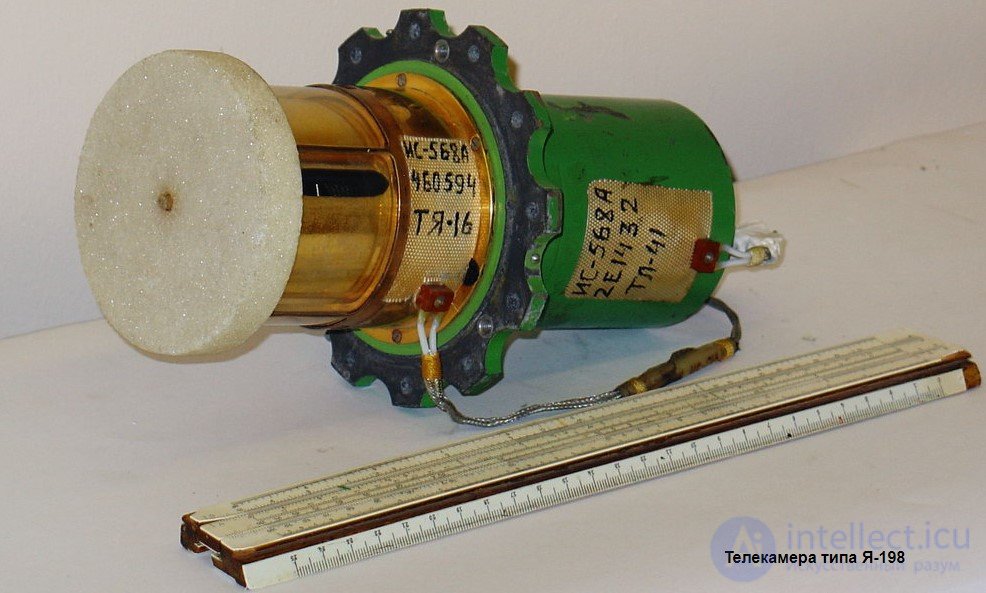
The Ya-198 telephotometer
RKS
ShareVolga had to be housed inside a pressurized enclosure, whereas the Ya-198, designed for low pressure, could be mounted outside the spacecraft's pressure vessel. That made it possible to dispense with a spherical viewport that was extremely difficult to manufacture and weighed 1.1 kilograms, along with a desiccant weighing another 1 kilogram.
As a result, replacing the telephotometer already saved 4.2 kilograms. Additional advantages came with it: assembly of the spacecraft was greatly simplified, and its body could be filled with moister nitrogen.
The new telephotometer also had a noticeably higher resolution - 500 lines against 250. The overall panorama parameters became 6000 × 500 elements. The time needed to transmit one panorama did increase, but that was precisely a consequence of the new telephotometer's greater sensitivity.
And when Luna-9 became the first spacecraft in the world to land on the lunar surface on February 3, 1966, it was the Ya-198 that showed the whole world the first panoramas of the surface of our natural satellite.
In all, Luna-9 transmitted panoramas of the lunar surface at different angles of solar illumination. After such a success, telephotometers took a firm place aboard Soviet landers.
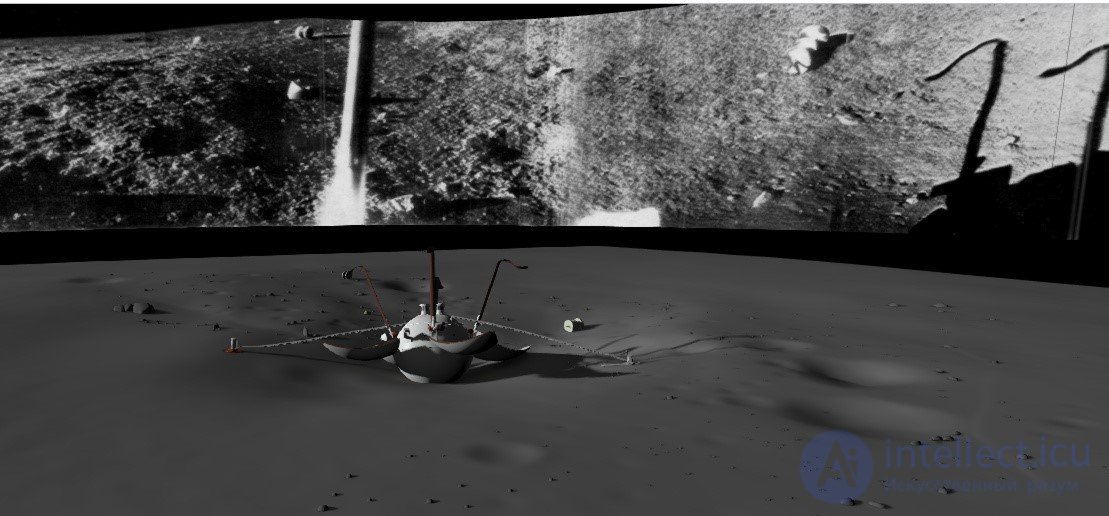
A panorama of the Moon taken by the Ya-198 telephotometer aboard the Luna-9 spacecraft
Pavel Shubin
ShareThe next lander, Luna-13, already carried two telephotometers, for obtaining stereoscopic images. This turned out to be a fortunate idea, since one of the telephotometers on the spacecraft failed for unknown reasons. Thanks to the second instrument, Earth saw several more panoramas of the lunar surface.
And it went further. The Luna-20 spacecraft assessed its soil sampling site using two telephotometers, while the Soviet lunar rovers carried four telephotometers each, transmitting both vertical and horizontal panoramas. The total number of panoramas from them already ran into the hundreds: 211 from Lunokhod-1 and 86 from Lunokhod-2.
The lander of the automatic interplanetary spacecraft Mars-3, the first ever to touch down on the Red Planet, in December 1971, also carried telephotometers, but unfortunately no complete panorama was obtained. For reasons unknown, the lander was damaged immediately after touchdown.
Documents of its manufacturer, the Lavochkin Association, mention that the signal strength kept falling - most likely the battery had been damaged. The spacecraft landed during a dust storm, one of the largest observed on Mars up to that time, but by present-day understanding that could not have affected the lander.
Nevertheless, shortly after landing the lander began transmitting the first panorama of the Martian surface. Alas, it lasted only 14.5 seconds (20 seconds by other accounts), after which the Mars-3 lander fell silent forever.
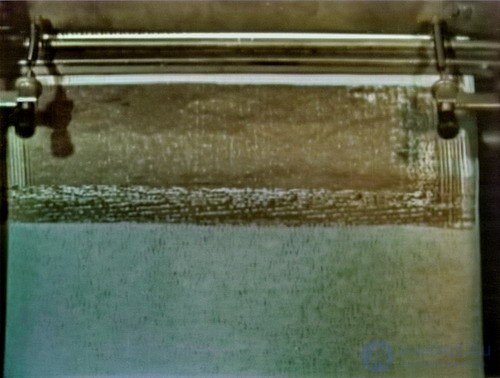
The beginning of the transmission carrying the panoramic image of the Martian surface taken aboard the lander of the Mars-3 interplanetary spacecraft
A still from the film "Spacecraft M-71"
ShareThe moment the panorama transmission begins is clearly visible in the images. White noise gives way to a very dark, low-contrast picture with technical markers along the edges. The technical markers carried the brightness level, and they too indicated very weak illumination. Unfortunately, that is all the information that could be obtained at the time.
People only got to see Mars in 1976, thanks to American engineers - and to telephotometers. The Americans liked the Soviet engineers' idea so much that they developed telephotometers of their own design for the Viking landers.
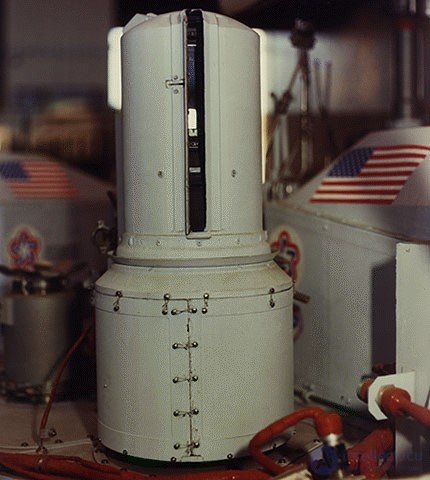
The Viking telephotometer (USA)
NASA
ShareEach of them had a mass of 7.26 kilograms, but their design was noticeably more complex and more advanced. In particular, they contained a 2 × 6 array of photodiodes tuned to different spectral bands. It allowed black-and-white, color and infrared panoramas to be obtained. The total field of view was 342 degrees, and the resolution was 2500 × 512 pixels with 32 gradations per channel.
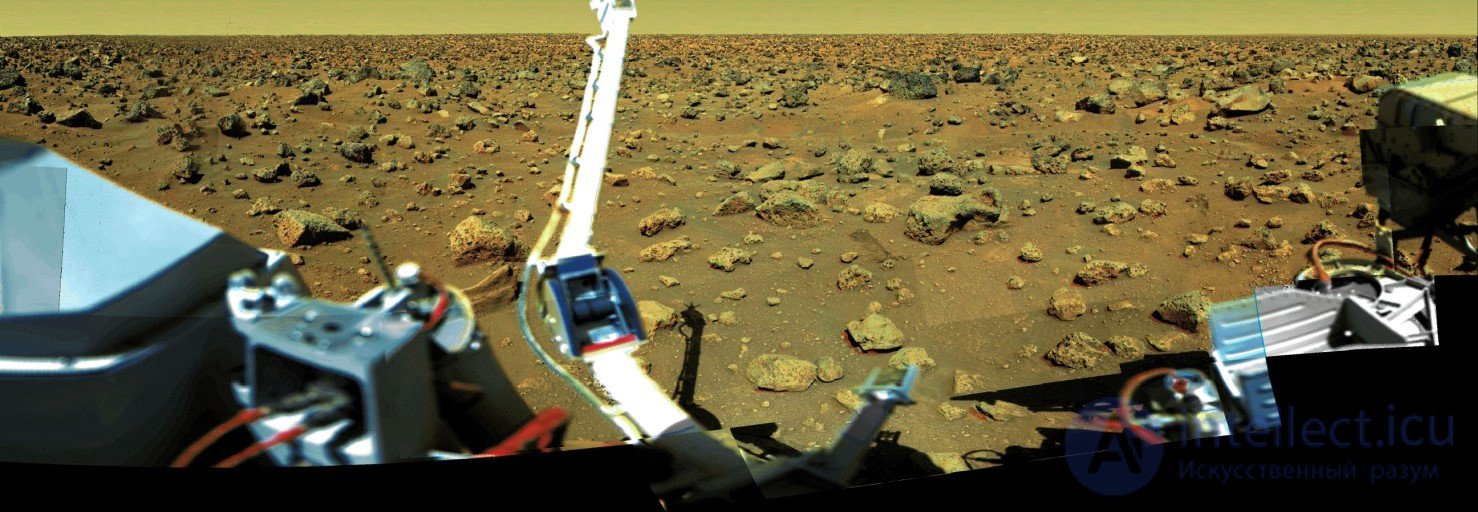
A color panorama of the Martian surface taken aboard the Viking-2 automatic interplanetary spacecraft
NASA
ShareThis was the first and last time American engineers used dedicated panoramic cameras. When, 20 years later, the United States began sending rovers to the Red Planet, they were fitted with ordinary digital cameras.
With Venus, Soviet scientists had far better luck, even though it caused them more apprehension than Mars did.
On the one hand, they knew that the illumination level on the surface of Venus was sufficient to obtain an image. That experiment had been carried out with the Venera-8 spacecraft. But for the telephotometer designers this was not enough. Venus looked like far too complicated a planet, and nobody had answers to many questions about the parameters of its atmosphere.
All sorts of things were expected: that there is enormous refraction at the surface of Venus, so that an observer could take in almost the whole planet in a single view; that, on the contrary, viewing conditions there are such that an observer would barely make out the spot on which he stands; that a poorly transparent near-surface layer hangs in the atmosphere; that the surface of Venus is perfectly smooth and covered with molten metal, making contrasted images impossible to obtain; and so on.
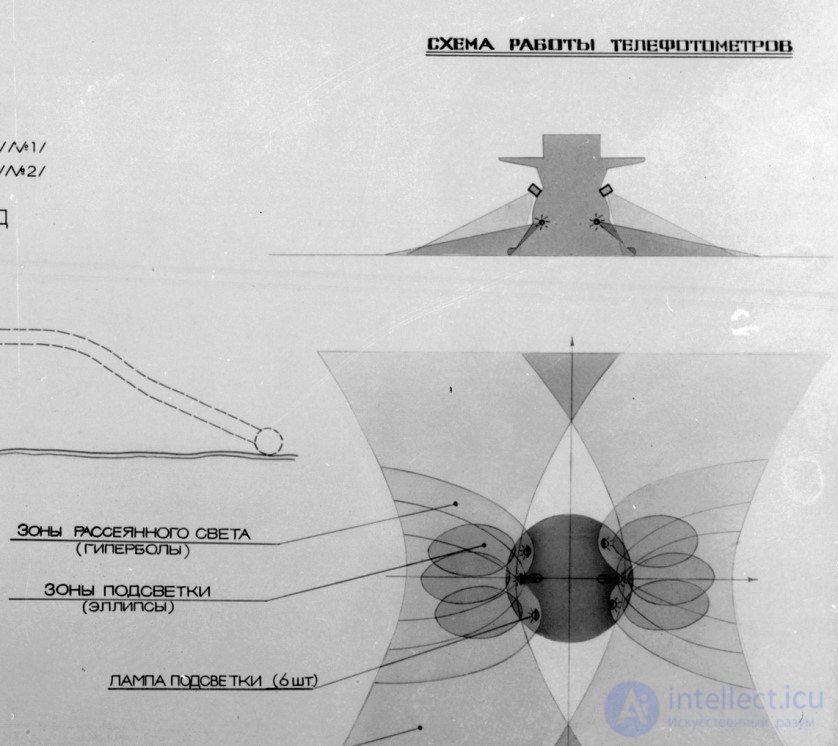
Diagram of how the telephotometers worked on the lander of the Venera-9 spacecraft
Illustration from the book "Venus. The Untamed Planet"
ShareThese concerns led to halogen mercury lamps being installed on the landers — specifically to increase contrast (and not for illumination, as one might have assumed).
On October 22, 1975, the lander of the "Venera 9" probe touched down on the planet. According to the plan, pyrotechnic charges were to blow the covers off the telephotometers, but unfortunately only one of them worked as intended. The first panorama from the surface of Venus arrived on Earth.
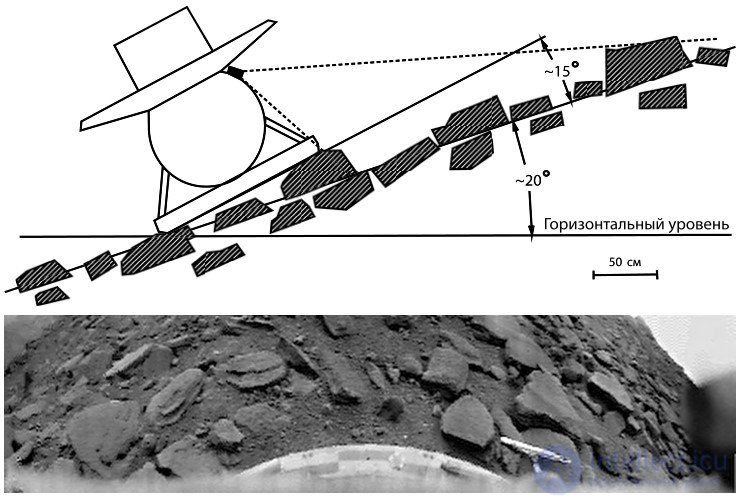
The landing sequence of the "Venera 9" lander and the panorama taken by its telephotometer
Illustration from the book "Venus. The Untamed Planet"
ShareIt turned out that the lander had come down on a fairly steep slope, and the camera that worked was the one facing the top of the slope. The second telephotometer, facing the drop-off, was also working, but its cover prevented it from producing an image.
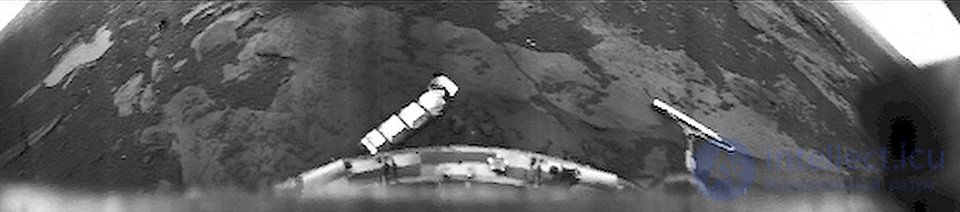
Panorama taken from aboard the lander of the "Venera 10" probe
Don Mitchell
ShareThree days later the lander of the next Soviet probe — "Venera 10" — touched down on Venus. And soon the scientists had one more panorama of the planet's surface in front of them.
The last achievement of the Soviet telephotometers is also connected with Venus. In 1982 the landers of the "Venera 13" and "Venera 14" probes sent back color panoramas of its surface. To obtain color, the panoramas were transmitted through red, green and blue filters. In the blue channel the signal level turned out to be so weak that only the jettisoned cover of the telephotometer could be made out.
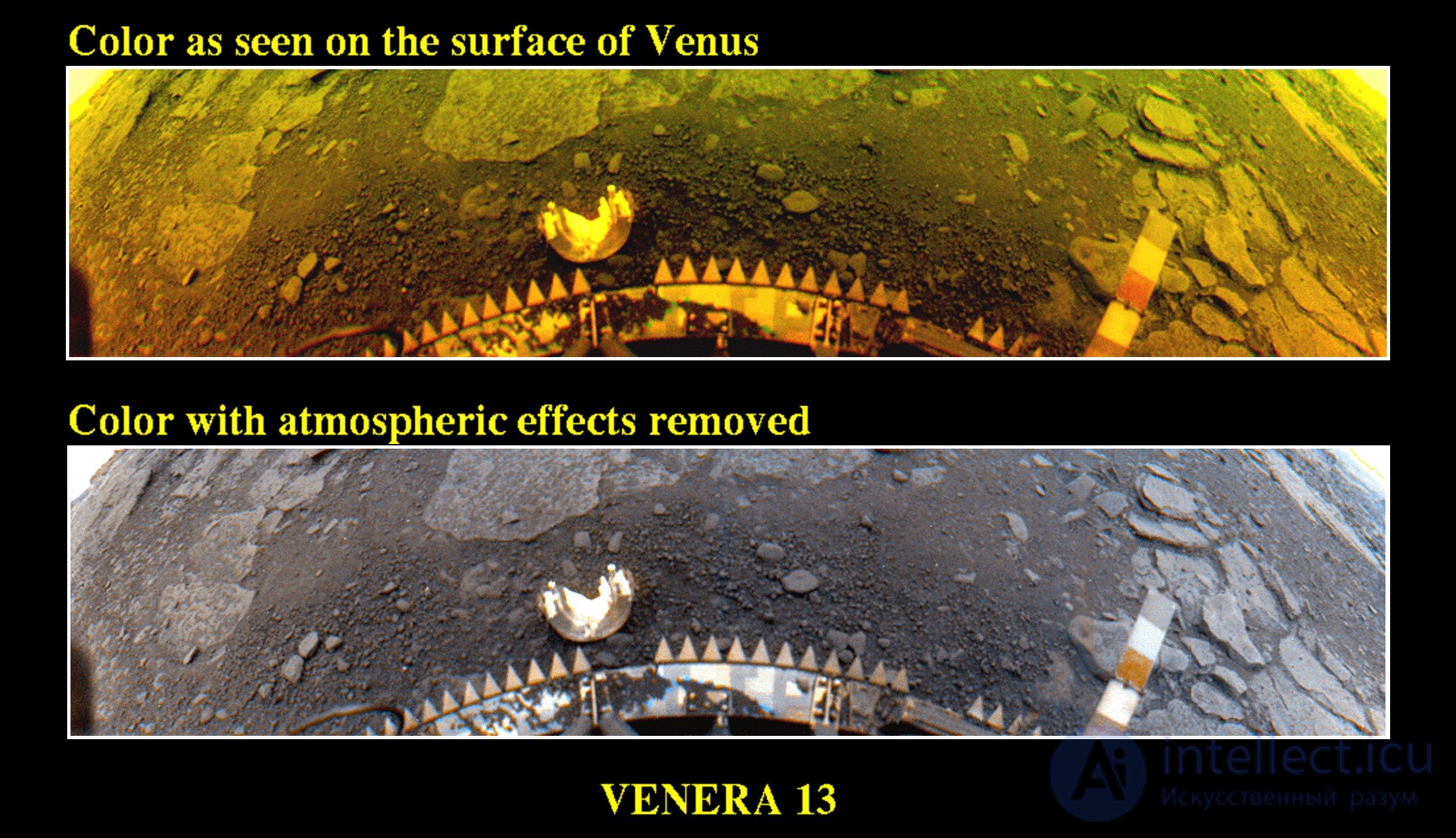
Color images (the actual one at the top and the processed one at the bottom) of the surface of Venus obtained from the lander of the "Venera 13" probe
Don Mitchell
ShareDuring the "Venera 14" mission (as in the case of "Venera 13"), the signal from the lander was relayed to Earth via the flyby module, which was moving away from the planet while the signal was being transmitted. Because of this, the signal from the surface grew weaker and weaker until it finally disappeared.
The panorama it transmitted is humanity's last look at Venus. Thirty-seven years have passed since that day, but to this day no one can say for certain when we will next see new photographs of its surface.
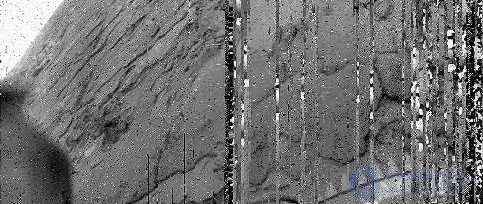
A fragment of the panorama obtained from aboard the lander of the "Venera 14" probe
Don Mitchell
ShareOf course, after "Venera 13" and "Venera 14" the planet was also visited by the excellently performing landers of the "Vega" mission. But they landed on the unlit side of Venus, and it was decided to remove the cameras from them.
Panoramic cameras, which are structurally similar to telephotometers, have not vanished into history, although they use CCD sensors (more precisely, "CCD line arrays"). They were part of the machine vision system on the "Phobos-Grunt" probe, and they are also found in new Russian projects such as "Luna 25" and "Venera-D". So it is quite possible that we will yet see Russian panoramas of other worlds.

Comments